
Best Wampler Distortion Pedals 2026
Alright, so you're looking for a Wampler distortion? Good choice. Brian Wampler's pedals have carved out a serious niche-they're not just another clone factory. They're known for nailing those classic amp tones, especially Marshall and Soldano, but with a modern sensibility and a focus on dynamics that a lot of other distortion pedals just miss. Let's break down what makes them tick and which one's right for your rig.
Last updated: October 8, 2026
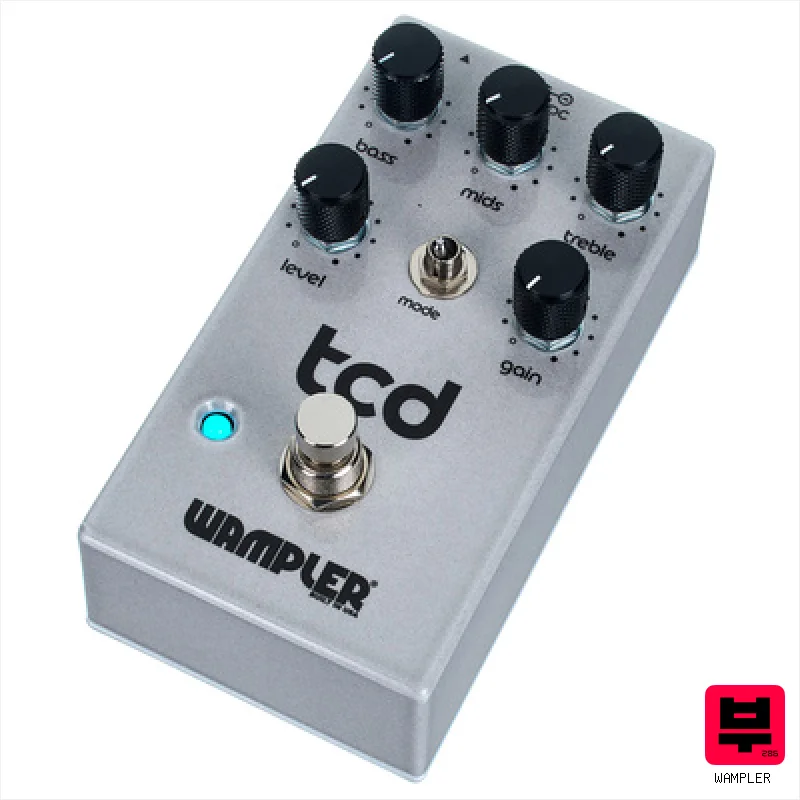
Wampler TCD Overdrive
- • Captures famous harmonic complexity and amp-like response
- • More versatile than the original with greater control
- • Mode switch offers two distinct overdrive types
- • Made in USA with a compact 64mm width
- • No power adapter included in the box
- • Lacks dedicated EQ knobs for bass, mids, treble
- • Uses standard barrel connector instead of modern power
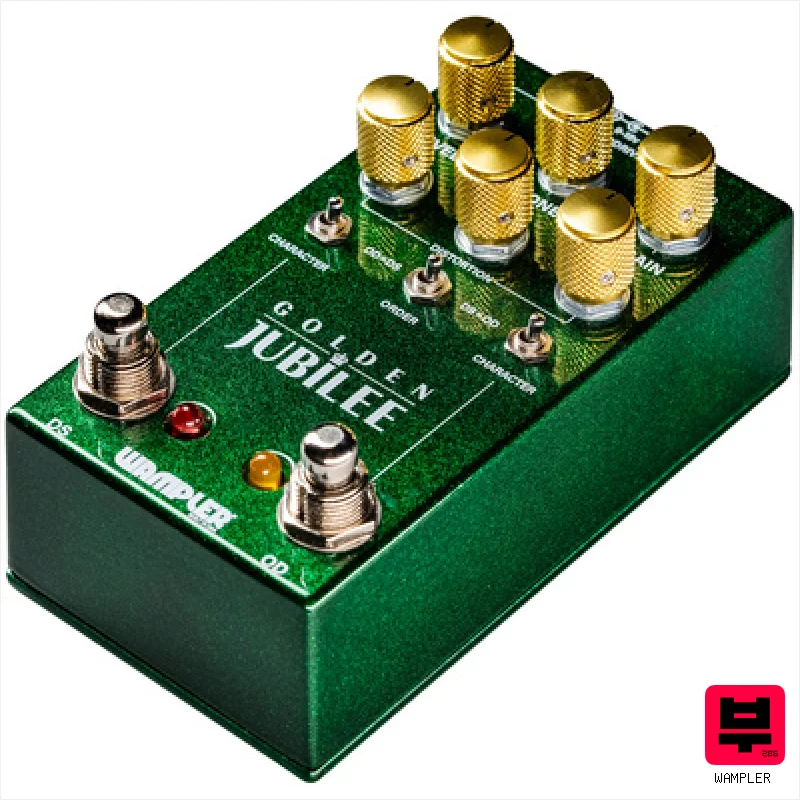
Wampler Golden Jubilee Overdrive/Dist.
- • Combines American and British sound styles in one box
- • Offers independent rhythm and lead channel controls
- • Includes two distinct character voicing switches for tone shaping
- • Allows easy switching between overdrive and distortion modes
- • Requires external power supply not included in the kit
- • Missing specific details on internal circuit construction
- • Lacks stated durability ratings for heavy touring use

Wampler Cryptid Fuzz
- • Exceptional dynamic response to guitar volume knob adjustments.
- • The 'Character' switch offers a surprisingly wide tonal palette.
- • Robust enclosure and quality components indicate durable construction.
- • Chime mode delivers a scooped, vintage fuzz tone that's quite unique.
- • Can get a bit muddy with high-gain amps and darker pickups.
- • Lacks a true 'bass' control, potentially limiting low-end shaping.
- • Power supply not included, a common but slightly frustrating omission.
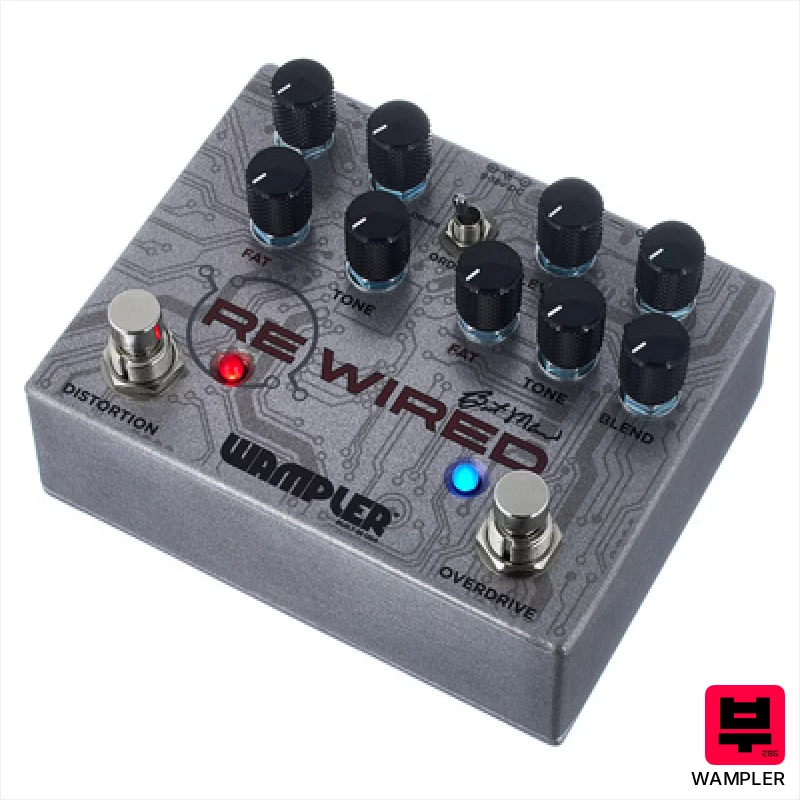
Wampler ReWired Brent Mason Overd/Dist
- • Dual channels offer distinct overdrive and British distortion tones.
- • The 'Fat' switch adds significant low-end warmth and sustain.
- • Wampler's ReWired circuit provides a more transparent and responsive feel.
- • Robust enclosure and quality components suggest excellent long-term durability.
- • The stacked modes can get muddy quickly with high gain settings.
- • Limited tonal versatility compared to multi-mode distortion pedals.
- • The size might be a challenge for players with very small pedalboards.

Wampler Phenom Distortion
- • Dual voicing modes offer distinct tonal palettes, expanding versatility.
- • The 'Bright' mode retains clarity and articulation even at high gain.
- • Wampler's meticulous component selection yields a surprisingly warm distortion.
- • True bypass preserves your signal integrity when the pedal is disengaged.
- • Limited control depth compared to more complex distortion offerings.
- • The compact size might feel cramped for players with larger hands.
- • While versatile, it leans towards rock and modern rock tones; less suited for clean, subtle gain.
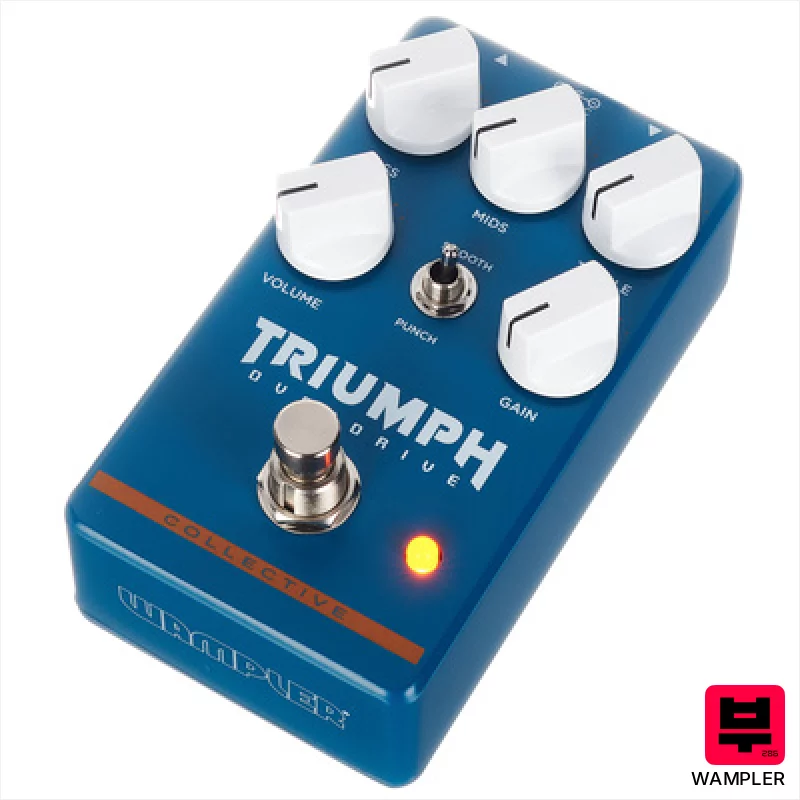
Wampler Triumph Overdrive
- • Dual voicing switch offers surprisingly distinct and usable tonal options.
- • The 'Smooth' mode nails a warm, transparent overdrive reminiscent of a vintage tube amp.
- • Robust enclosure and quality components suggest a pedal built to withstand gigging.
- • Punch mode adds significant low-end and sustain, great for heavier styles.
- • Limited versatility; not a do-everything distortion pedal – more focused.
- • Lacks battery operation, requiring a power supply for convenience.
- • Mids control can be a bit narrow, potentially requiring EQ adjustments.

Wampler Moxie Overdrive
- • Compact size ideal for tight pedalboards, minimizing real estate usage.
- • Voice switch offers tonal flexibility between 'Screamer' and brighter response.
- • Fat switch emulates a vintage amp's warmth, adding harmonic richness.
- • True bypass preserves original signal when bypassed, avoiding unwanted coloration.
- • Limited tonal palette compared to multi-mode distortion pedals.
- • No battery operation adds a layer of inconvenience for gigging musicians.
- • While versatile, it excels as a Screamer variant, not a radical distortion.

Wampler Dual Pantheon Overdrive
- • Dual Pantheon circuits offer incredible tonal flexibility, covering blues to modern rock.
- • Independent I/O routing allows for complex signal chains and stereo amp setups.
- • Wampler’s renowned circuit design delivers dynamic response and natural overdrive.
- • Robust enclosure and high-quality components suggest long-term reliability.
- • The extensive routing options can be overwhelming for less experienced users.
- • The size is substantial, making it less ideal for very compact pedalboards.
- • While versatile, it excels in overdrive territory and isn’t a high-gain distortion unit.
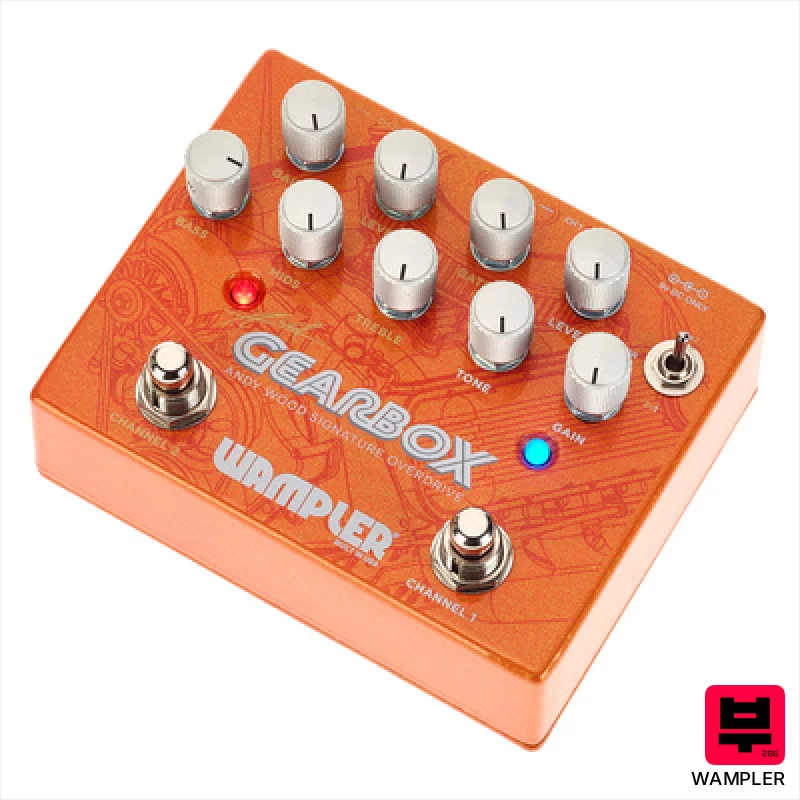
Wampler Gearbox Dual Overdrive
- • Tumnus channel nails a transparent, amp-like crunch.
- • Pinnacle channel delivers a thick, harmonically rich distortion.
- • Flexible EQ on Channel 2 shapes tones precisely.
- • Integrated noise gate effectively tames high-gain settings.
- • Size can be cumbersome on smaller pedalboards.
- • Limited tonal flexibility compared to multiple individual pedals.
- • Power supply not included, a common but frustrating omission.
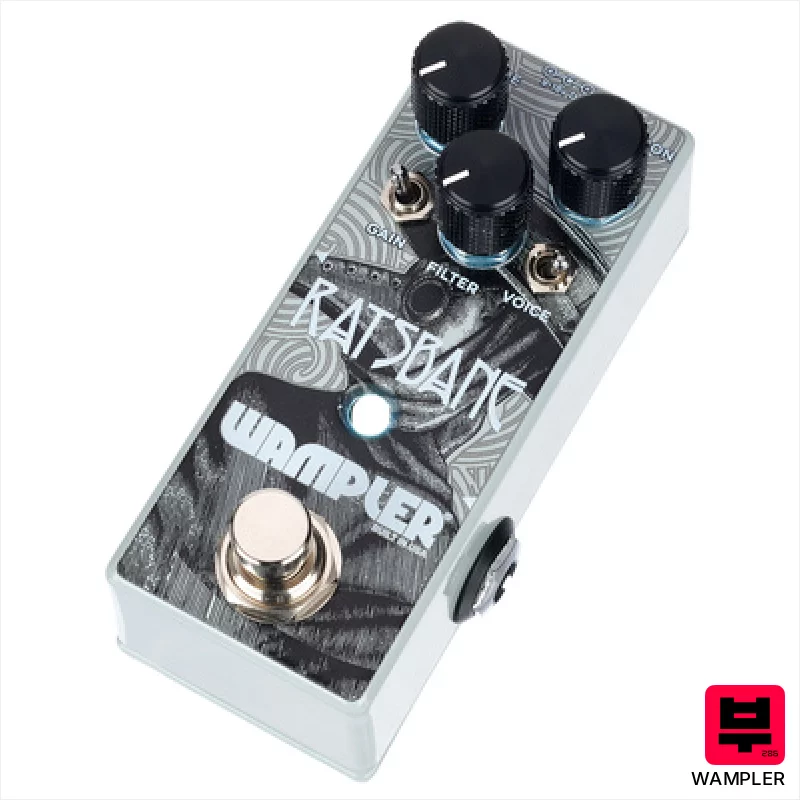
Wampler Ratsbane Overdrive/Distortion
- • Excellent recreation of a classic high-gain distortion sound
- • Versatile gain stages offer a wide range of overdrive tones
- • Voice switch provides significant tonal shaping options
- • Compact size makes it pedalboard-friendly and convenient
- • Lacks true bypass, potentially coloring clean signals
- • Power supply not included, adding to overall cost
- • High gain settings can get quite compressed and muddy
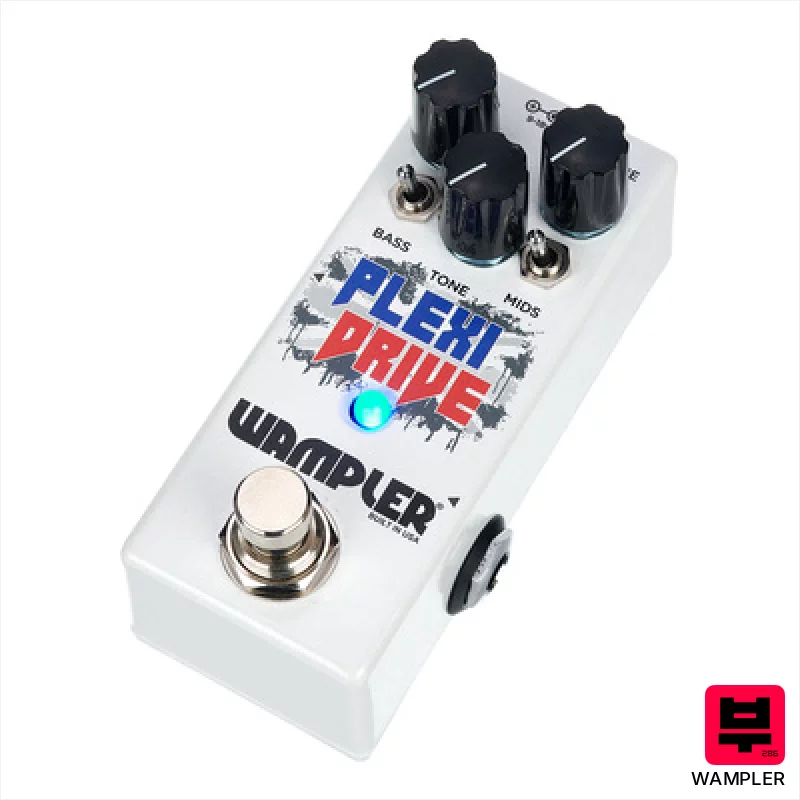
Wampler Plexi-Drive Mini
- • Excellent plexi amp emulation, surprisingly full for its size
- • Mid boost offers a significant, usable volume and tonal shift
- • Compact size makes it incredibly pedalboard-friendly
- • Wampler’s build quality ensures reliable performance and longevity
- • Limited tonal flexibility beyond a classic British amp sound
- • No battery operation restricts power supply options
- • Bass boost can get muddy with darker pickups or high gain settings

Wampler Belle Overdrive
- • Warm, creamy overdrive tones reminiscent of a Klon-style circuit.
- • Excellent bass response control avoids muddy low-end frequencies.
- • Push switch adds a noticeable, harmonically rich clipping characteristic.
- • Robust construction; Wampler’s known for durable enclosures and quality components.
- • Gain range, while versatile, might not satisfy players seeking extreme high-gain distortion.
- • True bypass is absent; a slight coloration present even when bypassed.
- • Power supply not included; an additional expense for some users.
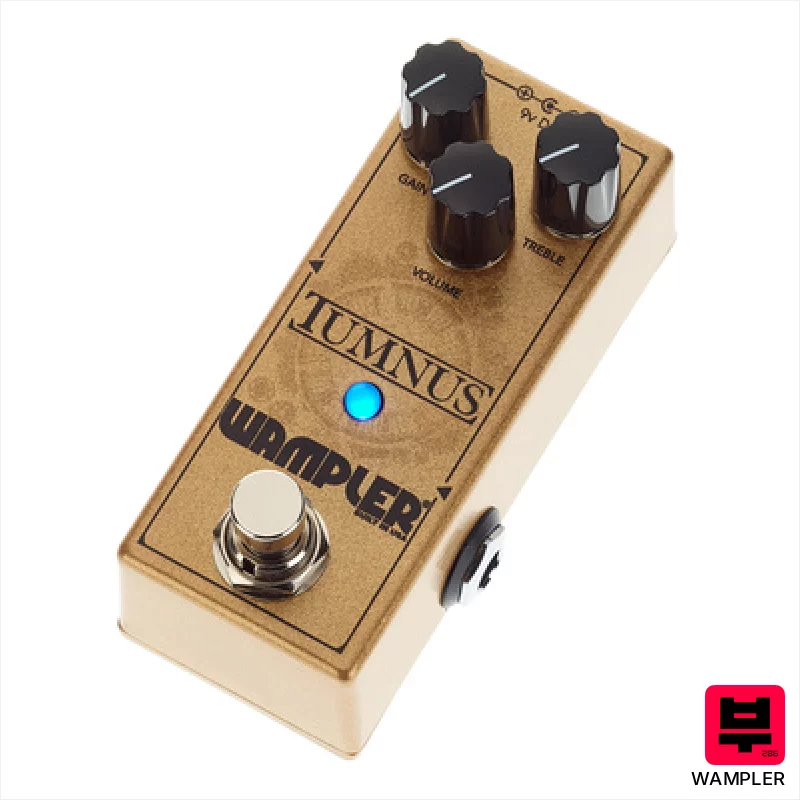
Wampler Tumnus Overdrive V2
- • Warm, responsive overdrive emulating a cranked Deluxe Reverb
- • Excellent buffering circuit maintains signal clarity and prevents tone suck
- • Compact footprint ideal for crowded pedalboards, well-considered size
- • Gain control offers a wide range, from subtle boost to mild overdrive
- • Limited tonal versatility; excels at specific amp tones, not a do-it-all pedal
- • No battery operation adds power supply dependency and potential inconvenience
- • Treble control can be a bit scooped, requiring EQ tweaking in some setups
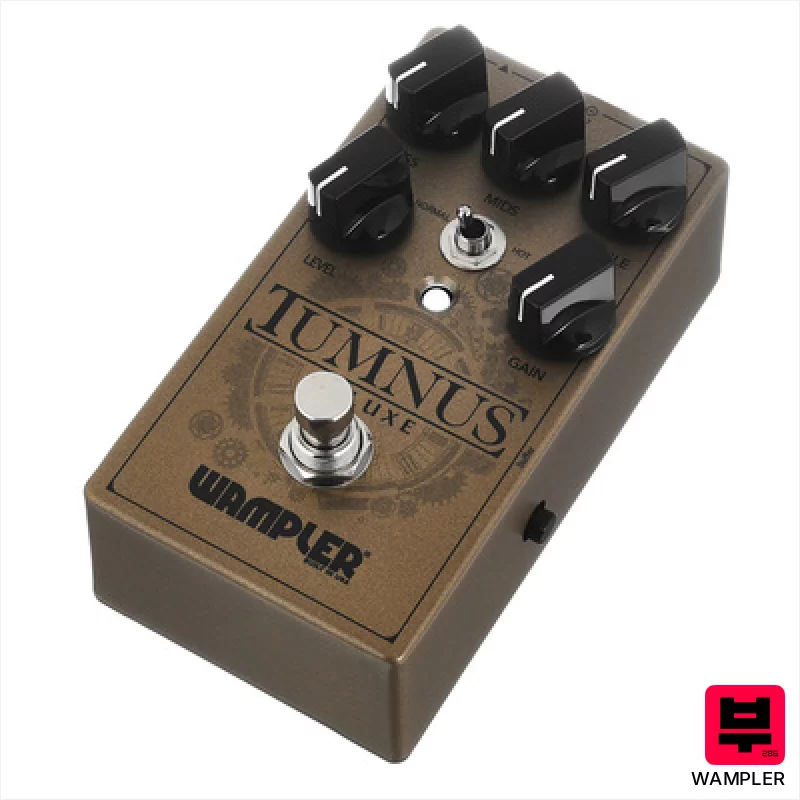
Wampler Tumnus Deluxe Overdrive V2
- • Exceptional Klon-style warmth and responsiveness, truly versatile
- • The active EQ section offers remarkable tonal shaping ability
- • Robust enclosure and high-quality components inspire confidence
- • The 'Hot' mode adds a welcome, more saturated drive option
- • Can be a bit noisy with high gain settings and certain pickups
- • The mid control can be a little too scooped at times
- • Price point might be a barrier for some budget-conscious players
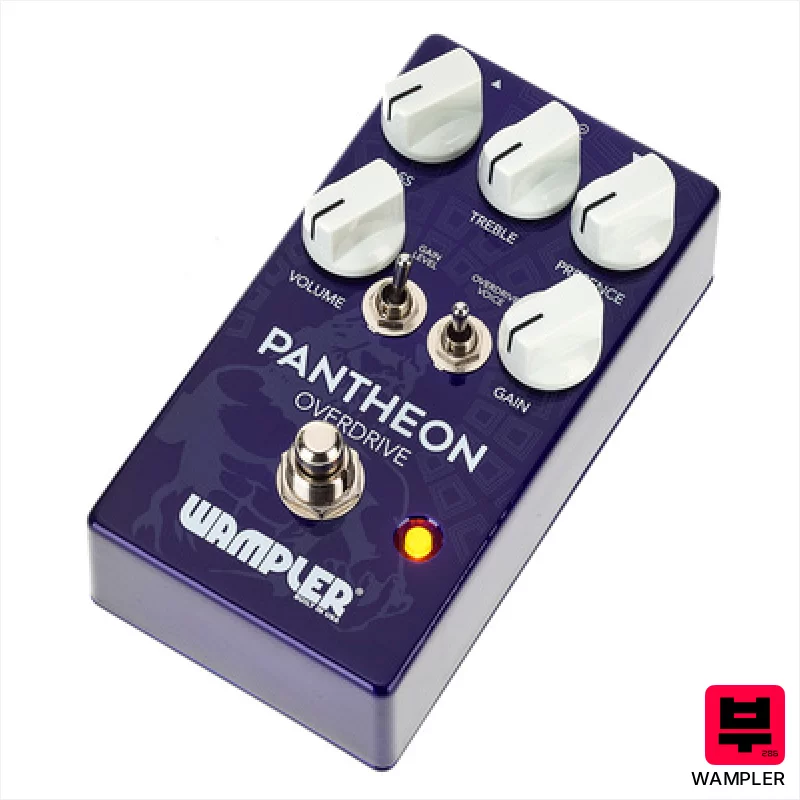
Wampler Pantheon Overdrive
- • Exceptional transparency preserves existing guitar character
- • Dynamic response reacts beautifully to picking intensity
- • Versatile gain range from subtle boost to mild overdrive
- • Robust enclosure and quality components indicate lasting durability
- • Can be a bit noisy with high gain settings and sensitive pickups
- • Limited tonal shaping compared to multi-band distortion pedals
- • Relatively compact size may be a challenge for some pedalboards
Every distortion pedals that matches
18 models match this page. The 15 above are covered in detail; the rest are listed here with their published specifications.
| # | Model | Specifications | Price |
|---|---|---|---|
| 16 | Wampler Paisley Deluxe Overdrive | not published | $267 |
| 17 | Wampler Velvet Fuzz | not published | $222 |
| 18 | Wampler Euphoria | not published | $217 |
Distortion Pedals by the numbers
Measured across all 551 models in this category, so «wide», «short» or «expensive» mean something you can check.
How to Choose the Best Distortion Pedals
Tone Character
Wampler's strength is that 'amp-in-a-box' thing, but they avoid that sterile, compressed feel. You get a responsive, touch-sensitive breakup that reacts to your picking dynamics-light touch for cleanish tones, dig in for serious crunch. It's the kind of sustain and harmonic complexity you want.
Dynamic Response
This is where Wampler really shines. Many distortion pedals flatten your playing, but Wampler pedals preserve articulation and nuance. Pickups with a hotter voicing will still retain clarity, and you can actually hear your pick attack. That's huge for lead work.
Build Quality
The enclosures are generally robust, and the components are solid. You'll find true bypass switching, which is standard now, but Wampler's attention to detail in the circuit design and parts selection elevates them. It's not boutique-level hand-wired, but it's a reliable workhorse.
Gain Structure & Headroom
Wampler pedals often have a wider gain range than you might expect. They can go from mild overdrive to full-on high-gain distortion, and they tend to have good headroom at lower gain settings-meaning they don't immediately collapse into a fizzy mess when you add a bit of drive. This makes them versatile for different amps and playing styles.
Clone Heritage & Innovation
While many Wampler pedals are inspired by classic amps (JCM800, Plexi, Soldano SLO), they're not exact clones. Wampler tweaks the circuits to improve certain aspects-like the low-end thump or the upper midrange clarity-without sacrificing the core character. They've also introduced their own original designs that stand on their own.
Buying Guide
Don't go chasing the highest gain setting on every pedal. Think about what amp sound you're trying to achieve and how it'll interact with your existing rig. A darker amp might benefit from a brighter Wampler, and vice-versa. Also, be aware that some of the older, more sought-after Wampler circuits (like the Tumnus) can command a premium on the used market - sometimes more than new ones. It's worth it for the tone, but factor that into your budget.
How This List Is Built
We don't play these instruments — we're a catalog, not a review desk, and we'd rather say so than pretend otherwise. This page covers 18 of 551 distortion pedals from the Thomann catalogue, which is the largest single source of specification data in this category: 15 in detail, the rest listed with their specifications.
Position is computed, not curated. We parse the manufacturer's own description into actual values — nut width, scale, fret count, fingerboard radius, size, alloy — and rank on them: how many specifications a model has published, how many of them are measurable numbers, and how precisely it meets this page's criterion. A product image adds a little. Price is not a ranking signal: it tells you nothing about whether a neck fits your hand. The same inputs always produce the same order, so nothing here is shuffled to look fresh.
What this list is good for: narrowing a category down to a shortlist by spec and budget. What it isn't: a substitute for hearing an instrument. Before you buy, read hands-on reviews and, where you can, play it. Full methodology.

