
Best British Pedal Company Distortion Pedals 2026
Alright, let's talk about British Pedal Company distortion. They've been quietly building a serious reputation, not chasing trends but crafting pedals that nail that British amp vibe - think Vox AC30 grit, Marshall stack saturation, but in a stompbox. If you're tired of the same old generic distortion flavors and craving something with real character, especially if you're chasing that classic UK rock tone, BPC deserves a serious listen. They're not the cheapest, but they're also not ludicrously priced, and the tone is undeniably there.
Last updated: April 11, 2026
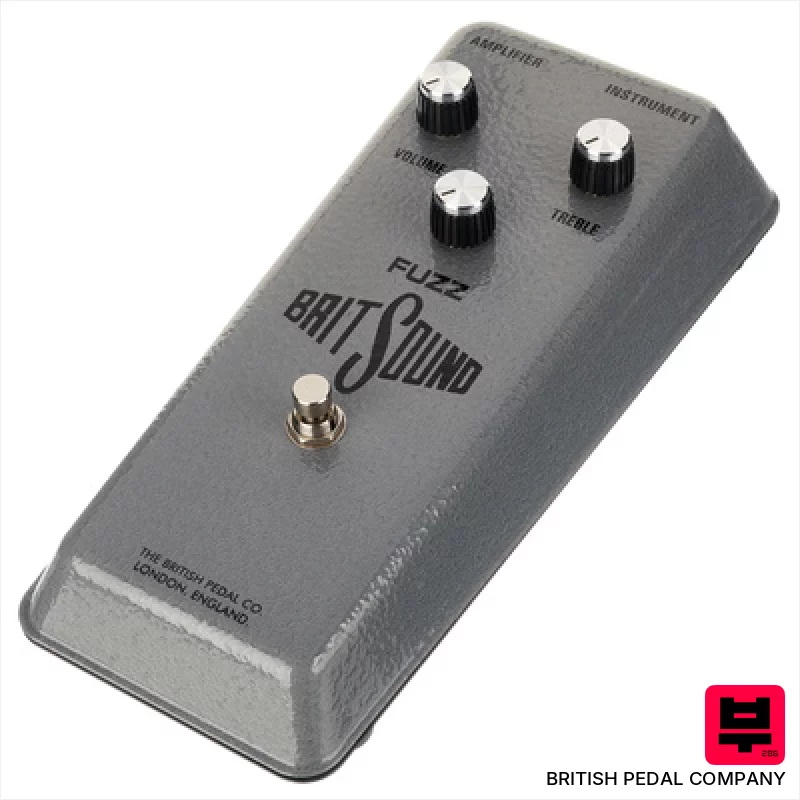
British Pedal Company Special Edition Britsound Fuzz
- • Authentic OC75 transistor circuit nails classic '68 Tone Bender vibe
- • Hammerite finish provides a robust, vintage aesthetic and durable protection
- • User-friendly controls offer more flexibility than original Tone Bender designs
- • True bypass preserves signal integrity when the fuzz isn't engaged
- • 9V battery power only is inconvenient for stage use and long gigs
- • Limited tonal versatility; primarily excels in saturated, vintage fuzz territory
- • Relatively heavy build may be a concern for pedalboard space and stability

British Pedal Company Vintage Series Buzzaround Fuzz
- • Authentic NKT213 transistors deliver the classic Buzzaround character.
- • Folded metal cabinet provides exceptional durability and vintage aesthetic.
- • Timbre control offers surprising tonal flexibility for a fuzz pedal.
- • Certificate of authenticity adds collector's value and pedigree.
- • Limited versatility; excels at fuzz, less suited for broader distortion tones.
- • Relatively heavy due to the robust metal enclosure and components.
- • Price point positions it as a premium-priced fuzz option.
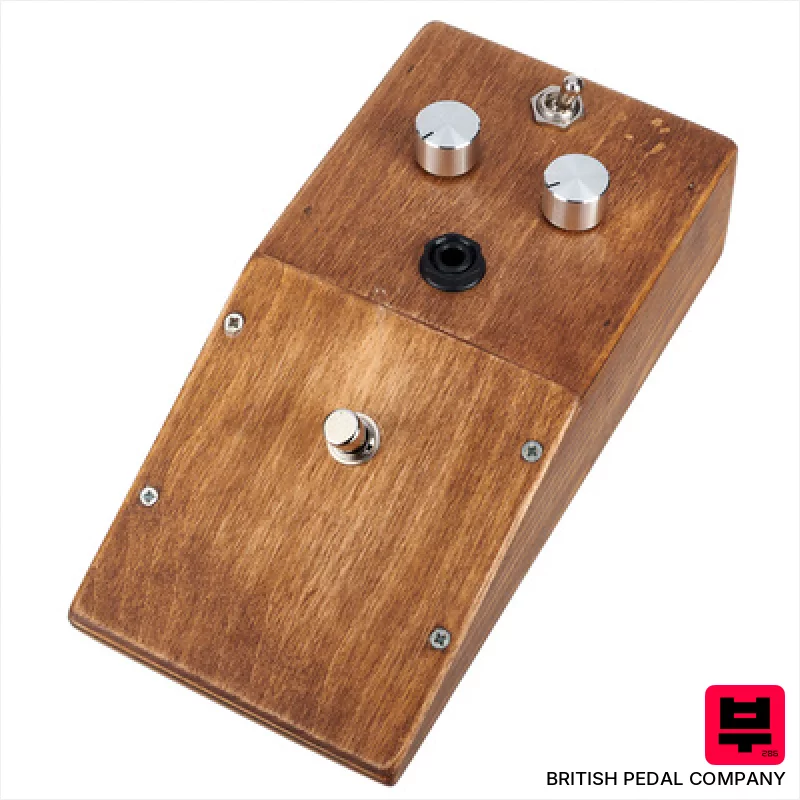
British Pedal Company Wooden Case MkI Tone Bender
- • Hand-dyed wooden enclosure offers unique aesthetics and subtle tone shaping.
- • Full point-to-point wiring ensures exceptional signal integrity and responsiveness.
- • Authentic OC75/2G381 transistor configuration nails that classic '60s fuzz tone.
- • Maintains clarity; retains fundamental frequencies even at high gain settings.
- • Battery power only is inconvenient for gigging, requires frequent replacements.
- • Limited versatility; excels in fuzz tones, less adaptable to other distortion styles.
- • Premium-priced, represents a significant investment for a single fuzz pedal.
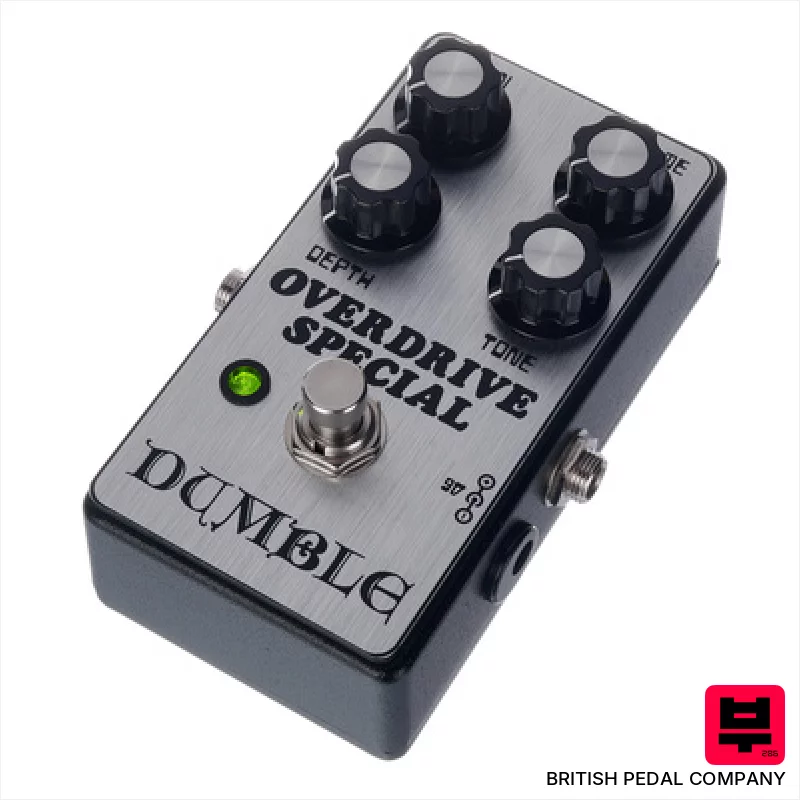
British Pedal Company Dumble Silverface Overdrive
- • Faithful Silverface emulation captures that elusive Dumble warmth and chime.
- • Robust metal enclosure feels substantial and built to withstand gigging.
- • Depth control adds a unique dynamic response and subtle harmonic complexity.
- • 18V operation expands headroom and cleans up nicely with lower gain settings.
- • Gain range is limited; won't handle extreme high-gain distortion styles.
- • The Tone control can be a bit vague and lacks precise frequency shaping.
- • Power supply not included; adds to the overall cost of ownership.

British Pedal Company Vintage Series Zonk Machine
- • Hammerite finish offers a unique vintage aesthetic and robust protection.
- • Three-transistor circuit delivers a focused, tight fuzz with pleasing oscillation.
- • Folded metal housing provides exceptional durability for gigging and touring.
- • Swell control allows for dynamic, expressive volume shaping and sustain.
- • Limited tonal flexibility; excels in fuzz but isn't a multi-effect solution.
- • The heavier build (575g) might be cumbersome for pedalboard setups.
- • The 'light oscillation' can be unpredictable with certain amplifier/pickup combinations.
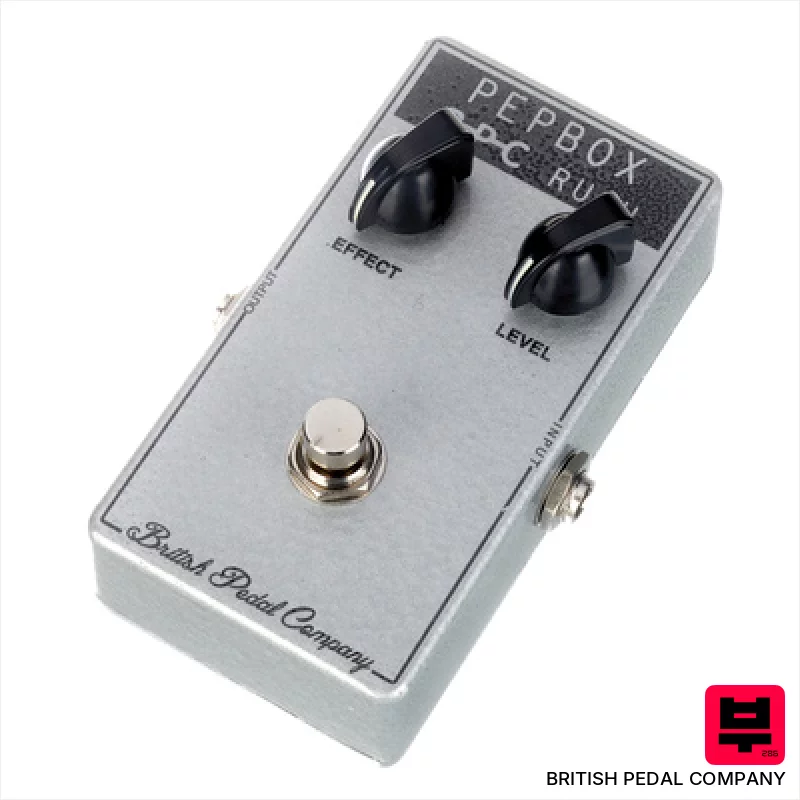
British Pedal Company Compact Series BPC Rush Pepbox
- • Authentic ACY41 transistors deliver a genuinely warm, vintage fuzz tone.
- • Die-cast housing provides robust build quality and roadworthiness.
- • Tight low-end prevents muddiness, ideal for rhythm playing and stacking.
- • Compact size and true bypass minimize footprint and signal degradation.
- • Limited tonal flexibility; primarily a dedicated fuzz pedal.
- • Requires isolated power supply, adding to overall cost and complexity.
- • Silver Hammerit finish might show fingerprints and smudges easily.

British Pedal Company Vintage Series Rush Pepbox
- • NOS ACY41 transistors deliver authentic, warm germanium fuzz tones.
- • Folded metal housing (MKI style) provides robust protection and vintage aesthetic.
- • Tight low-end prevents muddiness, ensuring clarity in a mix.
- • Certificate of authenticity adds collector value and assures historical accuracy.
- • Limited tonal versatility; excels at a specific vintage fuzz sound.
- • Hammerite finish can be prone to chipping with heavy use.
- • Relatively heavy due to the robust metal enclosure.
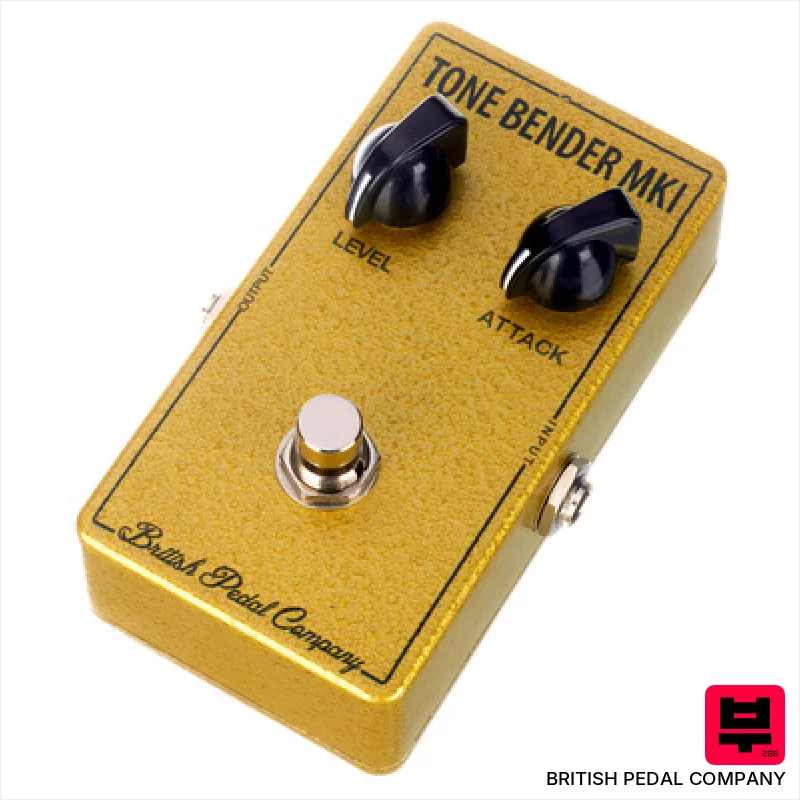
British Pedal Company Compact Series MkI Tone Bender
- • Gold Hammerite finish adds vintage charm and durability.
- • Germanium PNP transistors deliver classic, asymmetrical fuzz tones.
- • True bypass preserves signal integrity when the effect is disengaged.
- • Compact size makes it pedalboard-friendly without sacrificing tone.
- • Limited control set might restrict sculpting specific fuzz textures.
- • Requires isolated power supply, adding to the overall cost and complexity.
- • Aggressive, 'growly' nature isn't suitable for subtle or clean tones.

British Pedal Company Vintage Series MKI Fuzz
- • Gold Hammerite finish offers a unique, vintage aesthetic and durability
- • OC75 transistor delivers that characteristic 'growly' and aggressive fuzz tone
- • True bypass preserves your signal when the pedal is disengaged
- • Robust folded metal enclosure provides exceptional protection and substantial feel
- • The MKI's aggressive tone isn't universally appealing – lacks versatility for cleaner sounds
- • Its weight (940g) makes it less ideal for pedalboards with space constraints
- • The vintage-accurate circuit can be susceptible to noise if your rig isn’t well-shielded
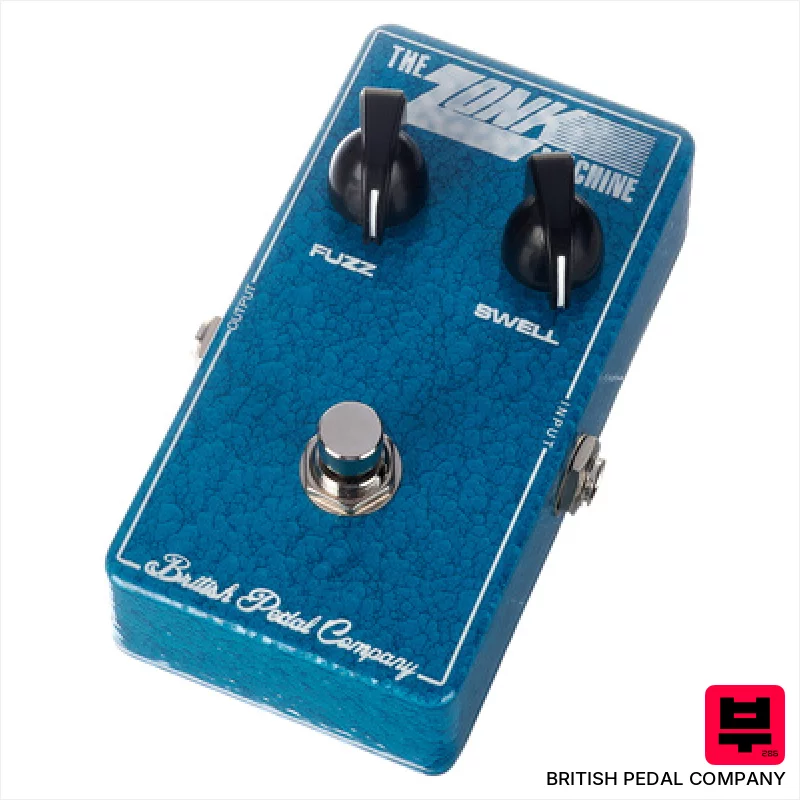
British Pedal Company Compact Series Zonk Machine
- • Hammerite finish offers excellent durability and a vintage aesthetic.
- • 3-transistor circuit delivers a tight, focused fuzz with pleasing oscillation.
- • True bypass preserves your signal integrity when the effect is disengaged.
- • Compact size makes it pedalboard-friendly without sacrificing tone.
- • Limited control set restricts fine-tuning of the fuzz character.
- • Higher price point places it above many budget-friendly fuzz options.
- • Narrow frequency response may not suit players seeking a broad, scooped tone.

British Pedal Company Vintage Series MKI.5 Fuzz
- • Authentic OC75 transistors deliver that classic, saturated fuzz tone.
- • Hammerite finish provides a robust, vintage aesthetic and protects the enclosure.
- • Excellent dynamic response; cleans up beautifully with volume knob adjustments.
- • Enhanced low-mids offer a thicker, more powerful sound than earlier Tone Bender versions.
- • The substantial weight (866g) makes it less travel-friendly.
- • Limited control set; tweaking beyond level and attack is impossible.
- • The vintage voicing might not suit modern, high-gain amp setups.

British Pedal Company Vintage Series OC81D Fuzz
- • Authentic OC81D transistor circuit delivers classic '60s fuzz tones.
- • Hammerite finish provides a robust, vintage aesthetic and durability.
- • Attack control offers nuanced dynamic shaping beyond simple volume swells.
- • True bypass preserves signal integrity when the effect is disengaged.
- • The heavy cast aluminum enclosure makes it noticeably weighty on a pedalboard.
- • Limited control set restricts versatility for modern, extreme distortion sounds.
- • OC81D transistors can be prone to microphonic behavior, requiring careful placement.

British Pedal Company Vintage Series OC75 Fuzz
- • Authentic OC75 transistor circuit delivers a nuanced, vintage fuzz tone
- • Cast aluminum enclosure provides robust build quality and classic aesthetics
- • Attack control offers subtle to aggressive fuzz character shaping
- • True bypass preserves signal integrity when the effect is disengaged
- • Relatively large footprint might be an issue for smaller pedalboards
- • Limited control set restricts extensive tonal sculpting possibilities
- • Can be noisy with high gain settings, especially with hotter pickups
How to Choose the Best Distortion Pedals
Heritage & Voicing
BPC's design philosophy is rooted in recreating classic British amp distortion circuits. They're not trying to be high-gain shred machines; they're aiming for that responsive, dynamic breakup that responds to your pick attack and volume knob. That 'fat midrange honk' is a hallmark.
Dynamic Response
These pedals breathe. They react to your playing dynamics in a way a lot of modern distortion pedals don't. Clean playing stays clean, a dig gives you grit, and cranking the volume delivers that thick, saturated drive - it's a huge deal for expressive playing.
Low-End Thump & Articulation
It's easy for distortion to just become a muddy mess, especially with a bass-heavy guitar or a darker amp. BPC pedals maintain surprisingly good articulation even at higher gain settings, while still delivering a solid low-end thump that cuts through the mix - crucial for gigging.
Build Quality
The enclosures are robust, the footswitches are reliable, and the components are generally high quality. They aren't boutique hand-wired, but they're built to withstand the rigors of regular gigging - something you don't always find these days.
Unique Circuit Designs
While inspired by classic amps, BPC isn't just cloning. They tweak and refine circuits, often incorporating subtle variations that give each pedal its own distinct character. You're getting a version of a classic, not a carbon copy.
Buying Guide
Look, you're paying a bit more for the BPC sound, and that's reflected in the build and component quality. Don't expect a huge range of features - they focus on nailing the core distortion tone. If you're chasing a super versatile, all-in-one solution, this isn't it; but if you want a focused, characterful distortion that sounds like a well-worn British amp, it's worth the investment. Pay attention to the specific model - each has a slightly different voicing.
How This List Is Built
We don't play these instruments — we're a catalog, not a review desk, and we'd rather say so than pretend otherwise. This page ranks 13 distortion pedals from the Thomann catalogue, which is the largest single source of specification data in this category.
Position is computed, not curated. Four signals, in order of weight: how completely the manufacturer documents the instrument (number of published specifications), where it sits in the price range, how specific the model designation is — which filters out generic accessories — and whether a product image exists. The same inputs always produce the same order, so nothing here is shuffled to look fresh.
What this list is good for: narrowing a category down to a shortlist by spec and budget. What it isn't: a substitute for hearing an instrument. Before you buy, read hands-on reviews and, where you can, play it. Full methodology.

