
Best Behringer Distortion Pedals 2026
Alright, let's talk Behringer distortion. For years, they've been the butt of jokes, but the reality is, they're churning out surprisingly decent dirt pedals at prices that'll make your jaw drop. We're not talking about replacing your Klon or your Soldano, but if you're on a budget, need a backup, or just want to experiment with some gnarly tones, Behringer's got some options worth considering. Seriously, some of these things nail classic distortion flavors remarkably well.
Last updated: October 8, 2026

Behringer Fuzz Bender
- • Surprisingly thick, vintage fuzz tones emulate early Vox and Tone Bender circuits.
- • Custom Mod switch adds much-needed mid-range clarity for modern applications.
- • The Attack control offers a wide range of fuzz textures, from gated to smooth.
- • Incredibly affordable, providing a gateway to classic fuzz sounds for budget-conscious players.
- • Plastic enclosure feels noticeably cheap and may not withstand heavy gigging.
- • Power supply not included; requires a specific barrel connector, adding to the overall cost.
- • Limited tonal versatility; excels at fuzz, but lacks broader distortion options.

Behringer OD300 Overdrive Distortion
- • Surprisingly usable gain range, from subtle boost to crunchy distortion
- • Simple, straightforward controls make dialing in tones easy
- • Compact size is pedalboard-friendly for smaller rigs
- • Unbeatable value – a genuinely affordable entry point to overdrive
- • Plastic enclosure feels flimsy and not very roadworthy
- • Tone control is somewhat limited in its effectiveness
- • Basic circuitry lacks the nuance of more expensive pedals
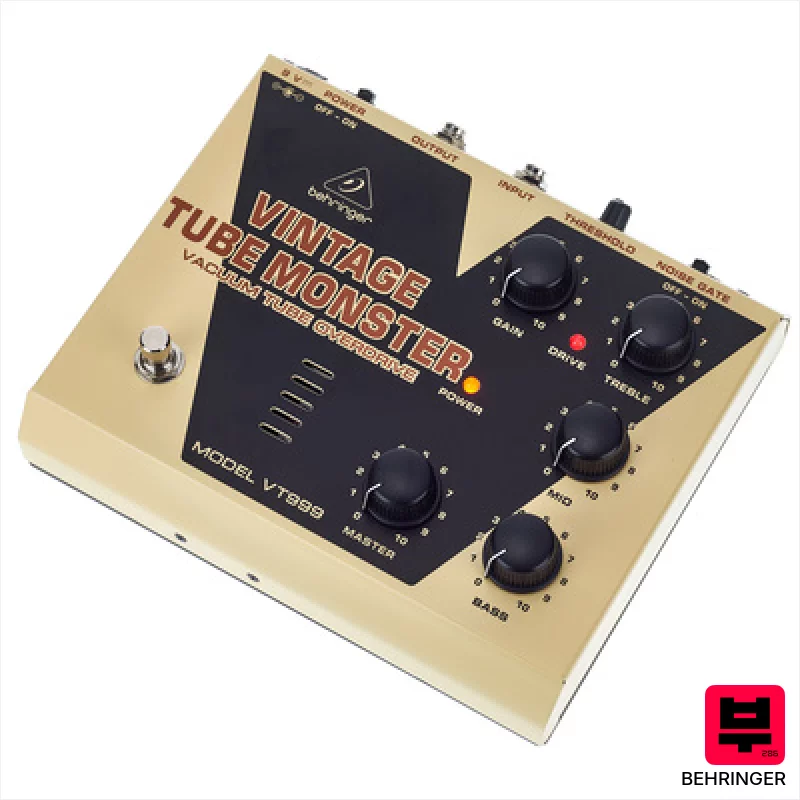
Behringer VT999
- • 12AX7 tube delivers genuine warmth and harmonic richness
- • Noise gate effectively tames high-gain settings, surprisingly well
- • Gain range covers bluesy overdrive to aggressive, modern distortion
- • Master volume allows for usable levels even with high gain settings
- • Build quality feels plasticky, not as robust as higher-end pedals
- • EQ section is somewhat basic, limiting tonal sculpting options
- • Noise can be noticeable at higher gain levels without careful tweaking
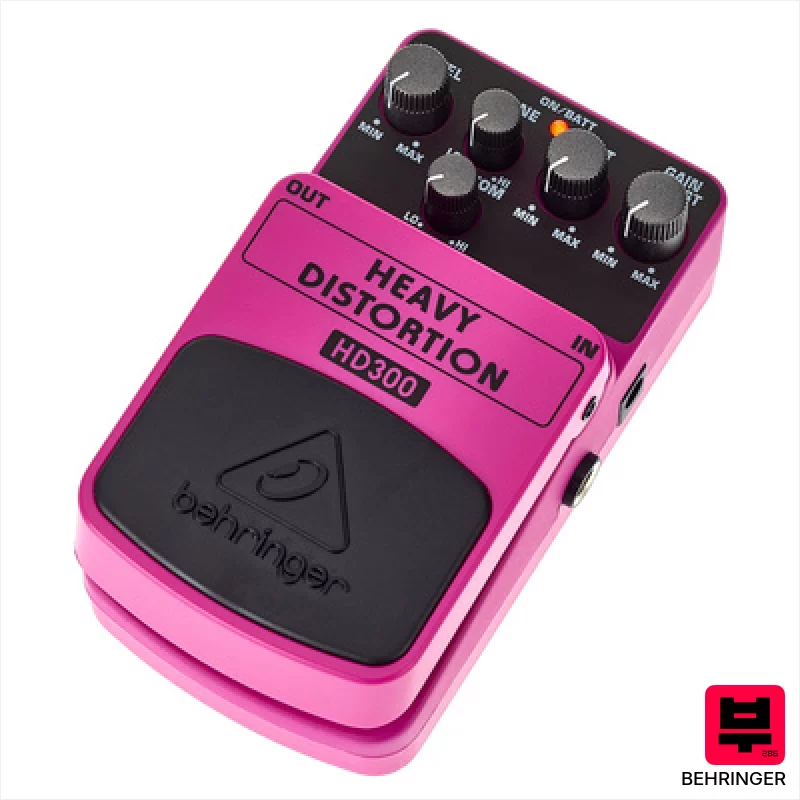
Behringer HD300 Heavy Distortion
- • Delivers surprisingly thick, saturated distortion for its price point.
- • Gain Boost circuit adds a welcome layer of aggressive, high-gain options.
- • Tone control offers a usable range, avoiding overly harsh or muddy frequencies.
- • Compact size makes it pedalboard-friendly for smaller setups.
- • Plastic enclosure feels noticeably cheap and potentially fragile.
- • Limited versatility; excels at heavy distortion, less suited for subtle tones.
- • Power supply jack is the uncommon 5.5mm type, requiring a specific adapter.
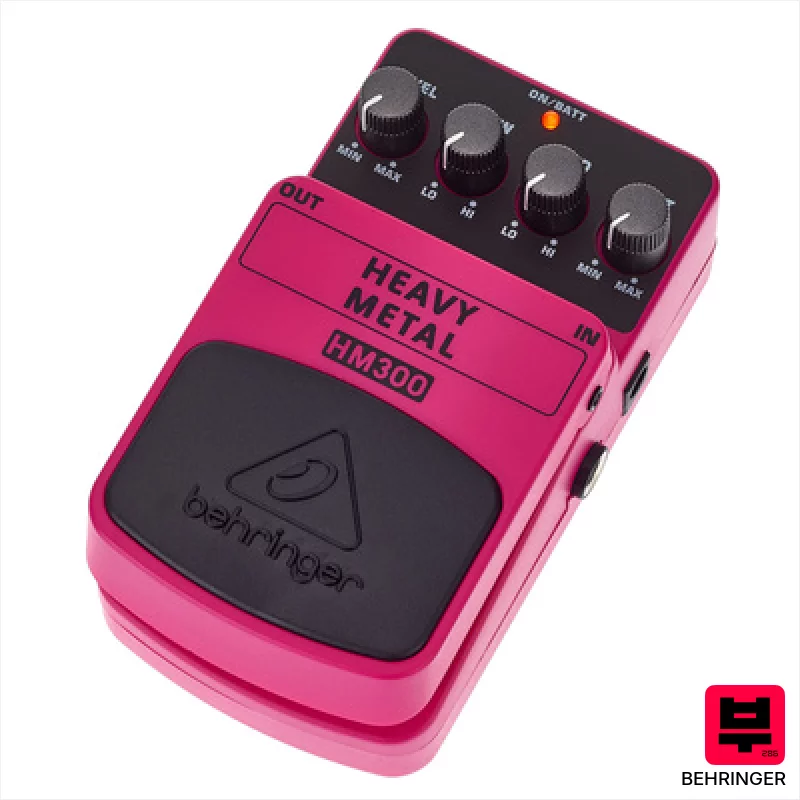
Behringer HM300 Heavy Metal Distortion
- • Delivers surprisingly thick, saturated 80s metal distortion.
- • Simple controls allow for quick dialing-in of aggressive tones.
- • Sturdy plastic enclosure feels more robust than the price suggests.
- • Small footprint makes it ideal for cramped pedalboards.
- • Plastic construction feels noticeably cheaper than higher-end pedals.
- • Limited tonal versatility; excels at one specific distortion style.
- • Footswitch action is a bit noisy and lacks precision.
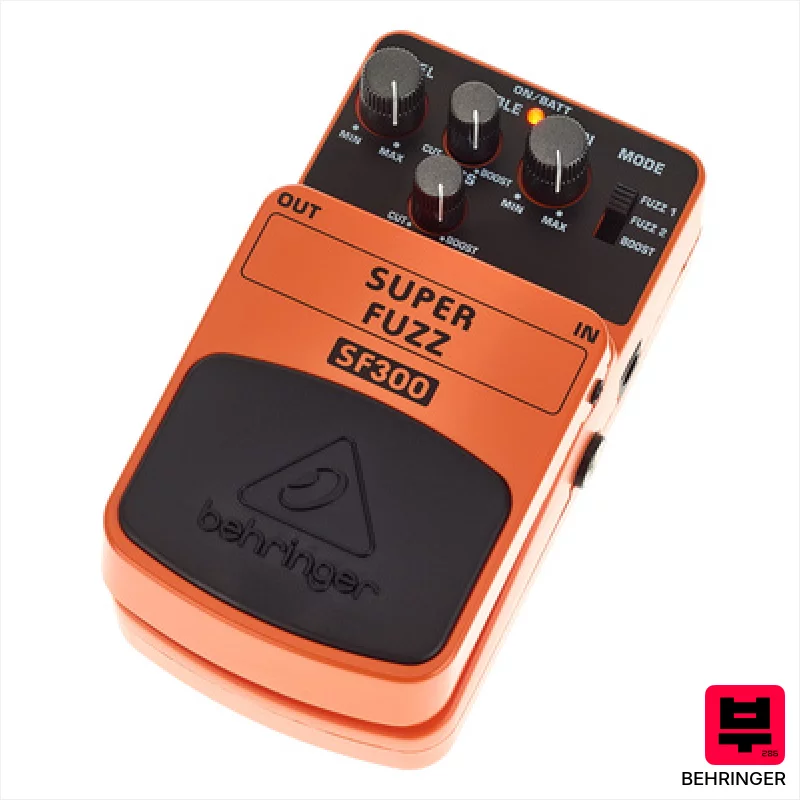
Behringer SF300 Super Fuzz
- • Surprisingly thick fuzz tones, especially in the 'Grunge' mode
- • The 2-band EQ offers decent tonal shaping for a budget pedal
- • Gain Boost setting provides a usable, crunchy overdrive
- • Compact size makes it easy to integrate into crowded pedalboards
- • Plastic enclosure feels flimsy and not very roadworthy
- • Tone can get muddy quickly with excessive gain and poor EQ settings
- • True bypass implementation is questionable; potential for noise issues
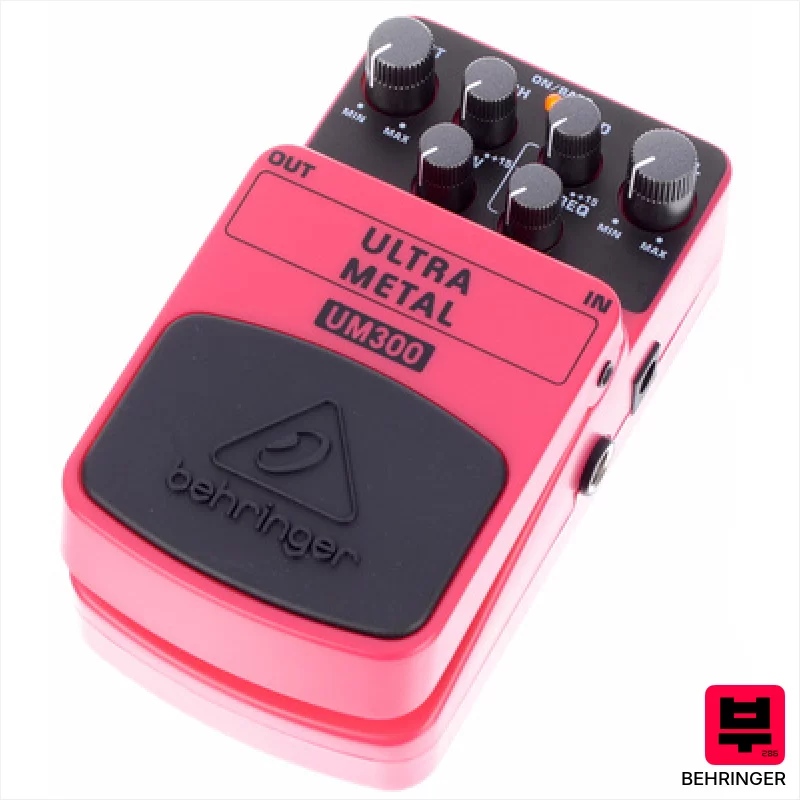
Behringer UM300
- • Surprisingly thick, saturated distortion for its price point.
- • 3-band EQ offers some tonal shaping beyond just raw distortion.
- • True bypass minimizes signal loss when the effect is disengaged.
- • Compact size makes it pedalboard-friendly for limited space.
- • Build quality feels noticeably cheap with plasticky components.
- • Limited versatility; really only suited for extreme metal tones.
- • Noise floor can be elevated, especially with higher gain settings.

Behringer TO800 Vintage Tube Overdrive
- • 4558 op-amps mimic tube warmth surprisingly well
- • MA150 diodes deliver a classic, gritty overdrive tone
- • Simple controls allow for quick, intuitive sound shaping
- • Remarkably affordable, offering great value for the price
- • Plastic enclosure feels somewhat cheap and less durable
- • True bypass implementation is likely lacking, potentially coloring bypassed signal
- • Limited tonal versatility; excels in overdrive, not high-gain distortion
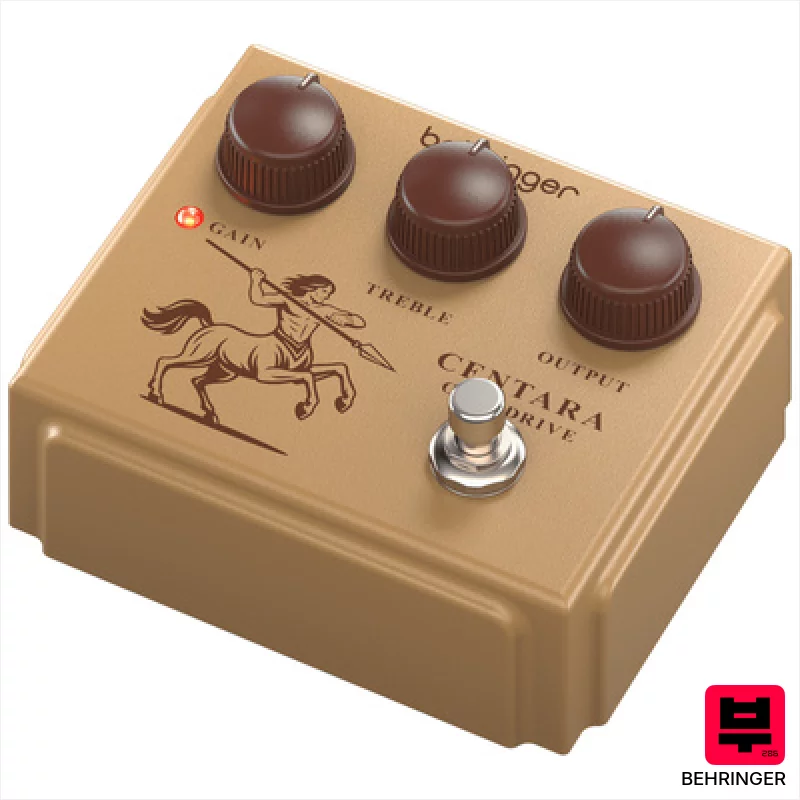
Behringer Centara Overdrive
- • Germanium diodes offer a uniquely warm, responsive soft clipping.
- • Increased voltage provides surprising headroom for a budget overdrive.
- • Simple, intuitive controls make dialing in tones remarkably easy.
- • Surprisingly compact footprint – pedalboard friendly.
- • Build quality feels noticeably plasticky, a common Behringer trait.
- • Limited tonal flexibility; excels in overdrive, less so in heavier distortion.
- • Power adapter not included – a recurring cost for many.
Distortion Pedals by the numbers
Measured across all 551 models in this category, so «wide», «short» or «expensive» mean something you can check.
How to Choose the Best Distortion Pedals
Tone
Let's be real, this is the big one. We're looking for that sweet spot between usable breakup and unusable fizz. Some Behringer pedals surprisingly nail classic distortion flavors - a decent approximation of a Rat, a Tubescreamer, or even a more aggressive Marshall stack - while others fall flat.
Build Quality
The plastic enclosures are... plastic. They're not going to survive a dropped stage dive, so treat 'em with respect. The footswitches are usually fine, but the pots can sometimes feel a little scratchy - a common corner cut at this price point.
Gain Structure & Headroom
Behringer's pedals often have a lot of gain on tap, which can be a blessing or a curse. It's crucial to understand how they interact with your amp - are they stacking well, or just turning into a muddy mess? Headroom is often limited, meaning you'll be pushing your amp into breakup quickly.
Noise
Let's not pretend these are silent. They can be a bit noisy, especially with high gain settings. It's manageable with good amp settings and careful gain staging, but it's something to be aware of if you're recording in a quiet environment.
Value
This is where Behringer shines. You're getting a surprising amount of functionality and a decent approximation of classic tones for a fraction of the cost of boutique pedals. It's hard to argue with that, even if there are some compromises.
Buying Guide
Look, you're not buying a museum piece here. Expect some plastic-y feel and potential pot scratchiness. The key is to understand what you're getting - these are inspired by classics, not clones. If you're after pristine build quality and ultra-low noise, look elsewhere, but if you want a surprisingly versatile distortion pedal for under $50, Behringer is worth a shot. Don't expect it to replace your favorite high-end pedal, but it can definitely fill a niche.
How This List Is Built
We don't play these instruments — we're a catalog, not a review desk, and we'd rather say so than pretend otherwise. This page covers 9 of 551 distortion pedals from the Thomann catalogue, which is the largest single source of specification data in this category: 9 in detail, the rest listed with their specifications.
Position is computed, not curated. We parse the manufacturer's own description into actual values — nut width, scale, fret count, fingerboard radius, size, alloy — and rank on them: how many specifications a model has published, how many of them are measurable numbers, and how precisely it meets this page's criterion. A product image adds a little. Price is not a ranking signal: it tells you nothing about whether a neck fits your hand. The same inputs always produce the same order, so nothing here is shuffled to look fresh.
What this list is good for: narrowing a category down to a shortlist by spec and budget. What it isn't: a substitute for hearing an instrument. Before you buy, read hands-on reviews and, where you can, play it. Full methodology.

