AudioFu Chart · October 2026
Best Active Stage Monitors Under $800 2026
The top pick is Mackie SRM150 Compact Powered PA System ($334). the box MA5 gives you the most for the money at $173. Yamaha DHR12M 1000-Watt Coaxial 12" Active Floor Monitor Loudspeaker leads the high end. Ranked by the AudioFu Index from 38 models across 12 brands, prices checked every night.
Last updated: October 26, 2026
Top 10
Full detail for the 10 highest AudioFu Index scores. Every other model is listed below.
-
- Size25"
- Weight3.4 kg
The SRM150 is a surprisingly capable little PA speaker – perfect for solo acoustic gigs, small vocal groups, or background music at events. It's a budget-friendly option that delivers decent volume and clarity, though don't expect earth-shattering bass. It's a solid workhorse for basic reinforcement needs.
Pros
- Surprisingly robust build for the price point; feels solid in hand.
- The Class D amp delivers respectable power without excessive heat.
- Built-in limiter protects drivers from overload, a crucial safety feature.
Cons
- Limited channel flexibility; not ideal for complex sound reinforcement.
- High frequencies can sound slightly harsh at higher volumes.
76AudioFu
IndexStableno change since Aug 17Aug 17$334 now$334€298 at Thomann · in stockCheck price ↗ -
- Size5"
- Weight2.8 kg
The box MA5 is a surprisingly capable little monitor – or full-range speaker – for the price. It's ideal for singer-songwriters, small acoustic ensembles, or anyone needing a portable, self-contained sound source. The built-in mixer is a real convenience, and the power-to-weight ratio is excellent.
Pros
- Neodymium driver delivers surprisingly punchy lows for its size
- Integrated mixer simplifies setup for solo performers or small bands
- Lightweight design (2.8kg) makes transport and stage setup easy
Cons
- EQ is basic 3-band; lacks precision for critical mixing
- RCA input limits connectivity to older CD players or devices
64AudioFu
IndexStableno change since Aug 17Aug 17$173 now$173€155 at Thomann · in stockCheck price ↗ -
Yamaha DHR12M 1000-Watt Coaxial 12" Active Floor Monitor Loudspeaker
DHR12M · Yamaha
23 for sale on Reverb1 finish at Thomann
- Weight16.5 kg
The DHR12M is a seriously powerful and well-built stage monitor. Its coaxial design and DSP make it ideal for smaller bands, DJs, or anyone needing a reliable, focused sound check in a variety of spaces. It's a great balance of performance and affordability.
Pros
- Robust plywood enclosure provides excellent resonance control and durability for stage use.
- Coaxial design delivers remarkably consistent coverage and a focused sound image.
- Class-D amplification offers impressive power and efficiency without excessive heat.
Cons
- The weight (16.5kg) makes transport a challenge, especially for solo performers.
- Limited EQ control beyond the presets restricts fine-tuning for specific acoustic environments.
64AudioFu
IndexStableno change since Aug 17Aug 17$693 now$693€619 at Thomann · in stockCheck price ↗ -
- Size10"
- Weight12.8 kg
The Flexsys FM10 is a surprisingly capable little stage monitor. It's a great solution for solo artists, duos, or smaller bands needing clear, focused monitoring – especially those relying on keyboards or acoustic instruments. The build quality is solid for the price point, making it a reliable workhorse.
Pros
- Coaxial driver provides surprisingly focused and coherent soundstage.
- The FRFR design makes it ideal for keyboard and acoustic guitar monitoring.
- Robust enclosure feels well-built, suggesting good longevity for stage use.
Cons
- 160W RMS is adequate, but might struggle with very loud rock bands.
- Limited EQ controls; relies heavily on source material quality.
60AudioFu
IndexStableno change since Aug 17Aug 17$334 now$334€298 at Thomann · in stockCheck price ↗ -
dB Technologies Flexsys FMX10 2-Way 400-Watt 10" Coaxial Active Stage…
FMX 10 · dB Technologies
3 for sale on Reverb1 finish at Thomann
- Size10"
- Weight11.3 kg
The FMX 10 is a surprisingly capable stage monitor, especially for the money. It’s got a clear, punchy sound that works well for smaller bands, singer-songwriters, and even DJs needing a reliable wedge. The coaxial design really shines in terms of coverage, making it ideal for situations where you need to fill a wider area without multiple monitors.
Pros
- Excellent coaxial design delivers surprisingly wide, consistent coverage.
- Class D amplification provides ample clean power without excessive heat.
- Robust polypropylene woofer cone handles serious volume with minimal distortion.
Cons
- Limited EQ controls restrict fine-tuning for specific acoustic environments.
- While portable, its weight can be a challenge for solo performers.
60AudioFu
Index↓ 4.1%since Aug 17 · lowest so far$465 · Aug 17$445 now$445€398 at Thomann · in stockCheck price ↗ -
- Size15"
- Weight23.2 kg
The MON 15 A G3 is a serious contender for working bands and larger solo acts needing a powerful, focused stage monitor. The DynX DSP is genuinely helpful for quick setup adjustments, and the birch enclosure gives it a solid, professional feel. It's a great balance of performance and affordability.
Pros
- Birch multiplex enclosure provides excellent resonance and durability.
- DynX DSP offers genuinely useful presets for various monitoring scenarios.
- Coaxial design delivers surprisingly accurate imaging for a stage monitor.
Cons
- Weight (23.2 kg) makes transport a challenge for solo performers.
- EQ, while present, lacks the precision of higher-end studio monitors.
59AudioFu
Index↓ 16.3%since Aug 17 · lowest so far$771 · Aug 17$646 now$646€577 at Thomann · in stockCheck price ↗ -
dB Technologies Flexsys FMX15 2-Way 1200-Watt 15" Coaxial Active…
FMX 15 · dB Technologies
3 for sale on Reverb1 finish at Thomann
- Size15"
- Weight16.9 kg
The FMX 15 is a real workhorse stage monitor, packing a serious punch for its size. It’s perfect for smaller bands, DJs, or anyone needing a loud, reliable, and relatively portable solution for live sound reinforcement. The coaxial design makes it surprisingly versatile for a powered speaker.
Pros
- Coaxial design offers surprisingly wide, consistent coverage.
- Class D amplification delivers impressive headroom without excessive heat.
- Robust construction; feels solid and built to handle gigging.
Cons
- Limited EQ options restrict fine-tuning for diverse sound sources.
- Weight makes it less ideal for solo performers or frequent travel.
58AudioFu
IndexStableno change since Aug 17Aug 17$637 now$637€569 at Thomann · in stockCheck price ↗ -
- Size12"
- Weight13.9 kg
The FMX 12 is a surprisingly capable little stage monitor. It’s a great option for smaller bands, solo performers, or DJs needing reliable, powerful sound reinforcement in a compact package. The coaxial design really helps with clarity, and the build feels solid for the price point.
Pros
- Coaxial design provides excellent point-source imaging and coverage.
- Class D amplification delivers surprising power for its size and weight.
- Robust polypropylene woofer cone handles high SPLs without distortion.
Cons
- Limited EQ controls restrict fine-tuning for different acoustic environments.
- Plastic enclosure feels less premium than aluminum alternatives.
55AudioFu
Index↓ 2.5%since Aug 17 · lowest so far$588 · Aug 17$573 now$573€512 at Thomann · in stockCheck price ↗ -
- Size8"
- Weight7.5 kg
The MA8/2 CL is a surprisingly capable little monitor for the budget-conscious. It's ideal for solo performers, smaller bands, or as a secondary stage monitor. Don't expect it to move a stadium, but it'll handle smaller gigs and rehearsals with decent clarity.
Pros
- Surprisingly robust cabinet for the price point, feels well-constructed.
- The 8in woofer delivers a respectable low-end presence.
- XLR/TRS combo jack offers flexible connectivity options.
Cons
- 70W is limited; struggles in larger venues or loud band situations.
- High-frequency response can be a touch harsh without EQ adjustments.
54AudioFu
IndexStableno change since Aug 17Aug 17$167 now$167€149 at Thomann · in stockCheck price ↗ -
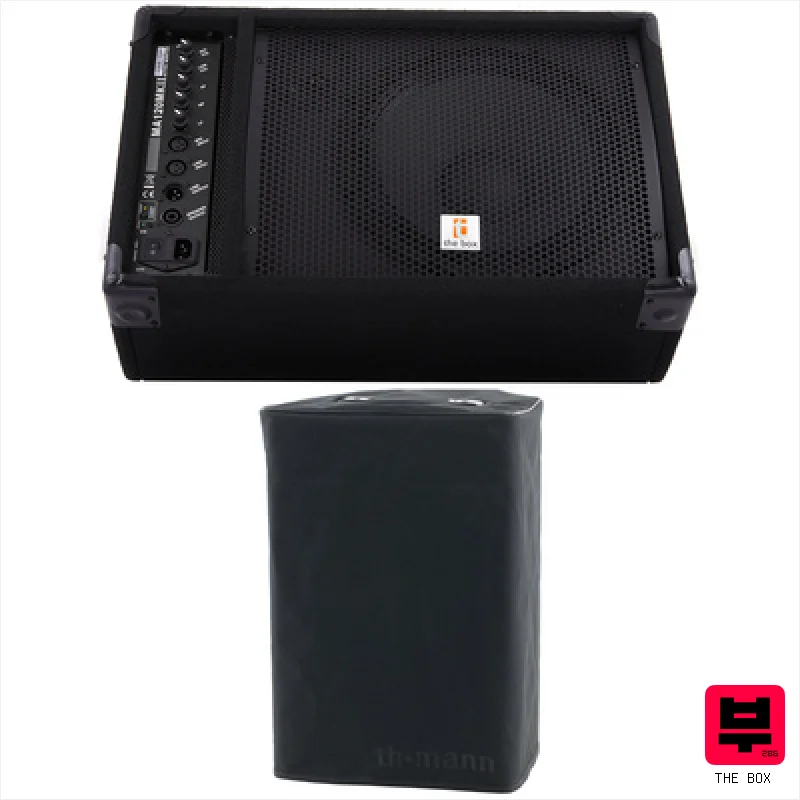
- Size12"
- Weight16.52 kg
The MA120 MKII is a solid, budget-friendly option for smaller stages or rehearsal spaces. It delivers a clean, powerful sound with good clarity, making it ideal for solo artists, duos, or bands needing reliable stage monitoring. Don't expect earth-shattering bass, but for the price, it's a real workhorse.
Pros
- Surprisingly robust plywood cabinet for the price point
- Clear, defined highs without harshness; good for vocal monitoring
- Versatile EQ allows for shaping the sound to different environments
Cons
- Limited low-end extension compared to larger PA speakers
- The 3-band EQ is basic; lacks more precise control
54AudioFu
IndexStableno change since Aug 17Aug 17$178 now$178€159 at Thomann · in stockCheck price ↗
All 38 active stage monitors
Same index, same nightly prices — compact. Colour options of one model share a row. Tap a photo to zoom.
- 11
the box MA100the box54Stable$178€159$178€159Check ↗
- 12
the box MA150the box54Stable$234€209$234€209Check ↗
- 13
Behringer Eurolive F1320D 300-Watt 2-Way 12" Active Wedge MonitorF1320D Monitor · Behringer54Stable$248€222$248€222Check ↗
- 14
the box pro DSX 110 Mthe box pro54Stable$279€249$279€249Check ↗
- 15
the box pro DSX 112 Mthe box pro54Stable$312€279$312€279Check ↗
- 16
the box pro DSX 115 Mthe box pro54Stable$357€319$357€319Check ↗
- 17
the box pro Mon A10the box pro54Stable$379€339$379€339Check ↗
- 18
the box pro Mon A12the box pro54Stable$435€389$435€389Check ↗
- 19
dB Technologies Flexsys FM12dB Technologies54Stable$445€398$445€398Check ↗
- 20
the box pro Achat 115 MA MKIIthe box pro54Stable$648€579$648€579Check ↗
- 21
the box pro MonX A10the box pro53↓ 12.3%$391€349$391€349Check ↗
- 22
LD Systems MON 8 A G3LD Systems53↓ 2.8%$434€388$434€388Check ↗
- 23
LD Systems MON 12 A G3LD Systems53↓ 4.2%$621€555$621€555Check ↗
- 24
IMG Stageline Flat-M200IMG Stageline52↓ 3.3%$465€415$465€415Check ↗
- 25
IMG Stageline Flat-M100IMG Stageline51Stable$375€335$375€335Check ↗
- 26
IMG Stageline Flat-M8IMG Stageline51Stable$402€359$402€359Check ↗
- 27
Proel WD10AV2Proel51Stable$424€379$424€379Check ↗
- 28
LD Systems MON 10 A G3LD Systems51Stable$559€499$559€499Check ↗
- 29
FBT X-Pro 112MAFBT51↓ 0.9%$726€649$726€649Check ↗
- 30
Behringer F1220D EuroliveBehringer50↑ 2.2%$212€189$212€189Check ↗
- 31
the box pro MonX A12the box pro50↓ 7.2%$435€389$435€389Check ↗
- 32
the box pro MonX A15the box pro50↓ 6.7%$469€419$469€419Check ↗
- 33
Proel WD12AV2Proel49↑ 3.4%$445€398$445€398Check ↗
- 34
Fun Generation CL 105 AFun Generation · 2 finishes48Stable$77€69$77€69Check ↗
- 35
PROEL WD15AV2 2-Way Active Coaxial Stage MonitorWD15AV2 · Proel46Stable$525€469$525€469Check ↗
- 36
Behringer B105D Active 5" Personal MonitorB105D · Behringer43Stable$95€85$95€85Check ↗
- 37
the box Six Mix Singer Start Setthe box32Stable$234€209$234€209Check ↗
- 38
Thomann SingSang BundleThomann29Stable$222€198$222€198Check ↗
Active Stage Monitors by the numbers
Measured across all 41 models we track, not a sample.
Median $379 — half of all active stage monitors here cost less.
median of 35 models · 4"–15"
median of 41 models · 2.5 kg–23.2 kg
How to choose the best active stage monitors
Frequency Response
A wider, flatter response is ideal, but honestly, in this price range, you're looking for something that avoids obvious peaks or dips that will color your sound. Watch out for excessive high-end harshness - that ice-picky top end is fatiguing and doesn't translate well to the audience.
Power/Headroom
More wattage isn't always better, but you need enough headroom to handle a loud band without distorting. Listen for compression or clipping when pushed - that's a sign of running out of juice.
Low-End Extension
Getting a decent low-end thump from a 10" or 12" monitor under $800 is a challenge. Don't expect sub-bass rumble, but you want something that doesn't sound completely anemic when the kick drum hits.
Dispersion Pattern
A wider dispersion pattern means more people onstage can hear the monitor clearly without fighting for the 'sweet spot.' This is crucial for band rehearsals where everyone's positioned differently.
Build Quality
Let's be real, at this price point, things are going to be a little plasticky. But you still want something that can withstand the rigors of gigging - dropped cables, bumped corners, the occasional beer spill. Look for decent internal bracing and a sturdy enclosure.
Buying guide
Alright, so you need stage monitors but you're not looking to drop a grand? Been there. Getting decent wedge monitors under $800 is totally doable, but you gotta know what you're getting. We're focusing on active monitors - powered - because lugging around a separate power amp is a pain, especially when you're loading in and out after a gig. Let's find you something that'll let you hear yourself without sounding like you're in a tin can.
At this budget, you're making compromises. Don't expect studio-grade clarity. The low-end will likely be rolled off a bit, and the overall dynamic range won't be as wide as something costing twice as much.
Focus on finding something with a relatively flat frequency response and enough headroom for your band's volume - a little extra power is always a good thing. Don't be afraid to buy used; you can often snag a higher-end model for a steal.
How the AudioFu Index works
Five measured signals and nothing else — no stars from strangers, no “tested by experts” we didn’t do. The weights are fixed and public. We don’t play these instruments; we measure the market around them.
This chart covers 41 active stage monitors from the Thomann catalogue. Before you buy, read hands-on reviews and, where you can, play it. Full methodology.
AudioFu earns a commission when you buy through our Thomann links. It never changes the order — the index does.
- Demand40%
How many of this exact model are for sale on Reverb right now — what musicians actually buy and resell.
- Lineup20%
How many finishes Thomann stocks — makers expand the models that sell.
- Price15%
Where the price has moved since we started tracking in August.
- Specs15%
How completely the maker documents it.
- Maker10%
How deep the brand’s range is in this category.
Questions
What's the difference between a 10" and 12" monitor?
Generally, 12" monitors offer more low-end extension, but they can be larger and heavier. 10" monitors are more compact and often have a tighter, more focused sound. It depends on your application and stage size.
Are these monitors suitable for recording vocals?
They can be, but they're not ideal. The lack of pristine clarity can introduce some coloration. They're better suited for live reinforcement where a little extra character isn't a dealbreaker.
What does 'headroom' actually mean?
Headroom is the difference between the average signal level and the point where distortion starts. More headroom means you can crank the volume without things getting muddy or clipping.
Can I use these monitors as PA speakers?
Technically, yes, but they're designed for close-range monitoring. They won't have the power or dispersion pattern to project sound to a large audience effectively. Think of them as your personal sound system, not the venue's.
What kind of input options should I look for?
XLR and 1/4" inputs are essential. A line/mic switch is a bonus, allowing you to adjust the input gain for different signal levels. Balanced inputs (XLR) are always preferable to reduce noise.