AudioFu Chart · October 2026
Best Active Stage Monitors for Intermediate 2026
The top pick is Mackie SRM150 Compact Powered PA System ($335). dB Technologies FMX 12 leads the high end. Ranked by the AudioFu Index from 56 models across 17 brands, prices checked every night.
Last updated: October 19, 2026
Top 10
Full detail for the 10 highest AudioFu Index scores. Every other model is listed below.
-
- Size25"
- Weight3.4 kg
The SRM150 is a surprisingly capable little PA speaker – perfect for solo acoustic gigs, small vocal groups, or background music at events. It's a budget-friendly option that delivers decent volume and clarity, though don't expect earth-shattering bass. It's a solid workhorse for basic reinforcement needs.
Pros
- Surprisingly robust build for the price point; feels solid in hand.
- The Class D amp delivers respectable power without excessive heat.
- Built-in limiter protects drivers from overload, a crucial safety feature.
Cons
- Limited channel flexibility; not ideal for complex sound reinforcement.
- High frequencies can sound slightly harsh at higher volumes.
76AudioFu
IndexStableno change since Aug 17Aug 17$335 now$335€298 at Thomann · in stockCheck price ↗ -
- Size10"
- Weight12.8 kg
The Flexsys FM10 is a surprisingly capable little stage monitor. It's a great solution for solo artists, duos, or smaller bands needing clear, focused monitoring – especially those relying on keyboards or acoustic instruments. The build quality is solid for the price point, making it a reliable workhorse.
Pros
- Coaxial driver provides surprisingly focused and coherent soundstage.
- The FRFR design makes it ideal for keyboard and acoustic guitar monitoring.
- Robust enclosure feels well-built, suggesting good longevity for stage use.
Cons
- 160W RMS is adequate, but might struggle with very loud rock bands.
- Limited EQ controls; relies heavily on source material quality.
60AudioFu
IndexStableno change since Aug 17Aug 17$335 now$335€298 at Thomann · in stockCheck price ↗ -
dB Technologies Flexsys FMX10 2-Way 400-Watt 10" Coaxial Active Stage…
FMX 10 · dB Technologies
3 for sale on Reverb1 finish at Thomann
- Size10"
- Weight11.3 kg
The FMX 10 is a surprisingly capable stage monitor, especially for the money. It’s got a clear, punchy sound that works well for smaller bands, singer-songwriters, and even DJs needing a reliable wedge. The coaxial design really shines in terms of coverage, making it ideal for situations where you need to fill a wider area without multiple monitors.
Pros
- Excellent coaxial design delivers surprisingly wide, consistent coverage.
- Class D amplification provides ample clean power without excessive heat.
- Robust polypropylene woofer cone handles serious volume with minimal distortion.
Cons
- Limited EQ controls restrict fine-tuning for specific acoustic environments.
- While portable, its weight can be a challenge for solo performers.
60AudioFu
Index↓ 4.1%since Aug 17 · lowest so far$467 · Aug 17$448 now$448€398 at Thomann · in stockCheck price ↗ -
- Size12"
- Weight13.9 kg
The FMX 12 is a surprisingly capable little stage monitor. It’s a great option for smaller bands, solo performers, or DJs needing reliable, powerful sound reinforcement in a compact package. The coaxial design really helps with clarity, and the build feels solid for the price point.
Pros
- Coaxial design provides excellent point-source imaging and coverage.
- Class D amplification delivers surprising power for its size and weight.
- Robust polypropylene woofer cone handles high SPLs without distortion.
Cons
- Limited EQ controls restrict fine-tuning for different acoustic environments.
- Plastic enclosure feels less premium than aluminum alternatives.
55AudioFu
Index↓ 2.5%since Aug 17 · lowest so far$591 · Aug 17$576 now$576€512 at Thomann · in stockCheck price ↗ -
- Size15"
- Weight23 kg
The DSX 115 M is a seriously capable stage monitor, offering a surprising amount of power and clarity for the price. It's a great option for working bands, cover bands, or anyone needing a reliable and loud solution for live gigs – the presets are genuinely useful for quick adjustments on the fly.
Pros
- Solid wooden cabinet offers surprising resonance and durability.
- Coaxial drivers provide a surprisingly wide and even soundstage.
- DSP presets genuinely tailor the sound for common applications.
Cons
- Class D/AB hybrid amplifier might lack the headroom of a pure Class D.
- The 36mm flange feels a bit lightweight for larger stands.
54AudioFu
IndexStableno change since Aug 17Aug 17$359 now$359€319 at Thomann · in stockCheck price ↗ -
- Size10"
- Weight11 kg
The Mon A10 is a surprisingly capable stage monitor, offering a good balance of power and clarity for the price. It's a solid option for smaller bands, DJs, or anyone needing a reliable wedge for rehearsals or gigs where portability is a consideration. The coax design helps with sound projection and coverage.
Pros
- Coax driver provides surprisingly even coverage for stage use.
- Class D amplification delivers efficient power with minimal heat.
- Robust build quality; feels solid for frequent transport.
Cons
- Limited EQ controls restrict fine-tuning for different environments.
- 11kg weight makes it less ideal for solo performers or frequent travel.
54AudioFu
IndexStableno change since Aug 17Aug 17$381 now$381€339 at Thomann · in stockCheck price ↗ -
- Size12"
- Weight15 kg
The Mon A12 is a surprisingly capable stage monitor for the money. The coaxial design offers a wide, clear sound, making it ideal for smaller bands or solo performers needing good coverage. It’s a great option for gigging musicians on a budget who need a reliable and powerful monitor.
Pros
- Coax driver delivers surprisingly coherent, wide stereo image.
- Class D amplification offers efficient power with reasonable thermal management.
- Built-in stand flange simplifies setup and portability on stage.
Cons
- Limited EQ controls restrict fine-tuning for different environments.
- The 1.35 in tweeter might lack headroom at very high volumes.
54AudioFu
IndexStableno change since Aug 17Aug 17$438 now$438€389 at Thomann · in stockCheck price ↗ -
- Size12"
- Weight17 kg
The Flexsys FM12 is a surprisingly capable stage monitor – the coaxial design really helps with clarity and throw. It’s a great option for smaller bands, solo artists, or anyone needing a compact, powerful monitor that’s affordable without sacrificing too much in terms of sound quality. The FRFR response is a huge bonus for in-ear monitoring.
Pros
- Excellent coaxial design provides surprisingly focused stage coverage.
- Robust enclosure feels well-built, capable of gigging regularly.
- FRFR response is genuinely flat, excellent for IEM users.
Cons
- Limited EQ controls require external processing for nuanced tweaking.
- 17kg weight makes transport a bit cumbersome for solo performers.
54AudioFu
IndexStableno change since Aug 17Aug 17$448 now$448€398 at Thomann · in stockCheck price ↗ -
- Weight12.5 kg
This little box is a solid workhorse for tight spaces. It packs 350 watts into a 10-inch woofer to keep the low end tight without breaking your budget. The built-in limiter and wide coverage make it easy to run without blowing out your system. It's perfect for bands playing small clubs or rehearsal rooms.
Pros
- 10-inch woofer delivers deep bass for small venues
- Class D and AB amps handle high power output
- Built-in limiter protects your PA from damage
Cons
- No speaker cabinet or grille mentioned in specs
- Missing specific amplifier brand or model name
53AudioFu
Index↓ 12.3%since Aug 17 · lowest so far$448 · Aug 17$393 now$393€349 at Thomann · in stockCheck price ↗ -
- Size8"
- Weight13.2 kg
The MON 8 A G3 is a solid, affordable stage monitor. The DynX DSP really helps you dial in a clear, focused sound, and the birch construction feels built to last. It's perfect for working bands and smaller venues needing reliable, powerful stage monitoring without the premium price tag.
Pros
- Birch multiplex housing provides excellent resonance and robust durability for stage use.
- DynX DSP offers surprisingly clean and flexible EQ adjustments for various vocal/instrumental needs.
- Coaxial driver design delivers a surprisingly wide and consistent sound dispersion.
Cons
- 13.2 kg weight makes it less ideal for frequent transport by a single person.
- Limited connectivity beyond standard stage monitor I/O – lacks dedicated effects sends.
53AudioFu
Index↓ 2.8%since Aug 17 · lowest so far$449 · Aug 17$437 now$437€388 at Thomann · in stockCheck price ↗
All 56 active stage monitors
Same index, same nightly prices — compact. Colour options of one model share a row. Tap a photo to zoom.
- 11
IMG Stageline Flat-M200IMG Stageline52↓ 3.3%$467€415$467€415Check ↗
- 12
IMG Stageline Flat-M100IMG Stageline51Stable$377€335$377€335Check ↗
- 13
IMG Stageline Flat-M8IMG Stageline51Stable$404€359$404€359Check ↗
- 14
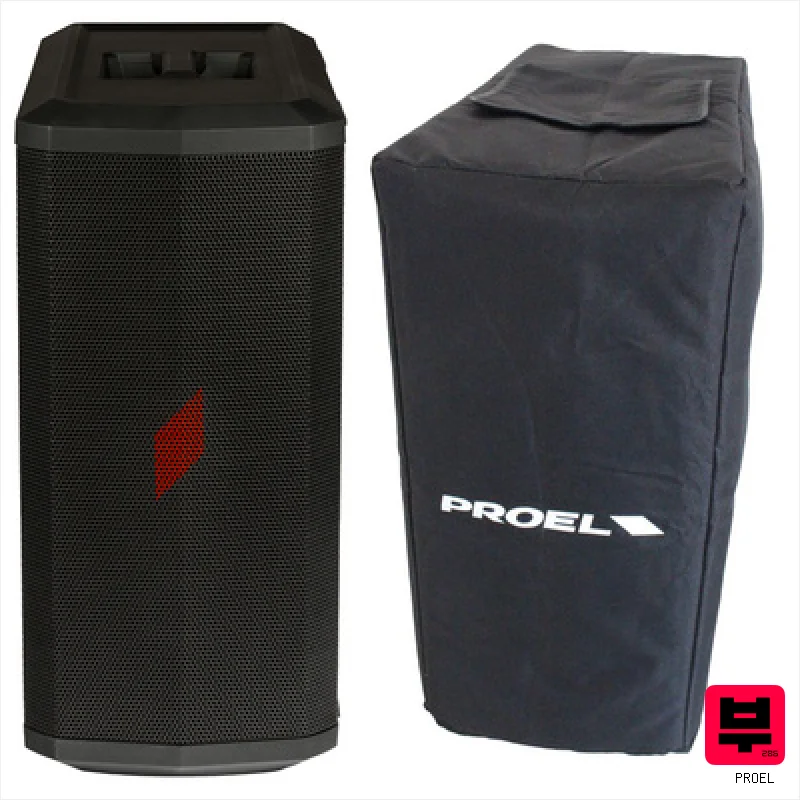
Proel WD10AV2Proel51Stable$426€379$426€379Check ↗
- 15
LD Systems MON 10 A G3LD Systems51Stable$562€499$562€499Check ↗
- 16
the box pro DSX 112 Mthe box pro54Stable$314€279$314€279Check ↗
- 17
the box pro MonX A12the box pro50↓ 7.2%$438€389$438€389Check ↗
- 18
the box pro MonX A15the box pro50↓ 6.7%$472€419$472€419Check ↗
- 19
Proel WD12AV2Proel49↑ 3.4%$448€398$448€398Check ↗
- 20
PROEL WD15AV2 2-Way Active Coaxial Stage MonitorWD15AV2 · Proel47Stable$528€469$528€469Check ↗
- 21
the box pro DSX 110 Mthe box pro54Stable$280€249$280€249Check ↗
- 22
Behringer Eurolive F1320D 300-Watt 2-Way 12" Active Wedge MonitorF1320D Monitor · Behringer55Stable$250€222$250€222Check ↗
- 23
the box MA150the box54Stable$235€209$235€209Check ↗
- 24
the box MA5the box · 3 finishes64Stable$174€155$174€155Check ↗
- 25
Behringer F1220D EuroliveBehringer51Stable$208€185$208€185Check ↗
- 26
the box MA100the box54Stable$179€159$179€159Check ↗
- 27
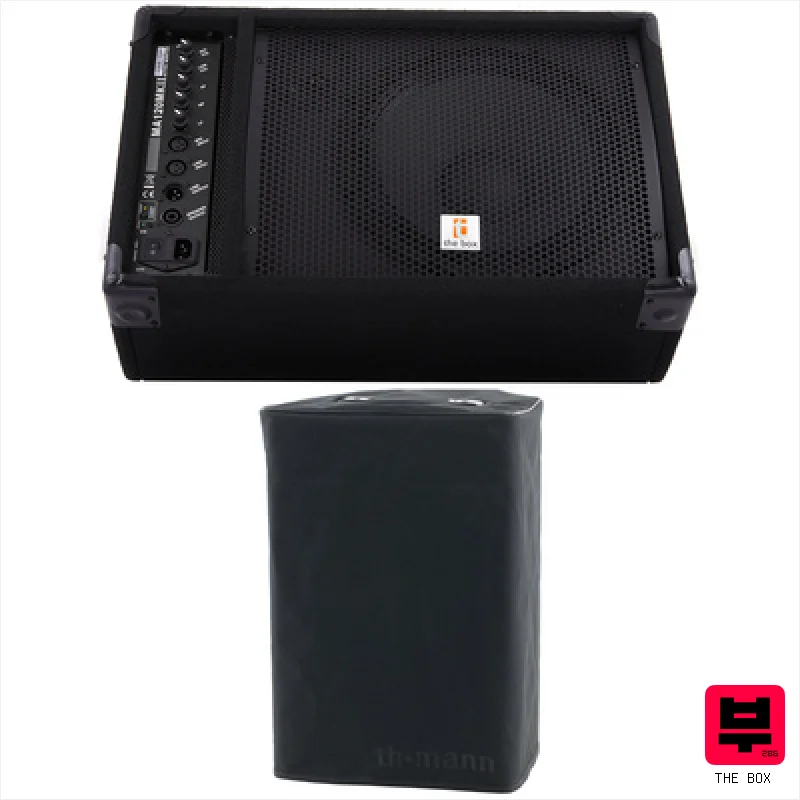
the box MA120 MKIIthe box54Stable$179€159$179€159Check ↗
- 28
the box MA8/2 CLthe box54Stable$168€149$168€149Check ↗
- 29
RCF NX915-SMA 15" Powered PA SpeakerNX 15-SMA · RCF67Stable$1,911€1,698$1,911€1,698Check ↗
- 30
Yamaha DHR12M 1000-Watt Coaxial 12" Active Floor Monitor LoudspeakerDHR12M · Yamaha65Stable$697€619$697€619Check ↗
- 31
RCF NX10-SMA 10" Active Stage MonitorNX 10-SMA · RCF65Stable$1,293€1,149$1,293€1,149Check ↗
- 32
the box Six Mix Singer Start Setthe box32Stable$235€209$235€209Check ↗
- 33
LD Systems MON 15 A G3LD Systems59↓ 16.3%$649€577$649€577Check ↗
- 34
dB Technologies Flexsys FMX15 2-Way 1200-Watt 15" Coaxial Active…FMX 15 · dB Technologies58Stable$640€569$640€569Check ↗
- 35
Thomann SingSang BundleThomann29Stable$223€198$223€198Check ↗
- 36
the box pro Achat 115 MA MKIIthe box pro54Stable$652€579$652€579Check ↗
- 37
LD Systems MON 12 A G3LD Systems53↓ 4.2%$625€555$625€555Check ↗
- 38
RCF NX912-SMA 12" Powered PA SpeakerNX 912-SMA · RCF52Stable$1,293€1,149$1,293€1,149Check ↗
- 39
RCF NX 915-SMARCF52Stable$1,406€1,249$1,406€1,249Check ↗
- 40
Seeburg Acoustic Line X1 dpSeeburg Acoustic Line52Stable$1,649€1,465$1,649€1,465Check ↗
- 41
RCF NX 12-SMARCF52Stable$1,660€1,475$1,660€1,475Check ↗
- 42
Seeburg Acoustic Line X2 dpSeeburg Acoustic Line52Stable$1,911€1,698$1,911€1,698Check ↗
- 43
Seeburg Acoustic Line X4 dpSeeburg Acoustic Line52Stable$2,448€2,175$2,448€2,175Check ↗
- 44
Seeburg Acoustic Line X6 dpSeeburg Acoustic Line52Stable$3,292€2,925$3,292€2,925Check ↗
- 45
Seeburg Acoustic Line X8 dpSeeburg Acoustic Line52Stable$3,539€3,145$3,539€3,145Check ↗
- 46
FBT X-Pro 112MAFBT51↓ 0.9%$730€649$730€649Check ↗
- 47
FBT StageMaxX 12MAFBT51Stable$999€888$999€888Check ↗
- 48
FBT Ventis 112MAFBT51Stable$1,225€1,089$1,225€1,089Check ↗
- 49
dB Technologies DVX DM28 Dual 8" Floor MonitorDVX DM28 · dB Technologies50Stable$1,348€1,198$1,348€1,198Check ↗
- 50
DAS Audio Action-M512ADAS Audio49Stable$898€798$898€798Check ↗
Active Stage Monitors by the numbers
Measured across all 60 models we track, not a sample.
Median $467 — half of all active stage monitors here cost less.
median of 53 models · 5"–15"
median of 60 models · 2.5 kg–23.2 kg
How to choose the best active stage monitors
Clarity & Frequency Response
You need to hear everything - the low-end thump of your bass, the articulation of your drums, the fat midrange honk of your vocals. A muddy monitor is useless; you need accurate reproduction so you can dial in your tone correctly.
Headroom & Power
Stage monitors get loud, especially with a full band. Adequate headroom prevents clipping and distortion when things get intense - a clipped monitor sounds terrible and feeds back easily.
Feedback Rejection
Built-in feedback suppression is a huge help, but it's not a magic bullet. Understanding how it works and how to adjust it is important, and some monitors handle feedback better than others.
Coverage Pattern (HxV)
A wider horizontal coverage is great for sharing a monitor with other band members, while a more focused vertical pattern minimizes unwanted reflections off the stage floor. A good balance is key.
Connectivity & Features
XLR inputs are a must for pro setups. Aux inputs for backing tracks are handy. Don't get bogged down in a million extra features you won't use - simplicity is often better, but basic flexibility is vital.
Buying guide
So, you're past the bedroom practice amp and starting to gig - congrats! Now you're realizing that hearing yourself on stage is a whole different ballgame than hearing your amp in your living room. Active stage monitors are the key to that, but choosing the right ones as an intermediate player means balancing features and budget without getting overwhelmed. Let's cut through the marketing and find you something that'll let you actually hear your parts and cut through the mix.
As an intermediate player, you're likely looking at the $200-$500 range per monitor. At this price point, compromises are inevitable. Cheaper monitors often cut corners on speaker quality, resulting in a rolled-off high end or a muddy low end.
Paying a bit more for a reputable brand with decent drivers will give you a noticeable improvement in clarity and headroom. Don't chase the loudest monitor; focus on one that delivers accurate sound and handles dynamics well.
How the AudioFu Index works
Five measured signals and nothing else — no stars from strangers, no “tested by experts” we didn’t do. The weights are fixed and public. We don’t play these instruments; we measure the market around them.
This chart covers 60 active stage monitors from the Thomann catalogue. Before you buy, read hands-on reviews and, where you can, play it. Full methodology.
AudioFu earns a commission when you buy through our Thomann links. It never changes the order — the index does.
- Demand40%
How many of this exact model are for sale on Reverb right now — what musicians actually buy and resell.
- Lineup20%
How many finishes Thomann stocks — makers expand the models that sell.
- Price15%
Where the price has moved since we started tracking in August.
- Specs15%
How completely the maker documents it.
- Maker10%
How deep the brand’s range is in this category.
Questions
What's the difference between a powered and active monitor?
Powered monitors have the amplifier built-in. Active monitors are designed as a single unit with the drivers and amp optimized together. Active generally sounds better, but both are common on stage.
How many watts do I need?
It's not just about wattage; it's about the amplifier's efficiency. 120-200 watts per side is usually sufficient for most intermediate gigs, but headroom is more important than sheer power.
What does 'feedback rejection' actually do?
It analyzes the sound coming from the monitor and attempts to suppress frequencies that are likely to cause feedback. It's a helpful tool, but proper mic placement and gain staging are still crucial.
Can I use studio monitors as stage monitors?
Technically, yes, but they're often designed for near-field listening and might not have the projection or feedback rejection needed for a stage. You can make it work, but it's not ideal.
What's the deal with wedges vs. rectangular monitors?
Wedges offer wider coverage, good for sharing. Rectangular monitors tend to have better vertical dispersion, minimizing floor reflections. Choose based on your stage setup and band size.