AudioFu Chart · October 2026
Best Active Stage Monitors Under $200 2026
The top pick is the box MA5 ($174). Fun Generation CL 105 A gives you the most for the money at $78. Ranked by the AudioFu Index from 6 models across 3 brands, prices checked every night.
Last updated: October 19, 2026
Top 6
Full detail for the 6 highest AudioFu Index scores. Every other model is listed below.
-
- Size5"
- Weight2.8 kg
The box MA5 is a surprisingly capable little monitor – or full-range speaker – for the price. It's ideal for singer-songwriters, small acoustic ensembles, or anyone needing a portable, self-contained sound source. The built-in mixer is a real convenience, and the power-to-weight ratio is excellent.
Pros
- Neodymium driver delivers surprisingly punchy lows for its size
- Integrated mixer simplifies setup for solo performers or small bands
- Lightweight design (2.8kg) makes transport and stage setup easy
Cons
- EQ is basic 3-band; lacks precision for critical mixing
- RCA input limits connectivity to older CD players or devices
64AudioFu
IndexStableno change since Aug 17Aug 17$174 now$174€155 at Thomann · in stockCheck price ↗ -
- Size8"
- Weight7.5 kg
The MA8/2 CL is a surprisingly capable little monitor for the budget-conscious. It's ideal for solo performers, smaller bands, or as a secondary stage monitor. Don't expect it to move a stadium, but it'll handle smaller gigs and rehearsals with decent clarity.
Pros
- Surprisingly robust cabinet for the price point, feels well-constructed.
- The 8in woofer delivers a respectable low-end presence.
- XLR/TRS combo jack offers flexible connectivity options.
Cons
- 70W is limited; struggles in larger venues or loud band situations.
- High-frequency response can be a touch harsh without EQ adjustments.
54AudioFu
IndexStableno change since Aug 17Aug 17$168 now$168€149 at Thomann · in stockCheck price ↗ -
- Size12"
- Weight16.52 kg
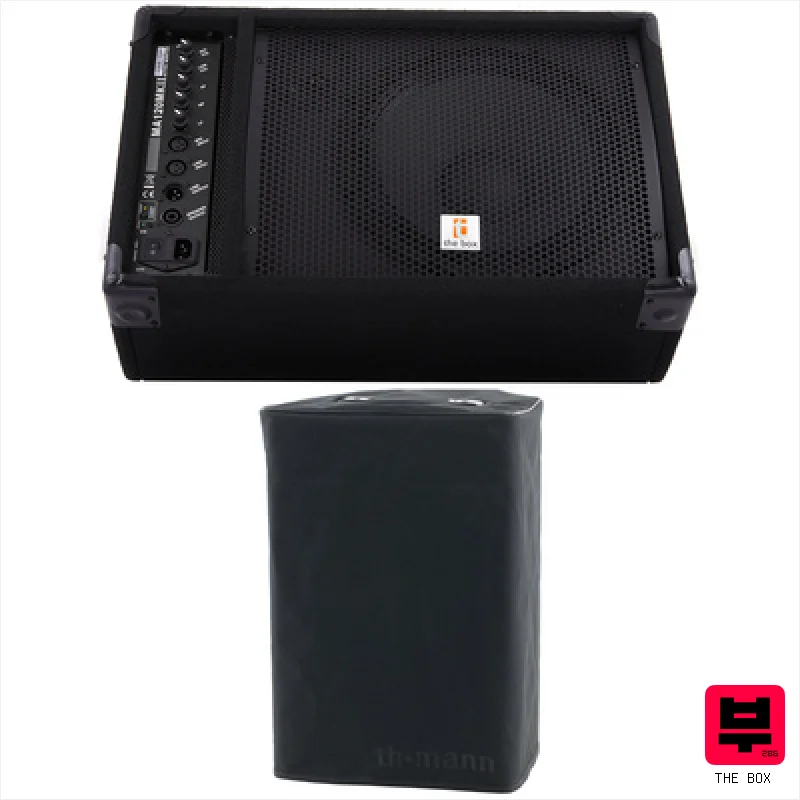
The MA120 MKII is a solid, budget-friendly option for smaller stages or rehearsal spaces. It delivers a clean, powerful sound with good clarity, making it ideal for solo artists, duos, or bands needing reliable stage monitoring. Don't expect earth-shattering bass, but for the price, it's a real workhorse.
Pros
- Surprisingly robust plywood cabinet for the price point
- Clear, defined highs without harshness; good for vocal monitoring
- Versatile EQ allows for shaping the sound to different environments
Cons
- Limited low-end extension compared to larger PA speakers
- The 3-band EQ is basic; lacks more precise control
54AudioFu
IndexStableno change since Aug 17Aug 17$179 now$179€159 at Thomann · in stockCheck price ↗ -
- Size10"
- Weight15 kg
The box MA100 is a surprisingly capable little monitor for the money. It's a solid choice for smaller gigs, drum amps, or as a secondary monitor – it’ll handle a decent level without being a powerhouse. Perfect for solo artists, duos, or smaller bands needing budget-friendly stage monitoring.
Pros
- Surprisingly robust cabinet for the price point, feels solid.
- The 3in cone tweeter delivers a decent high-end sparkle.
- Link socket enables easy stereo monitoring expansion.
Cons
- 100W RMS feels limiting for larger venues or louder bands.
- Rubber feet could be improved for better stability on stage.
54AudioFu
IndexStableno change since Aug 17Aug 17$179 now$179€159 at Thomann · in stockCheck price ↗ -
- Weight2.3 kg
This little Fun Generation CL 105 A is a surprisingly capable personal monitor. It's perfect for solo acoustic gigs, vocal practice, or small band rehearsals where you need your own dedicated sound. The Bluetooth is a nice touch, but don't expect it to blow any doors open – it’s more about convenience than sonic excellence.
Pros
- Compact size makes it ideal for small stages and practice spaces
- Bluetooth connectivity offers convenient music playback and backing tracks
- Class D amplifier provides efficient power with minimal heat
Cons
- The 50W RMS power is limited for larger venues or louder applications
- XLR/6.3mm mic input lacks phantom power for condenser microphones
-
- Weight3.05 kg
This little Behringer is a surprisingly capable stage monitor, especially considering the incredibly affordable price. It's perfect for solo performers, keyboardists, or anyone needing basic, portable PA functionality. Don't expect high-end performance, but it's a solid workhorse for practice or small gigs.
Pros
- Class-D amp delivers surprisingly clean power for the price.
- Compact size and lightweight design enable easy portability.
- Built-in MP3 player and Bluetooth add convenience for basic playback.
Cons
- Plastic enclosure feels budget-oriented and lacks premium resonance.
- Limited headroom; struggles at higher volumes without distortion.
Active Stage Monitors by the numbers
Measured across all 7 models we track, not a sample.
median of 5 models · 5"–10"
median of 7 models · 2.3 kg–15 kg
How to choose the best active stage monitors
Frequency Response
Expect a limited range at this price point. You're likely sacrificing some serious low-end thump and potentially some airiness on the high end. Focus on a balanced mid-range for vocal clarity, which is your priority.
Power Handling (Wattage)
Don't expect massive headroom. These are designed for moderate volume levels. Pushing them too hard will result in distortion and potential damage. Think rehearsal space and smaller gigs, not stadium rock.
Driver Complement
Typically, you'll find 6.5-inch woofers and 1-inch tweeters. The quality of those drivers will heavily influence the overall tone - listen for muddiness or harshness. Look for drivers that articulate well, especially for guitar.
Build Quality
Plastics will be prevalent. Don't expect road-ready durability. Handle with care and consider a bag for protection. The enclosure construction is a good indicator of how well the monitor will handle vibrations and resonance.
Polar Pattern
Most of these will be full-range, which means they radiate sound in all directions. While convenient, it can lead to bleed into microphones. Monitor placement and mic technique are crucial to minimize feedback.
Buying guide
Alright, so you need stage monitors and your budget's tighter than a snare drum head after a rainstorm. Let's be real - $200 isn't going to get you boutique-level clarity, but you can find active stage monitors that'll let you hear yourself over the kit and not feel like you're playing in a tin can. We're focusing on bang-for-the-buck here; monitors that will actually help you cut through the mix without completely falling apart when the drummer decides to channel his inner Bonham.
At this price, you're making compromises. The biggest trade-off will be frequency response and overall clarity. Don't expect a perfectly flat response; these are designed to be heard with other instruments.
Look for monitors that have a decent mid-range - that's where your vocals and guitars live. If you're serious about sound, consider saving a bit more for a step up, but these can absolutely get the job done for smaller gigs and rehearsals.
How the AudioFu Index works
Five measured signals and nothing else — no stars from strangers, no “tested by experts” we didn’t do. The weights are fixed and public. We don’t play these instruments; we measure the market around them.
This chart covers 7 active stage monitors from the Thomann catalogue. Before you buy, read hands-on reviews and, where you can, play it. Full methodology.
AudioFu earns a commission when you buy through our Thomann links. It never changes the order — the index does.
- Demand40%
How many of this exact model are for sale on Reverb right now — what musicians actually buy and resell.
- Lineup20%
How many finishes Thomann stocks — makers expand the models that sell.
- Price15%
Where the price has moved since we started tracking in August.
- Specs15%
How completely the maker documents it.
- Maker10%
How deep the brand’s range is in this category.
Questions
Will these monitors handle a full drum kit?
Realistically, no. They'll give you a reference, but they won't reproduce the low-end impact. You'll need to rely on the mains for the thump.
Can I use these for recording vocals?
They can work in a pinch for recording vocals, but the limited frequency response might color the sound. A dedicated studio monitor is always better, but these are a budget alternative.
How do I avoid feedback?
Monitor placement is key. Get them off the floor, angle them down, and work with your sound engineer to find a comfortable level without feedback. Mic technique also makes a big difference.
What's the difference between active and passive monitors?
Active monitors have built-in amplifiers, meaning you don't need a separate power amp. Passive monitors require an external amplifier, which adds cost and complexity.
Are these monitors loud enough for a small band?
For a small band in a typical rehearsal space or bar, yes. For larger venues or louder bands, you'll likely need more power.