
Best 4/4 Size Classical Guitars Under $200 2026
Alright, so you're looking for a 4/4 classical guitar that won't break the bank - under $200. It's a tricky proposition, because good classical guitars are usually a serious investment. But it is possible to get something playable and even enjoyable at this price point, especially if you know what to look for and what compromises you're making. Let's dive in and find you a decent starting point.
Last updated: October 9, 2026

Harley Benton CG200CE-BK Bundle
- • Basswood body delivers a surprisingly warm and resonant tone for the price.
- • Integrated pickup system and EQ offer basic amplification and tonal shaping.
- • TableAmp V2 provides decent volume and Bluetooth connectivity for practice/performance.
- • Maple fretboard provides a smooth playing experience, aiding in faster passages.
- • Basswood, while warm, lacks the projection of higher-grade tonewoods like Spruce.
- • The pickup system is basic; don't expect studio-quality recording tones.
- • Nato neck can be prone to slight movement with humidity changes; requires care.
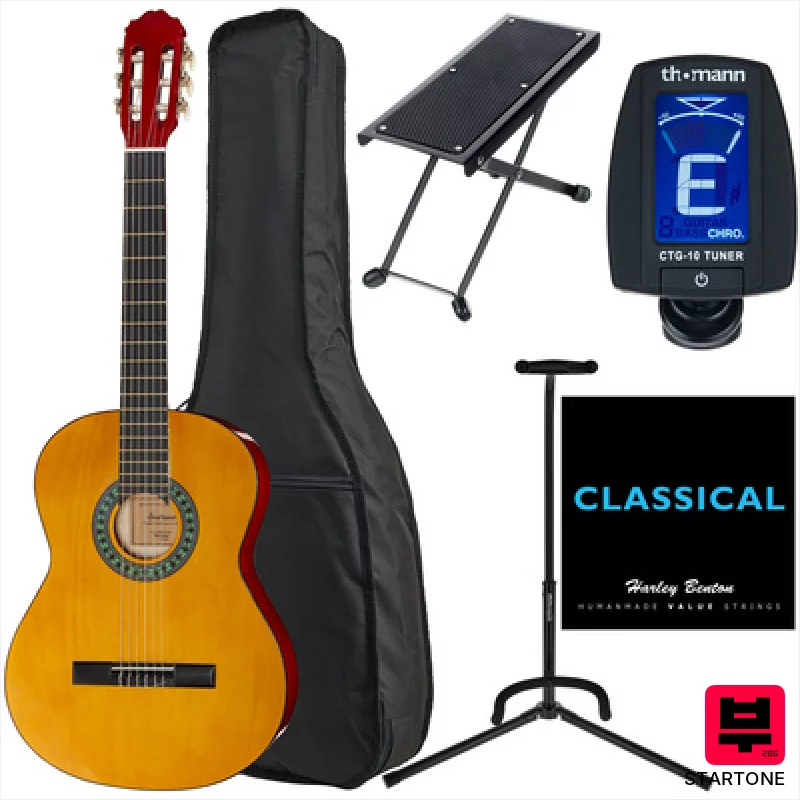
Startone CG851 4/4 Classical Guitar Set
- • Basswood body offers a surprisingly warm and balanced tonal foundation.
- • Jatoba fingerboard provides a smooth, consistent playing surface.
- • Complete set includes gig bag and stand, excellent value for beginners.
- • Nato neck offers decent stability and a playable profile for the price.
- • Basswood, while warm, lacks the projection of more premium tonewoods.
- • Jatoba fingerboard might feel slightly harder than rosewood to some.
- • Millenium stand is basic and not suitable for long-term nitro finishes.

Ortega RST5MOC
- • Spruce top offers surprisingly good projection for the price.
- • Catalpa back & sides contribute to a warm, mellow tone.
- • Walnut fingerboard provides a smooth playing experience.
- • Ocean Blue Matte finish is aesthetically pleasing and unique.
- • Catalpa's tonal limitations won't satisfy advanced players' demands.
- • Basic chrome tuners might exhibit some tuning instability over time.
- • Spruce top is likely to be thinner, increasing vulnerability to humidity.
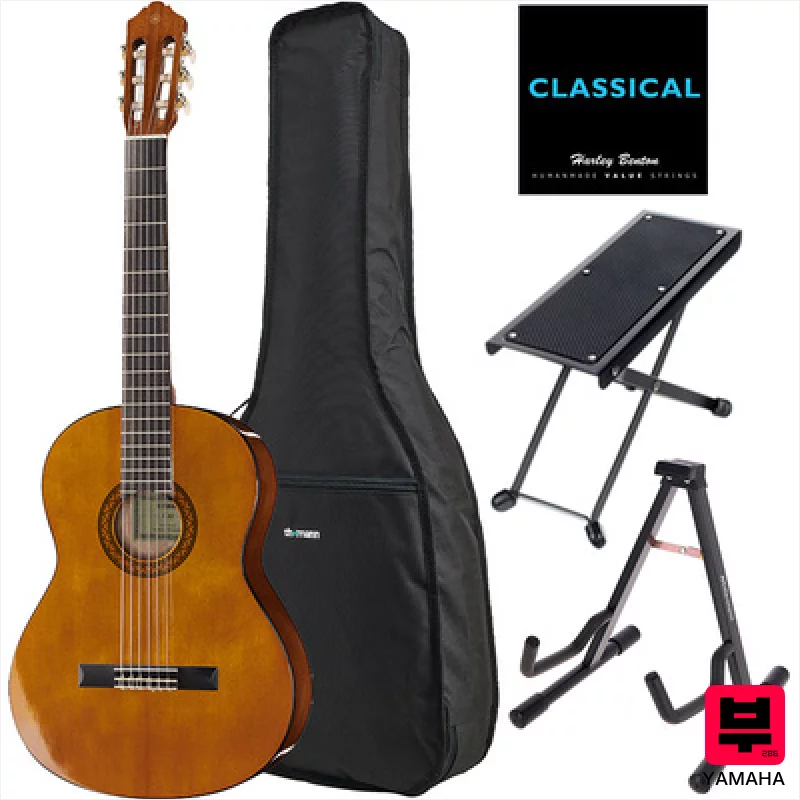
Yamaha C40 Bundle
- • Spruce top delivers a surprisingly resonant and clear tone for the price.
- • Meranti back and sides offer a warm, balanced response, avoiding harshness.
- • Nato neck provides good stability and a comfortable, familiar feel.
- • Gig bag and stand included offer excellent value and convenience for beginners.
- • Meranti back/sides lack the tonal complexity of more premium woods like rosewood or mahogany.
- • Rosewood fingerboard may exhibit some fret buzz, common in guitars at this price point.
- • High-gloss finish, while attractive, can feel a bit plasticky and less refined.
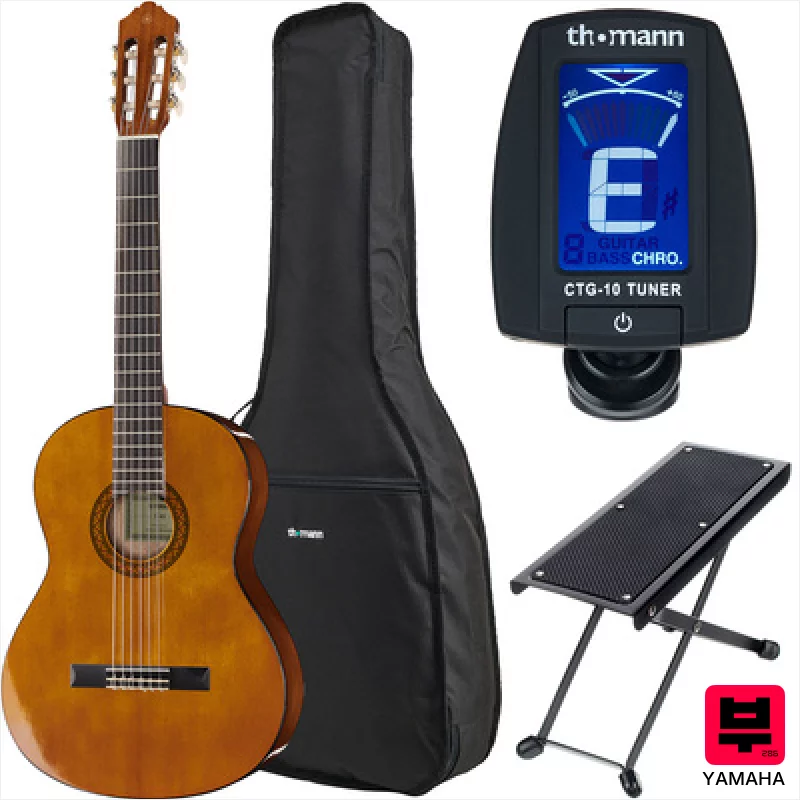
Yamaha C40 Bundle
- • Spruce top provides a bright, clear tone suitable for various playing styles.
- • Meranti back and sides offer warmth and balance, preventing a overly bright sound.
- • Rosewood fretboard and bridge contribute to a rich, resonant sustain.
- • Gig bag and footrest included offer excellent value and beginner-friendly setup.
- • Meranti back and sides are a budget material, limiting high-end tonal complexity.
- • Nato neck, while stable, lacks the premium feel of mahogany or Spanish cedar.
- • High-gloss finish can be prone to fingerprints and may feel less 'open' acoustically.

Thomann C-404 NT Set
- • European spruce top offers a bright, clear fundamental tone.
- • Okoume back and sides provide warmth and balanced projection.
- • Hannabach 815 HT strings deliver a pleasant, responsive feel.
- • Includes gig bag, tuner, and footrest – a great starter package.
- • Okoume is a softer wood, potentially susceptible to dings and scratches.
- • Blackwood fingerboard might feel slightly less refined than rosewood.
- • The 'C' neck profile isn't universally preferred; may feel thick to some.
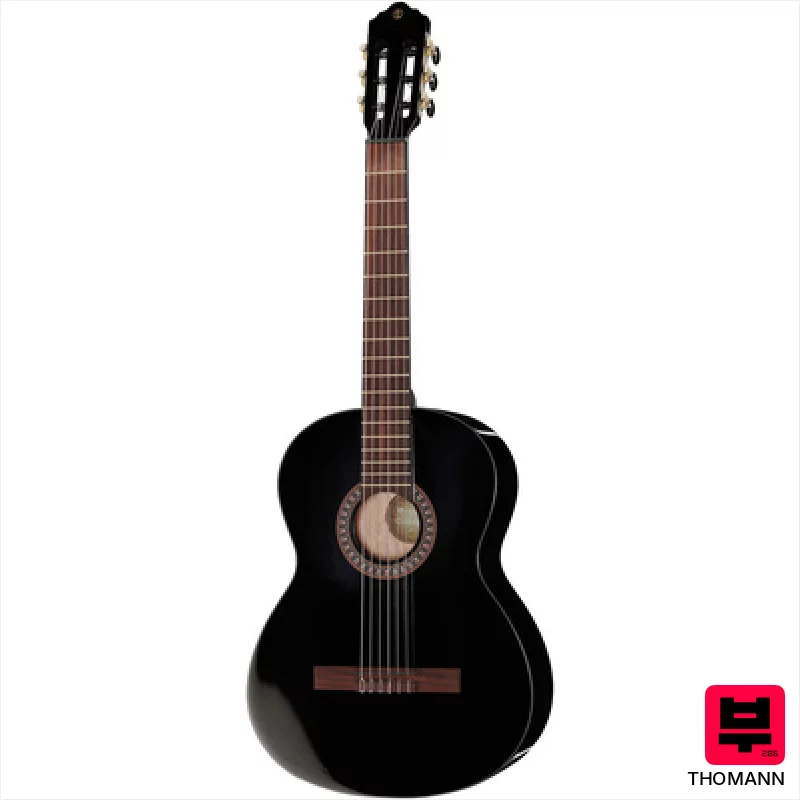
Thomann C-404 BLK Set
- • European spruce top provides a bright, clear fundamental tone
- • Okoume back and sides offer warmth and good projection for the price
- • Blackwood fingerboard and bridge contribute to a respectable sustain
- • Includes gig bag, tuner, and footrest – excellent starter package
- • Okoume can be a bit 'woody' sounding compared to mahogany or rosewood
- • Factory Hannabach strings are decent, but an upgrade is recommended
- • Black finish might show fingerprints and scuffs easily

Harley Benton CG200CE-BK w/Bag
- • Basswood body delivers a surprisingly warm and balanced tone.
- • Nato neck provides decent stability and a playable feel.
- • Integrated 4-band EQ offers basic output shaping for amplified use.
- • Gig bag provides adequate protection and portability for beginners.
- • Basswood construction lacks the resonance of more premium tonewoods.
- • Maple fretboard can feel a bit slick for some players’ preferences.
- • Pickup system is basic and won't rival higher-end acoustic-electric systems.
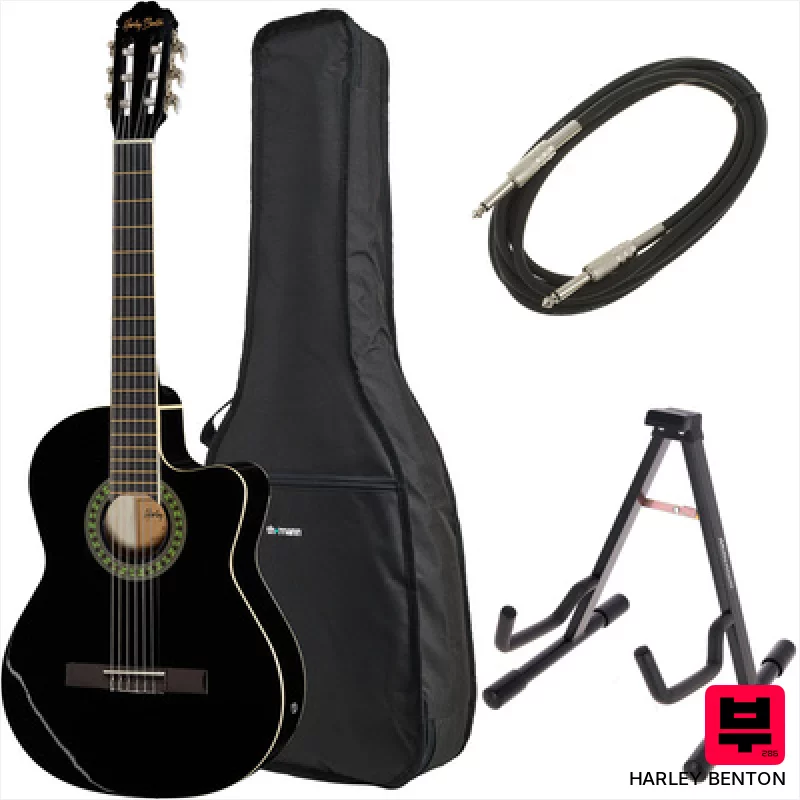
Harley Benton CG200CE-BK Bundle
- • Basswood body provides a surprisingly warm and resonant tone for the price.
- • Integrated 4-band EQ allows for basic output shaping and gig-friendly adjustments.
- • Nato neck offers decent stability and a playable feel, typical for this price range.
- • The bundled gig bag and stand offer immediate playability and protection – a real value.
- • Maple fretboard can feel a bit 'slick' compared to rosewood, impacting grip for some players.
- • Basswood, while warm, lacks the complexity and projection of higher-grade tonewoods.
- • Gig bag is economy-grade; durability is limited, especially with frequent travel.
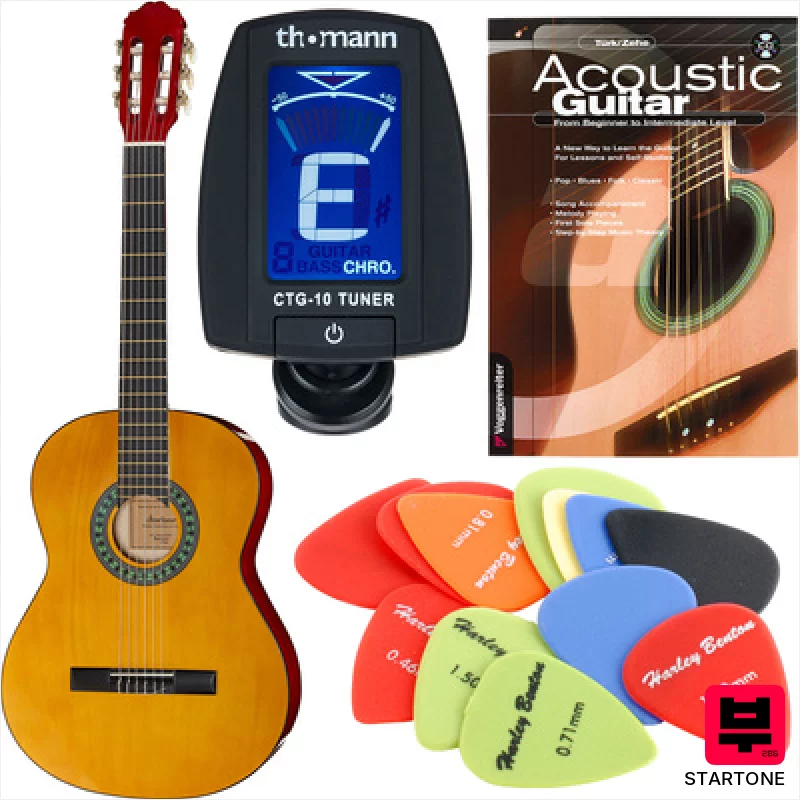
Startone Concert Guitar Set 1 English
- • Includes a tuner and beginner's course, great value for the price.
- • Basswood body offers a warmer, more mellow tone than spruce.
- • Jatoba fingerboard provides a smooth playing experience and good durability.
- • Nato neck is typically stable and provides a comfortable feel.
- • Basswood is a softer tonewood; won’t offer the projection of higher-grade woods.
- • Jatoba can be a bit harder than rosewood, potentially less forgiving for beginners.
- • Gig bag not included, a more robust case would be preferable.
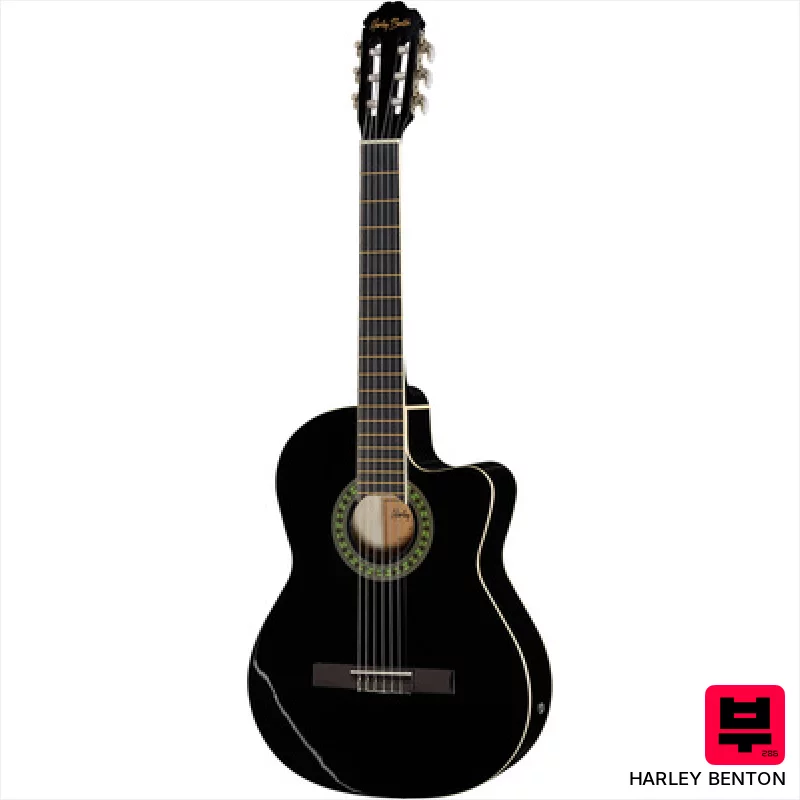
Harley Benton CG200CE-BK
- • Basswood body delivers surprisingly warm, balanced tones for the price.
- • Integrated 4-band EQ offers basic shaping of the amplified sound.
- • Maple fretboard provides a smooth, fast playing experience.
- • Cutaway allows comfortable access to higher frets, expanding range.
- • Basswood, while warm, lacks the resonance of more premium tonewoods like cedar.
- • Nato neck can be prone to slight movement in extreme humidity changes.
- • Pickup system is basic; don't expect studio-quality amplified tones.
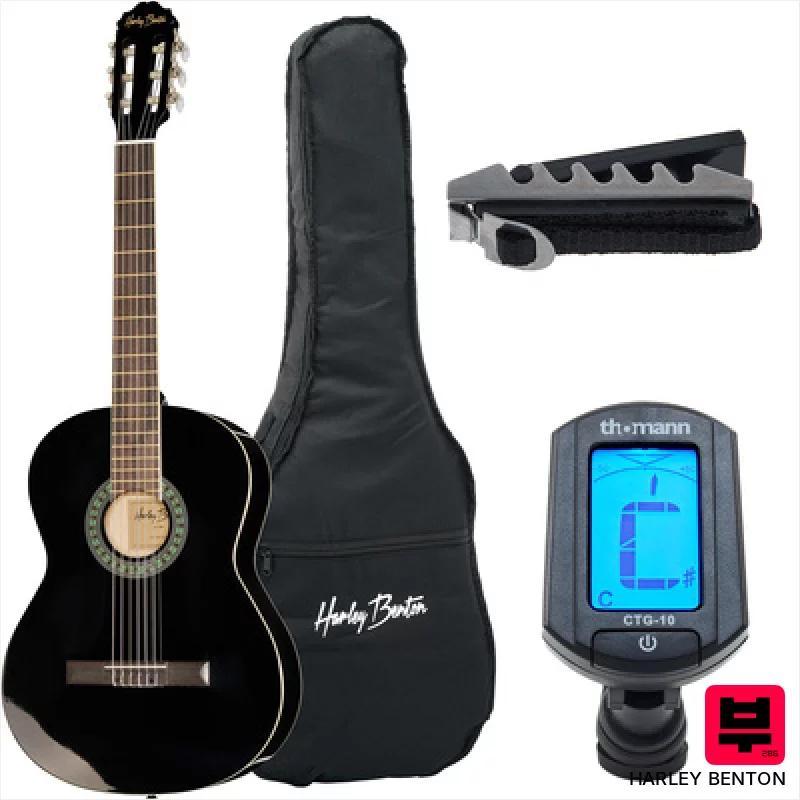
Harley Benton CG200-BK Bundle
- • Basswood body delivers a surprisingly warm and balanced tonal foundation.
- • Nato neck offers decent stability and a playable, if basic, feel.
- • Complete accessory pack adds immediate value for beginners or casual players.
- • High-gloss black finish looks surprisingly sharp for a budget-friendly instrument.
- • Maple fretboard can feel a bit 'slick' and lack the warmth of rosewood.
- • Gig bag is very basic, offering minimal protection from bumps and scrapes.
- • Overall build quality reflects the price point – expect some minor cosmetic imperfections.
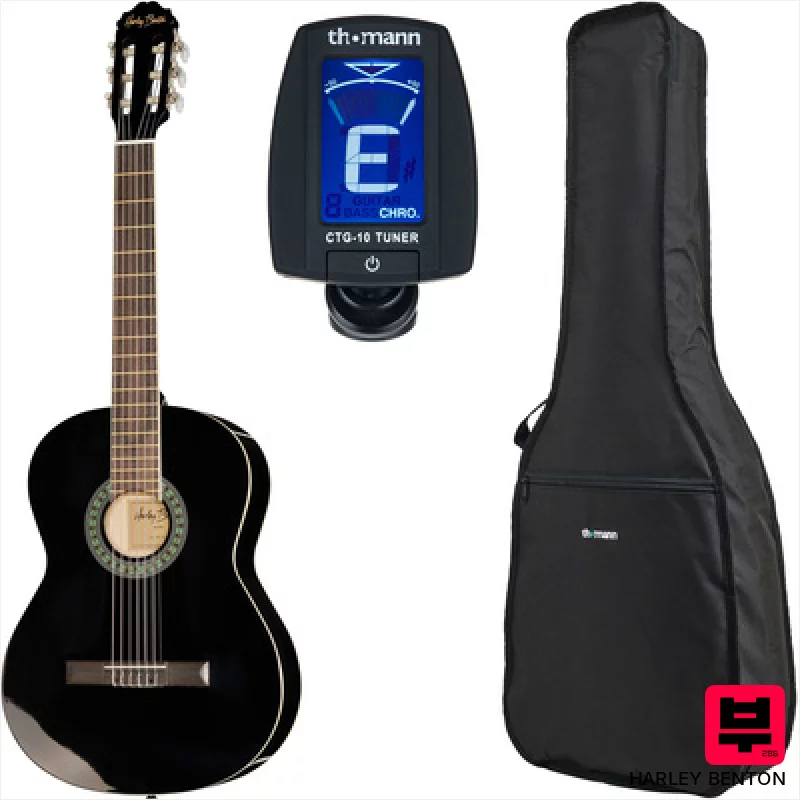
Harley Benton CG200-BK Set 1
- • Basswood body provides a warm, mellow tone suitable for classical and fingerstyle.
- • Nato neck offers decent stability and a playable, comfortable feel for beginners.
- • Maple fretboard provides a smooth surface for accurate intonation and easy string bending.
- • Included gig bag and tuner offer excellent value, a complete starter package.
- • Basswood, while warm, lacks the projection and complexity of higher-grade tonewoods.
- • Maple fretboard can feel a bit 'slick' compared to rosewood or ebony for some players.
- • Hardware and tuners are basic, may need upgrading for serious or advanced playing.
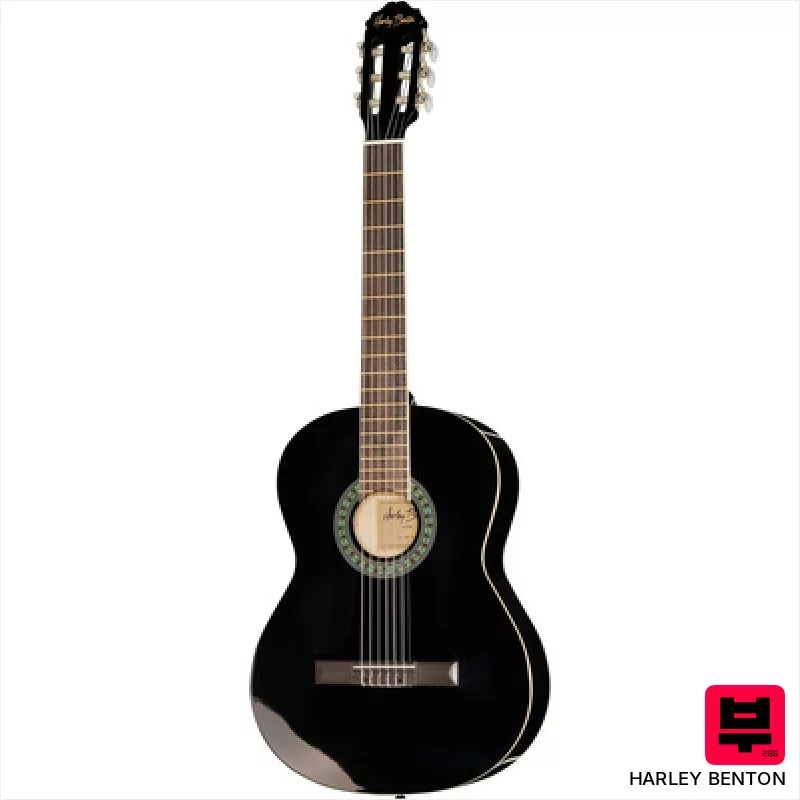
Harley Benton CG200-BK
- • Basswood body provides a surprisingly warm, balanced tone.
- • Nato neck offers decent stability and a playable feel for the price.
- • Maple fretboard is smooth, aiding comfortable practice and learning.
- • High-gloss finish looks surprisingly good for a budget instrument.
- • Basswood, while warm, lacks the projection of more premium tonewoods.
- • Hardware is basic and likely to be a future upgrade point.
- • Maple fretboard can be prone to drying and cracking without proper care.
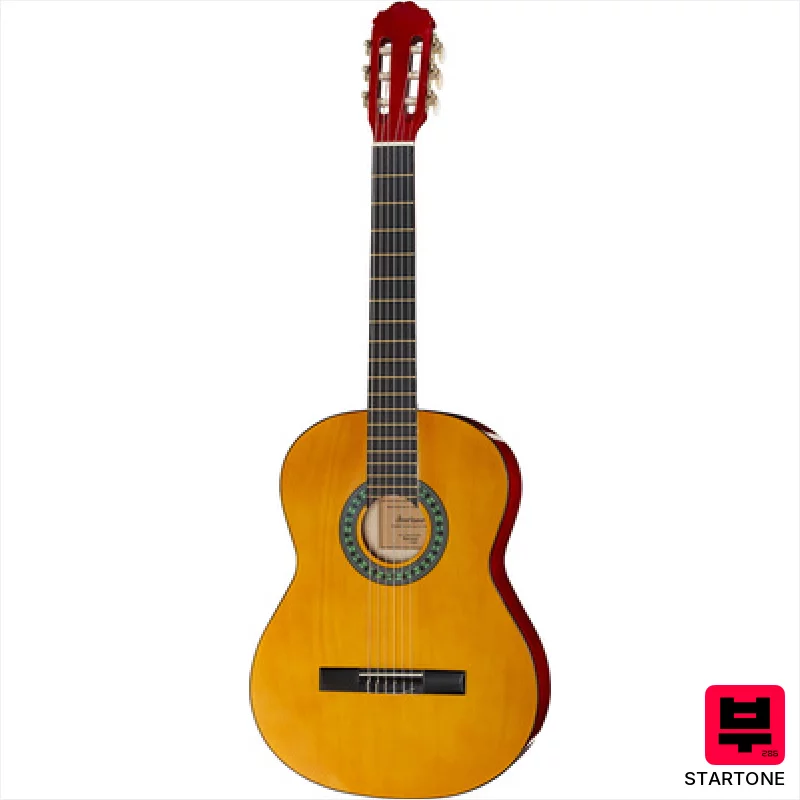
Startone CG 851 4/4
- • Basswood body provides a warm, mellow tone suitable for classical pieces.
- • Jatoba fingerboard offers a surprisingly smooth playing experience for the price.
- • Nato neck is stable and comfortable, facilitating easier chord transitions.
- • 650mm scale length feels familiar to many classical guitar players.
- • Basswood body, while warm, lacks the projection of higher-grade woods.
- • Jatoba fingerboard can feel slightly dry and may benefit from occasional oiling.
- • Basic nylon strings will likely be the first upgrade for serious students.
Every 4/4 size classical guitars that matches
46 models match this page. The 15 above are covered in detail; the rest are listed here with their published specifications.
| # | Model | Specifications | Price |
|---|---|---|---|
| 16 | Ibanez GA3ECE-OAM | Nut width 52 mm (2.05") · Scale 650 mm (25.59") · Frets 19 frets | $189 |
| 17 | Yamaha C40 BL Bundle 2 | Nut width 52 mm (2.05") · Scale 650 mm (25.59") · Frets 19 frets | $178 |
| 18 | Yamaha C40 BL Bundle 1 | Nut width 52 mm (2.05") · Scale 650 mm (25.59") · Frets 19 frets | $178 |
| 19 | Ortega RTECP-1 Ltd Classic Pack | Nut width 52 mm (2.05") · Scale 650 mm (25.59") · Frets 19 frets | $167 |
| 20 | Ortega RSTC5M | Nut width 52 mm (2.05") · Scale 650 mm (25.59") · Frets 19 frets | $155 |
| 21 | Yamaha C40 BL | Nut width 52 mm (2.05") · Scale 650 mm (25.59") · Frets 19 frets | $155 |
| 22 | Ibanez GA3-OAM | Nut width 52 mm (2.05") · Scale 650 mm (25.59") · Frets 19 frets | $133 |
| 23 | Fender CN-30 Natural | Nut width 44.5 mm (1.75") · Frets 18 frets · Fingerboard Walnut fingerboard | $148 |
| 24 | Fender CN-30 Wide Neck WN Natural | Nut width 50.8 mm (2") · Frets 18 frets · Fingerboard Walnut fingerboard | $148 |
| 25 | Yamaha C40 | Nut width 52 mm (2.05") · Scale 650 mm (25.59") · Fingerboard Rosewood fingerboard | $144 |
| 26 | Harley Benton CG300CE NT Bundle | Nut width 52 mm (2.05") · Weight 3.1 kg | $196 |
| 27 | La Mancha Rubinito LSM | Nut width 52 mm (2.05") · Scale 650 mm (25.59") | $178 |
| 28 | La Mancha Rubinito LSM-N | Nut width 48 mm (1.89") · Scale 650 mm (25.59") | $178 |
| 29 | Yamaha CX40 II | Nut width 52 mm (2.05") · Scale 650 mm (25.59") | $167 |
| 30 | Ortega RST5M | Nut width 52 mm (2.05") · Scale 650 mm (25.59") | $162 |
| 31 | La Mancha Granito 33-N-MB | Nut width 48 mm (1.89") · Scale 650 mm (25.59") | $151 |
| 32 | Thomann Classic 4/4 Guitar Blac Bundle | Nut width 52 mm (2.05") · Scale 650 mm (25.59") | $151 |
| 33 | Thomann Classic 4/4 Guitar Bundle | Nut width 52 mm (2.05") · Scale 650 mm (25.59") | $151 |
| 34 | La Mancha Romero Granito 32-AB | Nut width 52 mm (2.05") · Scale 650 mm (25.59") | $149 |
| 35 | La Mancha Romero Granito 32-N | Nut width 52 mm (2.05") · Scale 650 mm (25.59") | $144 |
| 36 | Thomann Classic 4/4 Guitar Bundle | Nut width 52 mm (2.05") · Scale 650 mm (25.59") | $144 |
| 37 | Thomann Classic 4/4 Guitar | Nut width 52 mm (2.05") · Scale 650 mm (25.59") | $133 |
| 38 | Thomann Classic 4/4 Guitar Black | Nut width 52 mm (2.05") · Scale 650 mm (25.59") | $133 |
| 39 | Harley Benton CG-400CE Thinline BK w/Bag | Nut width 48 mm (1.89") · Scale 650 mm (25.59") | $122 |
| 40 | Ortega RGA-ORG Classicalguitar | Nut width 52 mm (2.05") · Scale 650 mm (25.59") | $100 |
| 41 | Ortega RGA-GAP Classicalguitar | Nut width 52 mm (2.05") · Scale 650 mm (25.59") | $100 |
| 42 | Yamaha C40M Bundle | Scale 650 mm (25.59") | $169 |
| 43 | Yamaha C40M | Scale 650 mm (25.59") | $144 |
| 44 | Harley Benton CG300CE NT Bundle | Nut width 52 mm (2.05") | $124 |
| 45 | Harley Benton CG300CE NT w/Bag | Nut width 52 mm (2.05") | $111 |
| 46 | Harley Benton CG300CE NT | Nut width 52 mm (2.05") | $100 |
4/4 Size Classical Guitars by the numbers
Measured across all 46 models in this category, so «wide», «short» or «expensive» mean something you can check.
How to Choose the Best 4/4 Size Classical Guitars
Tonewoods
Expect laminate tops (usually spruce or cedar) and backs/sides. Solid wood is a pipe dream at this price; laminate is functional, but will lack the complexity and responsiveness of solid wood. The spruce will generally be a bit brighter, cedar a little warmer and 'woody'.
Action & Neck Profile
This is critical. High action (distance between strings and frets) makes playing uncomfortable and limits your speed. A thick, unwieldy neck profile will also hinder technique. Try to find a guitar with a playable action - you might need a setup (more on that later).
Bracing Pattern
The bracing pattern under the top wood significantly impacts the guitar's tone. Expect simpler bracing patterns in this price range, which will affect sustain and projection. Don't expect the complex, carefully voiced bracing of higher-end instruments.
Finish Quality
Let's be real - the finish will likely be thin and uneven. This isn't a deal-breaker, but it's something to be aware of. A thick, glossy finish can actually dampen the guitar's resonance, so a thinner finish is generally preferable.
Hardware & Tuning Machines
Cheap tuning machines are a common weakness. They can be sloppy and difficult to tune accurately, which is frustrating when you're trying to learn. Upgrading the tuners is a relatively inexpensive upgrade down the road.
Buying Guide
At this price, you're making trade-offs. Don't expect a concert-grade instrument; it's a starting point. Look for a guitar with a comfortable neck profile and action that's reasonably low - a setup by a luthier can make a huge difference, budget for that if needed. Focus on playability over 'tone' - a guitar that feels good in your hands is more valuable than one that sounds marginally better but is a pain to play.
How This List Is Built
We don't play these instruments — we're a catalog, not a review desk, and we'd rather say so than pretend otherwise. This page covers 46 4/4 size classical guitars from the Thomann catalogue, which is the largest single source of specification data in this category: 15 in detail, the rest listed with their specifications.
Position is computed, not curated. We parse the manufacturer's own description into actual values — nut width, scale, fret count, fingerboard radius, size, alloy — and rank on them: how many specifications a model has published, how many of them are measurable numbers, and how precisely it meets this page's criterion. A product image adds a little. Price is not a ranking signal: it tells you nothing about whether a neck fits your hand. The same inputs always produce the same order, so nothing here is shuffled to look fresh.
What this list is good for: narrowing a category down to a shortlist by spec and budget. What it isn't: a substitute for hearing an instrument. Before you buy, read hands-on reviews and, where you can, play it. Full methodology.

