
Best Hanika 4/4 Size Classical Guitars 2026
Alright, so you're serious about classical guitar and you've heard the name Hanika. They're not the cheapest route, but if you're chasing that old-world European tone and build, you need to be looking at them. Hanika guitars consistently deliver a level of refinement you just don't find in a lot of mass-produced instruments-it's that nuanced response, that subtle complexity that separates them. Let's break down what makes these guitars so special and whether they're right for your needs.
Last updated: October 9, 2026
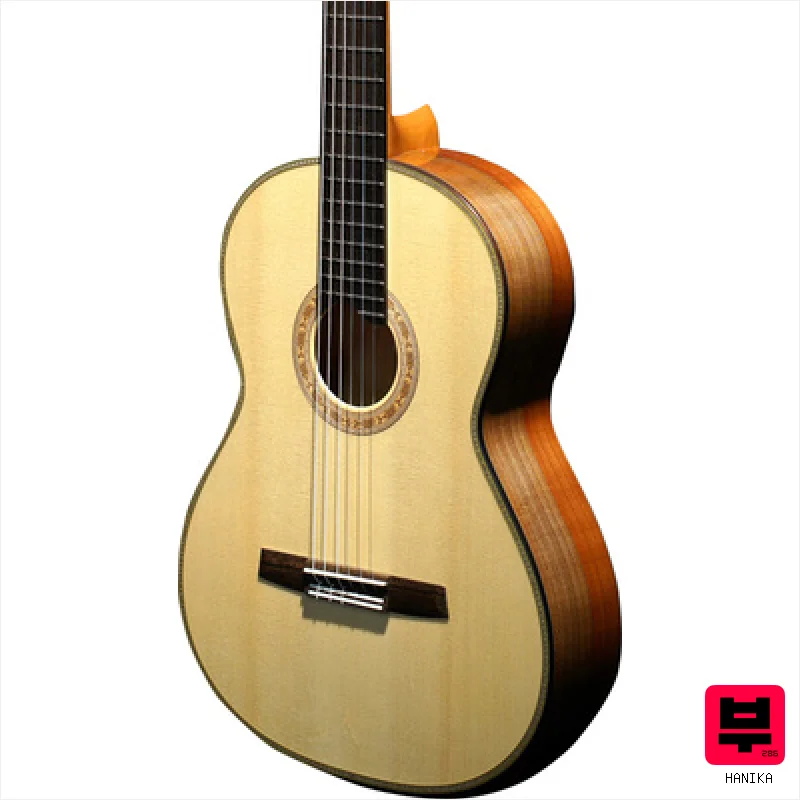
Hanika HartiPilsner Signature
- • Solid AAA spruce top for a responsive voice
- • Thermo-treated wood ensures long-term stability
- • Blackwood fingerboard provides a smooth feel
- • Bone nut and saddle for accurate intonation
- • Heavy 4/4 size may strain smaller players
- • No built-in electronics or pickups included
- • Limited tonal customization without external amps
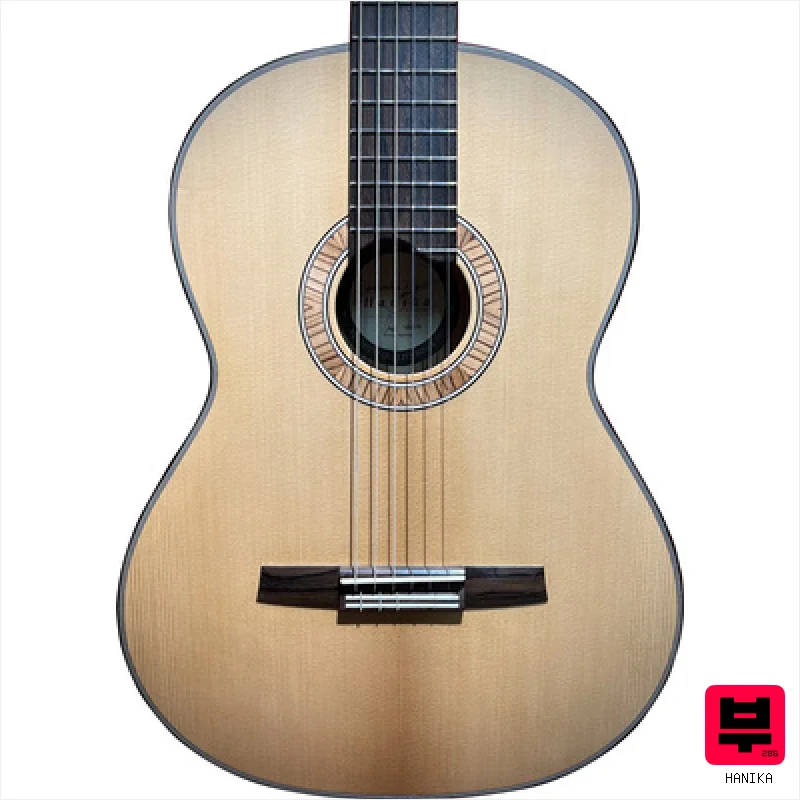
Hanika Jahresmodell 2026
- • Solid thermo spruce top for strong response
- • Zebrano back and sides offer rich tone
- • Zircote fingerboard and bridge add durability
- • Seven-sym arched bracing ensures structural strength
- • Natural high gloss finish may show wear quickly
- • No electronic pickups or amplification options
- • Solid zebrano can make the instrument heavy
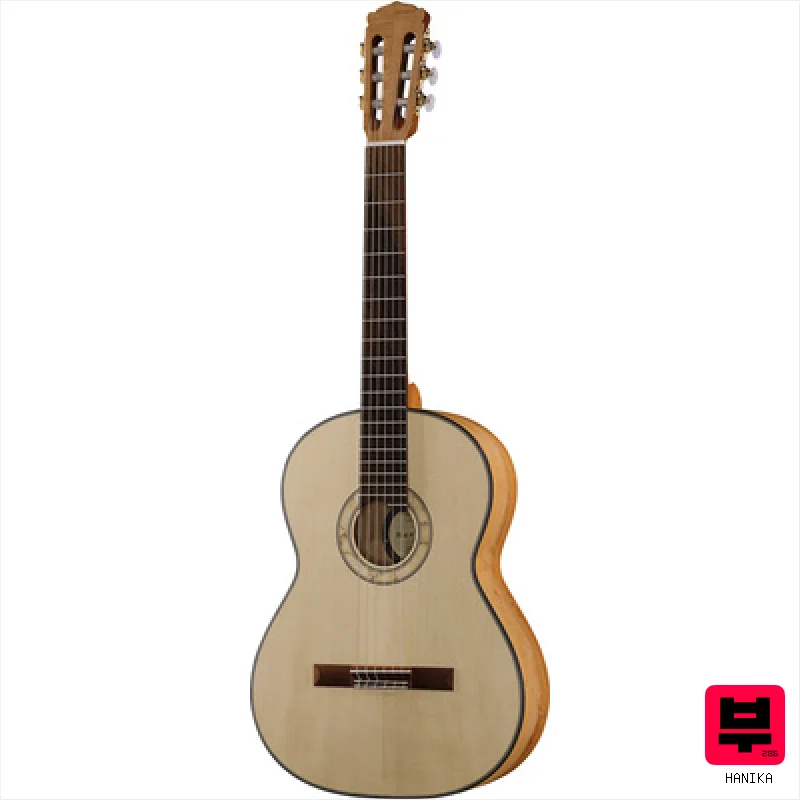
Hanika Custom 54PF Apple
- • Solid spruce top delivers bright, responsive classical tone
- • Apple wood body provides warm, resonant low-end response
- • Curved ASym bracing shapes unique, focused sound
- • Thermally treated neck ensures stable playability
- • No pickup system included for amplified use
- • Shellac finish may require more care than lacquer
- • Natural color lacks visual contrast or dark tones
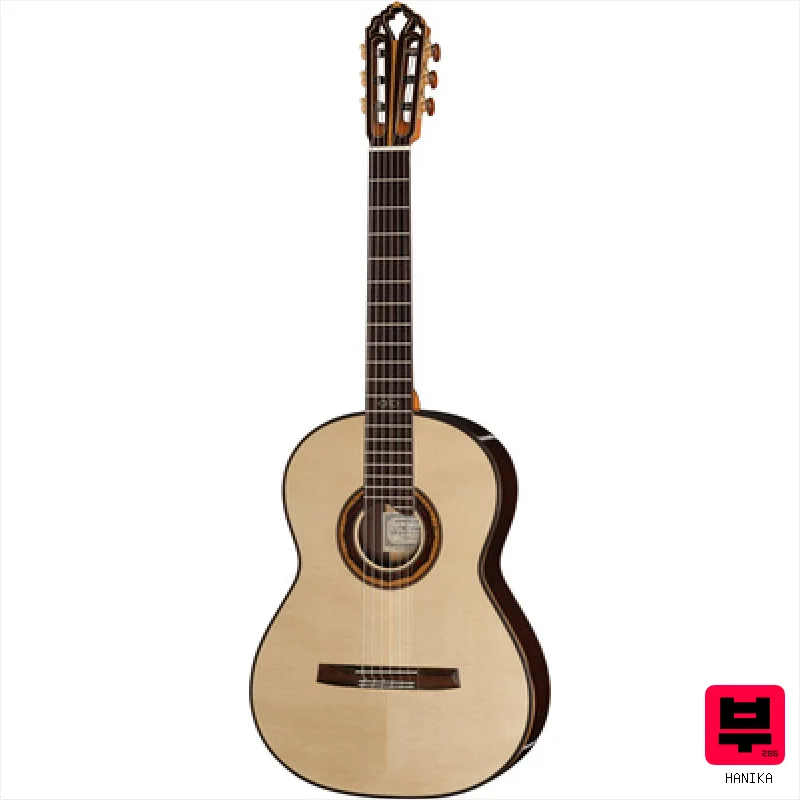
Hanika Custom 1a-DTL
- • Solid AA spruce top for strong projection
- • Katalox wood on body and neck
- • DT DiamondLattice bracing system
- • Triple Hanika slot crown shape
- • Very high price tag
- • No electronic pickups listed
- • Weight not stated in description
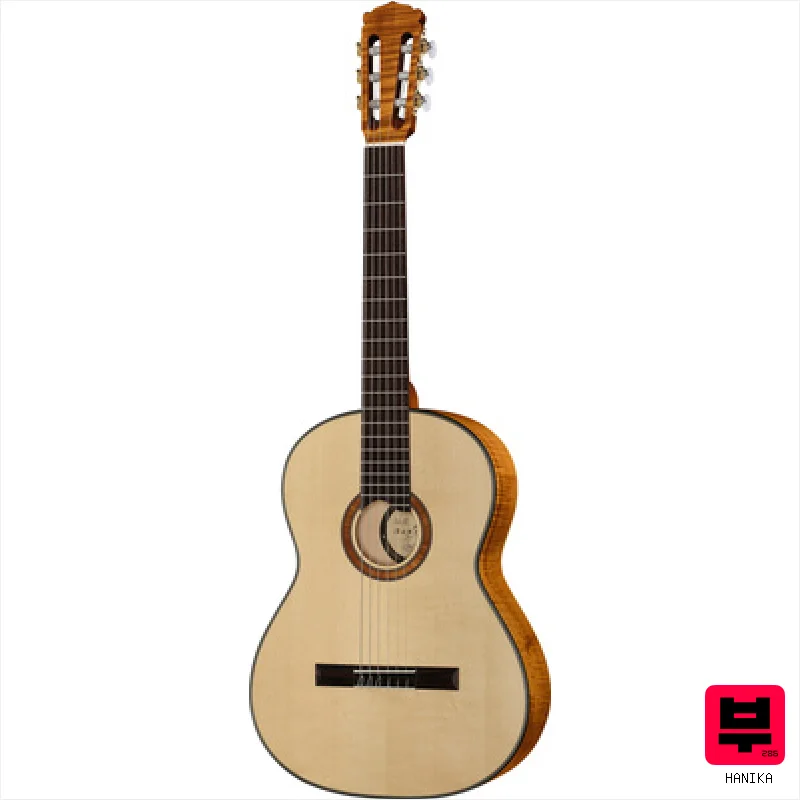
Hanika 50AF
- • All solid wood construction ensures rich resonance and projection
- • Asymmetrical bracing creates a focused, balanced midrange tone
- • Premium thermo-maple neck offers stability and smooth playability
- • Rosewood back and sides deliver warm, complex harmonic overtones
- • Open-pore matt finish shows dirt and wear more easily
- • Fiber top binding can be less durable than traditional binding
- • Weight is not listed, so balance may feel heavy for some
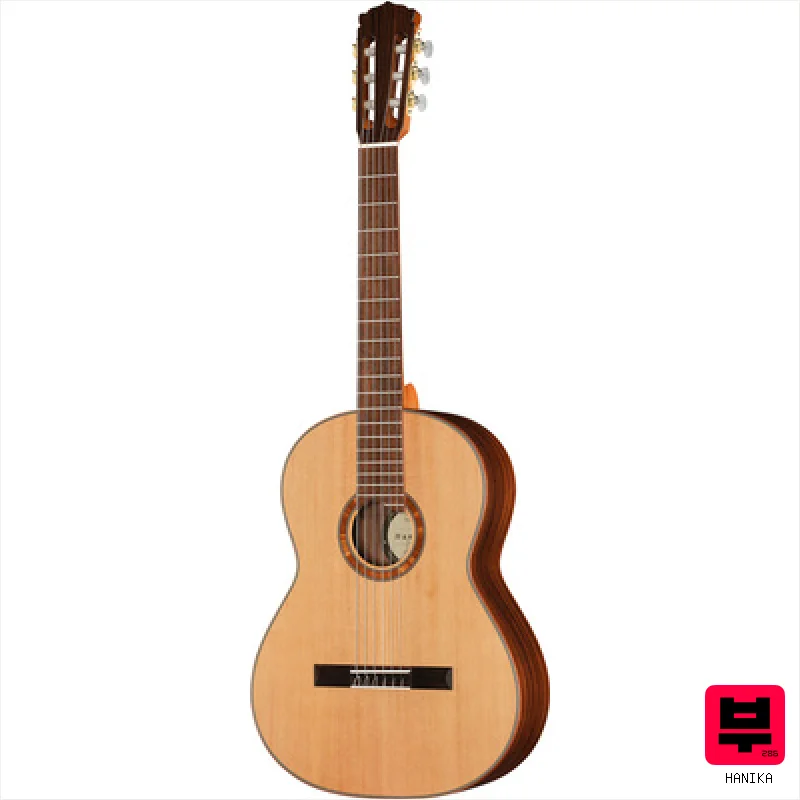
Hanika 50 PC Basis
- • Solid cedar top offers strong initial attack
- • Solid rosewood back and sides for depth
- • Open pore finish shows natural wood grain
- • Alder neck with thermal treatment for stability
- • Mahogany top binding is less common than rosewood
- • Weight not specified for player comfort
- • No pickup system included in base model
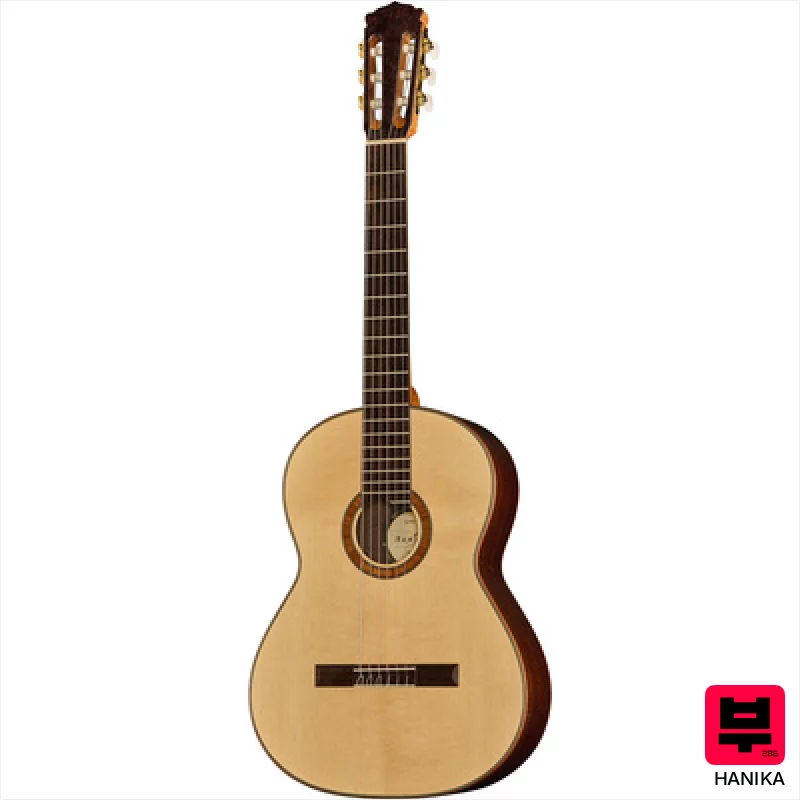
Hanika 50TEF
- • Solid Franconian oak back/sides offer a warm, resonant tone.
- • Thermally modified neck enhances stability and resists humidity changes.
- • 5-Fold asymmetrical bracing improves projection and clarity.
- • Grenadilla fingerboard provides excellent durability and a smooth playing feel.
- • Plastic nut is a cost-saving measure; ebony would be a premium upgrade.
- • Open-pore matte finish requires more diligent care to prevent grime buildup.
- • Limited versatility; primarily suited for classical and fingerstyle playing.
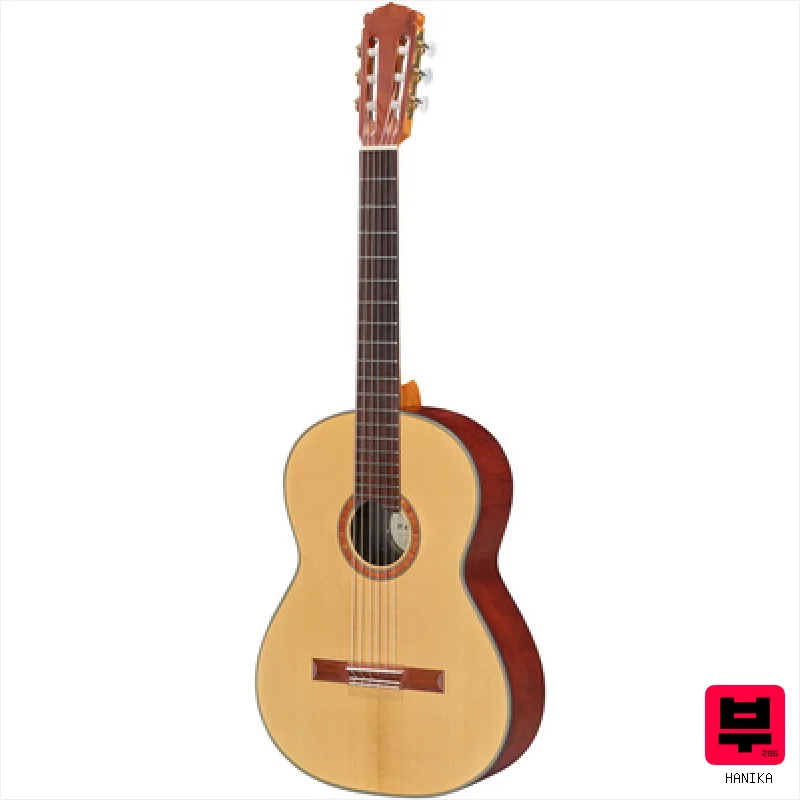
Hanika 50 TBF
- • Solid thermo-treated spruce top for bright attack
- • Solid thermo-treated pear wood back and sides
- • Thermo Erle neck ensures stable tuning
- • Bone saddle adds warm midrange clarity
- • Plastic nut lacks traditional wood feel
- • No electronic pickups for amplification
- • No volume control or volume knob
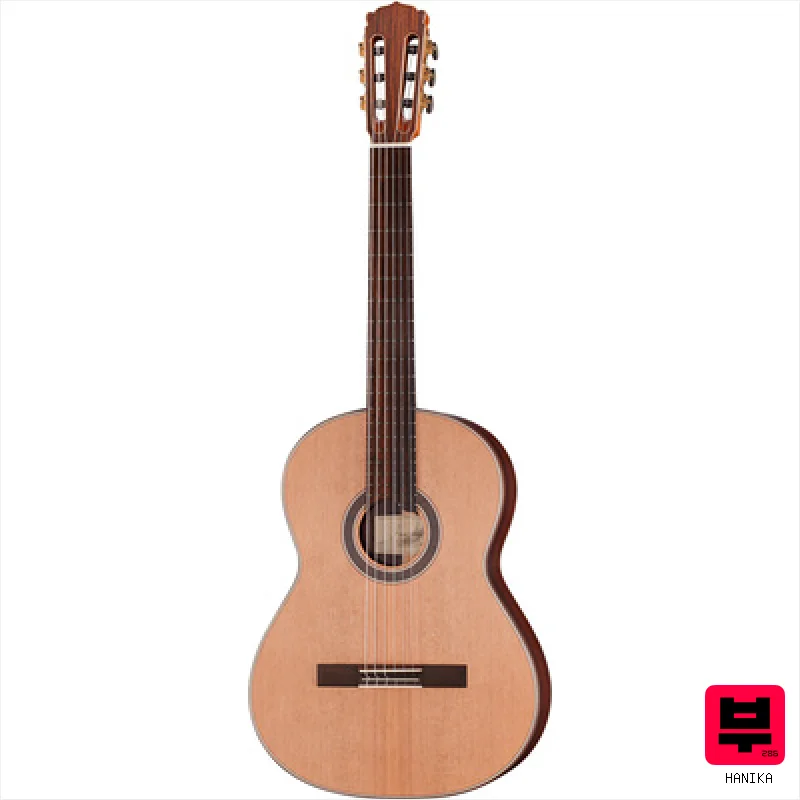
Hanika Natural-PC
- • Solid cedar top offers bright attack and quick response
- • Solid rosewood back and sides provide deep, warm resonance
- • Blackwood fingerboard adds unique dark color and grip
- • Includes Hiscox case for safe transport and protection
- • Weight not listed, likely heavy for small hands
- • No electronic pickups included for stage use
- • S-GT heads may not lock tight under heavy playing
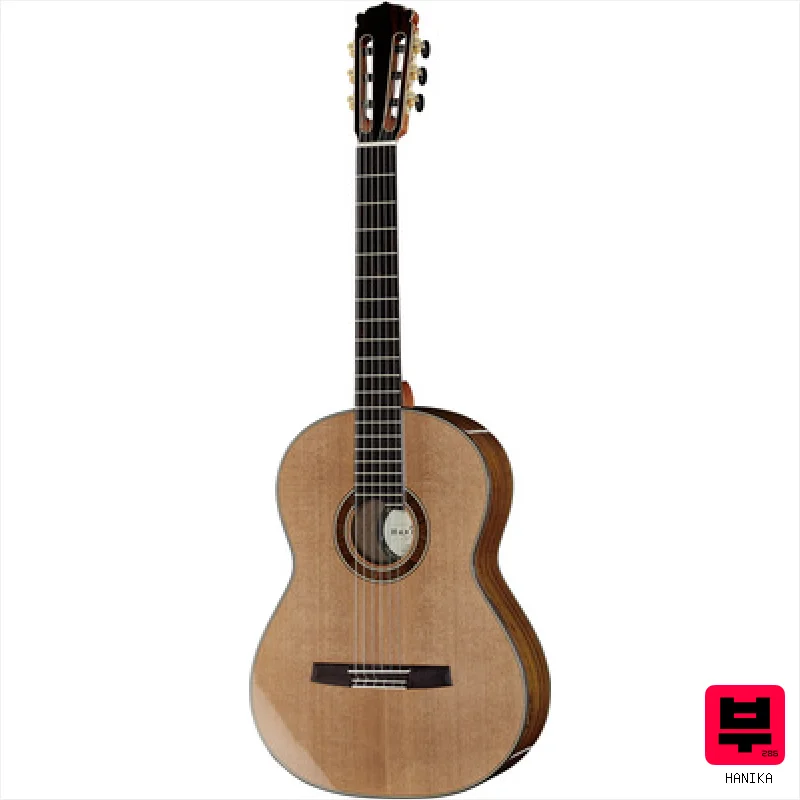
Hanika 58BC
- • Solid cedar top delivers bright attack and fast response
- • Bocote back and sides offer warm, rich low-end depth
- • Cedro neck provides sturdy support with excellent playability
- • Includes high-quality Hiscox case for safe transport
- • Natural high-gloss finish shows fingerprints easily
- • Weight not listed so may feel heavy for smaller players
- • No pickup system included for amplification needs
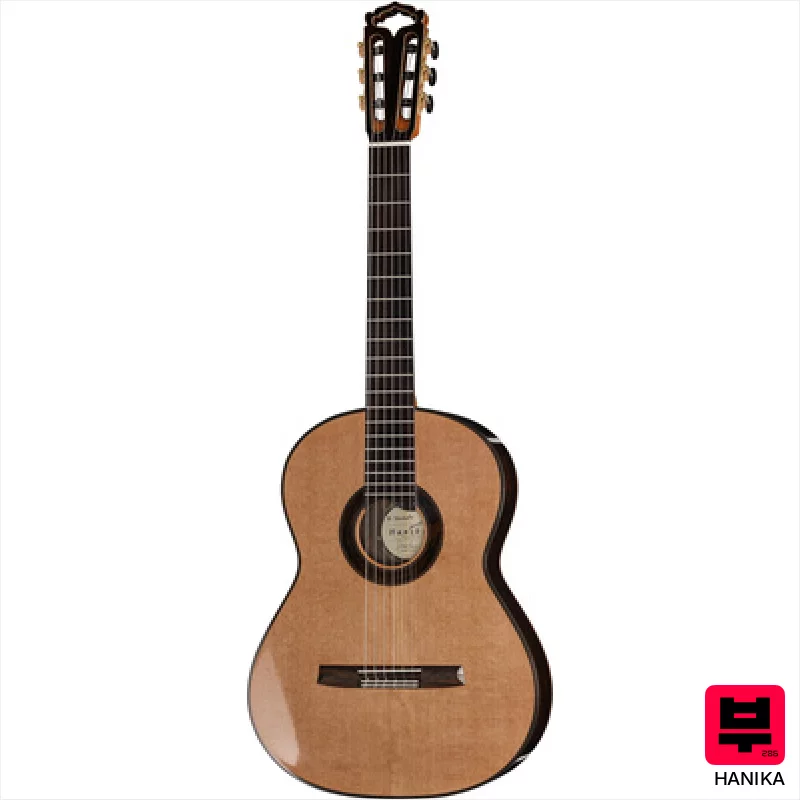
Hanika HE-Torres Ziricote/Cedar
- • Ziricote back/sides deliver rich, complex overtones and projection.
- • Cedar top provides warmth and responsiveness ideal for nuanced playing.
- • Grenadilla binding adds visual elegance and contributes to focused tone.
- • Hanika's renowned construction ensures exceptional stability and longevity.
- • Ziricote's density can make the guitar feel a bit weighty for extended playing.
- • High-gloss shellac finish requires careful maintenance and can be prone to scratches.
- • Premium-priced, placing it outside the reach of many aspiring classical guitarists.

Hanika Fusion PC w/Pickup
- • Grenadilla binding & fretboard offer striking aesthetics and enhanced durability.
- • Solid Cedar composite top delivers a warm, responsive, and complex tone.
- • Udo Rössner pickup system provides exceptionally clean and amplified sound.
- • Hanika's renowned German craftsmanship ensures impeccable build quality and longevity.
- • The Fusion cutaway, while comfortable, subtly alters the traditional classical guitar resonance.
- • Grenadilla can be brittle; requires careful handling and maintenance of binding.
- • Premium-priced, making it a significant investment for most players.
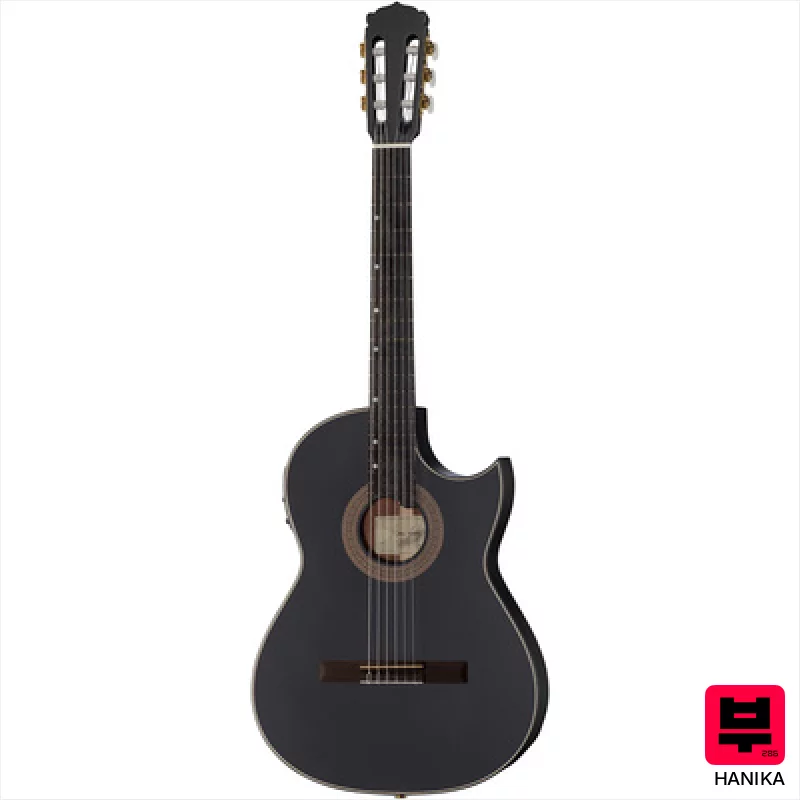
Hanika Thomann Custom BK
- • Solid cedar top delivers warmth, projection, and nuanced tone.
- • Mahogany back and sides offer focused resonance and sustain.
- • Shadow SH 4020 pickup system provides clean, amplified sound with minimal feedback.
- • Ebony fretboard ensures smooth playability and clear note definition.
- • Matte black finish might not appeal to players preferring glossier aesthetics.
- • Entandophragma zylindricum mahogany can be a bit denser, potentially impacting overall weight.
- • Cutaway compromises some upper bout resonance compared to non-cutaway models.

Hanika 52AF
- • Solid spruce top delivers focused, clear projection and responsiveness.
- • Maple back and sides provide warmth and sustain, balanced tone.
- • Cedro neck offers a smooth, comfortable playing experience with excellent feel.
- • Ebony fingerboard contributes to a crisp, articulate playing feel and sustain.
- • The high-gloss finish, while beautiful, can feel a bit sticky in humid environments.
- • 52mm nut width might be challenging for players with smaller hands.
- • Maple back/sides, while warm, can lack the deep resonance of rosewood.
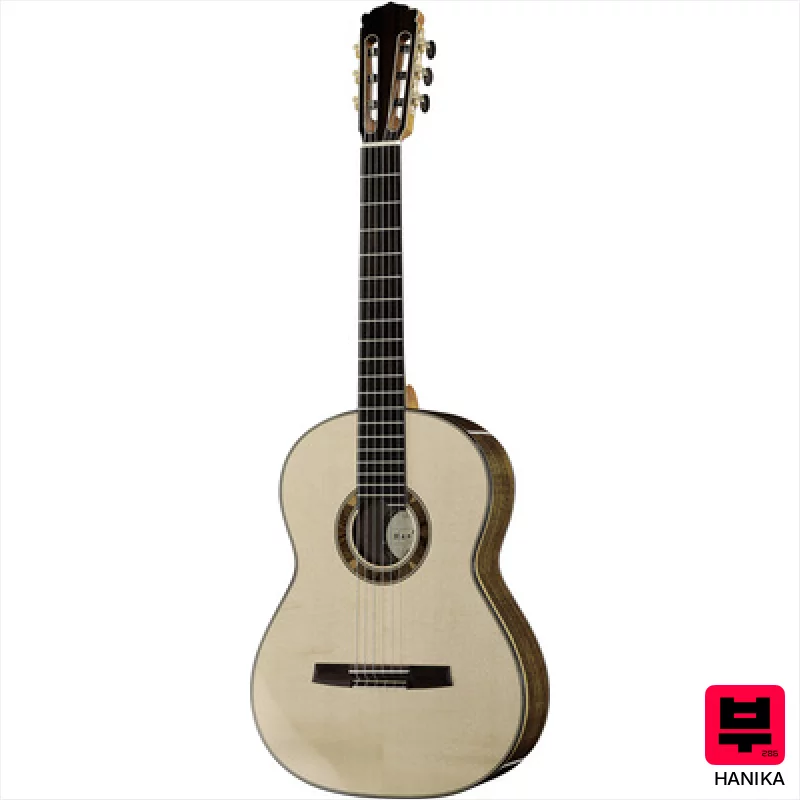
Hanika 58BF
- • Solid Bocote back/sides deliver a warm, complex, resonant tone.
- • Hanika’s R2-E tuners offer exceptional stability and precise tuning.
- • Cedar neck provides a comfortable, responsive playing feel with excellent projection.
- • Rosewood binding adds a touch of elegance and enhances the guitar’s structural integrity.
- • The Bocote can be a bit harder on the fingers than some other tonewoods.
- • The Makassar headstock veneer, while beautiful, is prone to minor hairline cracks with temperature changes.
- • Being a German-made instrument, it's premium-priced, limiting accessibility.
Every 4/4 size classical guitars that matches
33 models match this page. The 15 above are covered in detail; the rest are listed here with their published specifications.
| # | Model | Specifications | Price |
|---|---|---|---|
| 16 | Hanika 54PC | Nut width 52 mm (2.05") · Scale 650 mm (25.59") · Frets 20 frets | $1,397 |
| 17 | Hanika HE-Torres Ziricote/Spruce | Nut width 52 mm (2.05") · Scale 650 mm (25.59") · Frets 20 frets | $5,256 |
| 18 | Hanika Natural-Torres Ceder | Nut width 52 mm (2.05") · Scale 650 mm (25.59") · Frets 20 frets | $3,243 |
| 19 | Hanika CutPro PF + Pickup System | Nut width 50 mm (1.97") · Scale 650 mm (25.59") · Frets 20 frets | $2,907 |
| 20 | Hanika Natural-Lattice | Nut width 52 mm (2.05") · Scale 650 mm (25.59") · Frets 20 frets | $4,016 |
| 21 | Hanika Natural-Torres | Nut width 52 mm (2.05") · Scale 650 mm (25.59") · Frets 20 frets | $3,243 |
| 22 | Hanika Natural-PF | Nut width 52 mm (2.05") · Scale 650 mm (25.59") · Frets 20 frets | $2,124 |
| 23 | Hanika 54PF | Nut width 52 mm (2.05") · Scale 650 mm (25.59") · Frets 20 frets | $1,397 |
| 24 | Hanika 50 KF-N | Nut width 52 mm (2.05") · Scale 650 mm (25.59") · Neck profile D-shape neck | $1,229 |
| 25 | Hanika 58Lattice EF-N | Nut width 52 mm (2.05") · Scale 650 mm (25.59") · Neck profile C-shape neck | $3,467 |
| 26 | Hanika Meisterklasse 1A DTL | Nut width 52 mm (2.05") · Scale 650 mm (25.59") · Neck profile C-shape neck | $11,175 |
| 27 | Hanika New Century Lattice | Nut width 52 mm (2.05") · Scale 650 mm (25.59") | $3,243 |
| 28 | Hanika HE-Doubletop-N | Nut width 52 mm (2.05") · Scale 650 mm (25.59") | $5,144 |
| 29 | Hanika 50MC | Nut width 52 mm (2.05") · Frets 20 frets | $1,006 |
| 30 | Hanika Crossover PSS | Nut width 50 mm (1.97") · Scale 640 mm (25.2") | $3,354 |
| 31 | Hanika BasisCut PC + Pickup System | Nut width 50 mm (1.97") · Scale 650 mm (25.59") | $2,180 |
| 32 | Hanika 56CC | Scale 650 mm (25.59") · Neck profile D-shape neck | $2,348 |
| 33 | Hanika Basis Cut TEF+DOT | Scale 650 mm (25.59") · Neck profile D-shape neck | $2,236 |
4/4 Size Classical Guitars by the numbers
Measured across all 467 models in this category, so «wide», «short» or «expensive» mean something you can check.
How to Choose the Best 4/4 Size Classical Guitars
Heritage & Construction
Hanika guitars are built in the Czech Republic, steeped in a tradition of meticulous craftsmanship. They often use traditional bracing patterns-sometimes a modified Torres-that contribute to their characteristic tone. It's not just about the wood; it's about how it's worked.
Tone
That's the big one. Hanika guitars tend to have a warm, centered tone with a strong fundamental. You get a really clear low-end thump without it being muddy, and the treble response isn't brittle-more like a mature, complex shimmer. It's a tone that cuts through a small ensemble without being harsh, and it records beautifully - less need for EQ.
Neck Profile & Playability
The neck profiles are generally comfortable, erring on the side of traditional, but not overly thick. Setup from the factory is usually excellent, resulting in a comfortable action. This makes them accessible to a wide range of players, from students to seasoned professionals.
Wood Selection & Voicing
Hanika isn't shy about using quality tonewoods, often Spanish cedar tops and Indian rosewood back and sides. The voicing is carefully considered - they don't just build guitars; they shape the sound, prioritizing sustain and responsiveness over sheer volume.
Build Quality & Consistency
The attention to detail is noticeable - clean joinery, careful finishing, and a general sense of solidity. While there's always variation between individual instruments, Hanika guitars consistently exhibit a level of build quality that surpasses many competitors in their price range. It's a noticeable upgrade from the entry-level instruments.
Buying Guide
If you're serious about classical, a Hanika is a worthy investment. Be prepared to spend - they aren't budget instruments. The earlier models, particularly those from the 80s and 90s, are highly sought after and command a premium, but even newer instruments offer excellent value. Don't chase the 'loudest' guitar; focus on the responsiveness and tonal complexity - that's where Hanika truly shines.
How This List Is Built
We don't play these instruments — we're a catalog, not a review desk, and we'd rather say so than pretend otherwise. This page covers 33 of 467 4/4 size classical guitars from the Thomann catalogue, which is the largest single source of specification data in this category: 15 in detail, the rest listed with their specifications.
Position is computed, not curated. We parse the manufacturer's own description into actual values — nut width, scale, fret count, fingerboard radius, size, alloy — and rank on them: how many specifications a model has published, how many of them are measurable numbers, and how precisely it meets this page's criterion. A product image adds a little. Price is not a ranking signal: it tells you nothing about whether a neck fits your hand. The same inputs always produce the same order, so nothing here is shuffled to look fresh.
What this list is good for: narrowing a category down to a shortlist by spec and budget. What it isn't: a substitute for hearing an instrument. Before you buy, read hands-on reviews and, where you can, play it. Full methodology.

