
Best 4/4 Size Classical Guitars for Classical 2026
So, you're serious about classical guitar. Forget the beginner packs and the guitars with the overly bright, brittle tone. We're talking about instruments that respond to your touch, offer real sustain, and can handle the demands of a recital or a recording session. Finding the right 4/4 classical guitar isn't about flashy aesthetics; it's about nailing that warm, resonant voice and comfortable feel.
Last updated: July 15, 2026 • Next update: July 22, 2026
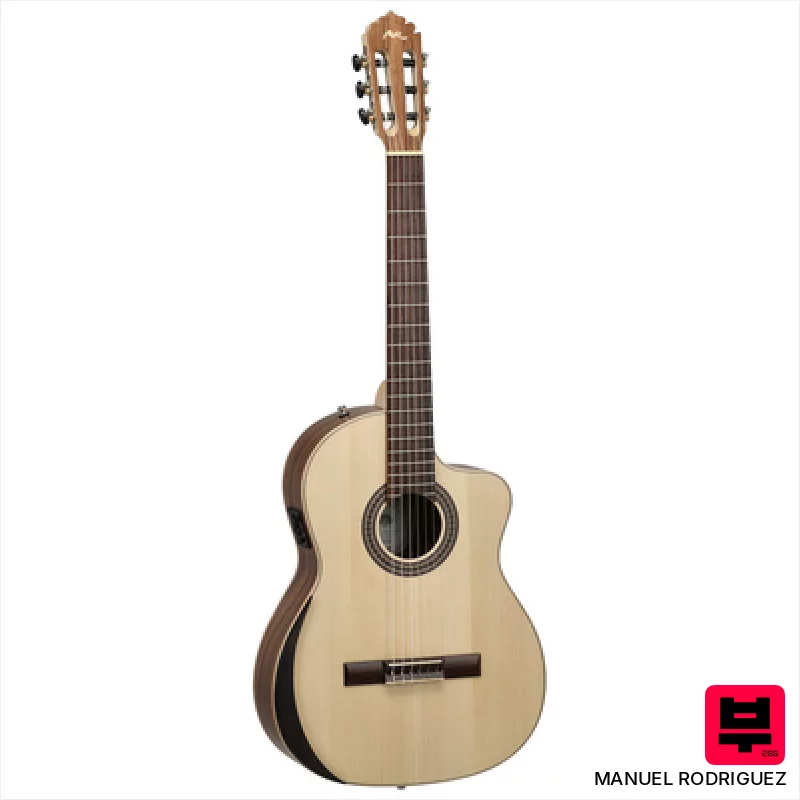
Manuel Rodriguez Ecologia Samba Truss Rod
- • Solid European spruce top delivers a bright, responsive voice.
- • Walnut back and sides add warmth and sustain, nicely balanced.
- • Truss rod allows for precise neck adjustment, crucial for stability.
- • Solidflex pickup with SQ-3 EQ offers surprisingly usable amplified tones.
- • Acacia fingerboard, while functional, lacks the premium feel of ebony.
- • Open pore finish can be prone to moisture absorption in humid climates.
- • While versatile, it leans towards a brighter tone, limiting some darker genres.

Caballero by Manuel Rodriguez CA-PM SE
- • Solid spruce top delivers a surprisingly warm and responsive tone.
- • Okoume neck with carbon reinforcement enhances stability and playability.
- • GEWA ETC-4 pickup system offers decent amplified sound and a tuner.
- • Sapele back and sides provide a balanced tonal foundation with good projection.
- • The Hannabach 600HT strings are decent, but an immediate upgrade is recommended.
- • Open pore finish, while environmentally friendly, can feel a bit rough to the touch.
- • Cutaway compromises upper body resonance slightly; a minor trade-off.
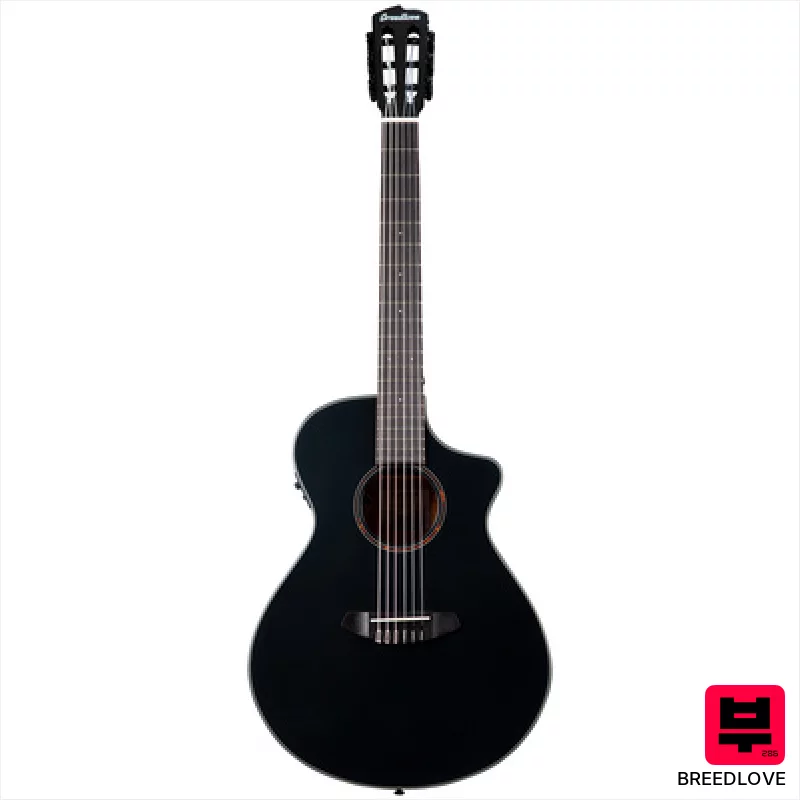
Breedlove Discovery S Conc Nylon CE BS
- • Solid red cedar top delivers warm, responsive tone with good projection.
- • Fishman Presys I pickup provides reliable amplified sound without excessive feedback.
- • African mahogany back/sides offer a balanced, mature tonal foundation.
- • Ovangkol fingerboard provides a smooth playing experience and durability.
- • Laminated back and sides limit the top-end sparkle of all-solid construction.
- • Ovangkol fingerboard can feel slightly harder than rosewood for some players.
- • Black matte finish might show fingerprints and smudges more readily.
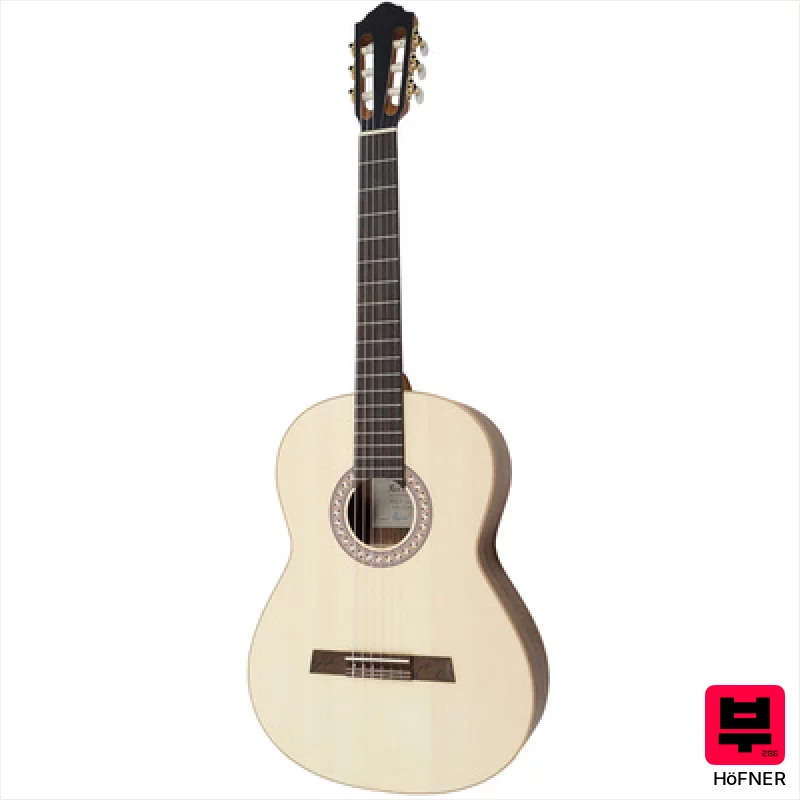
Höfner HGL5 Green Line
- • Solid spruce top delivers a clear, resonant tone with excellent projection.
- • Walnut back and sides add warmth and complexity to the overall sound.
- • Alder neck provides stability and a comfortable, familiar feel for many players.
- • NuBone nut enhances sustain and tuning stability compared to standard materials.
- • Smoked oak fingerboard might feel a little rough for some players initially.
- • Walnut back and sides can slightly dampen high-end sparkle, requiring adjustments.
- • The 'Green Line' finish, while attractive, can be more susceptible to fingerprints.

Caballero by Manuel Rodriguez Principio CA-CMO 120
- • Solid spruce top delivers a bright, responsive, and nuanced tone, excellent for classical pieces.
- • Okoume neck with carbon reinforcement provides exceptional stability and resists warping over time.
- • Ovangkol fingerboard offers a smooth playing experience and contributes to a warm, balanced sound.
- • Gold-plated machine heads ensure precise tuning and a touch of refinement for a guitar in this price bracket.
- • Olive back and sides, while attractive, can slightly dampen the overall projection compared to rosewood.
- • Matt finish, while aesthetically pleasing, might not offer the same durability as a gloss finish.
- • Nut width of 52mm might feel slightly wider for players accustomed to narrower classical guitar necks.

Höfner HLE-EUZ24 Cedar/Eucalyptus
- • Solid cedar top delivers warm, responsive tone with excellent projection.
- • Eucalyptus back/sides add clarity and a touch of brightness to the sound.
- • Walnut fingerboard offers a smooth, comfortable playing experience.
- • German craftsmanship ensures high build quality and reliable performance.
- • Eucalyptus can be visually less appealing than more traditional rosewood back/sides.
- • The 'Green Line' oil/wax finish might require more frequent maintenance than a gloss finish.
- • Limited fretboard space (19 frets) restricts upper register access slightly.
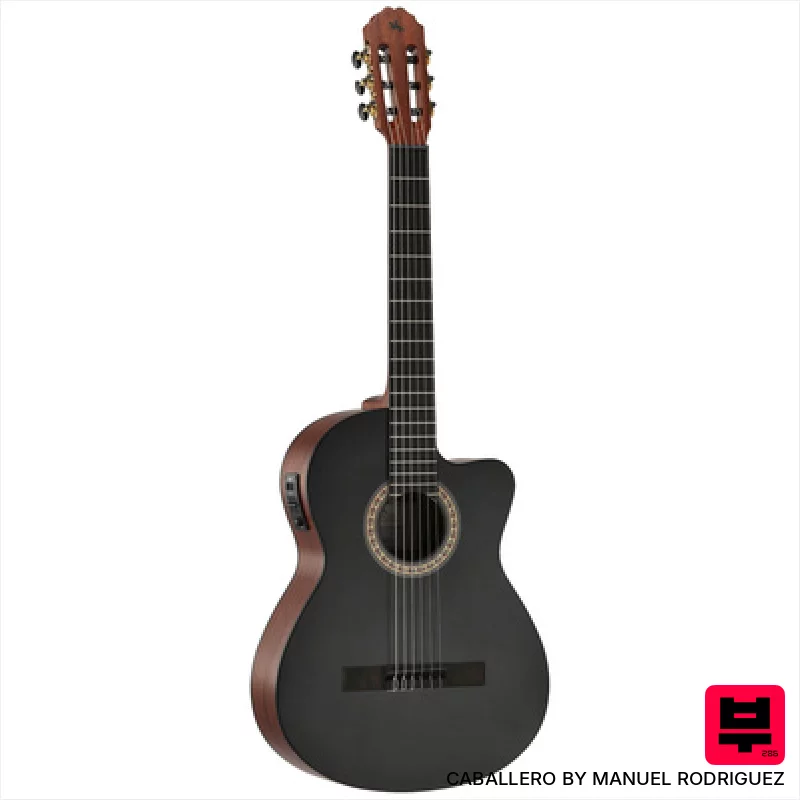
Caballero by Manuel Rodriguez Principio CA-PM SB
- • Solid spruce top delivers a clear, responsive tone with good projection.
- • GEWA ETC-4 pickup system provides usable amplified sound for stage performance.
- • Okoume neck with carbon reinforcement enhances stability and reduces unwanted movement.
- • Sapele back and sides offer warmth and balance, complementing the spruce top.
- • Black matte finish might show fingerprints and require more diligent cleaning.
- • Ovangkol fingerboard can be slightly drier than rosewood, potentially needing occasional humidification.
- • While versatile, the plugged-in tone is geared towards acoustic-electric performance, not high-gain scenarios.
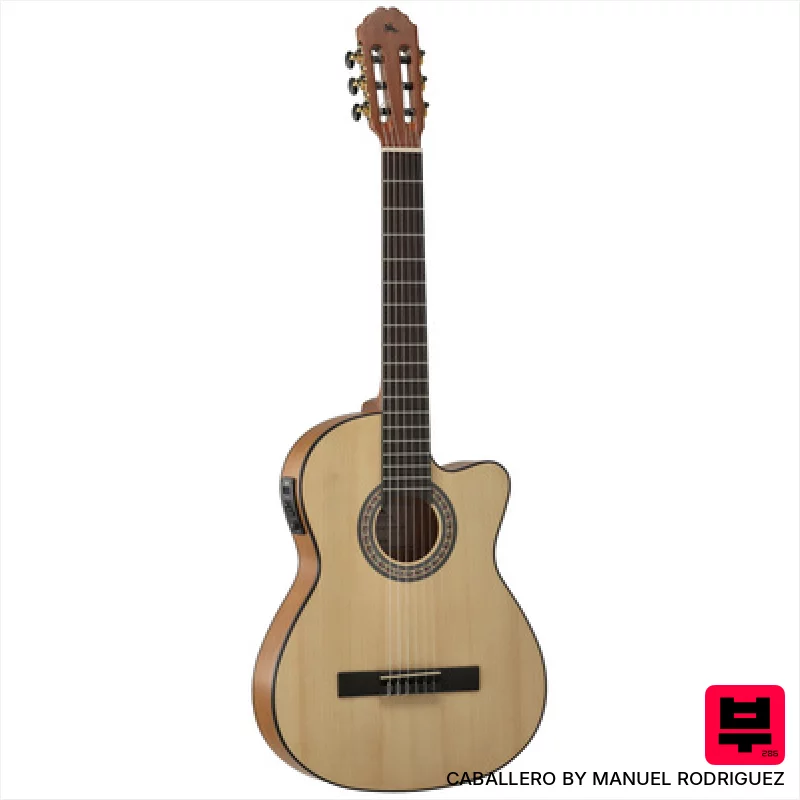
Caballero by Manuel Rodriguez Principio CA-PM FE
- • Solid spruce top delivers a surprisingly bright and responsive tone.
- • GEWA ETC-4 pickup system offers decent amplified sound with a tuner.
- • Okoume neck with carbon reinforcement provides stability and comfortable playability.
- • Attractive decorative rosette and binding add a touch of visual appeal.
- • Agathis back and sides limit the overall tonal complexity and sustain.
- • The Hannabach 600HT strings, while decent, might be a quick upgrade for serious players.
- • The open-pore matte finish, while eco-friendly, can feel a little less refined.
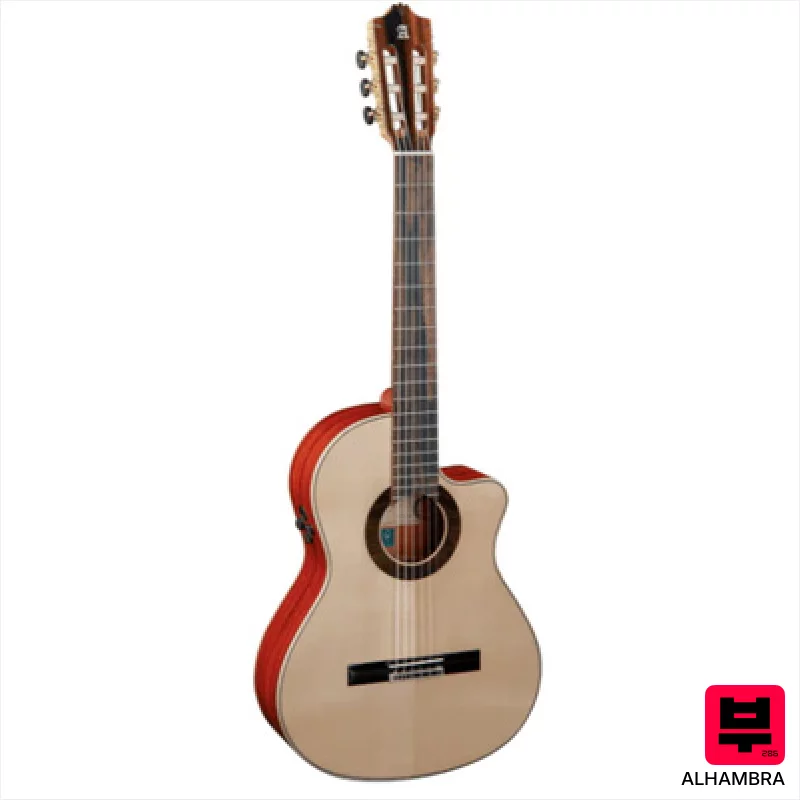
Alhambra Green Sustain Cut E8 w/Gig Bag
- • Solid German spruce top delivers a clear, projecting voice.
- • Padauk back and sides offer warmth and sustain.
- • Fishman Flex M Blend pickup system provides excellent amplified tone.
- • Ergoneck neck profile enhances comfort and playability for longer sessions.
- • Padouk can be prone to cracking if humidity isn't carefully managed.
- • The cutaway, while functional, slightly compromises upper-body resonance.
- • High-gloss finish might be a fingerprint magnet for some players.
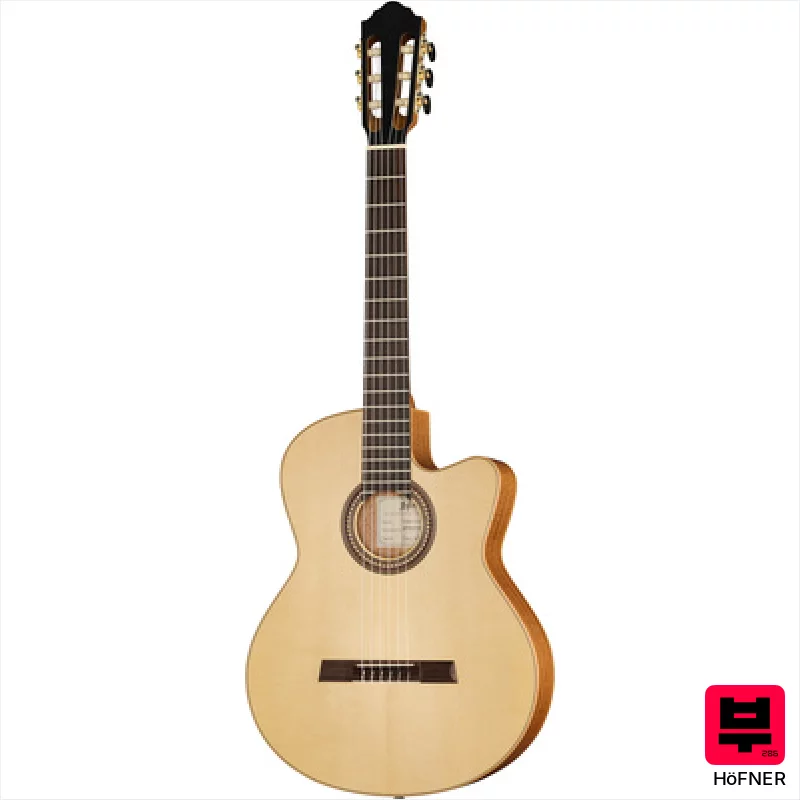
Höfner Meister Series HM65-F-CE
- • Solid spruce top delivers clear, articulate projection and warmth.
- • Mahogany back & sides add a pleasing richness and sustain.
- • Alder neck provides stability and a comfortable, responsive feel.
- • Rosewood fingerboard offers smooth playability and a classic tone.
- • Höfner Green Line finish may not appeal to all aesthetic preferences.
- • Solid construction results in a slightly heavier instrument than some alternatives.
- • Limited tonal versatility compared to guitars with onboard electronics.
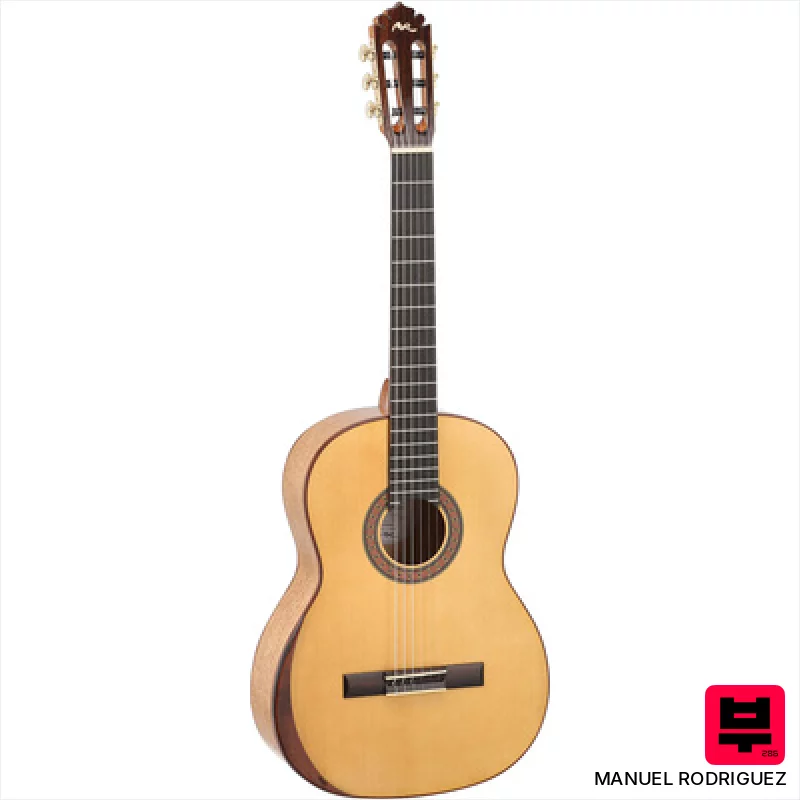
Manuel Rodriguez Superior Anniversario 120 J-SB
- • Solid spruce top delivers a bright, responsive, and articulate tone.
- • Birdseye maple back/sides add visual flair and focused projection.
- • Bone nut and saddle improve sustain and tuning stability significantly.
- • Mahogany neck with ebony fingerboard offers comfortable playability and warmth.
- • The high-gloss finish may be a fingerprint magnet and require careful maintenance.
- • Birdseye maple can sometimes be visually polarizing; not universally appealing.
- • Limited edition (120 pieces) restricts availability and potential resale value.
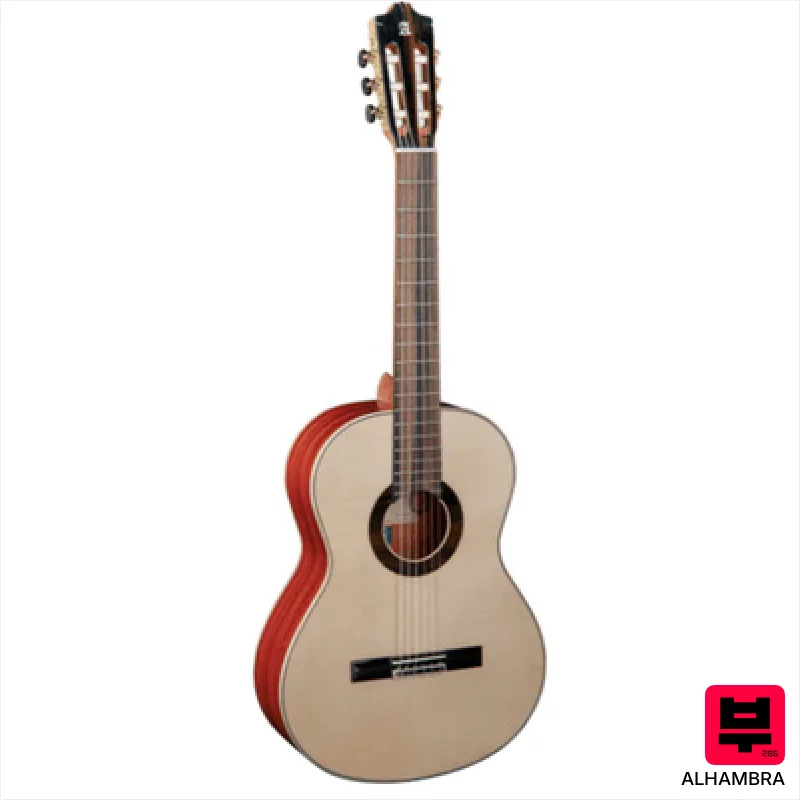
Alhambra Green Sustain Classical w/GBag
- • Solid German spruce top delivers a bright, articulate tone with excellent projection.
- • Padouk back and sides add warmth and sustain, balancing the spruce's brightness.
- • Ergoneck profile enhances playing comfort, especially for longer practice sessions.
- • Gold-plated machine heads provide smooth, precise tuning stability.
- • The high-gloss finish, while attractive, can be a fingerprint magnet and feel slightly less 'open' tonally.
- • Padouk, while beautiful, can exhibit some graininess, affecting the aesthetic for some players.
- • The included gig bag is functional but not a premium, road-ready case.
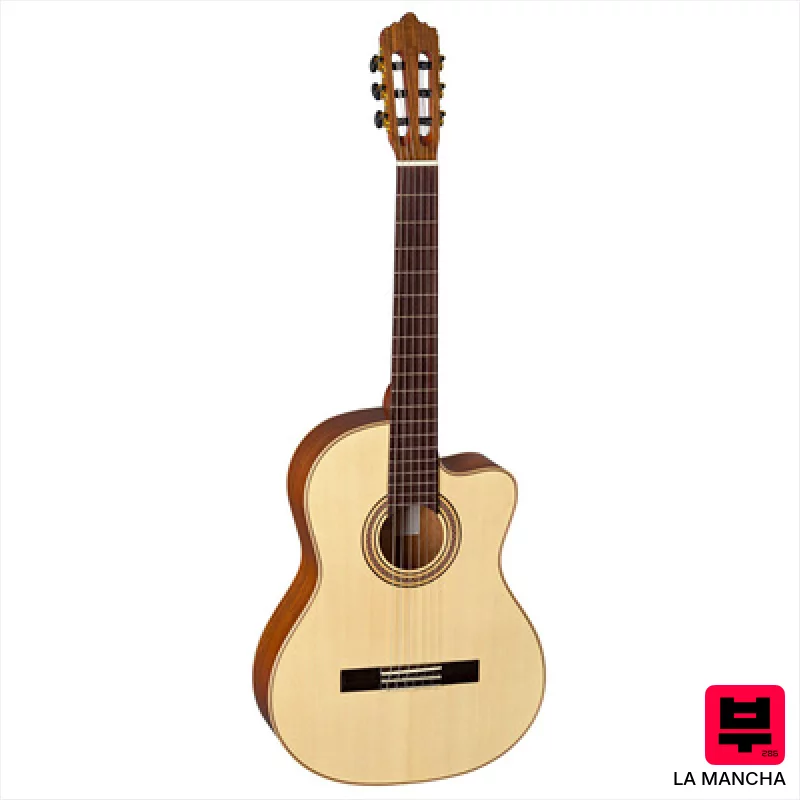
La Mancha Rubi S-C
- • Solid German spruce top delivers a surprisingly rich and resonant tone.
- • Toona Kalantas neck with carbon reinforcement ensures excellent stability and playability.
- • The Spanish neck-body joint provides comfortable access to higher registers.
- • Ovangkol fingerboard offers a smooth playing surface and contributes to a warm tone.
- • Mahogany back and sides, while pleasing, limit the overall projection compared to rosewood.
- • High-gloss finish, while attractive, can feel a little sticky in humid conditions.
- • Savarez Cantiga strings are decent, but experienced players will likely upgrade for more nuanced tone.
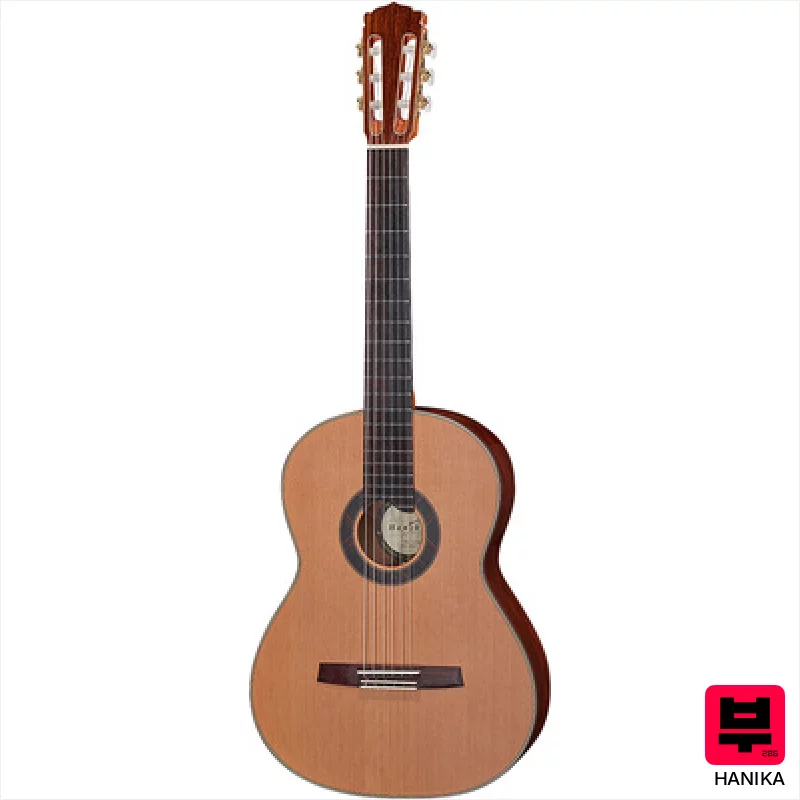
Hanika 56 SC
- • Exceptional Santos rosewood back/sides deliver rich, complex overtones.
- • Asymmetrical bracing yields a remarkably responsive and dynamic sound.
- • Cedar top provides warmth and projection ideal for lyrical playing.
- • Rubner R2 machine heads offer smooth, precise tuning stability.
- • The high-gloss finish can be prone to fingerprints and smudging.
- • AAA grade materials command a premium-priced investment.
- • The 52mm nut width may feel wide for players accustomed to narrower necks.
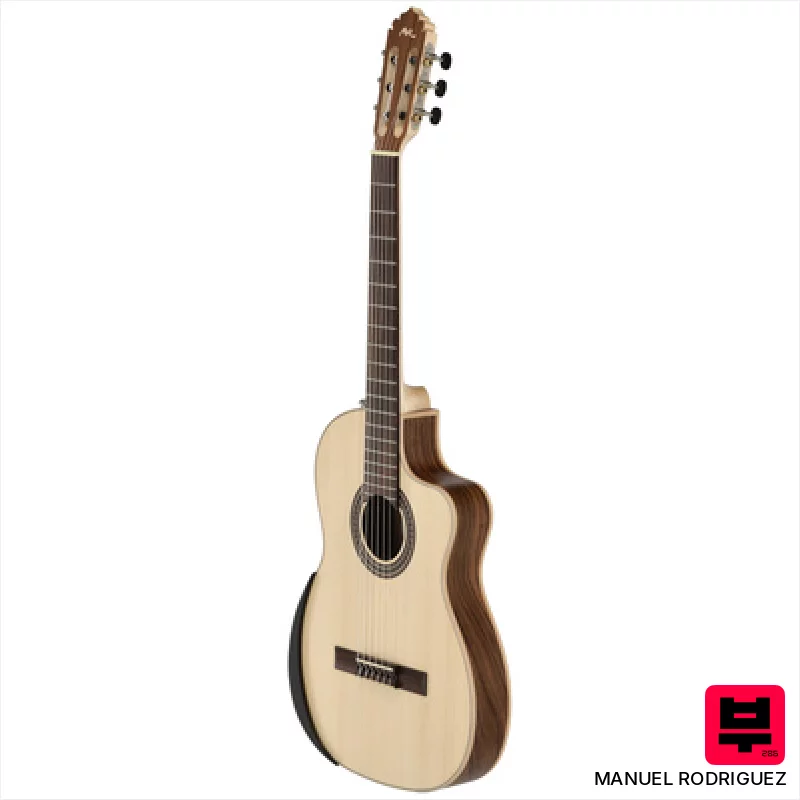
Manuel Rodriguez Ecologia Samba Plano
- • Solid spruce top delivers a clear, responsive tone with good projection.
- • Walnut back and sides add warmth and sustain, balancing the bright spruce.
- • Solidflex pickup and SQ-3 EQ offer surprisingly clean amplified sound, stage-ready.
- • Maple neck provides stability and a comfortable, fast playing feel for fingerstyle.
- • Open pore finish, while aesthetically pleasing, may require more diligent care to prevent moisture issues.
- • Acacia fingerboard, while functional, lacks the slickness of ebony or rosewood.
- • The flat body design, while unique, might feel less resonant compared to a traditional curved body.
How to Choose the Best 4/4 Size Classical Guitars
Tonewoods
Spruce tops generally give you more projection and clarity, good for cutting through an ensemble. Cedar tends to be warmer, more responsive for softer passages, but can get muddy if you're not careful with your technique. Rosewood back and sides bring depth and sustain, while mahogany can offer a drier, more focused tone.
Bracing Pattern
This is HUGE. Fan bracing is the standard for modern classical guitars, allowing for a more even distribution of vibration and a richer tone. X-bracing is less common but can offer a different kind of projection, though often at the expense of nuance. The pattern impacts the guitar's responsiveness and overall tonal balance.
Action & Neck Profile
Low action is desirable for playability, but too low and you'll get fret buzz. The neck profile - whether it's a slim, modern feel or a more traditional, rounded shape - is a matter of personal preference, but it dramatically affects comfort and speed.
Sustain & Projection
Classical guitar isn't about screaming distortion. It's about creating a singing tone that resonates and hangs in the air. You want a guitar that sustains notes beautifully and projects well, even in a larger venue without amplification.
Overall Articulation
A good classical guitar should allow for clear, distinct articulation of notes - no blurring or muddiness. This is especially critical for complex pieces with fast passages or intricate fingerpicking patterns. It's about control, not just volume.
Buying Guide
Don't chase the cheapest option; corners get cut in wood quality and bracing. A solid top is almost mandatory for any serious player. Pay attention to the finish - a thick, glossy finish can dampen the guitar's resonance. Ultimately, the best guitar is the one that feels right and inspires you to play, so try before you buy if possible. A slightly higher price tag often buys you better wood, a more refined setup, and a more nuanced voice.
Our Methodology
We don't just look at specs here. We've spent years playing these guitars - in practice rooms, on stage, and in professional studios. Our evaluations are based on how they feel in the hand, how they respond dynamically, and, crucially, how they sound in a variety of musical contexts. We A/B test against each other, and against guitars we know and love, to give you a realistic assessment.

