
Best Fender 4/4 Size Classical Guitars 2026
Alright, so you're looking at a Fender classical? It's a bit of a curveball, isn't it? Fender isn't exactly the first name that pops into your head when you think 'serious classical guitar,' but they've been quietly making some surprisingly decent instruments for decades. Let's break down what you're getting with a Fender 4/4 classical, and whether it's actually worth the hype for your playing style, be it studio tracking or a low-key gig.
Last updated: October 9, 2026

Fender CN-60S Natural WN w/Bag
- • Solid spruce top delivers a surprisingly resonant and bright tone.
- • Mahogany back & sides add warmth and sustain, nicely balanced.
- • Walnut fingerboard offers a comfortable playing feel, a subtle improvement.
- • The included gig bag is genuinely useful for transport and storage.
- • Laminated mahogany back/sides limit the overall tonal complexity and projection.
- • Factory strings are serviceable, but an immediate upgrade is highly recommended.
- • High-gloss finish, while attractive, can feel a bit sticky in humid environments.
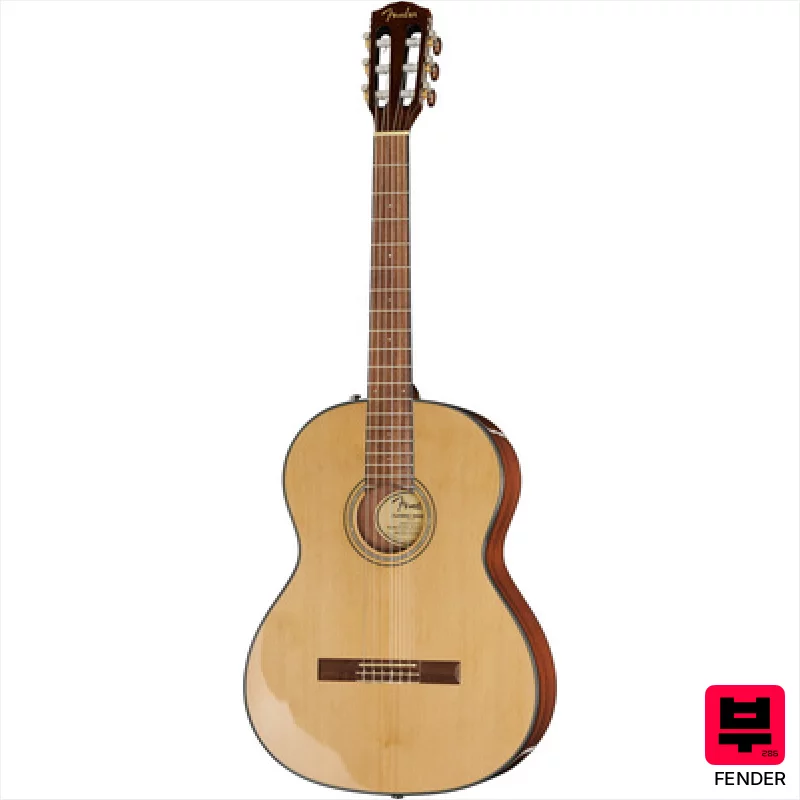
Fender CN-60S Natural WN
- • Solid spruce top delivers surprisingly rich, warm tone for the price.
- • Mahogany back & sides provide good projection and sustain.
- • Walnut fingerboard offers a comfortable playing experience with a slightly warmer feel.
- • Dual-action truss rod allows for easy neck adjustments over time.
- • Laminated mahogany back and sides limit the overall tonal complexity.
- • Factory strings are serviceable but an immediate upgrade is recommended.
- • High-gloss finish can feel a little thick and potentially impact resonance.
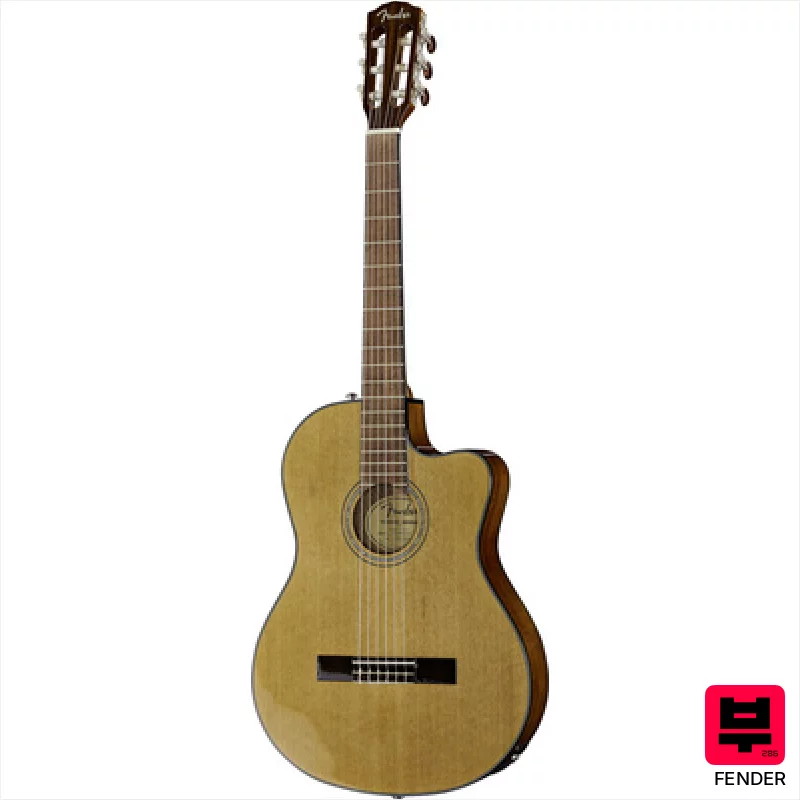
Fender CN-140SCE Thinline Natural
- • Solid cedar top delivers a warm, responsive, and articulate tone.
- • Ovangkol back and sides add projection and sustain with a balanced character.
- • Fishman Classic Design pickup system provides a clean amplified sound for performance.
- • Mahogany neck offers comfortable playability and a pleasing warmth to the overall tone.
- • The thinner body, while comfortable, sacrifices some of the traditional classical guitar resonance.
- • Ovangkol laminate isn't as tonally complex as all-solid wood construction.
- • Nut width of 43 mm might feel cramped for players accustomed to wider necks.
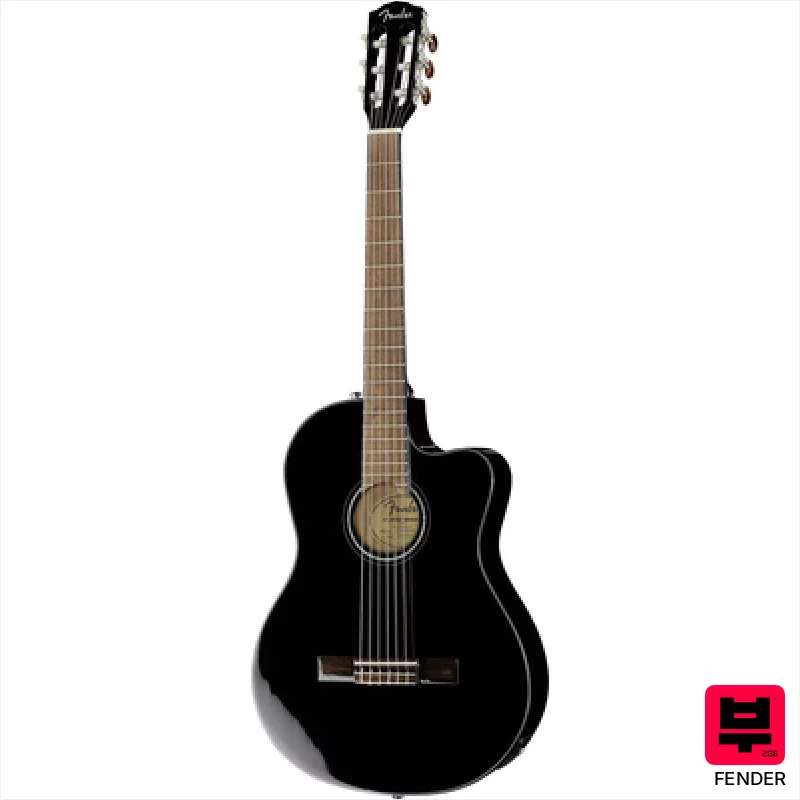
Fender CN-140SCE Thinline Black
- • Solid cedar top delivers warm, resonant tones ideal for classical and fingerstyle.
- • Fishman Classic Design pickup provides amplified sound with natural acoustic character.
- • Ovangkol back and sides add projection and a touch of brightness to the overall tone.
- • Mahogany neck offers comfortable playability and good sustain.
- • Laminated back and sides limit the guitar's potential for complex overtones.
- • The thinner body, while comfortable, slightly reduces acoustic volume compared to traditional classicals.
- • Walnut fingerboard might feel a bit harder than rosewood for some players.
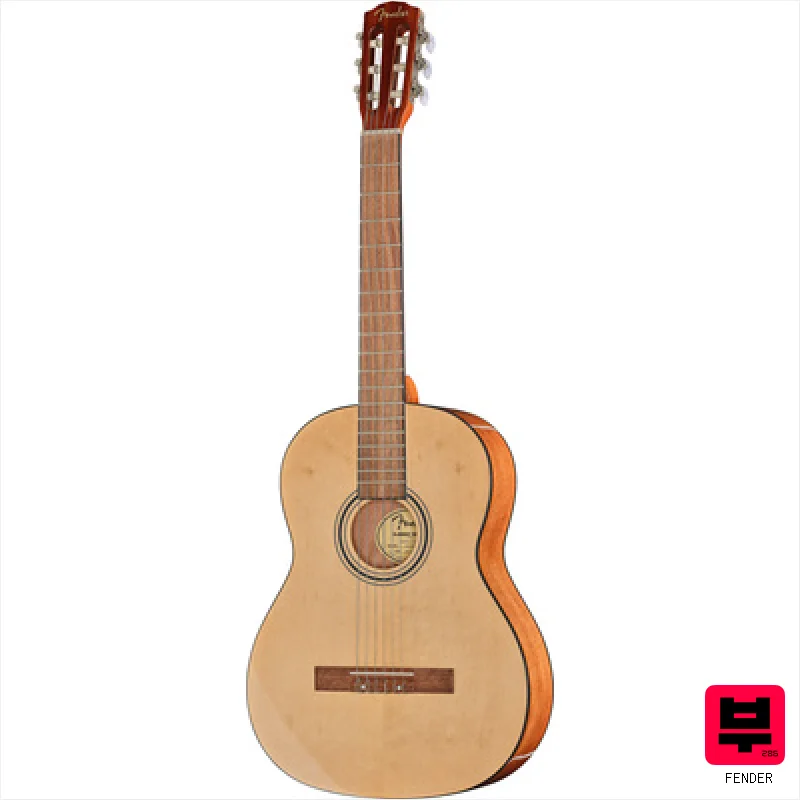
Fender CN-30 Wide Neck WN Natural
- • Easy 2-inch nut width for large hands
- • Affordable price for a full-sized classical guitar
- • Laminated spruce top for durability
- • Includes a gig bag with purchase
- • No bridge pin system for standard nylon strings
- • Laminated back and sides lack resonance depth
- • Mahogany neck feels different from traditional rosewood
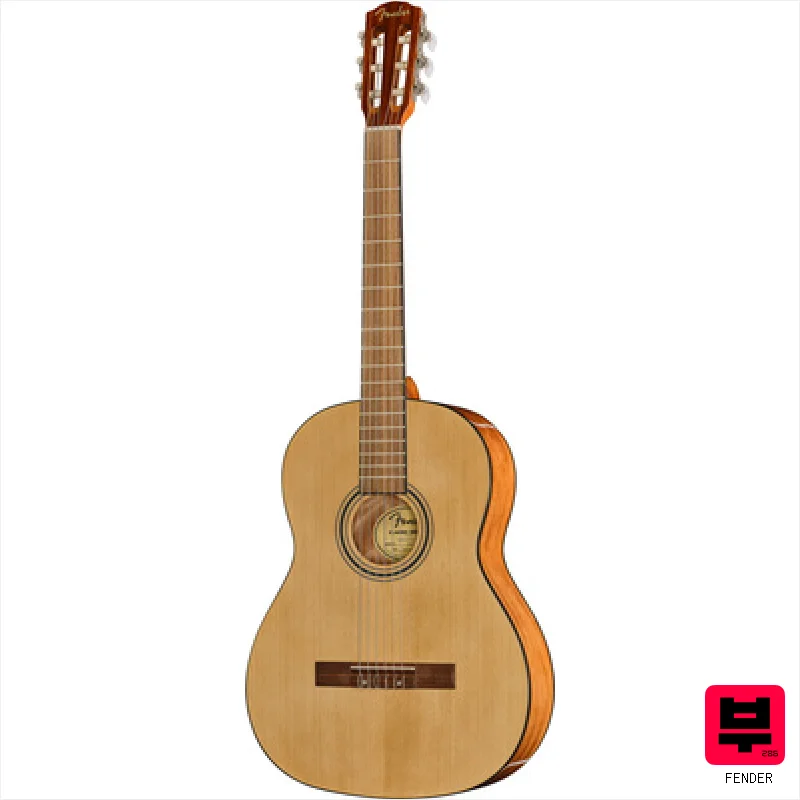
Fender CN-30 Natural
- • Solid spruce top offers strong response
- • Laminated okoume back and sides
- • Mahogany neck provides stable tuning
- • Walnut fingerboard resists wear well
- • Laminated wood limits resonance
- • PPS nut may feel less traditional
- • Lack of solid wood body

Fender CN-60S Black IL w/Bag
- • Solid spruce top offers a surprisingly bright, responsive tone.
- • Mahogany back & sides provide warmth and sustain.
- • High-gloss black finish looks sharp and protects the instrument.
- • Included gig bag offers convenient portability and basic protection.
- • The laminated back and sides limit the overall tonal complexity.
- • 18 frets restrict higher register playing compared to full-scale guitars.
- • Factory Fender 100 Classic strings are serviceable but benefit from an upgrade.
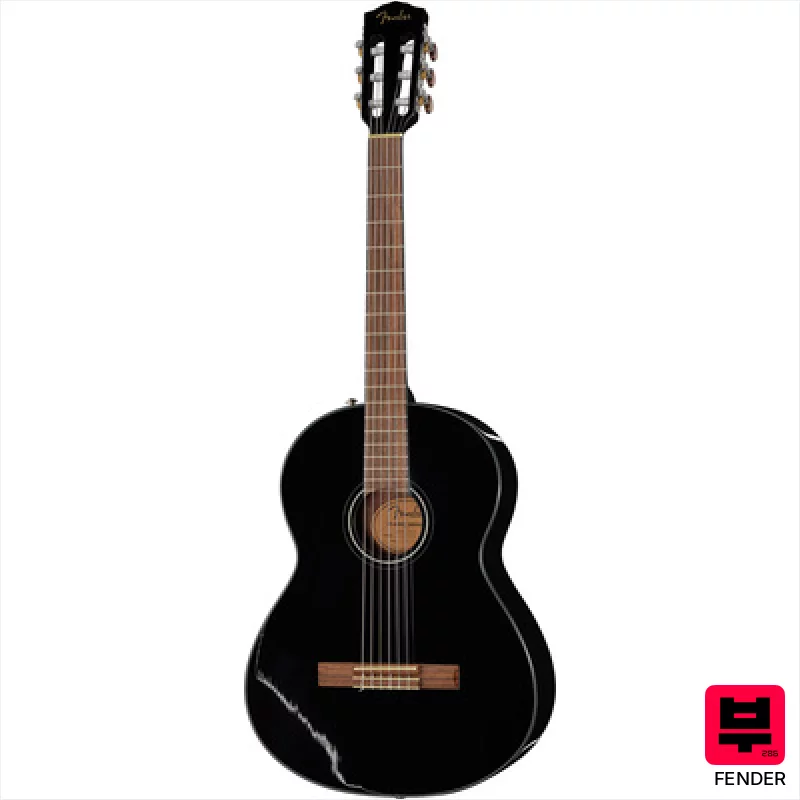
Fender CN-60S Black IL
- • Solid spruce top provides a bright, responsive tone ideal for classical pieces
- • Mahogany back and sides offer warmth and sustain, balancing the top's brightness
- • High-gloss black finish looks striking and protects the instrument well
- • Indian Laurel fretboard contributes to a smooth playing experience and clear note definition
- • Laminated mahogany back and sides limit the overall tonal complexity compared to all-solid wood guitars
- • 43mm nut width might feel wide for players accustomed to narrower necks
- • High-gloss finish can be prone to fingerprints and may require more careful cleaning
4/4 Size Classical Guitars by the numbers
Measured across all 467 models in this category, so «wide», «short» or «expensive» mean something you can check.
How to Choose the Best 4/4 Size Classical Guitars
Heritage & Design Philosophy
Fender's DNA is rooted in electrics, so their classicals often have a more modern feel - slightly wider necks than traditional Spanish models, sometimes a bit more headroom in the tone. This isn't a bad thing, but it's a departure from the classic, intimate vibe of a Ramirez or Cordoba.
Tone Characteristics
Don't expect a dark, brooding tone. Fenders tend to have a brighter, more articulate voice, leaning towards a more 'projected' sound. It's not necessarily lacking in warmth, but it's got a clarity that can cut through a band mix - a plus for some, a minus for others who prefer that warm, woody hug.
Build Quality & Materials
Fender's build quality is generally consistent, but you're not going to find exotic tonewoods like you do on higher-end Spanish guitars. They often use laminated tops on the more affordable models, which impacts sustain and responsiveness - a definite compromise to keep the price down. Solid tops are available, though.
Playability & Neck Profile
Fender's neck profiles are usually comfortable, often erring on the side of a slightly flatter profile that's easier for players accustomed to electric guitars. The action tends to be a bit lower than traditional classical guitars, which can be a plus for faster playing, but might require adjustment to get that authentic classical feel.
Electronics (if equipped)
Some Fender classicals have built-in pickups. While these aren't going to rival a dedicated acoustic pickup system, they can be surprisingly useful for stage work or recording - offering a usable amplified tone, though you'll want a decent preamp to really tame the inherent brightness.
Buying Guide
Look, a Fender classical isn't going to replace a master-level Spanish guitar. However, they offer a solid, playable instrument at a reasonable price point. If you're a beginner or intermediate player, or you need a reliable, amplified classical for gigs, a Fender is worth a look. Avoid the really cheap laminated-top models if you can; the difference in feel and response is noticeable. Pay attention to the neck profile - it's what will really determine your comfort level.
How This List Is Built
We don't play these instruments — we're a catalog, not a review desk, and we'd rather say so than pretend otherwise. This page covers 8 of 467 4/4 size classical guitars from the Thomann catalogue, which is the largest single source of specification data in this category: 8 in detail, the rest listed with their specifications.
Position is computed, not curated. We parse the manufacturer's own description into actual values — nut width, scale, fret count, fingerboard radius, size, alloy — and rank on them: how many specifications a model has published, how many of them are measurable numbers, and how precisely it meets this page's criterion. A product image adds a little. Price is not a ranking signal: it tells you nothing about whether a neck fits your hand. The same inputs always produce the same order, so nothing here is shuffled to look fresh.
What this list is good for: narrowing a category down to a shortlist by spec and budget. What it isn't: a substitute for hearing an instrument. Before you buy, read hands-on reviews and, where you can, play it. Full methodology.

