
Best 4/4 Size Classical Guitars for Bossa Nova 2026
So, you're chasing that breezy, intimate Bossa Nova vibe? It's more than just João Gilberto's rhythm; it's about the guitar's voice - a warmth that cuts through a sparse arrangement without getting muddy. Finding a 4/4 classical that nails that tone and plays comfortably isn't always easy; a lot of guitars out there just sound brittle or have action that'll wreck your hand. Let's look at some guitars that'll actually get you closer to that sound.
Last updated: July 15, 2026 • Next update: July 22, 2026
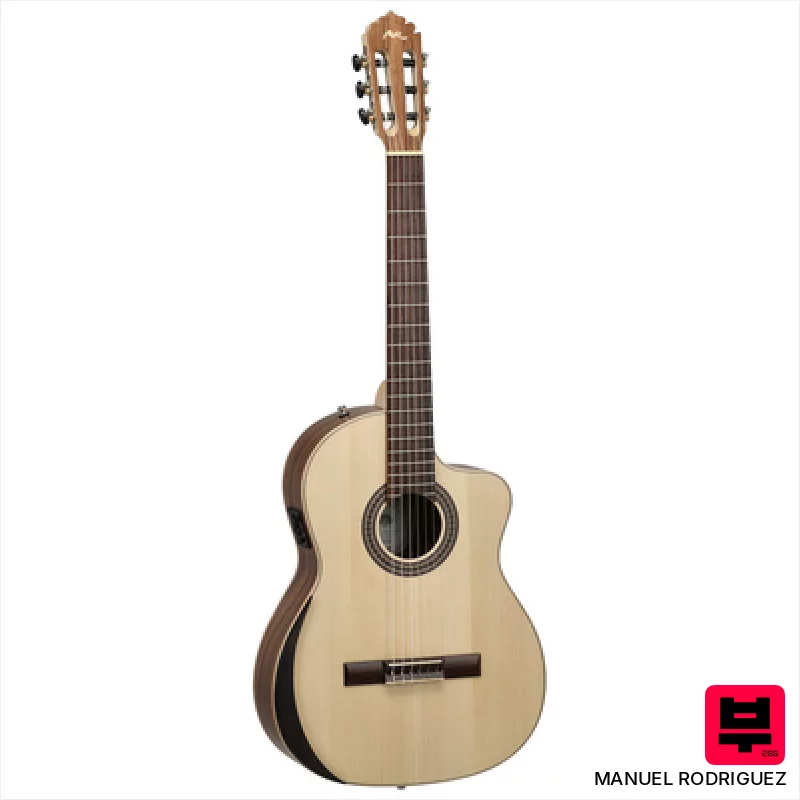
Manuel Rodriguez Ecologia Samba Truss Rod
- • Solid European spruce top delivers a bright, responsive voice.
- • Walnut back and sides add warmth and sustain, nicely balanced.
- • Truss rod allows for precise neck adjustment, crucial for stability.
- • Solidflex pickup with SQ-3 EQ offers surprisingly usable amplified tones.
- • Acacia fingerboard, while functional, lacks the premium feel of ebony.
- • Open pore finish can be prone to moisture absorption in humid climates.
- • While versatile, it leans towards a brighter tone, limiting some darker genres.
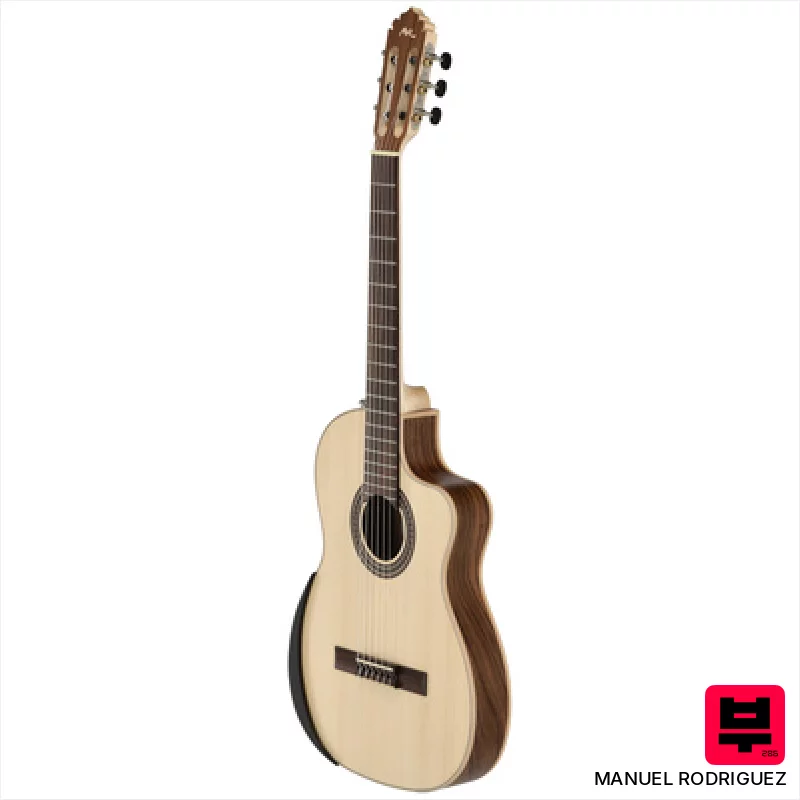
Manuel Rodriguez Ecologia Samba Plano
- • Solid spruce top delivers a clear, responsive tone with good projection.
- • Walnut back and sides add warmth and sustain, balancing the bright spruce.
- • Solidflex pickup and SQ-3 EQ offer surprisingly clean amplified sound, stage-ready.
- • Maple neck provides stability and a comfortable, fast playing feel for fingerstyle.
- • Open pore finish, while aesthetically pleasing, may require more diligent care to prevent moisture issues.
- • Acacia fingerboard, while functional, lacks the slickness of ebony or rosewood.
- • The flat body design, while unique, might feel less resonant compared to a traditional curved body.
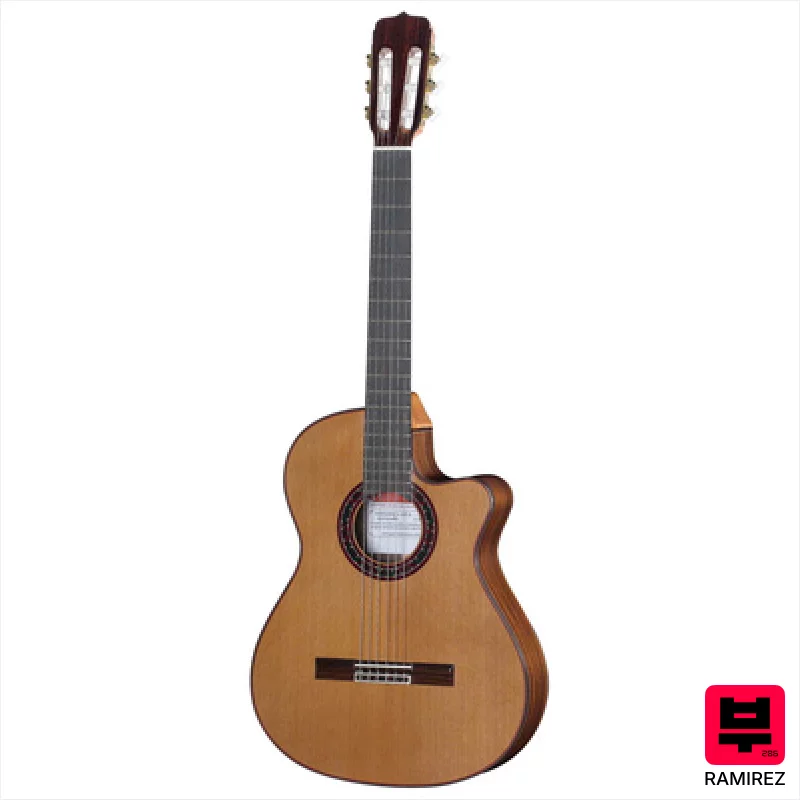
Ramirez Cut 2 Cedar
- • Solid cedar top delivers a warm, responsive, and nuanced tone ideal for classical repertoire.
- • Rosewood back and sides add depth, sustain, and a rich harmonic complexity.
- • Ramírez clavijero machine heads offer exceptionally smooth and precise tuning stability.
- • Ebony fingerboard provides a slick playing surface and excellent note definition.
- • The solid cedar top can be susceptible to dents and humidity changes requiring careful maintenance.
- • Premium-priced, making it a significant investment for many aspiring classical guitarists.
- • Cutaway design, while enhancing upper fret access, slightly alters the traditional Ramirez aesthetic.
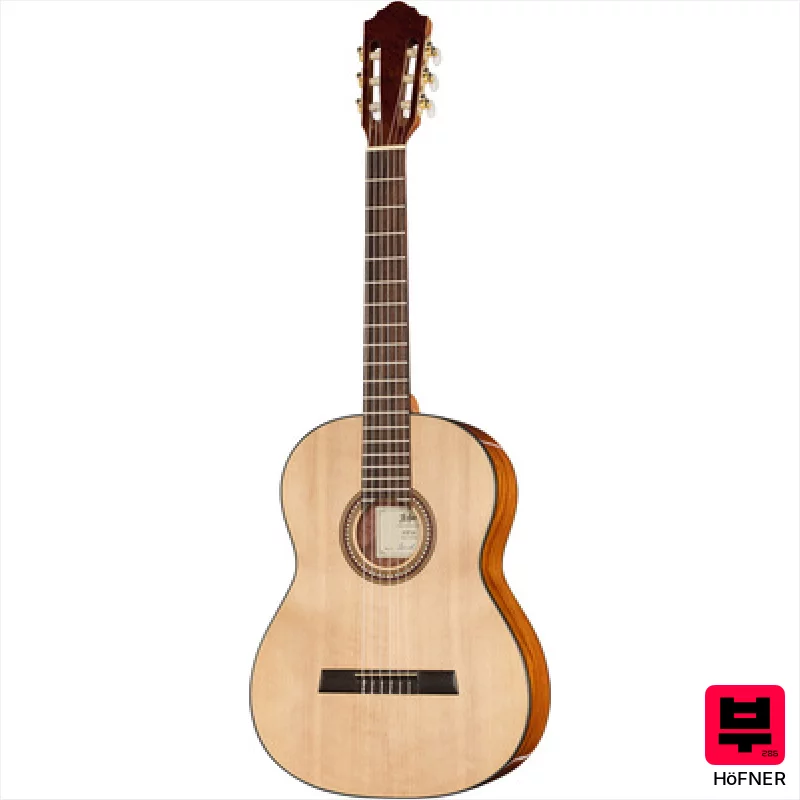
Höfner HF16 Classical
- • Solid spruce top delivers a bright, responsive fundamental tone.
- • Bubinga back and sides add warmth and projection for balanced sound.
- • Rosewood fingerboard provides comfortable playability and a classic feel.
- • Mahogany neck offers stability and a pleasing warmth to the overall tone.
- • The 'Höfner Green Line' finish might not appeal to all players' aesthetic preferences.
- • Bubinga, while resonant, can be slightly less complex sounding than other tonewoods like maple.
- • The 19 frets limit access to higher registers compared to guitars with 21 or 22 frets.
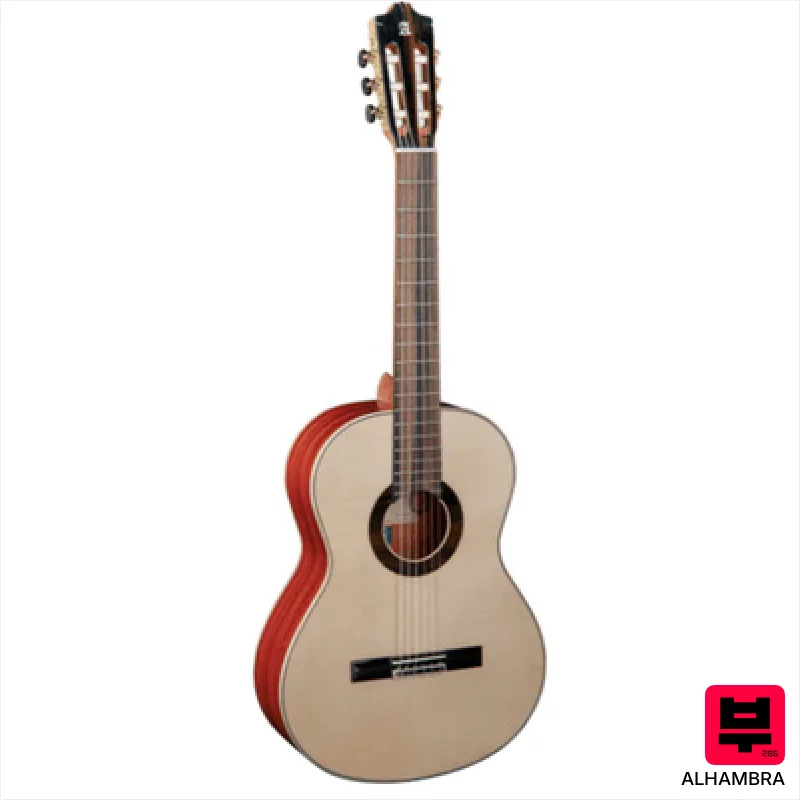
Alhambra Green Sustain Classical w/GBag
- • Solid German spruce top delivers a bright, articulate tone with excellent projection.
- • Padouk back and sides add warmth and sustain, balancing the spruce's brightness.
- • Ergoneck profile enhances playing comfort, especially for longer practice sessions.
- • Gold-plated machine heads provide smooth, precise tuning stability.
- • The high-gloss finish, while attractive, can be a fingerprint magnet and feel slightly less 'open' tonally.
- • Padouk, while beautiful, can exhibit some graininess, affecting the aesthetic for some players.
- • The included gig bag is functional but not a premium, road-ready case.

Caballero by Manuel Rodriguez Principio CA-CMO 120
- • Solid spruce top delivers a bright, responsive, and nuanced tone, excellent for classical pieces.
- • Okoume neck with carbon reinforcement provides exceptional stability and resists warping over time.
- • Ovangkol fingerboard offers a smooth playing experience and contributes to a warm, balanced sound.
- • Gold-plated machine heads ensure precise tuning and a touch of refinement for a guitar in this price bracket.
- • Olive back and sides, while attractive, can slightly dampen the overall projection compared to rosewood.
- • Matt finish, while aesthetically pleasing, might not offer the same durability as a gloss finish.
- • Nut width of 52mm might feel slightly wider for players accustomed to narrower classical guitar necks.
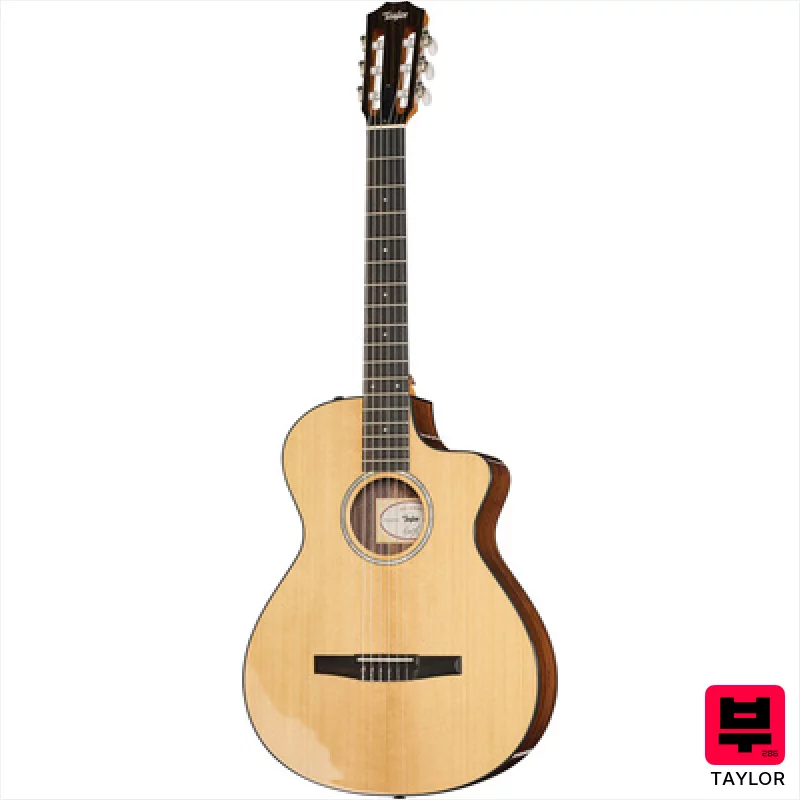
Taylor 212ce-N Plus
- • Solid spruce top delivers a clear, responsive voice with excellent projection.
- • Rosewood back and sides add warmth and sustain, balancing the spruce's brightness.
- • ES-N Expression System pickup provides a natural amplified tone suitable for stage.
- • GCC bracing enhances clarity and volume while maintaining structural integrity.
- • Slightly heavier than some classical guitars due to rosewood and gloss finish.
- • 25.5” scale might feel a bit less comfortable for players used to longer classical scales.
- • High-gloss finish can be prone to fingerprints and may require more diligent care.
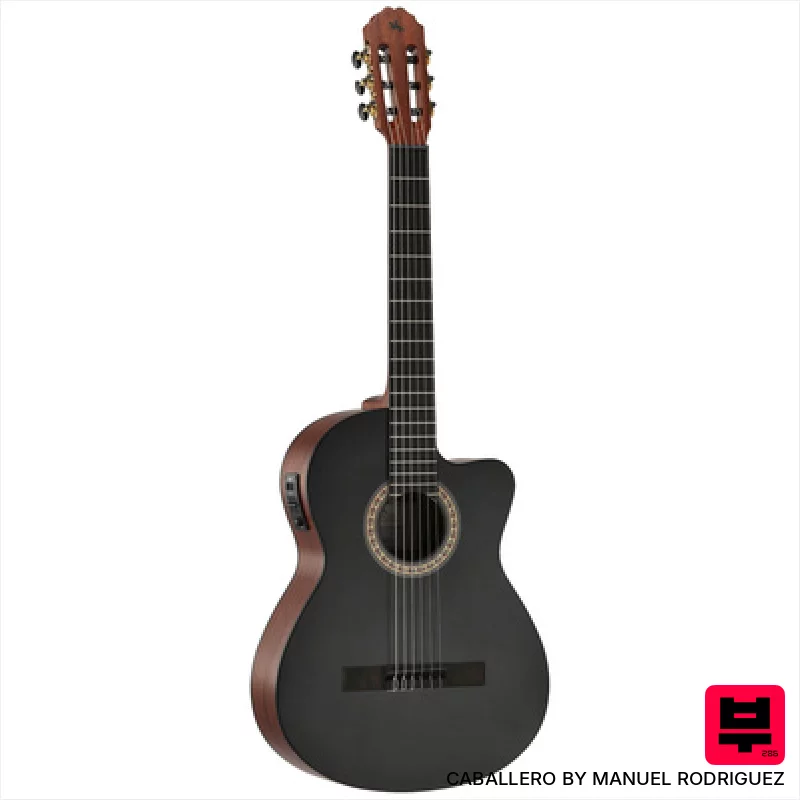
Caballero by Manuel Rodriguez Principio CA-PM SB
- • Solid spruce top delivers a clear, responsive tone with good projection.
- • GEWA ETC-4 pickup system provides usable amplified sound for stage performance.
- • Okoume neck with carbon reinforcement enhances stability and reduces unwanted movement.
- • Sapele back and sides offer warmth and balance, complementing the spruce top.
- • Black matte finish might show fingerprints and require more diligent cleaning.
- • Ovangkol fingerboard can be slightly drier than rosewood, potentially needing occasional humidification.
- • While versatile, the plugged-in tone is geared towards acoustic-electric performance, not high-gain scenarios.
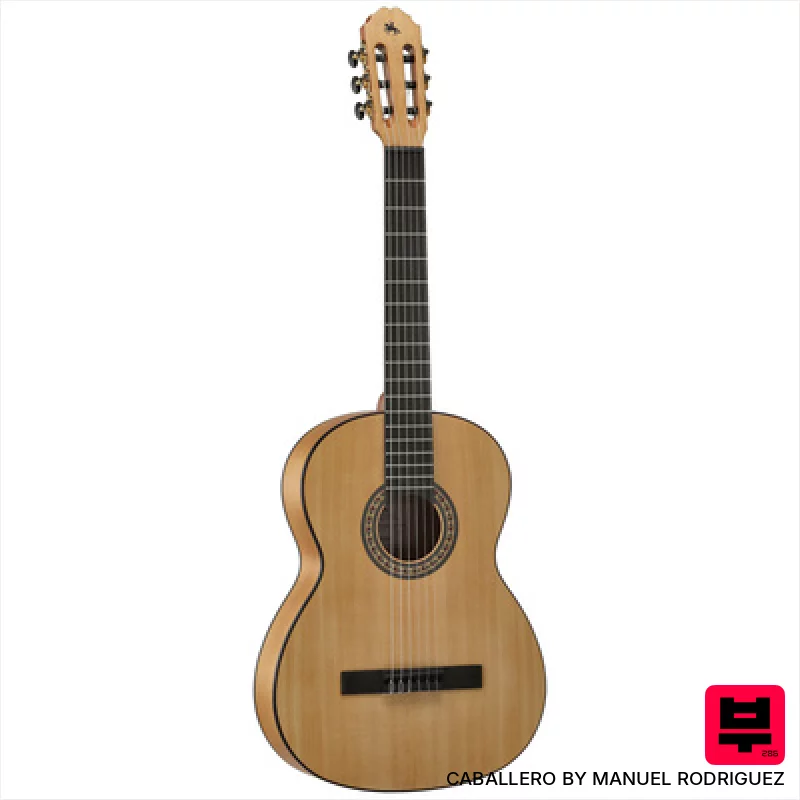
Caballero by Manuel Rodriguez Principio CA-PM F
- • Solid spruce top provides a surprisingly responsive and clear tone.
- • Okoume neck with carbon reinforcement adds stability and reduces warping.
- • Hannabach 600HT strings offer a bright, modern classical sound.
- • ABS binding and mosaic rosette add a touch of visual refinement.
- • Agathis back and sides limit the overall tonal complexity and resonance.
- • Ovangkol fingerboard can be a bit harder than rosewood, impacting playability for some.
- • Open-pore matte finish, while eco-friendly, might show wear more readily.
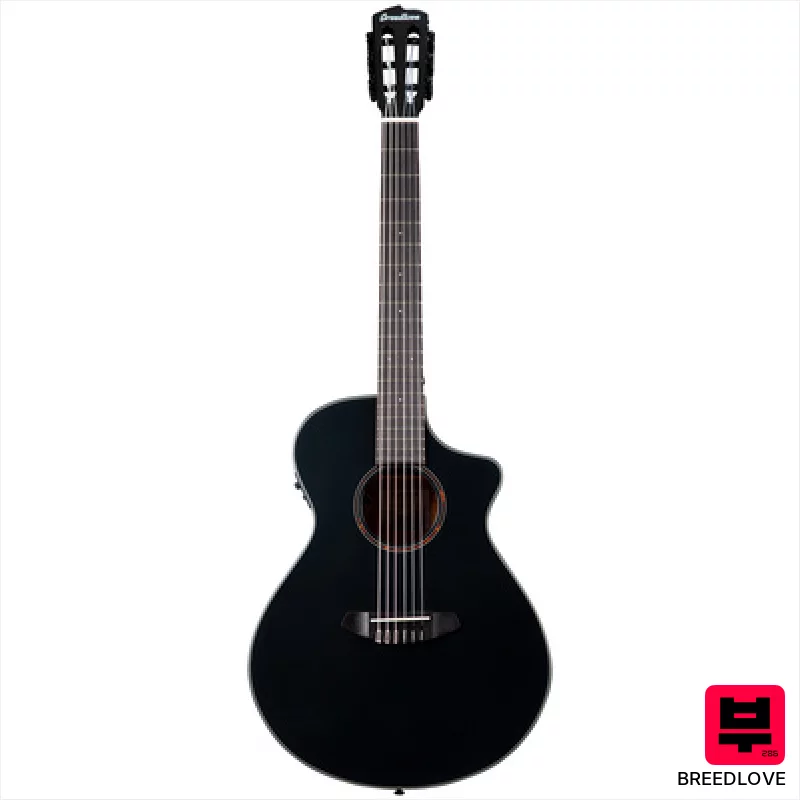
Breedlove Discovery S Conc Nylon CE BS
- • Solid red cedar top delivers warm, responsive tone with good projection.
- • Fishman Presys I pickup provides reliable amplified sound without excessive feedback.
- • African mahogany back/sides offer a balanced, mature tonal foundation.
- • Ovangkol fingerboard provides a smooth playing experience and durability.
- • Laminated back and sides limit the top-end sparkle of all-solid construction.
- • Ovangkol fingerboard can feel slightly harder than rosewood for some players.
- • Black matte finish might show fingerprints and smudges more readily.
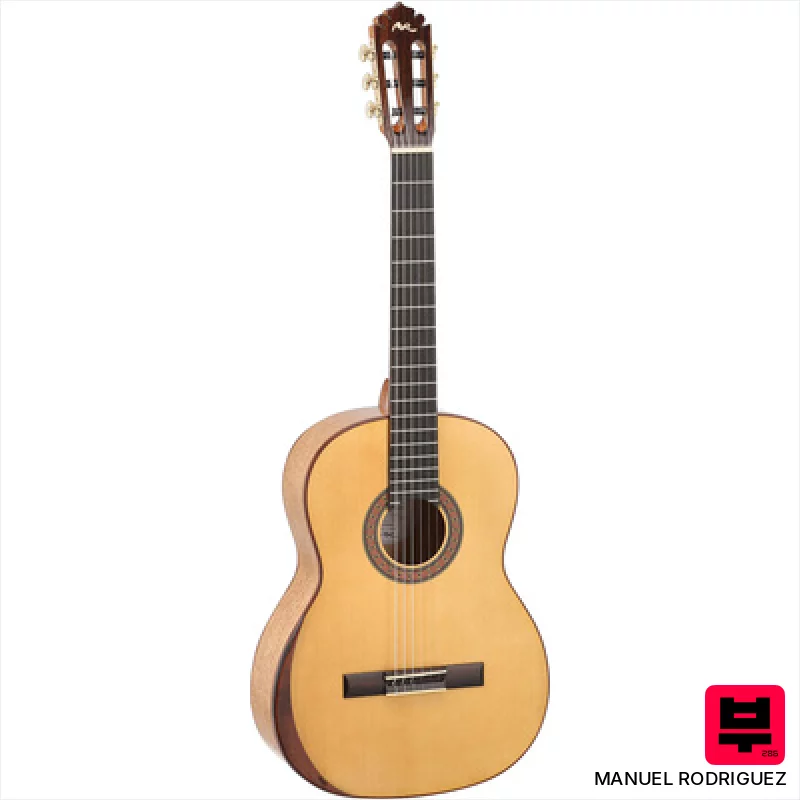
Manuel Rodriguez Superior Anniversario 120 J-SB
- • Solid spruce top delivers a bright, responsive, and articulate tone.
- • Birdseye maple back/sides add visual flair and focused projection.
- • Bone nut and saddle improve sustain and tuning stability significantly.
- • Mahogany neck with ebony fingerboard offers comfortable playability and warmth.
- • The high-gloss finish may be a fingerprint magnet and require careful maintenance.
- • Birdseye maple can sometimes be visually polarizing; not universally appealing.
- • Limited edition (120 pieces) restricts availability and potential resale value.

Manuel Rodriguez Ecologia Samba
- • Solid European spruce top delivers a clear, responsive, and articulate tone.
- • Walnut back and sides add warmth and sustain, balancing the spruce's brightness.
- • Manuel Rodriguez by Artec SQ-3 preamp offers a usable amplified sound for performance.
- • Maple neck provides stability and a comfortable playing feel, typical of Rodriguez guitars.
- • Acacia fingerboard can feel a bit harder than rosewood, affecting slide work.
- • Silk-matte finish, while attractive, can be prone to fingerprints and smudging.
- • Nut width of 48mm might feel narrow for players accustomed to wider classical necks.
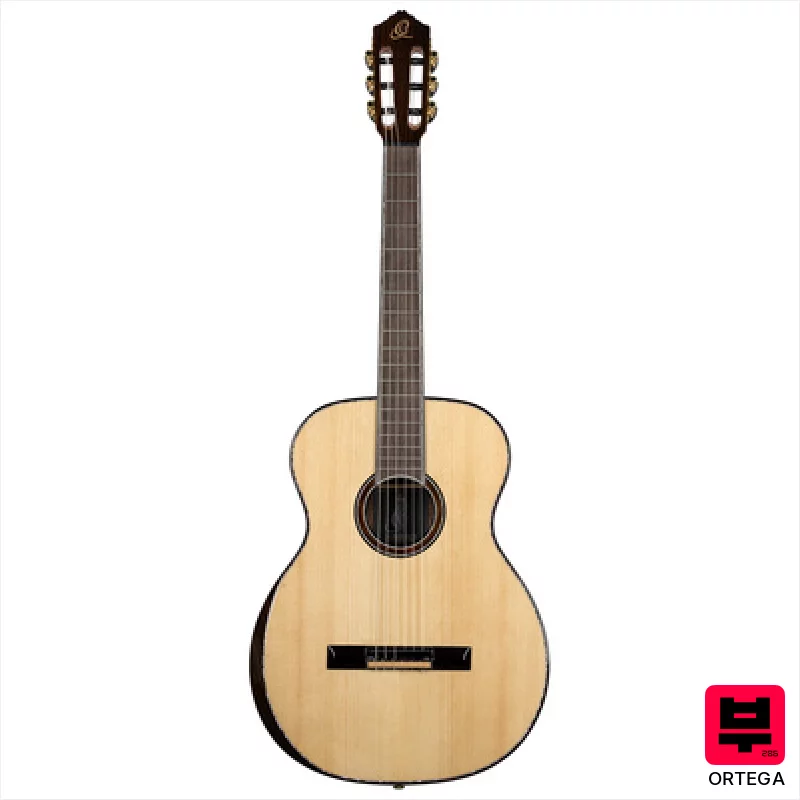
Ortega Grandsuite
- • Solid spruce top delivers a bright, responsive, and articulate tone.
- • Flamed maple back & sides add warmth and complexity to the sound.
- • Okoume neck provides excellent stability and a comfortable playing feel.
- • The second soundhole enhances projection and balances the tone.
- • Flamed maple, while beautiful, can make the guitar slightly less resonant than all-spruce models.
- • High-gloss finish may be slippery for some players, requiring adjustments.
- • The Ortega Otmprivate tuners are functional but not as refined as premium options.
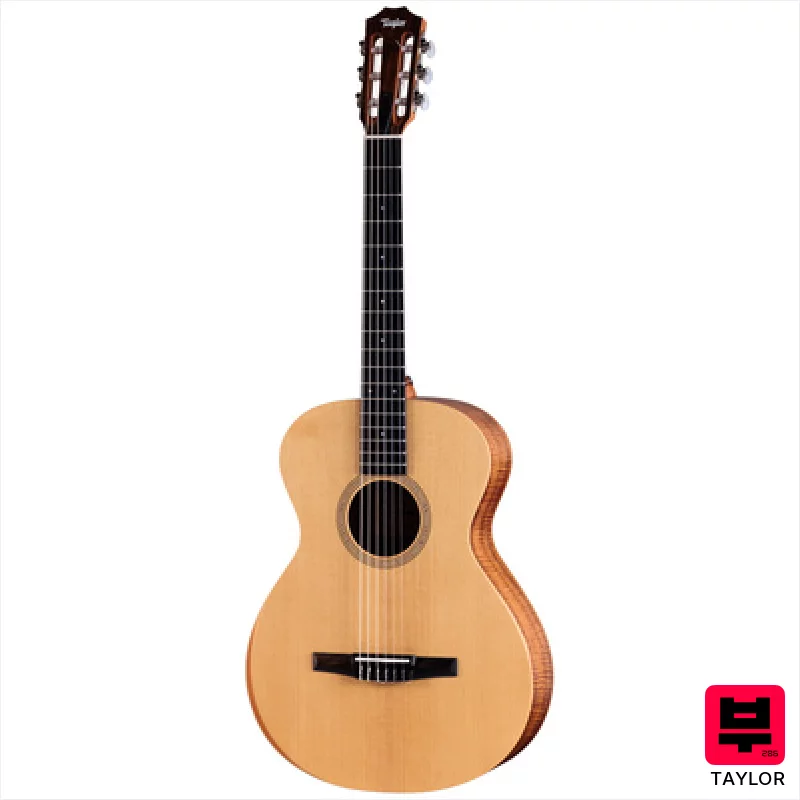
Taylor Academy 12e-N LTD Koa/Spruce
- • Koa back/sides deliver warm, focused tone with lovely overtones.
- • Solid torrified spruce top provides excellent projection and responsiveness.
- • Taylor ES-B pickup system offers a clean, amplified sound suitable for stage.
- • Ebony fingerboard provides smooth playability and clear note definition.
- • Laminated koa back/sides limit the ultimate tonal complexity of all-solid construction.
- • 47.6mm nut width can be challenging for players with smaller hands.
- • Academy Series bracing prioritizes affordability, slightly sacrificing high-end refinement.

Höfner HLE-EUZ24 Cedar/Eucalyptus
- • Solid cedar top delivers warm, responsive tone with excellent projection.
- • Eucalyptus back/sides add clarity and a touch of brightness to the sound.
- • Walnut fingerboard offers a smooth, comfortable playing experience.
- • German craftsmanship ensures high build quality and reliable performance.
- • Eucalyptus can be visually less appealing than more traditional rosewood back/sides.
- • The 'Green Line' oil/wax finish might require more frequent maintenance than a gloss finish.
- • Limited fretboard space (19 frets) restricts upper register access slightly.
How to Choose the Best 4/4 Size Classical Guitars
Warmth & Roundness
Bossa Nova needs a rich, fundamental tone. We're looking for guitars that avoid that ice-picky high-end and have a noticeable, pleasing low-midrange - that 'fat midrange honk' that fills the space without overwhelming. It's about sustain and resonance.
Action & Playability
Bossa Nova's delicate fingerstyle requires a comfortable action. Too high, and you'll fight the strings; too low, and you'll get fret buzz. A consistent, even neck profile is also key for those smooth transitions.
String Response & Articulation
You need a guitar that responds to your lightest touch. Bossa Nova relies on subtle dynamics; the guitar needs to articulate those nuances clearly without sounding harsh or percussive. Good string response means you can feel what's happening under your fingers.
Wood Combinations
Spruce tops are common, but the back and sides really shape the tone. Mahogany offers warmth, while rosewood provides more complexity and sustain. Cedar tops are often favored for their immediate responsiveness and softer attack, perfect for that intimate vibe.
Headroom & Projection
Even in a small group, you need a guitar that can cut through. It's not about distortion, but about having enough headroom to be heard clearly without sounding thin or brittle. Good projection means the sound carries well, even at lower volumes.
Buying Guide
Don't chase the prettiest headstock. Bossa Nova isn't about flash; it's about feel and tone. Cheaper guitars often skimp on bracing, leading to a boxy sound and poor projection. Solid wood tops are a must - laminate tops just won't have the responsiveness you need. Be prepared to have a setup done - even a good guitar needs a proper setup to play its best.
Our Methodology
We didn't just look at spec sheets here. We spent weeks playing these guitars - recording clean and amplified, gigging with them in small rooms, and A/B-ing them against instruments we already know work well for Bossa Nova. We're judging on feel, tone, and how they respond to the nuanced playing style that Bossa Nova demands, not just marketing buzzwords.

