
Best Cordoba 4/4 Size Classical Guitars 2026
So, you're looking at a Cordoba 4/4 classical - smart move. They've carved out a unique space in the classical guitar world, blending Spanish heritage with modern playability. Cordoba isn't trying to be a Ramirez or a Hauser, they're aiming for something a little more accessible without completely sacrificing the soul of the instrument, and for a lot of players, they nail it. Let's break down what makes these guitars tick and which model might be the best fit for you.
Last updated: October 9, 2026

Cordoba Fusion Orchestra CE Pro
- • Solid red cedar top offers bright, responsive attack
- • Solid rosewood back and sides provide rich resonance
- • Fusion C neck profile balances comfort and playability
- • Fishman Matrix Infinity VT pickup handles dynamic playing
- • Natural high-gloss finish adds significant weight
- • Cutaway design may lack traditional classical feel
- • No additional electronic controls beyond basic pickup
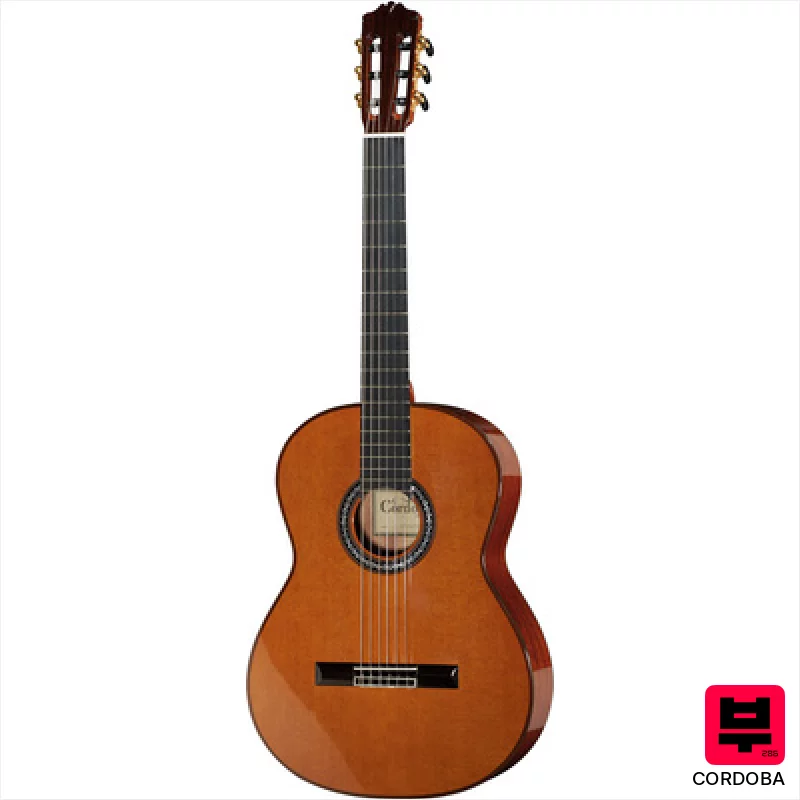
Cordoba C9 Cedar
- • Solid cedar top delivers a warm, responsive, and nuanced tone.
- • Ebony fingerboard offers exceptional clarity and smooth playability.
- • Cordoba Premium Gold tuners provide reliable tuning stability and a premium feel.
- • Well-executed mother-of-pearl and ebony rosette adds a touch of elegance.
- • Cedar top is susceptible to dents and scratches, requiring careful handling.
- • High tension strings may be challenging for beginners or those with lighter touch.
- • Mahogany back and sides, while tonally pleasing, might lack the projection of some rosewood options.

Cordoba Fusion Orchestra CE TB
- • Solid rosewood back/sides deliver rich, warm tonal complexity.
- • Solid cedar top offers excellent projection and responsiveness.
- • Fishman Presys Blend pickup system provides versatile amplified options.
- • Ebony fingerboard enhances playability and note clarity.
- • Rosewood can be prone to slight cracking with humidity fluctuations.
- • The teardrop burst finish may not appeal to all players’ aesthetic preferences.
- • While versatile, it's still primarily a classical guitar – limited for aggressive genres.

Cordoba Fusion Orchestra CE Ced Bundle
- • Solid cedar top delivers a warm, responsive, and articulate tone.
- • Rosewood back and sides add depth and sustain, enhancing projection.
- • Fishman Presys pickup system offers reliable amplification with a built-in tuner.
- • Ebony fretboard provides a smooth playing experience and excellent note clarity.
- • Cedar top is softer and more prone to dings than harder woods like spruce.
- • Rosewood can sometimes exhibit a slightly 'woody' overtone, requiring careful EQing.
- • The gig bag, while functional, isn't a premium, heavily padded case.

Cordoba Fusion 5
- • Solid spruce top delivers a bright, responsive tone with good projection
- • Fishman Sonitone pickup system provides a clean, amplified sound suitable for stage
- • Mahogany back and sides add warmth and sustain to the overall tone
- • Truss rod allows for easy neck adjustment, accommodating different playing styles
- • Pau Ferro fretboard can feel a little less smooth than ebony, requiring some break-in
- • Mahogany construction can make it a bit heavier than guitars with lighter woods
- • Cutaway compromises some upper body resonance and aesthetic appeal
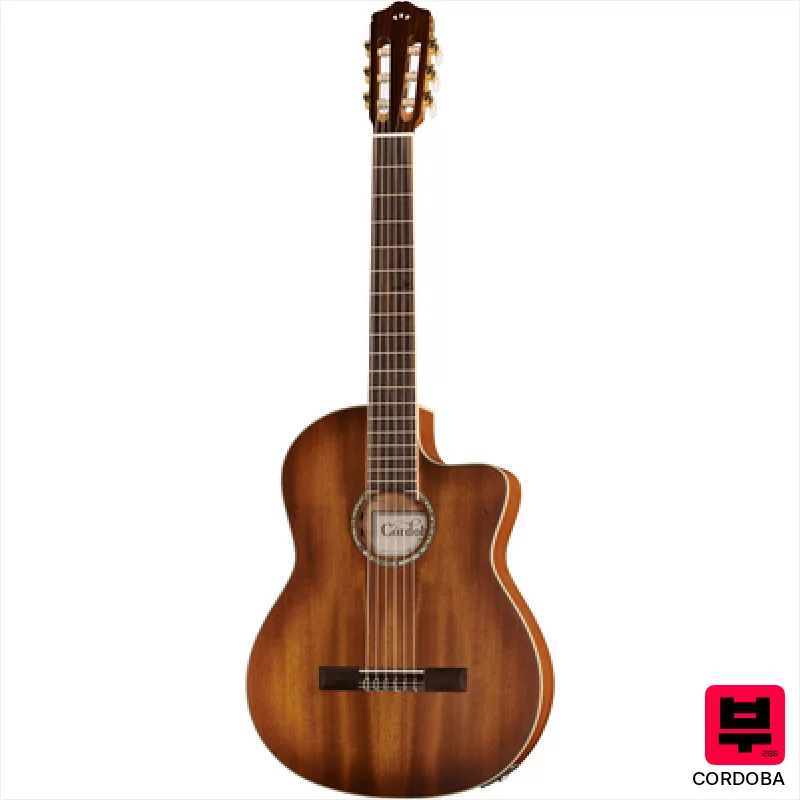
Cordoba C4 CE Edgeburst Iberia
- • Solid mahogany top delivers a warm, focused, and resonant tone.
- • Fishman Sonitone pickup offers a clean and natural amplified sound.
- • Mahogany construction provides excellent sustain and a balanced tonal response.
- • Pau ferro fretboard offers a smooth playing experience and pleasing feel.
- • Mahogany can be somewhat 'dark' tonally; lacks bright, sparkling highs.
- • Edgeburst finish, while attractive, may not appeal to all tastes.
- • High tension strings require more finger strength for extended playing.
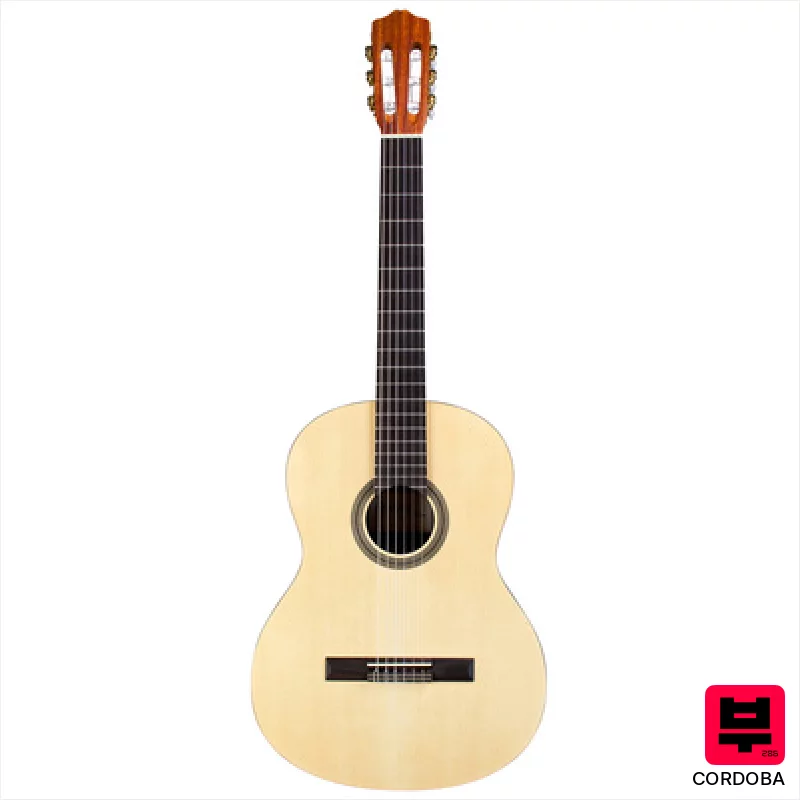
Cordoba Protege C1M 4/4
- • Spruce top delivers a surprisingly bright and responsive tone.
- • Mahogany back and sides provide warmth and projection.
- • Truss rod allows for easy neck adjustments, crucial for stability.
- • Pau Ferro fingerboard offers a smooth playing experience.
- • Savarez strings are serviceable but a worthwhile upgrade for better tone.
- • Mahogany construction means it won’t have the sustain of rosewood models.
- • Matt finish, while practical, lacks the visual appeal of gloss finishes.

Cordoba Fusion Orchestra CE Cedar
- • Solid cedar top delivers a warm, responsive, and articulate tone.
- • Rosewood back and sides add richness and projection, enhancing sustain.
- • Fishman Presys pickup system offers excellent amplified tone with integrated tuner.
- • Ebony fretboard provides smooth playability and contributes to clear note definition.
- • Cedar top is susceptible to humidity changes, requiring careful maintenance.
- • High-gloss finish can feel a little sticky for some players’ preferences.
- • Cutaway compromises some upper-body resonance compared to non-cutaway models.

Cordoba C 9 Crossover Cedar
- • Solid Canadian cedar top delivers a warm, responsive tone.
- • Mahogany back and sides offer balanced projection and sustain.
- • Silver Cordoba machine heads provide smooth, accurate tuning stability.
- • Rosewood fretboard and bone nut enhance clarity and playability.
- • Cedar top is susceptible to dents and scratches requiring careful handling.
- • High tension strings may be challenging for beginner players.
- • The crossover design might feel slightly less 'traditional' to some purists.
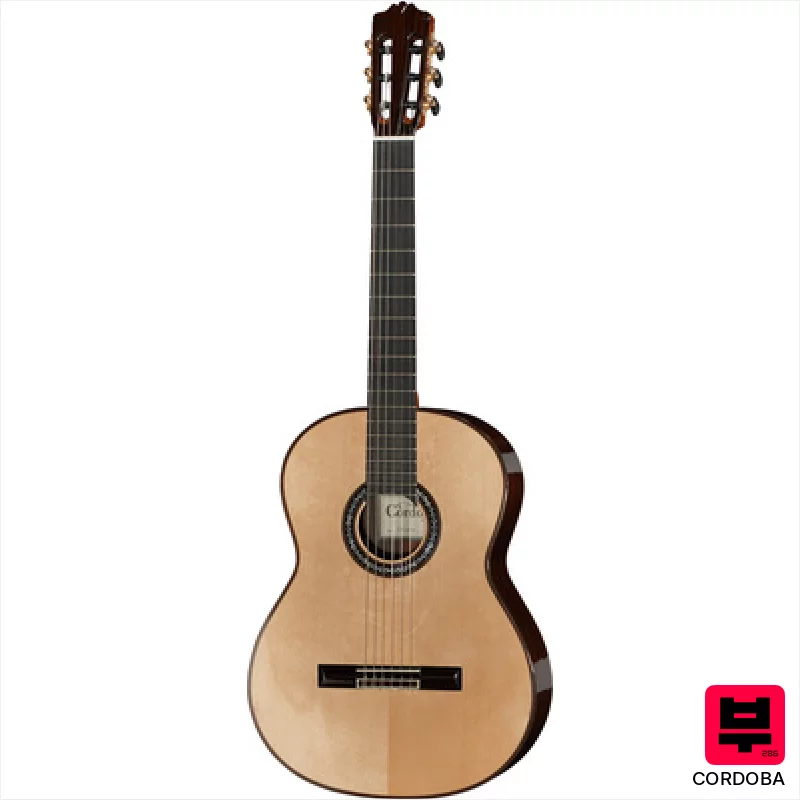
Cordoba C10 Spruce
- • Solid European spruce top delivers a rich, nuanced tone with excellent projection
- • Rosewood back and sides provide warmth and sustain, enhancing the overall complexity
- • Ebony fretboard offers a smooth playing experience and contributes to clear note definition
- • Cordoba Premium Gold tuners ensure precise and stable tuning, crucial for classical playing
- • High gloss finish can be a fingerprint magnet and slightly impede resonance compared to a more open finish
- • 52mm nut width might feel narrow for players accustomed to steel-string guitars
- • The Savarez Cristal Corum strings, while decent, are a starting point; upgrading will reveal more of the guitar's potential
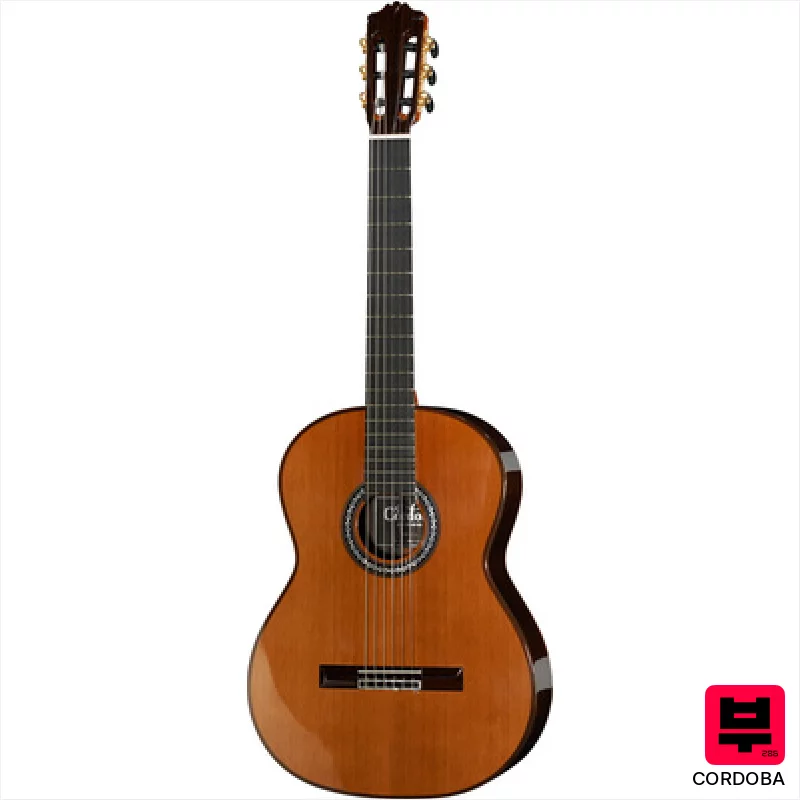
Cordoba C10 Cedar
- • Solid cedar top delivers a warm, responsive, and nuanced tone.
- • Rosewood back and sides add depth and projection, excellent sustain.
- • Ebony fretboard offers a smooth, fast playing experience with clear intonation.
- • Cordoba Premium Gold tuners ensure rock-solid tuning stability and a premium feel.
- • Cedar top is susceptible to dents and scratches requiring careful handling.
- • High tension strings may be challenging for beginners or players with lighter touch.
- • The natural gloss finish, while beautiful, can be prone to fingerprints and smudging.
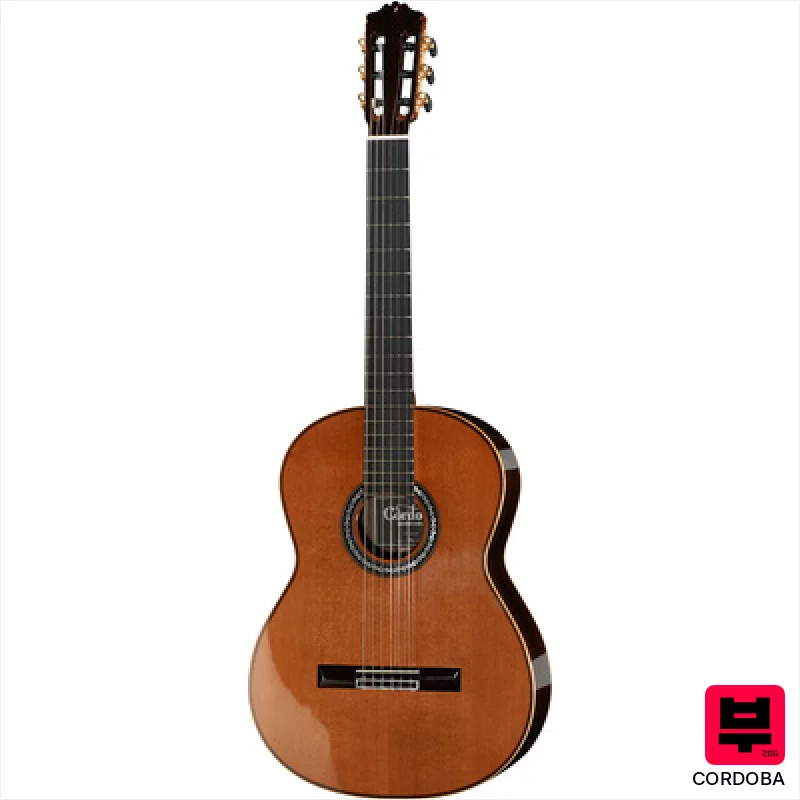
Cordoba C12 Cedar
- • Solid cedar top delivers a warm, responsive, and nuanced tone.
- • Rosewood back and sides enhance projection and sustain beautifully.
- • Ebony fretboard provides a smooth, comfortable playing experience.
- • Cordoba Premium Gold tuners offer exceptional tuning stability and precision.
- • Cedar top is susceptible to humidity fluctuations, requiring diligent care.
- • The 52mm nut width might feel narrow for players accustomed to wider necks.
- • High tension strings demand more finger strength and can be fatiguing.
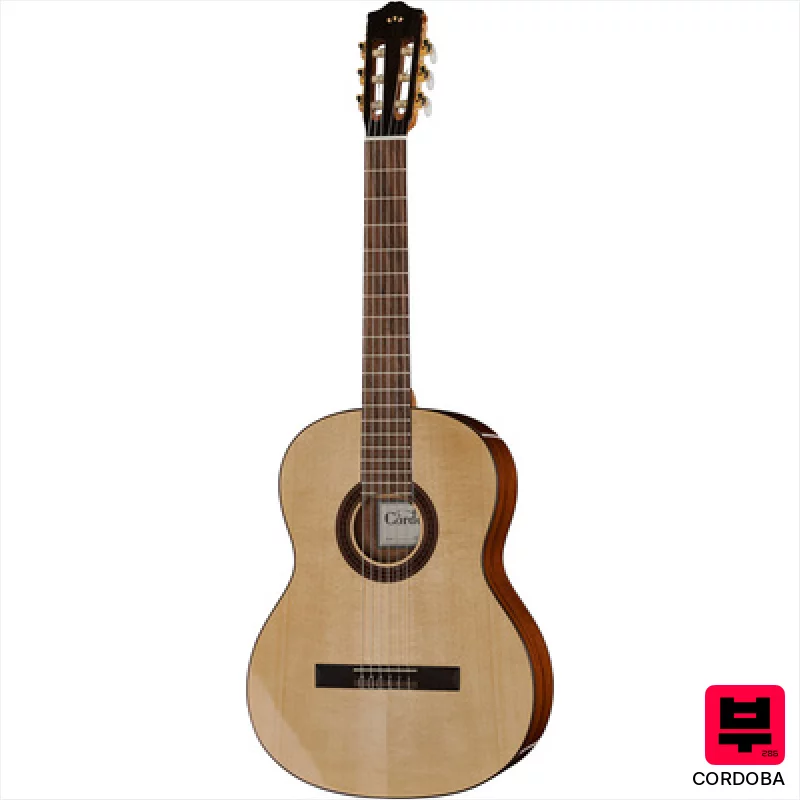
Cordoba C5 SP Iberia
- • Solid spruce top delivers a responsive, clear, and balanced tonal character.
- • Mahogany veneer back and sides provide warmth and projection without excessive brightness.
- • Rosewood fingerboard offers a smooth playing experience and rich harmonic complexity.
- • Gold-plated tuners ensure stable tuning and a touch of refinement.
- • Mahogany veneer, while warm, limits the complex overtones of all-solid wood construction.
- • Nut width of 52mm might feel a bit wide for players accustomed to narrower classical necks.
- • Natural finish, while aesthetically pleasing, may require more diligent care to prevent scratches.
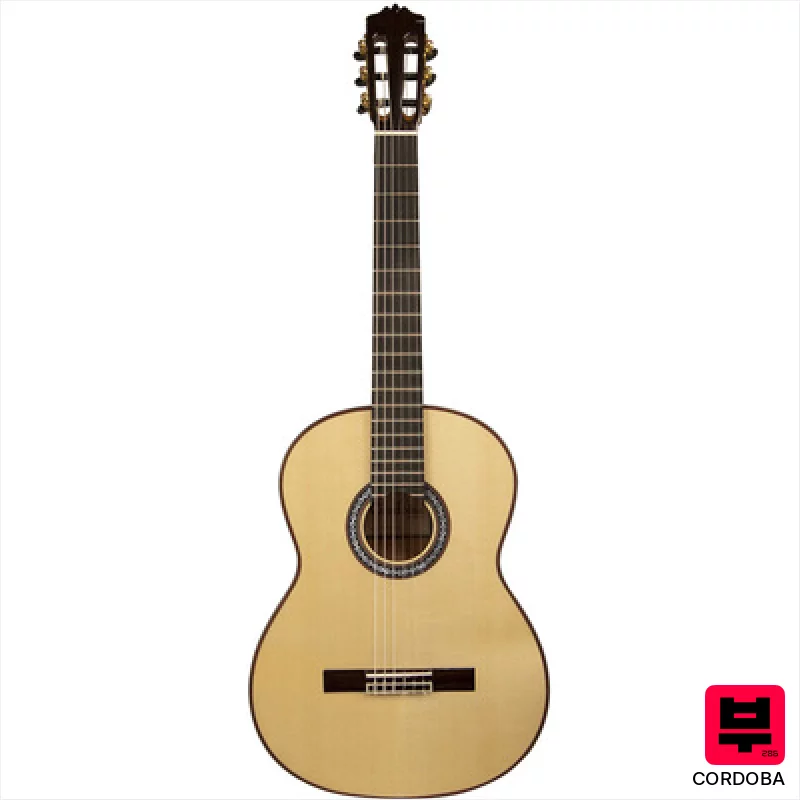
Cordoba F10 Flamenco
- • Solid spruce top delivers a bright, responsive, and articulate tone ideal for flamenco.
- • Solid cypress back and sides contribute to a dry, percussive sound and quick response.
- • Ebony fingerboard offers a smooth playing experience and excellent note definition.
- • Gold-plated machine heads provide reliable tuning stability and a touch of class.
- • The cypress back and sides can be a bit 'woody' and lack some warmth for other styles.
- • While well-built, the finish might not be as refined as higher-end, premium-priced instruments.
- • The 52mm nut width can feel a little snug for players accustomed to wider classical guitar necks.
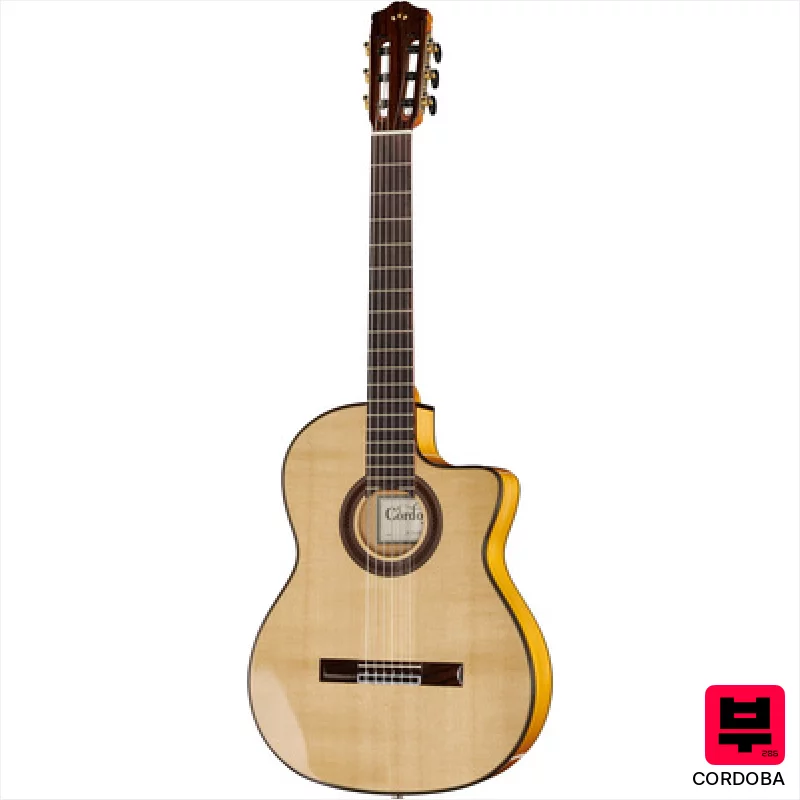
Cordoba GK Studio
- • Solid spruce top delivers a bright, responsive flamenco tone.
- • Laminated cypress back and sides offer excellent projection and warmth.
- • Fishman pickup system provides a usable amplified sound for performance.
- • Gold-plated machine heads ensure smooth, accurate tuning stability.
- • Cypress laminate limits the tonal complexity compared to all-solid wood instruments.
- • Nut width of 50mm might feel narrow for players accustomed to wider necks.
- • Cutaway compromises some upper bout resonance and aesthetic traditionalism.
Every 4/4 size classical guitars that matches
28 models match this page. The 15 above are covered in detail; the rest are listed here with their published specifications.
| # | Model | Specifications | Price |
|---|---|---|---|
| 16 | Cordoba F7 Flamenco Iberia | Nut width 52 mm (2.05") · Scale 650 mm (25.59") | $632 |
| 17 | Cordoba C5 CE Spruce Iberia | Nut width 50 mm (1.97") · Scale 648 mm (25.51") | $513 |
| 18 | Cordoba Esteso SP | Nut width 52 mm (2.05") · Scale 648 mm (25.51") | $3,019 |
| 19 | Cordoba Torres | Nut width 51 mm (2.01") · Scale 640 mm (25.2") | $5,144 |
| 20 | Cordoba C5 CD Iberia | Nut width 52 mm (2.05") · Scale 650 mm (25.59") | $424 |
| 21 | Cordoba C7-SP Iberia | Nut width 52 mm (2.05") · Scale 650 mm (25.59") | $643 |
| 22 | Cordoba C7 CD Iberia | Nut width 52 mm (2.05") · Scale 650 mm (25.59") | $644 |
| 23 | Cordoba C7-CE Iberia | Nut width 50 mm (1.97") · Scale 650 mm (25.59") | $815 |
| 24 | Cordoba GK Studio Negra | Nut width 50 mm (1.97") · Scale 650 mm (25.59") | $832 |
| 25 | Cordoba C5 CE Iberia | Nut width 50 mm (1.97") · Scale 650 mm (25.59") | $529 |
| 26 | Cordoba Fusion 14 Maple | Nut width 48 mm (1.89") · Scale 640 mm (25.2") | $1,000 |
| 27 | Cordoba Friederich | Nut width 52 mm (2.05") · Scale 650 mm (25.59") | $3,522 |
| 28 | Cordoba C12 Spruce | Frets 19 frets | $2,460 |
4/4 Size Classical Guitars by the numbers
Measured across all 467 models in this category, so «wide», «short» or «expensive» mean something you can check.
How to Choose the Best 4/4 Size Classical Guitars
Heritage & Design Philosophy
Cordoba's design ethos is rooted in traditional Spanish construction but with a focus on player comfort and versatility. They've thoughtfully incorporated modern features like thinner finishes and more comfortable neck profiles, making them easier to handle than many traditional European-made instruments. This is a big deal for players transitioning from steel-string or wanting a more forgiving feel.
Tonewood Selection
While you'll find some solid tops on higher-end models, the majority of Cordoba 4/4 guitars use sapele back and sides, often paired with a cedar or spruce top. Sapele offers a warm, balanced tone with a surprising amount of headroom - crucial if you're playing in a band or recording with multiple mics. The top wood dictates the character: cedar brings a darker, warmer tone with quicker response, while spruce delivers more projection and a brighter, more articulate sound.
Playability & Neck Profile
This is where Cordoba really shines. Their necks are consistently comfortable, often falling into the medium-slim profile range, making them accessible to players of various hand sizes and skill levels. The action is generally well-regulated from the factory, though a setup is always a good investment to dial it in perfectly for your playing style. A comfortable neck is vital for long practice sessions or gigging.
Projection & Articulation
Cordoba guitars typically have good projection, but it's not the booming resonance you'd find on a higher-end, all-solid instrument. They articulate well, meaning individual notes are clear and defined, which is important for intricate fingerstyle pieces or cutting through a mix with a band. The voicing leans towards a balanced, versatile tone rather than a hyper-focused sound.
Value Proposition
Let's be honest, you're getting a well-made, playable classical guitar at a price point that's often significantly lower than traditional European makers. While there are compromises (like laminate back and sides on some models), the overall bang-for-your-buck is hard to ignore. This makes them fantastic for students or players who want a reliable instrument without breaking the bank.
Buying Guide
Cordoba's range is broad, so consider your needs. If you're a beginner, a Cúbano or Requinto will be a great starting point. For gigging or recording, a model with a solid top like the Esperanza or C5-CET (with electronics) is worth the investment. Don't be afraid to have a luthier set it up - a proper setup can drastically improve playability and tone, and it's a worthwhile expense on any guitar.
How This List Is Built
We don't play these instruments — we're a catalog, not a review desk, and we'd rather say so than pretend otherwise. This page covers 28 of 467 4/4 size classical guitars from the Thomann catalogue, which is the largest single source of specification data in this category: 15 in detail, the rest listed with their specifications.
Position is computed, not curated. We parse the manufacturer's own description into actual values — nut width, scale, fret count, fingerboard radius, size, alloy — and rank on them: how many specifications a model has published, how many of them are measurable numbers, and how precisely it meets this page's criterion. A product image adds a little. Price is not a ranking signal: it tells you nothing about whether a neck fits your hand. The same inputs always produce the same order, so nothing here is shuffled to look fresh.
What this list is good for: narrowing a category down to a shortlist by spec and budget. What it isn't: a substitute for hearing an instrument. Before you buy, read hands-on reviews and, where you can, play it. Full methodology.

