
Best Gewa 4/4 Size Classical Guitars 2026
Alright, let's talk Gewa classical guitars. You're probably wading through a sea of options, and a lot of them just don't cut it - either they sound lifeless or feel like a medieval torture device. Gewa's carved out a solid reputation for offering serious value, particularly for players who want a solid instrument without dropping serious bank. They're not flashy, but they deliver consistent performance, which is what matters when you're gigging or tracking.
Last updated: October 9, 2026
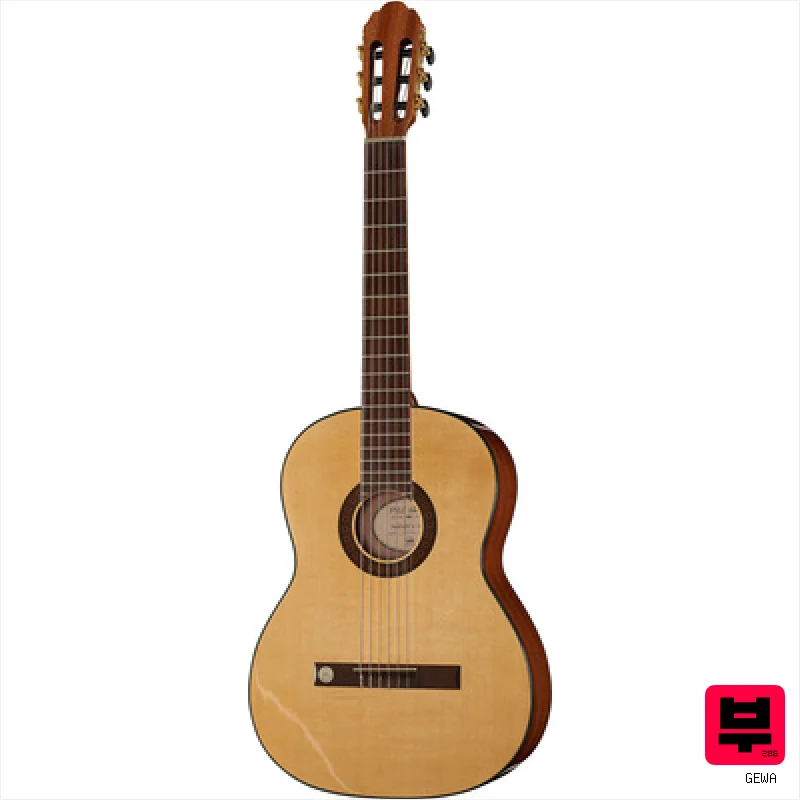
Gewa Pro Arte GC210A
- • Solid spruce top delivers a bright and responsive attack.
- • Mahogany back and sides provide a warm, mid-focused tone.
- • Acacia fingerboard and bridge offer a smooth, durable playing surface.
- • Environmentally friendly polyurethane finish resists wear and tear.
- • No pickup system listed for amplified playing.
- • Total weight is not stated in the description.
- • Finish gloss level may show wear over time.

Gewa Pro Natura Silver Samba
- • Solid spruce top delivers a clear, responsive tone with good projection.
- • Fishman Classic II pickup system offers respectable amplified sound and a built-in tuner.
- • Maple back and sides provide a balanced warmth and sustain to the overall tone.
- • Cutaway allows easy access to higher frets, broadening playing possibilities.
- • Acacia fingerboard might feel a bit 'slick' compared to ebony for some players.
- • Maple construction, while balanced, lacks the overt richness of rosewood.
- • Silk-matte finish, while aesthetically pleasing, can be prone to fingerprints.
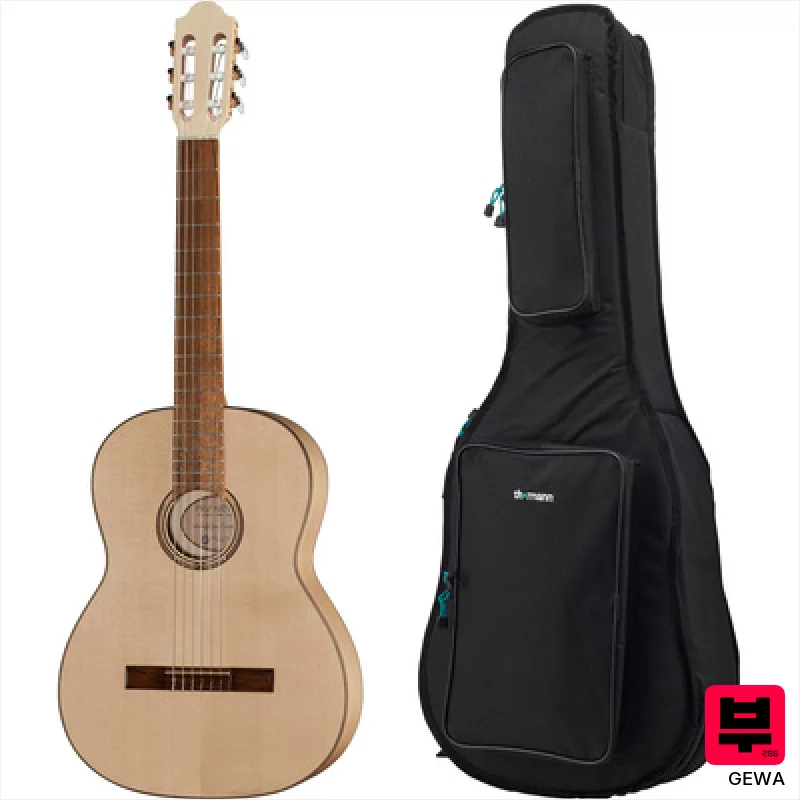
Gewa Pro Natura Gold 4/4 m/Bag
- • Solid spruce top delivers a bright, responsive tone with good projection.
- • Maple back and sides offer a balanced warmth and clarity.
- • European craftsmanship ensures solid construction and attention to detail.
- • Gig bag provides robust protection and comfortable carrying options.
- • Maple back/sides can sometimes lack the deep resonance of rosewood.
- • Acacia fretboard may not offer the same smooth feel as ebony.
- • The silk matte finish might show fingerprints and require careful cleaning.
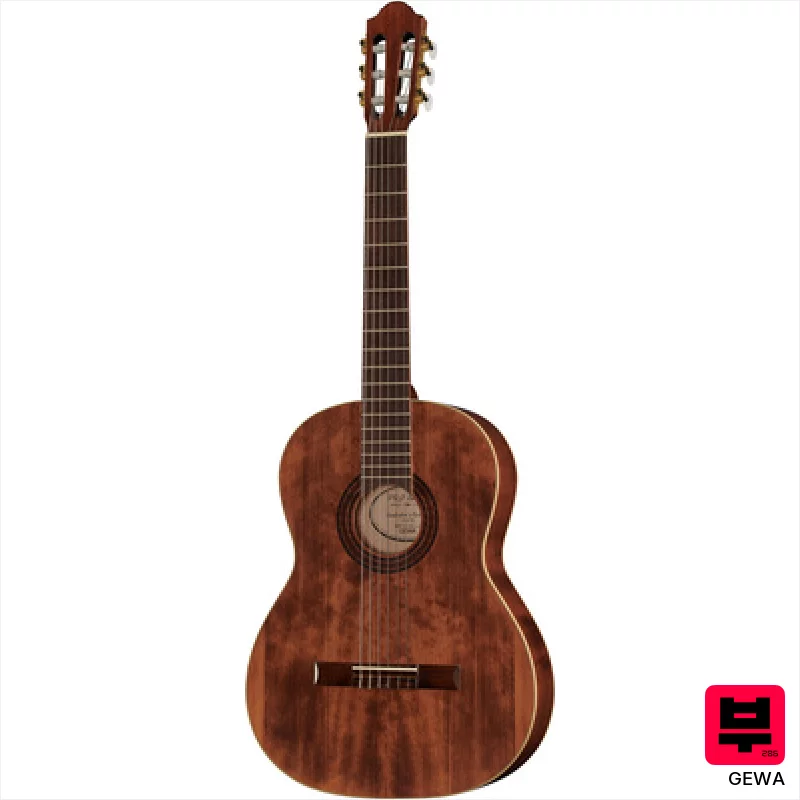
Gewa Pro Arte GC-Antique
- • Solid spruce top delivers a clear, responsive, and balanced tone.
- • European manufacture suggests quality construction and attention to detail.
- • Beechwood sides offer a warmer tonal character than purely basswood.
- • Van Gent machine heads provide reliable tuning stability and smooth action.
- • Basswood back/sides can lack the depth of more premium tonewoods like rosewood.
- • Antique matte finish might be prone to showing fingerprints and wear.
- • Original Augustine strings are decent but many players will likely want to upgrade.
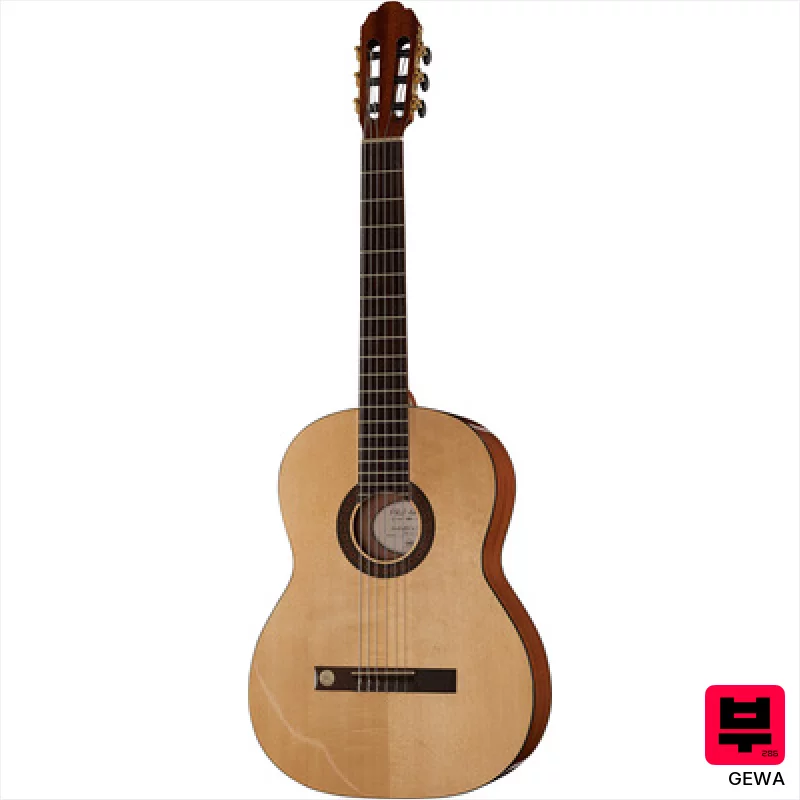
Gewa Pro Arte GC130A
- • Solid spruce top delivers a bright, responsive fundamental tone.
- • Mahogany back and sides offer warmth and focused projection.
- • Tinted maple neck provides stability and a comfortable playing feel.
- • Real wooden rosette adds a touch of class and visual appeal.
- • Acacia fingerboard can feel slightly harder than ebony or rosewood.
- • Polyurethane finish, while durable, can dampen the wood's natural resonance.
- • Limited upper fret access due to the traditional classical guitar design.
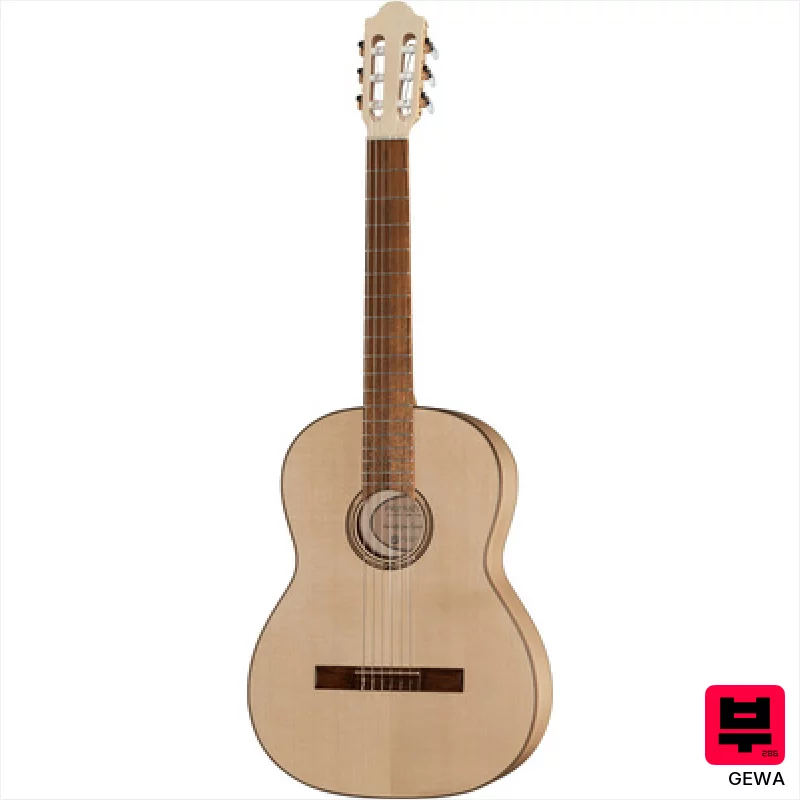
Gewa Pro Natura Gold 4/4
- • Solid spruce top delivers a clear, responsive fundamental tone.
- • Maple back and sides provide a balanced, articulate projection.
- • European craftsmanship ensures a consistently well-built instrument.
- • Acacia fretboard offers a comfortable playing experience with a warm feel.
- • Maple back/sides can sound a bit less 'warm' than rosewood to some players.
- • Silk matte finish might show fingerprints and handling marks easily.
- • Nut width of 52mm may feel narrow for players with larger hands.

Gewa Pro Natura Silver 4/4 Maple
- • Solid spruce top delivers a surprisingly warm and resonant tone.
- • Maple back and sides provide focused projection and clarity.
- • Acacia fingerboard offers a smooth playing experience and pleasant feel.
- • European craftsmanship ensures generally good build quality and attention to detail.
- • Maple back/sides can sound slightly less complex than rosewood alternatives.
- • Acacia fingerboard may require more frequent maintenance than ebony.
- • Matte finish, while attractive, can show fingerprints easily.
4/4 Size Classical Guitars by the numbers
Measured across all 467 models in this category, so «wide», «short» or «expensive» mean something you can check.
How to Choose the Best 4/4 Size Classical Guitars
Tonewood Selection
Gewa's consistent use of solid spruce tops and rosewood back and sides across their mid-range models is a big deal. You're getting genuine materials that contribute to a warm, responsive tone - that's not always the case with other brands at this price point, where you'll often find laminate woods sneaking in.
Neck Profile & Playability
Gewa consistently delivers comfortable neck profiles. They're not overly thick or thin - a real Goldilocks situation that makes them accessible to players of different hand sizes and experience levels. The action is generally well-set from the factory, though a professional setup can always elevate the feel.
Bracing Patterns
Gewa's bracing, while not radically innovative, is well-executed. It provides a good balance of projection and warmth. You'll get decent sustain without that brittle, overly-bright character you sometimes find in thinner bracing designs; it translates well both solo and in ensemble settings.
Construction Quality
The build quality is generally very good for the price. Dovetail neck joints are standard on most models, which is a solid sign of longevity. Finish work isn't flawless - you might see some minor imperfections - but it's not a dealbreaker and doesn't impact the tone.
Overall Tone Character
Gewa guitars tend to have a balanced tone with a pleasing warmth. They aren't going to give you ice-picky high frequencies, but they also don't lack articulation. You'll get a good fundamental tone with a clear midrange presence - perfect for classical, flamenco, or even fingerstyle work.
Buying Guide
Don't expect a Gewa to sound like a $5,000 concert guitar, but they'll surprise you with their consistent quality. The higher-end models (like the Maestro series) get you closer to that level, but the real sweet spot is in the G200 to G500 range. A good luthier's setup is almost essential - even a minor adjustment to the action can make a world of difference. Be realistic about your budget and don't chase the 'perfect' tone; find something that inspires you to play.
How This List Is Built
We don't play these instruments — we're a catalog, not a review desk, and we'd rather say so than pretend otherwise. This page covers 7 of 467 4/4 size classical guitars from the Thomann catalogue, which is the largest single source of specification data in this category: 7 in detail, the rest listed with their specifications.
Position is computed, not curated. We parse the manufacturer's own description into actual values — nut width, scale, fret count, fingerboard radius, size, alloy — and rank on them: how many specifications a model has published, how many of them are measurable numbers, and how precisely it meets this page's criterion. A product image adds a little. Price is not a ranking signal: it tells you nothing about whether a neck fits your hand. The same inputs always produce the same order, so nothing here is shuffled to look fresh.
What this list is good for: narrowing a category down to a shortlist by spec and budget. What it isn't: a substitute for hearing an instrument. Before you buy, read hands-on reviews and, where you can, play it. Full methodology.

