
Best Wireless Systems for Guitar and Bass Under $300 2026
Alright, so you want to ditch the cable spaghetti but you're not looking to drop a grand on a wireless system? Totally get it. Gigging with a tangled mess is a pain, and recording without one can be just as limiting. We've rounded up some solid wireless guitar and bass systems under $300 that won't leave you sounding like you're playing through a tin can. Let's find you some freedom without breaking the bank.
Last updated: April 11, 2026
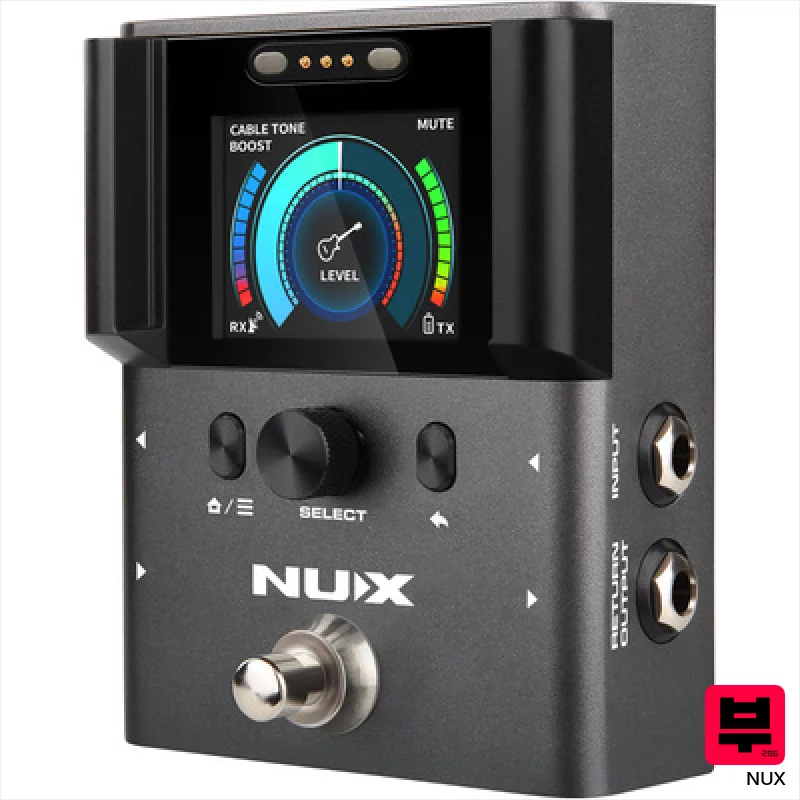
Nux B-8 Wireless-System Git/Bass
- • Compact design minimizes stage clutter; excellent for pedalboard integration.
- • Built-in tuner is genuinely useful for quick onstage adjustments.
- • Balanced XLR DI output simplifies recording and live sound reinforcement.
- • Wireless pairing is incredibly fast and reliable; very user-friendly.
- • 2.4 GHz band is susceptible to interference in crowded RF environments.
- • Transmitter's plastic construction feels less robust than higher-end units.
- • Limited channel options restrict use in densely populated wireless setups.

Boss WL-20L Wireless System Bundle
- • Plug-and-play pairing simplifies setup; ideal for gigging musicians needing quick solutions.
- • Low 2.3ms latency ensures tight, responsive feel – critical for live performance.
- • BOSS’s proprietary technology minimizes interference, delivering clean, clear guitar/bass tone.
- • Integrated rechargeable battery provides ample playtime; convenient USB charging.
- • 15-meter range is somewhat limited; line-of-sight dependency can restrict movement.
- • Designed specifically for low-impedance active pickups; passive pickups require an adapter.
- • The carrying pouch is basic; offers minimal protection beyond dust.

Boss WL-20 Wireless System Bundle
- • Plug-and-play setup simplifies pairing, saving valuable stage time.
- • Boss's proprietary tech minimizes interference, crucial for crowded RF environments.
- • Cable simulation convincingly replicates familiar tone, avoiding sterile digital feel.
- • Compact and lightweight transmitter is comfortable for extended playing sessions.
- • 15-meter range is limited, restricting movement onstage significantly.
- • High-impedance design restricts compatibility with active pickups and certain amps.
- • Limited channel count can be problematic in venues with heavy wireless usage.
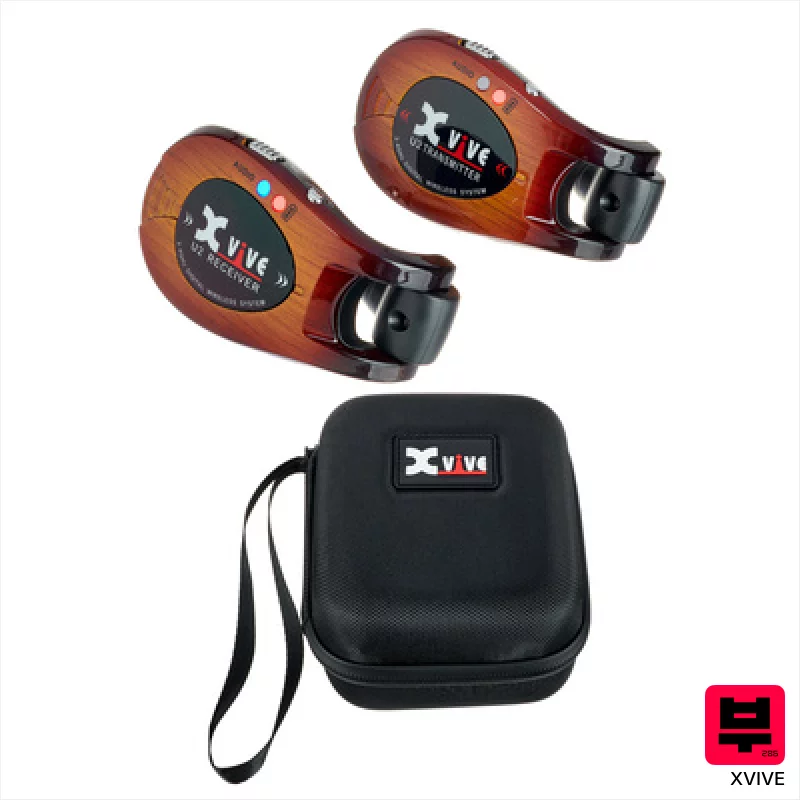
XVive U2 Guitar Wireless Syst Bundle
- • Sunburst finish adds a touch of class beyond typical black wireless systems.
- • 2.4 GHz frequency offers broad compatibility and avoids common interference.
- • Low 5ms latency ensures a responsive, natural playing feel – crucial for live work.
- • Integrated rechargeable battery simplifies setup and eliminates external power needs.
- • ABS housing, while robust, lacks the premium feel of metal-encased units.
- • 70ft range is adequate but limited compared to higher-end, professional systems.
- • Single USB charging method could be inconvenient for some users.
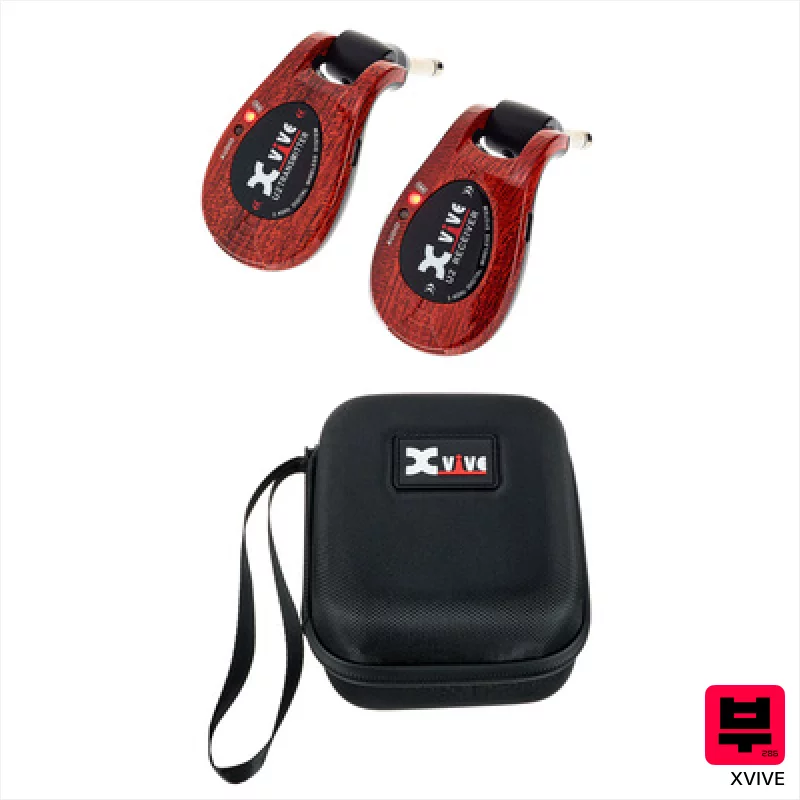
XVive Wireless System U2 Wood Bundle
- • Wood design offers a surprisingly premium aesthetic, though it's a printed finish.
- • Low latency (<6ms) is genuinely usable for live performance and recording.
- • Compact transmitter and receiver are convenient for travel and gigging.
- • Hard travel case provides excellent protection for the system components.
- • The 'wood' finish is a printed design; it lacks the feel of real wood.
- • 30m range is optimistic; expect reduced range with typical stage obstructions.
- • Limited channel selection (4) might be restrictive for crowded RF environments.
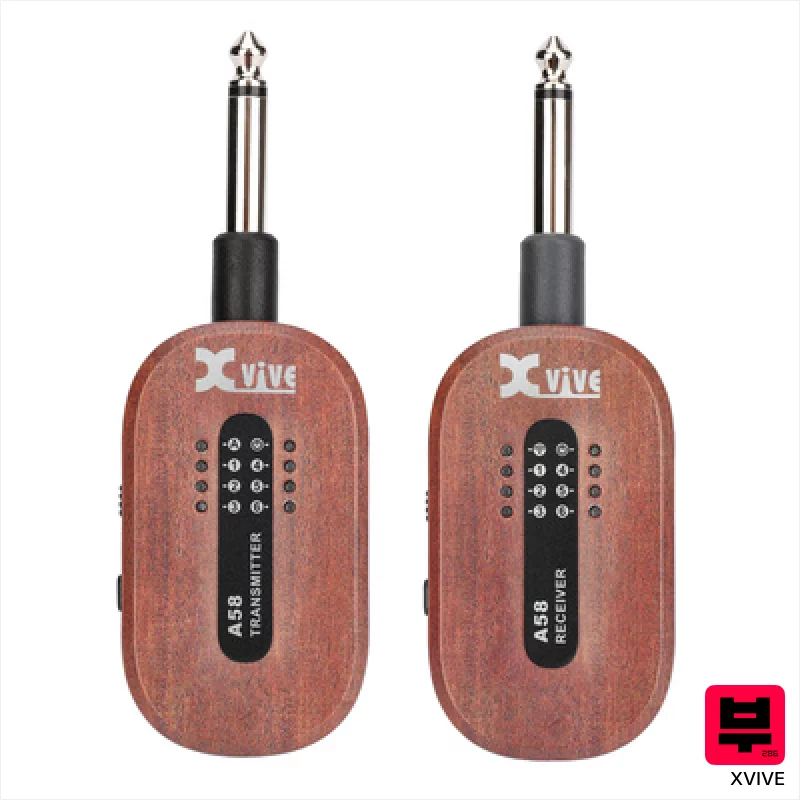
XVive A 58 Guitar Wireless System MH
- • Excellent 5.8GHz clarity minimizes interference common in crowded wireless spaces.
- • The 780mAh battery offers genuinely usable playtime for gigs and practice.
- • Compact receiver design integrates discreetly with pedalboards and amps.
- • Wide 20Hz-20kHz frequency response captures instrument's full tonal range.
- • Plastic construction feels budget-oriented; longevity remains a question mark.
- • 30m range is realistic *only* with minimal obstruction; walls reduce it significantly.
- • Limited channel selection might pose issues in densely populated wireless environments.
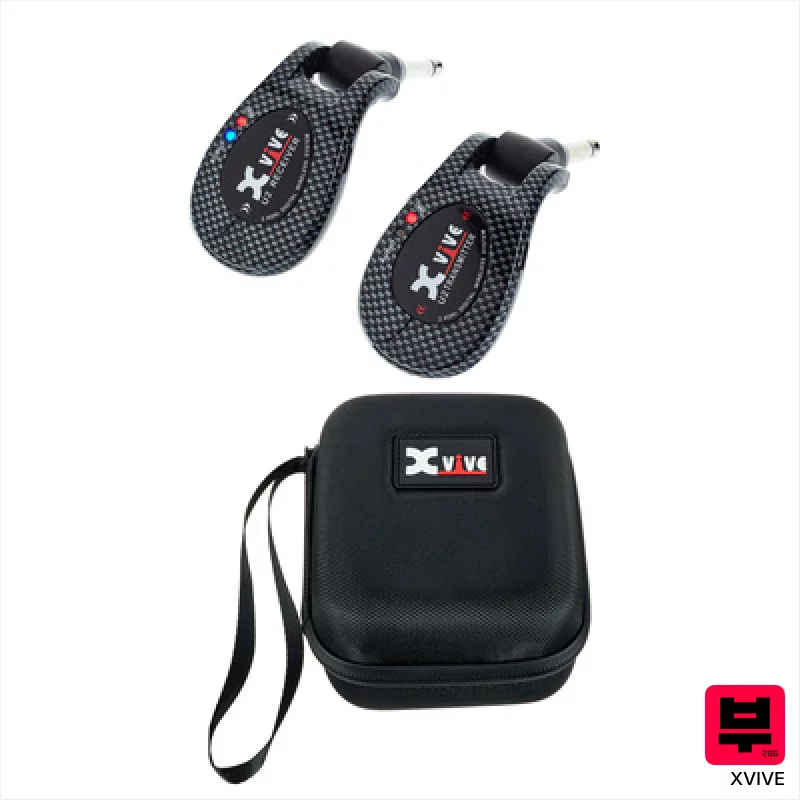
XVive Wireless System U2 Carb Bundle
- • Robust ABS housing provides decent protection against gigging wear and tear.
- • 2.4GHz band offers reliable operation globally, avoiding common interference.
- • Low latency (<6ms) ensures a natural feel for responsive playing styles.
- • Integrated rechargeable battery simplifies setup and eliminates external power needs.
- • ABS housing, while durable, lacks the premium feel of metal alternatives.
- • 30m range can be limiting in larger venues or with obstructions.
- • Limited channel selection (4) may require frequency coordination in crowded RF environments.
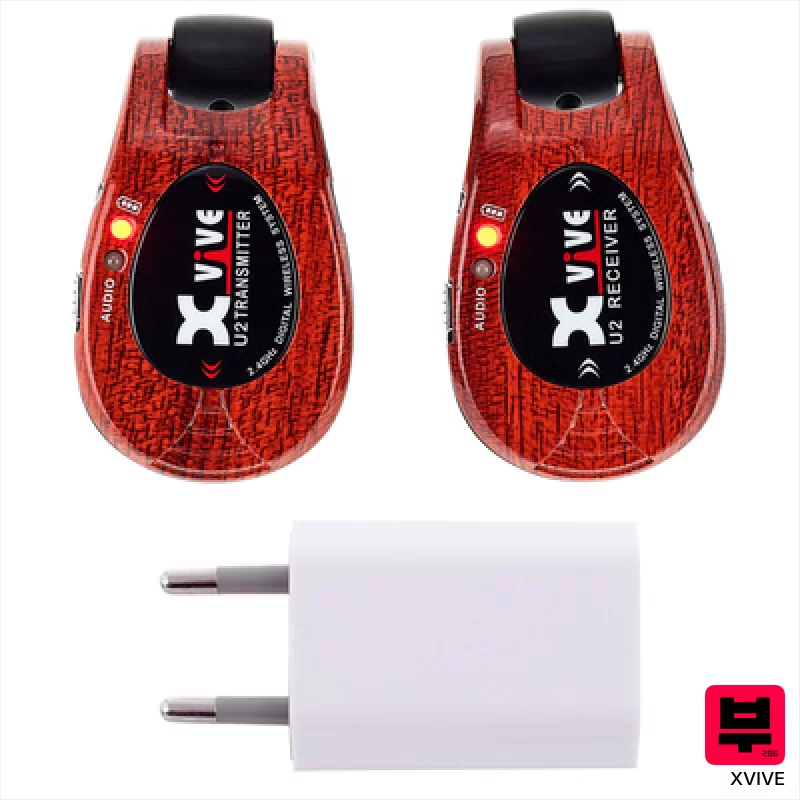
XVive Wireless System U2 Wood Bundle
- • Wood-look design offers a unique aesthetic appeal.
- • 2.4 GHz system provides reliable, interference-free transmission.
- • Low latency (<6ms) is virtually undetectable during performance.
- • USB charging and power options offer flexibility and convenience.
- • 'Wood' design is a printed finish, not genuine wood.
- • 30m range is optimistic; real-world performance depends heavily on environment.
- • Limited channel selection (4) might be restrictive for crowded RF spaces.
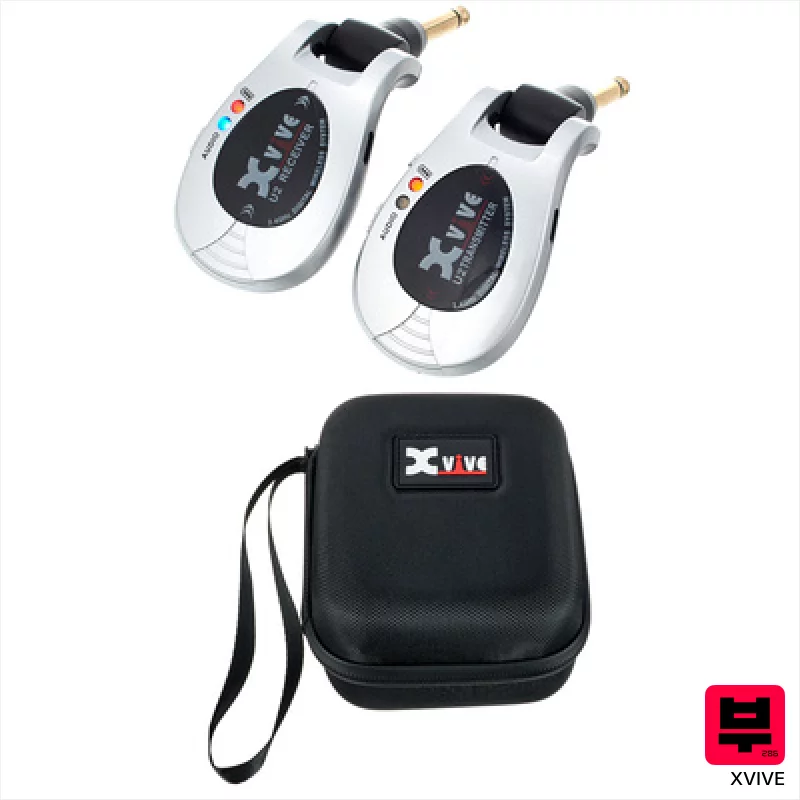
XVive Wireless System U2 Silv Bundle
- • The included hard case offers excellent protection during transport and storage.
- • 2.4 GHz system provides reliable performance with minimal interference in most environments.
- • 6ms latency is virtually undetectable for real-time performance needs.
- • USB charging simplifies battery management and eliminates the need for separate batteries.
- • 30-meter range is adequate but may be limiting for larger stages or outdoor gigs.
- • Rechargeable lithium batteries, while convenient, have a limited lifespan compared to replaceable options.
- • Dynamic range of 105dB might be a constraint for extremely loud stage volumes.
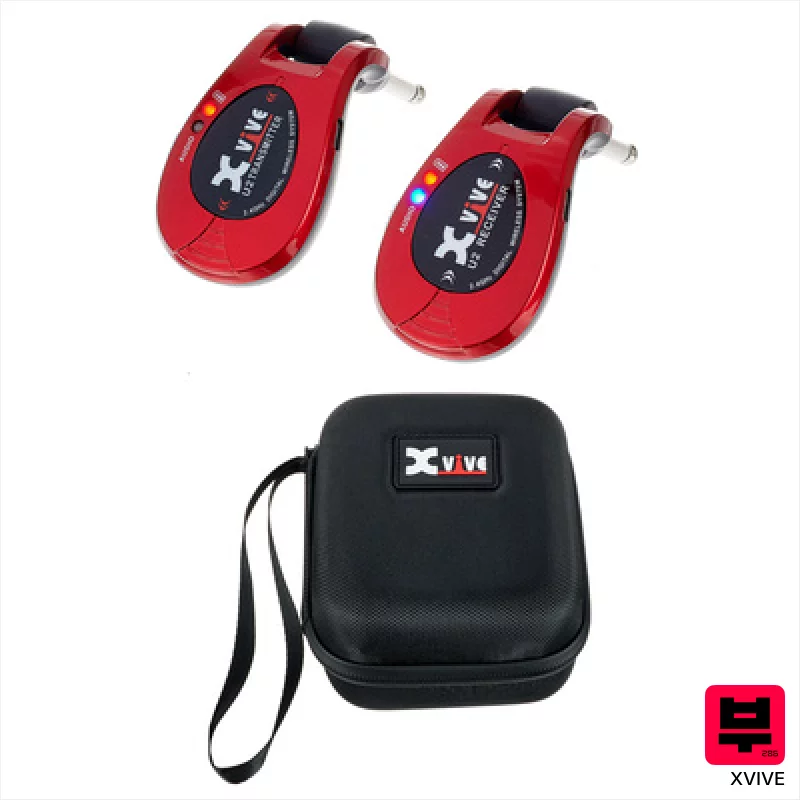
XVive Wireless System U2 Red Bundle
- • Red finish adds a touch of stage presence and visual flair
- • Hard travel case provides excellent protection during transport and storage
- • Low latency (<6ms) ensures a tight, responsive performance feel
- • Rechargeable battery eliminates the need for disposable power sources.
- • 2.4GHz band can be susceptible to interference in crowded wireless environments
- • While functional, the plastic construction feels less robust than metal alternatives
- • Limited channel selection might be restrictive for larger bands or complex setups.
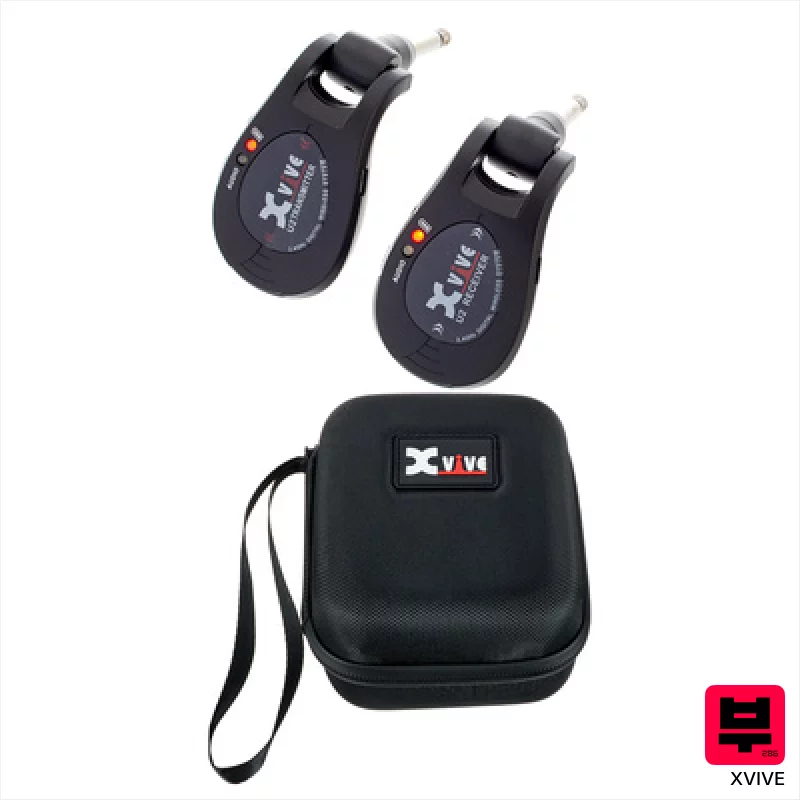
XVive Wireless System U2 Blac Bundle
- • Solid build quality for the price point; feels robust in hand.
- • Low latency (<6ms) makes it suitable for stage performance.
- • The included hard case offers excellent protection during transport.
- • Rechargeable battery eliminates the need for frequent replacements.
- • 30m range is optimistic; expect reduced range with interference.
- • 2.4GHz band can be susceptible to interference from other devices.
- • Limited channel selection (4) might be restrictive for larger bands.
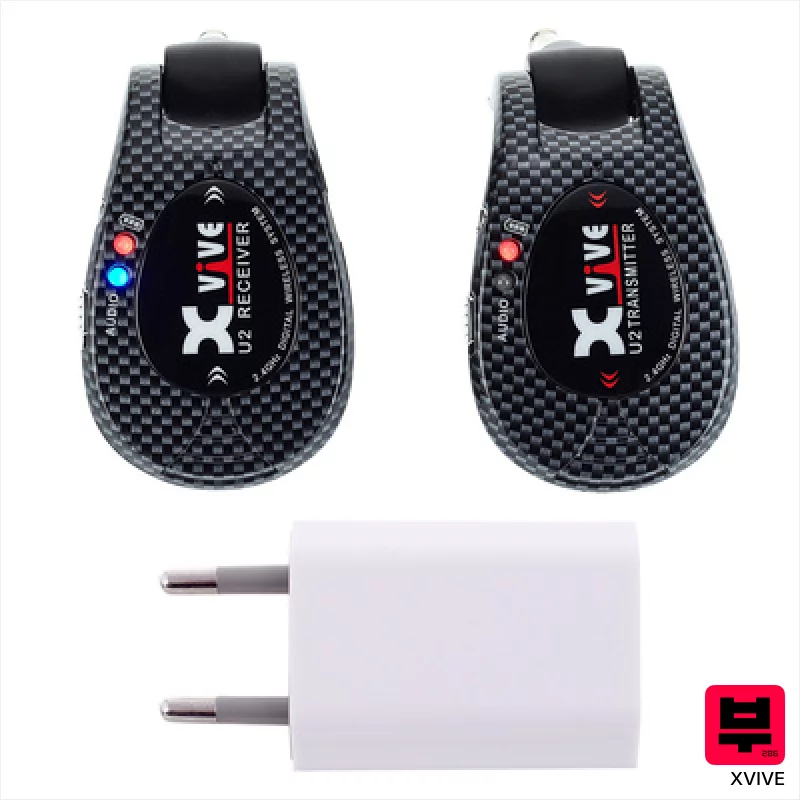
XVive Wireless System U2 Carb Bundle
- • Robust ABS housing provides surprising durability for the price.
- • 2.4GHz band offers reliable operation globally, avoiding interference.
- • Low latency (<6ms) makes it suitable for live performance scenarios.
- • Integrated rechargeable battery eliminates need for external power on the transmitter.
- • ABS housing, while durable, lacks the premium feel of metal alternatives.
- • 30m range is respectable, but line-of-sight limitations can still be a factor.
- • Limited channel selection (4) may not be ideal for complex stage setups.
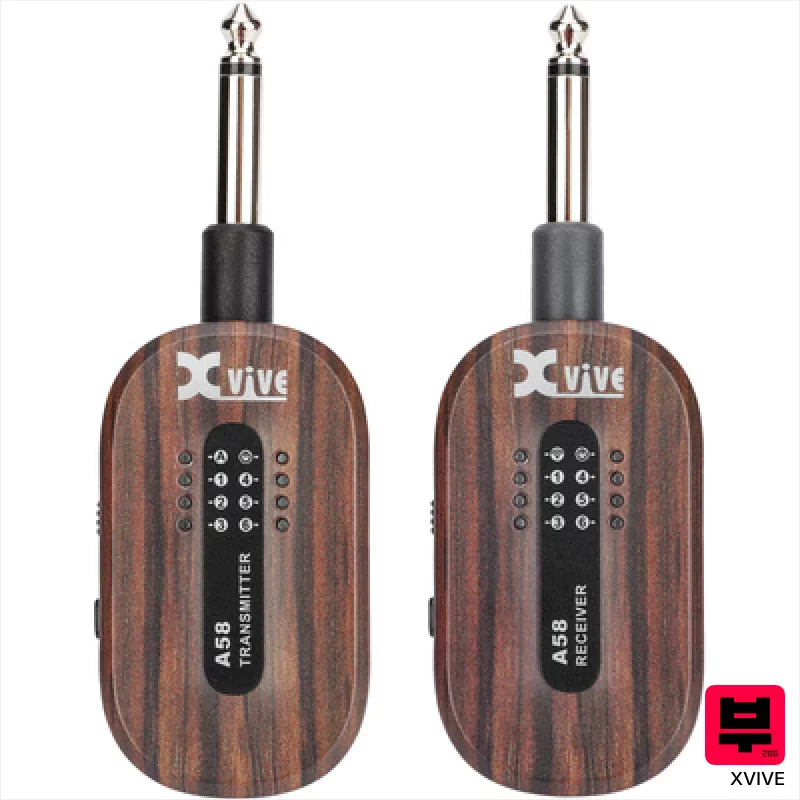
XVive A58 Guitar Wireless System RW
- • Excellent latency for stage performance; feels virtually wired.
- • 6 channels offer real flexibility in crowded RF environments.
- • Solid build quality for the price; feels durable enough for gigging.
- • Broad 20Hz-20kHz frequency response captures instrument's full sonic spectrum.
- • Battery life, while decent, isn't ideal for extended festival runs.
- • The receiver unit is a bit bulky compared to some competitors.
- • Passive pickup users might notice slight high-frequency roll-off.
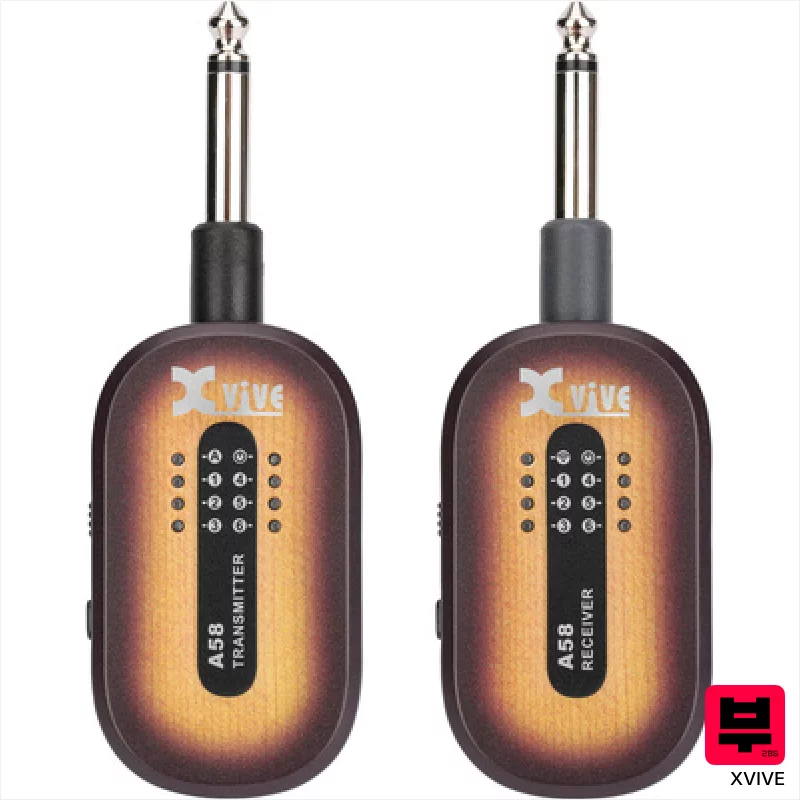
XVive A58 Guitar Wireless System VS
- • 5.8 GHz band minimizes interference compared to crowded 2.4 GHz systems.
- • Rechargeable battery simplifies operation and avoids constant battery replacements.
- • 24-bit/48kHz conversion provides clean, detailed audio for both active and passive pickups.
- • Low latency (<5ms) ensures a responsive, unnoticeable playing experience.
- • Plastic construction feels less robust than higher-end, metal-encased systems.
- • 30m range is decent but susceptible to signal drop with significant obstructions.
- • Limited channel options may restrict use in very crowded wireless environments.
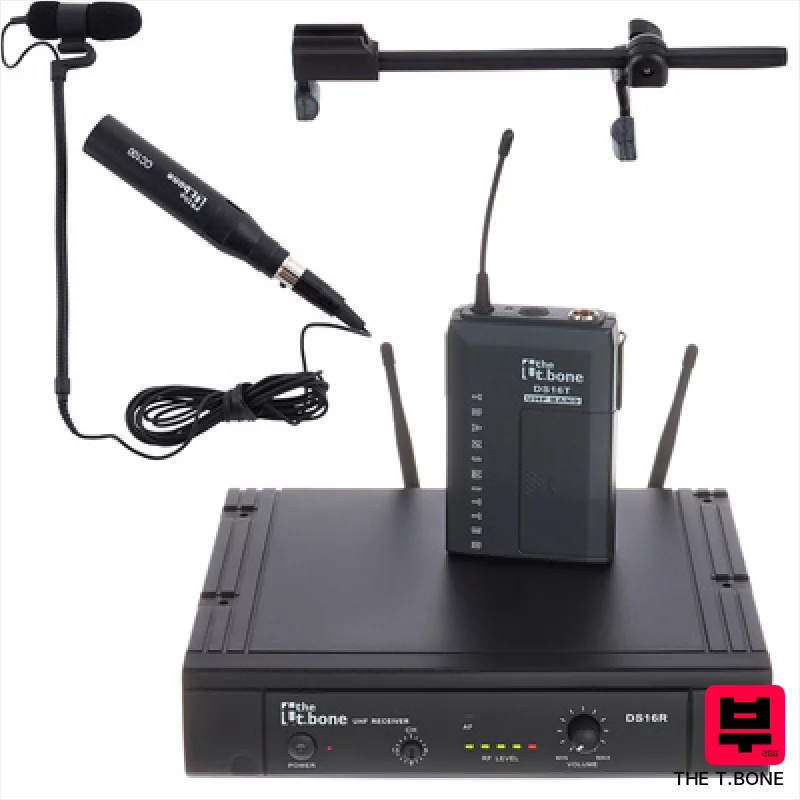
the t.bone TWS 863 Ovid Guitar Bundle
- • Excellent value for a complete wireless guitar system
- • The Ovid clip mic captures surprisingly detailed acoustic tones
- • 863 MHz band offers registration-free operation in many regions
- • Compact receiver is rack-mountable, saving valuable space
- • Build quality feels a little plasticky, not as robust as higher-end systems
- • Limited frequency selection compared to more advanced wireless options
- • Bodypack cable length might be restrictive for some performers
How to Choose the Best Wireless Systems for Guitar and Bass
Frequency Range
Wider is generally better, especially for bass. A narrow range can mean more interference, especially in crowded venues or near other transmitters. Bass needs headroom; a limited range will choke the low-end thump.
Latency
This is HUGE. Even a few milliseconds of delay can mess with your timing and feel. We're looking for systems with latency under 5ms, anything more noticeable will impact your playing.
Dynamic Range
More dynamic range means a cleaner signal, even at higher volumes. Low dynamic range means you'll hear hiss and compression when you really need to dig in and get some breakup. You want to cut through the mix, not disappear into noise.
Build Quality & Durability
Gigs aren't gentle. The transmitter needs to be roadworthy - solid construction, decent battery life, and a reliable clip. A flimsy transmitter is just asking for trouble.
Tone/Signal Integrity
Wireless systems inherently introduce some signal degradation. The best ones minimize this, preserving your guitar's pickup voicing and sustain. Cheap systems can make your Les Paul sound like a Strat, and that's not a good thing.
Buying Guide
At this price point, you're making trade-offs. Expect some compression, potential for interference, and maybe a slightly 'sterile' tone compared to a direct connection. Don't expect studio-grade clarity. Prioritize low latency above all else - that's the most impactful factor on your playing feel. Paying a little more for a system with a wider frequency range and digital transmission will almost always be worth it to avoid dropouts and interference. Check reviews for real-world user experiences regarding interference in your local area.
How This List Is Built
We don't play these instruments — we're a catalog, not a review desk, and we'd rather say so than pretend otherwise. This page ranks 15 wireless systems for guitar and bass from the Thomann catalogue, which is the largest single source of specification data in this category.
Position is computed, not curated. Four signals, in order of weight: how completely the manufacturer documents the instrument (number of published specifications), where it sits in the price range, how specific the model designation is — which filters out generic accessories — and whether a product image exists. The same inputs always produce the same order, so nothing here is shuffled to look fresh.
What this list is good for: narrowing a category down to a shortlist by spec and budget. What it isn't: a substitute for hearing an instrument. Before you buy, read hands-on reviews and, where you can, play it. Full methodology.

