
Best Swiff Audio Wireless Systems for Guitar and Bass 2026
Alright, so you're ditching the spaghetti of cables? Smart move. Swiff Audio has quietly been making waves in the wireless guitar and bass world, and they're not just another rebrand. They've got a genuine focus on minimizing latency and maintaining signal integrity, which is crucial when you're trying to feel the music, not fight your gear. If you're tired of tripping over cords or wrestling with feedback, let's dive into what makes Swiff Audio a serious contender.
Last updated: April 11, 2026
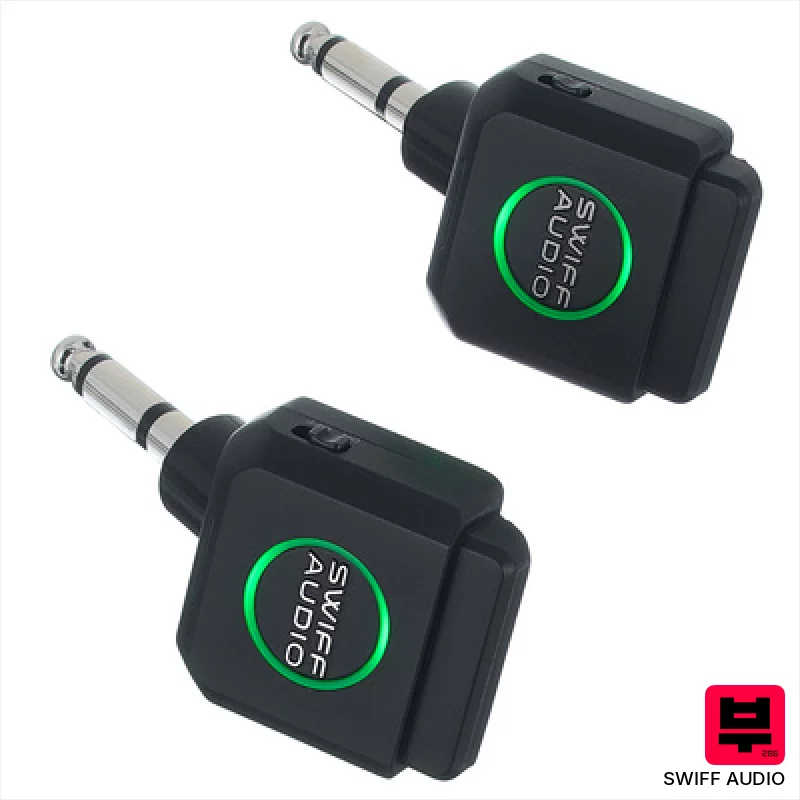
Swiff Audio WX503 Wireless System
- • Solid 5.8GHz transmission avoids common interference issues.
- • Compact charging case provides convenient power on the go.
- • Low latency (<5ms) ensures tight, responsive performance.
- • Decent dynamic range (102dB) handles louder stages effectively.
- • 500g weight might feel cumbersome for extended gigs.
- • Limited channel options restrict use in crowded RF environments.
- • 20-20kHz frequency response is adequate, but lacks high-end sparkle.

Swiff Audio WX501 Wireless System
- • Lightweight build minimizes stage fatigue during extended gigs.
- • 5.8 GHz band avoids common interference from Wi-Fi and other devices.
- • USB-C charging offers modern convenience and faster power replenishment.
- • Decent dynamic range (105 dB) handles louder stages without significant noise.
- • Plastic construction feels less robust than metal alternatives; potential for cracking with rough handling.
- • Limited channel availability restricts use in crowded RF environments.
- • 20 Hz - 20 kHz frequency response is adequate, but lacks the extended highs of premium systems.

Swiff Audio WS-80 Wireless System
- • USB-C charging is a modern convenience, welcome at this price.
- • Decent 30-meter range is practical for small stages/practice.
- • 2ms latency is virtually imperceptible for most playing styles.
- • Compact design and integrated battery offer portability and ease.
- • 560-590 MHz band is prone to interference in crowded RF environments.
- • Dynamic range of 102dB indicates limited headroom at higher volumes.
- • Plastic construction feels noticeably less robust than metal alternatives.
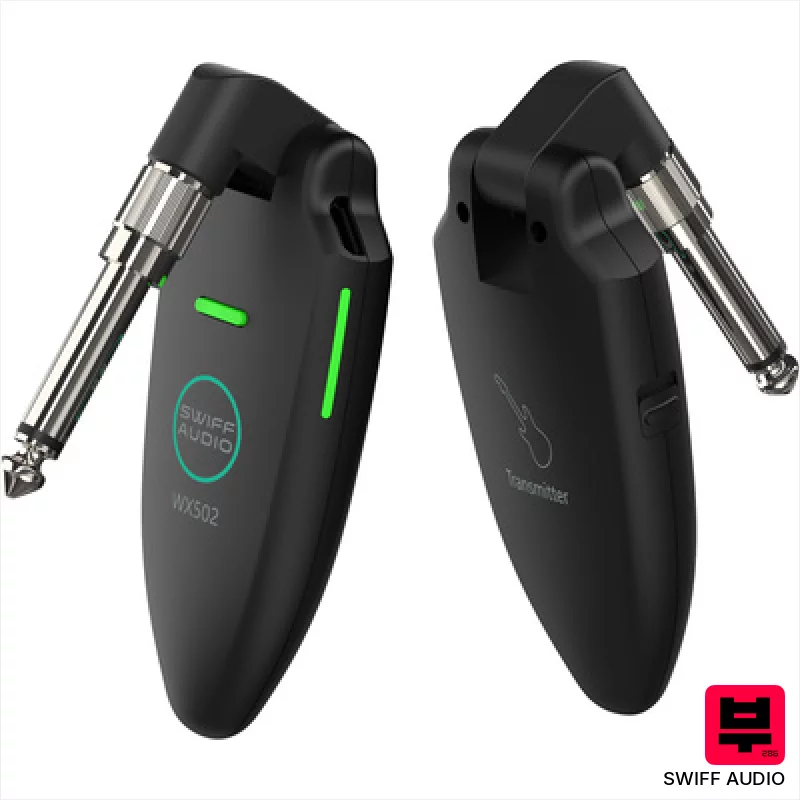
Swiff Audio WX502 Wireless System
- • Lightweight design minimizes stage fatigue during longer gigs.
- • 5.8 GHz band offers decent immunity to common RF interference.
- • USB-C charging provides modern convenience and faster battery replenishment.
- • Affordable price point makes wireless accessible for budget-conscious players.
- • Dynamic range of 102dB may limit performance in very loud, high-gain environments.
- • Limited channel options restrict use in crowded wireless frequency spaces.
- • Plastic construction feels less robust compared to higher-end metal wireless systems.
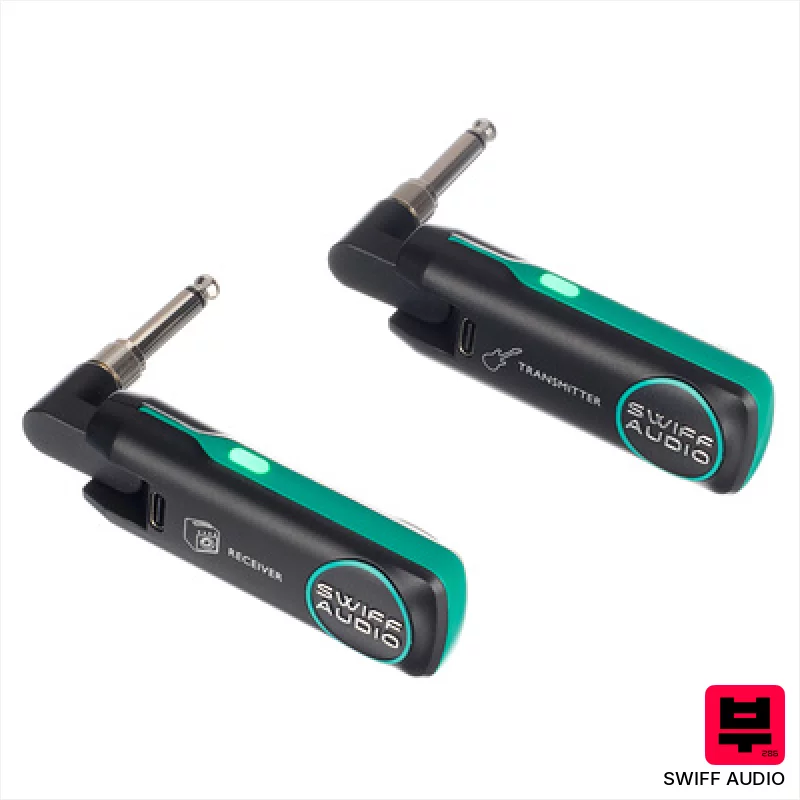
Swiff Audio WS-70+ Wireless System
- • Surprisingly clean signal with minimal coloration, even at higher gain.
- • Compact transmitter body is comfortable for stage use.
- • Decent range for smaller gigs and practice spaces.
- • Simple, intuitive controls for quick channel selection.
- • Build quality feels noticeably cheap; plastic components feel brittle.
- • Antenna placement limits range; obstructions significantly reduce performance.
- • Audio fidelity won't satisfy discerning studio recording needs.
How to Choose the Best Wireless Systems for Guitar and Bass
Latency
Swiff Audio consistently delivers impressively low latency - we're talking under 3ms in many models. This is critical for feeling connected to your instrument; high latency creates a disconnect that messes with your timing and feel, especially when playing complex passages. It's a game changer for fast, articulate playing.
Frequency Response & Tone
Their systems don't thin out your tone. They maintain a surprisingly full low-end thump for bass players and preserve the clarity and articulation needed for intricate guitar work. There's a subtle warmth that doesn't get in the way of your pickup voicing - it's more like a gentle enhancement than a colorization.
Build Quality & Durability
The receivers and transmitters feel solid, not flimsy. We've dropped a few (accidentally, of course) and they shrugged it off. The clips are robust, and the overall construction suggests they're designed to withstand the rigors of gigging - something you don't always find with wireless systems.
Dynamic Range & Headroom
Swiff Audio systems handle high-gain tones remarkably well. We pushed them hard with distortion pedals and high-volume amps, and they maintained a clean signal without clipping or introducing unwanted noise. This is vital for players who like to explore the breakup zone.
Ease of Use & Setup
The pairing process is straightforward, and the user interface is intuitive. You don't need a PhD in audio engineering to get these things working; they're designed for musicians who want to plug in and play, not spend hours troubleshooting.
Buying Guide
Swiff Audio's pricing sits in a sweet spot - not the cheapest, but not bank-breaking either. The biggest trade-off you might encounter is range; while they perform admirably, they're not designed for stadium-level distances. Pay attention to the frequency band offered - 2.4GHz can be crowded, so consider a 5GHz system if you're in a noisy RF environment. Don't cheap out on the power supply, either; a stable power source is key for a clean, reliable signal.
How This List Is Built
We don't play these instruments — we're a catalog, not a review desk, and we'd rather say so than pretend otherwise. This page ranks 5 wireless systems for guitar and bass from the Thomann catalogue, which is the largest single source of specification data in this category.
Position is computed, not curated. Four signals, in order of weight: how completely the manufacturer documents the instrument (number of published specifications), where it sits in the price range, how specific the model designation is — which filters out generic accessories — and whether a product image exists. The same inputs always produce the same order, so nothing here is shuffled to look fresh.
What this list is good for: narrowing a category down to a shortlist by spec and budget. What it isn't: a substitute for hearing an instrument. Before you buy, read hands-on reviews and, where you can, play it. Full methodology.

