
Best Wireless Systems for Guitar and Bass for Stage Performance 2026
Alright, so you're tired of tripping over cables? I get it. Wireless systems have come a long way, but choosing the right one for stage isn't just about freedom - it's about tone, reliability, and not having your signal drop out mid-solo. Let's cut through the marketing hype and figure out what'll actually work for your gigs, whether you're a blues guitarist, a hard-hitting bassist, or somewhere in between.
Last updated: June 17, 2026 • Next update: June 24, 2026
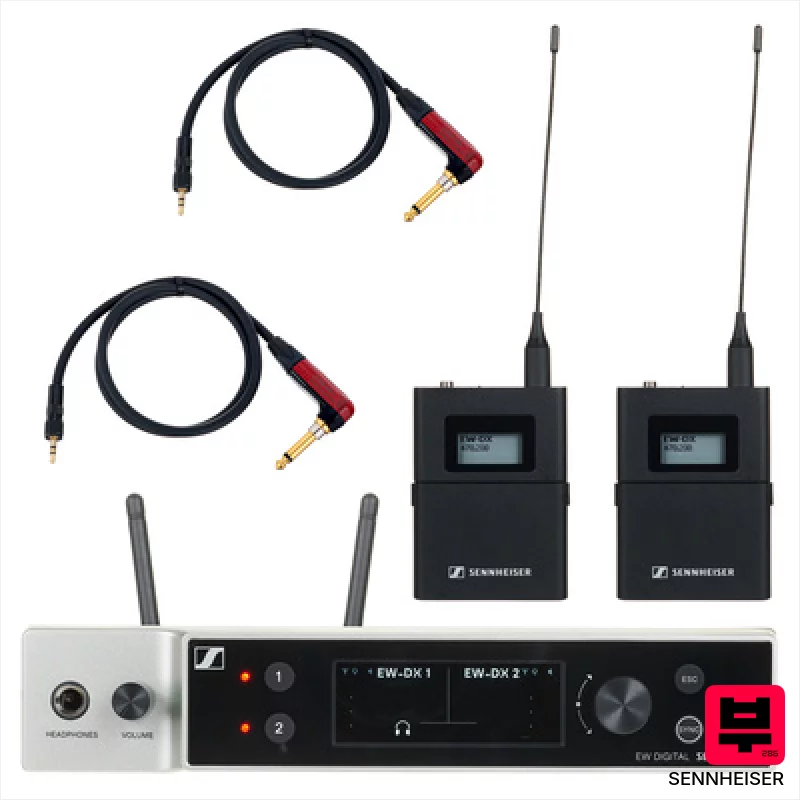
Sennheiser EW-DX 2 Dante CI Set Q1-9
- • Rock-solid Dante integration simplifies complex live sound workflows.
- • AES 256 encryption provides excellent security for sensitive performances.
- • Robust metal receiver chassis feels built to withstand demanding touring conditions.
- • Pocket transmitters are surprisingly compact and comfortable for extended use.
- • The AA battery requirement for the transmitters can be a logistical hassle.
- • The frequency range (470.2-550 MHz) limits operation in some regions.
- • Premium-priced, making it a significant investment for smaller gigs.

Mipro ACT-5800 MT-58 Pedal Set
- • 5.8GHz offers clean signal, less interference than 2.4GHz.
- • Programmable parameters provide extensive customization options.
- • Multiple outputs cater to complex pedalboard routing needs.
- • Violet finish adds a touch of visual flair, distinct on stage.
- • Violet color might not appeal to all performers’ aesthetic.
- • The menu system could be more intuitive for less tech-savvy users.
- • Receiver size is a bit bulky compared to some competitors.
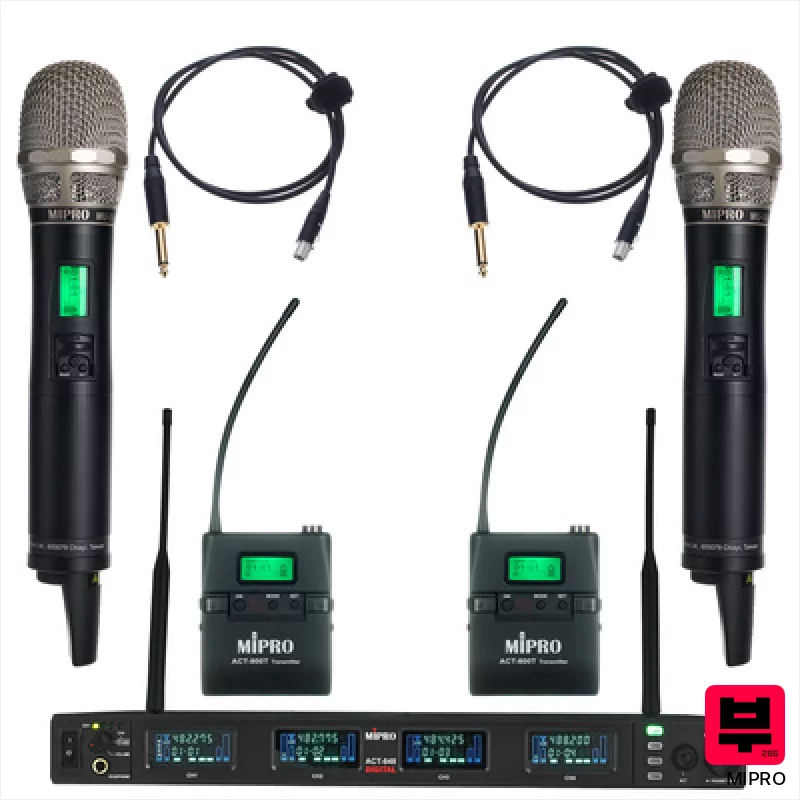
Mipro ACT-800 2xMU59 2xGuitar 5UA
- • Exceptional 72MHz bandwidth provides incredible channel flexibility.
- • ACT automatic channel targeting simplifies setup in crowded RF environments.
- • AES/EBU digital output caters to high-end recording setups.
- • Robust build quality with rack ears ensures stage durability.
- • Premium-priced system represents a significant investment for smaller operations.
- • The receiver's size (420mm wide) can be restrictive in tight spaces.
- • Limited flexibility for non-Mipro microphone integration.
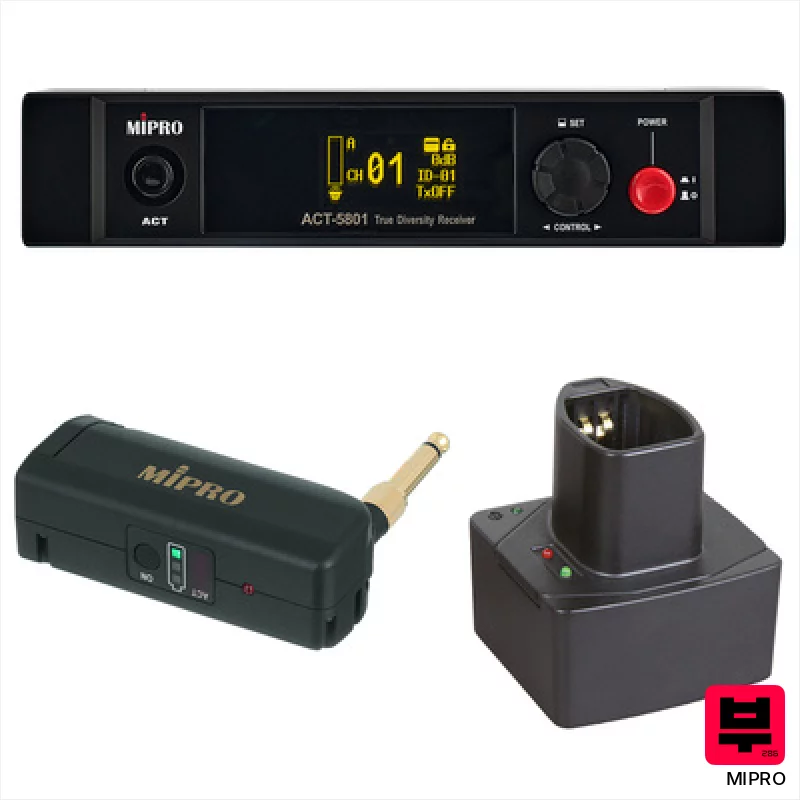
Mipro ACT-5800 Instrument Set
- • Digital transmission minimizes interference common in crowded RF spaces.
- • Compact transmitter design is comfortable for extended playing.
- • True diversity receiver offers reliable signal reception, even with obstacles.
- • Rechargeable battery system offers convenience and reduces disposable waste.
- • Plastic housing feels less robust than metal alternatives for gigging pros.
- • Limited frequency band necessitates channel scanning in some environments.
- • 5.8GHz band can be susceptible to interference from other devices.
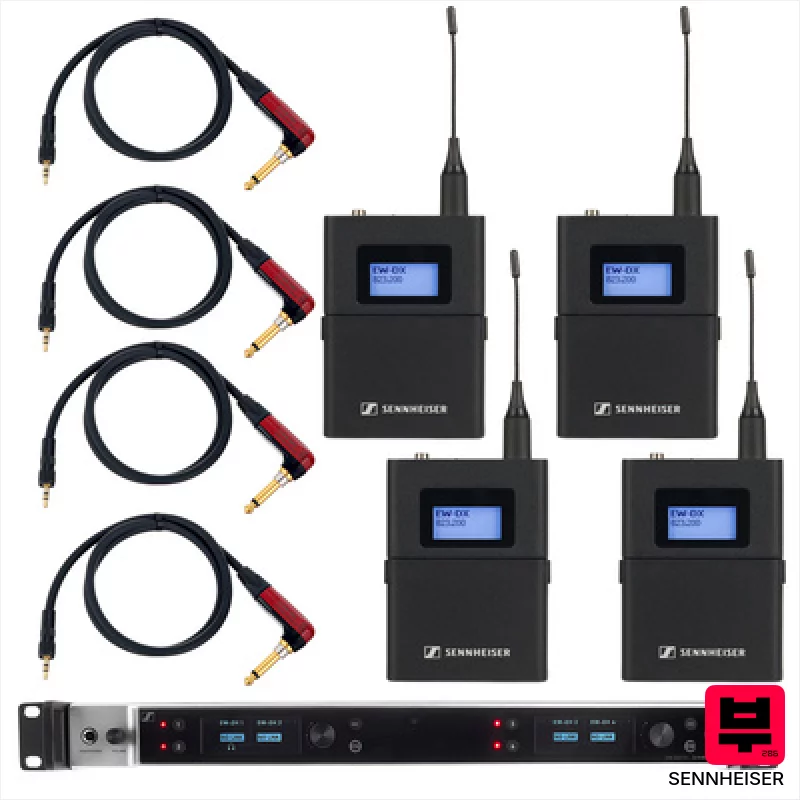
Sennheiser EW-DX 4 Dante CI Set U1/5
- • Dante connectivity simplifies integration into networked audio workflows seamlessly.
- • AES 256 encryption provides robust security for sensitive live performances.
- • Pocket transmitters are exceptionally compact and comfortable for performers.
- • Four channels offer flexibility for multiple instruments or vocalists.
- • The receiver's weight (approx. 2kg) can be cumbersome for mobile setups.
- • Premium-priced, making it a significant investment for smaller operations.
- • Requires AA batteries or the BA 70 pack, adding to ongoing operational costs.

Sennheiser EW-DX 4 Dante CI S2-10 Set
- • Rock-solid Dante connectivity simplifies complex live sound setups.
- • Excellent frequency response offers clear, natural instrument tone.
- • Robust metal construction ensures durability for demanding touring.
- • AES 256 encryption provides secure, interference-free transmission.
- • The receiver's weight (2kg) can be cumbersome for mobile setups.
- • Limited channel count (4) might restrict flexibility for large ensembles.
- • Rechargeable battery pack (BA 70) sold separately adds to overall cost.

Sennheiser EW-DX 2 Dante CI Set U1/5
- • Rock-solid Dante integration simplifies complex live sound setups.
- • Excellent AES 256 encryption ensures secure wireless transmission.
- • Pocket transmitters are remarkably compact and comfortable to wear.
- • Receiver's build quality feels robust and professional for stage use.
- • The AA battery requirement can be inconvenient for long gigs.
- • Dual-channel design limits simultaneous instrument usage.
- • Premium-priced, making it a significant investment for smaller operations.
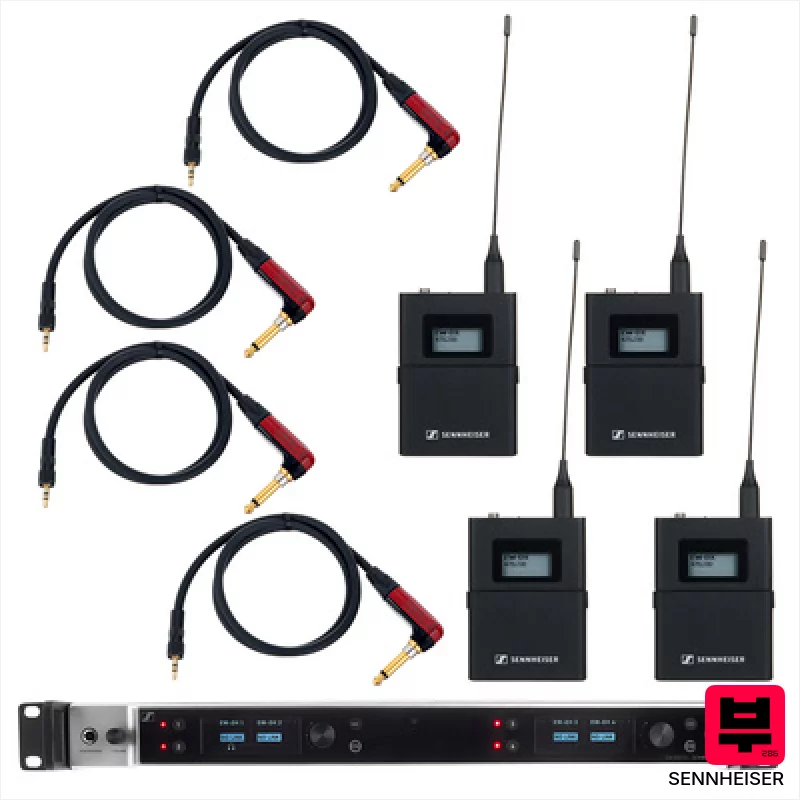
Sennheiser EW-DX 4 Dante CI Set Q1-9
- • Rock-solid Dante integration simplifies complex live sound workflows.
- • Robust metal receiver chassis inspires confidence in gigging environments.
- • Pocket transmitters are surprisingly compact and comfortable for extended use.
- • AES 256 encryption provides a crucial layer of security for sensitive performances.
- • The receiver's weight (4.6kg) demands a sturdy rack setup.
- • AA battery operation in the transmitters can be inconvenient on long runs.
- • The bundled instrument cables are fairly short, limiting stage flexibility.
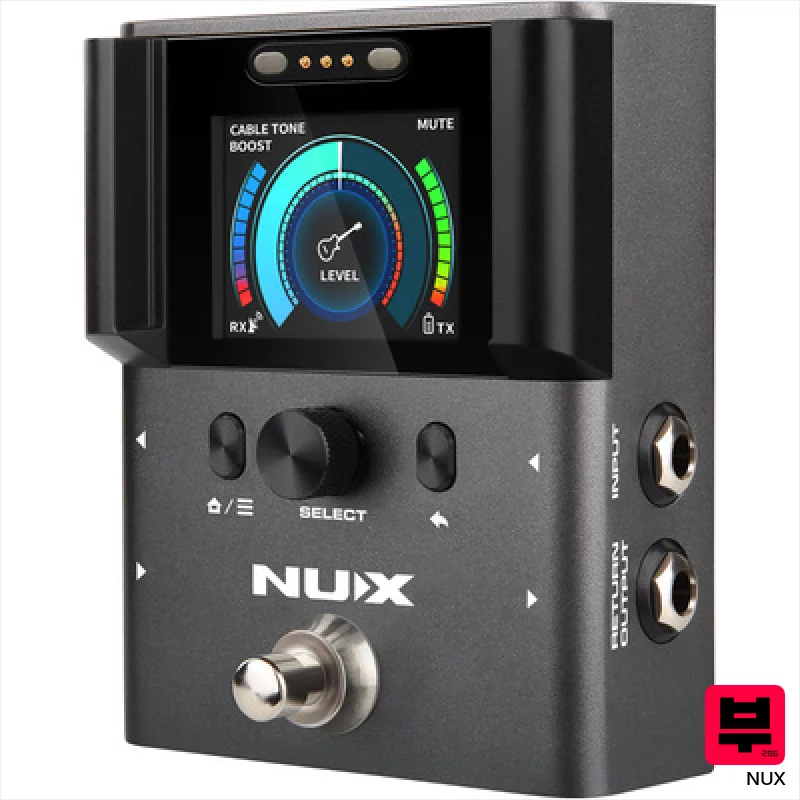
Nux B-8 Wireless-System Git/Bass
- • Compact design minimizes stage clutter; excellent for pedalboard integration.
- • Built-in tuner is genuinely useful for quick onstage adjustments.
- • Balanced XLR DI output simplifies recording and live sound reinforcement.
- • Wireless pairing is incredibly fast and reliable; very user-friendly.
- • 2.4 GHz band is susceptible to interference in crowded RF environments.
- • Transmitter's plastic construction feels less robust than higher-end units.
- • Limited channel options restrict use in densely populated wireless setups.

Blackstar Airwire i58
- • Compact transmitter design minimizes playing obstruction.
- • 5.8 GHz frequency reduces interference compared to 2.4 GHz.
- • Low latency (<6ms) ensures real-time performance for stage use.
- • Nine-hour battery life provides ample performance time for most gigs.
- • Limited channel selection compared to more professional wireless systems.
- • 35m range is adequate, but not ideal for large outdoor venues.
- • Plastic construction feels less robust than metal-bodied wireless systems.
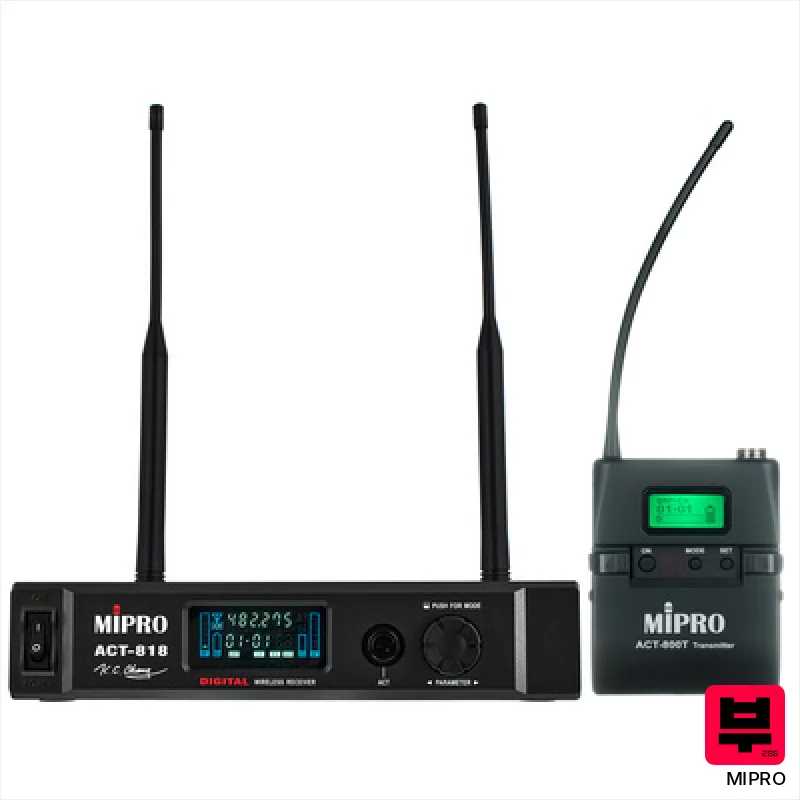
Mipro ACT-800 Bodypack Set 5UA
- • Excellent dynamic range (115 dBA) minimizes noise and feedback.
- • ACT automatic channel targeting simplifies setup in crowded RF environments.
- • Robust UHF frequency range (482-554 MHz) offers reliable signal transmission.
- • AES/EBU output provides a high-quality digital connection option.
- • The bodypack may feel bulky and heavy for extended wear, especially for smaller individuals.
- • Premium-priced, representing a significant investment for budget-conscious users.
- • Limited frequency band compared to wider spectrum systems, potentially restricting channel availability.

Boss WL-20 Wireless System Bundle
- • Plug-and-play setup simplifies pairing, saving valuable stage time.
- • Boss's proprietary tech minimizes interference, crucial for crowded RF environments.
- • Cable simulation convincingly replicates familiar tone, avoiding sterile digital feel.
- • Compact and lightweight transmitter is comfortable for extended playing sessions.
- • 15-meter range is limited, restricting movement onstage significantly.
- • High-impedance design restricts compatibility with active pickups and certain amps.
- • Limited channel count can be problematic in venues with heavy wireless usage.

Swiff Audio WX501 Wireless System
- • Lightweight build minimizes stage fatigue during extended gigs.
- • 5.8 GHz band avoids common interference from Wi-Fi and other devices.
- • USB-C charging offers modern convenience and faster power replenishment.
- • Decent dynamic range (105 dB) handles louder stages without significant noise.
- • Plastic construction feels less robust than metal alternatives; potential for cracking with rough handling.
- • Limited channel availability restricts use in crowded RF environments.
- • 20 Hz - 20 kHz frequency response is adequate, but lacks the extended highs of premium systems.
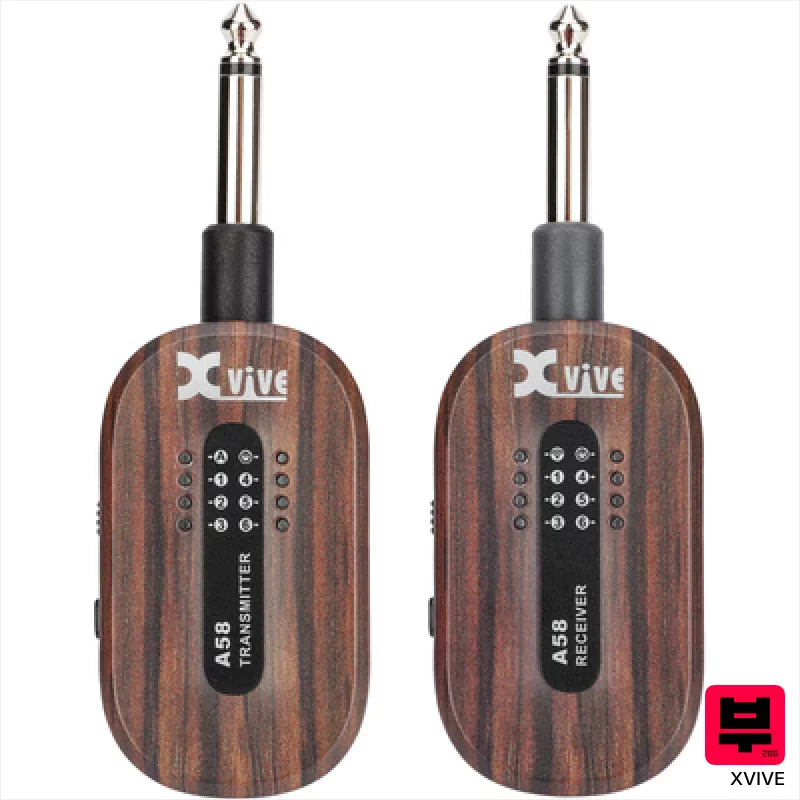
XVive A58 Guitar Wireless System RW
- • Excellent latency for stage performance; feels virtually wired.
- • 6 channels offer real flexibility in crowded RF environments.
- • Solid build quality for the price; feels durable enough for gigging.
- • Broad 20Hz-20kHz frequency response captures instrument's full sonic spectrum.
- • Battery life, while decent, isn't ideal for extended festival runs.
- • The receiver unit is a bit bulky compared to some competitors.
- • Passive pickup users might notice slight high-frequency roll-off.

Positive Grid Spark Link
- • Plug-and-play simplicity eliminates setup headaches; great for gigging musicians.
- • 2.4GHz system offers reliable performance, minimizing interference compared to older systems.
- • Low latency (<3ms) ensures real-time response, critical for dynamic playing.
- • Compact design and rechargeable battery provide excellent portability and convenience.
- • 30-meter range might be limiting for larger stages or outdoor performances.
- • Single USB charging cable feels a bit sparse for a complete wireless system.
- • Limited channel selection (4) could become restrictive for band rehearsals.
How to Choose the Best Wireless Systems for Guitar and Bass
Latency
Anything over 5ms is noticeable, especially for fast playing. That delay messes with your feel and articulation - it's a real vibe killer. We're looking for systems that feel tight and responsive, letting you play with confidence.
Frequency Response & Tone
Wireless systems can color your tone, often in subtle but noticeable ways. We're evaluating for transparency - does it add harshness, roll off the low-end, or muddy the mids? Ideally, it should be as close to your wired signal as possible.
Range & Reliability
A system that cuts out during a crucial fill is useless. We're testing for consistent signal strength across a typical stage area, accounting for potential interference from other bands and stage lighting.
Dynamic Range & Headroom
Can it handle your playing style? A quiet clean player needs a different system than someone who digs into overdrive. We're looking for systems that don't compress or distort unexpectedly when you really lay into it.
Ease of Use & Setup
No one wants to spend 20 minutes wrestling with a wireless system before the show. We're assessing how easy it is to pair, sync, and troubleshoot, especially under pressure.
Buying Guide
Don't cheap out entirely - seriously. The really budget systems often cut corners on the transmitter's components, leading to noise and signal dropouts. Paying more generally gets you better frequency management, improved dynamic range, and a more transparent sound. Look for systems with multiple frequency bands, a good reputation for reliability, and consider a receiver with a spectrum analyzer to help avoid interference - it's worth it for peace of mind.
Our Methodology
We're not basing this list on spec sheets alone. We've spent countless hours on stage, in rehearsal rooms, and in studios with these systems, A/B'ing them against wired setups, and putting them through the ringer - drop tests, crowded frequency environments, the whole nine yards. What matters is how they feel and sound in a real-world band situation.

