
Best Boss Wireless Systems for Guitar and Bass 2026
Alright, so you're ditching the spaghetti of cables? Smart move. Boss has been a reliable name in guitar and bass gear for decades, and their wireless systems are surprisingly good, especially when you consider the price point. They aren't going to blow away the high-end boutique stuff, but for consistent performance and solid tone, Boss wireless offers a lot of value, particularly for gigging musicians who need something dependable.
Last updated: April 11, 2026

Boss WL-20L Wireless System Bundle
- • Plug-and-play pairing simplifies setup; ideal for gigging musicians needing quick solutions.
- • Low 2.3ms latency ensures tight, responsive feel – critical for live performance.
- • BOSS’s proprietary technology minimizes interference, delivering clean, clear guitar/bass tone.
- • Integrated rechargeable battery provides ample playtime; convenient USB charging.
- • 15-meter range is somewhat limited; line-of-sight dependency can restrict movement.
- • Designed specifically for low-impedance active pickups; passive pickups require an adapter.
- • The carrying pouch is basic; offers minimal protection beyond dust.

Boss WL-20 Wireless System Bundle
- • Plug-and-play setup simplifies pairing, saving valuable stage time.
- • Boss's proprietary tech minimizes interference, crucial for crowded RF environments.
- • Cable simulation convincingly replicates familiar tone, avoiding sterile digital feel.
- • Compact and lightweight transmitter is comfortable for extended playing sessions.
- • 15-meter range is limited, restricting movement onstage significantly.
- • High-impedance design restricts compatibility with active pickups and certain amps.
- • Limited channel count can be problematic in venues with heavy wireless usage.
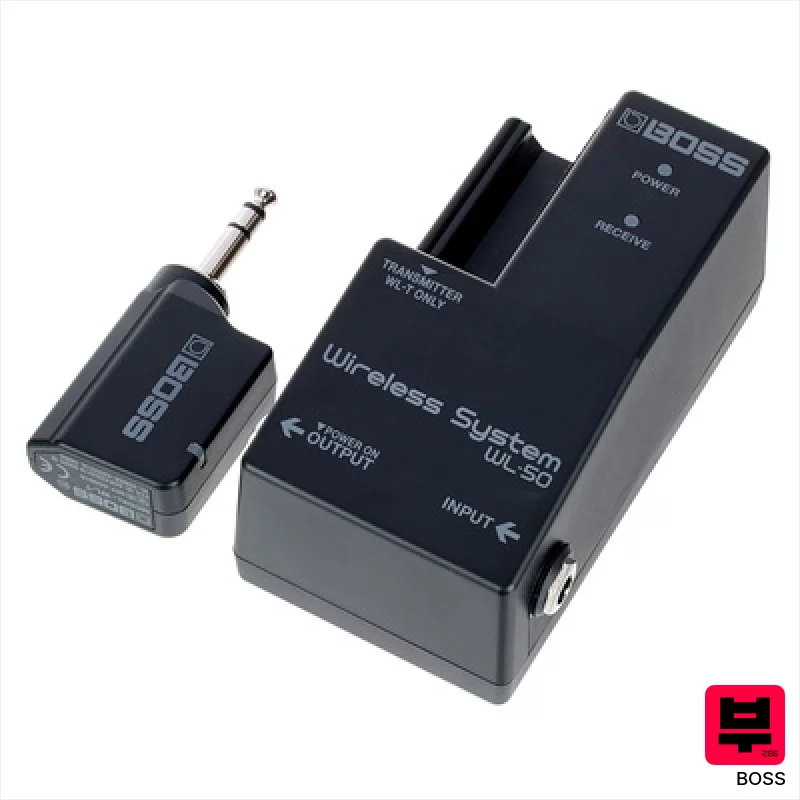
Boss WL-50 Wireless System
- • Plug-and-play design eliminates frustrating wireless setup headaches.
- • Compact pedal format integrates seamlessly into existing pedalboards.
- • Impressive 12-hour battery life offers reliable performance on stage.
- • Low 2.3ms latency ensures a responsive, natural playing feel.
- • Limited channel availability may pose issues in crowded RF environments.
- • 20-meter range is adequate, but can be restrictive for larger stages.
- • Cable simulation options are basic, lacking nuanced tone shaping.
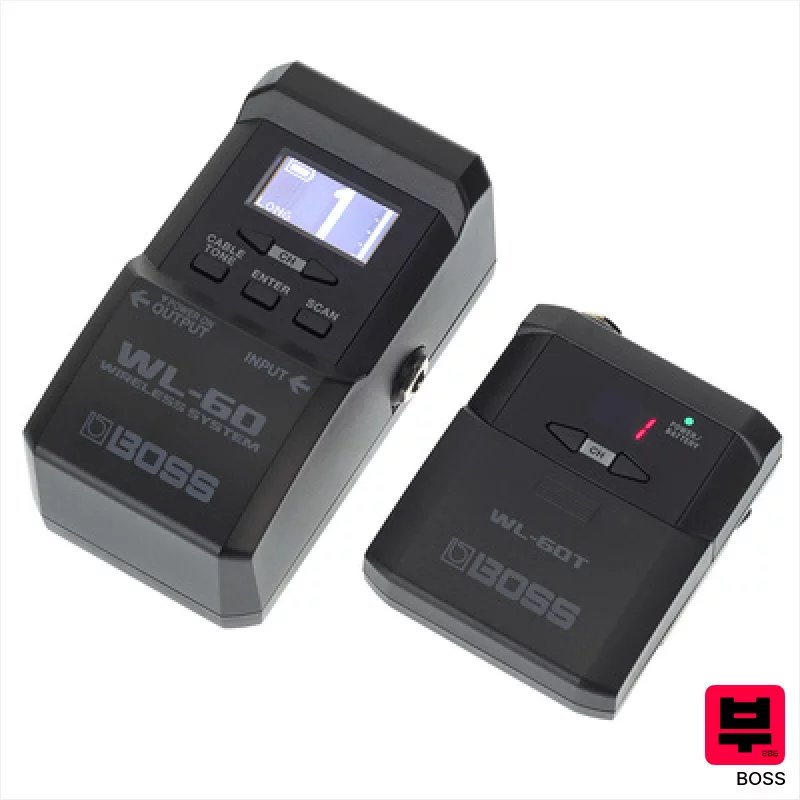
Boss WL-60 Wireless System
- • Plug-and-play simplicity eliminates wireless setup headaches.
- • Low 2.3ms latency feels completely transparent during performance.
- • Cable simulation offers tonal flexibility for different rigs.
- • Compact pedalboard-friendly design is genuinely useful.
- • Limited range compared to higher-end, dedicated wireless systems.
- • Relies on AA batteries; power adapter is sold separately.
- • Channel selection may be restrictive in crowded RF environments.
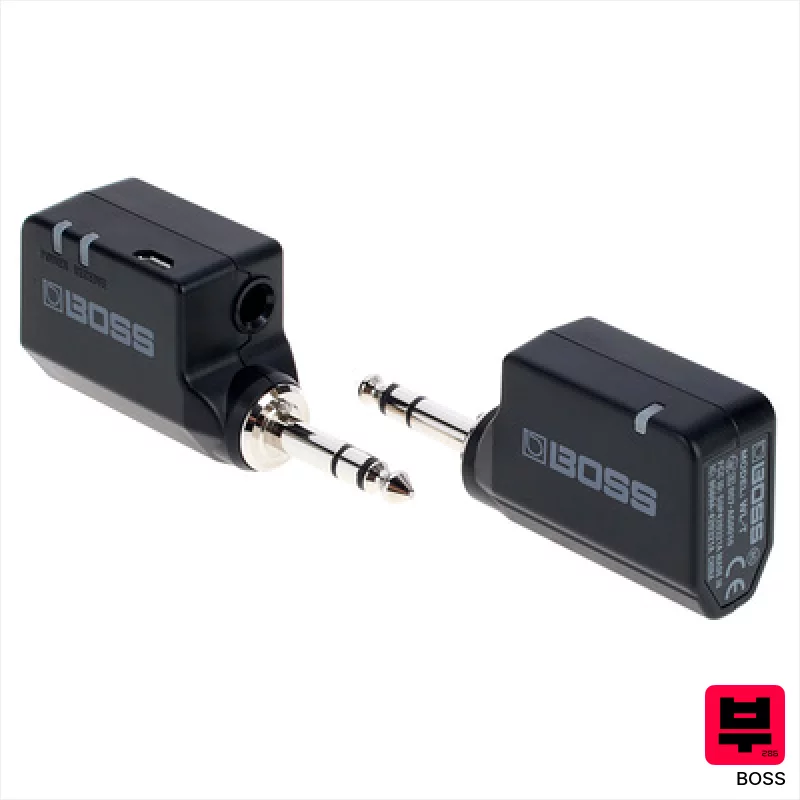
Boss WL-20 Wireless System
- • Simple pairing eliminates setup headaches, a genuine time-saver.
- • Cable simulation realistically mimics a 3m cable's feel and tone.
- • BOSS's proprietary tech delivers surprisingly clean, interference-free signal.
- • Compact, lightweight design minimizes performance impact.
- • 15-meter range is limiting for larger stages or dynamic movement.
- • High-impedance requirement restricts compatibility with some active pickups.
- • Battery replacement isn't user-replaceable; requires sending it in.

Boss WL-20L Wireless System
- • Simple pairing process eliminates frustrating setup delays
- • BOSS's interference-reducing tech delivers surprisingly clean signal
- • Lightweight and compact for comfortable stage or studio use
- • Long battery life minimizes downtime during performances
- • Limited range necessitates line-of-sight for reliable connection
- • Only suitable for instruments with active, low-impedance pickups
- • Lack of channel scanning could lead to interference in crowded RF environments
How to Choose the Best Wireless Systems for Guitar and Bass
Tone Transparency
Boss wireless systems generally aim for transparency, but there's a subtle 'digital' quality, especially with the older models. It's not bad, just noticeable-it doesn't muddy up a bright Vox AC30, but it won't give you that warm, tube-like saturation either.
Range and Reliability
The range is generally good, but interference can be a factor in crowded RF environments. The newer systems use more sophisticated modulation to mitigate this, but always do a range check before a gig.
Latency
Latency is a critical factor. Boss has improved considerably here, and the latest systems are genuinely usable for live performance. However, older models can have a slight, but perceptible, delay that can throw off your timing, especially when playing intricate passages.
Build Quality
Boss gear is known for its robust build. These wireless systems are no exception; they can take a beating on the road. The transmitters are compact and durable, and the receivers are built to withstand regular use.
Ease of Use
Setup is straightforward, with clear channel selection and pairing instructions. This is a huge plus for players who aren't tech wizards and just want to get on with the show.
Buying Guide
Don't expect boutique-level tone-these are workhorse systems. The older Boss Wireless Systems (like the LS-20W) are significantly more prone to dropouts than the newer ones (like the LS-60W). Spend a little more for the latest generation; the improved latency and increased channel options are worth it. Also, consider the frequency band - 2.4GHz is convenient, but can be crowded, while 5GHz offers cleaner signals if it's available in your area.
How This List Is Built
We don't play these instruments — we're a catalog, not a review desk, and we'd rather say so than pretend otherwise. This page ranks 6 wireless systems for guitar and bass from the Thomann catalogue, which is the largest single source of specification data in this category.
Position is computed, not curated. Four signals, in order of weight: how completely the manufacturer documents the instrument (number of published specifications), where it sits in the price range, how specific the model designation is — which filters out generic accessories — and whether a product image exists. The same inputs always produce the same order, so nothing here is shuffled to look fresh.
What this list is good for: narrowing a category down to a shortlist by spec and budget. What it isn't: a substitute for hearing an instrument. Before you buy, read hands-on reviews and, where you can, play it. Full methodology.

