
Best Mipro Wireless Systems for Guitar and Bass 2026
So, you're ditching the spaghetti of cables and going wireless for guitar or bass? Smart move. Mipro's been quietly building a reputation as a serious contender in the wireless space, and for good reason - they offer a solid balance of performance and value that a lot of bigger brands overlook. Forget the cheap, buzzy systems; Mipro delivers a surprisingly clean signal and robust build, making them a great choice for gigging musicians and even studio work.
Last updated: April 11, 2026
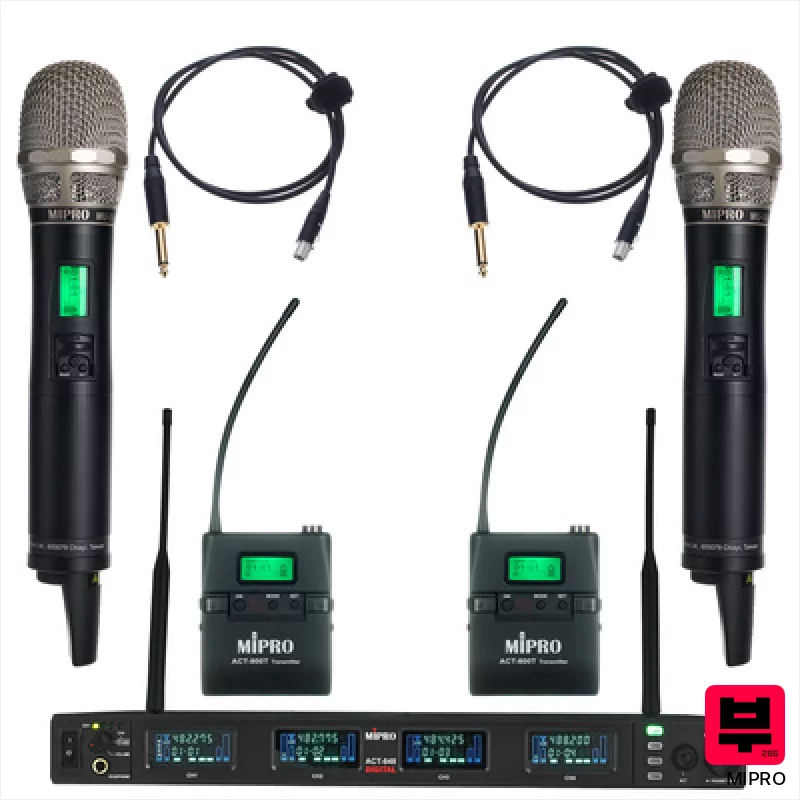
Mipro ACT-800 2xMU59 2xGuitar 5UA
- • Exceptional 72MHz bandwidth provides incredible channel flexibility.
- • ACT automatic channel targeting simplifies setup in crowded RF environments.
- • AES/EBU digital output caters to high-end recording setups.
- • Robust build quality with rack ears ensures stage durability.
- • Premium-priced system represents a significant investment for smaller operations.
- • The receiver's size (420mm wide) can be restrictive in tight spaces.
- • Limited flexibility for non-Mipro microphone integration.

Mipro ACT-800 Bodypack Twin Set 5UA
- • Excellent dynamic range (115 dBA) minimizes unwanted noise and feedback
- • ACT automatic channel targeting simplifies setup and avoids interference
- • Robust build quality with rack ears suggests professional-grade durability
- • AES/EBU digital output caters to high-end recording setups
- • The 72 MHz bandwidth, while broad, can still be limiting in congested RF environments
- • Twin bodypack systems can be bulky and require careful cable management onstage
- • Premium-priced, making it a significant investment for smaller operations
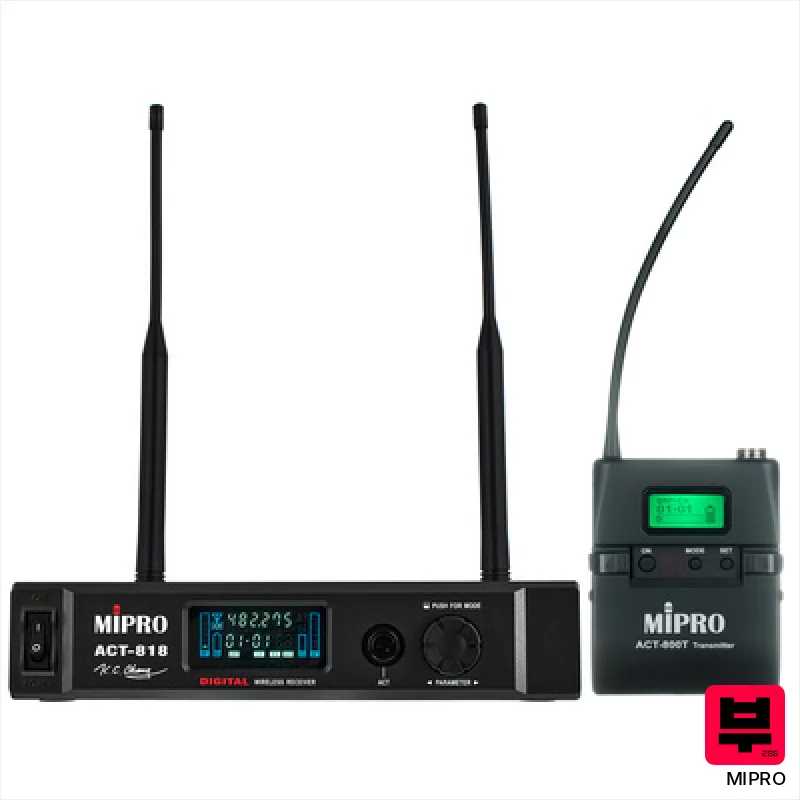
Mipro ACT-800 Bodypack Set 5UA
- • Excellent dynamic range (115 dBA) minimizes noise and feedback.
- • ACT automatic channel targeting simplifies setup in crowded RF environments.
- • Robust UHF frequency range (482-554 MHz) offers reliable signal transmission.
- • AES/EBU output provides a high-quality digital connection option.
- • The bodypack may feel bulky and heavy for extended wear, especially for smaller individuals.
- • Premium-priced, representing a significant investment for budget-conscious users.
- • Limited frequency band compared to wider spectrum systems, potentially restricting channel availability.

Mipro ACT-5800 MT-58 Pedal Set
- • 5.8GHz offers clean signal, less interference than 2.4GHz.
- • Programmable parameters provide extensive customization options.
- • Multiple outputs cater to complex pedalboard routing needs.
- • Violet finish adds a touch of visual flair, distinct on stage.
- • Violet color might not appeal to all performers’ aesthetic.
- • The menu system could be more intuitive for less tech-savvy users.
- • Receiver size is a bit bulky compared to some competitors.
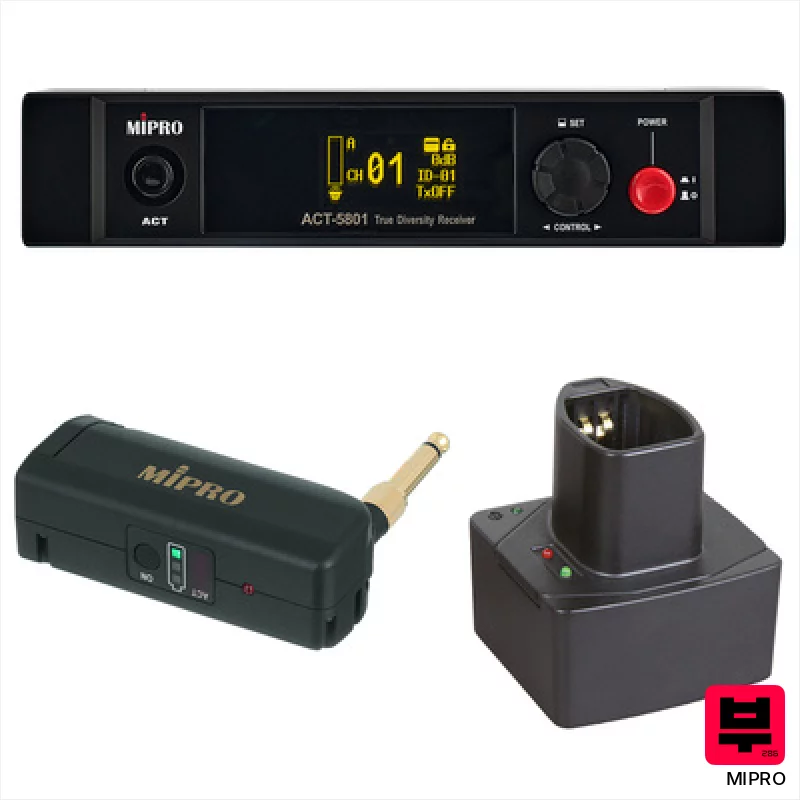
Mipro ACT-5800 Instrument Set
- • Digital transmission minimizes interference common in crowded RF spaces.
- • Compact transmitter design is comfortable for extended playing.
- • True diversity receiver offers reliable signal reception, even with obstacles.
- • Rechargeable battery system offers convenience and reduces disposable waste.
- • Plastic housing feels less robust than metal alternatives for gigging pros.
- • Limited frequency band necessitates channel scanning in some environments.
- • 5.8GHz band can be susceptible to interference from other devices.
How to Choose the Best Wireless Systems for Guitar and Bass
Frequency Response & Clarity
Mipro tends to deliver a surprisingly flat frequency response, especially in their higher-end models. This isn't about adding color; it's about accurately reproducing your instrument's tone - that means preserving the low-end thump of a bass or the articulate highs of a single-coil guitar. It's a clean, transparent signal that lets your amp and pickups do the talking.
Dynamic Range & Headroom
A lot of cheaper wireless systems compress like crazy when you hit them hard. Mipro units generally offer decent headroom - enough to handle aggressive playing without getting muddy or losing definition. You still need to be mindful of gain staging, but they'll handle a good amount of volume before they start to break up.
Build Quality & Durability
These aren't flimsy plastic toys. Mipro's metal construction feels solid, and they've held up to the rigors of gigging better than some systems costing twice as much. The transmitters are comfortable to hold, even for extended periods, which is surprisingly important.
Interference Rejection
Wireless is only as good as its ability to avoid interference. Mipro systems incorporate decent RF filtering and often offer multiple frequency options, which helps to minimize dropouts and buzzing, especially in crowded RF environments like clubs and festivals. It's not perfect, but it's generally reliable.
Latency
Let's be honest, any wireless system introduces a bit of latency. Mipro's latency is generally competitive - low enough that it won't be a major issue for most players, but sensitive players might notice a tiny delay. It's not a dealbreaker, but something to be aware of.
Buying Guide
Don't expect Mipro to sound like a boutique, ultra-expensive system, and you won't be disappointed. The entry-level models are a great value, but the higher-end units (like the ACT or GOLD series) really step up the game with improved frequency response and better RF performance. Be sure to check for frequency licensing requirements in your area, and consider a system with multiple frequencies to avoid interference. Ultimately, Mipro offers a reliable and transparent wireless solution for players who want quality without breaking the bank.
How This List Is Built
We don't play these instruments — we're a catalog, not a review desk, and we'd rather say so than pretend otherwise. This page ranks 5 wireless systems for guitar and bass from the Thomann catalogue, which is the largest single source of specification data in this category.
Position is computed, not curated. Four signals, in order of weight: how completely the manufacturer documents the instrument (number of published specifications), where it sits in the price range, how specific the model designation is — which filters out generic accessories — and whether a product image exists. The same inputs always produce the same order, so nothing here is shuffled to look fresh.
What this list is good for: narrowing a category down to a shortlist by spec and budget. What it isn't: a substitute for hearing an instrument. Before you buy, read hands-on reviews and, where you can, play it. Full methodology.

