AudioFu Chart · October 2026
Best Headset Microphones Under $500 2026
The top pick is Shure MX153T/O-TQG Microflex Omnidirectional Earset Mic w/ TQG… ($241). the t.bone HeadmiKe - D EW BN gives you the most for the money at $66. Ranked by the AudioFu Index from 45 models across 10 brands, prices checked every night.
Last updated: October 21, 2026
Top 10
Full detail for the 10 highest AudioFu Index scores. Every other model is listed below.
-
Shure MX153T/
O-TQG Microflex Omnidirectional Earset Mic w/ TQG… MX153 B · Shure
30 for sale on Reverb2 finishes at Thomann
The MX153 B is a solid choice for presenters, vocalists, and content creators who need a reliable, clear-sounding earset mic. It's comfortable to wear and delivers Shure’s characteristic vocal clarity – perfect for situations where you need your voice to be the focus without a lot of fuss.
Pros
- Excellent vocal clarity with Shure's renowned condenser tech
- Robust TQG connector ensures reliable signal transmission
- Flexible earhook provides a comfortable, secure fit for extended use
Cons
- Omnidirectional pickup can be problematic in noisy environments
- Limited versatility – primarily designed for voice, not instruments
71AudioFu
Index↓ 13.7%since Aug 17 · lowest so far$279 · Aug 17$241 now$241€215 at Thomann · in stockCheck price ↗ -
- Weight0.02 kg
The t.bone HeadmiKe is a surprisingly capable headset mic, especially if you already use a Sennheiser EW wireless system. It's a solid budget-friendly option for content creators, online instructors, or anyone needing a hands-free vocal solution, just be mindful of the higher impedance needing a good preamp.
Pros
- Lightweight design minimizes fatigue during extended use.
- Cardioid pattern effectively isolates vocals, reducing room noise.
- Sennheiser EW connector provides compatibility with existing wireless systems.
Cons
- 750-ohm impedance requires a preamp for optimal gain and signal.
- Brown color might not be universally appealing or professional-looking.
-
The PGA31 is a solid, budget-friendly headset mic, perfect for singers, presenters, or gamers needing clear vocal capture without a lot of fuss. Its cardioid pattern helps isolate your voice, and the lightweight build makes it comfortable for long sessions. It’s not going to replace a studio mic, but it's a reliable workhorse for live performance or online communication.
Pros
- Lightweight design minimizes fatigue during extended use
- Cardioid pattern effectively rejects background noise and feedback
- Shure’s reputation ensures reliable performance and durability
Cons
- Limited frequency response compared to studio condenser mics
- Plastic construction feels less premium than higher-end headsets
-
Shure SM31FH Fitness Headset Wireless Condenser Mic
SM31 FH · Shure
29 for sale on Reverb1 finish at Thomann
The SM31 FH is a solid, dependable headset mic—perfect for instructors, coaches, or anyone needing clear voice transmission in a noisy gym or active setting. The build quality is surprisingly robust, and the lightweight design means you’ll barely notice it’s there, but don’t expect pristine studio sound; it's geared towards intelligibility over nuance.
Pros
- Durable, water-resistant construction ideal for demanding environments
- Lightweight design minimizes fatigue during extended use
- Clear, intelligible vocal pickup for speech and singing
Cons
- Limited frequency response compared to studio condenser mics
- TA4F connector restricts compatibility without an adapter
61AudioFu
IndexStableno change since Aug 17Aug 17$196 now$196€175 at Thomann · in stockCheck price ↗ -
The SM35 TQG is a workhorse headset mic, perfect for presenters, vocalists in theatrical productions, or anyone needing clear, intelligible voice capture in a loud environment. It's built to withstand the rigors of stage use and delivers a surprisingly natural vocal tone for a headset – just be mindful of its specialized connector.
Pros
- Robust build quality; feels solid and dependable for stage use
- Cardioid pattern effectively rejects background noise and feedback
- Lightweight design minimizes fatigue during extended performances
Cons
- Limited versatility; primarily suited for speaking and singing
- TQG connector can be restrictive for some setups
61AudioFu
IndexStableno change since Aug 17Aug 17$212 now$212€189 at Thomann · in stockCheck price ↗ -
Shure WH20XLR Cardioid Dynamic Headset Mic w/ XLR Connector
WH20TQG · Shure
14 for sale on Reverb3 finishes at Thomann
The WH20TQG is a solid, dependable headset mic for anyone needing clear voice transmission in a noisy environment – think aerobics instructors, public address, or even a musician needing a reliable stage mic. Its rugged build and comfortable headband are big pluses, though the dynamic capsule means it won't have the super-detailed sound of more premium options.
Pros
- Rugged dynamic capsule handles demanding performance environments
- CROAKIES headband offers excellent comfort for extended use
- Cardioid pattern minimizes feedback and background noise
Cons
- Limited frequency response compared to condenser headsets
- Dynamic mic lacks the detail of higher-end alternatives
59AudioFu
IndexStableno change since Aug 17Aug 17$133 now$133€119 at Thomann · in stockCheck price ↗ -
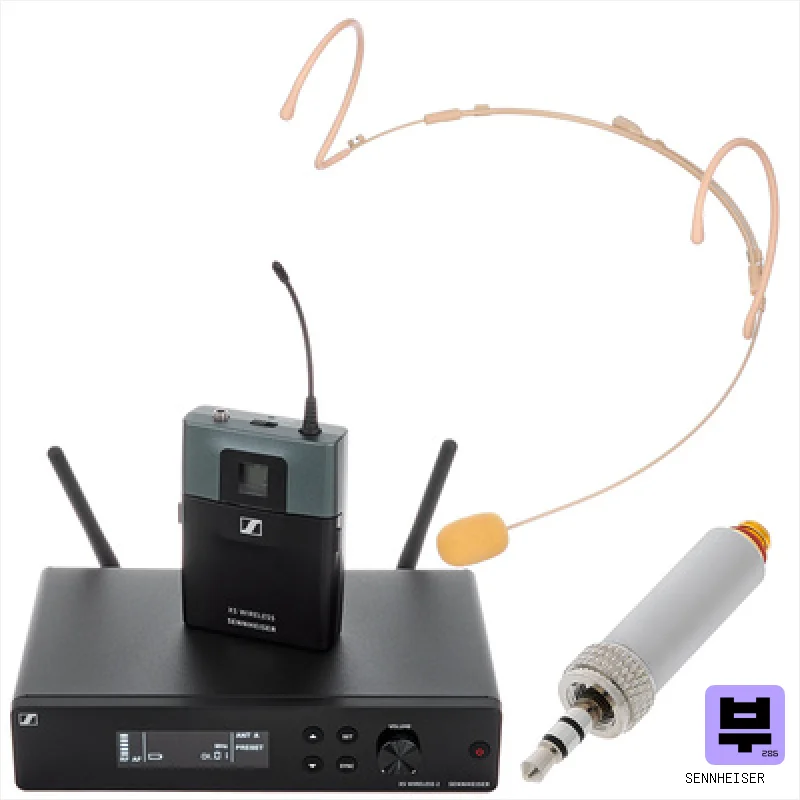
Sennheiser XSW 2-ME3-A Wireless Headset Microphone System - Band A…
ME3 · Sennheiser
19 for sale on Reverb1 finish at Thomann
The Sennheiser ME3 is a solid performer for vocalists and presenters using Sennheiser Evolution Wireless systems. It delivers a clean, natural sound with surprising detail for a headset mic, and the lightweight build makes it comfortable for extended use. This is a great, affordable upgrade for anyone needing a reliable wireless vocal solution.
Pros
- Excellent transient response for vocal clarity
- Gold-plated connector minimizes oxidation and signal loss
- Lightweight design reduces performance fatigue during long sets
Cons
- Cable length is somewhat restrictive for dynamic stage movement
- Primarily designed for Sennheiser wireless systems, limiting standalone use
57AudioFu
IndexStableno change since Aug 17Aug 17$163 now$163€145 at Thomann · in stockCheck price ↗ -
The AKG C 520 L is a solid choice for vocalists and presenters needing a reliable, hands-free mic. Its cardioid pattern and condenser capsule deliver clear audio, and the lightweight build makes it comfortable for long performances. It's a workhorse headset mic for live sound reinforcement.
Pros
- Excellent off-axis rejection minimizes room noise effectively.
- Lightweight design minimizes fatigue during extended use.
- TQG connector offers robust reliability and secure connection.
Cons
- Limited flexibility; primarily designed for stage performance, not studio recording.
- 200 Ohm impedance requires a preamp with sufficient gain.
54AudioFu
IndexStableno change since Aug 17Aug 17$209 now$209€186 at Thomann · in stockCheck price ↗ -
- Weight0.02 kg
The t.bone HeadmiKe is a budget-friendly option for performers needing a hands-free mic. It's surprisingly capable for vocals, especially for streaming, podcasting, or live vocalists who need mobility. Just be aware of the high impedance and omnidirectional pickup—it's not a studio mic, but a solid performer for the price.
Pros
- Lightweight design minimizes fatigue during extended use.
- Condenser capsule delivers surprisingly clear vocal reproduction.
- TQG connector offers compatibility with Shure wireless systems.
Cons
- 750 Ohm impedance requires a preamp or substantial gain.
- Omnidirectional pickup captures unwanted room noise easily.
-
- Weight0.02 kg
The t.bone HeadmiKe - D Shure BN is a surprisingly capable budget-friendly headset mic. It's perfect for streamers, podcasters, or online performers needing a clear, focused vocal pickup without a ton of fuss. Just be aware you'll need a decent preamp to drive it properly.
Pros
- Lightweight design minimizes fatigue during extended use.
- Cardioid pattern effectively isolates vocals, reducing background noise.
- Shure TQG connector offers compatibility with common wireless systems.
Cons
- 750-ohm impedance requires a preamp or microphone interface for optimal gain.
- Brown color is aesthetically unusual and may not suit all preferences.
All 45 headset microphones
Same index, same nightly prices — compact. Colour options of one model share a row. Tap a photo to zoom.
- 11
the t.bone HeadmiKe Pro Beigethe t.bone50Stable$133€119$133€119Check ↗
- 12
Mipro MU-53HNS-1MMipro48↓ 1.8%$124€111$124€111Check ↗
- 13
Audio-Technica ATM75CW Cardioid Condenser Headworn MicrophoneATM75cw · Audio-Technica47Stable$118€105$118€105Check ↗
- 14
Sennheiser HSP Essential Omnidirectional Neckworn Microphone with…HSP Essential (Black EW) · Sennheiser47Stable$331€295$331€295Check ↗
- 15
Shure DH5T/O-MTQG DuraPlex HeadsetShure · 5 finishes45↓ 4.1%$446€398$446€398Check ↗
- 16
AKG C544L Headset Condenser MicrophoneC 544 L · AKG44Stable$138€123$138€123Check ↗
- 17
Albrecht Nackenbügelmikrofon for ATT400Albrecht43Stable$13€12$13€12Check ↗
- 18
the t.bone EarmiKe - D AKGthe t.bone · 4 finishes43Stable$50€45$50€45Check ↗
- 19
Sennheiser HS 2 (Black EW)Sennheiser · 3 finishes41Stable$436€389$436€389Check ↗
- 20
AKG C555L Headset Condenser MicrophoneC 555 L · AKG38Stable$114€102$114€102Check ↗
- 21
Mipro MU-506HS PLUS-1MMipro · 3 finishes38Stable$178€159$178€159Check ↗
- 22
Shure SM39-TQGShure · 2 finishes37Stable$481€429$481€429Check ↗
- 23
the t.bone TWS One Headsetthe t.bone35Stable$20€18$20€18Check ↗
- 24
the t.bone HC 444 TWSthe t.bone35Stable$44€39$44€39Check ↗
- 25
the t.bone EarmiKe - D Shurethe t.bone35Stable$50€45$50€45Check ↗
- 26
the t.bone EarmiKe - O Shurethe t.bone35Stable$50€45$50€45Check ↗
- 27
the t.bone TG 16 T Earset Microphonethe t.bone35Stable$50€45$50€45Check ↗
- 28
Audio-Technica Pro 8 HEcWAudio-Technica · 2 finishes35↓ 3.3%$100€89$100€89Check ↗
- 29
the t.bone Earmic 500 - AKGthe t.bone35Stable$100€89$100€89Check ↗
- 30
the t.bone Earmic 500 - Shurethe t.bone35Stable$100€89$100€89Check ↗
- 31
the t.bone Earmic 500 - Sennheiserthe t.bone35Stable$100€89$100€89Check ↗
- 32
Sennheiser HSP Essential (Beige 3-Pin)Sennheiser35↓ 1.4%$320€285$320€285Check ↗
- 33
Sennheiser HSP Essential (Beige EW)Sennheiser35↓ 1.4%$320€285$320€285Check ↗
- 34
Rode HS2-P LargeRode · 2 finishes34↓ 2.4%$273€243$273€243Check ↗
- 35
Intricon HT 747 BlackIntricon · 2 finishes33↓ 0.5%$222€198$222€198Check ↗
- 36
Mipro MU-55HNS-3MMipro32Stable$162€144$162€144Check ↗
- 37
Mipro MU-55HNS-3PMipro32Stable$165€147$165€147Check ↗
- 38
Mipro MU-506HS-1MMipro32Stable$167€149$167€149Check ↗
- 39
Mipro MU-55HNS-3UMipro32Stable$167€149$167€149Check ↗
- 40
AKG COBT Mini EarmicAKG31Stable$54€48$54€48Check ↗
- 41
AKG CKBT2 Mini HeadsetAKG31Stable$100€89$100€89Check ↗
- 42
AKG HC 644 MDAKG31Stable$201€179$201€179Check ↗
- 43
Rode NTH-MICRode30Stable$61€54$61€54Check ↗
- 44
LD Systems LDWS100MH1LD Systems29Stable$50€45$50€45Check ↗
- 45
LD Systems LDWS100MH3LD Systems29Stable$100€89$100€89Check ↗
Headset Microphones by the numbers
Measured across all 73 models we track, not a sample.
Median $133 — half of all headset microphones here cost less.
median of 9 models · 0.01 kg–0.1 kg
How to choose the best headset microphones
Sound Quality
It's not gonna rival a Neumann, but we're looking for clarity, a natural vocal presence (no ice-pick harshness), and decent handling noise rejection. A slight low-end warmth can be a plus for cutting through a mix without sounding thin, but avoid anything with a boomy, muddy low-end.
Comfort & Stability
Seriously, if it's uncomfortable or falls off mid-song, it's useless. We're judging based on weight distribution, headband padding, and how well it stays put during energetic performances - jumping around on stage is a test.
Build Quality & Durability
Gigs aren't gentle. We're looking for mics that can take a beating - robust construction, a decent cable, and a boom that doesn't snap after a few shows. Plastic construction is common at this price, but it needs to feel solid.
Feedback Rejection
Crucial for stage work. A mic that feeds back easily is a nightmare.
Cable & Connectivity
Let's be honest, the included cables often suck. We're considering cable length, robustness, and connector type (XLR or 1/4" are standard). A detachable cable is a HUGE bonus for longevity - a broken cable shouldn't kill the whole mic.
Buying guide
Alright, so you need a headset mic for gigs, streaming, or maybe even recording vocals but you're not looking to drop a grand. It's a surprisingly common situation. Finding a decent-sounding, reliable headset mic under $500 is totally doable, but you gotta know what to look for-it's not all about spec sheets. We're focusing on bang-for-the-buck here; let's cut through the marketing hype and find something that'll actually work for you.
At this price point, expect some compromises. You won't get the pristine, hyper-detailed sound of a studio-grade mic, and build quality won't be as rock-solid as something costing $1000. Watch out for overly bright top-ends - they can be fatiguing and harsh in a live setting.
Prioritize comfort and feedback rejection if you're gigging regularly; those are the things that will actually impact your performance.
How the AudioFu Index works
Five measured signals and nothing else — no stars from strangers, no “tested by experts” we didn’t do. The weights are fixed and public. We don’t play these instruments; we measure the market around them.
This chart covers 73 headset microphones from the Thomann catalogue. Before you buy, read hands-on reviews and, where you can, play it. Full methodology.
AudioFu earns a commission when you buy through our Thomann links. It never changes the order — the index does.
- Demand40%
How many of this exact model are for sale on Reverb right now — what musicians actually buy and resell.
- Lineup20%
How many finishes Thomann stocks — makers expand the models that sell.
- Price15%
Where the price has moved since we started tracking in August.
- Specs15%
How completely the maker documents it.
- Maker10%
How deep the brand’s range is in this category.
Questions
What's the difference between a dynamic and condenser headset mic?
Dynamic mics are tougher, handle more SPL (loudness), and are generally better for live, noisy environments. Condensers are more sensitive, capture more detail, but are more fragile and require phantom power - less ideal for a gigging situation.
Can I use these for recording vocals?
You can, but don't expect studio-quality results. They're best for demos, rehearsals, or streaming where ultimate fidelity isn't the top priority. A dedicated studio mic will always sound better.
What about wireless options?
Wireless headsets under $500 often sacrifice sound quality and reliability. Wired is generally the safer bet in this budget range - fewer dropouts and a more consistent signal.
How do I reduce handling noise?
Careful mic placement is key. Keep the mic closer to your mouth, but not too close, and practice minimizing movement. A windscreen (foam or mesh) helps, but it can also slightly dull the high frequencies.
Is a detachable cable really that important?
Absolutely. Cables are the first thing to fail. A detachable cable means you can replace it without replacing the entire headset, saving you money and hassle in the long run.