AudioFu Chart · October 2026
Best Headset Microphones Under $300 2026
The top pick is Shure MX153T/O-TQG Microflex Omnidirectional Earset Mic w/ TQG… ($241). the t.bone HeadmiKe - D EW BN gives you the most for the money at $66. Ranked by the AudioFu Index from 39 models across 10 brands, prices checked every night.
Last updated: October 21, 2026
Top 10
Full detail for the 10 highest AudioFu Index scores. Every other model is listed below.
-
Shure MX153T/
O-TQG Microflex Omnidirectional Earset Mic w/ TQG… MX153 B · Shure
30 for sale on Reverb2 finishes at Thomann
The MX153 B is a solid choice for presenters, vocalists, and content creators who need a reliable, clear-sounding earset mic. It's comfortable to wear and delivers Shure’s characteristic vocal clarity – perfect for situations where you need your voice to be the focus without a lot of fuss.
Pros
- Excellent vocal clarity with Shure's renowned condenser tech
- Robust TQG connector ensures reliable signal transmission
- Flexible earhook provides a comfortable, secure fit for extended use
Cons
- Omnidirectional pickup can be problematic in noisy environments
- Limited versatility – primarily designed for voice, not instruments
71AudioFu
Index↓ 13.7%since Aug 17 · lowest so far$279 · Aug 17$241 now$241€215 at Thomann · in stockCheck price ↗ -
- Weight0.02 kg
The t.bone HeadmiKe is a surprisingly capable headset mic, especially if you already use a Sennheiser EW wireless system. It's a solid budget-friendly option for content creators, online instructors, or anyone needing a hands-free vocal solution, just be mindful of the higher impedance needing a good preamp.
Pros
- Lightweight design minimizes fatigue during extended use.
- Cardioid pattern effectively isolates vocals, reducing room noise.
- Sennheiser EW connector provides compatibility with existing wireless systems.
Cons
- 750-ohm impedance requires a preamp for optimal gain and signal.
- Brown color might not be universally appealing or professional-looking.
-
The PGA31 is a solid, budget-friendly headset mic, perfect for singers, presenters, or gamers needing clear vocal capture without a lot of fuss. Its cardioid pattern helps isolate your voice, and the lightweight build makes it comfortable for long sessions. It’s not going to replace a studio mic, but it's a reliable workhorse for live performance or online communication.
Pros
- Lightweight design minimizes fatigue during extended use
- Cardioid pattern effectively rejects background noise and feedback
- Shure’s reputation ensures reliable performance and durability
Cons
- Limited frequency response compared to studio condenser mics
- Plastic construction feels less premium than higher-end headsets
-
Shure SM31FH Fitness Headset Wireless Condenser Mic
SM31 FH · Shure
29 for sale on Reverb1 finish at Thomann
The SM31 FH is a solid, dependable headset mic—perfect for instructors, coaches, or anyone needing clear voice transmission in a noisy gym or active setting. The build quality is surprisingly robust, and the lightweight design means you’ll barely notice it’s there, but don’t expect pristine studio sound; it's geared towards intelligibility over nuance.
Pros
- Durable, water-resistant construction ideal for demanding environments
- Lightweight design minimizes fatigue during extended use
- Clear, intelligible vocal pickup for speech and singing
Cons
- Limited frequency response compared to studio condenser mics
- TA4F connector restricts compatibility without an adapter
61AudioFu
IndexStableno change since Aug 17Aug 17$196 now$196€175 at Thomann · in stockCheck price ↗ -
The SM35 TQG is a workhorse headset mic, perfect for presenters, vocalists in theatrical productions, or anyone needing clear, intelligible voice capture in a loud environment. It's built to withstand the rigors of stage use and delivers a surprisingly natural vocal tone for a headset – just be mindful of its specialized connector.
Pros
- Robust build quality; feels solid and dependable for stage use
- Cardioid pattern effectively rejects background noise and feedback
- Lightweight design minimizes fatigue during extended performances
Cons
- Limited versatility; primarily suited for speaking and singing
- TQG connector can be restrictive for some setups
61AudioFu
IndexStableno change since Aug 17Aug 17$212 now$212€189 at Thomann · in stockCheck price ↗ -
Shure WH20XLR Cardioid Dynamic Headset Mic w/ XLR Connector
WH20TQG · Shure
14 for sale on Reverb3 finishes at Thomann
The WH20TQG is a solid, dependable headset mic for anyone needing clear voice transmission in a noisy environment – think aerobics instructors, public address, or even a musician needing a reliable stage mic. Its rugged build and comfortable headband are big pluses, though the dynamic capsule means it won't have the super-detailed sound of more premium options.
Pros
- Rugged dynamic capsule handles demanding performance environments
- CROAKIES headband offers excellent comfort for extended use
- Cardioid pattern minimizes feedback and background noise
Cons
- Limited frequency response compared to condenser headsets
- Dynamic mic lacks the detail of higher-end alternatives
59AudioFu
IndexStableno change since Aug 17Aug 17$133 now$133€119 at Thomann · in stockCheck price ↗ -
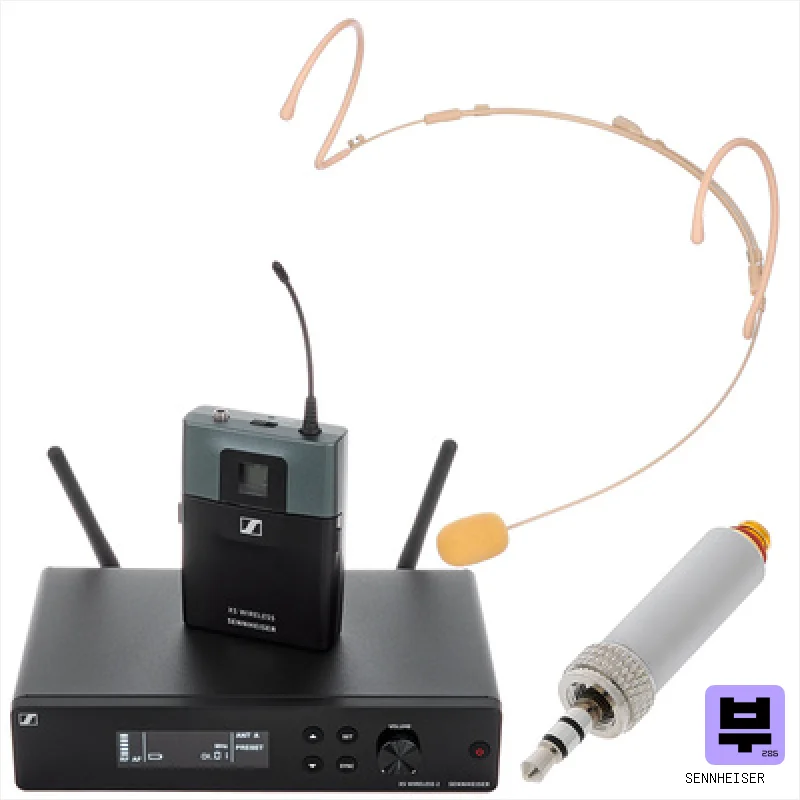
Sennheiser XSW 2-ME3-A Wireless Headset Microphone System - Band A…
ME3 · Sennheiser
19 for sale on Reverb1 finish at Thomann
The Sennheiser ME3 is a solid performer for vocalists and presenters using Sennheiser Evolution Wireless systems. It delivers a clean, natural sound with surprising detail for a headset mic, and the lightweight build makes it comfortable for extended use. This is a great, affordable upgrade for anyone needing a reliable wireless vocal solution.
Pros
- Excellent transient response for vocal clarity
- Gold-plated connector minimizes oxidation and signal loss
- Lightweight design reduces performance fatigue during long sets
Cons
- Cable length is somewhat restrictive for dynamic stage movement
- Primarily designed for Sennheiser wireless systems, limiting standalone use
57AudioFu
IndexStableno change since Aug 17Aug 17$163 now$163€145 at Thomann · in stockCheck price ↗ -
The AKG C 520 L is a solid choice for vocalists and presenters needing a reliable, hands-free mic. Its cardioid pattern and condenser capsule deliver clear audio, and the lightweight build makes it comfortable for long performances. It's a workhorse headset mic for live sound reinforcement.
Pros
- Excellent off-axis rejection minimizes room noise effectively.
- Lightweight design minimizes fatigue during extended use.
- TQG connector offers robust reliability and secure connection.
Cons
- Limited flexibility; primarily designed for stage performance, not studio recording.
- 200 Ohm impedance requires a preamp with sufficient gain.
54AudioFu
IndexStableno change since Aug 17Aug 17$209 now$209€186 at Thomann · in stockCheck price ↗ -
- Weight0.02 kg
The t.bone HeadmiKe is a budget-friendly option for performers needing a hands-free mic. It's surprisingly capable for vocals, especially for streaming, podcasting, or live vocalists who need mobility. Just be aware of the high impedance and omnidirectional pickup—it's not a studio mic, but a solid performer for the price.
Pros
- Lightweight design minimizes fatigue during extended use.
- Condenser capsule delivers surprisingly clear vocal reproduction.
- TQG connector offers compatibility with Shure wireless systems.
Cons
- 750 Ohm impedance requires a preamp or substantial gain.
- Omnidirectional pickup captures unwanted room noise easily.
-
- Weight0.02 kg
The t.bone HeadmiKe - D Shure BN is a surprisingly capable budget-friendly headset mic. It's perfect for streamers, podcasters, or online performers needing a clear, focused vocal pickup without a ton of fuss. Just be aware you'll need a decent preamp to drive it properly.
Pros
- Lightweight design minimizes fatigue during extended use.
- Cardioid pattern effectively isolates vocals, reducing background noise.
- Shure TQG connector offers compatibility with common wireless systems.
Cons
- 750-ohm impedance requires a preamp or microphone interface for optimal gain.
- Brown color is aesthetically unusual and may not suit all preferences.
All 39 headset microphones
Same index, same nightly prices — compact. Colour options of one model share a row. Tap a photo to zoom.
- 11
the t.bone HeadmiKe Pro Beigethe t.bone50Stable$133€119$133€119Check ↗
- 12
Mipro MU-53HNS-1MMipro48↓ 1.8%$124€111$124€111Check ↗
- 13
Audio-Technica ATM75CW Cardioid Condenser Headworn MicrophoneATM75cw · Audio-Technica47Stable$118€105$118€105Check ↗
- 14
AKG C544L Headset Condenser MicrophoneC 544 L · AKG44Stable$138€123$138€123Check ↗
- 15
Albrecht Nackenbügelmikrofon for ATT400Albrecht43Stable$13€12$13€12Check ↗
- 16
the t.bone EarmiKe - D AKGthe t.bone · 4 finishes43Stable$50€45$50€45Check ↗
- 17
AKG C555L Headset Condenser MicrophoneC 555 L · AKG38Stable$114€102$114€102Check ↗
- 18
Mipro MU-506HS PLUS-1MMipro · 3 finishes38Stable$178€159$178€159Check ↗
- 19
the t.bone TWS One Headsetthe t.bone35Stable$20€18$20€18Check ↗
- 20
the t.bone HC 444 TWSthe t.bone35Stable$44€39$44€39Check ↗
- 21
the t.bone EarmiKe - D Shurethe t.bone35Stable$50€45$50€45Check ↗
- 22
the t.bone EarmiKe - O Shurethe t.bone35Stable$50€45$50€45Check ↗
- 23
the t.bone TG 16 T Earset Microphonethe t.bone35Stable$50€45$50€45Check ↗
- 24
Audio-Technica Pro 8 HEcWAudio-Technica · 2 finishes35↓ 3.3%$100€89$100€89Check ↗
- 25
the t.bone Earmic 500 - AKGthe t.bone35Stable$100€89$100€89Check ↗
- 26
the t.bone Earmic 500 - Shurethe t.bone35Stable$100€89$100€89Check ↗
- 27
the t.bone Earmic 500 - Sennheiserthe t.bone35Stable$100€89$100€89Check ↗
- 28
Rode HS2-P LargeRode · 2 finishes34↓ 2.4%$273€243$273€243Check ↗
- 29
Intricon HT 747 BlackIntricon · 2 finishes33↓ 0.5%$222€198$222€198Check ↗
- 30
Mipro MU-55HNS-3MMipro32Stable$162€144$162€144Check ↗
- 31
Mipro MU-55HNS-3PMipro32Stable$165€147$165€147Check ↗
- 32
Mipro MU-506HS-1MMipro32Stable$167€149$167€149Check ↗
- 33
Mipro MU-55HNS-3UMipro32Stable$167€149$167€149Check ↗
- 34
AKG COBT Mini EarmicAKG31Stable$54€48$54€48Check ↗
- 35
AKG CKBT2 Mini HeadsetAKG31Stable$100€89$100€89Check ↗
- 36
AKG HC 644 MDAKG31Stable$201€179$201€179Check ↗
- 37
Rode NTH-MICRode30Stable$61€54$61€54Check ↗
- 38
LD Systems LDWS100MH1LD Systems29Stable$50€45$50€45Check ↗
- 39
LD Systems LDWS100MH3LD Systems29Stable$100€89$100€89Check ↗
Headset Microphones by the numbers
Measured across all 60 models we track, not a sample.
Median $100 — half of all headset microphones here cost less.
median of 9 models · 0.01 kg–0.1 kg
How to choose the best headset microphones
Frequency Response
It's not just about numbers; it's about the character. A hyped top end can sound brittle, a muddy low-end gets lost in the mix. We're looking for a balance that captures vocals clearly without sounding ice-picky or muffled.
Articulation & Dynamics
Can it handle a whisper and a scream without distortion? A good headset mic needs to capture the nuances of your performance, from subtle breaths to powerful belts.
Feedback Rejection
Let's be honest, stage volume is a battlefield. A headset mic that feeds back at a moderate volume is basically useless. Directional patterns and overall mic design play a huge role here.
Comfort & Stability
No matter how great it sounds, a headset you can't wear for more than 10 minutes is a failure. We're evaluating build quality, weight distribution, and overall ergonomics.
Cable & Connector Quality
Cheap cables and flaky connectors are a recipe for disaster on stage. A mic that cuts out mid-song is worse than a mic that sounds 'okay'. We're looking for durable construction and reliable connections.
Buying guide
So, you need a headset mic, huh? Whether it's for streaming, vocal tracking, or finally ditching that feedback-prone clip-on mic for gigging, a good headset can be a game changer. But let's be real, dropping five figures on a Neumann ain't happening. This list is about finding the best bang-for-your-buck headset mics under $300 - gear that won't make you cringe when you hear your recordings or struggle to cut through the band's wall of sound.
At this price point, you're making trade-offs. Don't expect studio-grade clarity - the capsule size and overall build quality will reflect the budget. Focus on finding a mic that balances decent sound with good feedback rejection and comfort, especially if you're gigging.
Steer clear of anything claiming "broadcast quality" - that's usually marketing fluff.
How the AudioFu Index works
Five measured signals and nothing else — no stars from strangers, no “tested by experts” we didn’t do. The weights are fixed and public. We don’t play these instruments; we measure the market around them.
This chart covers 60 headset microphones from the Thomann catalogue. Before you buy, read hands-on reviews and, where you can, play it. Full methodology.
AudioFu earns a commission when you buy through our Thomann links. It never changes the order — the index does.
- Demand40%
How many of this exact model are for sale on Reverb right now — what musicians actually buy and resell.
- Lineup20%
How many finishes Thomann stocks — makers expand the models that sell.
- Price15%
Where the price has moved since we started tracking in August.
- Specs15%
How completely the maker documents it.
- Maker10%
How deep the brand’s range is in this category.
Questions
What's the difference between a cardioid and omnidirectional headset mic?
Cardioid mics pick up sound primarily from the front, rejecting noise from the sides and rear - great for noisy environments and reducing feedback. Omnidirectional mics pick up sound from all directions, which can sound more natural in a quiet room but is a feedback nightmare on stage.
Can I use a headset mic for recording instruments?
Sure, but it won't be ideal. Headset mics are primarily designed for vocals. You'll likely get a more focused and detailed sound with a dedicated instrument mic, but in a pinch, a headset can work for acoustic guitar or vocals in a home recording setup.
Are wireless headset mics worth the extra money?
Wireless adds freedom, but also introduces potential for interference and latency. Budget wireless systems under $300 can be hit-or-miss - do your research and read reviews carefully. Wired is generally more reliable in this price range.
I'm a streamer, what should I look for?
Clear vocal capture is key, but also consider a mic with a decent pop filter or the option to add one. You'll also want something comfortable for long streaming sessions.