AudioFu Chart · October 2026
Best Sennheiser Headset Microphones 2026
The top pick is Sennheiser HSP2-EW-3 Omni-Directional Head-Worn Microphone ($537). Sennheiser XSW 2-ME3-A Wireless Headset Microphone System - Band A… gives you the most for the money at $163. Ranked by the AudioFu Index from 15 models, prices checked every night.
Last updated: October 21, 2026
Top 10
Full detail for the 10 highest AudioFu Index scores. Every other model is listed below.
-
Sennheiser HSP2-EW-3 Omni-Directional Head-Worn Microphone
HSP 2 (Beige 3-Pin) · Sennheiser
19 for sale on Reverb3 finishes at Thomann
The Sennheiser HSP 2-3 is a seriously well-built headset mic, perfect for broadcast, theater, or any situation demanding clear vocal capture and minimal background noise. Its omni pattern means it picks up everything, so it’s ideal for controlled environments – think studio interviews or live performances where you're managing the room. It’s a premium-priced option, but the build and sound quality justify the investment for serious professionals.
Pros
- Excellent off-axis rejection minimizes room noise effectively.
- The condenser capsule delivers a surprisingly natural and detailed vocal capture.
- Lemo connector offers robust reliability for wireless systems.
Cons
- The beige color is aesthetically unusual and may not suit all performers.
- High impedance requires a preamp with sufficient gain and matching capabilities.
64AudioFu
IndexStableno change since Aug 17Aug 17$537 now$537€479 at Thomann · in stockCheck price ↗ -
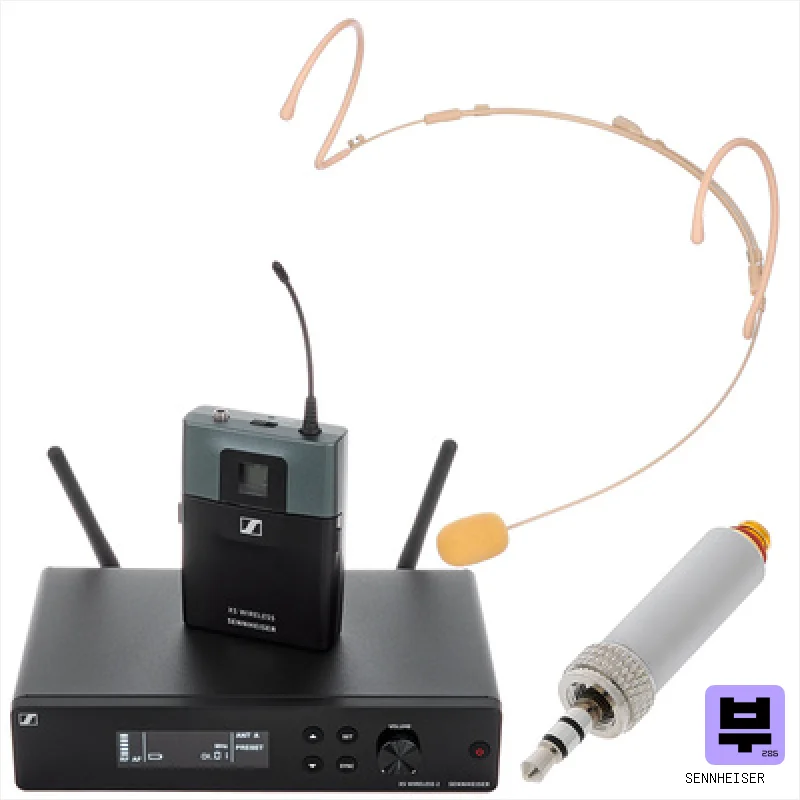
Sennheiser XSW 2-ME3-A Wireless Headset Microphone System - Band A…
ME3 · Sennheiser
19 for sale on Reverb1 finish at Thomann
The Sennheiser ME3 is a solid performer for vocalists and presenters using Sennheiser Evolution Wireless systems. It delivers a clean, natural sound with surprising detail for a headset mic, and the lightweight build makes it comfortable for extended use. This is a great, affordable upgrade for anyone needing a reliable wireless vocal solution.
Pros
- Excellent transient response for vocal clarity
- Gold-plated connector minimizes oxidation and signal loss
- Lightweight design reduces performance fatigue during long sets
Cons
- Cable length is somewhat restrictive for dynamic stage movement
- Primarily designed for Sennheiser wireless systems, limiting standalone use
57AudioFu
IndexStableno change since Aug 17Aug 17$163 now$163€145 at Thomann · in stockCheck price ↗ -
Sennheiser HSP Essential Omnidirectional Neckworn Microphone with…
HSP Essential (Black EW) · Sennheiser
7 for sale on Reverb1 finish at Thomann
The Sennheiser HSP Essential is a solid choice for content creators, podcasters, and presenters who need a reliable, comfortable headset mic. Its omni pickup makes it great for capturing natural room sound, and the adjustable arm ensures it sits just right. It’s not a studio mic, but it delivers good clarity and a professional feel without breaking the bank.
Pros
- Lightweight design (25g) minimizes neck fatigue during long sessions
- Omni pickup captures natural room ambience and group vocals
- Adjustable mic arm provides flexible positioning for optimal clarity
Cons
- Omni pattern isn't ideal for isolating vocals in noisy environments
- EW connector limits compatibility without an adapter
47AudioFu
IndexStableno change since Aug 17Aug 17$331 now$331€295 at Thomann · in stockCheck price ↗ -
This HSP 4-3 is a serious piece of kit for stage performers needing pristine vocal reproduction. Its featherlight build means you'll barely notice it, and the cardioid pickup focuses solely on your voice, cutting through any stage rumble. Ideal for professional vocalists, presenters, and broadcast applications where absolute clarity is paramount.
Pros
- Exceptional clarity for vocal capture, even in noisy environments
- Lightweight design (9.2g) minimizes neck fatigue during extended use
- Cardioid pattern effectively rejects off-axis sounds, reducing bleed
Cons
- High-end price point limits accessibility for budget-conscious users
- Lemo connector requires compatible wireless systems, restricting versatility
44AudioFu
Index↓ 1.8%since Aug 17 · lowest so far$627 · Aug 17$616 now$616€549 at Thomann · in stockCheck price ↗ -
This headset mic sits nicely on your neck with a flexible gooseneck. The MKE 2 capsule handles voice well for theatre or conference rooms. It costs a bit more than basic options but feels solid. Great for anyone who needs hands-free clarity without the bulk.
Pros
- Includes a dedicated gooseneck for stable positioning
- Uses the reliable MKE 2 capsule for clear sound
- Designed to be very comfortable for long wear
Cons
- Lacks specific frequency range details in text
- No stated weight makes comfort hard to verify
41AudioFu
IndexStableno change since Aug 17Aug 17$436 now$436€389 at Thomann · in stockCheck price ↗ -
The SL Headmic 1 SB is a seriously well-built option for broadcast, theatre, or anywhere you need a discreet and high-quality vocal capture. It's incredibly light and the condenser mic provides a really natural sound, but be aware of its omnidirectional nature – it picks up *everything*. This is a pro tool, designed for situations where audio quality is paramount.
Pros
- Lightweight design minimizes fatigue during extended use.
- Condenser capsule delivers clear, articulate vocal reproduction.
- Omnidirectional pickup captures natural room ambience effectively.
Cons
- Omnidirectional nature can be problematic in noisy environments.
- 3.5mm EW connector limits compatibility with some audio interfaces.
38AudioFu
IndexStableno change since Aug 17Aug 17$649 now$649€579 at Thomann · in stockCheck price ↗ -
The SL Headmic 1 BE is a surprisingly capable headset mic for presenters, broadcasters, or anyone needing clear, hands-free audio. Its lightweight design and Sennheiser’s renowned clarity make it comfortable for long periods, though be mindful of the omnidirectional pickup – a quieter environment is key for best results.
Pros
- Exceptional clarity for speech and vocals, minimizing sibilance
- Lightweight design (7g) ensures comfortable extended wear
- Omnidirectional pickup captures natural room ambience effectively
Cons
- Omnidirectional nature picks up unwanted background noise easily
- 3.5mm EW connector limits compatibility with standard audio interfaces
36AudioFu
Index↓ 2.4%since Aug 17 · lowest so far$560 · Aug 17$546 now$546€487 at Thomann · in stockCheck price ↗ -
The Sennheiser HSP Essential Omni-Beige EW is a solid choice for presenters, online instructors, or anyone needing clear, hands-free audio capture. Its lightweight build and omnidirectional pickup make it comfortable and versatile, though you'll need an EW interface to use it. It’s a premium-priced option that delivers professional-grade results.
Pros
- Lightweight design (25g) minimizes fatigue during extended use
- Omnidirectional pickup captures clear audio from all directions
- Robust cable construction ensures durability and longevity
Cons
- Omnidirectional nature picks up ambient noise, less ideal for noisy environments
- EW connector limits compatibility with standard audio interfaces
-
The Sennheiser HSP Essential Omni is a fantastic choice for broadcast, podcasting, or theater work where natural room ambience is desired. The lightweight build and comfortable design make it easy to wear for extended periods, and the Sennheiser quality ensures a clear, professional sound. It’s a premium option, but the quality and flexibility justify the investment for serious audio professionals.
Pros
- Excellent omni pickup, captures natural room sound
- Lightweight design minimizes fatigue during long sessions
- Robust cable construction resists wear and tear
Cons
- LEMO connector limits compatibility without adapters
- Omnidirectional nature can be problematic in noisy environments
35AudioFu
Index↓ 1.4%since Aug 17 · lowest so far$324 · Aug 17$320 now$320€285 at Thomann · in stockCheck price ↗ -
The HM 200 is a top-tier headset mic – seriously clean and detailed sound. It's a perfect choice for broadcast, voiceover work, or any situation demanding pristine vocal capture. The build quality is superb, making it a reliable workhorse for professionals.
Pros
- Exceptional clarity and detail for voice and instruments
- Robust nickel-plated headband ensures long-term durability
- Lightweight design minimizes fatigue during extended use
Cons
- Omnidirectional pickup can be problematic in noisy environments
- Premium-priced, limiting accessibility for some users
34AudioFu
IndexStableno change since Aug 17Aug 17$616 now$616€549 at Thomann · in stockCheck price ↗
All 15 headset microphones
Same index, same nightly prices — compact. Colour options of one model share a row. Tap a photo to zoom.
- 11
Sennheiser Headmic 1 (Black 3-Pin)Sennheiser34Stable$649€579$649€579Check ↗
- 12
Sennheiser Headmic 1 (Silver 3-Pin)Sennheiser34Stable$649€579$649€579Check ↗
- 13
Sennheiser Headmic 1 (Beige 3-Pin)Sennheiser34Stable$671€598$671€598Check ↗
- 14
Sennheiser Headmic 4 (Black 3-Pin)Sennheiser34Stable$717€639$717€639Check ↗
- 15
Sennheiser Headmic 4 (Beige EW)Sennheiser34Stable$717€639$717€639Check ↗
Headset Microphones by the numbers
Measured across all 129 models we track, not a sample.
Median $616 — half of all headset microphones here cost less.
median of 9 models · 0.01 kg–0.1 kg
How to choose the best headset microphones
Clarity & Frequency Response
Sennheiser headsets generally offer a remarkably clean top end - it's bright, but rarely ice-picky. They tend to avoid that muffled, underwater quality you get with a lot of cheaper headsets, which is crucial for intelligibility, especially when you're trying to cut through a loud band.
Build Quality & Durability
This is where Sennheiser shines. The housings are typically robust, the cables are beefier than you find on bargain brands, and the boom arms are designed to withstand a bit of a beating - essential for stage work. They aren't indestructible, but they're built to last longer than the average headset.
Feedback Rejection
Live sound is a minefield, and feedback is the biggest threat. Sennheiser's designs, particularly in their higher-end models, incorporate features that significantly reduce feedback potential, letting you push the monitor volume without ear-splitting squeals.
Comfort & Ergonomics
A headset you can't wear for more than 15 minutes is useless. Sennheiser often prioritizes comfortable earpads and boom arm designs, though fit can still vary depending on head size and personal preference - try before you buy if possible.
Microphone Pattern & Sensitivity
Most Sennheiser headsets are cardioid, which is great for isolating your voice and minimizing background noise. Sensitivity is also a factor - too sensitive and you'll pick up every breath and rumble; not sensitive enough and you'll be straining to be heard.
Buying guide
Alright, so you need a headset mic. It's a tricky spot - you want clarity, you need it to stay put, and it can't sound like you're talking through a tin can. Sennheiser's been a reliable name in this game for a long time, and for good reason. They've consistently delivered a balance of solid performance and durability, especially when you need something that'll survive a hectic gig or a long studio session.
Don't fall for the cheapest option; those are usually cutting corners on cable quality and boom arm construction. Sennheiser's lower-end models are decent, but you'll notice a difference in clarity and durability stepping up to their mid-range offerings. Consider the application: a vocalist needs a different mic than a game streamer, and both need something different than a stage monitor engineer.
How the AudioFu Index works
Five measured signals and nothing else — no stars from strangers, no “tested by experts” we didn’t do. The weights are fixed and public. We don’t play these instruments; we measure the market around them.
This chart covers 23 headset microphones from the Thomann catalogue (of 129 in the category). Before you buy, read hands-on reviews and, where you can, play it. Full methodology.
AudioFu earns a commission when you buy through our Thomann links. It never changes the order — the index does.
- Demand40%
How many of this exact model are for sale on Reverb right now — what musicians actually buy and resell.
- Lineup20%
How many finishes Thomann stocks — makers expand the models that sell.
- Price15%
Where the price has moved since we started tracking in August.
- Specs15%
How completely the maker documents it.
- Maker10%
How deep the brand’s range is in this category.
Questions
Are Sennheiser headsets worth the price?
Generally, yes. You're paying for that robust build and the consistently clean, intelligible sound. Cheaper headsets often sound muddy or brittle - the Sennheiser price premium buys you reliability and a more professional tone.
What's the difference between the Evolution and Accupoint series?
Evolution mics are often the workhorses, good all-around options. Accupoint series tend to focus on even greater clarity and feedback rejection, often used in more demanding live sound situations - think large venues and complex monitor setups.
Can I use a Sennheiser headset with my audio interface?
Absolutely. Most Sennheiser headsets have a standard 3.5mm or XLR connector. Just make sure your interface has the appropriate input. You might need an adapter.
How do I clean my Sennheiser headset?
Spot clean the earpads with a damp cloth - avoid harsh chemicals. For the microphone itself, a gentle blast of compressed air can dislodge dust and debris. Don't submerge it in water!
Do Sennheiser headsets sound 'warm' or 'bright'?
They tend to be on the brighter side of neutral, which helps with clarity and cut. It's not a 'warm' or 'vintage' sound, but it's usually not aggressively bright either. EQ can always tweak it to taste.