AudioFu Chart · October 2026
Best Headset Microphones for Beginner 2026
The top pick is the t.bone HeadmiKe - O EW BN ($66). Albrecht Nackenbügelmikrofon for ATT400 gives you the most for the money at $13. Shure PGA31-TQG leads the high end. Ranked by the AudioFu Index from 93 models across 11 brands, prices checked every night.
Last updated: October 20, 2026
Top 10
Full detail for the 10 highest AudioFu Index scores. Every other model is listed below.
-
- Weight0.02 kg
This t.bone HeadmiKe is a surprisingly capable little headset mic, especially if you're already in the Sennheiser EW ecosystem. It’s a solid budget-friendly option for streaming, online meetings, or even basic podcasting where you need hands-free operation and decent audio quality without a lot of fuss.
Pros
- Lightweight design minimizes fatigue during extended use.
- Omnidirectional pickup captures clear audio from all directions.
- Sennheiser EW plug offers compatibility with existing wireless systems.
Cons
- 750-ohm impedance requires a preamp or microphone interface.
- Condenser mic demands phantom power; not suitable for all applications.
-
- Weight0.1 kg
Look, this Albrecht mic is what it is: a super-budget option for basic comms with an ATT400. It’s fantastic if you need something lightweight and cheap for simple announcements or amateur radio work – think security guards, event staff, or someone just getting into wireless systems. Don't expect studio-quality audio, though.
Pros
- Extremely lightweight, minimizing neck fatigue during extended use.
- Simple plug-and-play operation with ATT400 transmitters.
- Robust neckband construction; likely reinforced nylon webbing.
Cons
- Basic electret capsule limits high-end detail and clarity.
- Mono output restricts stereo recording capabilities.
-
- Weight0.02 kg
The t.bone HeadmiKe - D Shure BN is a surprisingly capable budget-friendly headset mic. It's perfect for streamers, podcasters, or online performers needing a clear, focused vocal pickup without a ton of fuss. Just be aware you'll need a decent preamp to drive it properly.
Pros
- Lightweight design minimizes fatigue during extended use.
- Cardioid pattern effectively isolates vocals, reducing background noise.
- Shure TQG connector offers compatibility with common wireless systems.
Cons
- 750-ohm impedance requires a preamp or microphone interface for optimal gain.
- Brown color is aesthetically unusual and may not suit all preferences.
-
- Weight0.02 kg
The t.bone HeadmiKe is a budget-friendly option for performers needing a hands-free mic. It's surprisingly capable for vocals, especially for streaming, podcasting, or live vocalists who need mobility. Just be aware of the high impedance and omnidirectional pickup—it's not a studio mic, but a solid performer for the price.
Pros
- Lightweight design minimizes fatigue during extended use.
- Condenser capsule delivers surprisingly clear vocal reproduction.
- TQG connector offers compatibility with Shure wireless systems.
Cons
- 750 Ohm impedance requires a preamp or substantial gain.
- Omnidirectional pickup captures unwanted room noise easily.
-
Look, this TWS One headset is a budget-friendly option, perfect for online gaming or basic voice chat. The sound quality isn't going to win any awards, but it's surprisingly decent for the price, and the lightweight design is a real plus for longer sessions.
Pros
- Lightweight design minimizes fatigue during extended use
- Cardioid pattern effectively rejects background noise
- 3.5mm jack ensures compatibility with many devices
Cons
- Plastic construction feels noticeably cheap and fragile
- Limited frequency response restricts nuanced vocal capture
-
The PGA31 is a solid, budget-friendly headset mic, perfect for singers, presenters, or gamers needing clear vocal capture without a lot of fuss. Its cardioid pattern helps isolate your voice, and the lightweight build makes it comfortable for long sessions. It’s not going to replace a studio mic, but it's a reliable workhorse for live performance or online communication.
Pros
- Lightweight design minimizes fatigue during extended use
- Cardioid pattern effectively rejects background noise and feedback
- Shure’s reputation ensures reliable performance and durability
Cons
- Limited frequency response compared to studio condenser mics
- Plastic construction feels less premium than higher-end headsets
-
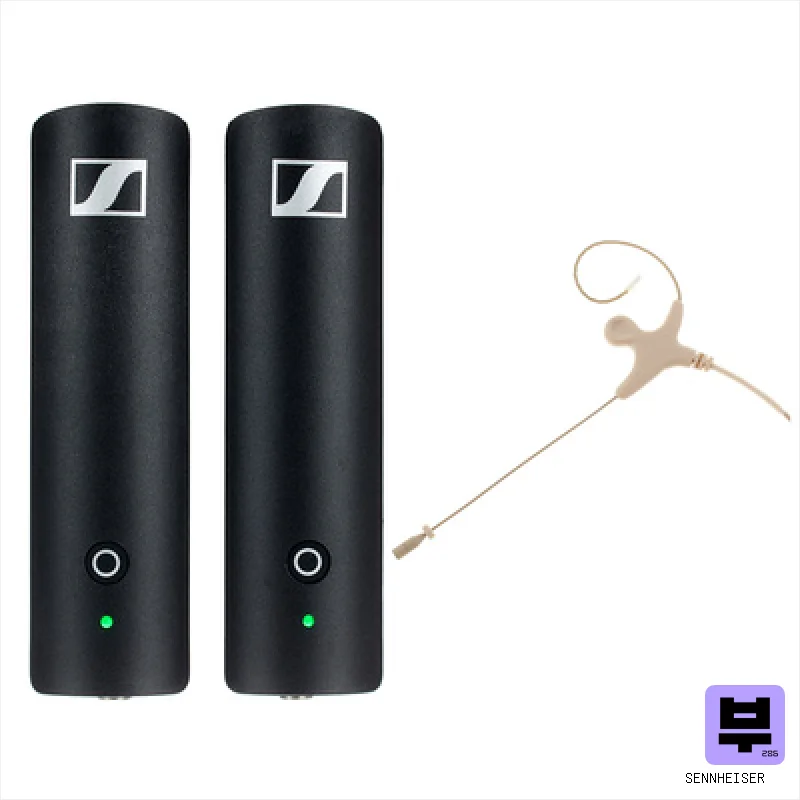
This little EarmiKe is a surprisingly capable budget-friendly option for content creators, streamers, or anyone needing a lightweight, discreet headset mic. The Sennheiser connector is a huge plus if you already have a system, and the omni pickup makes it pretty forgiving in less-than-ideal recording spaces. Just be mindful of the capsule's sensitivity—it's not a workhorse for loud environments.
Pros
- Lightweight design minimizes fatigue during extended use
- Omnidirectional pickup captures clear audio in dynamic environments
- Sennheiser EW connector offers compatibility with existing wireless systems
Cons
- The beige color might not suit all aesthetic preferences
- Condenser capsule is sensitive and may require careful gain staging
-
The t.bone HC 444 TWS is a surprisingly capable budget headset mic. It’s great for online meetings, presentations, or basic streaming where portability and affordability are key. Don’t expect studio-grade quality, but it’s a solid performer for the price point.
Pros
- Cardioid pattern effectively isolates vocals, minimizing room noise
- Mini-XLR connector offers compatibility with AKG wireless systems
- Lightweight design ensures comfortable extended use for presenters
Cons
- Plastic construction feels somewhat fragile, limiting long-term durability
- Limited frequency response restricts nuanced vocal detail and high-end clarity
-
This t.bone TG 16 T is a surprisingly capable earset mic, perfect for tour guides, lecturers, or anyone needing clear voice transmission without fuss. The sound is clean and understandable, and the lightweight design makes it comfortable to wear for long periods. Don't expect studio-quality audio, but for its intended purpose, it's a solid, budget-friendly choice.
Pros
- Lightweight design minimizes fatigue during extended speaking engagements.
- Clear vocal reproduction, surprisingly good intelligibility for the price.
- Robust clip mechanism secures firmly to various ear shapes and sizes.
Cons
- Limited frequency response lacks nuance for music recording applications.
- Plastic construction feels budget-oriented; durability a potential concern.
-
The EarmiKe is a surprisingly decent budget headset mic, especially if you’re already using Shure wireless gear. Its lightweight build and simple design make it ideal for online streaming, gaming, or basic presentations where portability is key, though don't expect studio-grade performance.
Pros
- Lightweight design minimizes fatigue during extended use
- Shure TQG connector offers compatibility with existing wireless systems
- Omnidirectional capsule captures clear audio from various angles
Cons
- Beige color might not be universally appealing or professional-looking
- Condenser capsule's sensitivity can be problematic in noisy environments
All 93 headset microphones
Same index, same nightly prices — compact. Colour options of one model share a row. Tap a photo to zoom.
- 11
the t.bone EarmiKe - D Shurethe t.bone35Stable$51€45$51€45Check ↗
- 12
AKG COBT Mini EarmicAKG31Stable$54€48$54€48Check ↗
- 13
Shure WH20XLR Cardioid Dynamic Headset Mic w/ XLR ConnectorWH20QTR · Shure · 3 finishes59Stable$134€119$134€119Check ↗
- 14
LD Systems LDWS100MH1LD Systems29Stable$51€45$51€45Check ↗
- 15
Rode NTH-MICRode30Stable$61€54$61€54Check ↗
- 16
Audio-Technica ATM75CW Cardioid Condenser Headworn MicrophoneATM75cw · Audio-Technica47Stable$118€105$118€105Check ↗
- 17
Mipro MU-53HNS-1MMipro48↓ 1.8%$125€111$125€111Check ↗
- 18
the t.bone Earmic 500 - Sennheiserthe t.bone35Stable$100€89$100€89Check ↗
- 19
the t.bone Earmic 500 - Shurethe t.bone35Stable$100€89$100€89Check ↗
- 20
the t.bone Earmic 500 - AKGthe t.bone35Stable$100€89$100€89Check ↗
- 21
Audio-Technica Pro 8 HEcWAudio-Technica · 2 finishes35↓ 3.3%$100€89$100€89Check ↗
- 22
AKG C555L Headset Condenser MicrophoneC 555 L · AKG38Stable$115€102$115€102Check ↗
- 23
AKG CKBT2 Mini HeadsetAKG31Stable$100€89$100€89Check ↗
- 24
AKG C544L Headset Condenser MicrophoneC 544 L · AKG44Stable$138€123$138€123Check ↗
- 25
LD Systems LDWS100MH3LD Systems29Stable$100€89$100€89Check ↗
- 26
Shure MX153T/O-TQG Microflex Omnidirectional Earset Mic w/ TQG…MX153 B · Shure · 2 finishes71↓ 13.7%$241€215$241€215Check ↗
- 27
Sennheiser HSP2-EW-3 Omni-Directional Head-Worn MicrophoneHSP 2 (Beige 3-Pin) · Sennheiser · 3 finishes64Stable$538€479$538€479Check ↗
- 28
Shure SM31FH Fitness Headset Wireless Condenser MicSM31 FH · Shure61Stable$196€175$196€175Check ↗
- 29
Shure SM35-TQGSM35 TQG · Shure · 2 finishes61Stable$212€189$212€189Check ↗
- 30
Sennheiser XSW 2-ME3-A Wireless Headset Microphone System - Band A…ME3 · Sennheiser57Stable$163€145$163€145Check ↗
- 31
AKG C520 Headset Vocal Condenser MicrophoneC 520 L · AKG · 2 finishes54Stable$209€186$209€186Check ↗
- 32
Sennheiser HSP Essential Omnidirectional Neckworn Microphone with…HSP Essential (Black EW) · Sennheiser47Stable$331€295$331€295Check ↗
- 33
Shure DH5T/O-MTQG DuraPlex HeadsetShure · 5 finishes45↓ 4.1%$447€398$447€398Check ↗
- 34
Sennheiser HSP 4 (Beige 3-Pin)Sennheiser · 4 finishes44↓ 1.8%$616€549$616€549Check ↗
- 35
Sennheiser HS 2 (Beige 3-Pin)Sennheiser · 3 finishes41Stable$437€389$437€389Check ↗
- 36
Mipro MU-506HS PLUS-1UMipro · 3 finishes38Stable$178€159$178€159Check ↗
- 37
Sennheiser Headmic 1 (Silver EW)Sennheiser · 2 finishes38Stable$650€579$650€579Check ↗
- 38
DPA 6066-OC-R-B03DPA38↓ 5.6%$953€849$953€849Check ↗
- 39
Shure SM39-TQGShure · 2 finishes37Stable$482€429$482€429Check ↗
- 40
DPA 4266-OP-F-F90-LHDPA37↓ 2.7%$796€709$796€709Check ↗
- 41
DPA 4288-DP-F-F90-MEDPA37↓ 2.6%$852€759$852€759Check ↗
- 42
DPA 4066-OP-A-F34-LHDPA37↓ 2.5%$863€769$863€769Check ↗
- 43
DPA 6066-OC-R-F03DPA37↓ 3.0%$870€775$870€775Check ↗
- 44
DPA 4088-DP-A-B90-LH BLKDPA37↓ 2.4%$897€799$897€799Check ↗
- 45
DPA 4488-DP-R-B90DPA37↓ 2.4%$897€799$897€799Check ↗
- 46
DPA 4166-OP-F-F90-LHDPA37↓ 2.4%$908€809$908€809Check ↗
- 47
DPA 6066-OC-R-B90DPA37↓ 2.4%$908€809$908€809Check ↗
- 48
DPA 4088-DP-A-F90-LH beigeDPA37↓ 2.4%$908€809$908€809Check ↗
- 49
DPA 4166-OP-F-F90-MHDPA37↓ 2.4%$919€819$919€819Check ↗
- 50
DPA 4088-DP-A-F03-LH beigeDPA37↓ 2.3%$942€839$942€839Check ↗
Headset Microphones by the numbers
Measured across all 128 models we track, not a sample.
Median $437 — half of all headset microphones here cost less.
median of 8 models · 0.02 kg–0.1 kg
How to choose the best headset microphones
Playability/Comfort
A headset that pinches or pulls can ruin your performance. We're looking for something you can actually wear for a set without wanting to rip it off. Weight distribution, earcup padding, and microphone boom positioning are key.
Vocal Clarity
Beginner players often struggle with mic technique. The mic needs to be forgiving - capturing vocals with decent presence without sounding overly harsh or muddy. We're listening for a natural vocal tone, not a processed or artificial one.
Feedback Rejection
Gigs are loud. A headset with good feedback rejection will save you from that embarrassing squeal and let you focus on the music. This is especially important for smaller stages with less-than-ideal monitoring.
Build Quality/Durability
Let's be real, you're probably not the most careful. A headset that falls apart after a few gigs is a waste of money. We're checking for solid construction and reasonable cable robustness.
Ease of Use/Complexity
Beginners don't want a million knobs and switches. Simple, straightforward operation is a huge plus. A mic that's easy to set up and use will let you focus on learning your instrument and stagecraft.
Buying guide
So, you're starting out, huh? Gotta get that vocal and instrument sound locked in, especially if you're gigging or even just recording some bedroom tracks. Headset mics can be a lifesaver for beginners - freedom to move, decent feedback rejection, and they keep your hands free for, you know, playing. But not all headset mics are created equal, and picking the wrong one can make you sound like you're singing into a tin can.
Don't expect miracles at the budget end. Cheaper headsets often cut corners on build quality and mic capsules, leading to a muffled, lifeless sound. Paying a little more for a reputable brand usually gets you a capsule with better articulation and a more natural response.
Prioritize comfort - a bad fit will impact your performance more than a slight tonal compromise. Look for models with adjustable booms and earcups to ensure a good fit.
How the AudioFu Index works
Five measured signals and nothing else — no stars from strangers, no “tested by experts” we didn’t do. The weights are fixed and public. We don’t play these instruments; we measure the market around them.
This chart covers 128 headset microphones from the Thomann catalogue. Before you buy, read hands-on reviews and, where you can, play it. Full methodology.
AudioFu earns a commission when you buy through our Thomann links. It never changes the order — the index does.
- Demand40%
How many of this exact model are for sale on Reverb right now — what musicians actually buy and resell.
- Lineup20%
How many finishes Thomann stocks — makers expand the models that sell.
- Price15%
Where the price has moved since we started tracking in August.
- Specs15%
How completely the maker documents it.
- Maker10%
How deep the brand’s range is in this category.
Questions
Do I need a wireless headset?
Not initially. Wired headsets are cheaper and more reliable. Wireless adds complexity and battery management, which isn't ideal when you're learning.
What's the difference between a dynamic and condenser headset mic?
Dynamic mics are tougher and handle high sound pressure levels better - good for loud gigs. Condenser mics are more sensitive and can capture more detail - better for quieter environments or recording. For a beginner, a dynamic mic is generally more forgiving.
How important is the cable?
Surprisingly important. Cheap cables introduce noise and can cut out. A balanced XLR cable (if your interface or mixer supports it) will significantly reduce hum and interference. Don't skimp here.
Can I use a headset mic for recording vocals at home?
Sure, but it won't replace a dedicated studio mic. It's a decent option for demos or quick recordings, but you'll get a more professional sound with a proper mic and interface.
My headset mic is picking up a lot of stage noise. What can I do?
First, adjust the mic boom's position - getting it closer to your mouth reduces bleed. Second, work on your mic technique - projecting your voice without yelling. Finally, consider investing in a windscreen or foam cover for the mic capsule.