
Best Guitar Effects Under $100 2026
Look, we all want that killer tone, but sometimes the budget just ain't there for boutique pedals. You don't need to break the bank to get decent effects - there's a surprising amount of quality lurking under $100. This isn't about chasing perfection, it's about getting usable, gig-worthy sounds without emptying your wallet for something that'll end up collecting dust.
Last updated: April 11, 2026
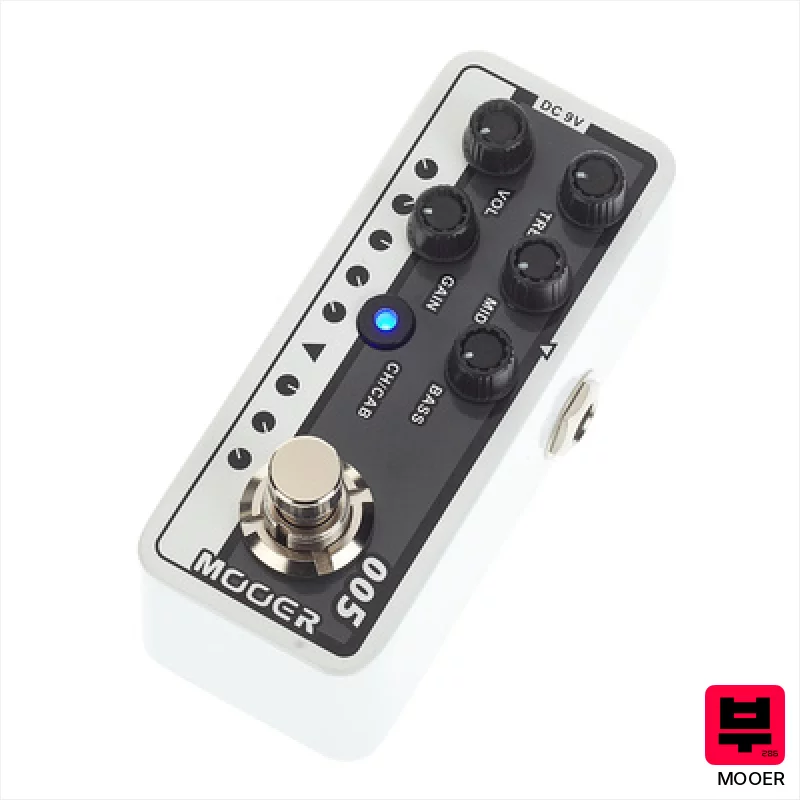
Mooer Micro PreAMP 005 Brown Sound 3
- • Compact size allows for easy integration into tight pedalboards
- • Simulates a classic Brown sound surprisingly well for its size
- • 3-band EQ provides decent tonal shaping capabilities
- • Metal housing offers a level of protection beyond typical plastic pedals
- • Speaker simulation is passable, but lacks nuance of higher-end amp sims
- • Limited tonal versatility – strictly a Brown amp vibe
- • Power supply not included, a common but frustrating omission
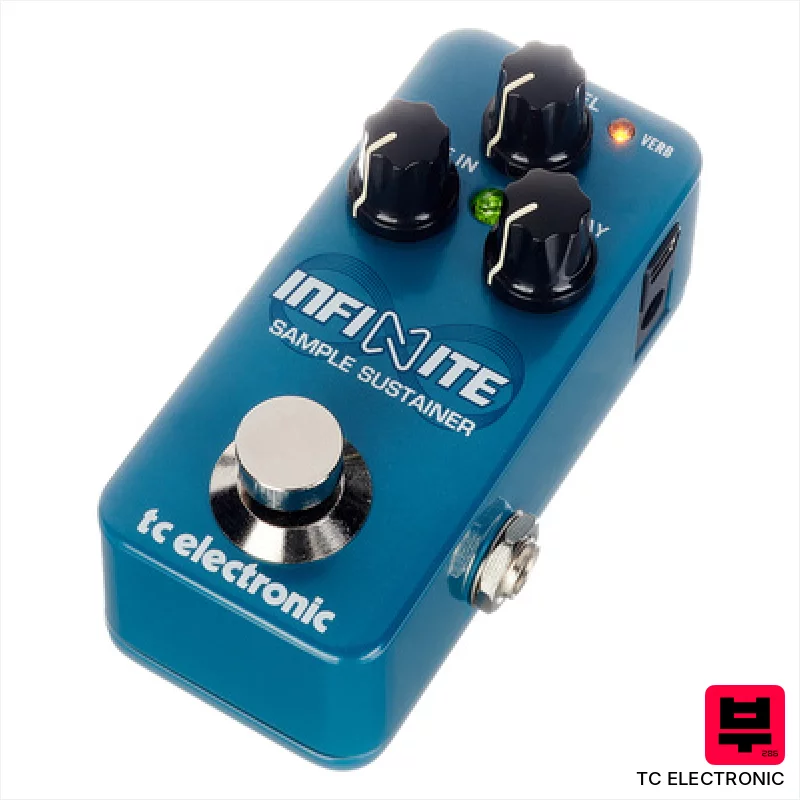
tc electronic Infinite Mini Sample Sustainer
- • Incredibly compact, fitting easily into tight pedalboards.
- • Layering function enables surprisingly complex, evolving soundscapes.
- • Analog Dry Thru maintains signal integrity, crucial for dynamic playing.
- • Intuitive controls offer immediate gratification and creative exploration.
- • Limited decay control range can feel restrictive for longer sustains.
- • Requires a 9V DC power supply; battery operation is not practical.
- • FX Send/Return jacks are a bit basic for advanced routing scenarios.

Mooer Micro PreAMP 002 UK Gold 900
- • UK high-gain voicing captures a distinct, aggressive 90s Brit amp tone
- • Compact size makes it incredibly convenient for pedalboard space
- • Solid metal enclosure feels surprisingly robust for its price point
- • 3-band EQ offers decent shaping capabilities for various genres
- • Speaker simulation (CAB switch) is a basic emulation, lacks nuance
- • Limited to preamp functionality; requires an amp or power amp
- • Battery operation isn't supported, demanding a power adapter
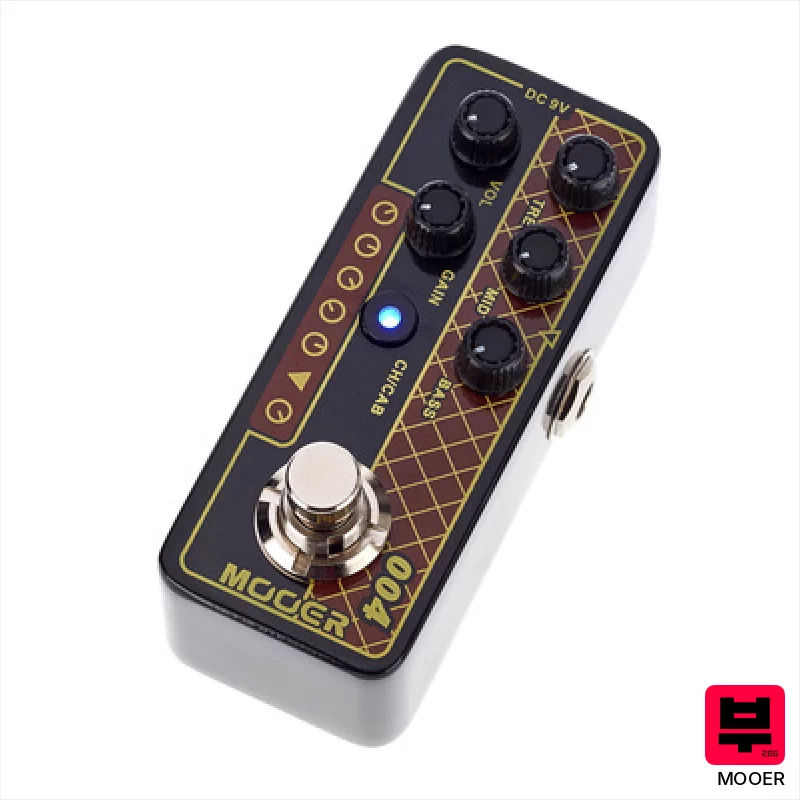
Mooer Micro PreAMP 004 Day Tripper
- • Authentic British amp tones, surprisingly convincing for the size
- • Compact and robust metal enclosure handles gigging well
- • 3-band EQ provides decent shaping of the core sound
- • CH/CAB switch offers usable speaker simulation for direct recording
- • Limited tonal versatility compared to more complex pedals
- • No battery power option restricts portability significantly
- • EQ range can feel a little narrow for drastic tonal changes
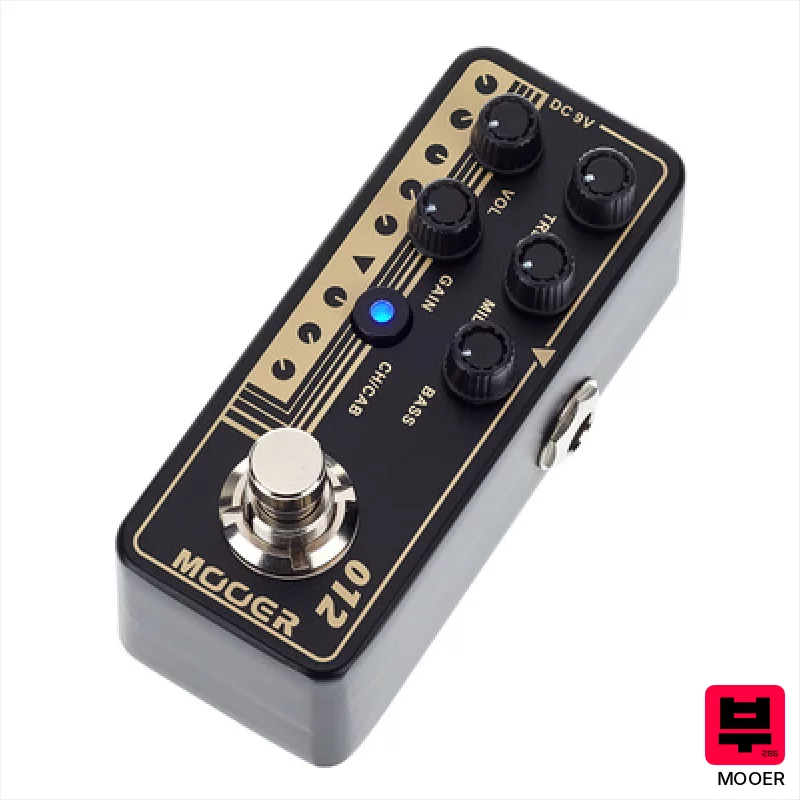
Mooer Micro PreAmp 012 US Gold 100
- • Authentic US boutique amp voicing in a tiny package
- • Metal housing feels surprisingly robust for its size and price
- • 3-band EQ offers decent shaping of the amp's character
- • CH/CAB switch adds speaker simulation for direct recording flexibility
- • Battery operation is a significant omission for gigging musicians
- • Limited tonal versatility compared to more complex preamp pedals
- • Small footprint can make footswitching awkward with multiple pedals

Mooer Noise Killer Bundle PS K1 RB
- • Compact size makes it pedalboard-friendly for smaller setups
- • Rockboard cover provides excellent protection against dust and accidental knob adjustments
- • Simple controls allow for quick noise reduction tweaking on the fly
- • True bypass preserves original signal when noise gate is disengaged
- • The 'Soft' reduction mode might not be aggressive enough for extremely noisy environments
- • Limited knob configuration restricts deeper parameter customization compared to higher-end gates
- • Requires a separate 9V power supply, adding to overall cost and complexity

tc electronic Spark Booster Bundle PS G RB
- • Solid Rockboard protective cover safeguards from dust and accidental spills.
- • Boosts signal up to 26dB, ideal for pushing amp gain or existing pedals.
- • Mid-switch offers tonal shaping beyond simple bass/treble adjustments.
- • True bypass preserves signal integrity when the effect is disengaged.
- • Power supply and battery are notably absent, adding to initial cost.
- • Single mounting hole limits pedalboard flexibility for some setups.
- • While versatile, excels primarily as a clean boost or mild overdrive.
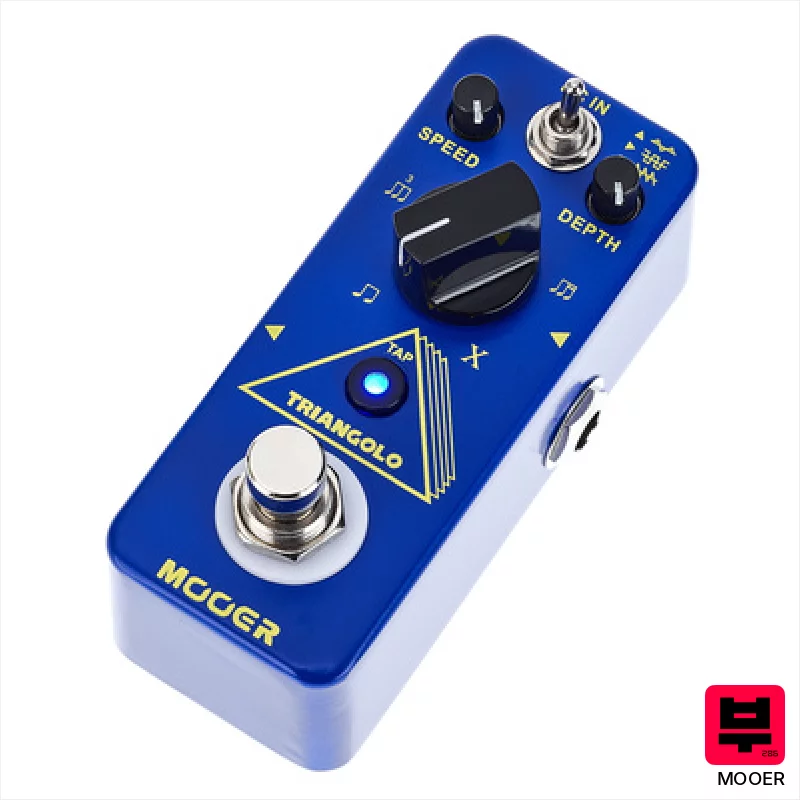
Mooer Triangolo - Digital Tremolo
- • Solid metal housing provides surprising durability for the price.
- • Tap Tempo subdivisions offer rhythmic flexibility beyond basic tremolo.
- • Triangle, Square, and Saw waveforms provide tonal variation.
- • Compact size makes it pedalboard-friendly for most setups.
- • Limited control range compared to higher-end, analog tremolo pedals.
- • No battery power option restricts portability and convenience.
- • Basic LED indicator offers limited visual feedback during operation.
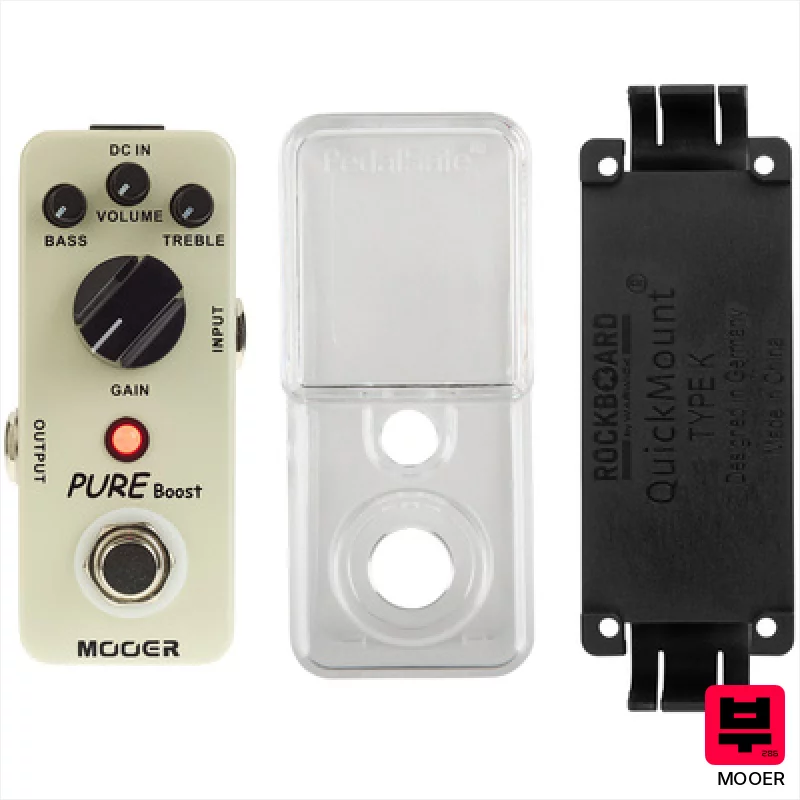
Mooer Pure Boost Bundle PS K1 RB
- • Provides a clean, transparent boost without muddying the signal.
- • Rockboard cover offers practical protection against dust and accidental knob adjustments.
- • EQ section allows for subtle tonal shaping and mid-boost capabilities.
- • Compact size and Rockboard mounting plate facilitate easy pedalboard integration.
- • Power supply not included; requires a separate purchase for operation.
- • EQ is limited to a 2-band configuration, lacking more nuanced control.
- • The plastic enclosure feels a little less robust than higher-end metal options.
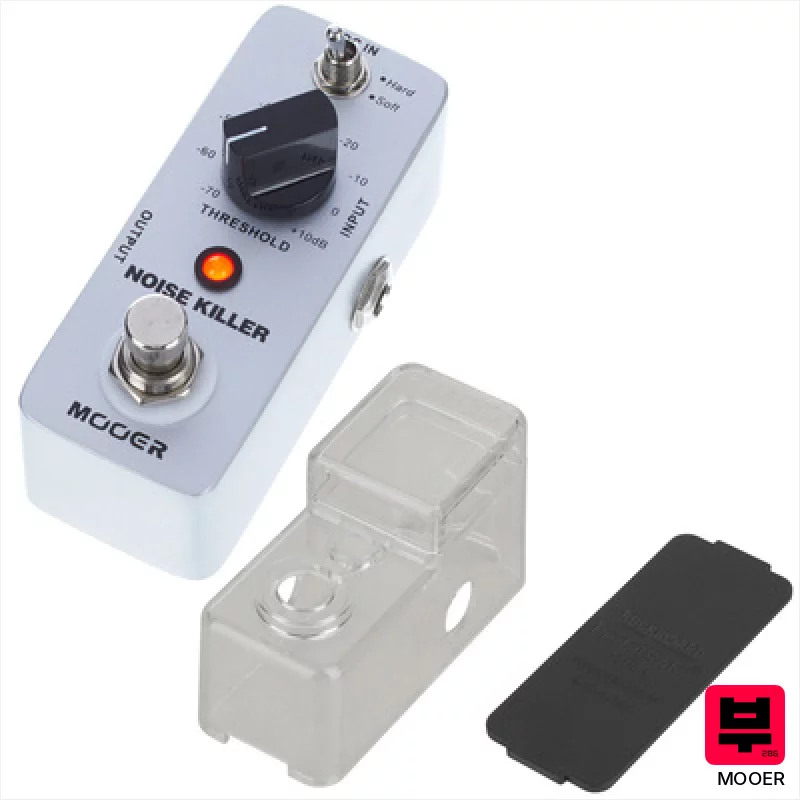
Mooer Noise Killer Bundle PS K1
- • Compact size makes it pedalboard-friendly for smaller setups
- • Rockboard cover offers robust protection against dust and accidental knob adjustments
- • True bypass preserves signal integrity when the noise gate is disengaged
- • Dual reduction modes offer flexibility for different playing styles and noise levels
- • Power supply not included – an additional expense for many users
- • The 'soft' reduction mode might not be aggressive enough for extremely noisy environments
- • Plastic enclosure feels a little less premium compared to higher-end noise gates
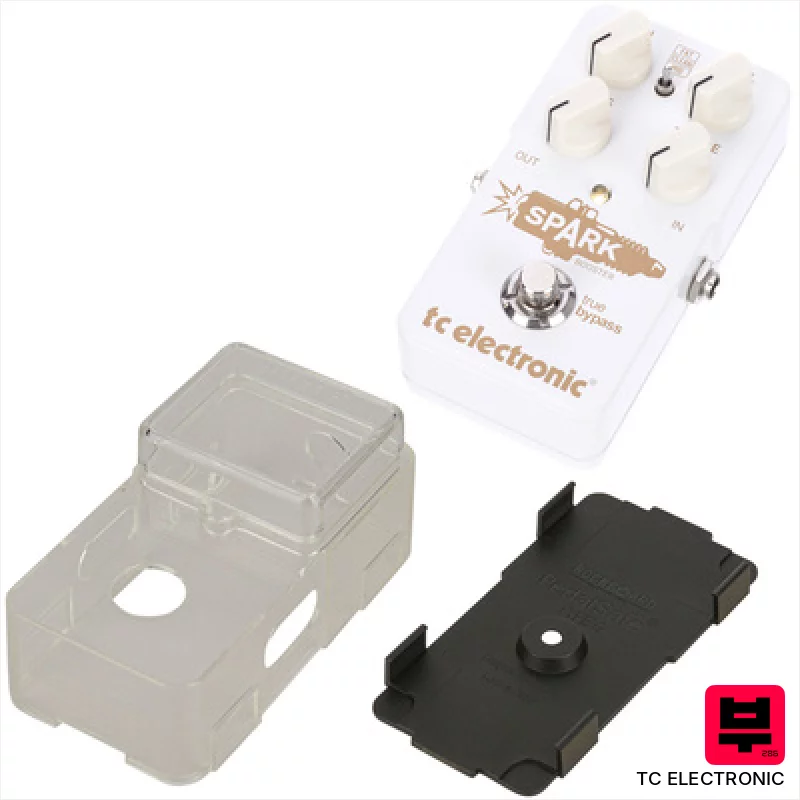
tc electronic Spark Booster Bundle PS G
- • Boosts signal cleanly, avoiding noise floor issues with weaker amps
- • Rockboard cover provides excellent protection from dust and accidental pedal changes
- • Fat/Clean/Mid switch offers surprisingly versatile tonal shaping options
- • Compact footprint and standard size make it pedalboard-friendly for most setups
- • Power supply and battery sold separately, adding to the overall cost
- • 26dB boost might be limiting for players needing extreme gain
- • Rockboard cover’s plastic construction feels slightly less premium than metal alternatives

Behringer B-Tron III Envelope Filter
- • Optical circuit delivers a surprisingly organic, vocal-like wah tone
- • Three filter types offer a wider range of expressive possibilities
- • Sensitivity control is genuinely useful for adapting to different pickup outputs
- • True bypass preserves your signal when the effect is off.
- • Plastic enclosure feels somewhat flimsy compared to higher-end units
- • Limited control range on the 'Peak' knob restricts fine-tuning
- • Power supply not included feels a bit cheap for the price.
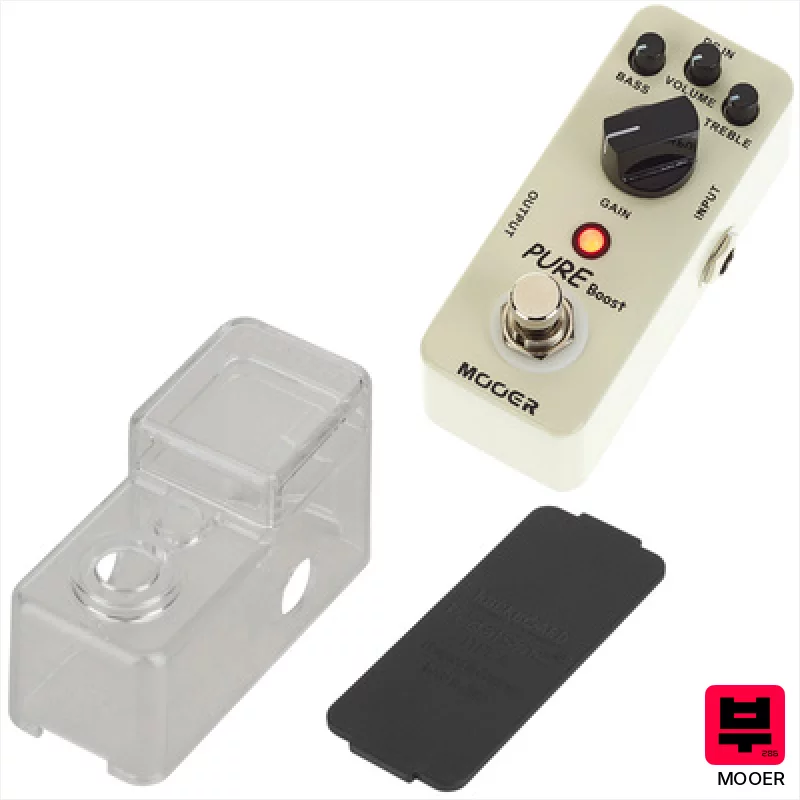
Mooer Pure Boost Bundle PS K1
- • Clean boost preserves signal clarity and dynamics effectively.
- • 2-band EQ provides useful tonal shaping without harshness.
- • Protective cover safeguards pedal from dust and accidental knob adjustments.
- • Bundle offers good value, including a protective cover and mounting plate.
- • Power supply not included; an additional expense for many users.
- • Compact size might be restrictive for some pedalboard layouts.
- • EQ range, while useful, isn’t as extensive as dedicated EQ pedals.
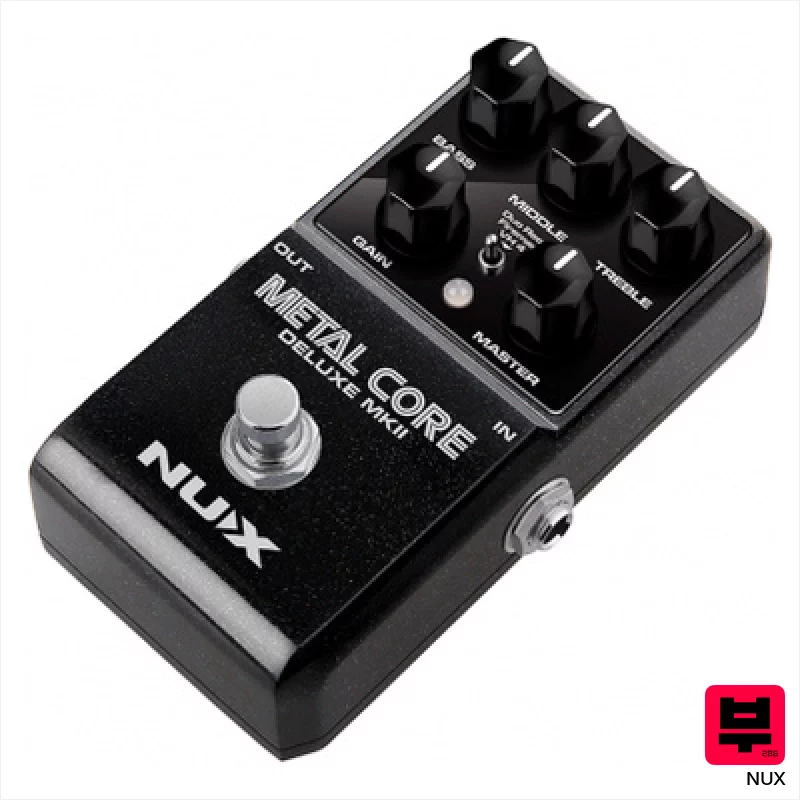
Nux Metal Core Deluxe MKII
- • Impressive amp modeling for the price; surprisingly responsive TSAC HD tech.
- • Compact size makes it ideal for pedalboard space constraints.
- • IR output allows direct recording without a full amp setup.
- • Automatic parameter saving simplifies preset management and recall.
- • Plastic enclosure feels less robust than metal alternatives.
- • Limited control flexibility compared to more complex multi-effects units.
- • EQ options are basic; advanced tone shaping requires external pedals.
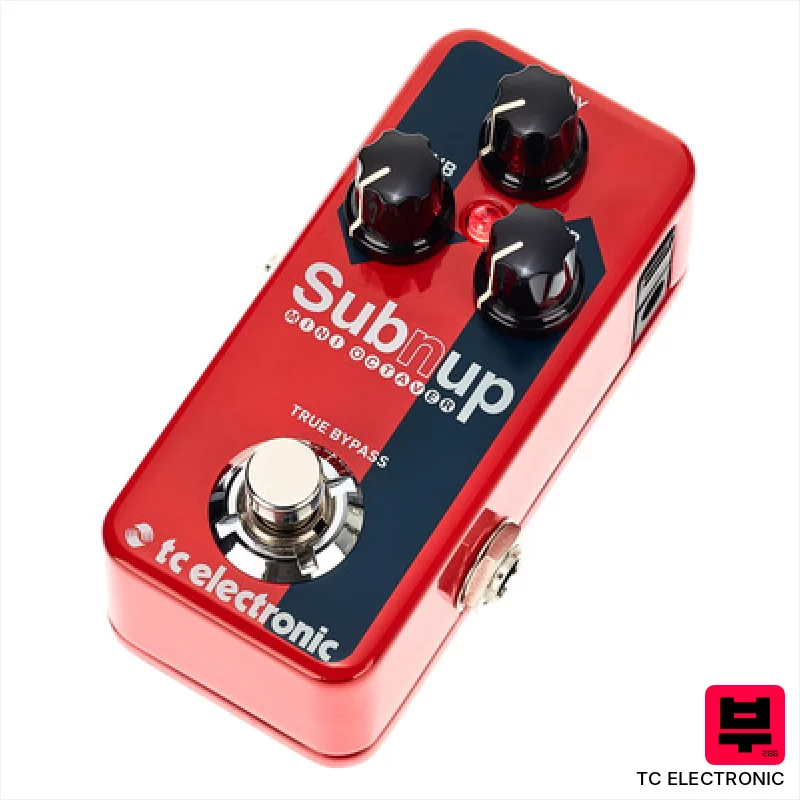
tc electronic Sub'N'Up Mini Octaver
- • Excellent polyphonic tracking avoids the digital warble common in octave pedals
- • TonePrint technology offers incredible tonal flexibility beyond basic octaves
- • Mini size is ideal for crowded pedalboards without sacrificing functionality
- • The 'Unduck' feature cleans up muddiness, especially with high gain amps
- • Limited control beyond the Dry-Sub-Up switch; lacks fine-tuning options
- • Requires a 9V DC power supply (not included), adding to the overall cost
- • Construction feels a bit plasticky, though it's surprisingly durable for its size
How to Choose the Best Guitar Effects
Tone Quality
This isn't just about 'good' or 'bad'; it's about the type of tone. Does that overdrive have a usable breakup? Does the reverb sound natural or like a digital wash? Does the modulation add subtle texture or an obvious warble?
Build Quality
At this price point, you're going to find more plastic enclosures and less road-worthy construction. We're looking for pedals that feel like they can survive a gig, even if they're not built like a tank.
Versatility
Can this pedal cover a range of sounds, or is it locked into one specific vibe? A versatile pedal is a better investment, especially if you're limited on space or budget.
Noise Floor
Cheap components can introduce unwanted hiss and hum. We're evaluating how much noise each pedal adds to the signal chain, especially when stacking multiple effects.
Dynamic Response
Does the pedal react to your playing? Can you coax subtle nuances out of it, or is it just a static, unchanging effect? A responsive pedal feels more connected to your playing.
Buying Guide
Don't expect miracles. Pedals under $100 will almost always have compromises - maybe it's a noisy power supply, a limited range of controls, or a less-than-stellar footswitch. Focus on the core function - if you need a basic reverb, get a reverb. Don't chase the 'best' distortion; find one that inspires you to play. And seriously, consider a power supply - cheap pedals often sound better with a clean, regulated power source.
How This List Is Built
We don't play these instruments — we're a catalog, not a review desk, and we'd rather say so than pretend otherwise. This page ranks 15 guitar effects from the Thomann catalogue, which is the largest single source of specification data in this category.
Position is computed, not curated. Four signals, in order of weight: how completely the manufacturer documents the instrument (number of published specifications), where it sits in the price range, how specific the model designation is — which filters out generic accessories — and whether a product image exists. The same inputs always produce the same order, so nothing here is shuffled to look fresh.
What this list is good for: narrowing a category down to a shortlist by spec and budget. What it isn't: a substitute for hearing an instrument. Before you buy, read hands-on reviews and, where you can, play it. Full methodology.

