
Best KMA Audio Machines Guitar Effects 2026
Alright, let's talk Kma Audio Machines. These aren't your typical digital emulations; they're meticulously crafted circuits built around a core philosophy of recreating classic amp tones with a modern, tweakable edge. If you're tired of sterile digital sounds and craving genuine warmth and responsiveness, Kma is worth a serious look-especially if you dig that vintage vibe but want a little something extra to push your sound. They've quietly become a favorite among players who value authentic tone and build quality.
Last updated: April 11, 2026
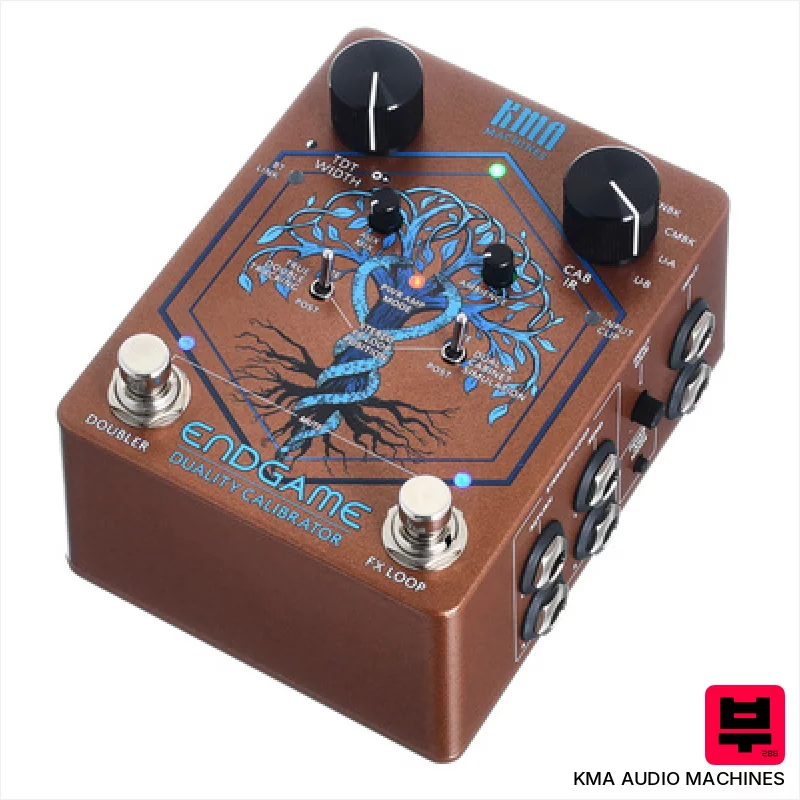
KMA Audio Machines Endgame Duality Calibrator
- • Exceptional IR loading provides remarkably realistic amp and cab tones.
- • True Double Tracker (TDT) adds significant depth and width to the signal.
- • Flexible FX loop accommodates a wide range of external effects processors.
- • Comprehensive metering and aux input offer unparalleled signal control and versatility.
- • Complex interface demands time and effort to fully master its features.
- • Premium-priced, potentially limiting accessibility for budget-conscious musicians.
- • Size and weight make it less than ideal for pedalboard travel.
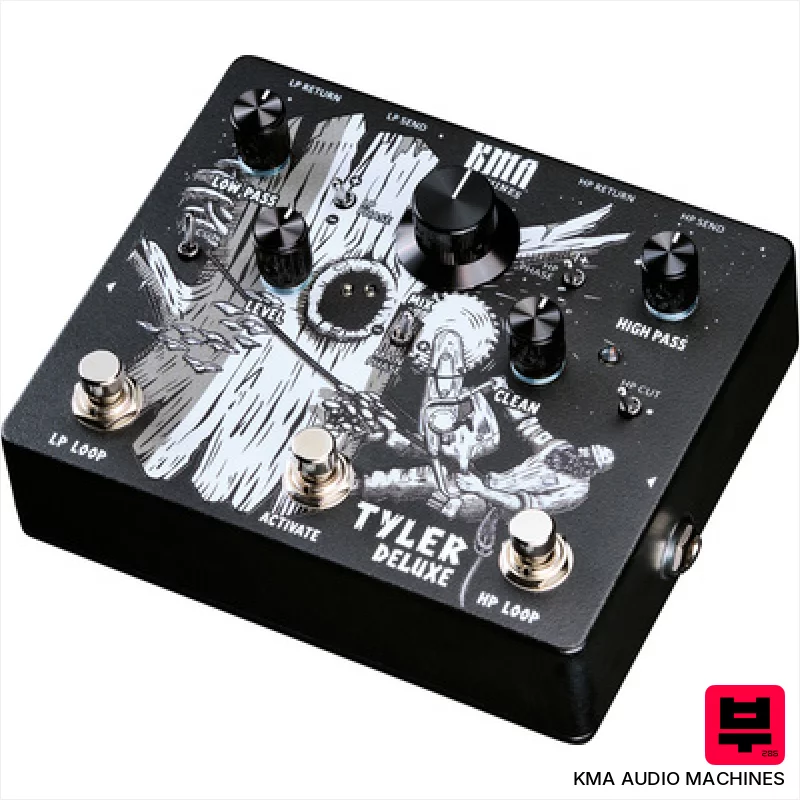
KMA Audio Machines Tyler Deluxe Freq. Splitter
- • Transformer-based isolation eliminates ground loops and noise.
- • Variable HP/LP attenuation offers incredibly precise tonal shaping.
- • Phase reversal switches effectively combat unwanted cancellations.
- • Clean blend control preserves original signal integrity and clarity.
- • The transformer design adds considerable weight – not travel-friendly.
- • Price point places it in a premium category for a splitter.
- • Limited to two channels; more complex routing needs are unmet.
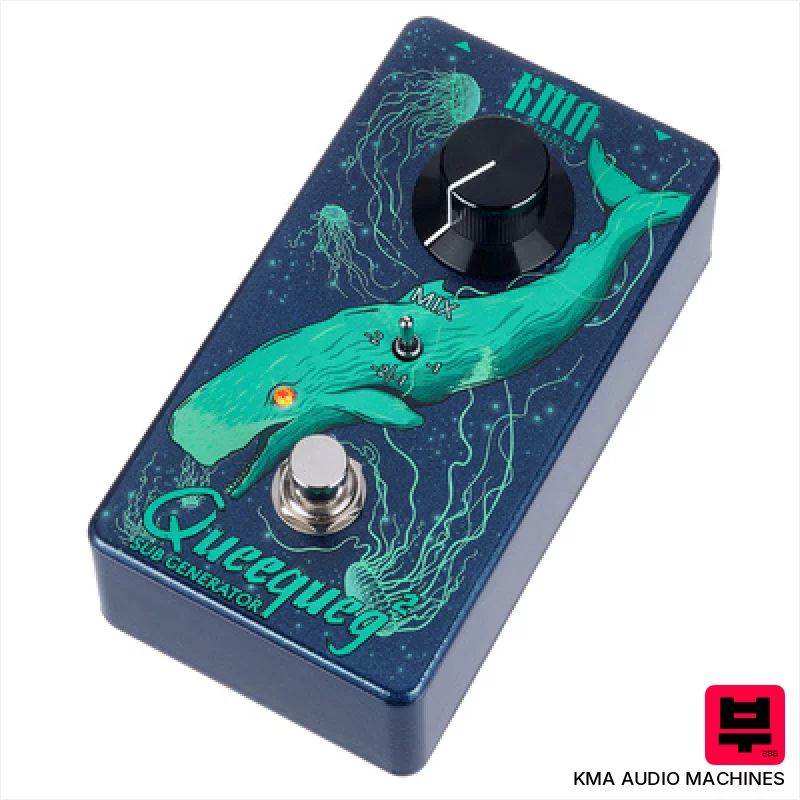
KMA Audio Machines Queequeg 2 Sub Oct. Generator
- • Excellent tracking for a sub-octave, maintains note clarity even with fast playing.
- • Analog circuitry delivers a warm, musical sub-bass response – not sterile or digital.
- • Flexible mix control allows subtle thickening or complete sub-octave dominance.
- • Compact footprint and robust German build quality ensure durability on the road.
- • Lacks battery operation, requiring a dedicated power supply, limiting portability.
- • Limited modes offer less sonic versatility compared to more complex sub-generators.
- • The all-analog design means no MIDI control or advanced parameter tweaking.
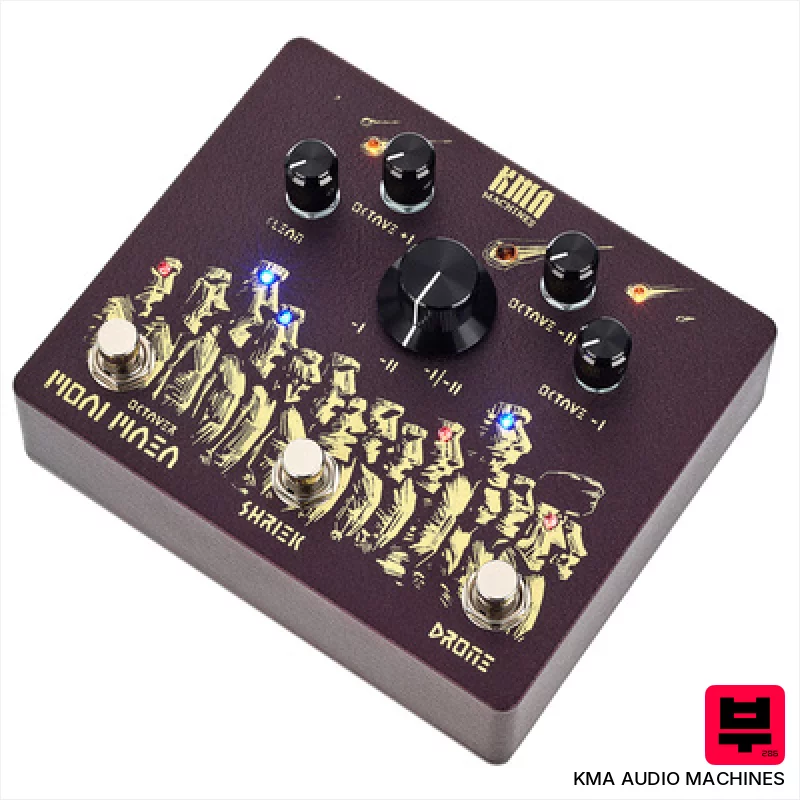
KMA Audio Machines Moai Maea Analog Octaver
- • Warm, analog octaves deliver thick, vintage fuzz tones.
- • The 'Shriek' mode provides surprisingly aggressive, gated textures.
- • True bypass preserves your signal when the effect is disengaged.
- • Handmade German construction suggests robust, long-lasting build quality.
- • Limited control beyond the octave selection and clean blend.
- • 20mA current draw might be a concern for some power supplies.
- • The footprint is relatively large for a single effect pedal.
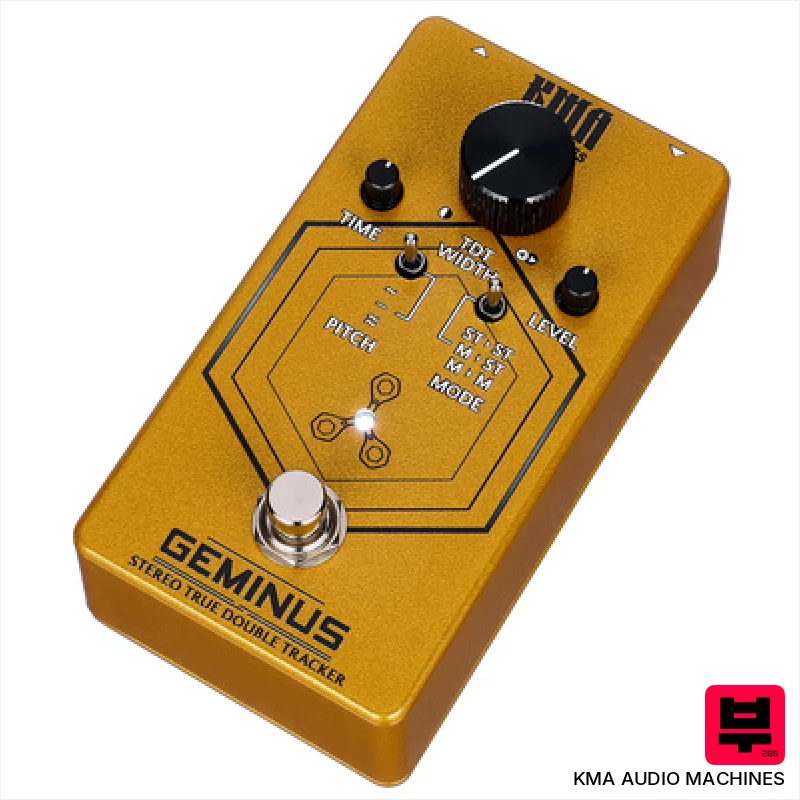
KMA Audio Machines Geminus Double Tracker
- • Exceptional stereo imaging creates remarkably wide, lush soundscapes.
- • Handmade German build quality inspires confidence in long-term durability.
- • Intuitive controls offer precise tailoring of double-tracking effects.
- • True stereo operation allows for creative panning and spatial manipulation.
- • Limited control over individual track delay times; lacks advanced modulation.
- • Requires a dedicated power supply, adding to the overall cost and complexity.
- • The 'Pitch' switch's subtle pitch variation may not be universally appealing.
How to Choose the Best Guitar Effects
Heritage & Design Philosophy
Kma's founder, Kevin Mees, is obsessed with vintage amp circuits, particularly the early Marshall and Vox designs. He isn't just aiming for an approximation; he's reverse-engineering and then subtly improving upon them, often incorporating modern conveniences like buffered inputs and expanded EQ controls.
Tone Characteristics
The hallmark of Kma is that 'creamy' breakup. It's not ice-pick distortion; it's a gradual, warm saturation that responds beautifully to your playing dynamics. You get a genuine sense of touch sensitivity, something often missing in digital modeling - that low-end thump and upper-midrange clarity are exceptional.
Build Quality
The enclosures are robust, typically heavy-gauge steel, and the footswitches feel solid. Component quality is high - you'll find quality pots and jacks, which makes a difference when you're stomping on these things night after night. It's not boutique-level artistry, but it's a noticeable step above many mass-produced pedals.
User Interface & Flexibility
While rooted in classic tones, Kma pedals aren't one-trick ponies. They offer a surprising amount of tweakability-subtle but impactful adjustments to gain, EQ, and even tone shaping-allowing you to dial in a wide range of sounds without straying too far from the core character. The controls feel musical, not just numbers to adjust.
Signal Path & Headroom
Kma pedals tend to preserve your guitar's signal integrity well. They offer good headroom before breakup, meaning you can use them to add a little extra warmth and sustain without completely obliterating your original tone. This makes them incredibly versatile - usable with everything from a sparkly clean Strat to a high-gain humbucker setup.
Buying Guide
Kma pedals aren't the cheapest on the market, but you're paying for that meticulous design and quality components. The biggest trade-off is that they are entirely analog - no presets or recall. This isn't a dealbreaker for many, but if you absolutely need instant recall for a complex setlist, they might not be the best fit. Don't expect a million different sounds from a single unit; their strength lies in mastering a few classic tones exceptionally well.
How This List Is Built
We don't play these instruments — we're a catalog, not a review desk, and we'd rather say so than pretend otherwise. This page ranks 5 guitar effects from the Thomann catalogue, which is the largest single source of specification data in this category.
Position is computed, not curated. Four signals, in order of weight: how completely the manufacturer documents the instrument (number of published specifications), where it sits in the price range, how specific the model designation is — which filters out generic accessories — and whether a product image exists. The same inputs always produce the same order, so nothing here is shuffled to look fresh.
What this list is good for: narrowing a category down to a shortlist by spec and budget. What it isn't: a substitute for hearing an instrument. Before you buy, read hands-on reviews and, where you can, play it. Full methodology.

