
Best Mooer Guitar Effects 2026
Alright, let's talk Mooer. For years, pedalboards were a serious investment, but Mooer stepped in and gave us a viable, surprisingly good option for players who don't want to remortgage their house for a collection of boutique stompboxes. They've come a long way from their early days, and now offer some legitimately useful and inspiring effects, especially for gigging musicians needing a compact solution. Whether you're looking for a reliable blues overdrive or a full-on amp modeler, Mooer's got something to consider.
Last updated: April 11, 2026
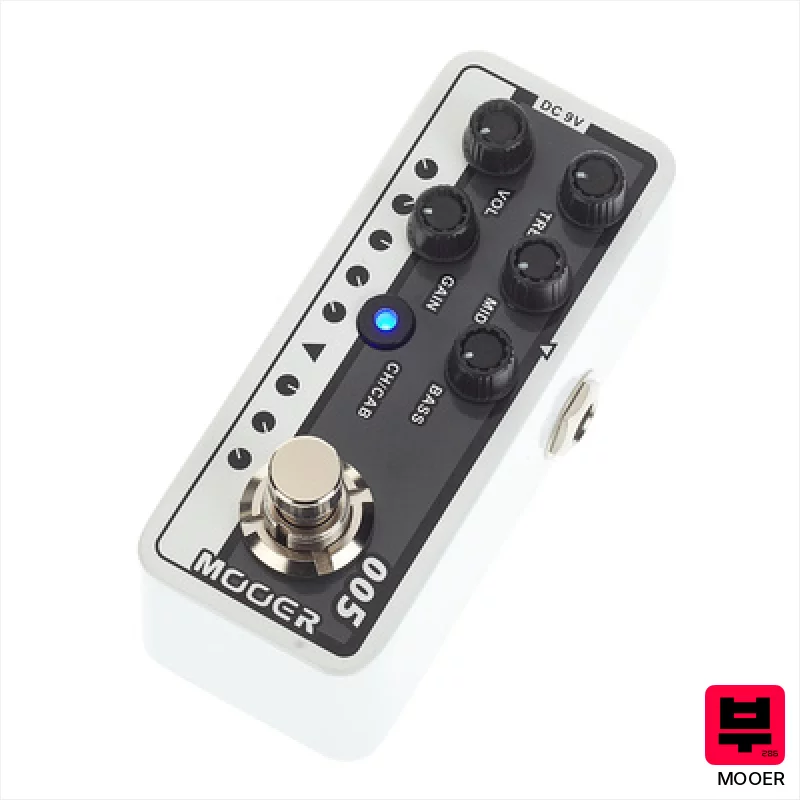
Mooer Micro PreAMP 005 Brown Sound 3
- • Compact size allows for easy integration into tight pedalboards
- • Simulates a classic Brown sound surprisingly well for its size
- • 3-band EQ provides decent tonal shaping capabilities
- • Metal housing offers a level of protection beyond typical plastic pedals
- • Speaker simulation is passable, but lacks nuance of higher-end amp sims
- • Limited tonal versatility – strictly a Brown amp vibe
- • Power supply not included, a common but frustrating omission

Mooer Micro PreAMP 002 UK Gold 900
- • UK high-gain voicing captures a distinct, aggressive 90s Brit amp tone
- • Compact size makes it incredibly convenient for pedalboard space
- • Solid metal enclosure feels surprisingly robust for its price point
- • 3-band EQ offers decent shaping capabilities for various genres
- • Speaker simulation (CAB switch) is a basic emulation, lacks nuance
- • Limited to preamp functionality; requires an amp or power amp
- • Battery operation isn't supported, demanding a power adapter
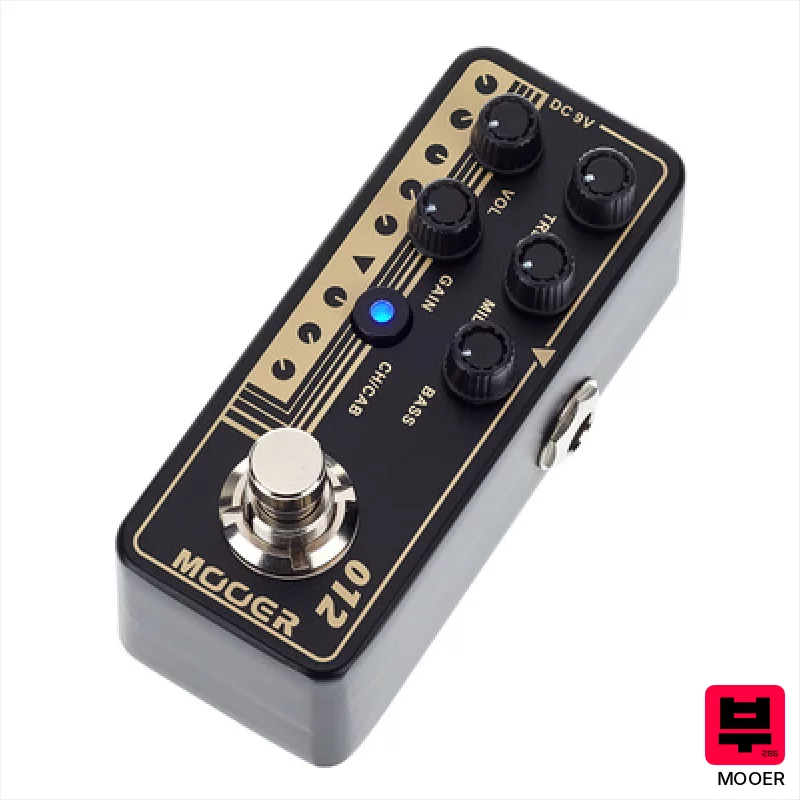
Mooer Micro PreAmp 012 US Gold 100
- • Authentic US boutique amp voicing in a tiny package
- • Metal housing feels surprisingly robust for its size and price
- • 3-band EQ offers decent shaping of the amp's character
- • CH/CAB switch adds speaker simulation for direct recording flexibility
- • Battery operation is a significant omission for gigging musicians
- • Limited tonal versatility compared to more complex preamp pedals
- • Small footprint can make footswitching awkward with multiple pedals
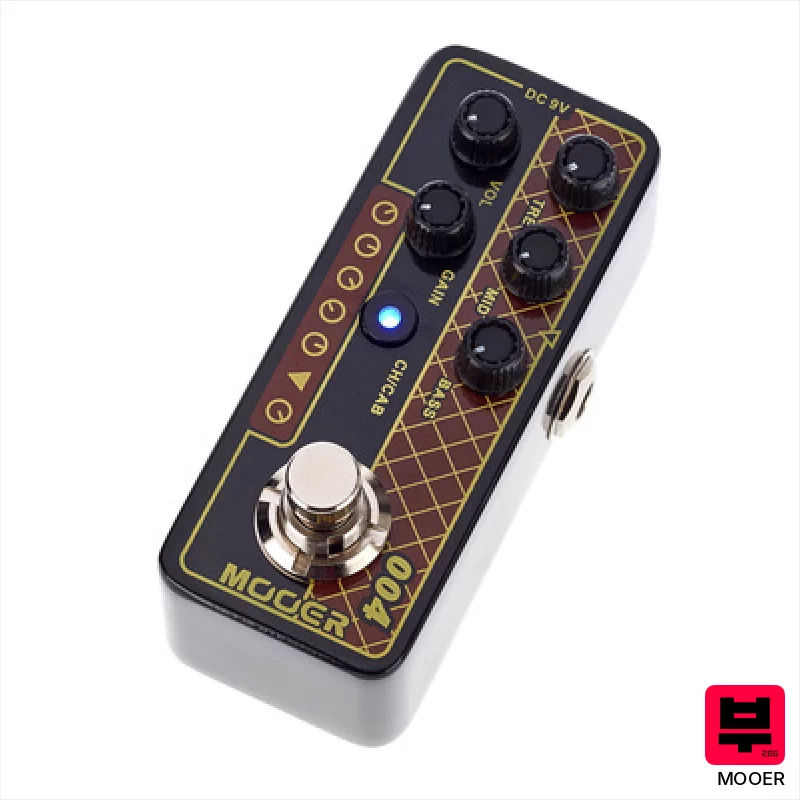
Mooer Micro PreAMP 004 Day Tripper
- • Authentic British amp tones, surprisingly convincing for the size
- • Compact and robust metal enclosure handles gigging well
- • 3-band EQ provides decent shaping of the core sound
- • CH/CAB switch offers usable speaker simulation for direct recording
- • Limited tonal versatility compared to more complex pedals
- • No battery power option restricts portability significantly
- • EQ range can feel a little narrow for drastic tonal changes

Mooer Noise Killer Bundle PS K1 RB
- • Compact size makes it pedalboard-friendly for smaller setups
- • Rockboard cover provides excellent protection against dust and accidental knob adjustments
- • Simple controls allow for quick noise reduction tweaking on the fly
- • True bypass preserves original signal when noise gate is disengaged
- • The 'Soft' reduction mode might not be aggressive enough for extremely noisy environments
- • Limited knob configuration restricts deeper parameter customization compared to higher-end gates
- • Requires a separate 9V power supply, adding to overall cost and complexity
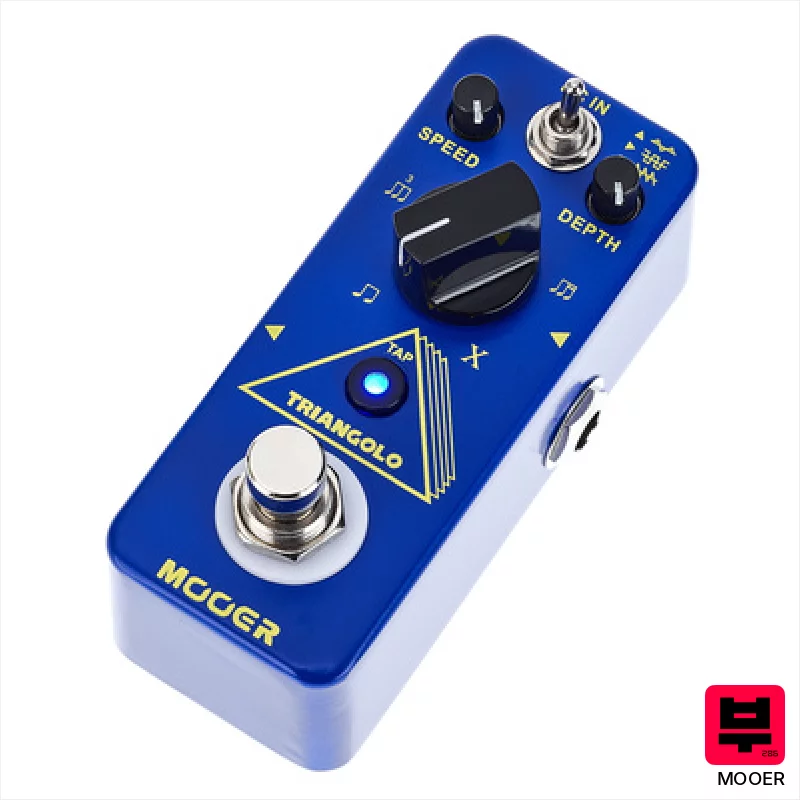
Mooer Triangolo - Digital Tremolo
- • Solid metal housing provides surprising durability for the price.
- • Tap Tempo subdivisions offer rhythmic flexibility beyond basic tremolo.
- • Triangle, Square, and Saw waveforms provide tonal variation.
- • Compact size makes it pedalboard-friendly for most setups.
- • Limited control range compared to higher-end, analog tremolo pedals.
- • No battery power option restricts portability and convenience.
- • Basic LED indicator offers limited visual feedback during operation.
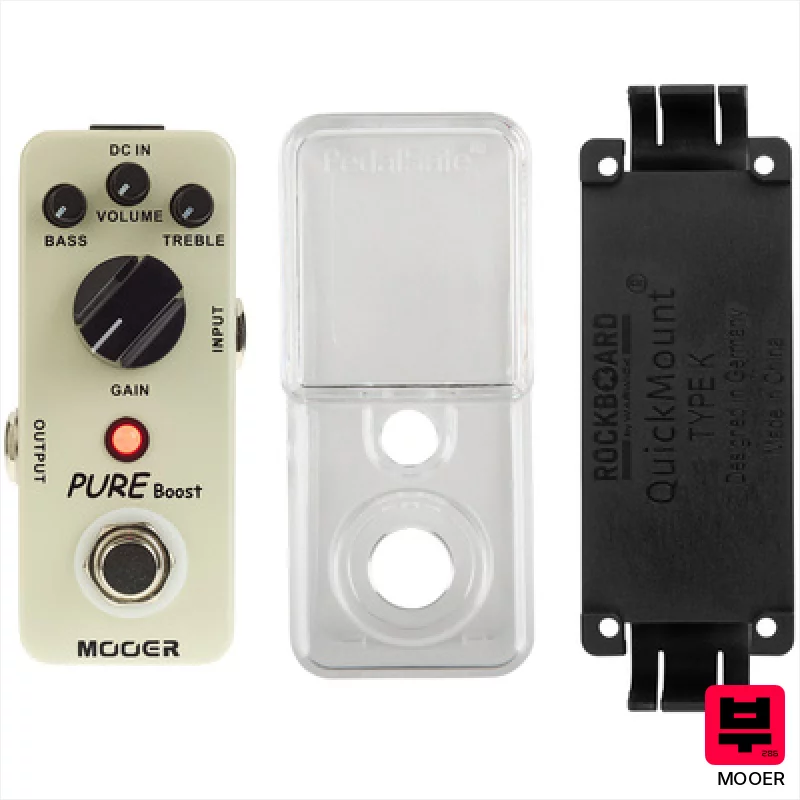
Mooer Pure Boost Bundle PS K1 RB
- • Provides a clean, transparent boost without muddying the signal.
- • Rockboard cover offers practical protection against dust and accidental knob adjustments.
- • EQ section allows for subtle tonal shaping and mid-boost capabilities.
- • Compact size and Rockboard mounting plate facilitate easy pedalboard integration.
- • Power supply not included; requires a separate purchase for operation.
- • EQ is limited to a 2-band configuration, lacking more nuanced control.
- • The plastic enclosure feels a little less robust than higher-end metal options.
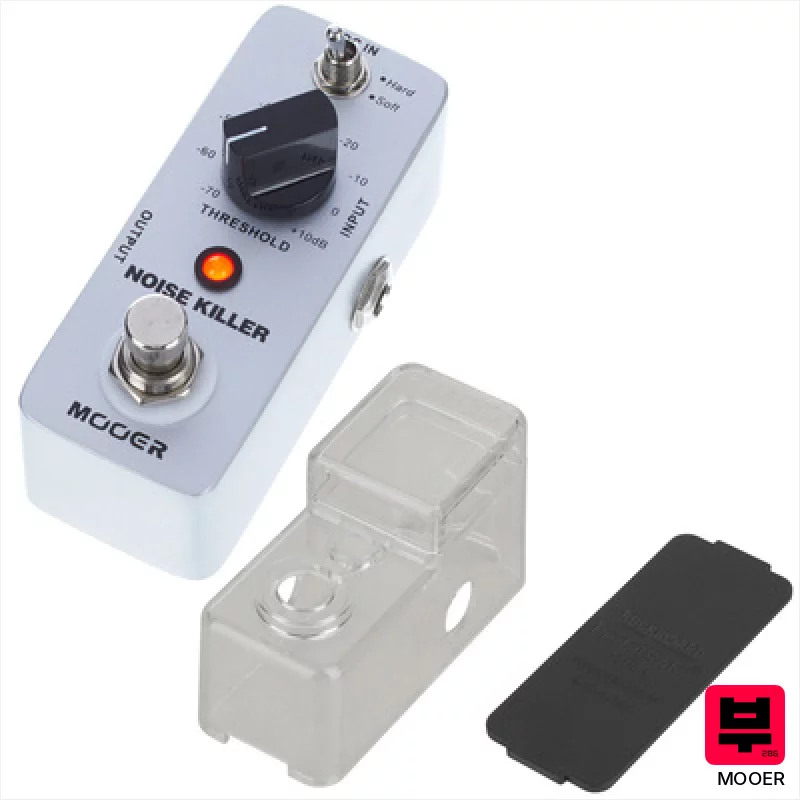
Mooer Noise Killer Bundle PS K1
- • Compact size makes it pedalboard-friendly for smaller setups
- • Rockboard cover offers robust protection against dust and accidental knob adjustments
- • True bypass preserves signal integrity when the noise gate is disengaged
- • Dual reduction modes offer flexibility for different playing styles and noise levels
- • Power supply not included – an additional expense for many users
- • The 'soft' reduction mode might not be aggressive enough for extremely noisy environments
- • Plastic enclosure feels a little less premium compared to higher-end noise gates
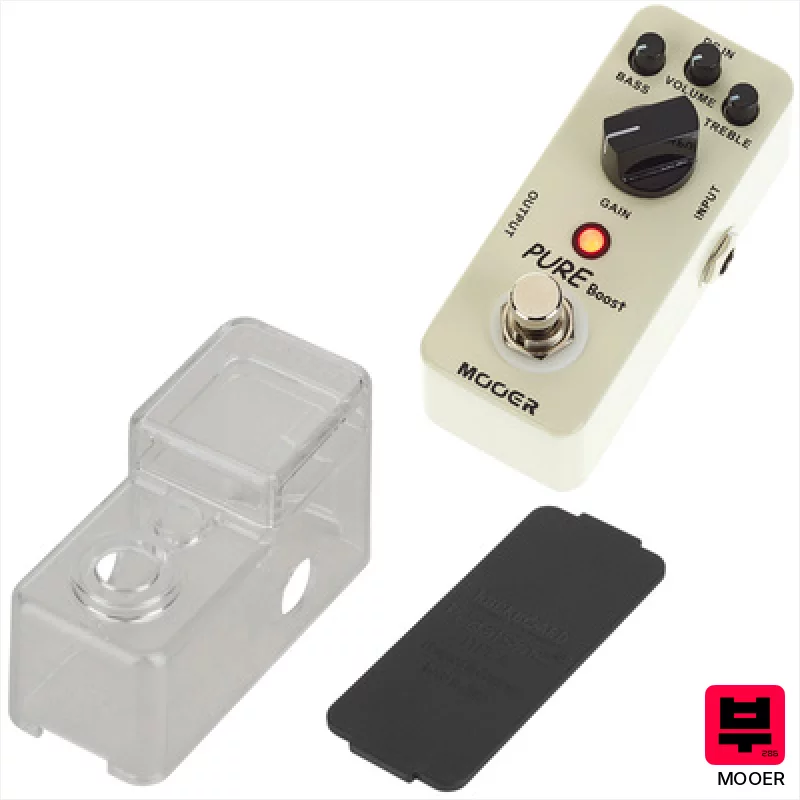
Mooer Pure Boost Bundle PS K1
- • Clean boost preserves signal clarity and dynamics effectively.
- • 2-band EQ provides useful tonal shaping without harshness.
- • Protective cover safeguards pedal from dust and accidental knob adjustments.
- • Bundle offers good value, including a protective cover and mounting plate.
- • Power supply not included; an additional expense for many users.
- • Compact size might be restrictive for some pedalboard layouts.
- • EQ range, while useful, isn’t as extensive as dedicated EQ pedals.
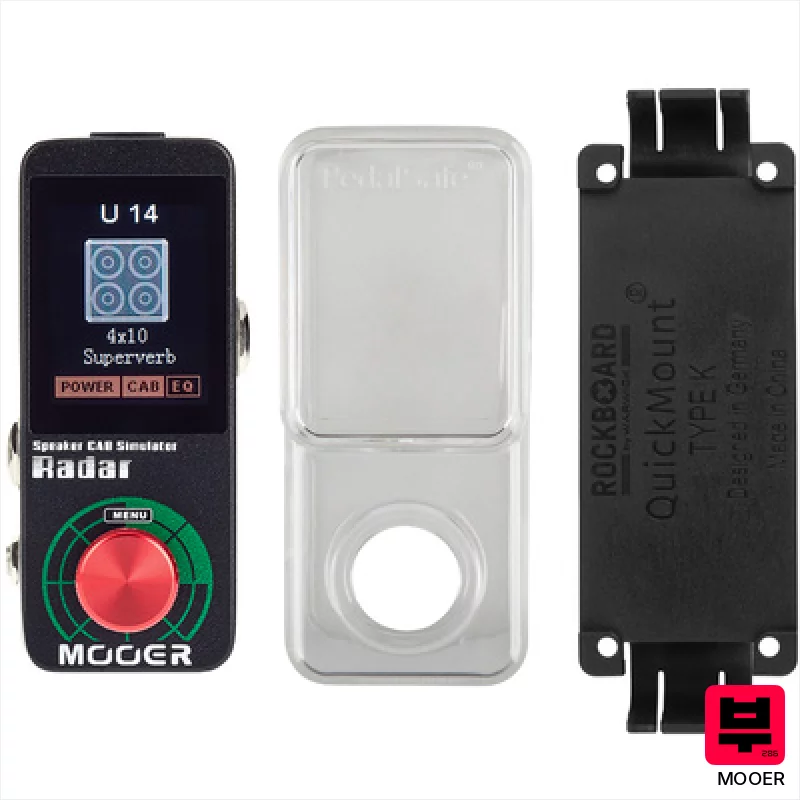
Mooer Radar Bundle RB
- • Excellent value: a full speaker/IR loader at a budget-friendly price point.
- • Mooer’s preamp models convincingly emulate classic amp tones.
- • Compact size and lightweight design make it pedalboard-friendly.
- • The Rockboard cover protects the pedal from dust and accidental bumps.
- • LCD screen can be a bit dim in brightly lit environments.
- • Menu navigation via rotary switch can feel slightly cumbersome.
- • IR loading is limited by the internal memory; requires software for extensive use.
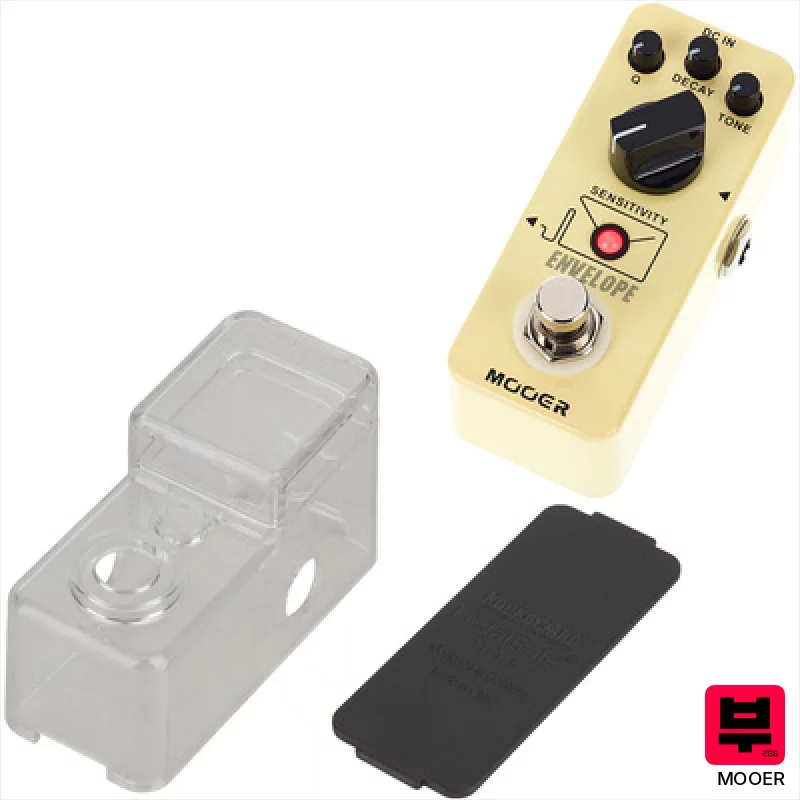
Mooer Envelope Bundle PS K1
- • Solid metal housing offers decent protection from gigging abuse.
- • Rockboard cover provides practical pedalboard protection and stability.
- • Analog circuitry delivers a warmer, more responsive envelope effect.
- • Compact size makes it pedalboard-friendly for smaller setups.
- • Power supply not included; a common Mooer omission, adding to the cost.
- • Limited tonal shaping beyond the core envelope filter function.
- • The metal housing, while robust, adds a noticeable weight.

Mooer MVP2 Harmonier
- • Excellent value for a harmonizer with this many modes.
- • Solid metal housing feels surprisingly robust for the price point.
- • Vocal modes add unexpected texture and creative possibilities.
- • The mixed output mode allows for subtle harmonic enhancement.
- • XLR microphone input might be noisy without a preamp.
- • Preset memory is limited; more would be beneficial for serious use.
- • Harmonizer algorithms can sound artificial at extreme settings.
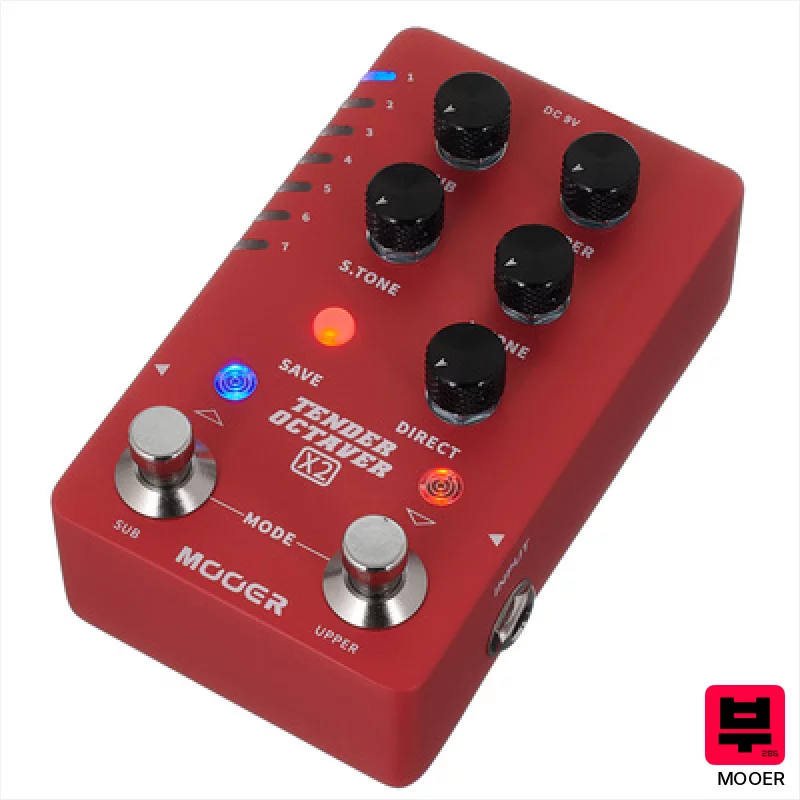
Mooer Tender Octaver X2
- • Metal housing feels robust, exceeding expectations for its class
- • DSP algorithm delivers surprisingly clean, musical octave tones
- • Independent octave volume controls offer excellent tonal shaping
- • Preset system allows for quick switching between octave configurations
- • Limited modulation options restrict versatility for complex textures
- • Footswitches feel a bit plasticky, not as premium as higher-end units
- • Smaller footprint might be cramped for players with large pedalboards

Mooer MVP1 Autuner
- • Surprisingly natural autotune for quick fixes and creative effects.
- • Vocal synth mode offers usable, if quirky, textural possibilities.
- • Compact size and lightweight design make it pedalboard-friendly.
- • Delay and reverb are decent quality, adding useful ambience.
- • Autotune algorithms can sound robotic with aggressive settings.
- • Limited control over vocal synth parameters; lacks deep customization.
- • Build quality feels plasticky; not as robust as higher-end units.
- • The 'hidden mode' functionality is a bit gimmicky and under-developed.

Mooer Purer Octave Pedal
- • Polyphonic tracking is surprisingly clean and stable, even with complex chords.
- • The 'DT' (Detune) function adds a unique, subtle chorus-like shimmer.
- • Compact size makes it ideal for pedalboards already crowded with effects.
- • Metal housing feels robust for a pedal in this price bracket, suggesting decent durability.
- • Limited control over the tone shaping of the octave signals – it's fairly raw.
- • Power supply not included, a common cost-saving measure but an extra expense.
- • The plastic knobs feel a little cheap and might loosen over time with heavy use.
How to Choose the Best Guitar Effects
Tone Modeling
Mooer's strength is definitely in their amp and cabinet modeling. While they don't always nail the exact feel of a vintage Plexi, they offer a usable, often inspiring range of tones, particularly their higher-end models. The early stuff can sound a bit sterile, but the newer generations have improved significantly.
Size & Portability
This is the big draw. They're tiny, which is a massive advantage for gigging musicians or those with limited space. Fitting a full suite of effects into a pedalboard the size of a shoe box is a win, plain and simple.
Ease of Use
Mooer's interfaces are generally straightforward, though the sheer number of parameters can be overwhelming at first. The expression pedal input is a nice touch for real-time tweaking - a must for live use.
Build Quality
Let's be honest, you're not getting boutique-level construction here. The enclosures are sturdy enough for gigging, but the footswitches aren't the most robust. Treat them with respect, and they'll last, but don't expect them to survive a full-on stomp-fest.
Value
This is where Mooer really shines. You get a lot of features and sounds for the price. They aren't going to replace a hand-wired tube amp, but they offer incredible bang for your buck, especially for home recording or practice.
Buying Guide
Don't expect them to be perfect. The earlier models can suffer from a certain 'digital harshness' - listen carefully for that ice-picky high-end. If you're serious about tone, invest in a decent power supply; cheap power can introduce noise and instability. Consider the multi-effects units if you want a lot of options in a small space, but individual stompboxes often offer better fidelity.
How This List Is Built
We don't play these instruments — we're a catalog, not a review desk, and we'd rather say so than pretend otherwise. This page ranks 15 guitar effects from the Thomann catalogue, which is the largest single source of specification data in this category.
Position is computed, not curated. Four signals, in order of weight: how completely the manufacturer documents the instrument (number of published specifications), where it sits in the price range, how specific the model designation is — which filters out generic accessories — and whether a product image exists. The same inputs always produce the same order, so nothing here is shuffled to look fresh.
What this list is good for: narrowing a category down to a shortlist by spec and budget. What it isn't: a substitute for hearing an instrument. Before you buy, read hands-on reviews and, where you can, play it. Full methodology.

