
Best Electro Harmonix Guitar Effects 2026
Alright, let's talk Electro HarmonIX. They're not for everyone - sometimes they're gloriously chaotic, other times they're just plain weird. But when they hit, they really hit, delivering a unique flavor that's been coloring guitar tones since the 70s. If you're chasing that vintage vibe or want to inject some serious personality into your rig, EHX is worth a serious look, but know what you're getting into.
Last updated: April 11, 2026

Electro Harmonix Intelligent Harmony Machine
- • Intelligent Harmony convincingly creates vocal-like harmonies.
- • Polyphonic mode handles full chords with surprisingly good tracking.
- • Momentary mode offers creative, sweeping harmony textures.
- • True bypass preserves your signal integrity when disengaged.
- • Tracking can occasionally falter with very fast, complex chord voicings.
- • The 'intelligent' algorithm isn't always perfect, requiring tweaking.
- • Limited tonal shaping beyond key and mix adjustments.
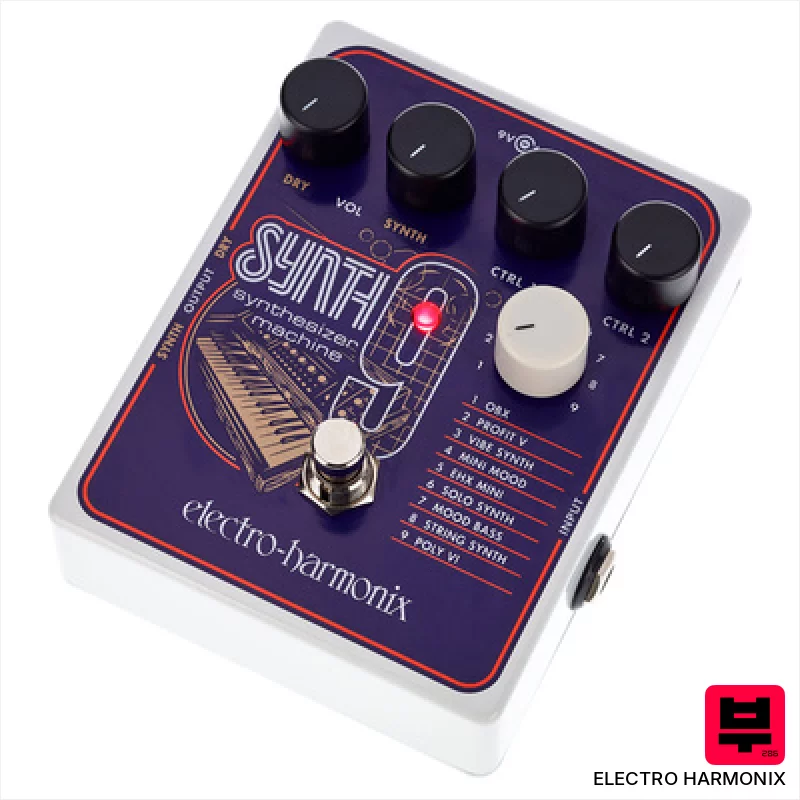
Electro Harmonix Synth9 Synthesizer Machine
- • Excellent range of vintage synth emulations, surprisingly accurate and usable
- • Fast tracking keeps the synth sounds locked to your playing
- • Dry/Synth blend offers great tonal flexibility for subtle textures
- • Works well with both guitar and bass, expanding its versatility
- • Can be a bit noisy, especially at higher Synth volume levels
- • Preset selector lacks fine-grained control, limited editing options
- • Build quality feels adequate but not exceptionally robust for frequent gigging

Electro Harmonix Pitch Fork+ Pitch Shifter
- • Dual engines offer incredible pitch shifting complexity and versatility.
- • X-MOD mode delivers unique, FM-like textures rarely found in pitch shifters.
- • Latch mode provides momentary effects for creative, stuttering sounds.
- • Buffered bypass maintains signal integrity, even when the effect is off.
- • The interface, while functional, can feel a bit overwhelming initially.
- • True stereo operation requires a more complex setup and external power.
- • The EHX build quality, while decent, isn't as robust as some boutique pedals.

Electro Harmonix String9 String Ensemble
- • Exceptional string machine emulations, surprisingly nuanced and organic.
- • The 'Orch Freeze' and 'Synth Freeze' modes offer unique textural possibilities.
- • Solid, roadworthy build quality with a robust metal enclosure.
- • Versatile controls allow for subtle string pads to full-blown orchestral swells.
- • Limited low-end response; bass frequencies can feel thin.
- • Power supply only; no battery operation restricts portability.
- • Can be overwhelming; the sheer number of modes demands experimentation.
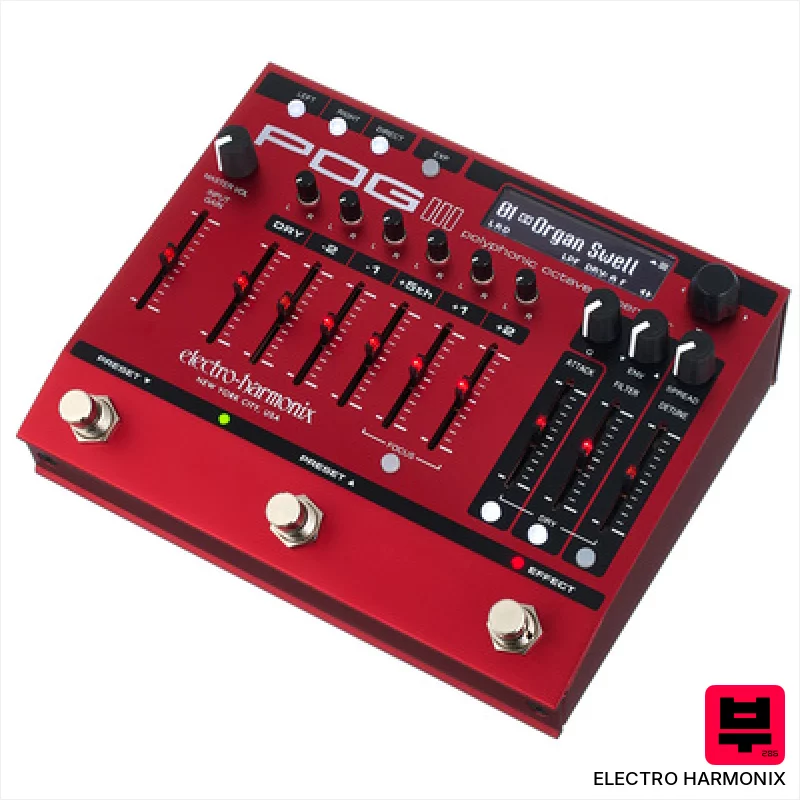
Electro Harmonix POG3 Octaver
- • Exceptional polyphony handles complex arrangements without digital artifacts.
- • NavCoder simplifies menu navigation, a significant usability improvement.
- • Multimode filter adds tonal shaping beyond basic octave trails.
- • Improved voicing delivers a smoother, more musical octave response.
- • High price point puts it out of reach for many players.
- • Size and weight make it less than ideal for smaller pedalboards.
- • While improved, the 'attack' control can still be finicky to dial in.

Electro Harmonix Nano Q-Tron Envelope Filter
- • Compact size makes it incredibly pedalboard-friendly, a real space saver.
- • Q control provides nuanced filter sweeps, from subtle to aggressive.
- • Three distinct modes offer a surprising range of tonal possibilities.
- • EHX's signature envelope filtering character is faithfully recreated in a small package.
- • Limited control set; lacks finer adjustments for experienced envelope filter users.
- • Plastic enclosure feels a little less robust than higher-end, metal-cased pedals.
- • Power supply not included; a common, but still slightly inconvenient omission.

Electro Harmonix Mainframe Bit Crusher
- • Unique, authentic 8-bit digital degradation sounds
- • Sample Rate Tuning mode offers creative pitch-based manipulation
- • Flexible filter options add tonal shaping versatility
- • Preset and expression functionality expands performance potential
- • Can be overly harsh or noisy with extreme settings
- • Limited tonal palette; not a general-purpose effect
- • Mainframe system can feel slightly clunky to navigate

Electro Harmonix BASS9 Bass Machine
- • Excellent tracking, even with fast playing and complex basslines
- • The 'Bowed' and 'Synth' sounds offer genuinely unique textures
- • Independent Dry/Effect volume allows for subtle blending or extreme effects
- • Compact size makes it pedalboard-friendly without sacrificing functionality
- • The 'Split Bass' sound can be muddy if not carefully EQ'd
- • Preset selector feels a bit cheap and lacks tactile feedback
- • Some sounds, like 'Flip-Flop', are novelty rather than usable tones
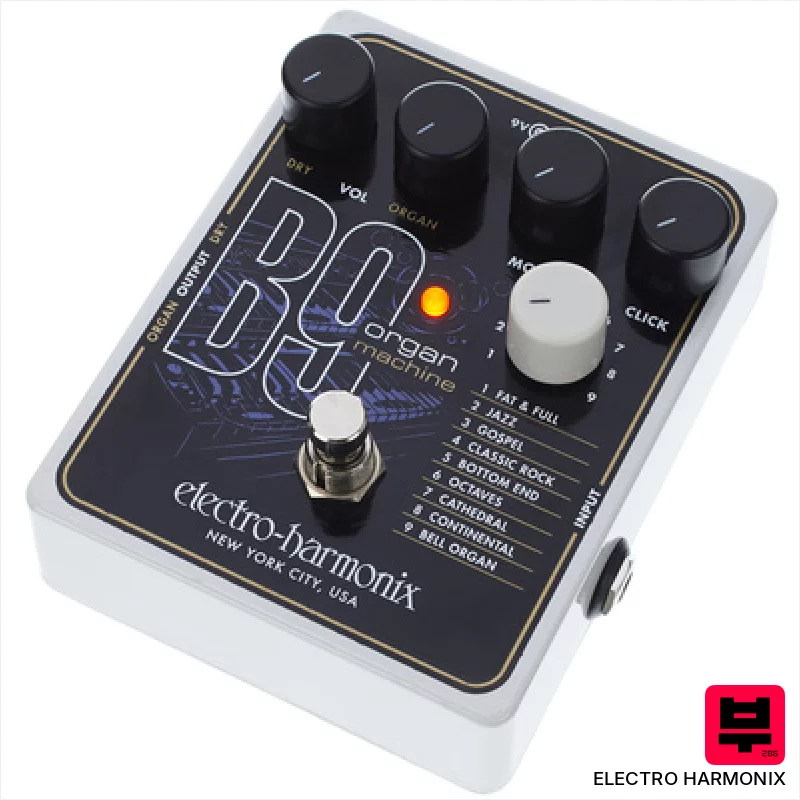
Electro Harmonix B9 Organ Machine
- • Excellent organ simulations, surprisingly nuanced for a pedal
- • Intuitive controls allow quick tweaking of organ tones
- • The 'Cathedral' preset is genuinely stunning and atmospheric
- • Solid build quality; feels robust for gigging use
- • Limited flexibility beyond the nine preset sounds
- • Can sound a bit cheesy if overused or not dialed in properly
- • Dry signal blending isn't as refined as some higher-end pedals
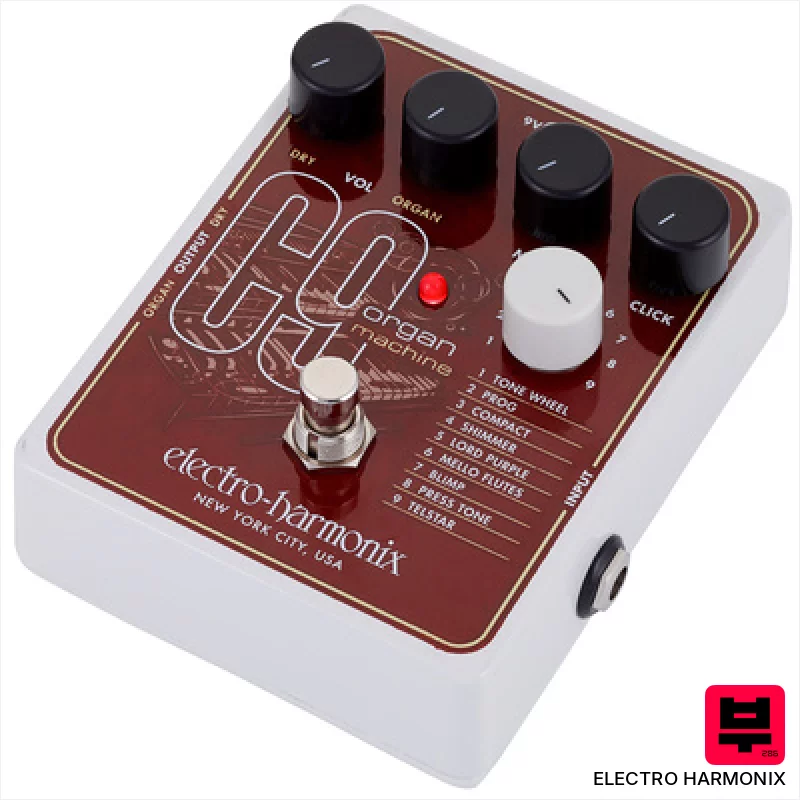
Electro Harmonix C9 Organ Machine
- • Excellent emulation of classic Vox Continental and Hammond tones
- • Preset variety offers a surprisingly wide sonic palette
- • The 'Click' control adds crucial vintage organ percussiveness
- • Compact size makes it pedalboard-friendly without compromising functionality
- • Dry signal blending can be a bit muddy at higher levels
- • Modulation depth is limited, lacking subtle textures
- • Preset recall isn’t as robust as some higher-end organ emulators
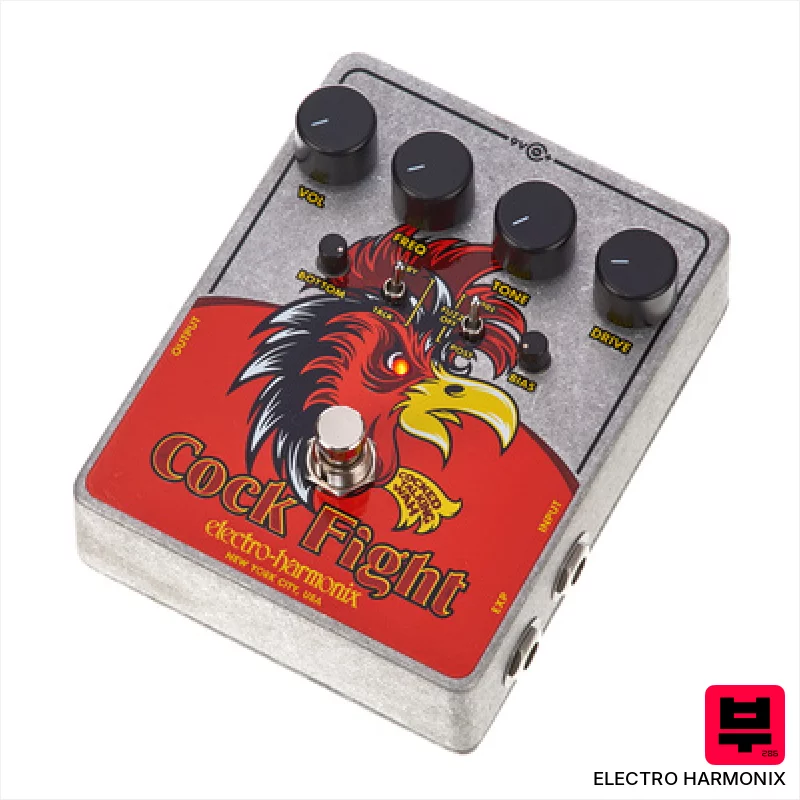
Electro Harmonix Cock Fight Cocked Wah
- • Unique 'talking wah' mode offers expressive, vocal-like textures.
- • Bias knob provides tonal flexibility, from warm to aggressive fuzz.
- • EXP input expands creative possibilities for real-time wah control.
- • True bypass preserves signal integrity when the effect is disengaged.
- • The fuzz circuit, while versatile, isn't a high-end boutique fuzz.
- • Fixed wah range may feel limiting for players accustomed to wider wah sweeps.
- • The 'talking wah' mode can be noisy with high gain settings.

Electro Harmonix Pico POG Octaver
- • Remarkably compact size for a polyphonic octaver.
- • Tone control offers useful shaping beyond basic octave tones.
- • Subtle LP mode cleans up the low-end muddiness common in octavers.
- • Solid build quality, feels durable despite its small footprint.
- • Limited tonal versatility compared to larger, more complex octaver pedals.
- • 9V DC power supply only; no battery option restricts gigging convenience.
- • Dry signal can be slightly affected, lacking some clarity.

Electro Harmonix Pico Deep Freeze
- • Compact size makes it incredibly pedalboard-friendly.
- • Layering function allows for evolving, textured soundscapes.
- • Glissando control adds expressive pitch bends and movement.
- • Multiple modes offer versatility beyond simple sustain.
- • Limited control depth compared to larger, dedicated sustain units.
- • 9V power supply not included, adding to the overall cost.
- • Can introduce some noise with higher decay settings and layering.
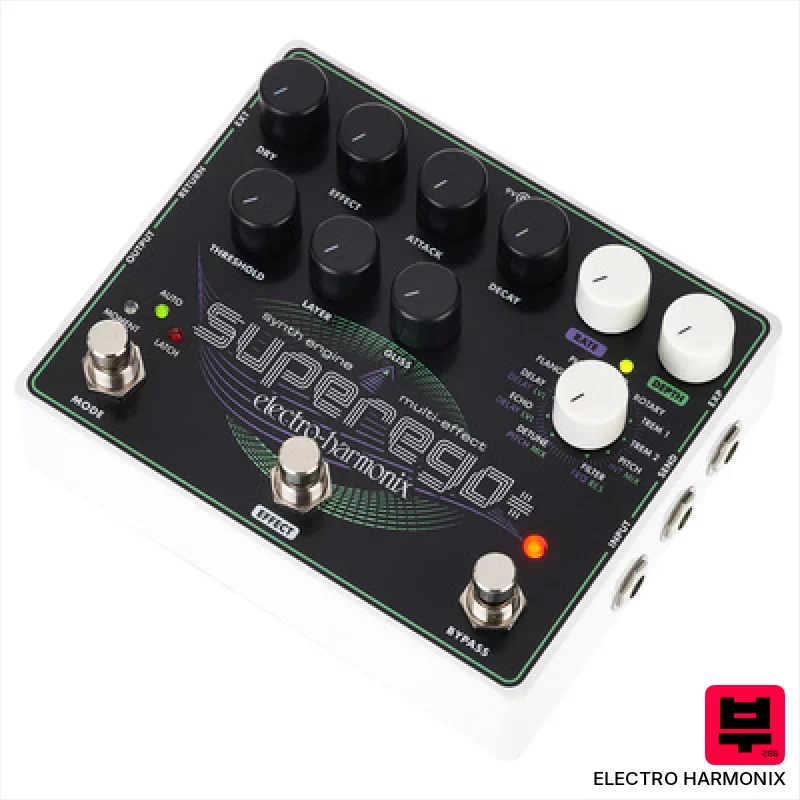
Electro Harmonix Superego Plus
- • Expansive synth textures far beyond typical EHX offerings
- • Layering capabilities add considerable creative depth for soundscapes
- • Send/Return loop allows for external effects processing integration
- • Expression pedal input offers real-time parameter manipulation
- • Complex interface can be overwhelming for beginners, steep learning curve
- • Limited preset storage restricts experimentation and recall
- • Power consumption is relatively high, requiring a robust power supply

Electro Harmonix Ravish Sitar
- • Excellent sympathetic string simulation captures sitar's characteristic resonance
- • Dual expression pedal inputs enable nuanced, expressive control
- • Nine presets offer a surprising range of sitar tones and textures
- • EHX’s robust construction ensures pedal can withstand gigging demands
- • Lead voice timbre can sound slightly artificial compared to a genuine sitar
- • Limited control over individual sympathetic string tuning – a key sitar characteristic
- • Polyphonic nature can occasionally introduce unwanted digital artifacts at extreme settings
How to Choose the Best Guitar Effects
Heritage
EHX practically is a chapter in effects history. They pioneered so many sounds - the Big Muff Pi, the Memory Man - that are still benchmarks today. That legacy informs their design philosophy, even if the execution varies.
Tone Characteristics
Expect character. EHX pedals often have a distinct, sometimes unpredictable flavor. It's rarely 'clean' or 'transparent'; it's about adding something - a fuzz's thick saturation, a chorus's watery shimmer, a delay's analog warmth. It's that unique color that draws people in.
Build Quality
Let's be honest, EHX's build quality has been a bit of a rollercoaster. The early stuff is legendarily robust, but the more recent, budget-focused models can feel a little flimsy - thinner enclosures, less robust footswitches. It's a trade-off for that price point.
Analog Warmth (and Noise)
Many EHX pedals are analog, and that comes with its own set of blessings and curses. You get that coveted warmth and responsiveness, but also potential for noise and drift, especially with older or less-expensive models. Proper power supplies are your friend here.
Experimentation & Quirks
EHX isn't afraid to be weird. Some pedals have unusual controls, unexpected behavior, or just plain oddball sounds. This is part of their charm, but it also means you need to be willing to experiment and embrace the chaos.
Buying Guide
Don't go in expecting surgical precision. EHX pedals are about vibe and character, not pristine clarity. If you're after a transparent boost, look elsewhere. Pay attention to the model - the newer "nano" versions are smaller but often cut corners on build quality. And for the love of Pete, get a good power supply - the voltage fluctuations can really mess with these things.
How This List Is Built
We don't play these instruments — we're a catalog, not a review desk, and we'd rather say so than pretend otherwise. This page ranks 15 guitar effects from the Thomann catalogue, which is the largest single source of specification data in this category.
Position is computed, not curated. Four signals, in order of weight: how completely the manufacturer documents the instrument (number of published specifications), where it sits in the price range, how specific the model designation is — which filters out generic accessories — and whether a product image exists. The same inputs always produce the same order, so nothing here is shuffled to look fresh.
What this list is good for: narrowing a category down to a shortlist by spec and budget. What it isn't: a substitute for hearing an instrument. Before you buy, read hands-on reviews and, where you can, play it. Full methodology.

