
Best Dreadnought Acoustic Guitars Under $500 2026
Alright, so you're after a dreadnought acoustic that won't break the bank? Happens to the best of us. Getting a full-bodied dreadnought sound - that low-end thump and headroom to handle a strummed rhythm or a fingerpicked melody - for under $500 is totally doable, but you gotta know what to look for. We've sifted through a lot of guitars to find the ones that deliver the most bang for your buck in this price bracket.
Last updated: October 9, 2026
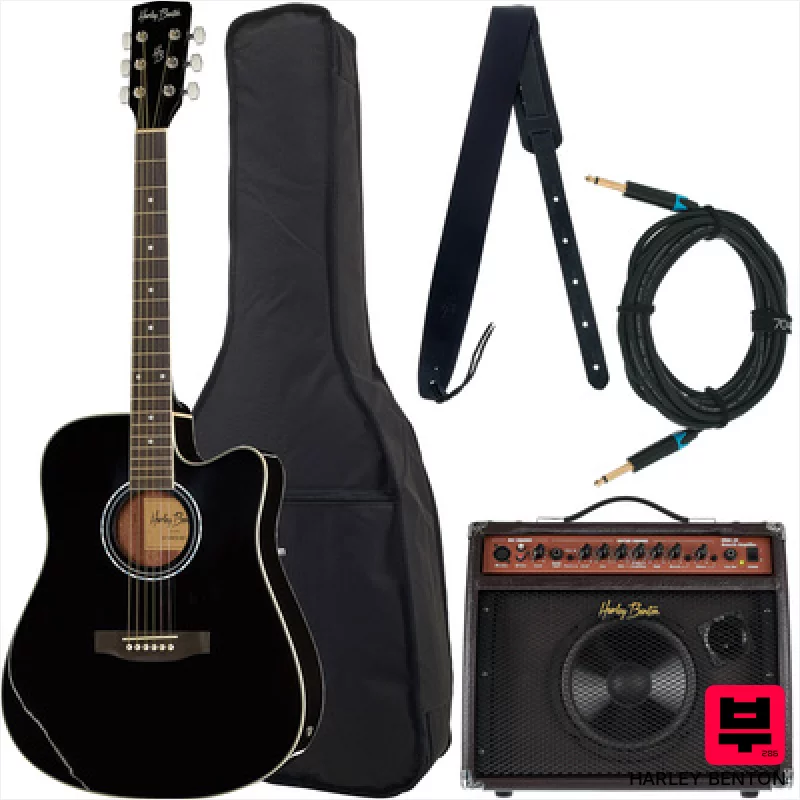
Harley Benton HBD120 CE BK Bundle
- • Spruce top provides a surprisingly bright and resonant acoustic tone.
- • Mahogany body delivers a warm, focused low-end response ideal for strumming.
- • The onboard pickup system offers decent amplified sound for practice or small gigs.
- • The included combo amp is surprisingly capable, with usable reverb and chorus effects.
- • Jatoba fingerboard can feel a little stiff compared to rosewood or ebony.
- • The amplifier's 8-inch speaker limits its volume and low-frequency extension.
- • Hardware, particularly the tuners, feels budget-oriented and may need upgrading.
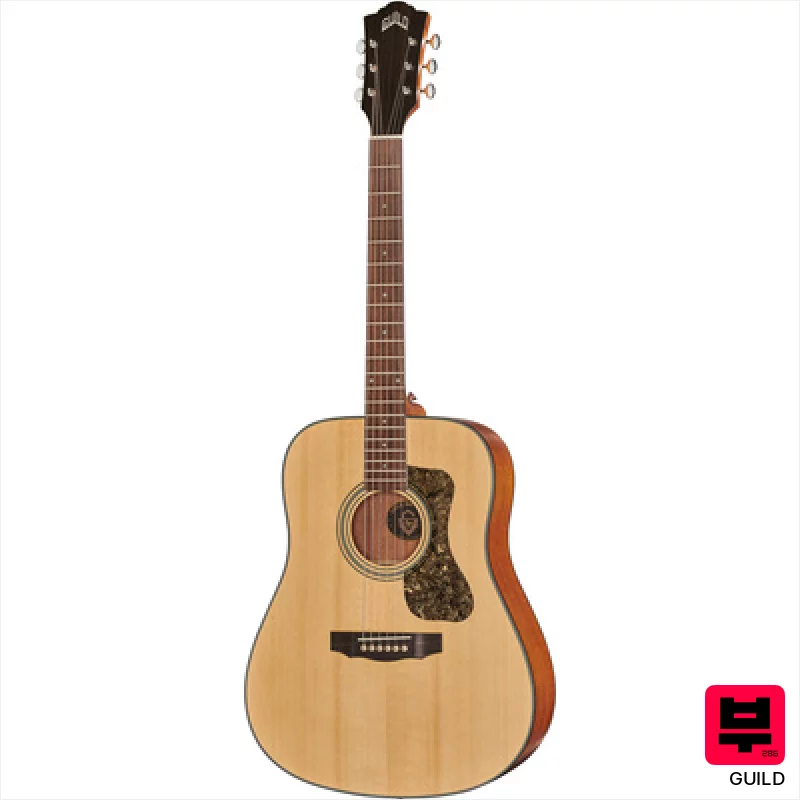
Guild D-340 Nat
- • Solid Sitka spruce top delivers excellent projection and headroom for strumming.
- • Mahogany back and sides provide a warm, focused tone with rich overtones.
- • Comfortable 'C' neck profile and 16” radius fingerboard facilitates easy playability.
- • Open-gear tuning machines offer reliable tuning stability and vintage aesthetics.
- • Mahogany construction can limit versatility for players seeking brighter, more articulate tones.
- • Matt finish might not appeal to those preferring a glossier, more reflective appearance.
- • Dreadnought body size may be unwieldy for smaller players or those seeking portability.
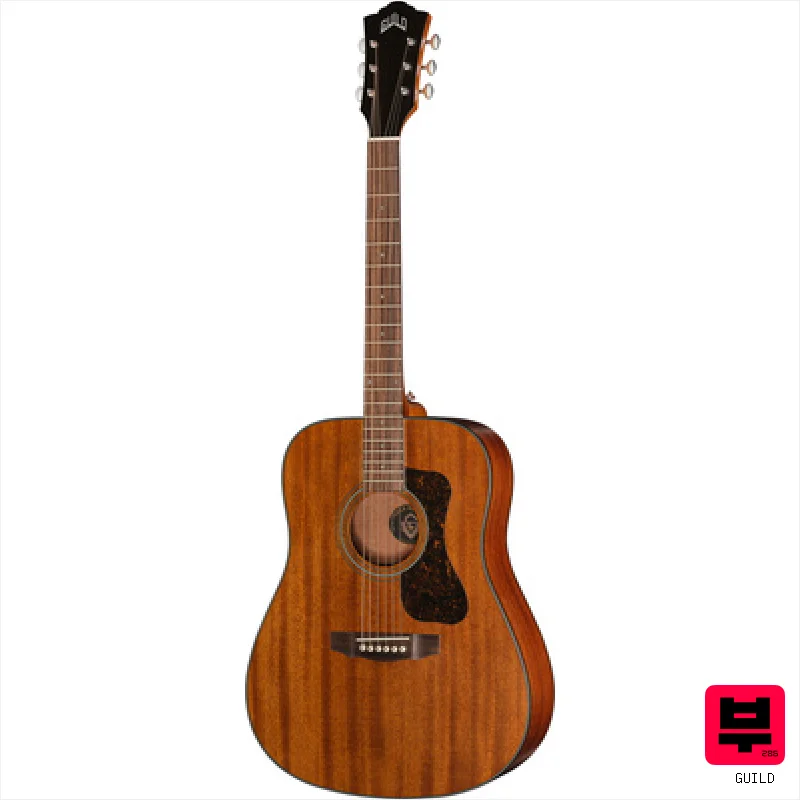
Guild D-320 Nat
- • Solid mahogany top delivers warm, mid-focused tone.
- • Rosewood fingerboard provides comfortable playability.
- • Compensated bone saddle ensures intonation accuracy.
- • Dovetail neck join offers strong structural stability.
- • All mahogany construction limits high-end brightness.
- • No electronics included for stage amplification.
- • Mahogany body may lack sustain compared to spruce tops.
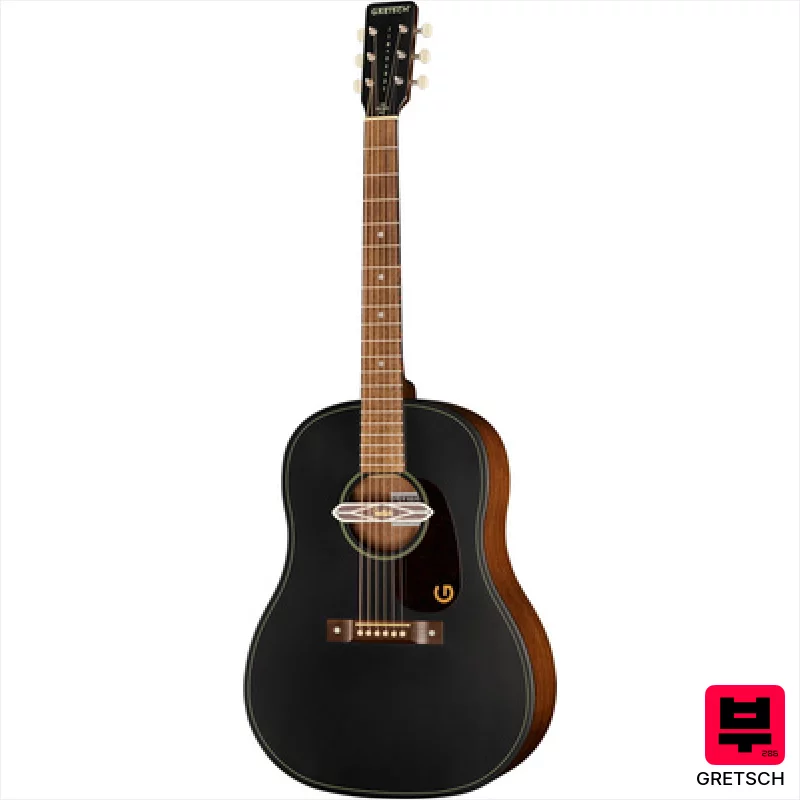
Gretsch JD Dread DELTO TSPG BLKT
- • Sapele laminate top delivers surprisingly warm, resonant tones.
- • Deltoluxe pickup offers usable, amplified sound for stage or recording.
- • Walnut fingerboard provides a smooth, comfortable playing experience.
- • 24.75” scale length eases bends and feels familiar to vintage players.
- • Laminated construction limits high-end sparkle and complex overtones.
- • Nato neck, while stable, lacks the premium feel of mahogany or maple.
- • Open-gear tuners might not offer the absolute finest tuning stability.
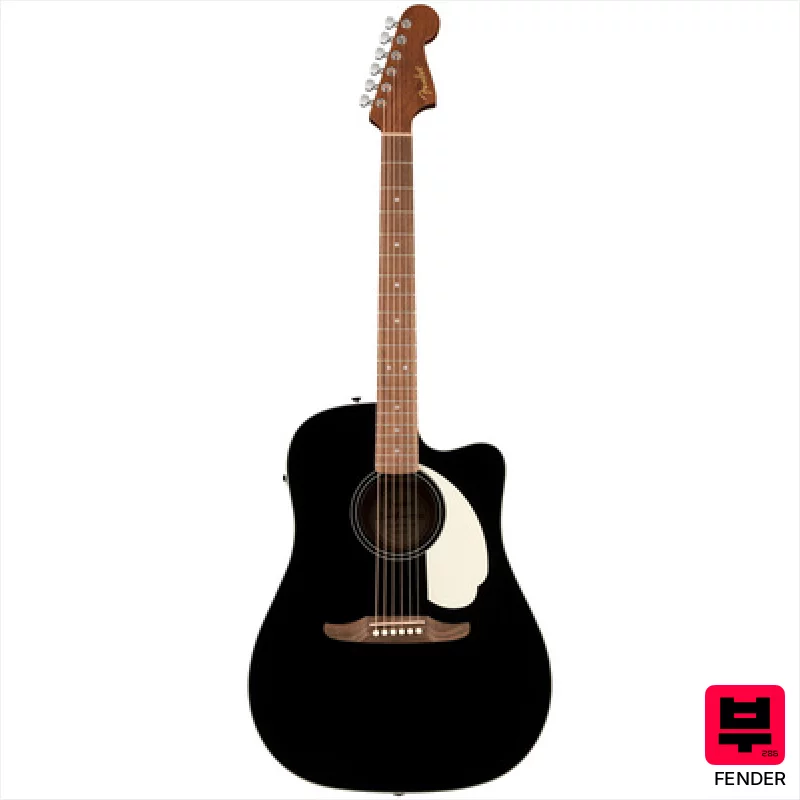
Fender CA STD Redondo CE IPG BLK
- • Sapele back/sides deliver a warm, resonant, and balanced tonal foundation.
- • Spruce top provides excellent projection and responsiveness for varied playing styles.
- • Built-in tuner is a genuinely useful feature for gigging musicians and beginners.
- • Okoume neck offers a comfortable, modern C-profile feel with good stability.
- • The Phosphor Bronze strings are bright; a swap to nickel strings would mellow the tone.
- • Sapele can be a bit 'woody' sounding initially; needs some break-in time.
- • The electronics, while functional, aren’t high-end and lack nuance for critical recording.
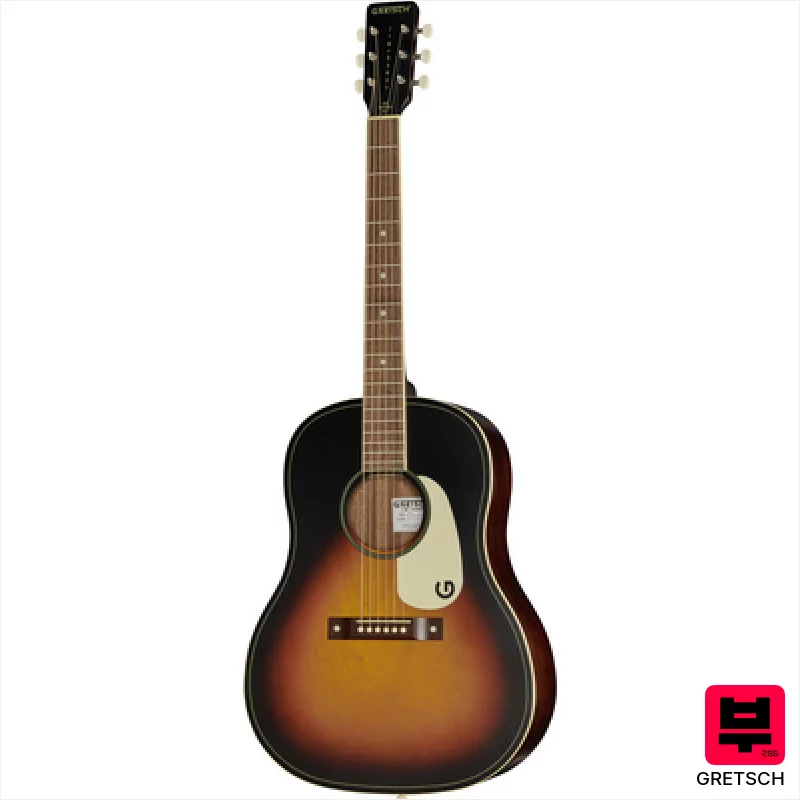
Gretsch JD Dread WPG RXB
- • Basswood top offers surprisingly warm, balanced tone for the price.
- • Walnut fingerboard provides a smooth, comfortable playing experience.
- • 24.75” scale enhances string flexibility and easier bending.
- • Solid build quality for an entry-level instrument; feels surprisingly robust.
- • Basswood construction limits high-end sparkle and nuanced articulation.
- • Die-cast tuners are functional, but lack the precision of geared tuners.
- • Satin finish, while attractive, can feel a bit plasticky.
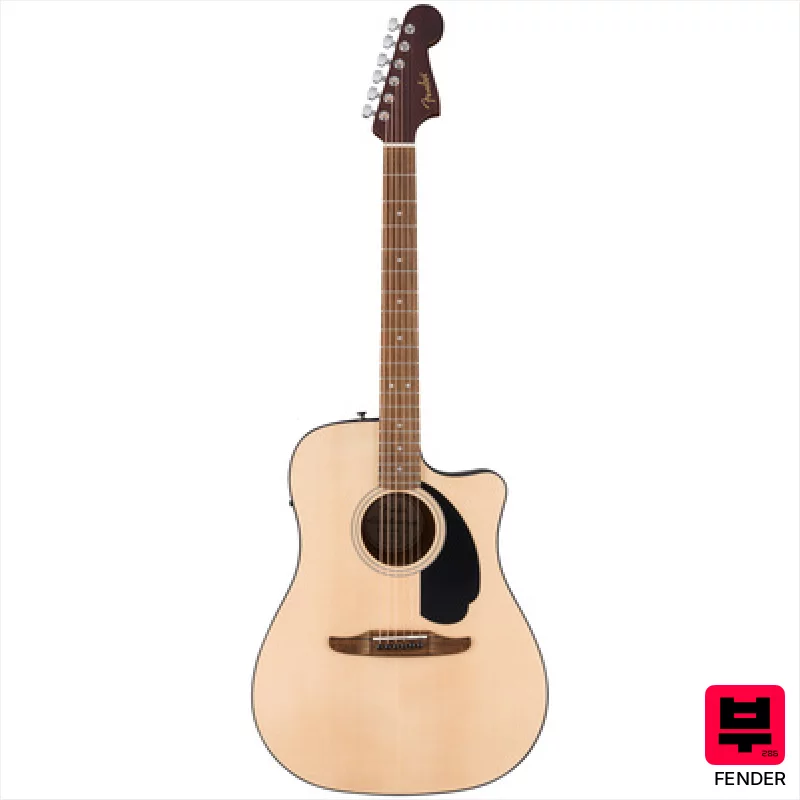
Fender CA STD Redondo CE BPG NAT
- • Sapele back and sides deliver a warm, resonant, and balanced tonal foundation.
- • Spruce top provides excellent projection and responsiveness, especially when strummed.
- • Fender electronics offer a usable amplified sound for stage or recording applications.
- • Modern Viking bridge design enhances sustain and transfer of string vibration.
- • Okoume neck, while playable, isn’t as tonally stable as mahogany or maple.
- • Phosphor bronze strings are bright; may require changing for a darker tone.
- • The built-in tuner is a convenience, but its accuracy can be inconsistent.

Fender CA STD Redondo CE IPG FRD
- • Sapele back and sides deliver a warm, focused, and articulate tone.
- • Spruce top provides excellent projection and responsiveness across the fretboard.
- • Fender electronics offer a surprisingly usable amplified sound with onboard tuner.
- • Okoume neck provides a comfortable, stable feel with a classic C profile.
- • The Phosphor Bronze strings are bright; a different gauge might be preferable.
- • Sapele can be a bit 'tight' acoustically initially; requires some playing to open up.
- • The single-ply pickguard feels a little thin for the overall build quality.
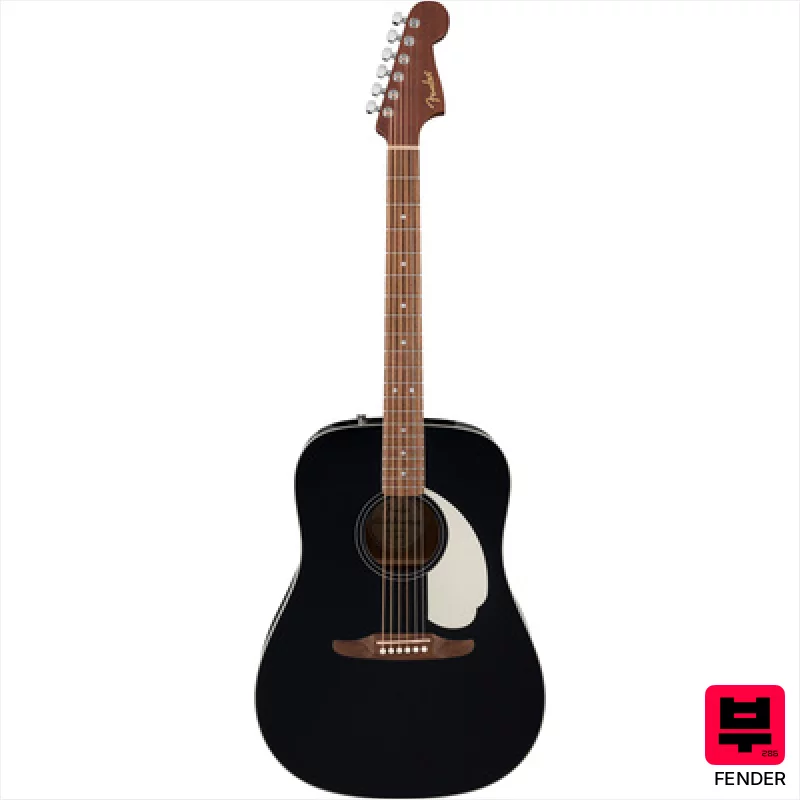
Fender CA STD Redondo IPG BLK
- • Sapele back and sides deliver a warm, resonant low-end tone.
- • Spruce top provides excellent projection and clarity across the spectrum.
- • Okoume neck offers a comfortable, fast feel for a wide range of playing styles.
- • Vintage-style frets and a 12 in radius improve playability and vintage feel.
- • Black finish might be a fingerprint magnet and show wear easily.
- • Phosphor Bronze strings are bright; might benefit from a warmer string set.
- • While versatile, the dreadnought body isn’t ideal for fingerstyle players needing deep bass.
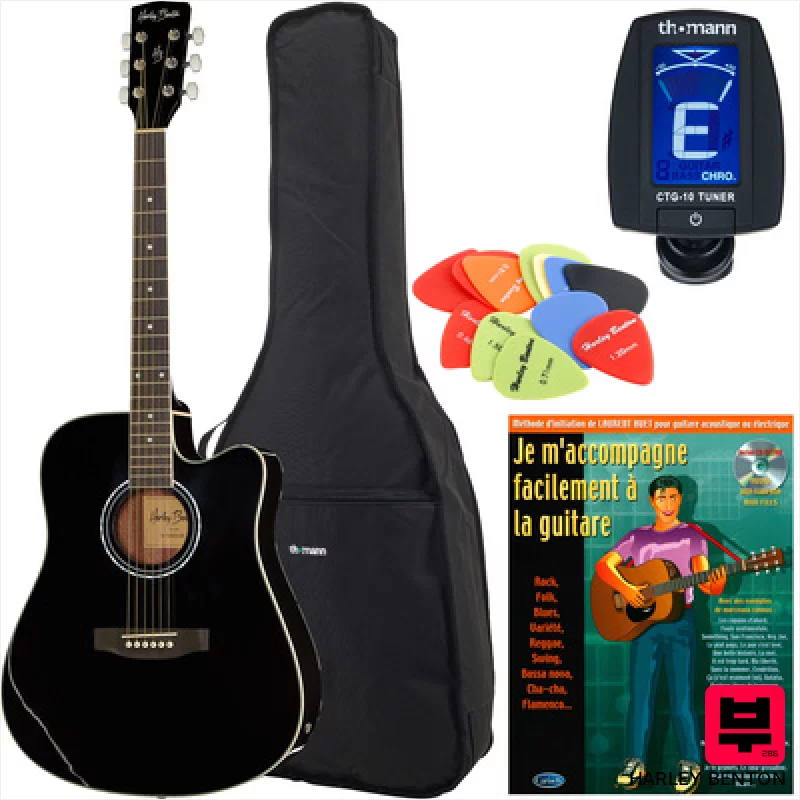
Harley Benton HBD120CEBK Bundle France
- • Solid spruce top delivers surprisingly bright and resonant tone
- • Mahogany back and sides add warmth and sustain, a classic pairing
- • Die-cast tuners offer stable tuning, a welcome upgrade at this price
- • Included Carisch method is a genuinely useful learning resource
- • Factory strings are basic; upgrading is highly recommended for better playability
- • High-gloss finish might be prone to fingerprints and smudging
- • Cutaway access to higher frets is somewhat limited by the dreadnought body shape
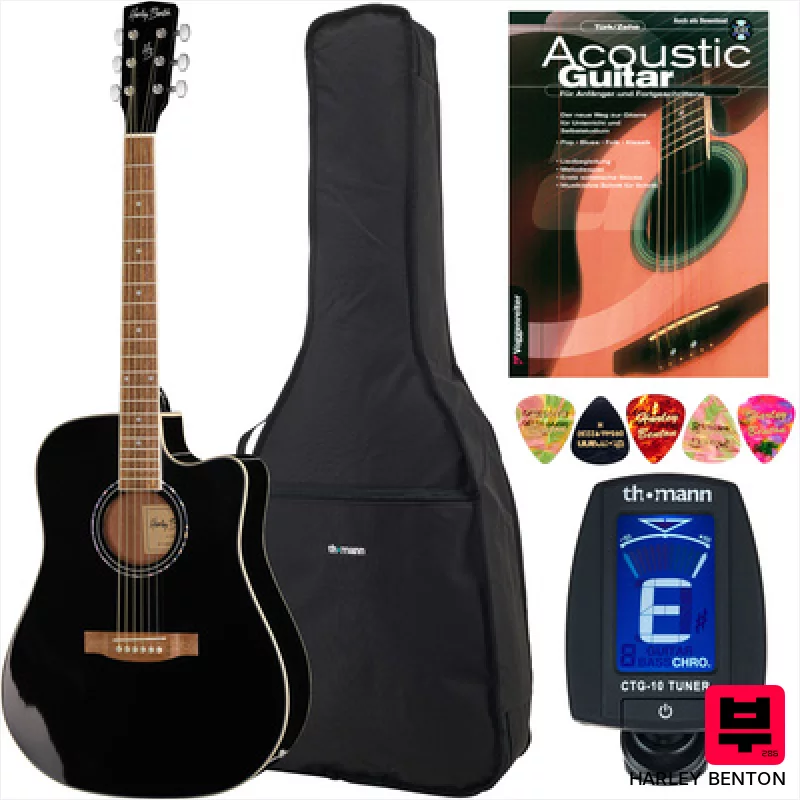
Harley Benton HBD120CEBK Bundle
- • Spruce top delivers surprisingly balanced and articulate tone.
- • Mahogany back and sides provide warmth and sustain, common in dreadnoughts.
- • Die-cast tuners offer stable tuning, a nice touch at this price point.
- • Included pickguards offer cosmetic customization options, a bonus for players.
- • Jatoba fingerboard can feel a bit harder than rosewood, impacting playability.
- • Factory strings are basic and will likely be the first upgrade needed.
- • EQ section on the pickup system is functional but lacks refinement.
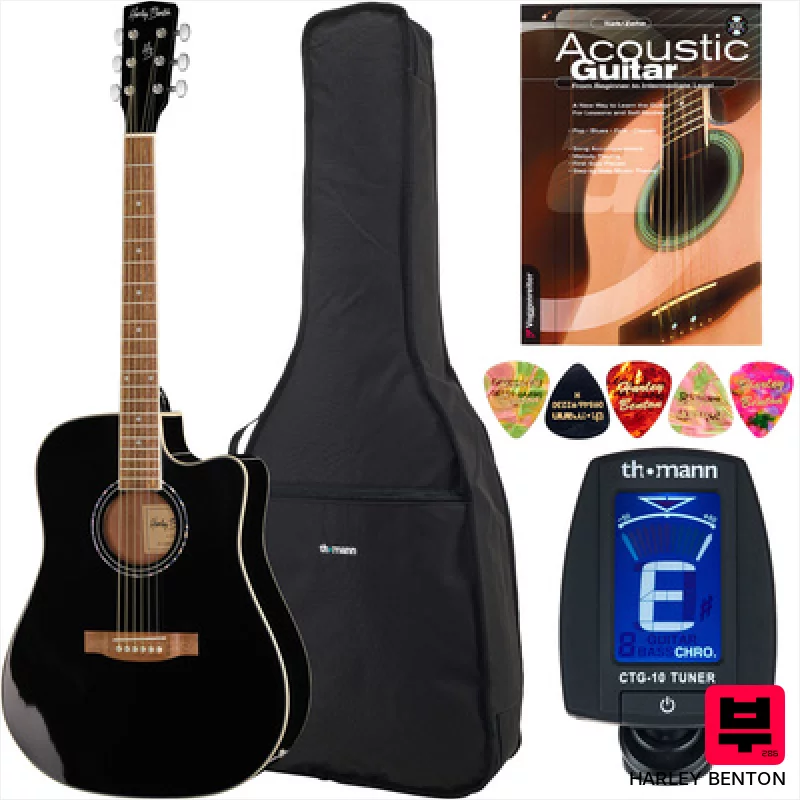
Harley Benton HBD120CEBK Bundle UK
- • Spruce top delivers a surprisingly bright and articulate acoustic tone.
- • Mahogany back and sides contribute to a warm, focused low-end response.
- • Die-cast tuners provide stable tuning, a noticeable upgrade for the price.
- • The included preamp offers decent onboard amplification for practice and small gigs.
- • Jatoba fingerboard can feel a bit stiff and less smooth than rosewood.
- • High-gloss finish might be prone to fingerprints and reflections.
- • The included course book is basic; more experienced players will likely want alternatives.
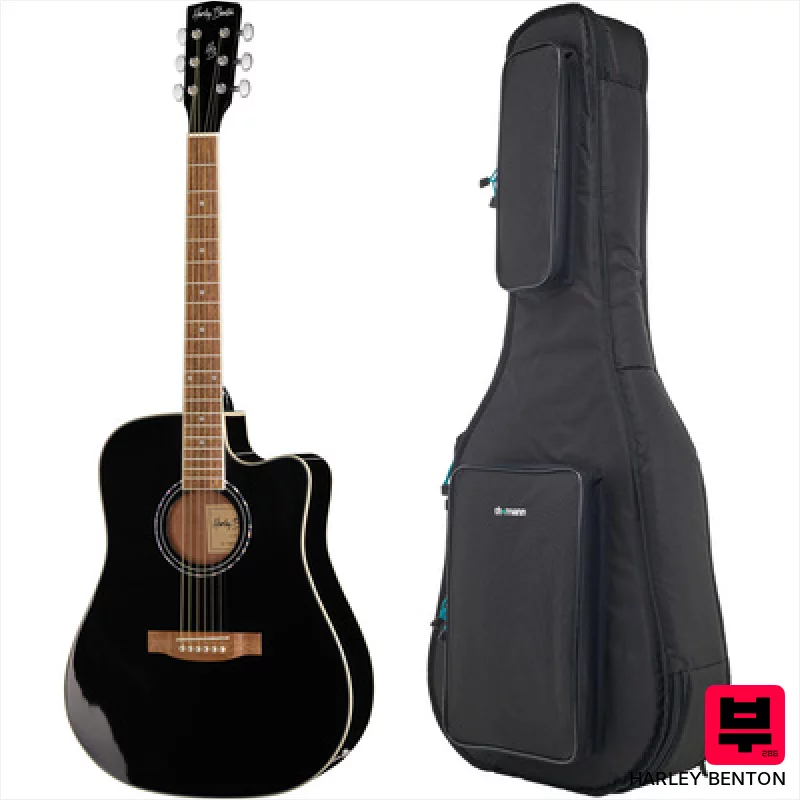
Harley Benton D-120CE BK w/Bag
- • Solid spruce top delivers surprisingly balanced and articulate tones.
- • Mahogany back and sides provide a warm, focused midrange response.
- • Die-cast tuners offer reliable tuning stability, a welcome touch at this price.
- • Integrated preamp and EQ system allows for stage-ready amplification.
- • Factory strings are thin; a quick upgrade will significantly improve playability.
- • High-gloss finish can be prone to fingerprints and smudging.
- • Jatoba fingerboard can feel a little stiff compared to rosewood.
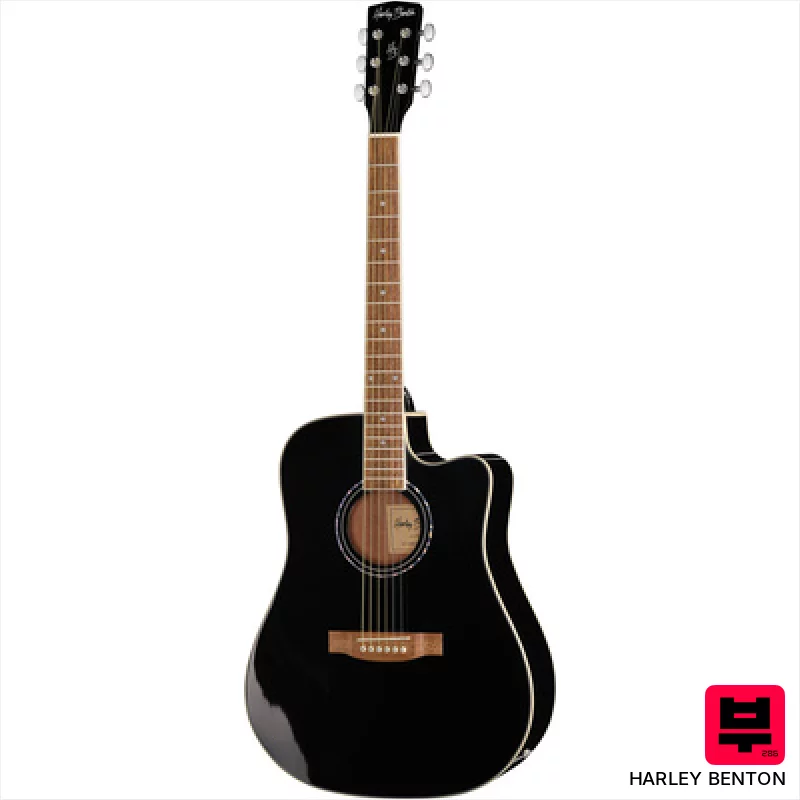
Harley Benton D-120CE BK
- • Spruce top delivers surprisingly warm and balanced acoustic tone
- • Mahogany body provides a focused, woody resonance
- • Die-cast tuners offer reliable tuning stability, a rarity at this price
- • Cutaway allows comfortable access to higher frets for lead playing
- • Factory strings are basic; upgrade for optimal tone and feel
- • Electronics are functional but lack the nuance of higher-end systems
- • High-gloss finish can be prone to fingerprints and smudging
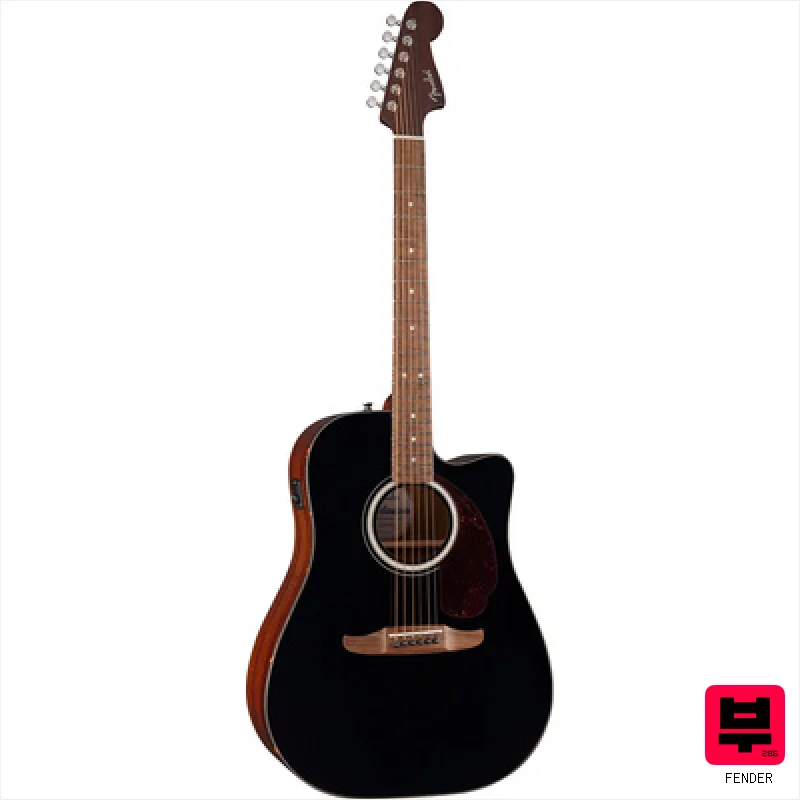
Fender CA DLX Redondo CE BLK
- • Solid spruce top offers strong, responsive attack for strumming
- • Mahogany back and sides deliver warm, mid-focused tone
- • Fishman CD-1 preamp adds clear pickup output and controls
- • Slim C neck profile makes playing chords and solos easy
- • Micarta nut may feel different to some players compared to bone
- • Mahogany body construction lacks traditional acoustic resonance depth
- • No weight specification provided in the official description text
Every dreadnought acoustic guitars that matches
188 models match this page. The 15 above are covered in detail; the rest are listed here with their published specifications.
| # | Model | Specifications | Price |
|---|---|---|---|
| 16 | Fender CA DLX Redondo CE NAT | Nut width 42.9 mm (1.69") · Scale 648 mm (25.51") · Frets 20 frets · Fingerboard radius 305 mm (12.01") · Fingerboard Walnut fingerboard | $372 |
| 17 | Fender CA DLX Redondo CE HSB | Nut width 42.9 mm (1.69") · Scale 648 mm (25.51") · Frets 20 frets · Fingerboard radius 305 mm (12.01") · Fingerboard Walnut fingerboard | $372 |
| 18 | Fender CA DLX Redondo Jr. E HSB | Nut width 43 mm (1.69") · Scale 610 mm (24.02") · Frets 20 frets · Fingerboard radius 305 mm (12.01") · Fingerboard Walnut fingerboard | $368 |
| 19 | Fender CA DLX Redondo Jr. E NAT | Nut width 43 mm (1.69") · Scale 610 mm (24.02") · Frets 20 frets · Fingerboard radius 305 mm (12.01") · Fingerboard Walnut fingerboard | $359 |
| 20 | Harley Benton Custom Line CLD-1048SCE w/Case | Nut width 48 mm (1.89") · Scale 648 mm (25.51") · Frets 20 frets · Fingerboard radius 400 mm (15.75") · Fingerboard Pau ferro fingerboard | $323 |
| 21 | Fender CA DLX Redondo SSB | Nut width 42.9 mm (1.69") · Scale 648 mm (25.51") · Frets 20 frets · Fingerboard radius 305 mm (12.01") · Fingerboard Walnut fingerboard | $301 |
| 22 | Harley Benton Custom Line CLD-1048SCE Bundle | Nut width 48 mm (1.89") · Scale 648 mm (25.51") · Frets 20 frets · Fingerboard radius 400 mm (15.75") · Fingerboard Pau ferro fingerboard | $301 |
| 23 | Harley Benton Custom Line CLD-15M w/Case | Nut width 43 mm (1.69") · Scale 643 mm (25.31") · Frets 20 frets · Body Sapele body · Weight 5 kg | $290 |
| 24 | Harley Benton Custom Line CLD-1048SCE NS | Nut width 48 mm (1.89") · Scale 648 mm (25.51") · Frets 20 frets · Fingerboard radius 400 mm (15.75") · Fingerboard Pau ferro fingerboard | $279 |
| 25 | Harley Benton Custom Line Superior-E w/Bag | Nut width 43 mm (1.69") · Scale 648 mm (25.51") · Frets 20 frets · Fingerboard radius 400 mm (15.75") · Body Okoume body | $279 |
| 26 | Harley Benton Custom Line Superior-E VS | Nut width 43 mm (1.69") · Scale 648 mm (25.51") · Frets 20 frets · Fingerboard radius 400 mm (15.75") · Body Okoume body | $267 |
| 27 | Gretsch JD DREAD MAH WPG CHRY BRST | Nut width 42.7 mm (1.68") · Scale 629 mm (24.76") · Frets 20 frets · Fingerboard radius 305 mm (12.01") · Fingerboard Walnut fingerboard | $211 |
| 28 | Ibanez PF34MHE-NT | Nut width 42 mm (1.65") · Scale 634 mm (24.96") · Frets 20 frets · Neck profile U-shape neck · Fingerboard Purpleheart fingerboard | $379 |
| 29 | Fender CA STD Redondo CE BPG 3TS | Nut width 42.9 mm (1.69") · Frets 20 frets · Fingerboard radius 305 mm (12.01") · Neck profile C-shape neck · Fingerboard Walnut fingerboard | $243 |
| 30 | Harley Benton CLD-65AE NT | Nut width 43 mm (1.69") · Scale 649 mm (25.55") · Fingerboard radius 380 mm (14.96") · Neck profile C-shape neck · Fingerboard Pau ferro fingerboard | $211 |
| 31 | Harley Benton CLD-65ME NT w/Bag | Nut width 43 mm (1.69") · Scale 649 mm (25.55") · Fingerboard radius 380 mm (14.96") · Neck profile C-shape neck · Fingerboard Pau ferro fingerboard | $211 |
| 32 | Harley Benton CLD-65ME NT | Nut width 43 mm (1.69") · Scale 649 mm (25.55") · Fingerboard radius 380 mm (14.96") · Neck profile C-shape neck · Fingerboard Pau ferro fingerboard | $200 |
| 33 | Ibanez V50NJP-OPN Jam Pack | Nut width 42 mm (1.65") · Scale 650 mm (25.59") · Frets 20 frets · Neck profile V-shape neck · Fingerboard Laurel fingerboard | $163 |
| 34 | Harley Benton CLD-65M NT | Nut width 43 mm (1.69") · Scale 649 mm (25.55") · Fingerboard radius 380 mm (14.96") · Neck profile C-shape neck · Fingerboard Pau ferro fingerboard | $144 |
| 35 | Harley Benton D-120CE VS w/Bag | Nut width 42.5 mm (1.67") · Scale 650 mm (25.59") · Frets 20 frets · Neck profile C-shape neck · Fingerboard Jatoba fingerboard | $122 |
| 36 | Harley Benton D-120CE VS Bundle | Nut width 42.5 mm (1.67") · Scale 650 mm (25.59") · Frets 20 frets · Neck profile C-shape neck · Fingerboard Jatoba fingerboard | $122 |
| 37 | Harley Benton D-120CE TB Bundle | Nut width 42.5 mm (1.67") · Scale 650 mm (25.59") · Frets 20 frets · Neck profile C-shape neck · Body Mahogany body | $122 |
| 38 | Harley Benton D-120CE TB Bundle | Nut width 42.5 mm (1.67") · Scale 650 mm (25.59") · Frets 20 frets · Neck profile C-shape neck · Body Mahogany body | $122 |
| 39 | Harley Benton D-120CE NT Bundle | Nut width 42.5 mm (1.67") · Scale 650 mm (25.59") · Frets 20 frets · Neck profile C-shape neck · Fingerboard Jatoba fingerboard | $122 |
| 40 | Harley Benton D-120CE NT Bundle | Nut width 42.5 mm (1.67") · Scale 650 mm (25.59") · Frets 20 frets · Neck profile C-shape neck · Fingerboard Jatoba fingerboard | $117 |
| 41 | Harley Benton D-120CE NT w/Bag | Nut width 42.5 mm (1.67") · Scale 650 mm (25.59") · Frets 20 frets · Neck profile C-shape neck · Fingerboard Jatoba fingerboard | $111 |
| 42 | Harley Benton D-120CE VS | Nut width 42.5 mm (1.67") · Scale 650 mm (25.59") · Frets 20 frets · Neck profile C-shape neck · Fingerboard Jatoba fingerboard | $100 |
| 43 | Harley Benton D-120CE NT | Nut width 42.5 mm (1.67") · Scale 650 mm (25.59") · Frets 20 frets · Neck profile C-shape neck · Fingerboard Jatoba fingerboard | $100 |
| 44 | Harley Benton D-120CE TB | Nut width 42.5 mm (1.67") · Scale 650 mm (25.59") · Frets 20 frets · Neck profile C-shape neck · Body Mahogany body | $100 |
| 45 | Harley Benton Custom Line CLD-41SE WN w/Case | Nut width 43 mm (1.69") · Scale 643 mm (25.31") · Frets 20 frets · Weight 5 kg | $480 |
| 46 | Recording King Dirty 30s Series 9 12-String | Nut width 49 mm (1.93") · Scale 645 mm (25.39") · Frets 20 frets · Strings 12-string | $334 |
| 47 | Harley Benton HBJ-45E SBK w/Bag | Nut width 43 mm (1.69") · Scale 648 mm (25.51") · Frets 20 frets · Fingerboard radius 356 mm (14.02") | $211 |
| 48 | Harley Benton HBJ-45E SBK | Nut width 43 mm (1.69") · Scale 648 mm (25.51") · Frets 20 frets · Fingerboard radius 356 mm (14.02") | $200 |
| 49 | Ibanez V40WSCE-OPB | Nut width 42 mm (1.65") · Scale 650 mm (25.59") · Frets 21 frets · Fingerboard radius 250 mm (9.84") | $185 |
| 50 | Ibanez V54NJP-WK Set | Nut width 42 mm (1.65") · Scale 650 mm (25.59") · Frets 20 frets · Fingerboard radius 250 mm (9.84") | $181 |
| 51 | Ibanez V44CE-WK | Nut width 42 mm (1.65") · Scale 650 mm (25.59") · Frets 20 frets · Fingerboard radius 250 mm (9.84") | $178 |
| 52 | Epiphone Hummingbird Studio HCS | Nut width 42.9 mm (1.69") · Scale 629 mm (24.76") · Frets 20 frets · Fingerboard Rosewood fingerboard | $497 |
| 53 | Epiphone Hummingbird Studio Antique Nat | Nut width 42.9 mm (1.69") · Scale 629 mm (24.76") · Frets 20 frets · Fingerboard Rosewood fingerboard | $492 |
| 54 | Epiphone Hummingbird Studio EC AN | Nut width 42.9 mm (1.69") · Scale 629 mm (24.76") · Frets 20 frets · Fingerboard Rosewood fingerboard | $469 |
| 55 | Epiphone J-45 Studio EC VS | Nut width 42.9 mm (1.69") · Scale 629 mm (24.76") · Frets 20 frets · Fingerboard Rosewood fingerboard | $446 |
| 56 | Fender CD-140SCE Nat | Nut width 43 mm (1.69") · Scale 648 mm (25.51") · Frets 20 frets · Fingerboard Walnut fingerboard | $402 |
| 57 | Epiphone J-45 Studio EC Natural | Nut width 42.9 mm (1.69") · Scale 629 mm (24.76") · Frets 20 frets · Fingerboard Rosewood fingerboard | $399 |
| 58 | Epiphone J-45 Studio Natural | Nut width 42.9 mm (1.69") · Scale 629 mm (24.76") · Frets 20 frets · Fingerboard Rosewood fingerboard | $392 |
| 59 | Recording King RDS-11-FE3-TBR | Nut width 43 mm (1.69") · Scale 645 mm (25.39") · Frets 20 frets · Neck profile C-shape neck | $390 |
| 60 | Fender CA DLX Redondo CE SHW | Nut width 42.9 mm (1.69") · Scale 648 mm (25.51") · Fingerboard radius 305 mm (12.01") · Fingerboard Walnut fingerboard | $379 |
| 61 | Harley Benton CLD-60SCE BK Cust. Line Bundle | Nut width 43 mm (1.69") · Scale 648 mm (25.51") · Fingerboard Walnut fingerboard · Weight 11 kg | $379 |
| 62 | Yamaha FG800 NT | Nut width 43 mm (1.69") · Scale 650 mm (25.59") · Frets 20 frets · Fingerboard Walnut fingerboard | $379 |
| 63 | Yamaha FG800 Sand Burst | Nut width 43 mm (1.69") · Scale 650 mm (25.59") · Frets 20 frets · Fingerboard Walnut fingerboard | $379 |
| 64 | Recording King RD-G6-CFE5 | Nut width 42.9 mm (1.69") · Scale 645 mm (25.39") · Frets 20 frets · Neck profile C-shape neck | $372 |
| 65 | Takamine GD11MCENS | Nut width 43 mm (1.69") · Scale 644 mm (25.35") · Frets 21 frets · Fingerboard Laurel fingerboard | $368 |
| 66 | Harley Benton CLD-15MCE SolidWood w/Bag | Nut width 43 mm (1.69") · Scale 643 mm (25.31") · Frets 20 frets · Fingerboard Pau ferro fingerboard | $346 |
| 67 | Epiphone J-45 Studio NA | Nut width 43 mm (1.69") · Scale 648 mm (25.51") · Frets 20 frets · Body Mahogany body | $334 |
| 68 | Harley Benton CLD-15MCE SolidWood | Nut width 43 mm (1.69") · Scale 643 mm (25.31") · Frets 20 frets · Fingerboard Pau ferro fingerboard | $334 |
| 69 | Yamaha FG800M | Nut width 43 mm (1.69") · Scale 650 mm (25.59") · Frets 20 frets · Fingerboard Walnut fingerboard | $312 |
| 70 | Fender CA DLX Redondo NAT | Nut width 42.9 mm (1.69") · Scale 648 mm (25.51") · Fingerboard radius 305 mm (12.01") · Fingerboard Walnut fingerboard | $301 |
| 71 | Yamaha FX400 Smoky Black | Nut width 43 mm (1.69") · Scale 634 mm (24.96") · Frets 20 frets · Fingerboard Rosewood fingerboard | $301 |
| 72 | Harley Benton Custom Line CLD-15MCE Bundle | Nut width 43 mm (1.69") · Scale 643 mm (25.31") · Frets 20 frets · Body Sapele body | $301 |
| 73 | Ibanez PF16MWCE WBK | Nut width 48 mm (1.89") · Scale 648 mm (25.51") · Frets 20 frets · Fingerboard Laurel fingerboard | $299 |
| 74 | Harley Benton Custom Line CLD-15MCE w/Bag | Nut width 43 mm (1.69") · Scale 643 mm (25.31") · Frets 20 frets · Body Sapele body | $290 |
| 75 | Harley Benton Custom Line CLD-15MCE | Nut width 43 mm (1.69") · Scale 643 mm (25.31") · Frets 20 frets · Body Sapele body | $279 |
| 76 | Yamaha FX400 Natural Satin | Nut width 43 mm (1.69") · Scale 634 mm (24.96") · Frets 20 frets · Fingerboard Rosewood fingerboard | $272 |
| 77 | Epiphone Hummingbird Tribute AN | Scale 629 mm (24.76") · Frets 20 frets · Fingerboard radius 305 mm (12.01") · Fingerboard Laurel fingerboard | $256 |
| 78 | Epiphone Hummingbird Tribute Ebo w/ GB | Scale 629 mm (24.76") · Frets 20 frets · Fingerboard radius 305 mm (12.01") · Fingerboard Laurel fingerboard | $256 |
| 79 | Epiphone Hummingbird Tribute HCS LH | Scale 629 mm (24.76") · Frets 20 frets · Fingerboard radius 305 mm (12.01") · Fingerboard Laurel fingerboard | $232 |
| 80 | Epiphone Hummingbird Tribute Ebony | Scale 629 mm (24.76") · Frets 20 frets · Fingerboard radius 305 mm (12.01") · Fingerboard Laurel fingerboard | $232 |
| 81 | Epiphone Hummingbird Tribute HCS | Scale 629 mm (24.76") · Frets 21 frets · Fingerboard radius 305 mm (12.01") · Fingerboard Laurel fingerboard | $229 |
| 82 | Harley Benton Custom Line CLD-15M w/Bag | Nut width 43 mm (1.69") · Scale 643 mm (25.31") · Frets 20 frets · Body Sapele body | $200 |
| 83 | Harley Benton Custom Line CLD-15M | Nut width 43 mm (1.69") · Scale 643 mm (25.31") · Frets 20 frets · Body Sapele body | $189 |
| 84 | Epiphone PR-150 GC Exclusive VS | Nut width 43 mm (1.69") · Scale 648 mm (25.51") · Frets 20 frets · Fingerboard Rosewood fingerboard | $178 |
| 85 | Harley Benton CLD-65SE NT | Nut width 43 mm (1.69") · Scale 649 mm (25.55") · Fingerboard radius 380 mm (14.96") · Fingerboard Pau ferro fingerboard | $167 |
| 86 | Ibanez V40CE-OPN | Nut width 42 mm (1.65") · Scale 650 mm (25.59") · Frets 20 frets · Fingerboard Laurel fingerboard | $167 |
| 87 | Ibanez V50NJP-OVS Jam Pack | Nut width 42 mm (1.65") · Scale 650 mm (25.59") · Frets 20 frets · Neck profile V-shape neck | $167 |
| 88 | Yamaha F400 Natural Satin | Nut width 43 mm (1.69") · Scale 634 mm (24.96") · Frets 20 frets · Fingerboard Rosewood fingerboard | $140 |
| 89 | Harley Benton D-120NT Bundle | Nut width 42.5 mm (1.67") · Scale 650 mm (25.59") · Frets 20 frets · Fingerboard Jatoba fingerboard | $133 |
| 90 | Ibanez V40-OPN | Nut width 42 mm (1.65") · Scale 650 mm (25.59") · Frets 20 frets · Fingerboard Laurel fingerboard | $133 |
| 91 | Harley Benton D120BK Bundle | Nut width 42.5 mm (1.67") · Scale 650 mm (25.59") · Frets 20 frets · Fingerboard Jatoba fingerboard | $122 |
| 92 | Harley Benton D120BK Bundle English | Nut width 42.5 mm (1.67") · Scale 650 mm (25.59") · Frets 20 frets · Fingerboard Jatoba fingerboard | $122 |
| 93 | Harley Benton D-120NT Bundle | Nut width 42.5 mm (1.67") · Scale 650 mm (25.59") · Frets 20 frets · Fingerboard Jatoba fingerboard | $111 |
| 94 | Harley Benton D-120BK Bundle | Nut width 42.5 mm (1.67") · Scale 650 mm (25.59") · Frets 20 frets · Fingerboard Jatoba fingerboard | $106 |
| 95 | Harley Benton D-120BK w/Bag | Nut width 42.5 mm (1.67") · Scale 650 mm (25.59") · Frets 20 frets · Fingerboard Jatoba fingerboard | $100 |
| 96 | Harley Benton D-120NT w/Bag | Nut width 42.5 mm (1.67") · Scale 650 mm (25.59") · Frets 20 frets · Fingerboard Jatoba fingerboard | $100 |
| 97 | Harley Benton D-120VS w/Bag | Nut width 42.5 mm (1.67") · Scale 650 mm (25.59") · Frets 20 frets · Body Mahogany body | $100 |
| 98 | Harley Benton D-120NT | Nut width 42.5 mm (1.67") · Scale 650 mm (25.59") · Frets 20 frets · Fingerboard Jatoba fingerboard | $88 |
| 99 | Harley Benton D-120BK | Nut width 42.5 mm (1.67") · Scale 650 mm (25.59") · Frets 20 frets · Fingerboard Jatoba fingerboard | $88 |
| 100 | Harley Benton D-120VS | Nut width 42.5 mm (1.67") · Scale 650 mm (25.59") · Frets 20 frets · Body Mahogany body | $88 |
| 101 | Baton Rouge TLA/D Alder | Nut width 46 mm (1.81") · Scale 630 mm (24.8") · Frets 20 frets | $497 |
| 102 | Yamaha FG830 NT | Nut width 43 mm (1.69") · Scale 650 mm (25.59") · Frets 20 frets | $489 |
| 103 | Takamine GD30CE-B | Nut width 43 mm (1.69") · Scale 643 mm (25.31") · Frets 20 frets | $487 |
| 104 | Harley Benton CLD-30SCM-CE SolidWood w/Bag | Nut width 44.5 mm (1.75") · Scale 650 mm (25.59") · Frets 20 frets | $458 |
| 105 | Breedlove Discovery S Dreadnought Spruce | Nut width 43 mm (1.69") · Scale 643 mm (25.31") · Frets 20 frets | $446 |
| 106 | Harley Benton CLD-30SCM-CE SolidWood | Nut width 44.5 mm (1.75") · Scale 650 mm (25.59") · Frets 20 frets | $446 |
| 107 | Takamine GD20CE-N | Nut width 43 mm (1.69") · Scale 643 mm (25.31") · Frets 20 frets | $446 |
| 108 | Harley Benton Custom Line CLD-41SE WN w/Case | Nut width 43 mm (1.69") · Scale 643 mm (25.31") · Frets 20 frets | $435 |
| 109 | Fender CD-140SCE Sunburst | Nut width 43 mm (1.69") · Scale 643 mm (25.31") · Frets 20 frets | $413 |
| 110 | Fender CD-140SCE All Mah | Nut width 43 mm (1.69") · Scale 643 mm (25.31") · Frets 20 frets | $402 |
| 111 | Harley Benton Custom Line CLD-41SE WN w/Bag | Nut width 43 mm (1.69") · Scale 643 mm (25.31") · Frets 20 frets | $402 |
| 112 | Takamine GD51 Nat | Nut width 42.5 mm (1.67") · Scale 644 mm (25.35") · Frets 21 frets | $396 |
| 113 | Harley Benton Custom Line CLD-41SE WN | Nut width 43 mm (1.69") · Scale 643 mm (25.31") · Frets 20 frets | $390 |
| 114 | Harley Benton Custom Line CLD-41S WN W/Case | Nut width 43 mm (1.69") · Scale 643 mm (25.31") · Frets 20 frets | $379 |
| 115 | Ibanez AAD77M1E-OAW | Nut width 43 mm (1.69") · Scale 650 mm (25.59") · Frets 20 frets | $372 |
| 116 | Ibanez AAD51CE-NT | Nut width 43 mm (1.69") · Scale 650 mm (25.59") · Frets 20 frets | $372 |
| 117 | Yamaha FG800 BL | Nut width 43 mm (1.69") · Scale 650 mm (25.59") · Frets 20 frets | $372 |
| 118 | Yamaha FG800 BS | Nut width 43 mm (1.69") · Scale 650 mm (25.59") · Frets 20 frets | $368 |
| 119 | Ibanez ALT50FA-TVT | Nut width 43 mm (1.69") · Scale 648 mm (25.51") · Frets 22 frets | $352 |
| 120 | Yamaha FG820 SBII | Nut width 43 mm (1.69") · Scale 650 mm (25.59") · Frets 20 frets | $351 |
| 121 | Ibanez ALT50FA-BDB | Nut width 43 mm (1.69") · Scale 648 mm (25.51") · Frets 22 frets | $347 |
| 122 | Harley Benton Custom Line CLD-41S WN w/Bag | Nut width 43 mm (1.69") · Scale 643 mm (25.31") · Frets 20 frets | $346 |
| 123 | Cort Earth 100 NS w/Bag | Nut width 43 mm (1.69") · Scale 643 mm (25.31") · Frets 20 frets | $334 |
| 124 | Harley Benton Custom Line CLD-41S WN | Nut width 43 mm (1.69") · Scale 643 mm (25.31") · Frets 20 frets | $334 |
| 125 | Ibanez AAD70CE-TBN | Nut width 43 mm (1.69") · Scale 650 mm (25.59") · Frets 20 frets | $334 |
| 126 | Ibanez AAD54E-OMH | Nut width 43 mm (1.69") · Scale 650 mm (25.59") · Frets 20 frets | $334 |
| 127 | Baton Rouge X15S/D-B | Nut width 46 mm (1.81") · Scale 630 mm (24.8") · Frets 21 frets | $312 |
| 128 | Cort Earth 100 NS | Nut width 43 mm (1.69") · Scale 643 mm (25.31") · Frets 20 frets | $312 |
| 129 | Ibanez ALT50FA-RDB | Nut width 43 mm (1.69") · Scale 648 mm (25.51") · Frets 22 frets | $308 |
| 130 | Cort MR500E Open Pore | Nut width 43 mm (1.69") · Scale 643 mm (25.31") · Frets 20 frets | $304 |
| 131 | Applause AED96-5HG Black Gloss Electro | Nut width 43 mm (1.69") · Scale 648 mm (25.51") · Frets 20 frets | $302 |
| 132 | Ibanez PF15ECE-TBS Bundle | Nut width 42 mm (1.65") · Scale 650 mm (25.59") · Frets 20 frets | $291 |
| 133 | Ibanez AW65-LG | Nut width 43 mm (1.69") · Scale 651 mm (25.63") · Frets 20 frets | $280 |
| 134 | Harley Benton HB Custom Line CLD-10SC w/Case | Nut width 43 mm (1.69") · Scale 648 mm (25.51") · Frets 20 frets | $279 |
| 135 | Ibanez PF15ECE-BK | Nut width 42 mm (1.65") · Scale 650 mm (25.59") · Frets 20 frets | $279 |
| 136 | DAngelico Premier Bowery LS Aged Mah | Nut width 43 mm (1.69") · Scale 647 mm (25.47") · Frets 20 frets | $267 |
| 137 | Ibanez PF15ECE-TBS | Nut width 42 mm (1.65") · Scale 650 mm (25.59") · Frets 20 frets | $267 |
| 138 | Applause AAS-69-HB Jump | Nut width 43 mm (1.69") · Scale 648 mm (25.51") · Frets 20 frets | $256 |
| 139 | Fender FA-125CE II Blk | Nut width 43 mm (1.69") · Scale 643 mm (25.31") · Frets 20 frets | $245 |
| 140 | DAngelico Premier Bowery LS Sat.Vint.SB | Nut width 42.9 mm (1.69") · Scale 648 mm (25.51") · Frets 20 frets | $242 |
| 141 | Harley Benton HB Custom Line CLD-10SC w/Bag | Nut width 43 mm (1.69") · Scale 648 mm (25.51") · Frets 20 frets | $234 |
| 142 | Harley Benton HB Custom Line CLD-10SC Bundle | Nut width 43 mm (1.69") · Scale 648 mm (25.51") · Frets 20 frets | $234 |
| 143 | DAngelico Premier Lexington LS Aged Mah | Nut width 43 mm (1.69") · Scale 647 mm (25.47") · Frets 20 frets | $223 |
| 144 | Harley Benton HB Custom Line CLD-10SCE BKS | Nut width 43 mm (1.69") · Scale 648 mm (25.51") · Frets 20 frets | $223 |
| 145 | Ibanez PF12MHCE-OPN | Nut width 42 mm (1.65") · Scale 650 mm (25.59") · Frets 20 frets | $223 |
| 146 | Harley Benton HB Custom Line CLD-10S w/Case | Nut width 43 mm (1.69") · Scale 648 mm (25.51") · Frets 20 frets | $211 |
| 147 | Baton Rouge X11LS/D-W-SCC | Nut width 48 mm (1.89") · Scale 630 mm (24.8") · Frets 21 frets | $207 |
| 148 | Harley Benton Custom Line CLD-16S w/Bag | Nut width 43 mm (1.69") · Scale 643 mm (25.31") · Frets 20 frets | $200 |
| 149 | Harley Benton Custom Line CLD-16S Bundle | Nut width 43 mm (1.69") · Scale 643 mm (25.31") · Frets 20 frets | $200 |
| 150 | DAngelico Premier Lexington LS SVSB | Nut width 43 mm (1.69") · Scale 647 mm (25.47") · Frets 20 frets | $190 |
| 151 | Brümmer Acoustic Steel CLD-10S Set | Nut width 43 mm (1.69") · Scale 648 mm (25.51") · Frets 20 frets | $189 |
| 152 | Harley Benton Custom Line CLD-16S | Nut width 43 mm (1.69") · Scale 643 mm (25.31") · Frets 20 frets | $189 |
| 153 | Recording King RDS-9-TS | Nut width 43 mm (1.69") · Scale 645 mm (25.39") · Frets 20 frets | $185 |
| 154 | Applause AAD96-M Mahogany | Nut width 43 mm (1.69") · Scale 648 mm (25.51") · Frets 20 frets | $178 |
| 155 | Harley Benton HB Custom Line CLD-10S Bundle | Nut width 43 mm (1.69") · Scale 648 mm (25.51") · Frets 20 frets | $178 |
| 156 | Fender FA-125 Blk | Nut width 43 mm (1.69") · Scale 643 mm (25.31") · Frets 20 frets | $167 |
| 157 | Harley Benton HB Custom Line CLD-10S NS | Nut width 43 mm (1.69") · Scale 648 mm (25.51") · Frets 20 frets | $167 |
| 158 | Baton Rouge X11LS/D Dreadnought | Nut width 46 mm (1.81") · Scale 630 mm (24.8") · Frets 21 frets | $155 |
| 159 | Recording King RDS-7-MBK | Nut width 43 mm (1.69") · Scale 645 mm (25.39") · Frets 20 frets | $155 |
| 160 | Yamaha F400 Smoky Black | Nut width 43 mm (1.69") · Frets 20 frets · Fingerboard Rosewood fingerboard | $169 |
| 161 | Fender CD-60 BK V3 DS | Nut width 43 mm (1.69") · Scale 643 mm (25.31") · Fingerboard Walnut fingerboard | $164 |
| 162 | Harley Benton CLD-60SCE BK Custom Line | Nut width 43 mm (1.69") · Scale 648 mm (25.51") · Fingerboard Walnut fingerboard | $155 |
| 163 | Harley Benton CLD-60SCE NT Custom Line | Nut width 43 mm (1.69") · Scale 643 mm (25.31") · Fingerboard Walnut fingerboard | $155 |
| 164 | Harley Benton CLD-60SMCE NT | Nut width 43 mm (1.69") · Scale 650 mm (25.59") · Fingerboard Laurel fingerboard | $144 |
| 165 | DAngelico Premier Bowery Black Cherry B | Nut width 43 mm (1.69") · Scale 635 mm (25") | $480 |
| 166 | Takamine GD30 B | Nut width 43 mm (1.69") · Scale 643 mm (25.31") | $390 |
| 167 | Ibanez AW65ECE-LG | Nut width 43 mm (1.69") · Frets 20 frets | $375 |
| 168 | Ibanez AW84CE-WK Artwood | Nut width 43 mm (1.69") · Scale 651 mm (25.63") | $362 |
| 169 | Ibanez AW54CE-OPN | Nut width 43 mm (1.69") · Scale 651 mm (25.63") | $357 |
| 170 | Epiphone J-15 EC Deluxe NA | Nut width 42.6 mm (1.68") · Scale 647 mm (25.47") | $334 |
| 171 | Yamaha FX370C BL | Scale 634 mm (24.96") · Frets 21 frets | $334 |
| 172 | Yamaha FX370C NT | Scale 634 mm (24.96") · Frets 21 frets | $333 |
| 173 | Applause AAS-69-VC Jump | Nut width 43 mm (1.69") · Scale 648 mm (25.51") | $279 |
| 174 | DAngelico Premier Bowery LS | Nut width 43 mm (1.69") · Scale 647 mm (25.47") | $267 |
| 175 | Ibanez AW54-OPN | Nut width 43 mm (1.69") · Scale 651 mm (25.63") | $252 |
| 176 | Yamaha F310P NA Set | Nut width 43 mm (1.69") · Scale 634 mm (24.96") | $245 |
| 177 | Yamaha F310P TBS Set | Nut width 43 mm (1.69") · Scale 634 mm (24.96") | $223 |
| 178 | Fender CD-60 NA Bundle | Nut width 43 mm (1.69") · Scale 643 mm (25.31") | $204 |
| 179 | Fender CD-60 NA V3 | Nut width 43 mm (1.69") · Scale 643 mm (25.31") | $162 |
| 180 | Yamaha F310 TBS | Nut width 43 mm (1.69") · Scale 634 mm (24.96") | $154 |
| 181 | Yamaha FGX800C NT | Frets 20 frets | $480 |
| 182 | Yamaha FX370C TBS | Scale 634 mm (24.96") | $333 |
| 183 | Fender CD-60SCE Blk WN w/Bag | Frets 20 frets | $321 |
| 184 | Fender CD-60SCE Blk WN | Frets 20 frets | $296 |
| 185 | Yamaha FX310AII NT | Scale 634 mm (24.96") | $266 |
| 186 | Yamaha F370 TBS | Frets 21 frets | $209 |
| 187 | Yamaha F370 NA | Frets 21 frets | $200 |
| 188 | Yamaha F370 BL | Frets 21 frets | $200 |
Dreadnought Acoustic Guitars by the numbers
Measured across all 188 models in this category, so «wide», «short» or «expensive» mean something you can check.
How to Choose the Best Dreadnought Acoustic Guitars
Tonewoods
Solid tops (especially Sitka Spruce) are key for resonance and aging gracefully. You'll mostly find laminate back and sides at this price point - it's a compromise, but look for a build that minimizes the deadening effect. Mahogany tends to offer a warmer, more focused tone than spruce.
Bracing Pattern
X-bracing is the standard for dreadnoughts, but the specifics matter. Tighter bracing generally means more focused projection, while looser bracing can add warmth and sustain. It's subtle, but it contributes to the overall character.
Neck Profile & Playability
A comfortable neck is everything. Don't get hung up on wood types; find a neck profile (C, D, V) that feels good in your hand. High action (string height) is common on cheaper guitars, so be prepared to potentially have it adjusted by a tech.
Hardware & Finish
Basic tuners are fine, but avoid anything that feels flimsy. A satin finish is often used to save money - it's less flashy, but it lets the wood breathe a bit more. Gloss finishes can sometimes dampen the natural resonance.
Pickup Voicing (if applicable)
Many guitars in this range come with basic electronics. Don't expect miracles - the pickups are usually decent for basic amplification, but the voicing often leans towards a mid-focused sound. It's a trade-off for portability and recording convenience.
Buying Guide
At this price point, you're making trade-offs. Expect laminate back and sides, and be realistic about the quality of the hardware. Don't be afraid to have a setup done - a proper setup can transform a mediocre playing guitar into something surprisingly playable. Focus on finding a guitar with a comfortable neck and a tone that inspires you, even if it's not the absolute 'best' sounding dreadnought ever.
How This List Is Built
We don't play these instruments — we're a catalog, not a review desk, and we'd rather say so than pretend otherwise. This page covers 188 dreadnought acoustic guitars from the Thomann catalogue, which is the largest single source of specification data in this category: 15 in detail, the rest listed with their specifications.
Position is computed, not curated. We parse the manufacturer's own description into actual values — nut width, scale, fret count, fingerboard radius, size, alloy — and rank on them: how many specifications a model has published, how many of them are measurable numbers, and how precisely it meets this page's criterion. A product image adds a little. Price is not a ranking signal: it tells you nothing about whether a neck fits your hand. The same inputs always produce the same order, so nothing here is shuffled to look fresh.
What this list is good for: narrowing a category down to a shortlist by spec and budget. What it isn't: a substitute for hearing an instrument. Before you buy, read hands-on reviews and, where you can, play it. Full methodology.

