
Best Guild Dreadnought Acoustic Guitars 2026
Alright, let's talk Guild Dreadnoughts. For years, they've been the quiet workhorse - the guitar that pros reach for when they need something that sounds like a guitar, not a marketing campaign. They're not flashy, they don't scream for attention, but they deliver a serious punch, a vintage vibe, and a build quality that'll outlast a lot of what's on the market today. If you're tired of guitars that sound thin or brittle, keep reading - Guild might be exactly what you've been looking for.
Last updated: October 10, 2026
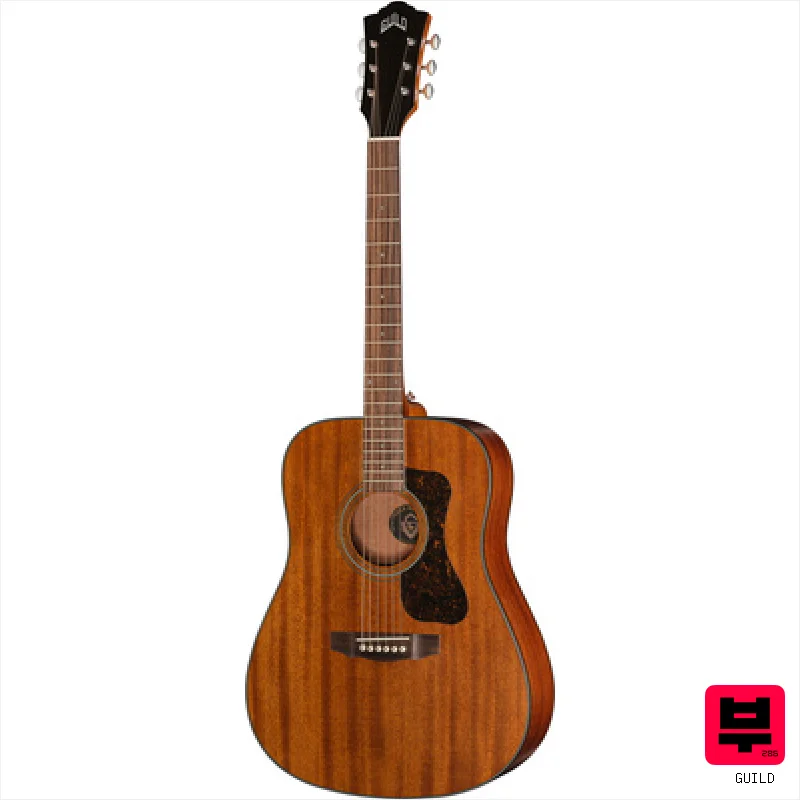
Guild D-320 Nat
- • Solid mahogany top delivers warm, mid-focused tone.
- • Rosewood fingerboard provides comfortable playability.
- • Compensated bone saddle ensures intonation accuracy.
- • Dovetail neck join offers strong structural stability.
- • All mahogany construction limits high-end brightness.
- • No electronics included for stage amplification.
- • Mahogany body may lack sustain compared to spruce tops.
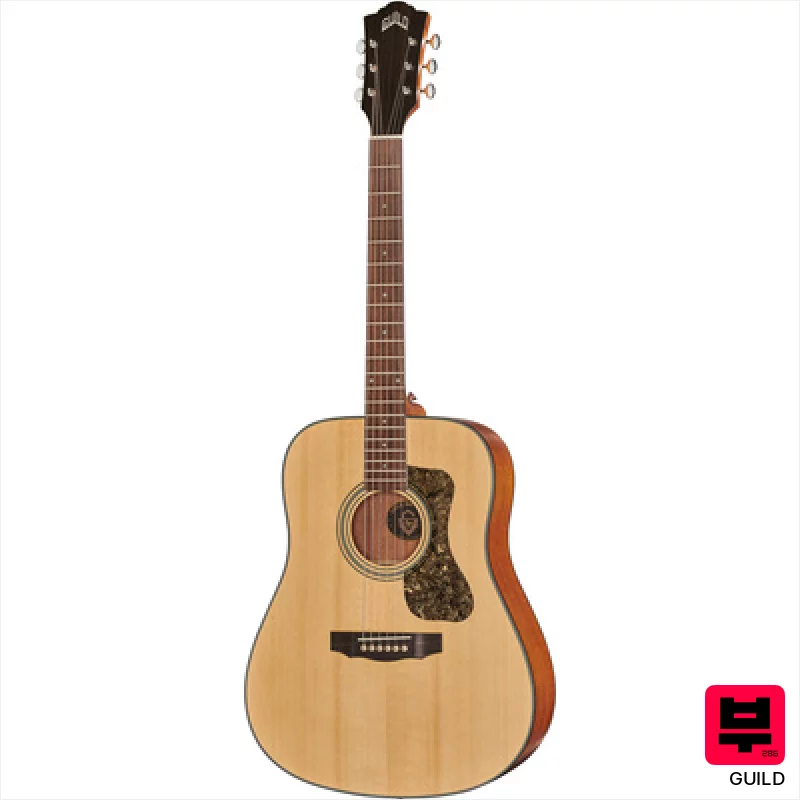
Guild D-340 Nat
- • Solid Sitka spruce top delivers excellent projection and headroom for strumming.
- • Mahogany back and sides provide a warm, focused tone with rich overtones.
- • Comfortable 'C' neck profile and 16” radius fingerboard facilitates easy playability.
- • Open-gear tuning machines offer reliable tuning stability and vintage aesthetics.
- • Mahogany construction can limit versatility for players seeking brighter, more articulate tones.
- • Matt finish might not appeal to those preferring a glossier, more reflective appearance.
- • Dreadnought body size may be unwieldy for smaller players or those seeking portability.
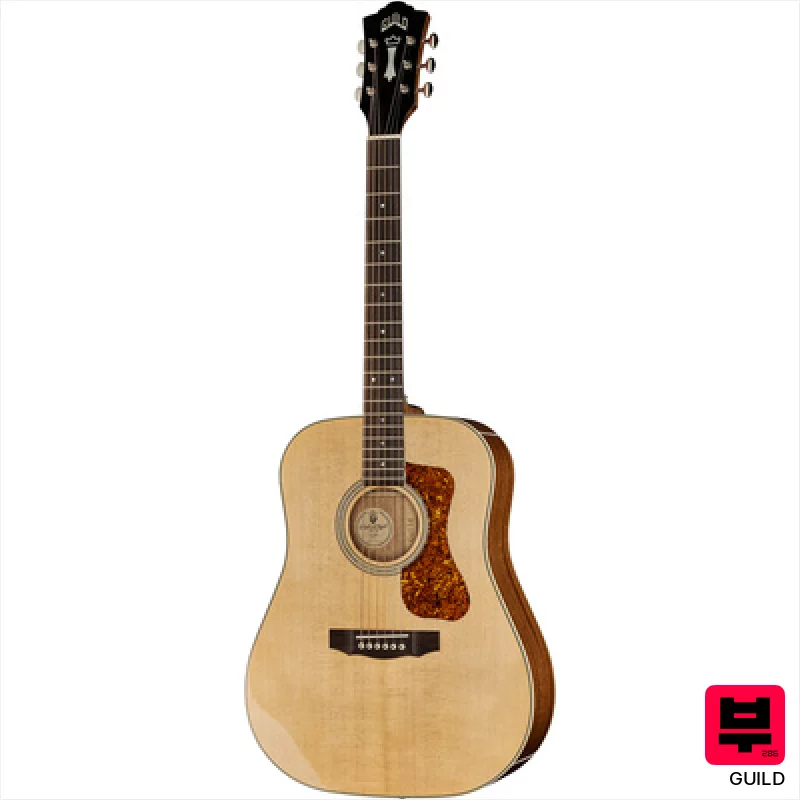
Guild D-140 Nat Westerly
- • Solid Sitka spruce top delivers a responsive, articulate sound with good headroom.
- • Solid mahogany back and sides provide warmth and a focused midrange presence.
- • Bone nut and saddle contribute to improved sustain and clarity throughout the tonal spectrum.
- • Westerly bracing pattern enhances projection and balances the guitar’s tonal response.
- • High-gloss finish might feel a bit thick for players preferring a more vintage, matte aesthetic.
- • Mahogany construction can be slightly less versatile for very bright or overly clean styles.
- • The 16in radius fingerboard might feel a touch steeper for players accustomed to flatter profiles.
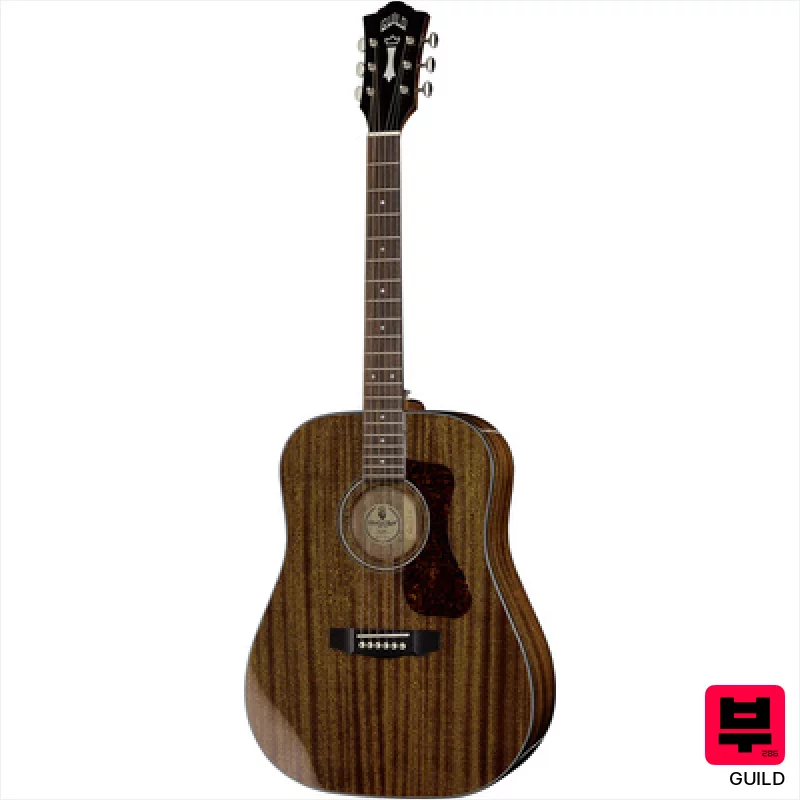
Guild D-120 Nat Westerly
- • Solid mahogany back and sides deliver a warm, focused, and mature tone.
- • Westerly Concert bracing provides excellent projection and balanced response across the spectrum.
- • Bone nut and saddle enhance sustain and improve string-to-body resonance.
- • Vintage 18 Guild machine heads offer smooth tuning stability and a classic aesthetic.
- • Mahogany's inherent brightness can be less versatile for certain modern playing styles.
- • The 16in fingerboard radius might feel less familiar to players accustomed to flatter profiles.
- • High-gloss finish, while beautiful, can be prone to fingerprints and may slightly dampen resonance.
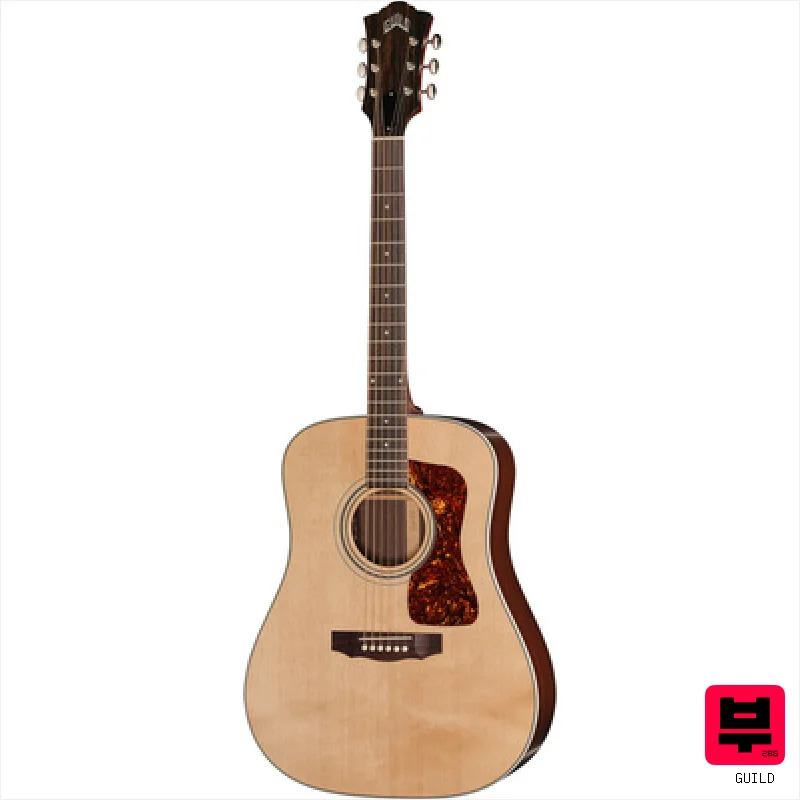
Guild D-50E Std NAT USA
- • Solid spruce top drives a loud, punchy sound
- • LR Baggs Element VTC pickup offers clean tone
- • Butterbean machine heads make tuning easy
- • Made in USA ensures quality craftsmanship
- • No specific weight listed in description
- • No detailed sound profile provided by manufacturer
- • Price point exceeds typical entry-level dreadnoughts
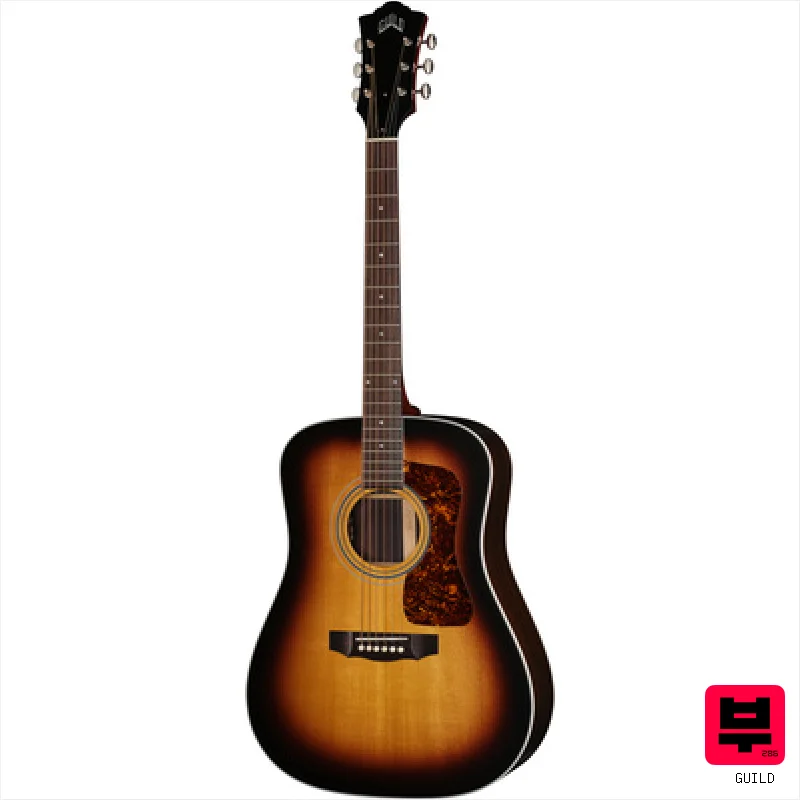
Guild D-50E Std ATB USA
- • Solid spruce top drives the guitar hard and bright.
- • Full solid rosewood back and sides add warmth.
- • L.R. Baggs Element VTC pickup sounds clean and clear.
- • Bone nut and saddle deliver smooth action and intonation.
- • Antique Burst finish may hide minor finish imperfections.
- • No specified weight makes handling feel uncertain.
- • Factory strings are light gauge, not heavy for all styles.
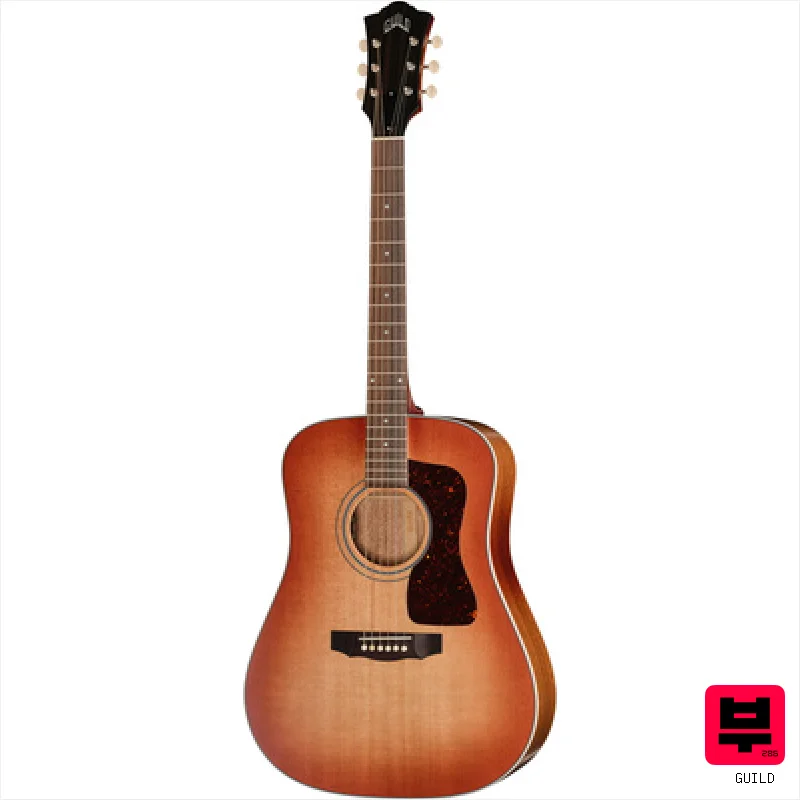
Guild D-40E Std PSB USA
- • Solid spruce top drives volume and clarity.
- • L.R. Baggs Element VTC pickup sounds great.
- • Bone nut and saddle feel smooth on strings.
- • Made in USA with high-quality materials.
- • Pacific Sunset Burst color may fade over time.
- • Weight is not listed so it could be heavy.
- • Scale length of 25.6 inches is standard but fixed.
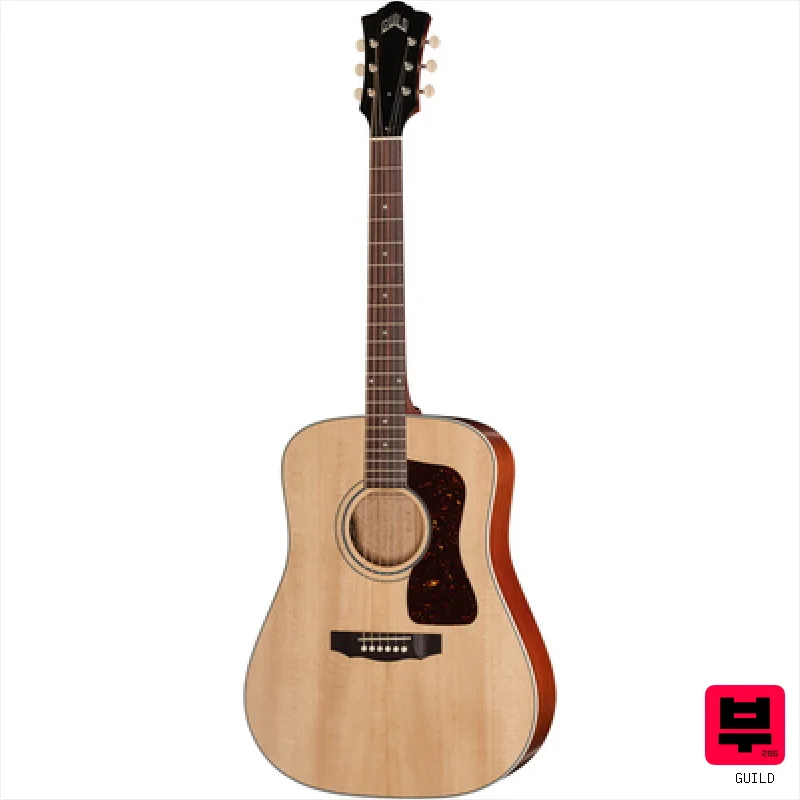
Guild D-40E Std NAT USA
- • Solid spruce top delivers bright, responsive attack
- • LR Baggs Element VTC offers clean, balanced pickup sound
- • Bone nut and saddle provide smooth intonation across the fretboard
- • Open-gear Deluxe Vintage heads ensure precise tuning stability
- • No weight spec listed makes carrying unknown
- • Strings are coated which may alter natural feel
- • Pearloid inlays lack the classic look of mother-of-pearl
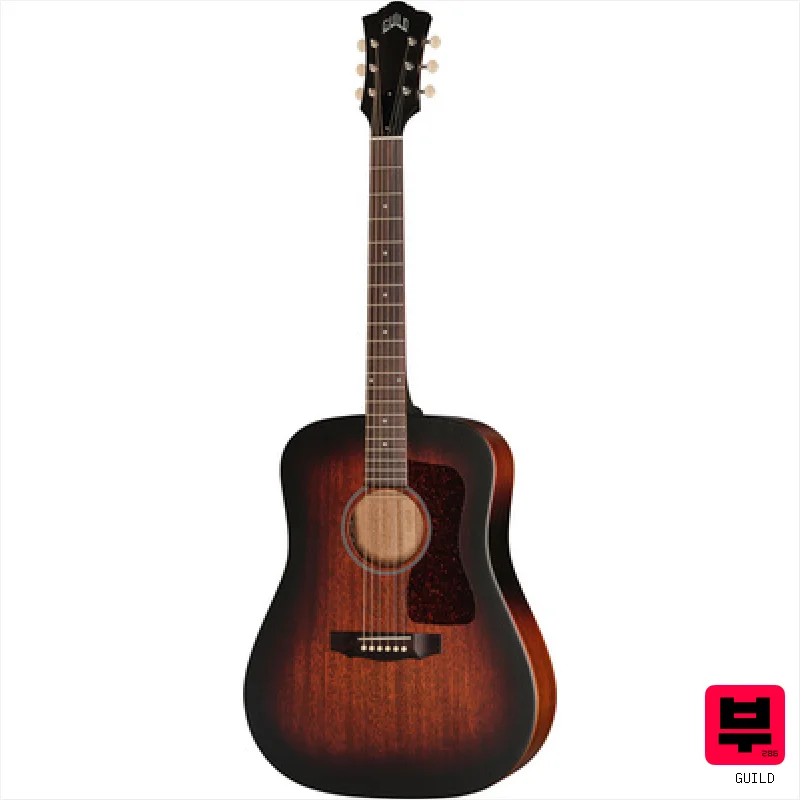
Guild D-20E VSB USA
- • Solid mahogany body for deep, warm bass response
- • L.R. Baggs Element VTC pickup for clean output
- • Bone nut and saddle for smooth string action
- • Open-gear vintage machine heads for reliable tuning
- • No active electronics to boost signal distance
- • Single pickup limits tone variety options
- • Standard dreadnought size may feel large for small players
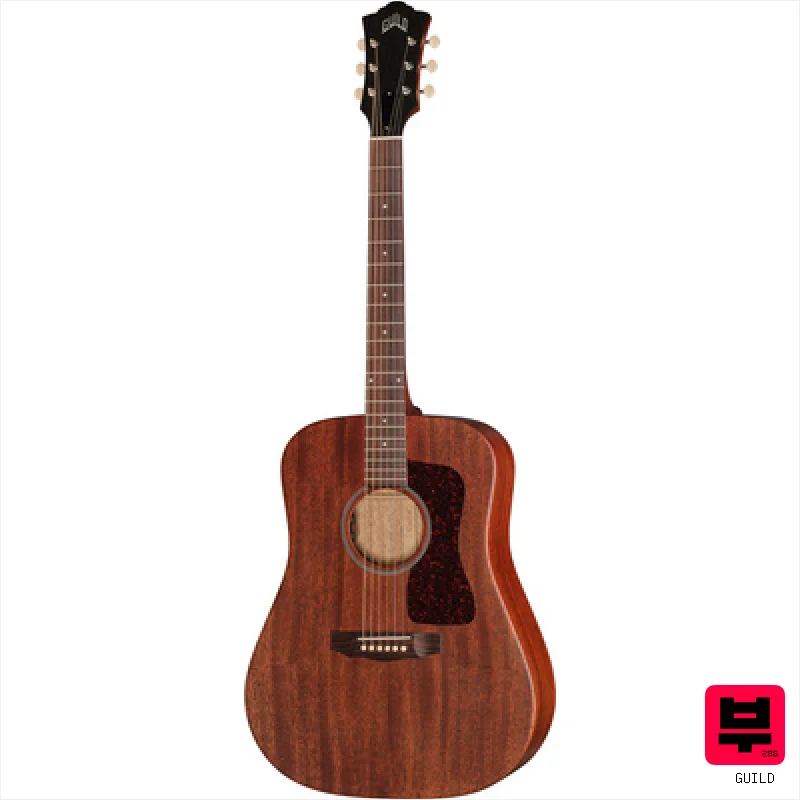
Guild D-20E NAT USA
- • Solid mahogany body provides warm, rich tones.
- • L.R.Baggs Element VTC pickup ensures clear signal.
- • Rosewood fingerboard offers smooth playability.
- • Open-gear machine heads hold tuning securely.
- • Lacks a soundhole pickup for acoustic-only use.
- • No weight spec provided in the text.
- • Premium-priced for a full solid wood dreadnought.
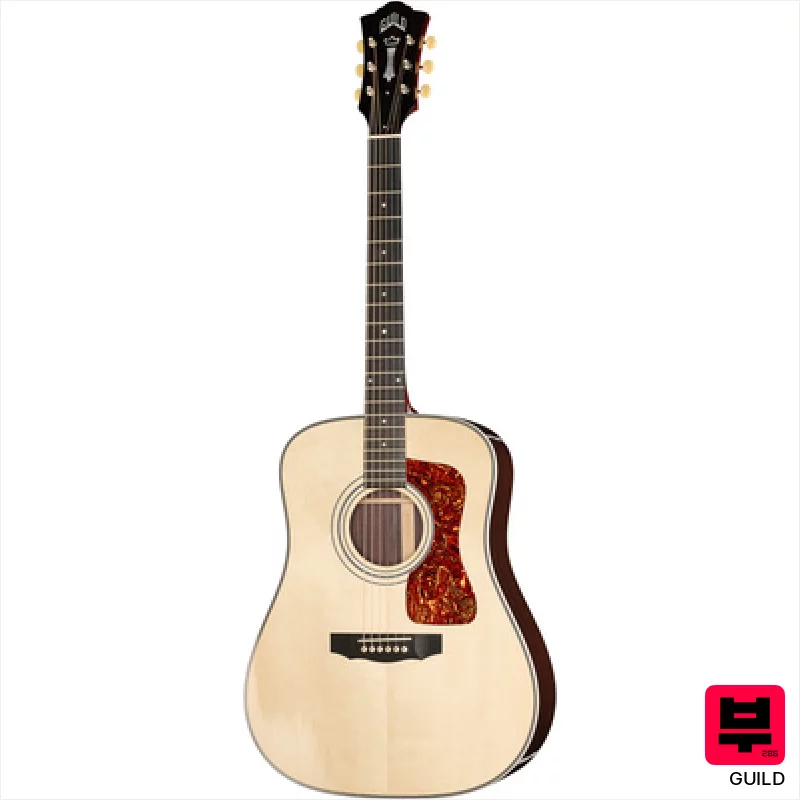
Guild Limited Edition D-50T NAT
- • Solid rosewood back/sides deliver exceptional warmth and sustain.
- • Sitka spruce top provides responsive projection and clarity.
- • Ebony fingerboard offers a smooth, effortless playing experience.
- • Vintage-style tuners ensure rock-solid tuning stability and vintage aesthetics.
- • The D-50T's size and solid wood construction make it relatively heavy.
- • Limited availability makes acquisition challenging and resale value speculative.
- • Rosewood's tonal character may not suit all playing styles or genres.
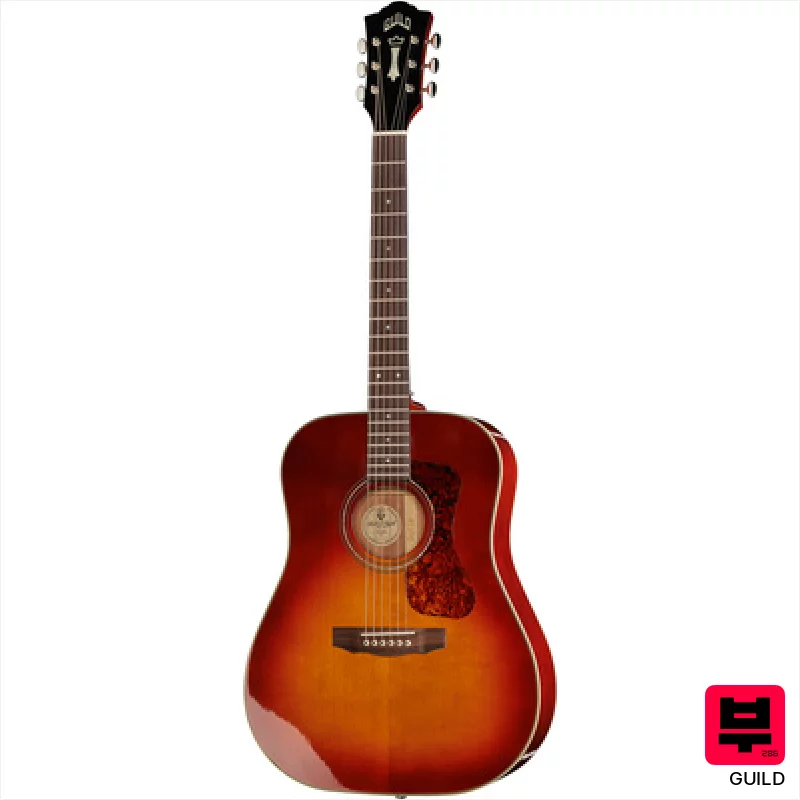
Guild D-140 Cherry Burst
- • Solid Sitka spruce top delivers a balanced, articulate, and responsive tone.
- • Solid mahogany back and sides provide warmth and sustain, enhancing the overall richness.
- • Bone nut and saddle improve string vibration transfer, boosting clarity and volume.
- • Vintage 18 machine heads offer smooth tuning stability and a classic aesthetic.
- • Cherry Burst finish, while beautiful, can be prone to fingerprints and smudging.
- • 16” fingerboard radius might feel less familiar to players accustomed to flatter profiles.
- • Dreadnought body size can be unwieldy for smaller players or travel.
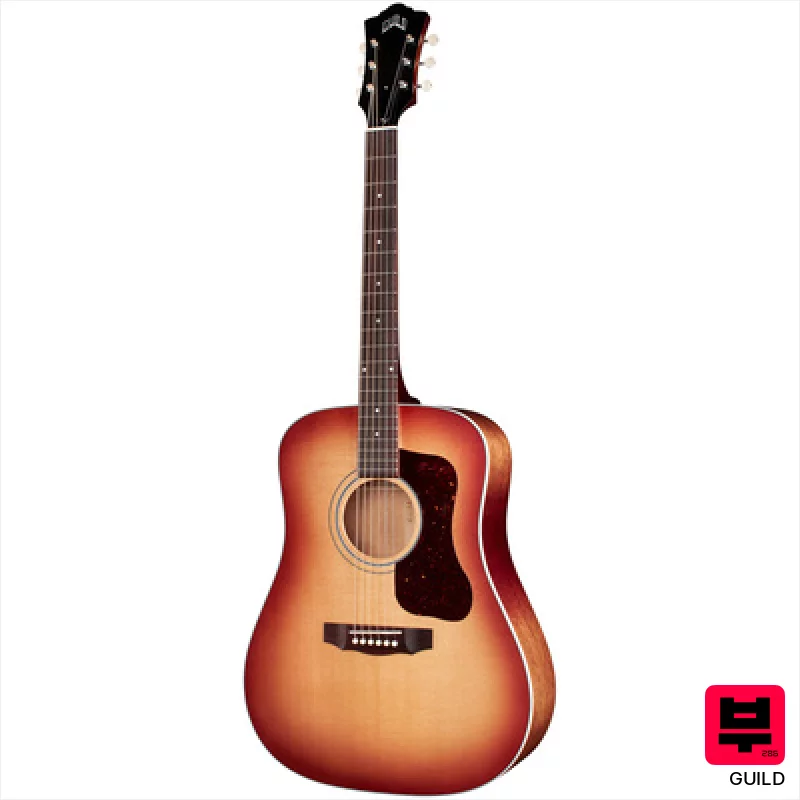
Guild D-40 Standard PSB VG USA
- • Solid Adirondack bracing delivers exceptional projection and clarity.
- • Mahogany back/sides provide warm, focused overtones and sustain.
- • Vintage Style tuners offer smooth, precise tuning stability.
- • C-profile neck ensures comfortable playability for a wide range of players.
- • The solid mahogany construction may lack the airy brightness some prefer.
- • Premium-priced, representing a significant investment for many players.
- • Tortoiseshell pickguard is a stylistic choice; may not appeal to all.
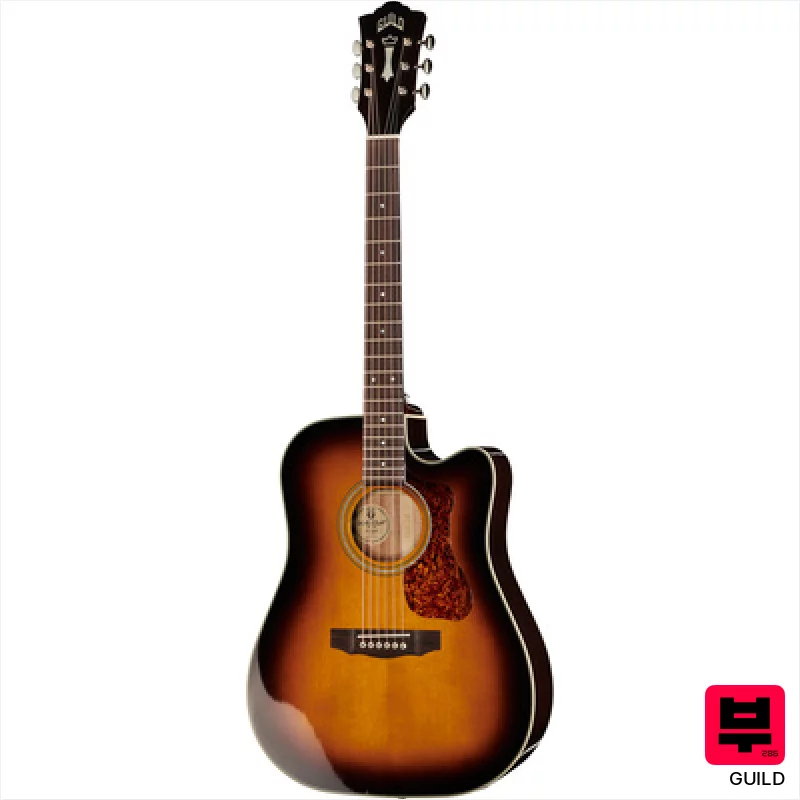
Guild D-140CE SB Westerly
- • Solid Sitka spruce top delivers a responsive, balanced, and articulate tone.
- • Mahogany back and sides provide warmth and a focused midrange character.
- • Fishman Sonitone preamp offers a clean, amplified sound suitable for stage.
- • Bone nut and saddle enhance sustain and clarity across the fretboard.
- • Mahogany body can sound a bit 'woody' for players seeking a brighter tone.
- • 16in radius fretboard might feel less comfortable for some modern players.
- • Cutaway access isn't as smooth as higher-end models with more aggressive bevels.
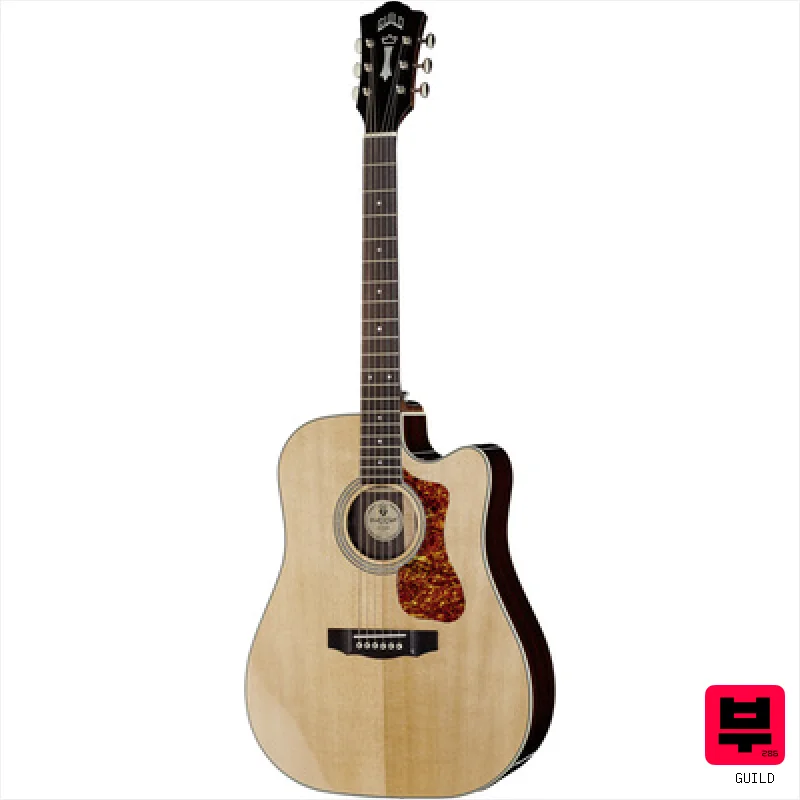
Guild D-150CE Nat Westerly
- • Solid spruce top with Westerly scalloped bracing for strong response
- • Premium solid rosewood back and sides for rich, full-bodied tone
- • Fishman Sonitone pickup included for easy amplification
- • Natural finish with high gloss for a clean, classic look
- • Mahogany neck can sometimes feel too thick for smaller hands
- • No specific weight rating listed makes carrying less predictable
- • Cutaway design may be too aggressive for players who prefer traditional shapes
Every dreadnought acoustic guitars that matches
25 models match this page. The 15 above are covered in detail; the rest are listed here with their published specifications.
| # | Model | Specifications | Price |
|---|---|---|---|
| 16 | Guild DS-240 Wine Red | Nut width 43 mm (1.69") · Scale 629 mm (24.76") · Frets 20 frets · Fingerboard Rosewood fingerboard | $622 |
| 17 | Guild DS-240E Black | Nut width 43 mm (1.69") · Scale 629 mm (24.76") · Frets 20 frets · Fingerboard Rosewood fingerboard | $721 |
| 18 | Guild D-140ce Black | Nut width 44.5 mm (1.75") · Scale 648 mm (25.51") · Frets 20 frets · Neck profile C-shape neck | $1,007 |
| 19 | Guild D-20 VSB USA | Nut width 43 mm (1.69") · Scale 648 mm (25.51") · Frets 20 frets · Body Mahogany body | $2,128 |
| 20 | Guild D-20 Nat USA | Nut width 44 mm (1.73") · Scale 648 mm (25.51") · Frets 20 frets · Body Mahogany body | $2,016 |
| 21 | Guild D-50 ATB USA | Nut width 43 mm (1.69") · Scale 651 mm (25.63") · Frets 20 frets · Neck profile C-shape neck | $3,529 |
| 22 | Guild D-140 SB Westerly | Nut width 44.5 mm (1.75") · Scale 648 mm (25.51") · Frets 20 frets · Body Mahogany body | $894 |
| 23 | Guild DS-240 Memoir Series | Nut width 43 mm (1.69") · Scale 629 mm (24.76") · Frets 20 frets | $619 |
| 24 | Guild D-240E Westerly Archback | Nut width 42.9 mm (1.69") · Scale 648 mm (25.51") | $537 |
| 25 | Guild D-55E ATB USA | Frets 20 frets · Fingerboard Ebony fingerboard | $5,480 |
Dreadnought Acoustic Guitars by the numbers
Measured across all 522 models in this category, so «wide», «short» or «expensive» mean something you can check.
How to Choose the Best Dreadnought Acoustic Guitars
Heritage & Construction
Guild's history is intertwined with Gibson's, and that pedigree shows. Their dovetail neck joints are rock-solid, a step above the bolt-on or glued-in construction you often see these days, contributing to sustain and resonance. The bracing patterns, often inspired by vintage Gibson designs, are key to their signature tone.
Tone Characteristics
That's the big one. Guild dreadnoughts don't have that overly bright, scooped-midrange sound that's become a default. They offer a warm, balanced tone with a pronounced low-end thump that cuts through a band mix without being muddy. You get a real, woody articulation - individual notes are clear, even when strumming chords aggressively.
Neck Profile & Playability
Guild's neck profiles vary, but they generally lean towards comfortable, medium-C shapes that feel great in the hand. The action is usually well-set from the factory, allowing for easy playing without feeling too floppy. This makes them accessible to players of different skill levels.
Hardware & Build Quality
The hardware is generally solid - Grover tuners are a common feature, offering reliable tuning stability. The finish is typically nitrocellulose lacquer, which allows the wood to breathe and resonate. While not always the thickest finish, it's a hallmark of vintage-inspired construction.
Dynamic Range & Headroom
These guitars respond incredibly well to your playing dynamics. A light touch yields a delicate, nuanced tone, while a hard strum delivers a powerful, driving sound. They have real headroom - meaning they can get loud without collapsing into a harsh, brittle breakup.
Buying Guide
Don't expect a Guild to be a 'plug and play' instrument. They often benefit from a professional setup - getting the action dialed in just right can unlock their full potential. The older, vintage-inspired models can be pricier, but the tonal rewards are significant. If you're on a tighter budget, the newer production models still offer incredible value, but be mindful of the wood choices - solid wood tops will always sound better than laminate.
How This List Is Built
We don't play these instruments — we're a catalog, not a review desk, and we'd rather say so than pretend otherwise. This page covers 25 of 522 dreadnought acoustic guitars from the Thomann catalogue, which is the largest single source of specification data in this category: 15 in detail, the rest listed with their specifications.
Position is computed, not curated. We parse the manufacturer's own description into actual values — nut width, scale, fret count, fingerboard radius, size, alloy — and rank on them: how many specifications a model has published, how many of them are measurable numbers, and how precisely it meets this page's criterion. A product image adds a little. Price is not a ranking signal: it tells you nothing about whether a neck fits your hand. The same inputs always produce the same order, so nothing here is shuffled to look fresh.
What this list is good for: narrowing a category down to a shortlist by spec and budget. What it isn't: a substitute for hearing an instrument. Before you buy, read hands-on reviews and, where you can, play it. Full methodology.

