Best Recording King Dreadnought Acoustic Guitars 2026

Premium Recording King dreadnought acoustic guitars - legendary tone and craftsmanship

Last updated: September 19, 2026

The best dreadnought acoustic guitars in 2026 are Recording King Dirty 30s Series 9 12-String (top pick), Recording King RDS-11-FE3-TBR for tighter budgets, and Recording King RD-G6-CFE5 for pros — selected from 7 options, priced $159–$1,030, ranked by brand, price and popularity.
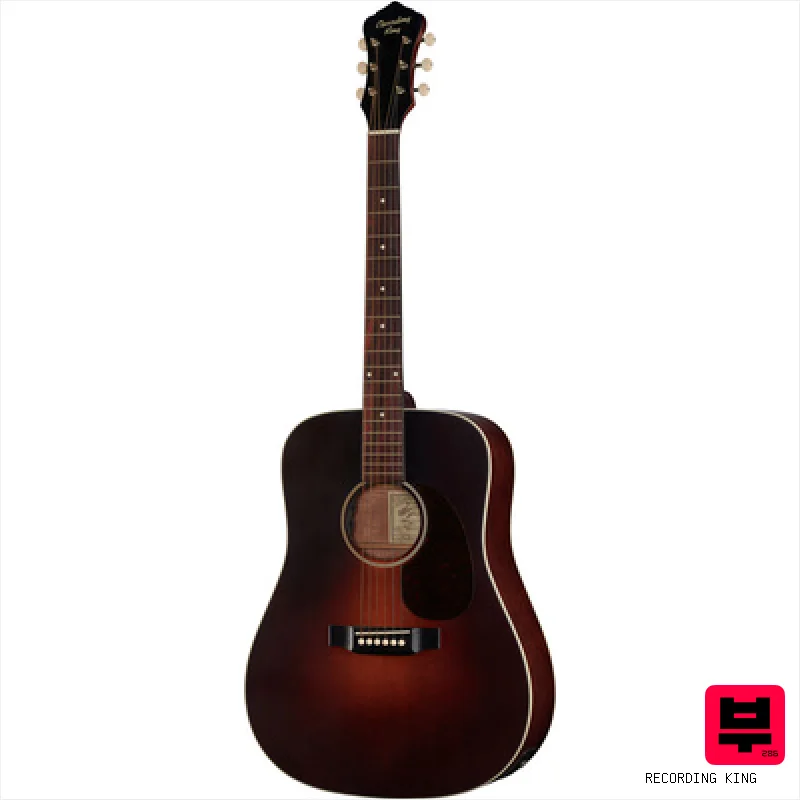
Recording King Dirty 30s Series 9 12-String - Professional Music Instrument Photo
#1

Recording King Dirty 30s Series 9 12-String

Nut width 49 mm (1.93") Scale 645 mm (25.39") Frets 20 frets Strings 12-string
Rock Campfire Sessions Bluegrass
Key Feature:
This dreadnought plays loud thanks to its solid spruce top and Whitewood body. The Fishman Presys pickup makes it easy to play in a band. It fits well as a budget-friendly option for those who want a 12-string without breaking the bank. Beginners and small venues will appreciate its straightforward design.
PROS
  • • Solid spruce top drives volume and response
  • • Fishman Presys pickup handles plugging in
  • • Whitewood back and sides add warmth
  • • Ivory binding and inlays add shine
CONS
  • • 12-string setup adds noticeable weight
  • • No adjustable EQ knobs for tone shaping
  • • Limited fret count on the neck
4.8/5 AudioFu Score
Specs:
8/10
Detail:
9/10
Value:
9/10
Art. 622928
$343
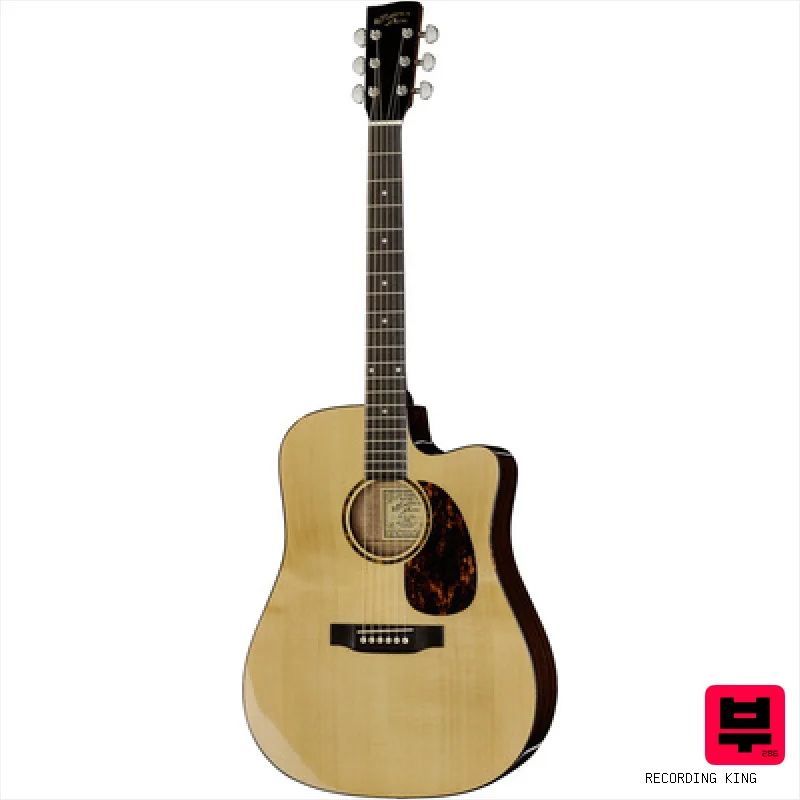
Recording King RDS-11-FE3-TBR - Professional Music Instrument Photo
#2

Recording King RDS-11-FE3-TBR

Nut width 43 mm (1.69") Scale 645 mm (25.39") Frets 20 frets Neck profile C-shape neck
Singer-Songwriter Bluegrass Folk
Key Feature:
This guitar uses solid spruce and mahogany for a rich, full sound. The forward shifted bracing helps it play loudly. It has a Fishman pickup so you can plug in easily. Great for players who want solid wood tone without extra cost.
PROS
  • • Solid Sitka spruce top for bright attack
  • • Solid African mahogany back and sides
  • • Fishman Sonitone pickup included
  • • Forward shifted X-bracing design
CONS
  • • No specified weight for carrying
  • • Lacks built-in volume control
  • • No Bluetooth connectivity
4.9/5 AudioFu Score
Specs:
8/10
Detail:
10/10
Value:
9/10
Art. 486650
$400
Recording King RD-G6-CFE5 - Professional Music Instrument Photo
#3

Recording King RD-G6-CFE5

Nut width 42.9 mm (1.69") Scale 645 mm (25.39") Frets 20 frets Neck profile C-shape neck
Singer-Songwriter Bluegrass Country
Key Feature:
This dreadnought has a solid spruce top that speaks up well in a mix, backed by mahogany for warmth. The Fishman pickup makes it ready for amps or recording without noise. It fits players who want a balanced sound without spending a fortune.
PROS
  • • Solid spruce top provides strong initial attack and clear midrange presence.
  • • Mahogany back and sides offer warm low-end and rich fundamental tones.
  • • Fishman Presys EQ pickup system ensures clean output and easy volume control.
  • • Bone nut and bridge deliver smooth intonation and a comfortable playing feel.
CONS
  • • No weight specification means you cannot verify the instrument's balance.
  • • Mahogany construction lacks the high-end sparkle and complexity of rosewood.
  • • X-bracing pattern is less common and may affect sustain compared to scalloped.
4.8/5 AudioFu Score
Specs:
8/10
Detail:
8/10
Value:
9/10
Art. 537270
$382
Recording King RD-342 Tonewood Reserve Elite - Professional Music Instrument Photo
#4

Recording King RD-342 Tonewood Reserve Elite

Nut width 44.5 mm (1.75") Scale 645 mm (25.39") Frets 20 frets
Bluegrass Folk Country
Key Feature:
This dreadnought feels solid and plays nicely with its thin neck. It has a nice bright top and rich wood body but needs an amp to be heard. Perfect for players who want pure acoustic tone without extra gear.
PROS
  • • Solid red spruce top for bright attack
  • • Full solid rosewood back and sides
  • • Thin-V neck profile for easy play
  • • High-gloss finish looks sharp and clean
CONS
  • • No electronics included for amplification
  • • Heavy dreadnought size adds weight
  • • Lacks modern tuners or pickups
4.7/5 AudioFu Score
Specs:
6/10
Detail:
10/10
Value:
8/10
Art. 553563
$1,030
Recording King RD-318 Adirondack - Professional Music Instrument Photo
#5

Recording King RD-318 Adirondack

Nut width 42.9 mm (1.69") Scale 645 mm (25.39") Frets 20 frets
Country Singer-Songwriter Rock
Key Feature:
This guitar uses an old Adirondack spruce top and solid mahogany body for a clear, warm sound. It has a thin neck that feels easy to play but lacks built-in electronics. Great for players who want pure acoustic tone without extra features.
PROS
  • • Solid 30-year-old Adirondack spruce top for bright tone
  • • Solid mahogany back and sides for warm depth
  • • Forward Shifted X bracing for strong structural integrity
  • • Thin V neck profile for comfortable playability
CONS
  • • No internal electronics or preamp included
  • • Lacks built-in tuners or volume controls
  • • Open gear heads offer less tuning stability
4.7/5 AudioFu Score
Specs:
6/10
Detail:
7/10
Value:
9/10
Art. 492557
$572
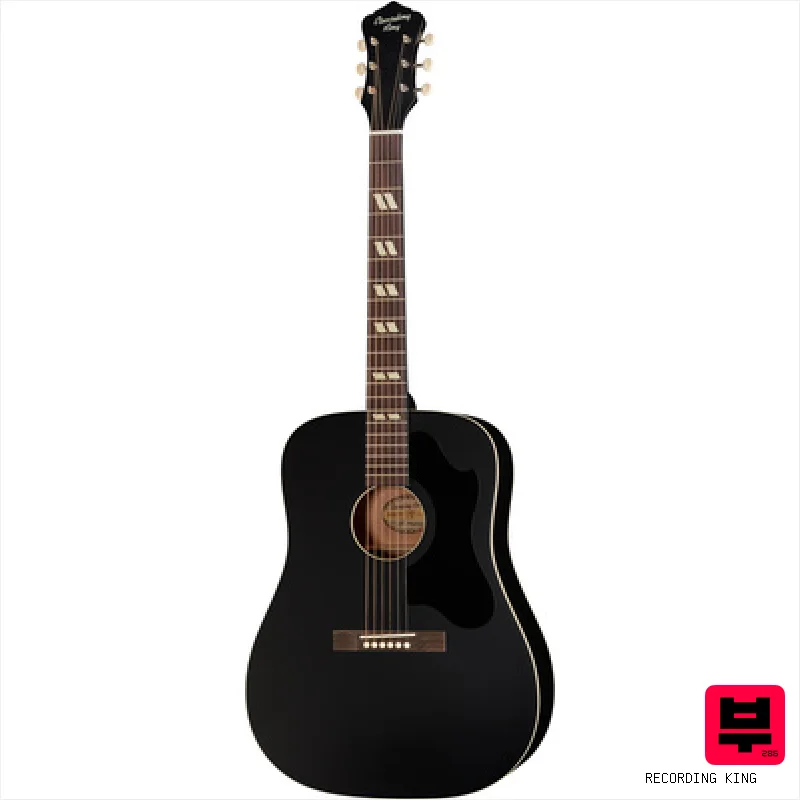
Recording King RDS-7-MBK - Professional Music Instrument Photo
#6

Recording King RDS-7-MBK

Nut width 43 mm (1.69") Scale 645 mm (25.39") Frets 20 frets
Folk Campfire Sessions Singer-Songwriter
Key Feature:
This guitar sounds like a classic three-string from the thirties but uses modern wood. The spruce top sings well when you play hard chords, and the slim neck makes it easy to reach high notes. It is a great choice for players who want a solid, acoustic voice without needing extra electronics.
PROS
  • • Dreadnought shape offers big, resonant sound for strumming.
  • • Spruce top provides a bright and responsive attack.
  • • Thin C neck profile feels comfortable under the hand.
  • • Dovetail joint ensures strong neck stability and durability.
CONS
  • • Lacks electronic pickups or preamp systems.
  • • White wood sides may show wear easily.
  • • No adjustable bridge pins for string height.
4.7/5 AudioFu Score
Specs:
6/10
Detail:
7/10
Value:
10/10
Art. 417834
$159
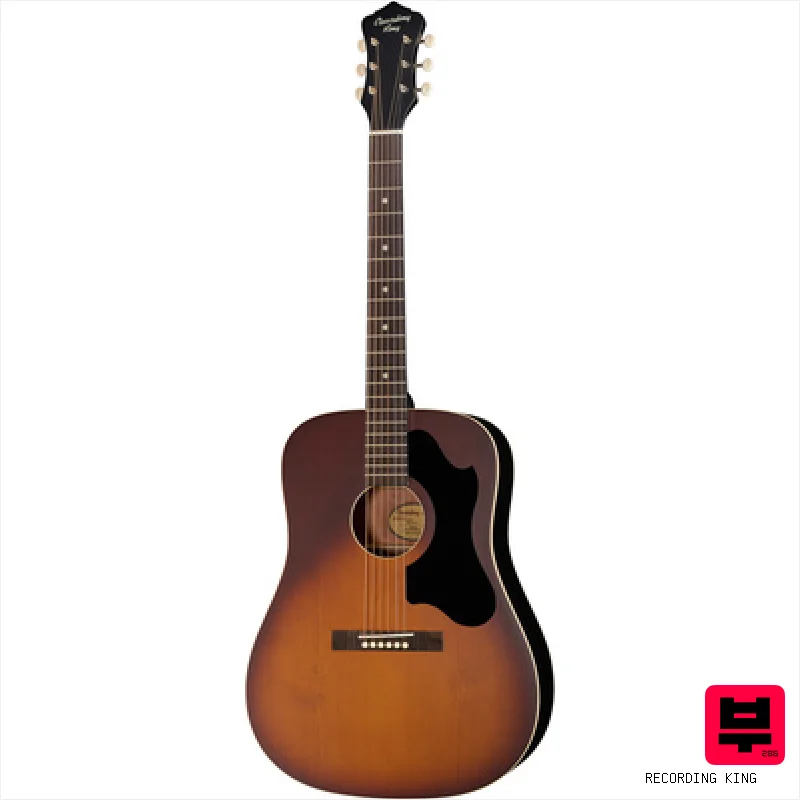
Recording King RDS-9-TS - Professional Music Instrument Photo
#7

Recording King RDS-9-TS

Nut width 43 mm (1.69") Scale 645 mm (25.39") Frets 20 frets
Campfire Sessions Bluegrass Singer-Songwriter
Key Feature:
This guitar plays like a classic dreadnought with a spruce top that cuts through a band. The white sides add brightness, while the thin neck makes it easy to play chords. It is perfect for players who want a bright, acoustic sound without extra pickups.
PROS
  • • Solid Sitka spruce top offers strong, clear projection
  • • X-Bracing construction keeps the top responsive and lively
  • • White wood back and sides provide a bright, balanced tone
  • • Thin C neck profile is comfortable for long playing sessions
CONS
  • • No electronics included for amplified performance
  • • Ovangkol fretboard may require specific care compared to rosewood
  • • White wood sides can sometimes lack the warmth of tonewood
4.7/5 AudioFu Score
Specs:
6/10
Detail:
7/10
Value:
10/10
Art. 417838
$189

Dreadnought Acoustic Guitars by the numbers

Measured across all 523 models in this category, so «wide», «short» or «expensive» mean something you can check.

Price
median $1,088
from $143 to $6,646
Nut width
median 43.7 mm (1.72")
from 42.5 mm (1.67") to 45 mm (1.77") · 482 models
Scale
median 645 mm (25.39")
from 629 mm (24.76") to 650 mm (25.59") · 495 models
Fingerboard radius
median 305 mm (12.01")
from 305 mm (12.01") to 406 mm (15.98") · 69 models
Fingerboard
ebony, rosewood, walnut
most common · 314 models
Frets
median 20
from 20 to 21 · 435 models
Neck profile
C, V, U
most common · 46 models
Body
mahogany, sapele, okoume
most common · 29 models
Weight
median 5 kg
from 1.76 kg to 10 kg · 5 models

How This List Is Built

We don't play these instruments — we're a catalog, not a review desk, and we'd rather say so than pretend otherwise. This page covers 7 of 523 dreadnought acoustic guitars from the Thomann catalogue, which is the largest single source of specification data in this category: 7 in detail, the rest listed with their specifications.

Position is computed, not curated. We parse the manufacturer's own description into actual values — nut width, scale, fret count, fingerboard radius, size, alloy — and rank on them: how many specifications a model has published, how many of them are measurable numbers, and how precisely it meets this page's criterion. A product image adds a little. Price is not a ranking signal: it tells you nothing about whether a neck fits your hand. The same inputs always produce the same order, so nothing here is shuffled to look fresh.

What this list is good for: narrowing a category down to a shortlist by spec and budget. What it isn't: a substitute for hearing an instrument. Before you buy, read hands-on reviews and, where you can, play it. Full methodology.

How to Choose the Best Dreadnought Acoustic Guitars

Budget Planning

  • • Under $200: Entry-level
  • • $200-$500: Intermediate
  • • $500-$1000: Advanced
  • • $1000+: Professional

Quality Check

  • • Sound clarity & tone
  • • Build materials & finish
  • • Hardware durability
  • • Overall craftsmanship

Key Features

  • • Your musical style
  • • Skill level match
  • • Intended use case
  • • Brand reputation

Frequently Asked Questions

Key factors include build quality, sound characteristics, playability, brand reputation, warranty coverage, and value for money. Consider your musical style, skill level, and intended use to find the best match.
Budget depends on your needs and experience level. Beginners can find quality options for $200-500, intermediate players should consider $500-1500 range, while professionals often invest $1500+ for premium features.
Higher-priced dreadnought acoustic guitars typically offer better materials, craftsmanship, and performance. They're worth it if you're serious about music, perform regularly, or need professional-grade features.
Top brands combine quality, innovation, and reliability. We evaluate brands based on build quality, sound performance, durability, and customer satisfaction to recommend the best options for different budgets.
Both have advantages. Online offers better prices and selection, while stores allow hands-on testing. We recommend researching online first, then testing in stores if possible. Many online retailers offer excellent return policies.

We use cookies to improve your experience. Learn more