
Best Solid-State Guitar Combos Under $50 2026
Alright, let's be real. $50 for a guitar combo? You're not expecting a boutique amp with hand-wound transformers. But you can get something that'll get you started, or serve as a decent practice rig. We're talking about solid-state, budget-friendly options here - think basic cleans, maybe a serviceable overdrive, and enough power to jam at home or rehearse with a low-volume band. Let's see what's out there that won't break the bank and actually sounds... acceptable.
Last updated: September 28, 2026

Joyo MA-10E Portable Guitar Amp
- • Surprisingly robust build for the price point, feels solid in hand.
- • Clean channel offers a decent, usable platform for practice.
- • Battery operation provides genuine portability and convenience.
- • OD channel delivers a serviceable, gritty overdrive for blues/rock.
- • Speaker is a limiting factor; lacks low-end extension and clarity.
- • EQ is extremely basic; limited tonal shaping possibilities.
- • Gain channel can get muddy quickly with higher input levels.

Marshall MS-2
- • Surprisingly authentic Marshall crunch for its size and price.
- • Battery-powered portability makes it ideal for practice and casual jamming.
- • Headphone output allows for silent practice or recording.
- • Simple controls offer immediate gratification without complexity.
- • The 2in speaker severely limits maximum volume and low-end response.
- • Solid-state circuitry lacks the warmth and dynamic response of a tube amp.
- • Tone control bandwidth is limited, restricting tonal shaping options.
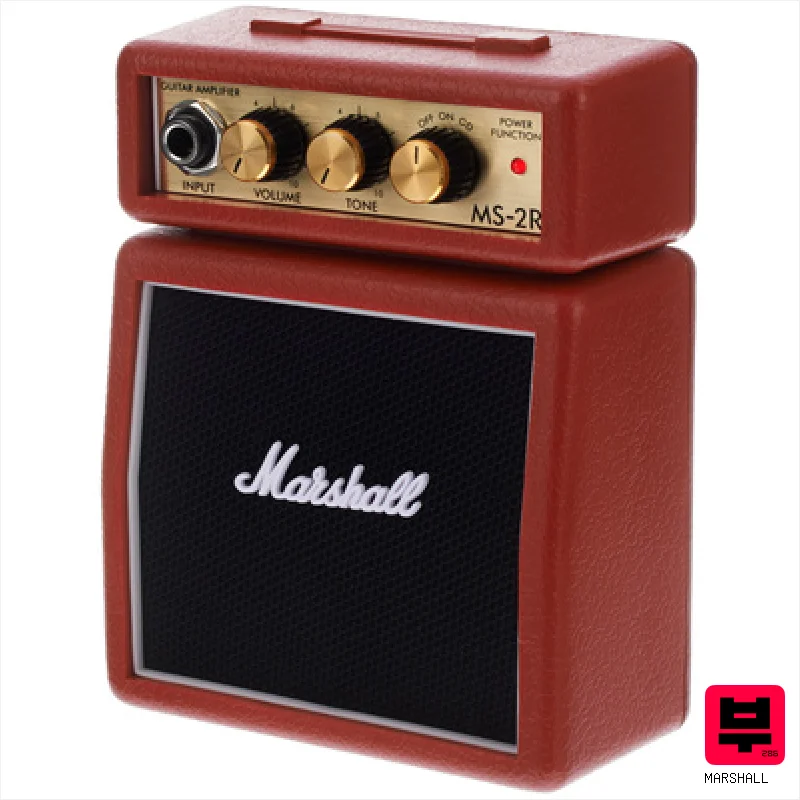
Marshall MS-2R
- • Ultra-lightweight at just 0.34 kg for easy transport
- • Compact dimensions fit in small cases or bags
- • Built-in overdrive switch for quick sound changes
- • Belt clip allows hands-free playing anywhere
- • Very low 1 watt limits volume for large rooms
- • No external speakers included in the combo
- • Power supply adapter must be bought separately

Harley Benton MA-5 Miniamp
- • Incredibly portable and lightweight, ideal for practice or travel.
- • Clean channel offers surprisingly usable, warm tones for its size.
- • Distortion channel provides a crunchy, basic overdrive for simple riffs.
- • Belt clip is genuinely useful for standing practice or casual jamming.
- • 3-inch speaker severely limits low-end response and overall volume.
- • Tone controls are basic, offering limited sculpting capabilities.
- • Battery operation makes it less convenient for extended playing sessions.
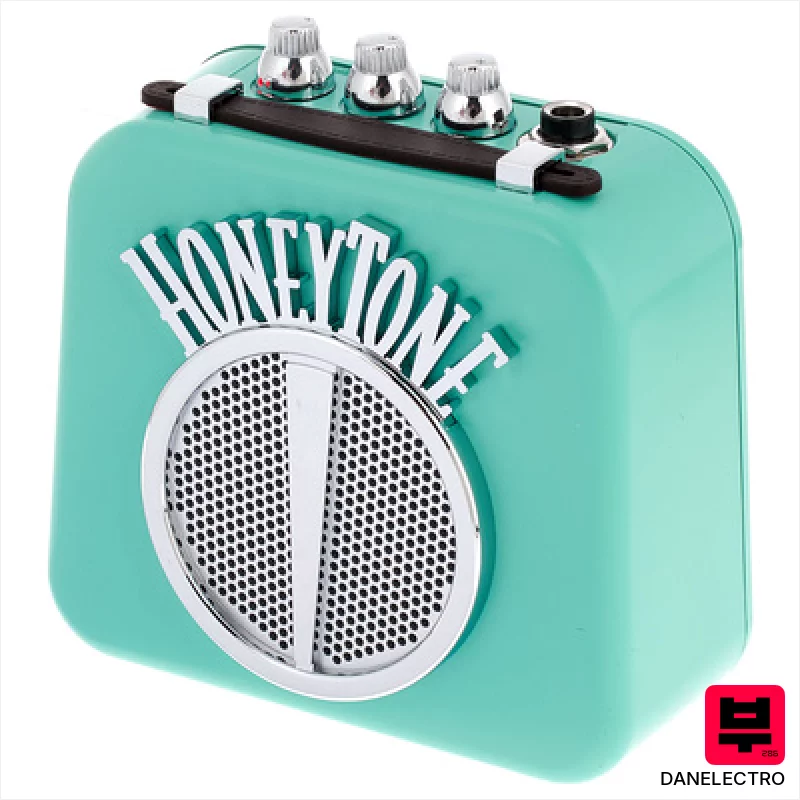
Danelectro N-10 Honeytone Mini Amp AQ
- • Real leather handle adds a touch of unexpected class.
- • Surprisingly usable overdrive for a mini amp.
- • Incredibly portable; belt clip is a genuinely useful feature.
- • Danelectro’s signature quirky, slightly hollow tone is present.
- • 1 Watt is *really* limited; struggles at anything beyond bedroom volume.
- • Speaker size (likely 2 in) severely restricts low-end response.
- • Power supply situation – battery or coaxial only, no standard option.
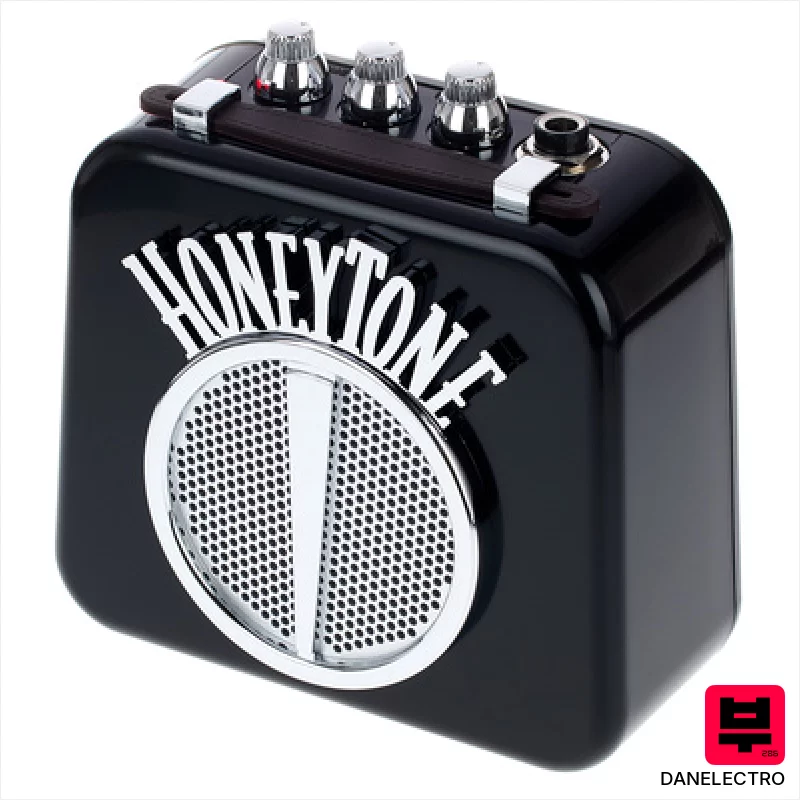
Danelectro N-10 Honeytone Mini Amp BK
- • Surprisingly robust build quality for its size; feels sturdier than expected.
- • The overdrive circuit delivers a genuinely usable, gritty vintage tone.
- • Leather handle adds a touch of class and improves portability.
- • Headphone output is a genuinely useful feature for quiet practice.
- • 1 Watt output is extremely limited; best for practice or very small rooms.
- • EQ is rudimentary; lacks the flexibility for tonal shaping.
- • Power supply not included; another expense to consider.
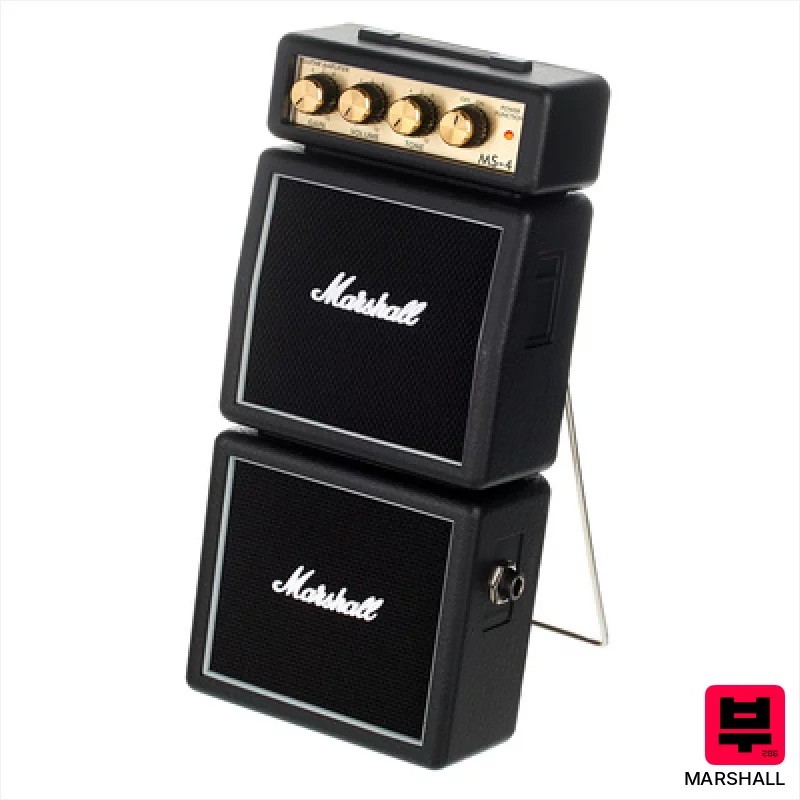
Marshall MS-4
- • Surprisingly loud for its size, captures a basic Marshall crunch
- • Portable and battery-powered for practice anywhere
- • Back-mounted bracket allows for angled placement
- • Simple controls make dialing in a usable tone easy
- • Speaker size limits low-end response significantly
- • Limited tonal versatility; not suited for clean sounds
- • Plastic enclosure feels somewhat cheap for a Marshall product
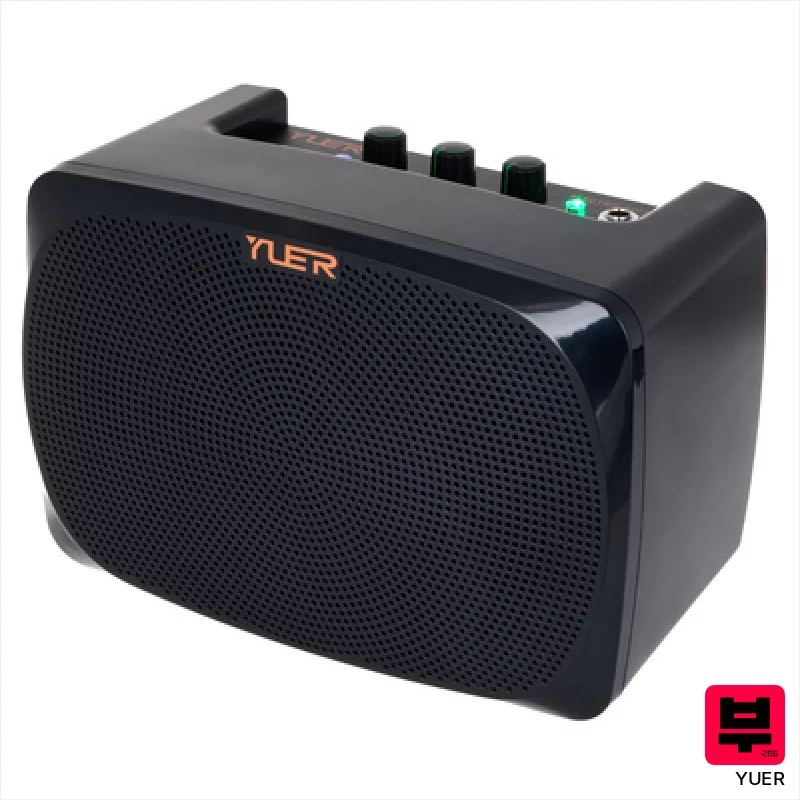
Yuer Portable Amp with Bluetooth
- • Surprisingly decent clean tone for practice, surprisingly usable.
- • Bluetooth connectivity adds convenience for backing tracks and jamming.
- • Compact size and battery power make it truly portable for travel.
- • The overdrive channel provides a passable, gritty rock tone.
- • Build quality feels noticeably cheap, mostly thin plastic construction.
- • Limited tonal shaping; EQ is basic and lacks nuance.
- • Low wattage restricts volume for anything beyond quiet practice.
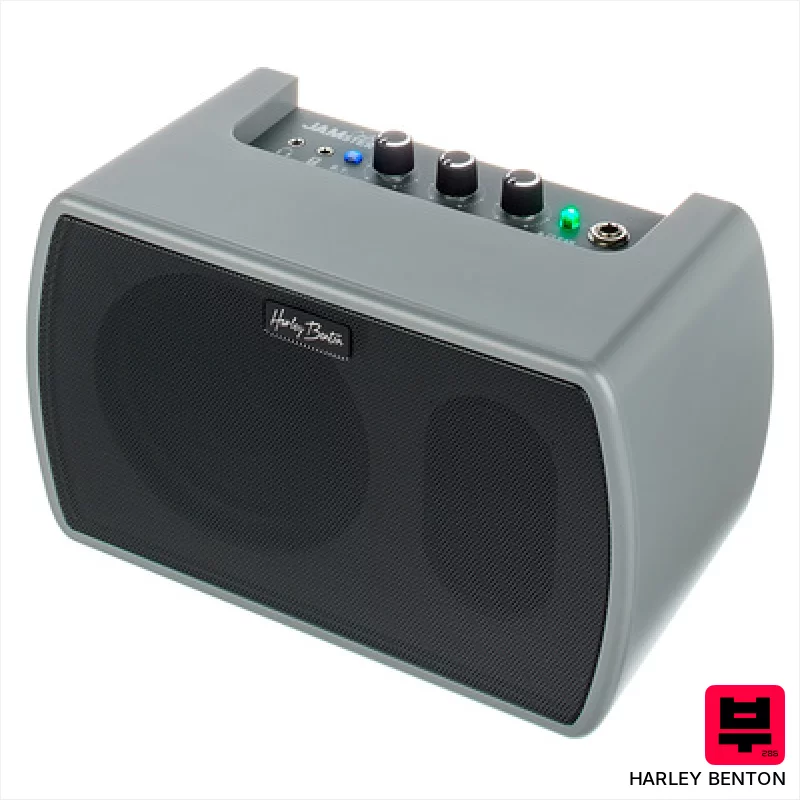
Harley Benton JAMster Guitar
- • Surprisingly decent cleans for a budget combo amp.
- • Bluetooth connectivity is genuinely useful for practice.
- • Lightweight and portable; ideal for travel or small spaces.
- • Simple controls make it incredibly easy to dial in basic sounds.
- • The 5” speaker severely limits low-end response and volume.
- • Overdrive channel lacks character and sounds quite fizzy.
- • Build quality is basic; plastic enclosure feels somewhat flimsy.
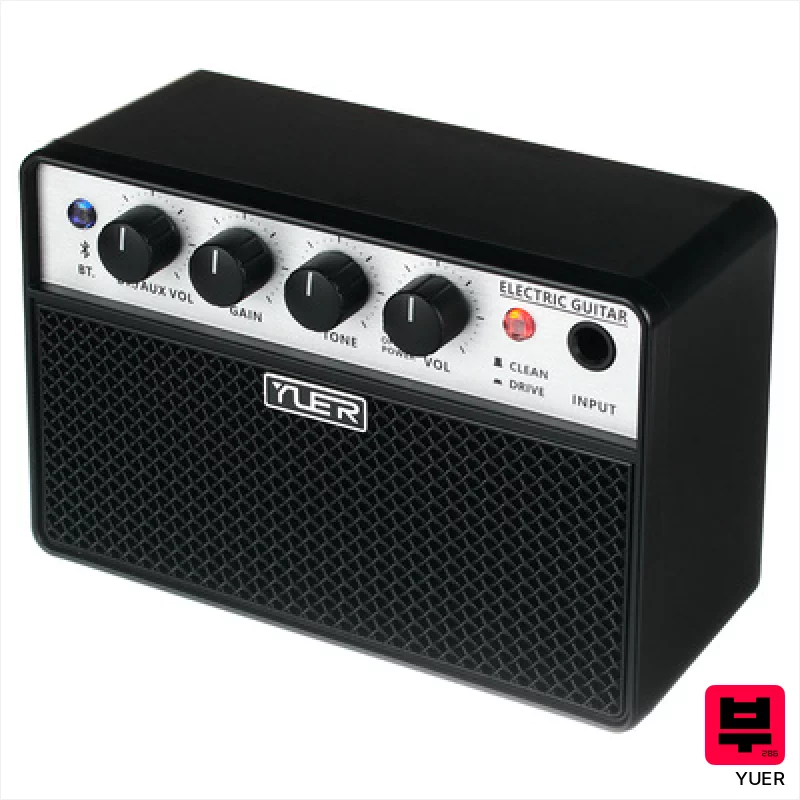
Yuer BA-10E Portable Amp BT
- • Surprisingly decent clean tone for practice and quiet playing.
- • Bluetooth 5.1 offers a stable and convenient audio connection.
- • Compact size and lightweight design enable excellent portability.
- • Simple controls make it easy to dial in basic sounds quickly.
- • The 10-watt power is really only suitable for bedroom practice.
- • Overdrive channel lacks nuance and character; quite basic.
- • Build quality feels noticeably cheap with mostly plastic construction.
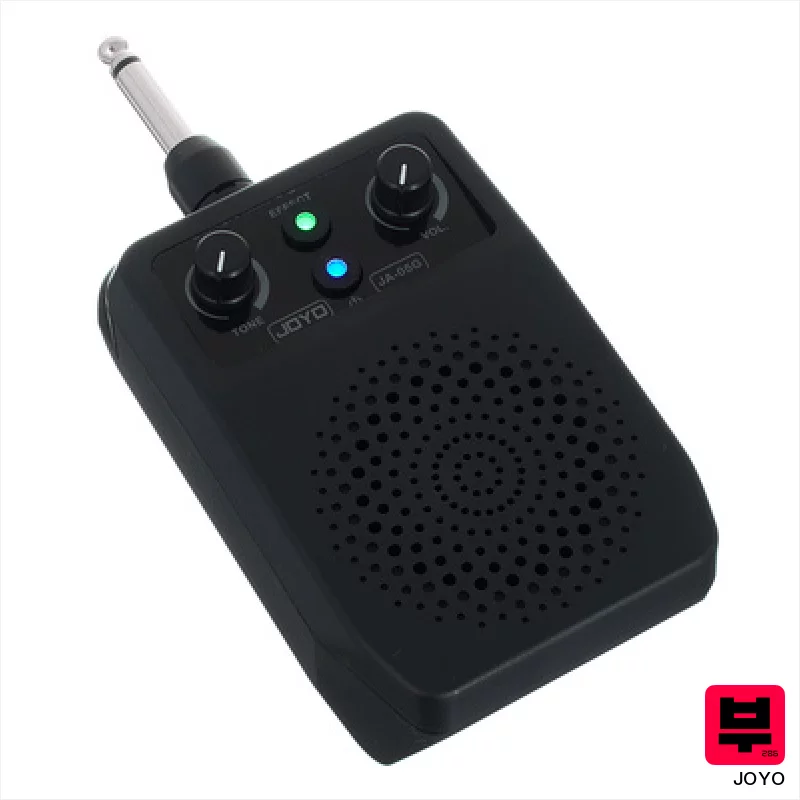
Joyo JA-05G Plug Amp
- • Extremely portable; easily fits in a gig bag or backpack.
- • Surprisingly decent clean tone for its size and price point.
- • Bluetooth connectivity offers convenient backing track play-along functionality.
- • Rechargeable battery provides a respectable amount of playtime on a single charge.
- • Sound quality is limited; lacks dynamic range and nuanced response.
- • The tiny speaker significantly restricts maximum volume and bass response.
- • Build quality feels noticeably cheap, with primarily plastic construction.
Solid-State Guitar Combos by the numbers
Measured across all 11 models in this category, so «wide», «short» or «expensive» mean something you can check.
How to Choose the Best Solid-State Guitar Combos
Tone Quality
At this price, don't expect vintage warmth or nuanced breakup. We're looking for a clean signal that isn't completely sterile and an overdrive that's usable, even if it's a little fizzy. The low-end thump is usually the first thing to suffer, so we're listening for that.
Build Quality
These are budget combos, so expect some plasticky knobs and a slightly flimsy speaker grille. We're assessing how well they hold up to basic use and whether anything feels like it's going to fall off.
Speaker Performance
The speaker is everything. A cheap speaker will choke the tone and ruin any potential headroom. We're listening for clarity, articulation, and whether it can handle a bit of volume without distorting in a bad way.
Features
Reverb is a huge plus at this price. EQ controls (even basic ones) are also helpful for shaping the sound. Don't expect effects loops or fancy digital modeling - that's just not happening.
Headroom & Dynamics
How much can you crank this thing before it starts to sound like a swarm of angry bees? We're testing how the amp responds to playing dynamics - can you get a quiet, clean tone and then a punchy overdrive without completely losing control?
Buying Guide
Seriously, manage your expectations. At $50, you're getting a tool, not a treasure. The biggest trade-off is almost always going to be the speaker - that's where the money's really cut. Look for combos with simple EQ controls; a little bass and treble adjustment can go a long way. If you're recording, you'll almost certainly want to run it through a profile pedal or some kind of tone-shaping device to compensate for the inherent limitations.
How This List Is Built
We don't play these instruments — we're a catalog, not a review desk, and we'd rather say so than pretend otherwise. This page covers 11 solid-state guitar combos from the Thomann catalogue, which is the largest single source of specification data in this category: 11 in detail, the rest listed with their specifications.
Position is computed, not curated. We parse the manufacturer's own description into actual values — nut width, scale, fret count, fingerboard radius, size, alloy — and rank on them: how many specifications a model has published, how many of them are measurable numbers, and how precisely it meets this page's criterion. A product image adds a little. Price is not a ranking signal: it tells you nothing about whether a neck fits your hand. The same inputs always produce the same order, so nothing here is shuffled to look fresh.
What this list is good for: narrowing a category down to a shortlist by spec and budget. What it isn't: a substitute for hearing an instrument. Before you buy, read hands-on reviews and, where you can, play it. Full methodology.

