AudioFu
AudioFu Chart · October 2026
Best Condenser Microphones Under $800 2026
The top pick is RODE NTG2 Shotgun Condenser Microphone ($217). sE Electronics sE7 Small Diaphragm Cardioid Condenser Microphone gives you the most for the money at $156. Neumann KMS 105 Handheld Supercardioid Condenser Microphone leads the high end. Ranked by the AudioFu Index from 103 models across 27 brands, prices checked every night.
Last updated: October 14, 2026
Top 10
Full detail for the 10 highest AudioFu Index scores. Every other model is listed below.
-
The NTG2 is a workhorse shotgun mic, perfect for film, video, and broadcast where you need clean, directional audio. It's surprisingly robust for its size and price, offering excellent noise rejection—just be mindful of that slight high-end edge, which can be easily tamed with a touch of EQ.
Pros
- Excellent off-axis rejection minimizes unwanted room noise.
- Robust, all-metal housing feels durable for field use.
- Supercardioid pattern provides focused, directional audio capture.
Cons
- High-frequency response can be slightly harsh without EQ.
- Supercardioid pattern demands careful mic placement.
74AudioFu
Index↓ 15.3%since Aug 14 · lowest so far$256 · Aug 14$217 now$217€194 at Thomann · in stockCheck price ↗ -
sE Electronics sE8 Small Diaphragm Cardioid Condenser Microphone…
SE8 · SE Electronics
52 for sale on Reverb8 finishes at Thomann
The SE8 is a seriously impressive little mic for the money. It's got a clean, detailed sound with a surprisingly natural character – great for acoustic instruments, vocals, and even drum overheads if you're on a budget. If you need a workhorse SDC that punches above its weight, this is a great choice.
Pros
- Handmade capsule delivers surprisingly detailed, natural transients
- Solid, machined aluminum body feels robust and well-built
- Low-cut filter offers useful shaping for various sources
Cons
- Cardioid pattern limits versatility for stereo or ambient recording
- Sensitivity is relatively low, may require gain boosting
74AudioFu
Index↓ 1.4%since Aug 14 · lowest so far$233 · Aug 14$229 now$229€205 at Thomann · in stockCheck price ↗ -
Shure BETA 52A Supercardioid Dynamic Bass Drum Microphone
Beta 87C · Shure
94 for sale on Reverb2 finishes at Thomann
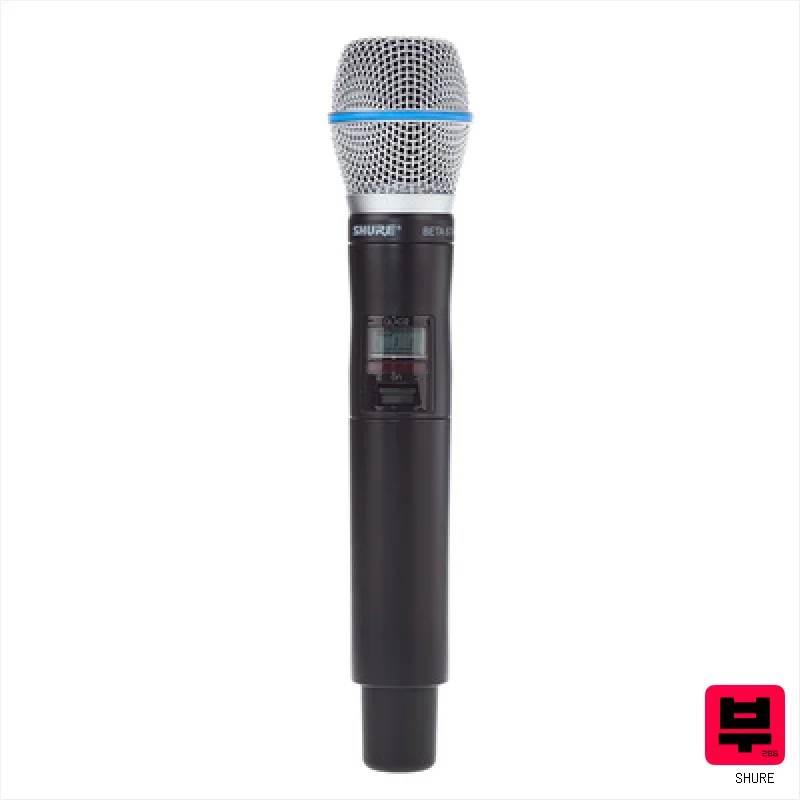
The Beta 87C is a workhorse vocal mic – seriously clean and detailed. It’s a fantastic choice for singers who want a natural, present sound, especially those using in-ear monitors. If you're looking for professional-grade vocal reproduction without a huge investment, this is a solid pick.
Pros
- Exceptional clarity and detail across the vocal spectrum.
- Robust, all-metal construction feels incredibly durable.
- Excellent off-axis rejection minimizes stage bleed and room noise.
Cons
- Can be overly sensitive for loud, aggressive vocalists.
- Lacks a pad switch for extremely high SPL sources.
68AudioFu
Index↓ 2.9%since Aug 14 · lowest so far$390 · Aug 14$379 now$379€339 at Thomann · in stockCheck price ↗ -
Neumann KMS 105 Handheld Supercardioid Condenser Microphone
KMS 105 · Neumann
52 for sale on Reverb4 finishes at Thomann
The KMS 105 is a focused tool—built for the vocalist who demands absolute clarity and rejection of stage noise. It’s a game-changer for solo performers and front people in bands needing pristine vocal capture. Expect professional-grade performance and a build to match.
Pros
- Robust build quality; Neumann’s reputation for longevity is well-earned.
Cons
- Limited versatility; primarily excels in vocal-focused live scenarios.
-
sE Electronics sE7 Small Diaphragm Cardioid Condenser Microphone
sE7 sideFire · SE Electronics
27 for sale on Reverb4 finishes at Thomann
The sE7 sideFire is a surprisingly capable little mic, especially for the price. It’s fantastic for acoustic instruments like guitars and vocals where you want a focused, clean sound – think singer-songwriters or podcasters needing a budget-friendly solution. The side-address design is a clever touch for tight spaces, making it surprisingly versatile.
Pros
- Side-address design offers flexible placement options for tight spaces.
- Cardioid pattern provides excellent off-axis rejection for cleaner recordings.
- Robust metal body feels surprisingly solid for its price bracket.
Cons
- Cardioid-only pattern limits versatility for certain recording scenarios.
- Lacks the nuanced detail of higher-end small diaphragm condensers.
64AudioFu
Index↓ 6.7%since Aug 14 · lowest so far$167 · Aug 14$156 now$156€139 at Thomann · in stockCheck price ↗ -
Neumann KMS 104 Handheld Cardioid Condenser Microphone
KMS 104 Plus · Neumann
20 for sale on Reverb6 finishes at Thomann
The KMS 104 Plus is Neumann’s take on a stage-ready vocal mic, and it delivers. It’s incredibly clean and detailed, really bringing out the nuances in a female vocal, especially in a rock or pop setting. If you’re a frontwoman looking for a professional-grade mic that cuts through a live mix, this is a solid choice.
Pros
- Exceptional clarity and detail, especially in the midrange
- Robust nickel plating offers excellent durability and a classic look
- Cardioid pattern effectively rejects stage bleed and feedback
Cons
- Narrower tonal palette; less forgiving with less-than-perfect vocal technique
- Primarily suited for female vocals; male voices may lack body
64AudioFu
IndexStableno change since Aug 14Aug 14$748 now$748€669 at Thomann · in stockCheck price ↗ -
RODE NT5 Small Diaphragm Cardioid Condenser Microphone Stereo Pair
NT5 MP · Rode
33 for sale on Reverb3 finishes at Thomann
The Rode NT5 MP is a fantastic matched pair for singer-songwriters, acoustic instruments, and stereo miking. They offer a neutral, detailed sound with impressive clarity and a surprisingly robust build for their price point. A great entry into quality stereo recording.
Pros
- Gold-sputtered capsule delivers a remarkably clean and detailed sound
- Matched pair ensures consistent stereo imaging and phase coherence
- Satin nickel finish provides a professional and durable aesthetic
Cons
- Cardioid pattern limits versatility for certain recording environments
- Requires 48V phantom power, necessitating a compatible interface or preamp
-
The NTG3B is a seriously impressive shotgun mic, especially for location sound recording. Its tight super-cardioid pickup pattern and excellent rejection of ambient noise make it a dream for film crews, broadcast journalists, and anyone needing pristine audio in challenging environments. It’s a premium tool that delivers professional results.
Pros
- Exceptional off-axis rejection minimizes unwanted room noise.
- Robust, all-metal housing offers excellent durability for field work.
- Super-cardioid pattern provides focused audio capture for dialogue.
Cons
- Super-cardioid pattern demands precise mic placement for optimal results.
- Lacks internal shock mount, requiring external solutions for vibration reduction.
62AudioFu
Index↓ 5.2%since Aug 14 · lowest so far$726 · Aug 14$688 now$688€615 at Thomann · in stockCheck price ↗ -
The NTG1 is a workhorse for location sound. It’s incredibly focused, minimizing unwanted room noise – a lifesaver on film sets. While not a studio mic, its compact size, clear sound, and robust build make it a fantastic choice for videographers and filmmakers needing a reliable, directional mic.
Pros
- Excellent rejection of off-axis noise for dialogue recording
- Lightweight and compact for mounting on cameras or boom poles
- Robust, all-metal housing offers surprising durability
Cons
- Supercardioid pattern demands precise mic placement
- Lacks a built-in pop filter; essential for vocal use
-
Sennheiser e865 Handheld Condenser Microphone
E 865 S · Sennheiser
29 for sale on Reverb2 finishes at Thomann
The E 865 S is a workhorse condenser mic, built for serious stage vocalists. Its supercardioid pickup is fantastic for cutting through a loud band, and it delivers a clear, detailed sound without being overly colored. A solid choice for singers needing excellent isolation and reliable performance.
Pros
- Supercardioid pattern excels at isolating vocals in loud live environments.
- Robust metal construction provides excellent durability for stage use.
- Extended frequency response captures nuanced vocal details and clarity.
Cons
- Supercardioid pattern demands precise mic technique to avoid feedback.
- Requires phantom power, limiting use with some older or simpler audio interfaces.
60AudioFu
Index↓ 11.3%since Aug 14 · lowest so far$267 · Aug 14$237 now$237€212 at Thomann · in stockCheck price ↗
All 103 condenser microphones
Same index, same nightly prices — compact. Colour options of one model share a row. Tap a photo to zoom.
- 11
Universal Audio Standard SP-1 Small Diaphragm Cardioid Condenser…SP-1 · Universal Audio60↓ 1.5%$435€389$435€389Check ↗
- 12
Shure SM81 Small Diaphragm Cardioid Condenser MicrophoneSM81 · Shure58↑ 3.9%$475€425$475€425Check ↗
- 13
RODE NTG4+ Shotgun Condenser MicrophoneNTG4+ · Rode · 2 finishes57↓ 7.7%$267€239$267€239Check ↗
- 14
Shure KSM141 / SL StereoKSM 141 SL · Shure · 2 finishes56↑ 2.2%$669€598$669€598Check ↗
- 15
Shure KSM9 / CGKSM 9 HS · Shure · 2 finishes56↓ 2.5%$741€662$741€662Check ↗
- 16
Audio-Technica PRO37 Small Diaphragm Cardioid Condenser MicrophonePro 37 · Audio-Technica55↓ 7.9%$195€174$195€174Check ↗
- 17
AKG C451 B MicrophoneC 451 B · AKG · 2 finishes55Stable$375€335$375€335Check ↗
- 18
Shure BETA 98H / C Clip-On Instrument MicrophoneBeta 98 AD/C · Shure53Stable$333€298$333€298Check ↗
- 19
Sontronics DM-1S Small Diaphragm Cardioid Instrument MicrophoneDM-1T · Sontronics · 2 finishes52↓ 7.4%$196€175$196€175Check ↗
- 20
RODE NT55 Interchangeable Capsule Small Diaphragm Condenser MicrophoneNT55 · Rode · 2 finishes52↓ 7.1%$352€315$352€315Check ↗
- 21
RODE M3 Multi-Powered Cardioid Condenser MicrophoneM3 · Rode51↓ 2.1%$105€94$105€94Check ↗
- 22
Audio-Technica AT2010 Handheld Condenser MicrohoneAT 2010 · Audio-Technica51↓ 3.7%$116€104$116€104Check ↗
- 23
Sennheiser e614 Supercardioid Small Diaphragm Condenser MicrophoneE614 · Sennheiser51↑ 5.6%$211€189$211€189Check ↗
- 24
RODE M2 Handheld Condenser MicrophoneM2 · Rode · 2 finishes50↓ 10.1%$100€89$100€89Check ↗
- 25
Austrian Audio CC8 Small Diaphragm Cardioid Condenser MicrophoneCC8 · Austrian Audio · 3 finishes50Stable$480€429$480€429Check ↗
- 26
DPA 4098-DC-G-B01-045 Supercardioid Gooseneck Microphone4098-DC-G-B01-045 · DPA50↓ 1.3%$771€689$771€689Check ↗
- 27
Lewitt Lewitt MTP-350 CM Handheld Condenser MicrophoneMTP 350 CM · Lewitt49↓ 4.3%$149€133$149€133Check ↗
- 28
Sennheiser e965 Handheld Vocal Condenser MicrophoneE 965 · Sennheiser49↑ 1.9%$603€539$603€539Check ↗
- 29
Audio-Technica AT897 Shotgun MicrophoneAT897 · Audio-Technica48↑ 4.3%$300€268$300€268Check ↗
- 30
Lewitt LCT 040 MATCH Small Diaphragm Cardioid Condenser Microphone…LCT 040 MATCH stereo pair · Lewitt · 2 finishes46↑ 5.6%$211€189$211€189Check ↗
- 31
AKG C636 Master Reference Handheld Vocal Condenser MicrophoneC636 BLK · AKG46Stable$525€469$525€469Check ↗
- 32
AKG C151 Small Diaphragm Cardioid Condenser MicrophoneC 151 · AKG45↓ 2.2%$148€132$148€132Check ↗
- 33
Sontronics STC-1Sontronics · 4 finishes45↓ 15.1%$189€169$189€169Check ↗
- 34
Avantone Audio CK-1 Small-Diaphragm FET Condenser MicrophoneCK-1 · Avantone44↓ 16.8%$167€149$167€149Check ↗
- 35
Audix ADX51 Small Diaphragm Condenser MicrophoneADX 51 · Audix44Stable$267€239$267€239Check ↗
- 36
Lewitt LCT 140 AIR Small Diaphragm Cardioid Condenser Microphone…LCT 140 Air Matched Pair · Lewitt44↑ 6.8%$333€298$333€298Check ↗
- 37
the t.bone EM 9600the t.bone · 2 finishes43Stable$53€47$53€47Check ↗
- 38
AKG C430 Small Diaphragm Cardioid Miniature Condenser MicrophoneC 430 · AKG43Stable$200€179$200€179Check ↗
- 39
Audio-Technica ATM450 Side-Address Cardioid Condenser MicATM 450 · Audio-Technica42Stable$290€259$290€259Check ↗
- 40
Sennheiser MKE 600 Shotgun MicMKE 600 Bag Bundle · Sennheiser · 2 finishes42↓ 7.7%$323€289$323€289Check ↗
- 41
Sennheiser e914 Small Diaphragm Cardioid Condenser MicrophoneE 914 · Sennheiser · 2 finishes42↑ 5.6%$424€379$424€379Check ↗
- 42
Austrian Audio OC707 Handheld Cardioid Condenser MicrophoneOC707 · Austrian Audio42Stable$480€429$480€429Check ↗
- 43
Lauten Audio LA-120 v2 Small Diaphragm Cardioid Condenser Microphone…Series Black LA-120 V2 · Lauten Audio42↓ 1.6%$536€479$536€479Check ↗
- 44
Antelope Edge Note Small Diaphragm Cardioid Modeling MicrophoneEdge Note · Antelope41Stable$167€149$167€149Check ↗
- 45
Neumann KK143Neumann41↓ 14.3%$670€599$670€599Check ↗
- 46
Shure Beta 87A Handheld Supercardioid Condenser MicrophoneBeta 87A Bundle · Shure40↑ 4.5%$420€375$420€375Check ↗
- 47
Audio-Technica AT4053b Small Diaphragm Hypercardioid Condenser…AT 4053B · Audio-Technica40↓ 5.7%$558€499$558€499Check ↗
- 48
Audio-Technica ATM710 Handheld Cardioid Condenser MicrophoneATM 710 · Audio-Technica39Stable$200€179$200€179Check ↗
- 49
AKG C 518 MC 518 ML · AKG39Stable$211€189$211€189Check ↗
- 50
Audio-Technica AT 8033Audio-Technica39Stable$234€209$234€209Check ↗
- 51
Shure VP82VP 82 · Shure39Stable$445€398$445€398Check ↗
- 52
DPA 4099-DP-1-101-MSDPA39↑ 4.7%$725€648$725€648Check ↗
- 53
the t.bone SC 140the t.bone · 2 finishes38↓ 5.8%$55€49$55€49Check ↗
- 54
AKG C7 Reference Condenser Vocal MicrophoneC7 · AKG38↑ 9.1%$267€239$267€239Check ↗
- 55
Audio-Technica AT4022 Small Diaphragm Omnidirectional Condenser…AT 4022 · Audio-Technica37Stable$424€379$424€379Check ↗
- 56
DPA 4099-DP-1-101-UDPA37↓ 6.6%$637€569$637€569Check ↗
- 57
the t.bone EM 700the t.bone · 2 finishes36Stable$39€35$39€35Check ↗
- 58
the t.bone EM 800the t.bone · 2 finishes36Stable$50€45$50€45Check ↗
- 59
Behringer B-5 Medium Diaphragm Condenser Microphone with…B5 · Behringer36Stable$58€52$58€52Check ↗
- 60
the t.bone EM 9900the t.bone · 2 finishes36Stable$122€109$122€109Check ↗
- 61
Audio-Technica AT4021 Small Diaphragm Cardioid Condenser MicrophoneAT 4021 · Audio-Technica36Stable$373€333$373€333Check ↗
- 62
DPA Microphones 2028B-B01 Supercardioid Wired Dynamic Microphone2028-B-B01 · DPA36Stable$592€529$592€529Check ↗
- 63
DPA Microphones 2012 Small Diaphragm Cardioid Condenser Microphone2012 · DPA36↓ 8.0%$771€689$771€689Check ↗
- 64
the t.bone MB 78 Betathe t.bone · 2 finishes35Stable$62€55$62€55Check ↗
- 65
Beyerdynamic TG I53 Small Diaphragm Cardioid Condenser MicrophoneTG I53 · beyerdynamic35Stable$144€129$144€129Check ↗
- 66
Shure KSM 137 SLShure · 2 finishes35Stable$514€459$514€459Check ↗
- 67
DPA 4090DPA35↓ 3.2%$670€599$670€599Check ↗
- 68
Neumann MCM-114 Microphone Set for GuitarMCM 114 Set Double Bass · Neumann · 9 finishes35↓ 0.8%$698€624$698€624Check ↗
- 69
Sanken CS-M1Sanken35↓ 9.8%$782€699$782€699Check ↗
- 70
Neumann KK 14Neumann34Stable$301€269$301€269Check ↗
- 71
DPA 4098-DC-G-B00-030DPA34Stable$669€598$669€598Check ↗
- 72
Neumann KK184 nxNeumann34Stable$670€599$670€599Check ↗
- 73
Beyerdynamic MC 950 Small Diaphragm Supercardioid Condenser MicrophoneMC 950 · beyerdynamic34↑ 1.6%$726€649$726€649Check ↗
- 74
DPA 4098-DC-G-B01-015DPA34↓ 1.3%$771€689$771€689Check ↗
- 75
DPA 4098-DC-G-B01-030DPA34Stable$781€698$781€698Check ↗
- 76
Earthworks Audio SR117Earthworks Audio33Stable$279€249$279€249Check ↗
- 77
Sennheiser MZX 8000Sennheiser33Stable$279€249$279€249Check ↗
- 78
Audio-Technica AE5400 Large-Diaphragm Cardioid Condenser Vocal…AE 5400 · Audio-Technica33↑ 19.1%$531€475$531€475Check ↗
- 79
Haun MBC 440 StereoHaun · 2 finishes33↑ 1.5%$748€669$748€669Check ↗
- 80
the t.bone Ovid System CC 100the t.bone32Stable$55€49$55€49Check ↗
- 81
Audio-Technica AT 2031Audio-Technica32Stable$122€109$122€109Check ↗
- 82
Shure R189B BlackShure32Stable$129€115$129€115Check ↗
- 83
Audio-Technica AT4051b Small Diaphragm Cardioid Condenser MicrophoneAT 4051 B · Audio-Technica32↑ 3.8%$614€549$614€549Check ↗
- 84
AKG CK 93AKG31Stable$248€222$248€222Check ↗
- 85
EV RE520EV31Stable$352€315$352€315Check ↗
- 86
EV RE420EV31Stable$357€319$357€319Check ↗
- 87
Earthworks Audio TC 20Earthworks Audio31Stable$480€429$480€429Check ↗
- 88
Earthworks Audio DM6Earthworks Audio31Stable$614€549$614€549Check ↗
- 89
Earthworks Audio ICON ProEarthworks Audio31Stable$659€589$659€589Check ↗
- 90
Earthworks Audio C30 S-B Gen 2Earthworks Audio31Stable$782€699$782€699Check ↗
- 91
Superlux HO8Superlux30Stable$32€29$32€29Check ↗
- 92
Superlux HI 10Superlux30Stable$37€33$37€33Check ↗
- 93
Superlux E208 PairSuperlux30Stable$88€79$88€79Check ↗
- 94
Superlux S241Superlux30Stable$100€89$100€89Check ↗
- 95
Superlux S502MKIISuperlux30Stable$167€149$167€149Check ↗
- 96
Slate Digital ML2A Digital Modeling MicrophoneML-2A · Slate Digital29Stable$436€390$436€390Check ↗
- 97
RODE NTG5 Shotgun Condenser MicrophoneNTG5 Kit · Rode29↓ 6.2%$576€515$576€515Check ↗
- 98
Behringer C-2 Dark Edition StereosetBehringer28Stable$54€48$54€48Check ↗
- 99
Antelope Edge 360Antelope28Stable$111€99$111€99Check ↗
- 100
Haun MBC660 LHaun28↑ 4.0%$290€259$290€259Check ↗
- 101
Warm Audio WA-84 NickelWarm Audio27Stable$369€329$369€329Check ↗
- 102
Haun MBC/MBNM 410Haun27↑ 6.3%$379€339$379€339Check ↗
- 103
Soyuz Microphones 011 Series FET Cardioid Small Diaphragm Condenser…011 FET · Soyuz22↑ 39.2%$715€639$715€639Check ↗
Condenser Microphones by the numbers
Measured across all 152 models we track, not a sample.
Median $352 — half of all condenser microphones here cost less.
median of 11 models · 8"–8"
median of 12 models · 0.16 kg–2.2 kg
How to choose the best condenser microphones
Transient Response
SDCs live and die by their ability to capture those quick, subtle details. A sluggish mic will smear your acoustic guitar's pick attack or muddy up a snare hit.
Self-Noise
Low self-noise is crucial, especially when tracking quieter sources like vocals or nylon-string guitars. Anything over 15dB-A starts to become noticeable, especially after some noise reduction.
Off-Axis Response
How does the mic sound when the source isn't perfectly centered? A good SDC will maintain a natural tone even with slight movements, avoiding a sudden shift in character.
Frequency Response
Don't expect a perfectly flat response. Look for a mic that complements the source-a little extra sparkle for vocals, a bit of warmth for acoustic instruments. But be aware of hyped frequencies that can sound artificial.
Build Quality & Portability
Gigging musicians need mics that can take a beating. Robust construction and a decent clip are vital; you don't want your mic tumbling off a stand mid-song.
Buying guide
So, you need a small-diaphragm condenser (SDC) but your wallet's looking a little thin? It's a common problem. These mics are essential for acoustic guitars, drum overheads, and nailing that crisp vocal presence, but the top-tier stuff can easily break the bank. We're focusing on mics under $800 that actually deliver real-world performance - mics that'll cut through a band mix or give your acoustic a real lift, without leaving you eating ramen for a month.
At this price point, you're making trade-offs. Expect a slightly less polished sound compared to the $1500+ mics - maybe a little less detail in the extreme highs or a touch more self-noise. Don't chase 'flat' frequency response; look for a mic that sounds good on your sources.
A well-chosen SDC under $800 can absolutely deliver professional results; it's about finding the right tool for the job, not chasing perfection.
How the AudioFu Index works
Five measured signals and nothing else — no stars from strangers, no “tested by experts” we didn’t do. The weights are fixed and public. We don’t play these instruments; we measure the market around them.
This chart covers 152 condenser microphones from the Thomann catalogue. Before you buy, read hands-on reviews and, where you can, play it. Full methodology.
AudioFu earns a commission when you buy through our Thomann links. It never changes the order — the index does.
- Demand40%
How many of this exact model are for sale on Reverb right now — what musicians actually buy and resell.
- Lineup20%
How many finishes Thomann stocks — makers expand the models that sell.
- Price15%
Where the price has moved since we started tracking in August.
- Specs15%
How completely the maker documents it.
- Maker10%
How deep the brand’s range is in this category.
Questions
What's the difference between cardioid and omni patterns?
Cardioid rejects sound from the rear, great for isolating sources. Omni picks up sound from all directions - fantastic for room tone and capturing a more natural, spacious sound, but also more prone to picking up unwanted noise.
Can I use these mics for vocals?
Absolutely! SDCs can be fantastic on vocals, especially for brighter, more articulate sounds. They might not have the 'warmth' of a large-diaphragm, but they can cut through a dense mix.
Are these mics good for drum overheads?
Definitely. Their quick transient response is ideal for capturing the snap and crack of the drum kit. Just be mindful of phase issues when using multiple mics.
What's 'self-noise' and why should I care?
Self-noise is the inherent hiss a microphone produces. Lower self-noise means less noise floor, which is crucial for quiet sources and cleaner recordings. It's especially important when layering or using gain reduction.
What's the deal with 'pencil mics'?
Pencil mics are often double-diaphragm SDCs in matched capsules. They tend to have a more balanced and 'classic' sound, but can be a little pricier than single-diaphragm options in this budget range.