
Best Bass Pedals Under $200 2026
Alright, so you're looking for bass pedals but your wallet's feeling the pinch? Totally get it. You want that extra something - a bit of grit, a sub-shaking rumble, or a chorus that doesn't sound like a cheesy keyboard preset - without dropping a grand. We've hunted down the best bass pedals you can snag for under $200, focusing on bang-for-your-buck and getting you sounds that actually work in a band setting.
Last updated: October 8, 2026
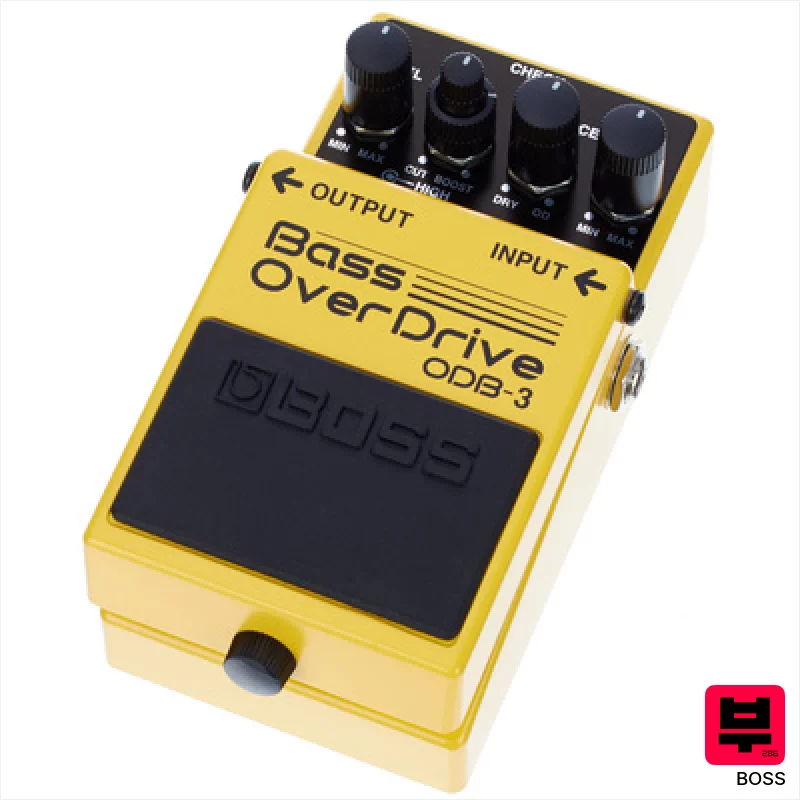
Boss ODB-3
- • Excellent low-end response, even with extreme overdrive settings.
- • The BALANCE control genuinely preserves fundamental bass frequencies.
- • Boss's renowned road-worthy build quality ensures lasting durability.
- • Simple, intuitive controls make dialing in usable tones remarkably easy.
- • Limited tonal flexibility beyond overdrive and EQ; not a full preamp.
- • Can sound a bit 'processed' if not carefully dialed – requires finesse.
- • May lack the organic warmth of a tube-driven overdrive.

MXR Bass Octave Bundle PS A1 RB
- • Excellent low-end depth with the 'Girth' control for a powerful sound
- • Growl knob adds crucial harmonic richness to the octave effect
- • MXR's robust build quality ensures reliable performance over time
- • The bundle provides immediate octave capabilities without additional purchases
- • Can introduce muddiness at higher settings if EQ isn’t dialed in properly
- • True bypass might be preferred by some for pristine signal integrity
- • The octave range isn’t as extensive as some higher-end dedicated octave units
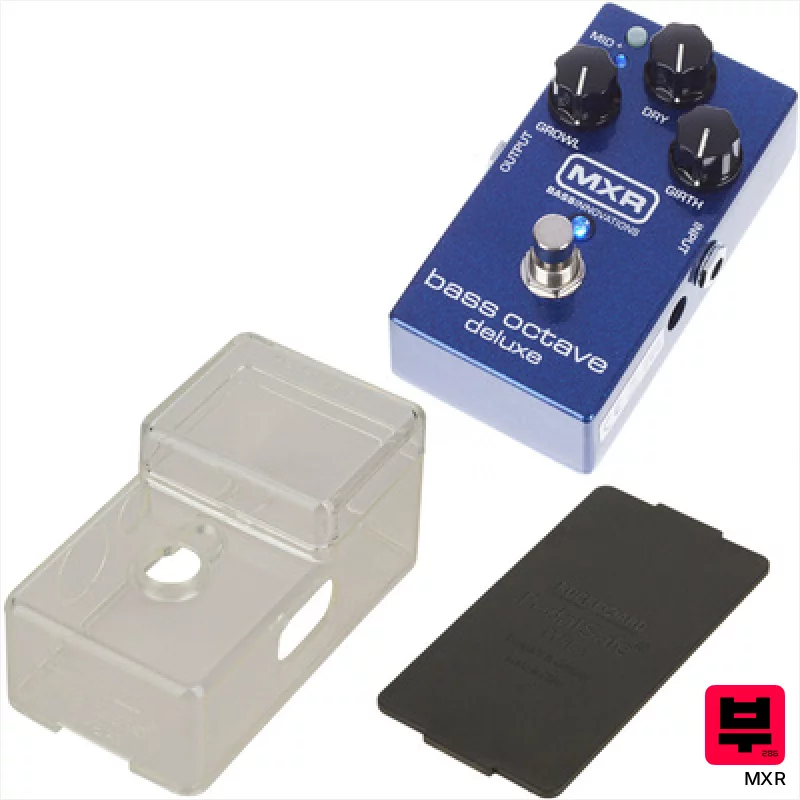
MXR Bass Octave Bundle PS A1
- • Delivers a genuinely usable sub-octave tone, not just a muddy rumble.
- • Growl and Girth controls offer surprising tonal shaping possibilities.
- • MXR's robust build quality ensures reliable gigging performance.
- • Bundle provides immediate octave functionality without needing separate units.
- • Can introduce a bit of noise, especially at higher settings.
- • The octave tone isn’t as pristine as some higher-end, dedicated octave modules.
- • Size can be a factor on smaller pedalboards, requiring careful planning.

Boss Bass Driver BB-1X
- • Boss’s Adaptive Distortion preserves low-end clarity even with high drive.
- • Blend control allows clean signal mixing for a balanced, articulate tone.
- • Balanced DI output provides a professional, noise-free recording or live signal.
- • Rugged Boss construction ensures reliable performance for years of gigging.
- • Drive can get muddy quickly if EQ isn’t carefully adjusted.
- • Limited tonal palette – primarily overdrive, less suited for clean boosts or complex effects.
- • Power supply sold separately, adding to the overall cost.

EBS Bass IQ Blue Label Env. Filter
- • Excellent low-frequency handling, avoids muddy bass response.
- • Versatile envelope filtering with adjustable sensitivity and decay.
- • True bypass preserves your signal integrity when disengaged.
- • Robust EBS build quality; feels solid and dependable.
- • Can be overwhelming for beginners unfamiliar with envelope filters.
- • Limited preset options; primarily focused on one core function.
- • The filter’s character might not suit all musical genres.
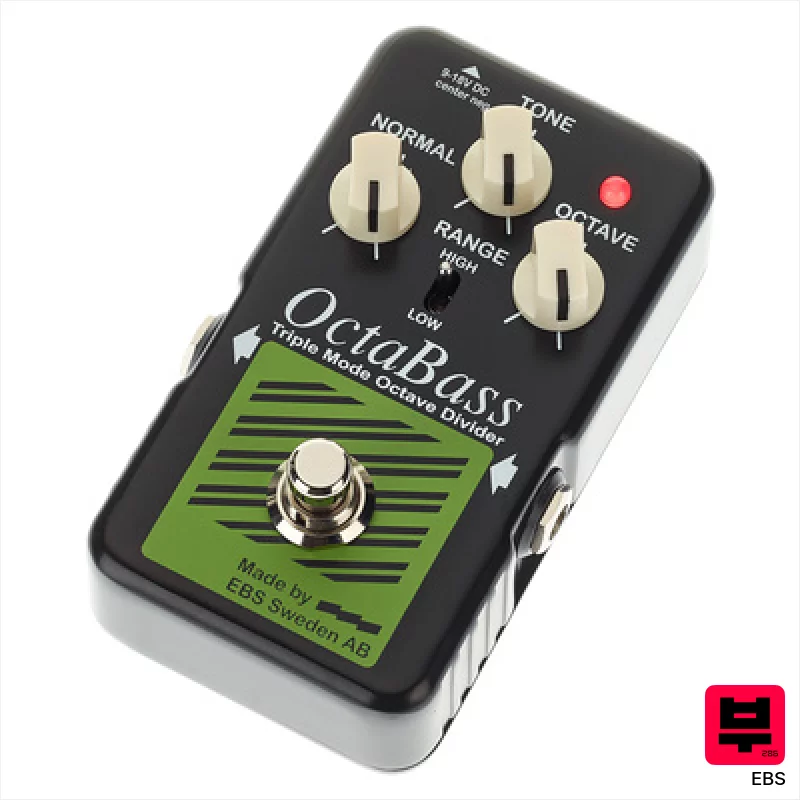
EBS Octabass Blue Label 2020
- • Improved tracking accuracy with the new Range switch is noticeable.
- • Tone control offers subtle sub-bass support or a focused octave.
- • Solid EBS build quality – reliable and road-worthy.
- • Compact size makes it pedalboard-friendly, despite its capabilities.
- • The octave effect can sound artificial with certain bass pickups.
- • 40mA current draw might be a consideration for battery-powered setups.
- • Limited tonal shaping beyond the octave and tone controls.

Rodenberg LDP OD/CB
- • Dual overdrive/boost functionality offers tonal flexibility.
- • Vintage plexi design hints at classic amp tones.
- • Separate deep boost adds substantial low-end emphasis.
- • True bypass preserves signal integrity when inactive.
- • Relatively heavy build may be cumbersome for pedalboard setups.
- • Power supply not included adds to the overall investment.
- • Limited control range might restrict advanced tone sculpting.
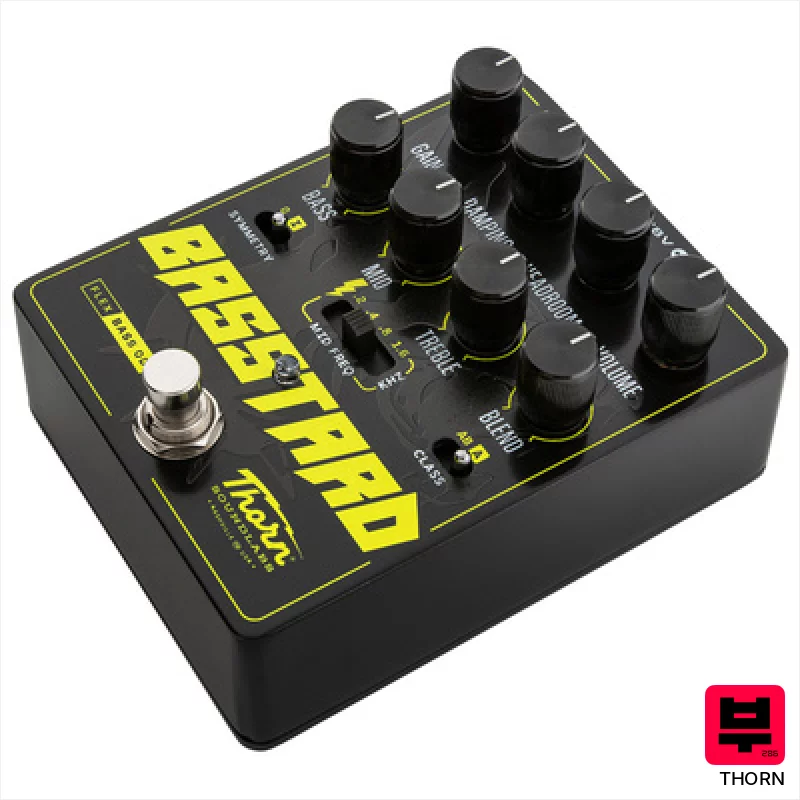
Thorn Basstard - Flex Bass Overdrive
- • Excellent damping control shapes low-end distortion effectively.
- • The Symmetry switch offers unique asymmetrical overdrive tones.
- • Flexible EQ section allows precise tonal sculpting for any bass.
- • Solid build quality; feels robust despite the compact size.
- • Lack of battery operation limits gigging convenience.
- • The 2.2-ohm output impedance might load some amplifiers.
- • Mid-frequency switch offers a limited range of tonal choices.

MXR Bass Distortion M 85
- • Ryan Ratajski’s input delivers a genuinely usable and musical bass distortion.
- • Silicon/LED clipping options offer diverse distortion textures – from aggressive to open.
- • Robust metal housing provides excellent durability for gigging and studio use.
- • Independent volume controls for clean and distorted signals enable stacking and blending.
- • The tone control’s range is somewhat limited, impacting high-end shaping.
- • Requires a separate power supply, adding to the overall investment.
- • Its compact size might be a drawback for players preferring larger pedal footprints.
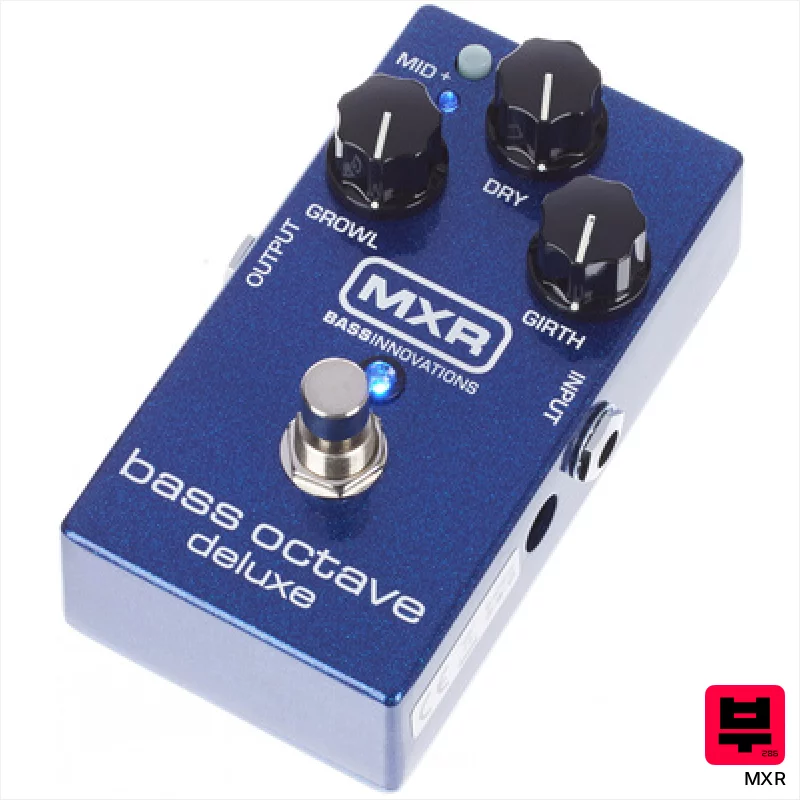
MXR M288 Bass Octave Deluxe
- • Growl control significantly improves octave tone realism and clarity.
- • Girth knob offers substantial tonal shaping, from deep to synth-like.
- • MXR’s robust build quality ensures durability for gigging bassists.
- • Offers a versatile range of octave effects, from subtle to extreme.
- • True bypass isn't present, potential for slight tone coloration.
- • Can introduce muddiness at higher octave and Girth settings.
- • Footprint is relatively large, may be an issue for smaller pedalboards.

Nux Melvin Lee Davis Bass Preamp
- • Impressive impulse response speaker simulation adds surprising realism
- • 3-band EQ with selectable mid frequencies offers targeted tone shaping
- • Built-in noise reduction effectively tames hum and unwanted frequencies
- • Blend control allows seamless integration with existing bass tones
- • Plastic enclosure feels less robust than higher-end metal stompboxes
- • AUX input lacks a level control, potentially clipping with louder sources
- • Impulse responses, while good, are limited in selection and customization
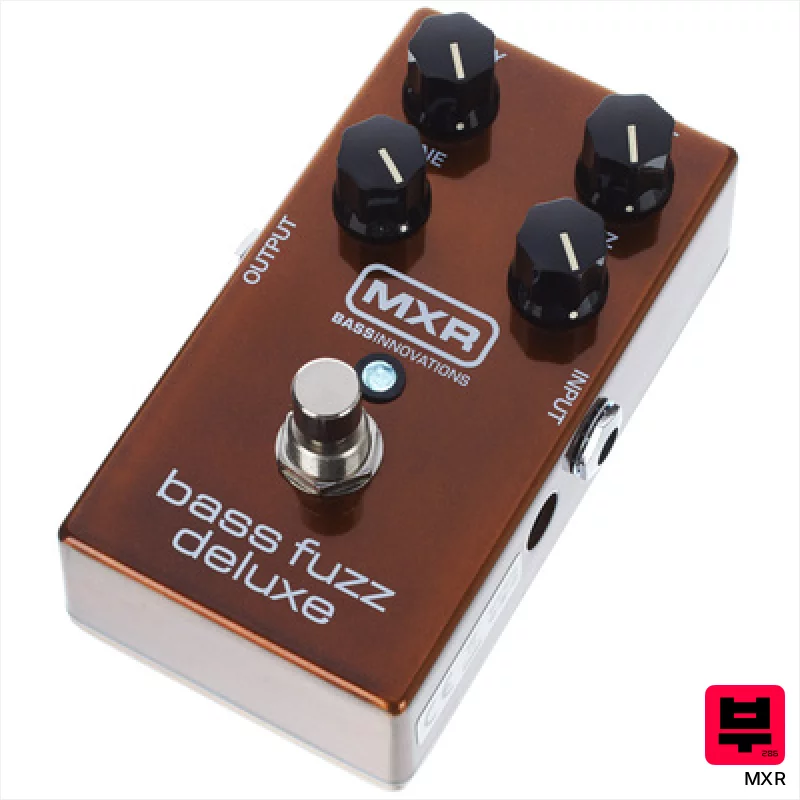
MXR M84 Bass Fuzz Deluxe
- • Vintage-voiced fuzz delivers thick, woolly bass tones perfect for stoner rock.
- • Dry blend control allows for subtle saturation or full-on fuzz.
- • Robust MXR construction ensures durability for gigging musicians.
- • Tone control offers a wide range, from dark and muddy to more articulate.
- • Can get muddy at higher gain settings, especially with active basses.
- • Limited versatility – primarily a fuzz pedal, not a broad tone-shaping tool.
- • 9V battery operation can be inconvenient for extended gigs.

MXR M 280 Vintage Bass Octave
- • Excellent tracking, even with fast basslines and complex rhythms.
- • The MID switch provides crucial tonal shaping for clarity.
- • Solid metal housing feels robust and gig-ready; reliable build.
- • Dual sub-octave voices offer a wide range of low-end textures.
- • Lacks battery operation, requiring a power supply – a modern inconvenience.
- • The MID trimpot adjustment is internal, limiting fine-tuning.
- • Can introduce some muddiness if not carefully dialed in with EQ.
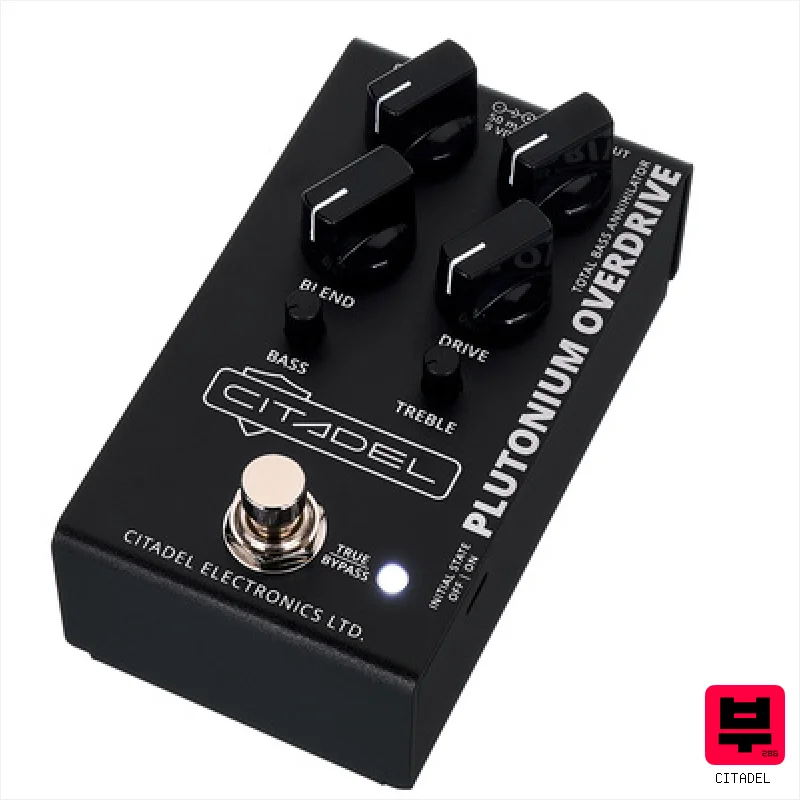
Citadel Plutonium Overdrive
- • Designed specifically for electric bass instruments
- • Uses an operational amplifier for core circuitry
- • Offers crisp low end with powerful distortion
- • Provides dense warm fuzz via crush control
- • No bypass type information provided
- • Missing details on power supply requirements
- • Lacks physical dimensions and connection types
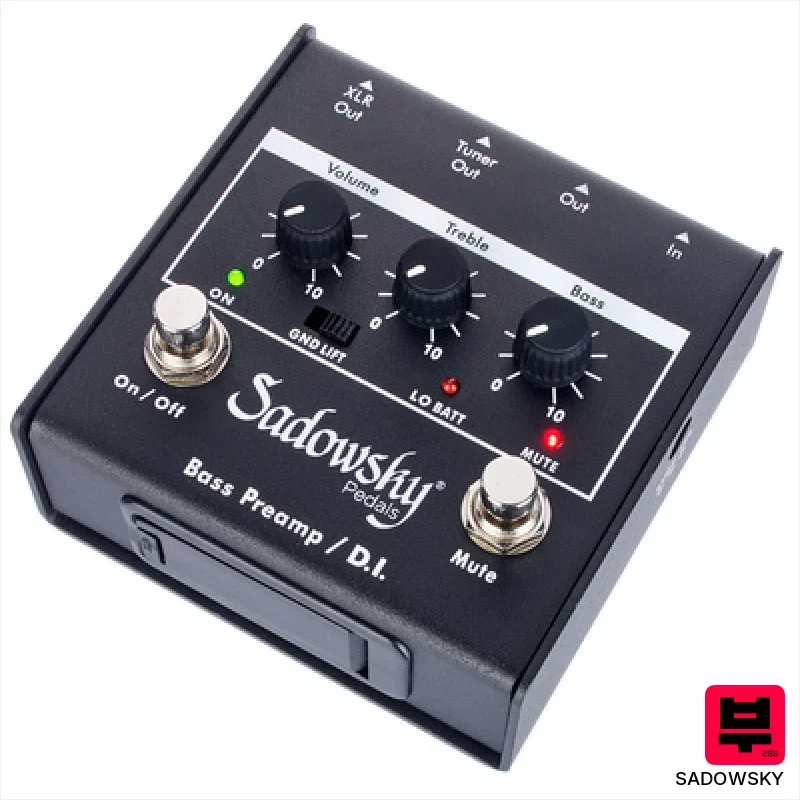
Sadowsky SBP-1 - Bass Preamp / DI
- • Sadowsky's signature preamp tone delivers a focused, articulate low-end.
- • Robust metal housing feels incredibly solid and durable for gigging.
- • DI output provides a clean, balanced signal directly to the PA system.
- • True bypass ensures signal integrity when the pedal is disengaged.
- • EQ section is limited to bass and treble boosts, lacking broader tonal shaping.
- • Power supply not included, adding to the overall investment.
- • Compact size can be a challenge for players with larger feet or crowded pedalboards.
Every bass pedals that matches
54 models match this page. The 15 above are covered in detail; the rest are listed here with their published specifications.
Bass Pedals by the numbers
Measured across all 54 models in this category, so «wide», «short» or «expensive» mean something you can check.
How to Choose the Best Bass Pedals
Tone
It's subjective, sure, but we're looking for pedals that deliver a usable, distinct character. Does the overdrive have that warm, creamy breakup or is it just harsh fuzz? Does the chorus add depth or a watery mess? We're judging based on versatility and how well it sits in a mix.
Build Quality
Pedalboard life is tough. We're assessing the enclosure, footswitch feel, and knob solidity. A flimsy enclosure might sound great, but it'll be toast after a few gigs.
Dynamics & Articulation
A great pedal responds to your playing. Can you coax subtle nuances or a screaming solo? Does it muddy up your articulation, or enhance it? This is critical for bass, where clarity and note definition are key.
Noise
Pedalboard noise is the bane of every bassist's existence. We're evaluating the noise floor - how much hiss and hum is introduced when the pedal is engaged, especially at higher gain settings. This is a big one at this price point - expect some trade-offs.
Versatility
Can this pedal do more than one thing well? A distortion that can also clean up to a subtle grit, or a chorus with a blend knob to dial in the effect are more valuable than a single-trick pony.
Buying Guide
At this price, you're generally looking at all-analog circuits with a few compromises. Expect some noise, potentially less headroom than higher-end options, and maybe a slightly less refined feel. Don't chase 'exact replicas' of boutique pedals - they won't happen. Focus on finding a pedal that inspires you and fills a specific sonic hole in your rig. A good power supply is also worth considering to minimize noise and ensure proper operation.
How This List Is Built
We don't play these instruments — we're a catalog, not a review desk, and we'd rather say so than pretend otherwise. This page covers 54 bass pedals from the Thomann catalogue, which is the largest single source of specification data in this category: 15 in detail, the rest listed with their specifications.
Position is computed, not curated. We parse the manufacturer's own description into actual values — nut width, scale, fret count, fingerboard radius, size, alloy — and rank on them: how many specifications a model has published, how many of them are measurable numbers, and how precisely it meets this page's criterion. A product image adds a little. Price is not a ranking signal: it tells you nothing about whether a neck fits your hand. The same inputs always produce the same order, so nothing here is shuffled to look fresh.
What this list is good for: narrowing a category down to a shortlist by spec and budget. What it isn't: a substitute for hearing an instrument. Before you buy, read hands-on reviews and, where you can, play it. Full methodology.

