
Best EBS Bass Pedals 2026
Alright, so you're looking at EBS bass pedals. Smart move. They've been a staple for serious bassists for decades, and for good reason. They nail that Scandinavian clean headroom and defined low-end that cuts through a live mix without getting muddy - something a lot of other brands just miss. Let's break down what makes EBS pedals tick and which ones should be on your radar.
Last updated: October 8, 2026

EBS UniChorus Studio Edition Rev 2
- • Improved headroom noticeably reduces muddiness at higher volumes.
- • Rev 2's lighter weight makes pedalboard organization much easier.
- • The Mode switch offers genuinely distinct chorus, flanger, and phaser tones.
- • Analog circuitry delivers a warm, organic chorus effect lacking in digital alternatives.
- • The control range, while useful, can feel a bit limited for extreme soundscapes.
- • The 9V battery option is convenient but drains quickly with continuous use.
- • The plastic enclosure, while durable, doesn’t feel as premium as some competitors.

EBS MultiComp Blue Label
- • Excellent compression across its three distinct voicing modes
- • Tubesim mode convincingly emulates vintage amp compression
- • Compact footprint saves valuable pedalboard real estate
- • Solid build quality – feels robust and ready for gigging
- • Gain control can be a little sensitive, requiring careful adjustment
- • Limited connectivity – only standard input/output jacks
- • Power supply not included; adds to the initial investment

EBS Billy Sheehan Ult.Sign.Drive
- • Warm, harmonically rich overdrive thanks to the analog circuitry
- • Clean loop offers seamless integration with other effects in your chain
- • The 'Clean' control provides a surprisingly useful, transparent boost
- • Robust construction feels solid and durable for gigging.
- • Limited tonal flexibility compared to multi-effect units
- • Compressor's mid-mode can be a bit too aggressive for subtle playing
- • Size is a bit larger than some other compact bass pedals.

EBS ValveDrive DI
- • ECC83 tube delivers warm, responsive overdrive character
- • Passive filters offer authentic vintage EQ shaping capabilities
- • XLR output provides a clean, direct signal for recording or live use
- • Robust metal enclosure feels exceptionally durable and roadworthy
- • High current draw necessitates a reliable power supply
- • Limited versatility compared to multi-effect units or more complex pedals
- • Size and weight make it less ideal for extremely compact pedalboards
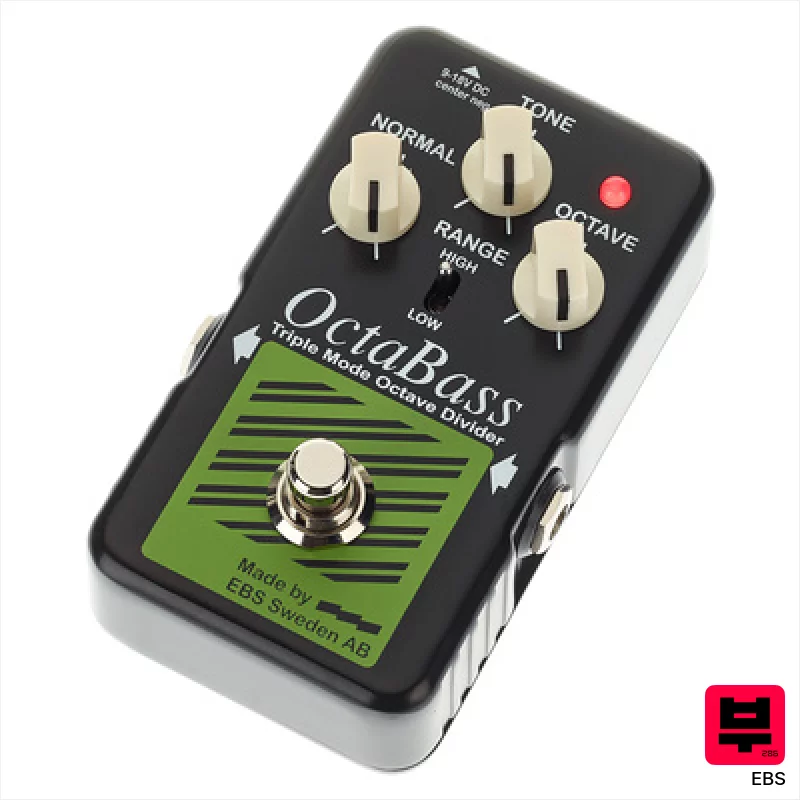
EBS Octabass Blue Label 2020
- • Improved tracking accuracy with the new Range switch is noticeable.
- • Tone control offers subtle sub-bass support or a focused octave.
- • Solid EBS build quality – reliable and road-worthy.
- • Compact size makes it pedalboard-friendly, despite its capabilities.
- • The octave effect can sound artificial with certain bass pickups.
- • 40mA current draw might be a consideration for battery-powered setups.
- • Limited tonal shaping beyond the octave and tone controls.

EBS Bass IQ Blue Label Env. Filter
- • Excellent low-frequency handling, avoids muddy bass response.
- • Versatile envelope filtering with adjustable sensitivity and decay.
- • True bypass preserves your signal integrity when disengaged.
- • Robust EBS build quality; feels solid and dependable.
- • Can be overwhelming for beginners unfamiliar with envelope filters.
- • Limited preset options; primarily focused on one core function.
- • The filter’s character might not suit all musical genres.
Bass Pedals by the numbers
Measured across all 148 models in this category, so «wide», «short» or «expensive» mean something you can check.
How to Choose the Best Bass Pedals
Tone Character
EBS's signature sound leans towards a very clean, articulate foundation. It's not inherently colored, meaning it lets your bass's natural voice shine, but they offer a range from that pristine clarity to controlled distortion with a distinct, almost 'smooth' breakup. It's a low-end thump with definition, not just a rumble.
Headroom
This is where EBS really shines. Their pedals consistently deliver incredible headroom, meaning you can push them hard without things getting compressed and lifeless. This is crucial for live situations where your signal dynamics are constantly changing.
Build Quality
EBS pedals are built like tanks. The metal enclosures are thick, the footswitches are solid, and the components generally feel top-notch. You're paying for that durability, and it shows - these are pedals you can gig with for years.
EQ Capabilities
EBS's EQ is often the star of the show. It's not just a basic bass/mid/treble control; it's a meticulously designed system that lets you surgically shape your tone. That ability to carve out space for your bass in a dense mix is invaluable.
Circuit Design
EBS designs their circuits with a focus on efficiency and low noise. This results in a cleaner signal path, especially important when stacking multiple effects or using high-gain amps. You'll hear more of your bass and less of the pedal's internal noise floor.
Buying Guide
EBS pedals aren't the cheapest on the market, and that's because they don't cut corners. You're paying for that clean headroom, robust build, and the meticulously designed EQ. Be wary of cheap clones or knock-offs; they often sacrifice the core EBS sound and reliability. If you need a clean, powerful foundation for your bass tone, EBS is worth the investment.
How This List Is Built
We don't play these instruments — we're a catalog, not a review desk, and we'd rather say so than pretend otherwise. This page covers 6 of 148 bass pedals from the Thomann catalogue, which is the largest single source of specification data in this category: 6 in detail, the rest listed with their specifications.
Position is computed, not curated. We parse the manufacturer's own description into actual values — nut width, scale, fret count, fingerboard radius, size, alloy — and rank on them: how many specifications a model has published, how many of them are measurable numbers, and how precisely it meets this page's criterion. A product image adds a little. Price is not a ranking signal: it tells you nothing about whether a neck fits your hand. The same inputs always produce the same order, so nothing here is shuffled to look fresh.
What this list is good for: narrowing a category down to a shortlist by spec and budget. What it isn't: a substitute for hearing an instrument. Before you buy, read hands-on reviews and, where you can, play it. Full methodology.

