
Best LD Systems Wireless Microphones with Handheld Microphone 2026
So, you're looking into going wireless, huh? It's a game changer for stage presence, but cheaping out on your handheld mic system is a recipe for feedback headaches and muddy vocals. Ld Systems isn't the first name that jumps to mind for a lot of players, but they've been quietly building solid, reliable wireless systems, and their handhelds deserve a serious listen, especially if you're balancing budget and performance.
Last updated: April 11, 2026
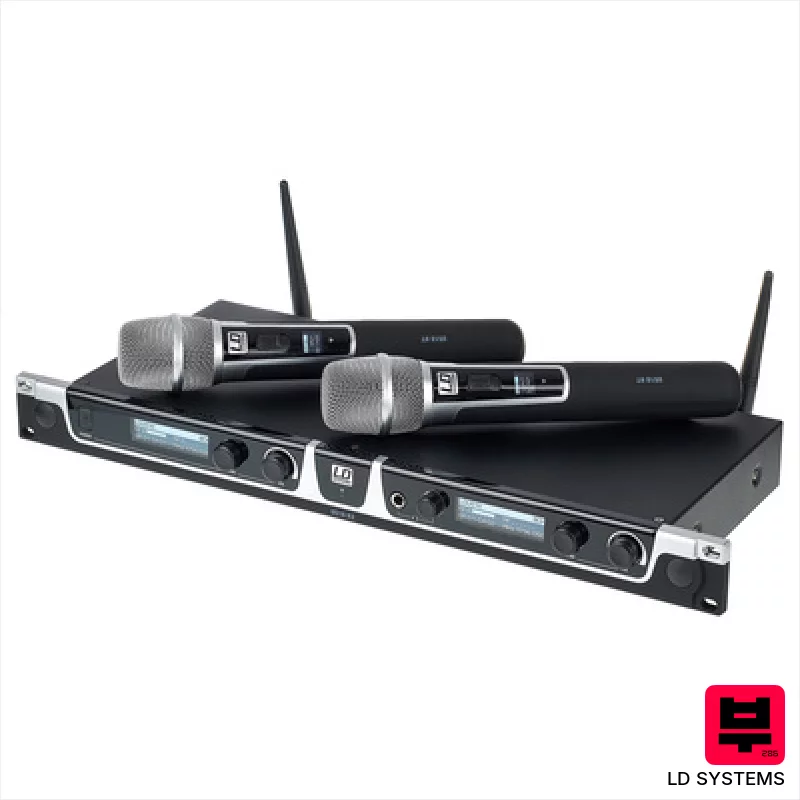
LD Systems U518 HHC2
- • True diversity receiver minimizes interference in crowded RF environments
- • Interchangeable capsules offer tonal flexibility for various vocal styles
- • OLED display provides clear, at-a-glance system status information
- • Dual bodypacks are ideal for stage productions and presentations
- • Limited frequency band (1785-1800 MHz) may require licensing in some regions
- • AA battery power for transmitters adds to operational costs and potential downtime
- • Build quality feels adequate, but not as robust as premium wireless systems
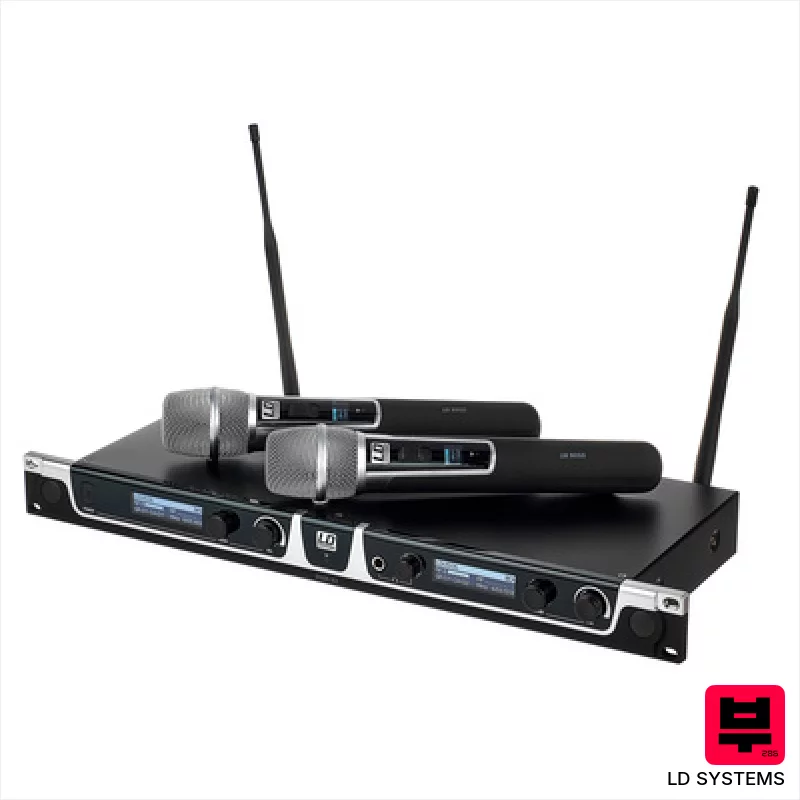
LD Systems U506 HHC2
- • True diversity reception minimizes interference in crowded RF environments
- • OLED display offers clear, real-time feedback on settings and battery status
- • Switchable transmission power provides flexibility for varying distances and legal limits
- • Condenser capsules deliver a detailed, articulate sound suitable for vocals and instruments
- • AA battery operation can become costly and inconvenient compared to rechargeable packs
- • The 655-679 MHz band is increasingly congested in some regions, limiting channel availability
- • While versatile, the capsule isn't as robust as some higher-end stage-grade microphone elements
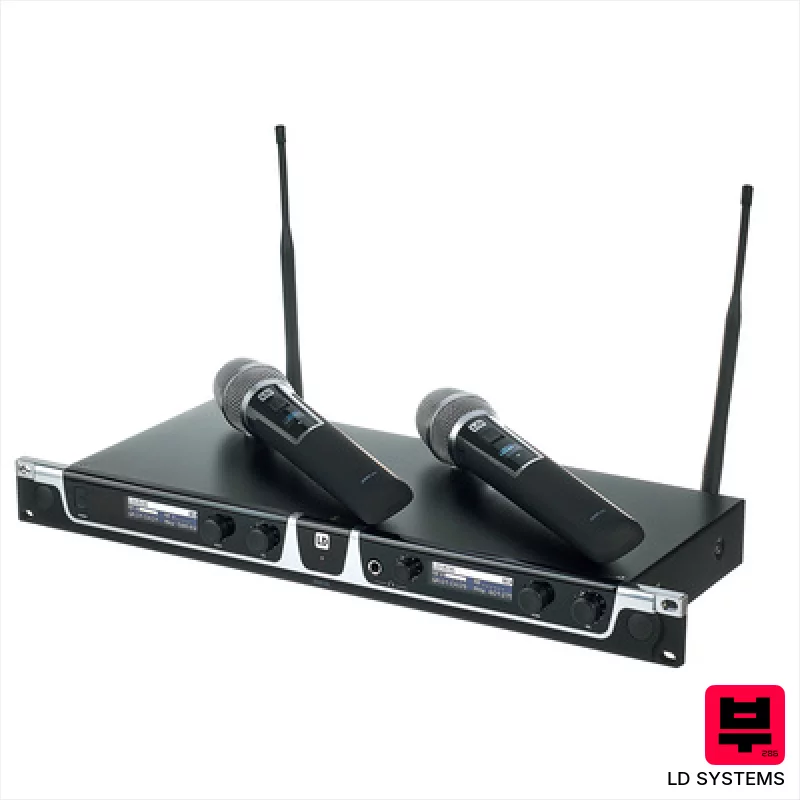
LD Systems U505 HHC2
- • True diversity reception minimizes interference in crowded RF environments
- • OLED display offers clear, real-time feedback on settings and battery status
- • Switchable transmission power allows for adaptable range and regulatory compliance
- • Handheld capsules deliver a bright, natural vocal tone with good detail
- • The 584-608 MHz band is becoming increasingly congested in some areas
- • AA battery operation isn't as convenient as integrated rechargeable packs
- • Build quality, while adequate, doesn't feel quite as premium as higher-end systems
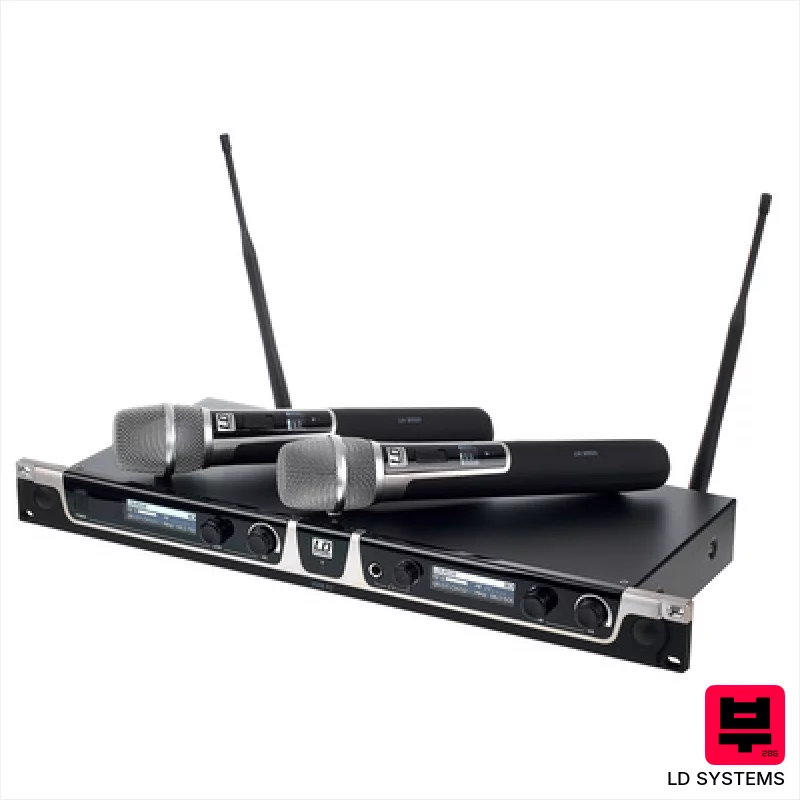
LD Systems U508 HHC2
- • Excellent frequency scanning simplifies setup in crowded RF environments
- • True diversity receiver minimizes dropouts, a welcome reliability boost
- • OLED display offers clear, at-a-glance system status information
- • Remote controls provide convenient stage control over volume and tone
- • AA battery reliance can be inconvenient for extended performances
- • 823-832/863-865 MHz band may face regulatory limitations in some regions
- • While versatile, capsule exchange limits ultimate sonic customization
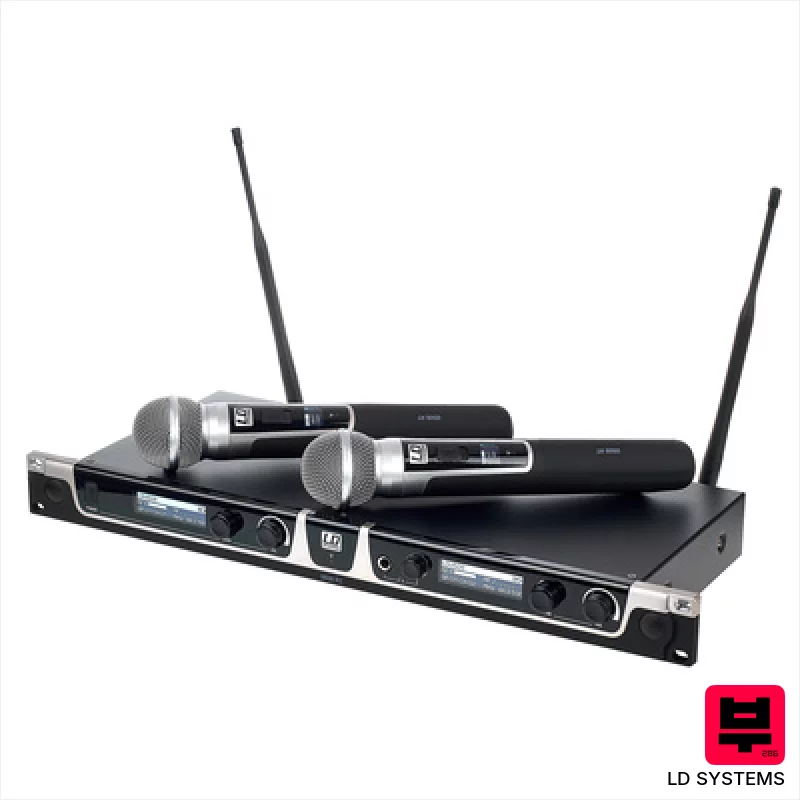
LD Systems U508 HHD2
- • True diversity receiver minimizes dropouts in challenging environments
- • The dynamic capsule delivers a robust, vocal-friendly sound with decent detail
- • Remote controls offer flexibility for stage performance and monitoring
- • 96 channels provide ample frequency options to avoid interference
- • The AA battery operation can become costly and inconvenient for extended gigs
- • The build quality, while decent, feels somewhat plasticky compared to higher-end systems
- • Limited frequency range might restrict compatibility with certain specialized applications
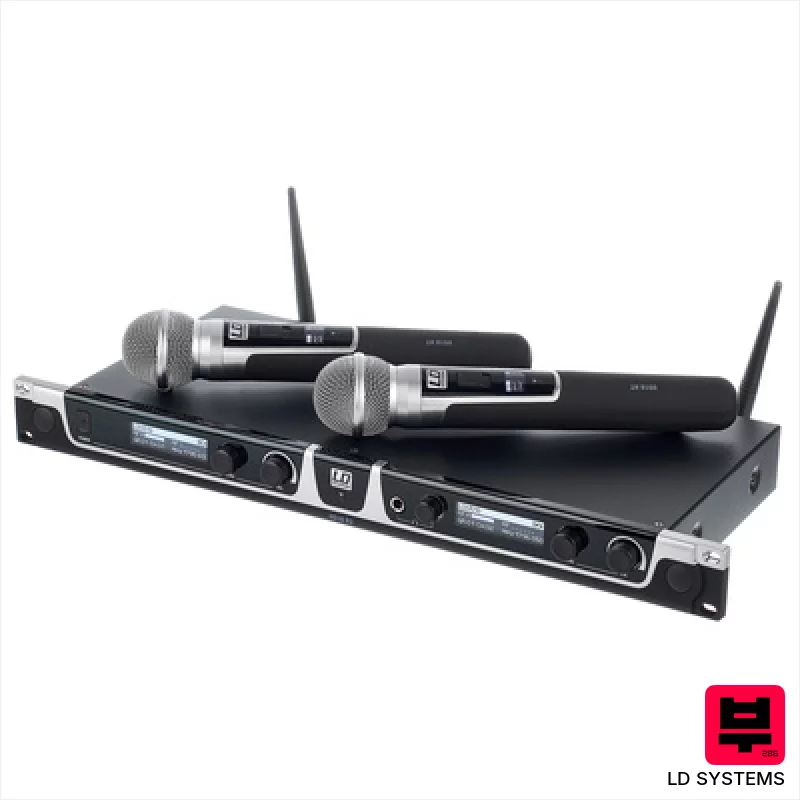
LD Systems U518 HHD2
- • True diversity receiver minimizes interference, a huge reliability boost.
- • Dynamic capsules offer a robust, stage-ready sound.
- • OLED display provides clear, at-a-glance system status.
- • Multiple channel options offer flexibility for larger performances.
- • The 1785-1800 MHz band might require licensing in some regions.
- • AA battery power in the transmitters isn't ideal for extended gigs.
- • The build quality feels a little plasticky for the price point.
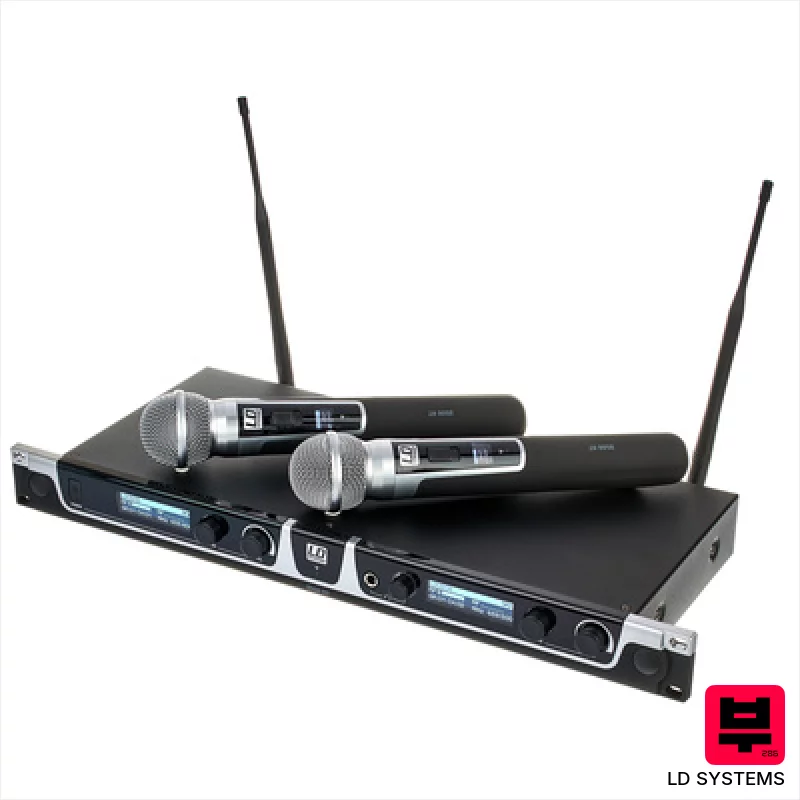
LD Systems U506 HHD2
- • True diversity reception minimizes interference in crowded RF environments
- • OLED display provides clear, at-a-glance status information
- • Dynamic capsules offer a robust, natural sound suitable for vocals and instruments
- • Switchable transmission power extends range and optimizes battery life
- • AA battery operation can be inconvenient compared to integrated rechargeable packs
- • Frequency band is relatively narrow, potentially limiting flexibility in some regions
- • While versatile, lacks advanced features found in higher-end wireless systems
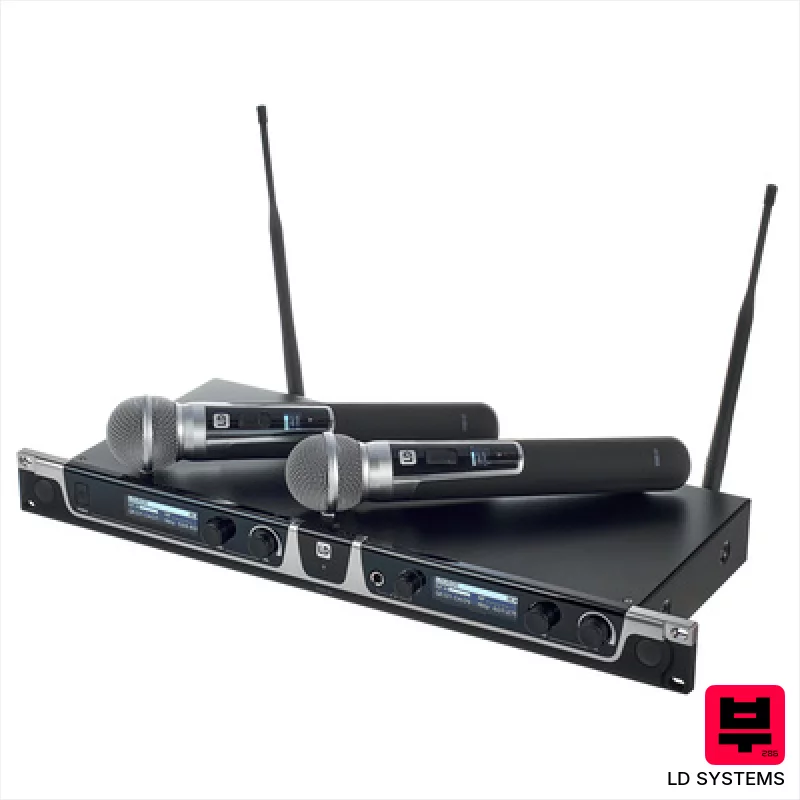
LD Systems U505 HHD2
- • True diversity reception minimizes interference in crowded RF environments.
- • OLED display offers clear, at-a-glance system status information.
- • Interchangeable capsules provide flexibility for different vocal styles and applications.
- • Comprehensive package includes batteries, antennas, and a sturdy carrying case.
- • 584-608 MHz band might face regulatory restrictions in some regions.
- • AA battery power in transmitters can be inconvenient for extended use.
- • Limited frequency range (60-16,000 Hz) might slightly curtail high-frequency detail.
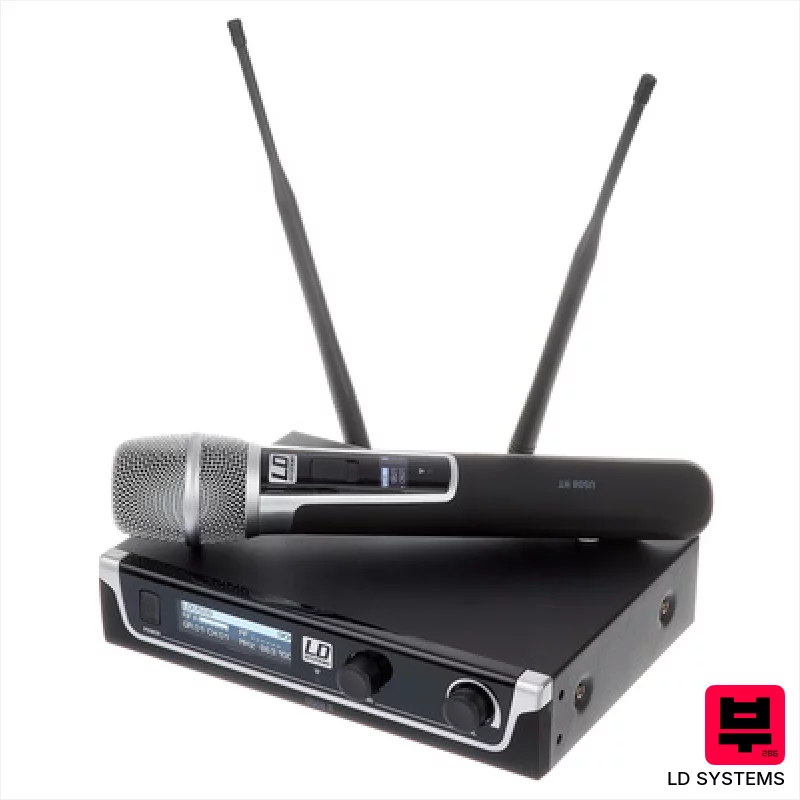
LD Systems U508 HHC
- • True diversity reception minimizes interference in crowded RF environments.
- • OLED display provides clear, at-a-glance information on frequency and battery status.
- • Cardioid capsule offers focused sound pickup, rejecting off-axis noise.
- • Multiple power settings allow for optimization of range and battery life.
- • 823-832 MHz band can face regulatory limitations in some regions.
- • AA battery power is less convenient than rechargeable internal packs.
- • While versatile, lacks features found in higher-end, more expensive systems.
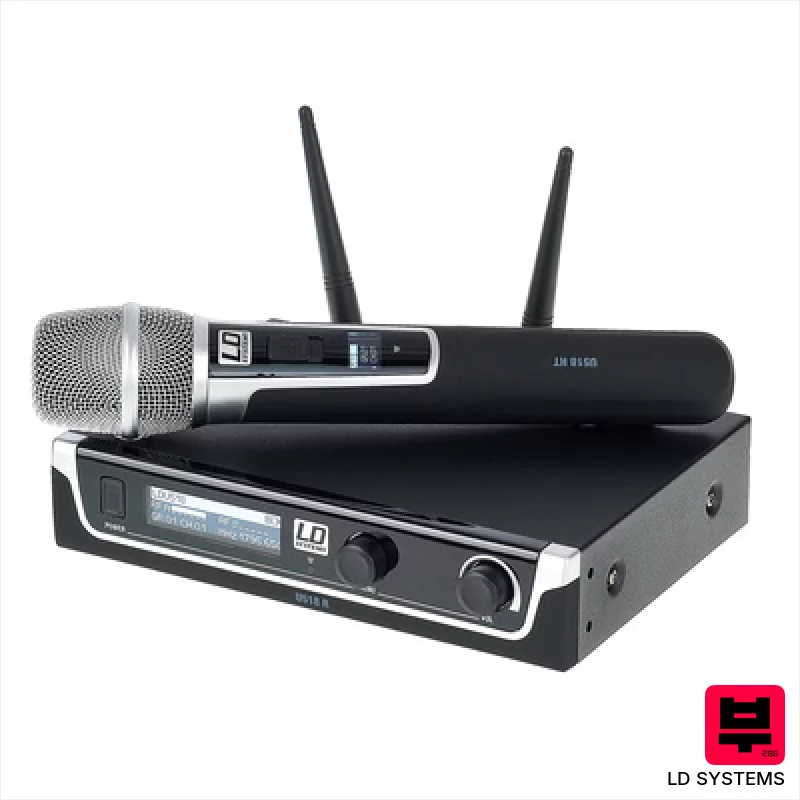
LD Systems U518 HHC
- • Solid build quality; feels robust for the price point
- • True diversity receiver minimizes dropouts in challenging RF environments
- • OLED display provides clear, at-a-glance system status
- • Includes essential accessories: batteries, antennas, power supply, case
- • Limited frequency band compared to broader UHF systems
- • AA battery operation in the transmitter can be inconvenient for long gigs
- • Cardioid capsule is a single pattern, lacks versatility for varied performance
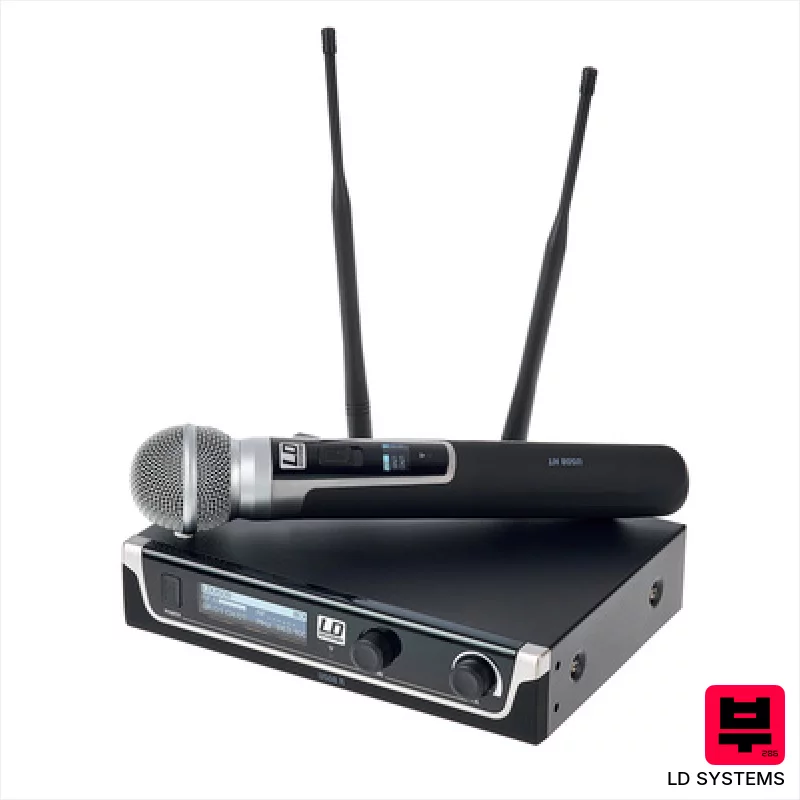
LD Systems U508 HHD
- • Solid build quality; feels robust for its price point.
- • True diversity receiver minimizes interference reliably.
- • OLED display provides clear, at-a-glance information.
- • Flexible channel selection offers good performance in crowded RF environments.
- • Dynamic capsule lacks the finesse of condenser mics for nuanced vocals.
- • Battery life is average; expect to swap AA’s frequently.
- • Range is respectable but not exceptional; line-of-sight is key.
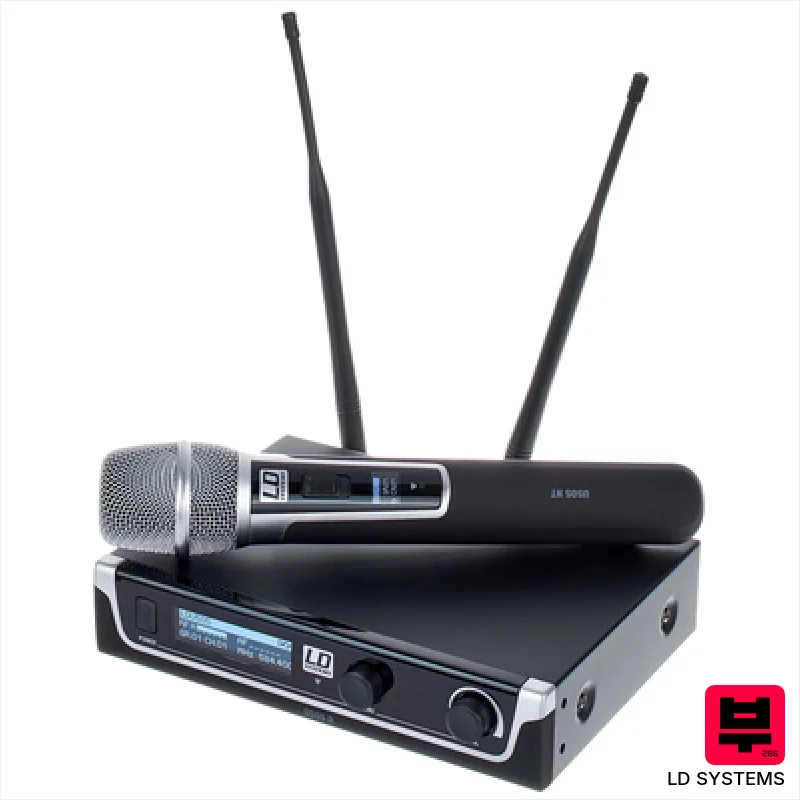
LD Systems U505 HHC
- • True Diversity system minimizes dropouts in challenging RF environments
- • OLED display provides clear, at-a-glance status information
- • Cardioid capsule offers focused sound pickup, reducing stage noise
- • 96 channels offer flexibility and reduce interference in crowded spaces
- • AA battery operation isn't ideal for extended performances; consider rechargeable packs
- • Build quality feels a bit plasticky; not as robust as higher-end systems
- • Limited frequency range might struggle in exceptionally dense RF environments
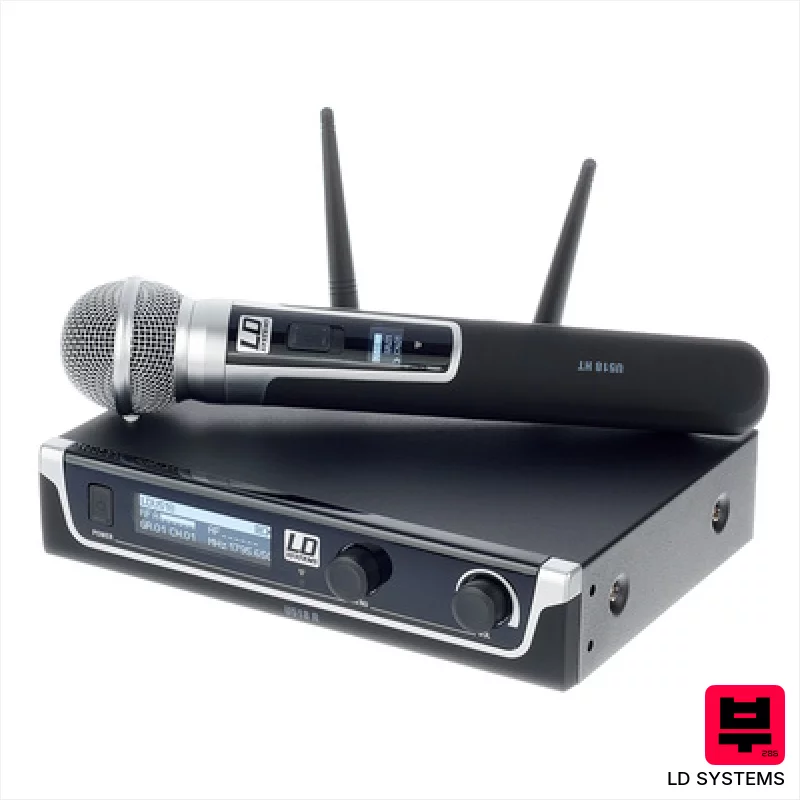
LD Systems U518 HHD
- • Solid build quality; feels robust for its price bracket
- • True diversity receiver minimizes interference in crowded RF environments
- • OLED display is clear and provides useful information at a glance
- • Automatic frequency scan simplifies setup and avoids dead spots
- • 1785-1800 MHz band is limited and may not be universally available
- • AA battery power in the handheld is inconvenient; rechargeable packs are essential
- • Cardioid pattern lacks versatility for complex stage setups
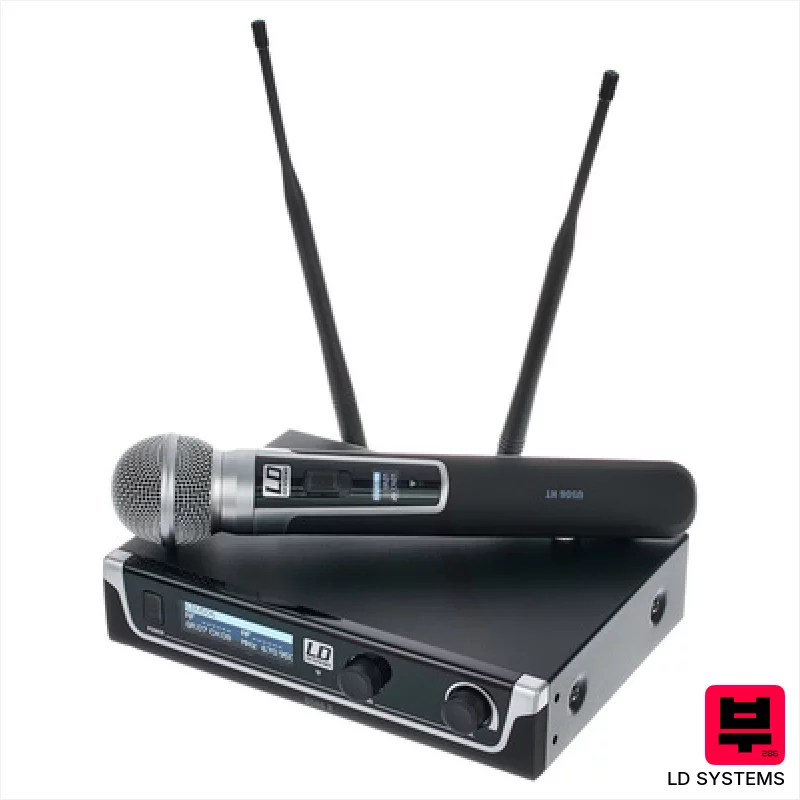
LD Systems U506 HHD
- • Dynamic capsule delivers clear vocals with decent feedback rejection
- • True diversity receiver minimizes interference in crowded RF environments
- • Automatic frequency scan simplifies setup, crucial for live gigs
- • OLED display provides clear visual feedback on settings and battery status
- • Plastic construction feels somewhat budget-oriented compared to higher-end systems
- • Battery life dependent on transmission power setting; AA's drain quickly
- • Limited frequency band may require channel adjustments in some locations
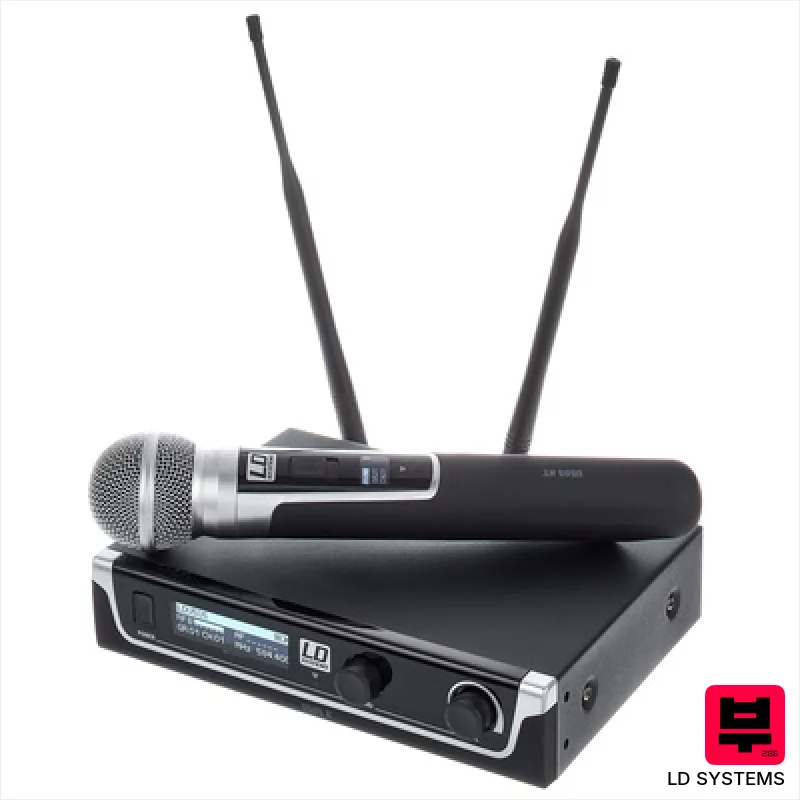
LD Systems U505 HHD
- • Solid build quality for the price point, feels dependable in hand
- • True diversity receiver minimizes dropouts in crowded RF environments
- • The dynamic capsule offers respectable vocal clarity and feedback rejection
- • Automatic frequency scan simplifies setup, especially for beginners
- • Sound quality, while acceptable, lacks the refinement of higher-end systems
- • Battery life is average; expect around 6-8 hours with alkaline cells
- • Limited frequency band compared to some competing systems.
How to Choose the Best Wireless Microphones with Handheld Microphone
Frequency Response & Tone
Ld Systems generally aims for a fairly neutral vocal character - not overly bright or hyped. You'll get a clean, articulate sound that's a good starting point for any vocal style, but it might lack that immediate 'wow' factor of some more aggressively EQ'd mics. Still, it's a solid foundation to build on with your PA's EQ.
Build Quality & Durability
These aren't disposable mics. The handhelds feel surprisingly robust, with a decent weight and solid construction. The receivers are similarly well-built, which is crucial for those late-night gigs where things get a little... enthusiastic. They've clearly prioritized reliability over chasing the slimmest possible profile.
Range & Reliability
Ld Systems has improved significantly in this area. Their newer systems offer respectable range and, importantly, solid frequency stability. You'll still want to do a quick frequency scan before each gig, but you're less likely to experience dropouts compared to some of the older, cheaper options.
Audio Clarity & Feedback Rejection
The mics themselves offer good clarity, particularly in the mid-range, which is where most vocals live. They're not going to magically solve feedback problems - that's a PA and room thing - but they offer decent feedback rejection when properly managed. They don't have the aggressive filtering of some higher-end mics, so you need to be mindful of your stage volume.
Value Proposition
This is where Ld Systems really shines. You're getting a lot of performance for the money. They aren't going to compete with the top-tier brands on sheer sonic refinement, but the price-to-performance ratio is genuinely excellent, making them a strong contender for bands and performers on a budget.
Buying Guide
Don't expect a super-polished, studio-grade vocal experience. Ld Systems wireless systems are workhorses, built for gigging and rehearsal. Pay attention to the frequency band - 2.4GHz systems are generally easier to license and less prone to interference than UHF, but range can be slightly shorter. If you're in a crowded RF environment, a wider bandwidth system is worth the investment.
How This List Is Built
We don't play these instruments — we're a catalog, not a review desk, and we'd rather say so than pretend otherwise. This page ranks 15 wireless microphones with handheld microphone from the Thomann catalogue, which is the largest single source of specification data in this category.
Position is computed, not curated. Four signals, in order of weight: how completely the manufacturer documents the instrument (number of published specifications), where it sits in the price range, how specific the model designation is — which filters out generic accessories — and whether a product image exists. The same inputs always produce the same order, so nothing here is shuffled to look fresh.
What this list is good for: narrowing a category down to a shortlist by spec and budget. What it isn't: a substitute for hearing an instrument. Before you buy, read hands-on reviews and, where you can, play it. Full methodology.

