
Best AKG Wireless Microphones with Handheld Microphone 2026
Alright, so you're looking at wireless handheld mics from AKG? Smart move. They've been a staple in studios and on stages for decades, and for good reason. Forget the flashy marketing - AKG's always been about solid, reliable performance and a vocal tone that sits beautifully in a mix, even when things get loud. Let's break down which AKG wireless handhelds are worth your money and which ones might leave you wanting.
Last updated: April 11, 2026

AKG WMS 470 D5 Band 10 Set
- • Robust metal receiver provides excellent durability for stage use
- • D5 capsule delivers clear, focused vocal reproduction with good feedback rejection
- • Infrared frequency transmission ensures reliable pairing and avoids interference
- • Auto-Set-Up simplifies operation, ideal for less experienced users
- • Band 10 frequency range can be limited in some regions, check local regulations
- • AA battery operation isn’t as convenient as rechargeable internal packs
- • Receiver's 9.5 in height might be a constraint in shallow rack spaces

AKG WMS 470 C5 Band 1 Set
- • Solid metal receiver build provides excellent roadworthiness
- • C5 capsule delivers a clear, detailed vocal sound
- • Infrared frequency transmission simplifies setup and avoids interference
- • Parallel operation allows for potential future expansion with more channels
- • Band 1 frequency range limits availability in some regions
- • AA battery operation can be inconvenient for long gigs
- • Receiver's 9.5 in height might be restrictive in tight rack spaces
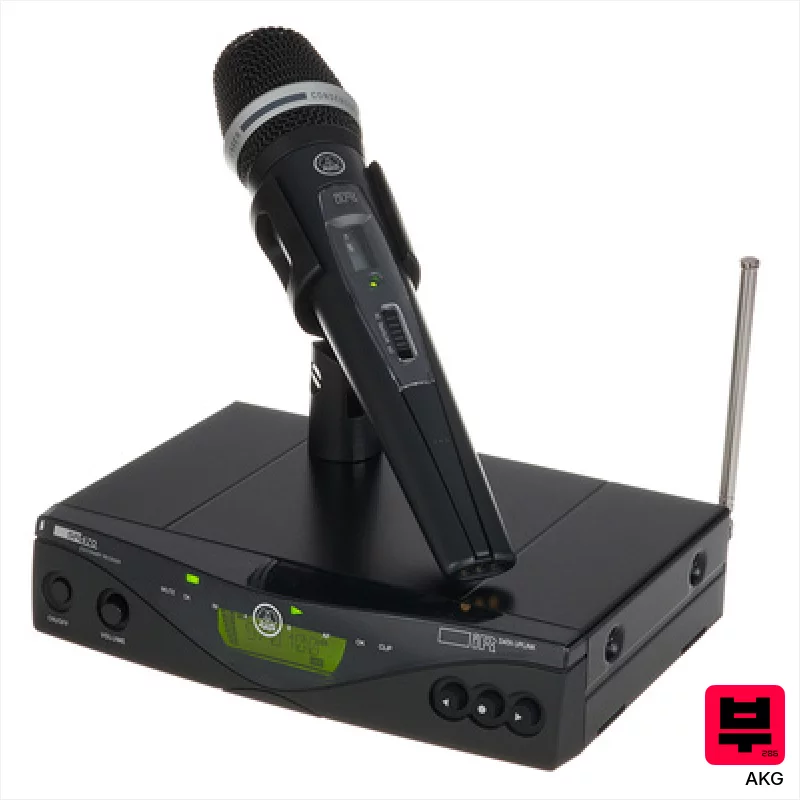
AKG WMS 470 C5 Band 8
- • Robust metal receiver housing offers excellent durability on stage.
- • C-5l capsule delivers a clear, focused vocal sound with good detail.
- • Infrared frequency transmission ensures quick and reliable pairing with the transmitter.
- • Auto setup and rehearsal mode streamline workflow for live performance.
- • Band 8 frequency allocation may face interference in crowded RF environments.
- • AA battery power can be a recurring expense compared to rechargeable packs.
- • Limited frequency selection within Band 8 restricts scalability for larger bands.

AKG WMS 420 Vocal Set Band M
- • Solid AKG D5 capsule delivers clear, punchy vocal performance
- • Diversity antenna system minimizes dropouts in challenging environments
- • Compact receiver design offers decent portability and rackmount options
- • On-Mute-Off switch provides reliable, noiseless operation during performances
- • Limited frequency band 'M' may face interference in crowded RF environments
- • AA battery power is less convenient than rechargeable options
- • Transmitter power (20mW) restricts range compared to higher-power systems
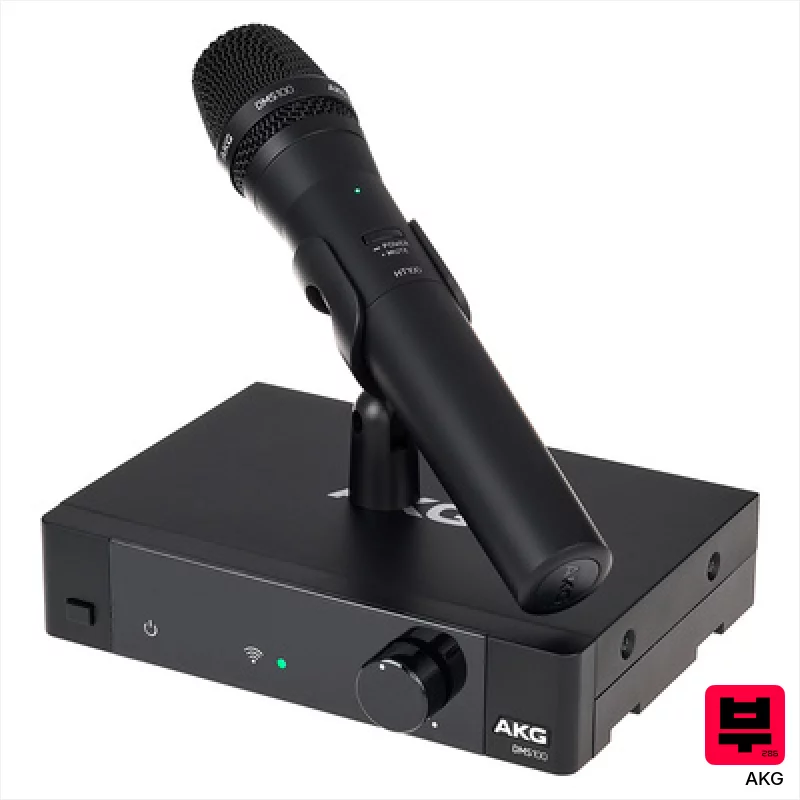
AKG DMS100 Vocal Set P5
- • Digital clarity provides clean, uncompressed vocal reproduction.
- • AES 256-bit encryption offers robust signal security.
- • Pocket transmitter's 12-hour battery life is genuinely impressive.
- • Automatic frequency management simplifies operation in crowded RF environments.
- • The dynamic capsule lacks the nuance for more delicate vocal styles.
- • 30m range can be limiting for larger stages or outdoor events.
- • Receiver size (200 x 165 x 44mm) makes it less portable.

AKG WMS 420 Vocal Set Band D
- • D5 capsule delivers AKG's signature robust, clear vocal tone.
- • Antenna diversity minimizes dropouts in challenging environments.
- • On-Mute-Off switch prevents embarrassing stage silence.
- • Compact receiver design offers portability without compromising features.
- • Band D frequency allocation can be congested in some areas.
- • AA battery power isn't as convenient as rechargeable packs.
- • Limited frequency count restricts use in very large, complex productions.
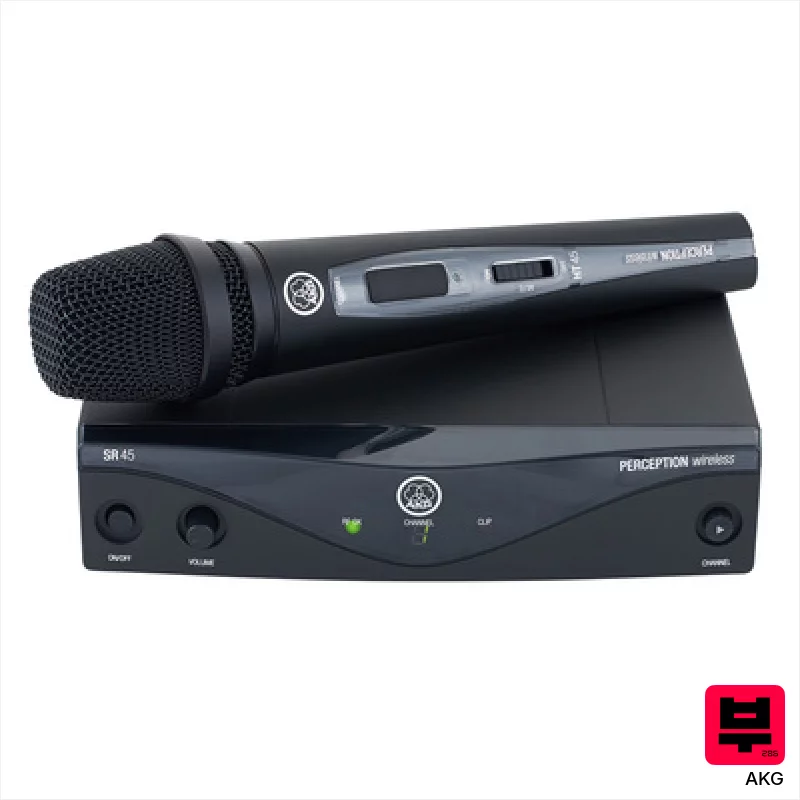
AKG PW45 Vocal Set Band M
- • Solid build quality for the price point, feels reliable in hand
- • Decent frequency range avoids common interference issues
- • Simple controls make setup and operation very straightforward
- • Cardioid mic rejects off-axis noise effectively for vocals
- • Limited frequency options restrict scalability for larger events
- • Battery life is average; expect frequent AA changes
- • Receiver’s antenna gain isn’t exceptional for long distances
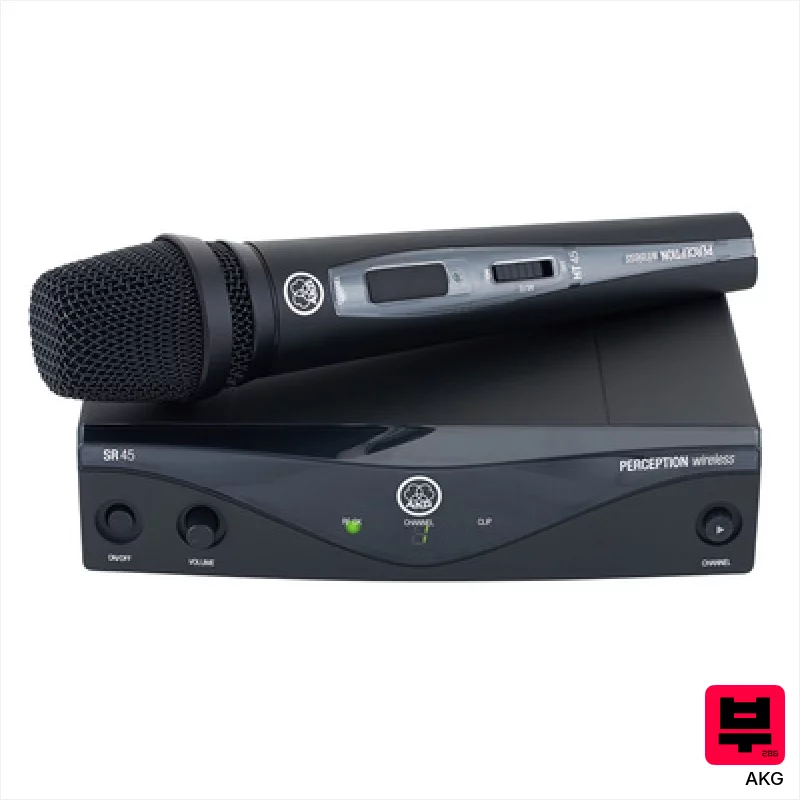
AKG PW45 Vocal Set ISM
- • Solid build quality for the price point, feels dependable in hand
- • Click-free switch is a surprisingly nice touch for live vocals
- • Diversity receiver minimizes dropouts in typical performance settings
- • Lightweight handheld transmitter reduces fatigue during longer sets
- • Limited frequency options restrict use in crowded RF environments
- • AA battery operation isn't ideal for extended, professional gigs
- • Sound quality is adequate, not exceptional, for critical applications

AKG WMS 40 Mini Dual Vocal/Inst
- • Compact design simplifies setup and transport for gigging musicians
- • HDAP technology delivers surprisingly clear and detailed vocal reproduction
- • Dual-transmitter flexibility handles vocals and instruments easily
- • European registration-free operation avoids bureaucratic hassles
- • Non-diversity receiver can be susceptible to interference in crowded RF environments
- • AA battery power offers less convenience than rechargeable options
- • Limited frequency agility restricts channel selection in dense wireless scenarios
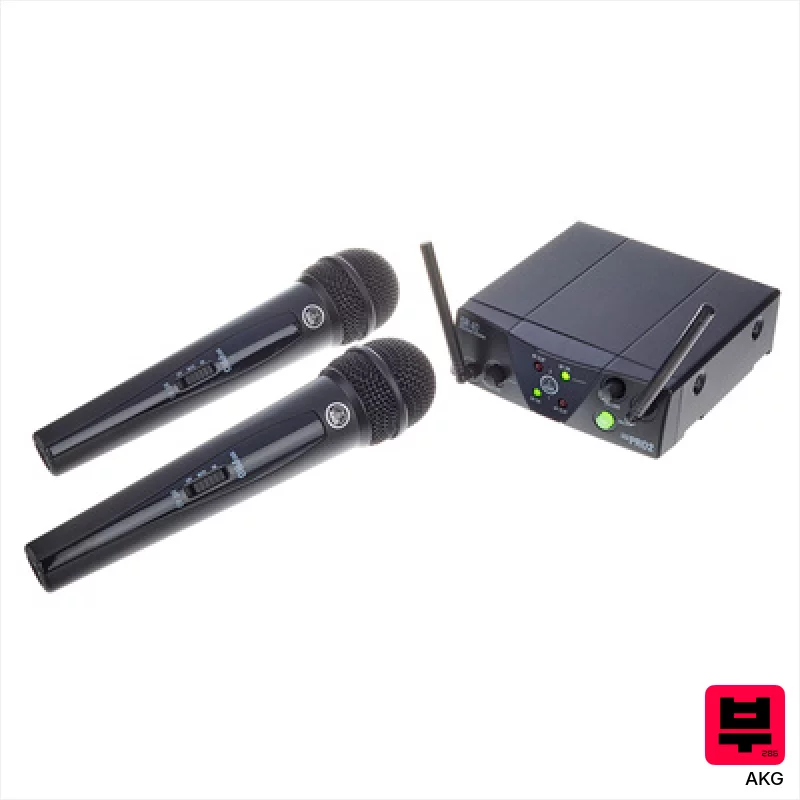
AKG WMS 40 Mini Dual Vocal
- • Compact design ideal for tight stages or travel setups
- • HDAP technology delivers surprisingly clear vocal reproduction
- • Simple, intuitive operation—easy for beginners to use
- • AA battery power offers flexibility and convenience
- • Non-diversity receiver can be prone to interference in crowded RF environments
- • Limited frequency band offers less flexibility than broader systems
- • Dynamic mic capsules lack the sensitivity for quieter performers

AKG WMS 40 Mini Vocal ISM3
- • Compact and lightweight design ideal for stage or events
- • HDAP technology delivers surprisingly clear vocal reproduction
- • ISM3 frequency band avoids licensing hassles in Europe
- • Simple, robust build suitable for frequent use and travel
- • Non-diversity receiver limits performance in crowded RF environments
- • Single AA battery operation can be inconvenient for long shows
- • Dynamic mic capsule lacks the sensitivity of condenser options

AKG WMS 40 Mini Vocal ISM2
- • Compact and lightweight design ideal for stage or events
- • ISM2 band avoids registration hassles across Europe
- • HDAP technology delivers surprisingly clear vocal reproduction
- • Simple, robust build – feels solid for frequent use
- • Non-diversity receiver limits performance in crowded RF environments
- • Single AA battery operation can be inconvenient for long shows
- • Dynamic mic capsule lacks the sensitivity of condenser alternatives
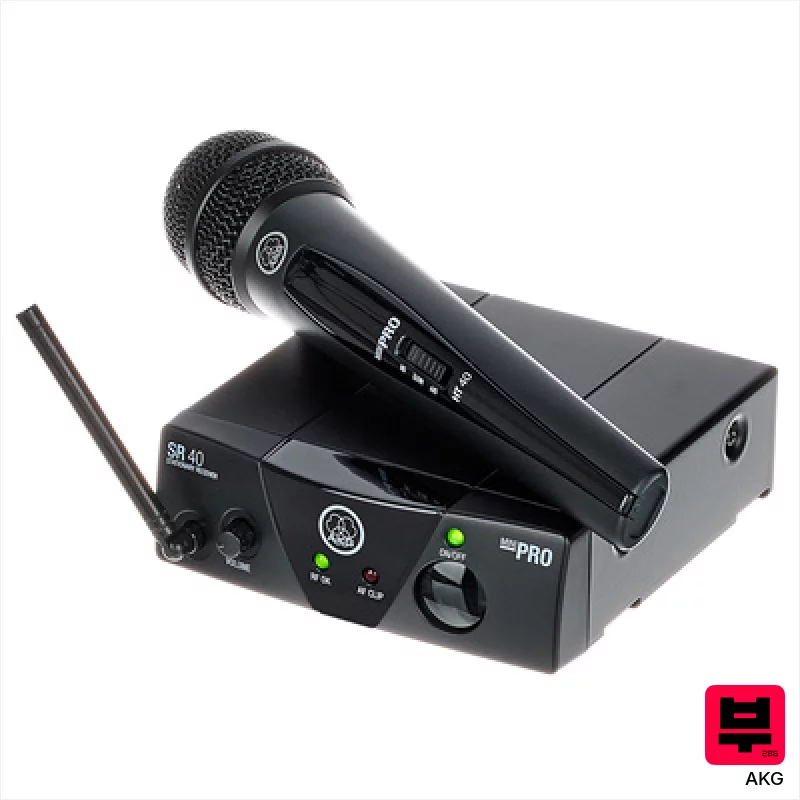
AKG WMS 40 Mini Vocal ISM1
- • Compact design minimizes stage clutter and travel hassle
- • HDAP technology delivers surprisingly clear vocal reproduction for the price
- • ISM1 band avoids licensing issues across Europe, a huge practical benefit
- • Simple operation and robust build suitable for frequent use
- • Non-diversity receiver limits performance in crowded RF environments
- • Dynamic mic capsule lacks the sensitivity for quiet stages or recording
- • Limited channel selection restricts use in complex multi-mic setups
How to Choose the Best Wireless Microphones with Handheld Microphone
Frequency Response & Articulation
AKG's mics generally deliver a balanced vocal tone, avoiding that overly bright, ice-picky top end you get with some brands. You'll hear subtle nuances in your voice, especially in the mids - that crucial area for clarity and presence without getting harsh. It's the kind of articulation that makes your vocals cut through a busy mix.
Build Quality & Durability
This is where AKG consistently shines. They aren't going to feel flimsy or like they'll snap in half if you drop them (though, please don't drop them!). The robust construction means they'll survive the rigors of touring and countless gigs - a huge factor for working musicians.
Wireless System Stability
AKG's wireless systems, particularly the newer digital models, offer impressive range and interference rejection. No more dropouts mid-song! It's a massive confidence boost on stage, knowing your signal is rock-solid.
Dynamic Range & Headroom
A good wireless system needs headroom to handle loud vocals without distorting. AKG's generally provide ample headroom, allowing for dynamic performances without pushing the system into clipping. That means clean, powerful vocals even during those high-energy moments.
Ergonomics & Handling Noise
A mic that's uncomfortable to hold or prone to handling noise is a pain. AKG's handhelds are generally well-balanced and comfortable, minimizing unwanted noise - a critical factor for clean recordings and professional-sounding live performances.
Buying Guide
Don't chase the newest model just for the sake of it. AKG's older systems (like the AKG D5/D7 combo) are still fantastic value, though you'll be working with 2.4GHz frequencies, which can be prone to interference in crowded RF environments. If you're playing in a busy venue, invest in a digital system (like the AKG Presage) - the extra cost is worth the peace of mind. Watch out for used systems - always verify the transmitter and receiver are paired correctly and in good working order.
How This List Is Built
We don't play these instruments — we're a catalog, not a review desk, and we'd rather say so than pretend otherwise. This page ranks 13 wireless microphones with handheld microphone from the Thomann catalogue, which is the largest single source of specification data in this category.
Position is computed, not curated. Four signals, in order of weight: how completely the manufacturer documents the instrument (number of published specifications), where it sits in the price range, how specific the model designation is — which filters out generic accessories — and whether a product image exists. The same inputs always produce the same order, so nothing here is shuffled to look fresh.
What this list is good for: narrowing a category down to a shortlist by spec and budget. What it isn't: a substitute for hearing an instrument. Before you buy, read hands-on reviews and, where you can, play it. Full methodology.

