
Best Wireless Microphones with Handheld Microphone for Advanced 2026
Let's be honest, if you're at the level where you're considering wireless handheld mics, you're not just looking for convenience; you're chasing a specific feel and performance. You're probably tired of cable clutter at gigs, or need that freedom for a dynamic stage move. But a cheap wireless system can ruin a vocal performance with dropouts, latency, or a thin, lifeless tone - a betrayal of your craft. This guide is for the serious vocalist who demands a wireless solution that doesn't compromise their art.
Last updated: April 11, 2026
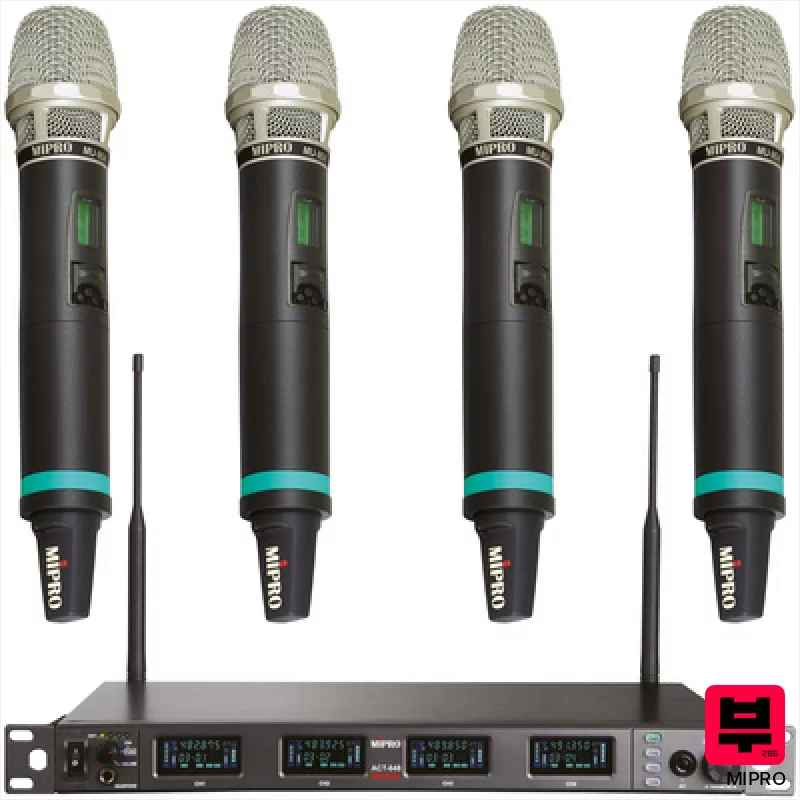
Mipro ACT-848 MU90 Quad Set 5UB
- • ACT Automatic Channel Targeting simplifies setup, crucial for complex live environments.
- • 72 MHz bandwidth offers exceptional channel availability, minimizing interference risks.
- • AES/EBU outputs provide high-quality digital audio routing flexibility.
- • Robust build quality and TNC antenna connections ensure reliability on stage.
- • The receiver's weight (2.6 kg) can be cumbersome for portable setups.
- • Premium-priced, limiting accessibility for smaller venues or budget-conscious users.
- • Limited microphone type compatibility – primarily designed for Mipro handhelds.

Sennheiser 6000/945 A1-A4 Twin Set
- • Rock-solid build quality; feels like it’ll survive a stage dive.
- • True bit diversity eliminates dropouts in crowded RF environments.
- • Dante connectivity simplifies integration into networked audio systems.
- • SKM 6000 transmitters offer exceptional ergonomic comfort for extended use.
- • The price point puts it firmly in the professional, high-end market.
- • Microphone head and battery compartment are separate purchases, adding to the cost.
- • Frequency range limitations might require coordination with local regulations.
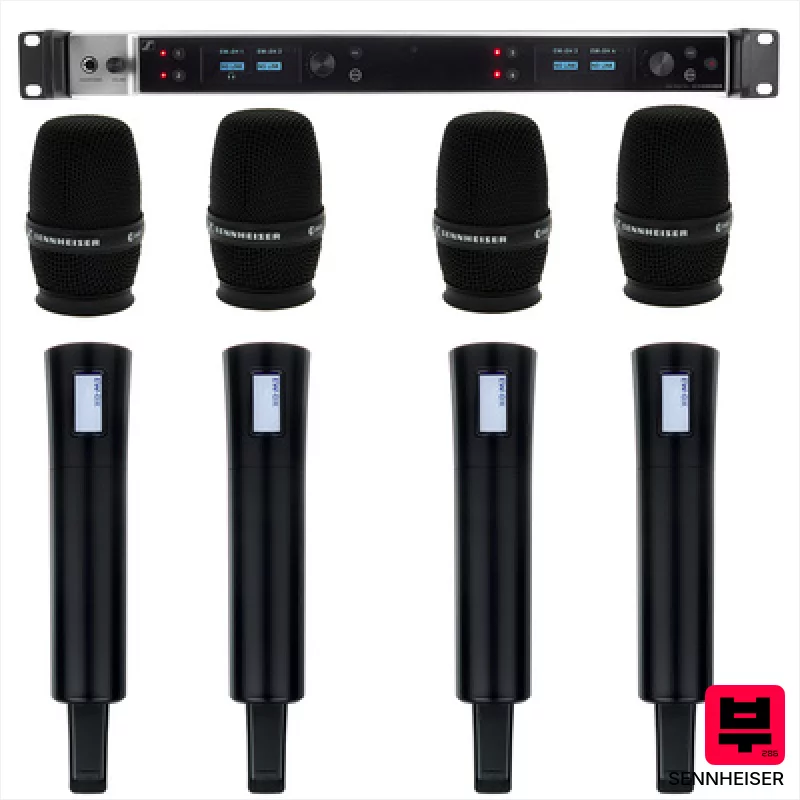
Sennheiser EW-DX 4x 945 S2-10 Set
- • Rock-solid Dante connectivity simplifies integration with digital workflows.
- • AES 256 encryption provides robust security for sensitive performances.
- • SKM S2-10 transmitters offer exceptional ergonomics and balanced feel.
- • The MMD 945-1 capsule delivers a clear, articulate vocal reproduction.
- • The receiver's weight (approx. 2kg) can be cumbersome for portable setups.
- • AA battery reliance adds operational costs and potential downtime.
- • Capsule versatility is limited to Sennheiser's ecosystem.
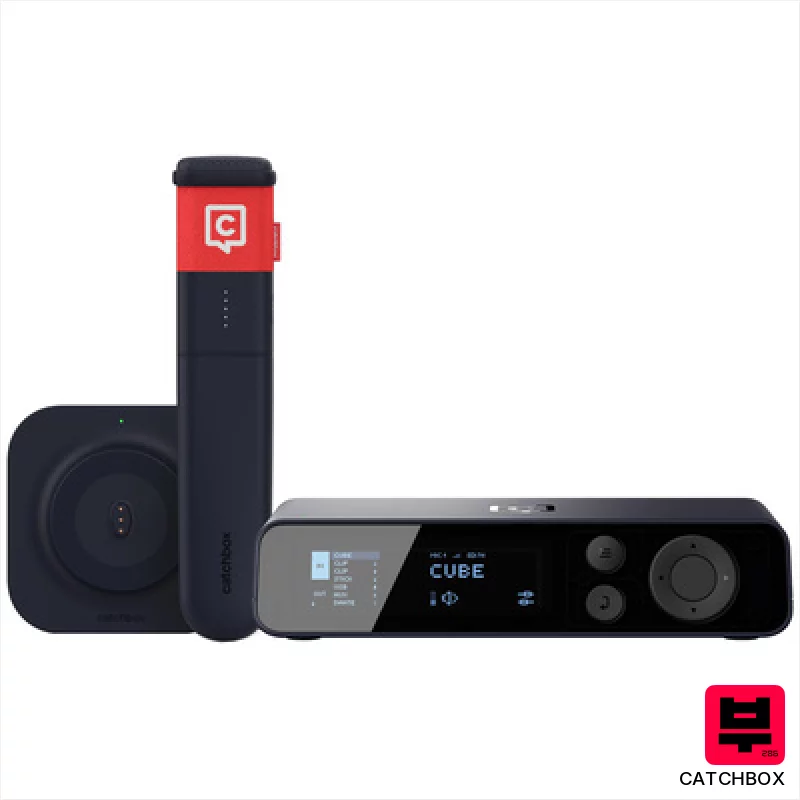
Catchbox Plus Hub4D Stick Red Bundle
- • Dante connectivity offers professional-grade integration with existing audio systems.
- • The graphical user interface simplifies complex receiver configuration and monitoring.
- • Omnidirectional capsule captures natural sound with excellent room pickup.
- • Stealth Mode minimizes accidental activation and unwanted audio capture.
- • Premium-priced, making it a significant investment for smaller operations.
- • Euroblock connectors require adapters for standard XLR connections, adding cost/complexity.
- • 100m range is susceptible to interference in dense urban environments.

Sennheiser EW-DX 4x 945 Q1-9 Set
- • Rock-solid build quality; the receiver feels exceptionally durable for stage use.
- • Dante connectivity offers seamless integration with modern digital workflows.
- • AES 256 encryption provides robust security for sensitive performances.
- • SKM transmitters are lightweight and comfortable, even during extended use.
- • The receiver's weight (approx. 4.6kg) can be a challenge for mobile setups.
- • Requires AA batteries or a separate battery pack, adding to operational costs.
- • Capsule isn't included, representing an additional expense for users.

Sennheiser EW-DX 4x 945 R1-9 Set
- • Rock-solid build quality, typical Sennheiser durability.
- • Dante connectivity offers seamless integration into digital workflows.
- • AES 256 encryption provides robust security for live performances.
- • SKM transmitters offer comfortable ergonomics and balanced weight.
- • High-end price point places it out of reach for many users.
- • Requires AA batteries or separate battery pack, adding to operational costs.
- • Capsule isn't included, adding to the initial investment.
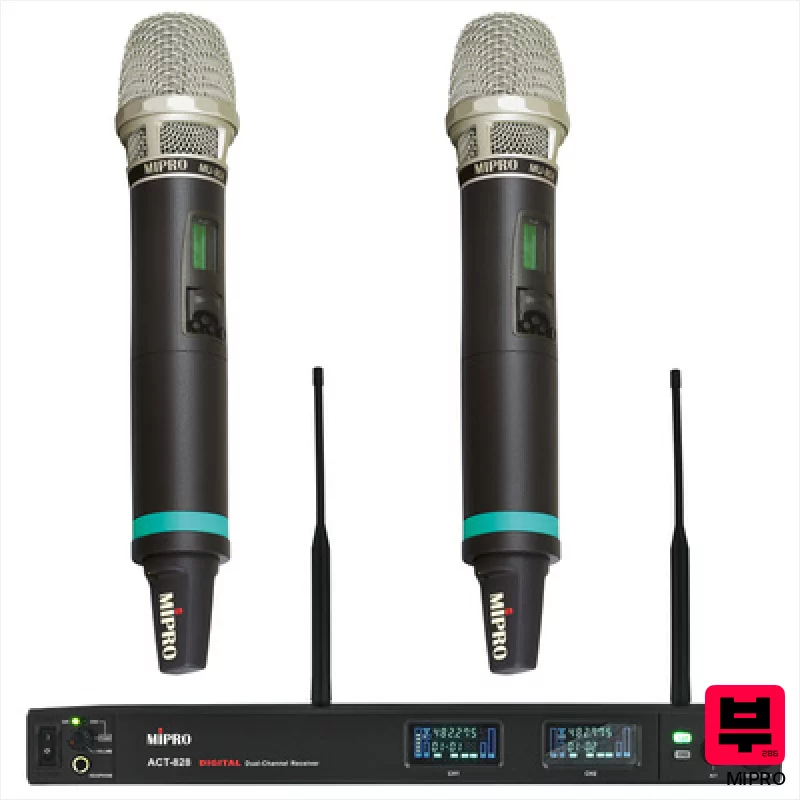
Mipro ACT-800 MU-90 Twin Set 5UA
- • ACT Automatic Channel Targeting simplifies setup, crucial for demanding live environments.
- • 72 MHz bandwidth provides exceptional channel availability, avoiding interference.
- • AES/EBU output caters to high-end digital mixing consoles and recording setups.
- • Robust build quality with rack ears ensures stability and professional roadworthiness.
- • Premium-priced, representing a significant investment for smaller operations.
- • Size and weight (1.8 kg) make portability less convenient for solo performers.
- • While versatile, the UHF band may face regulatory restrictions in certain regions.
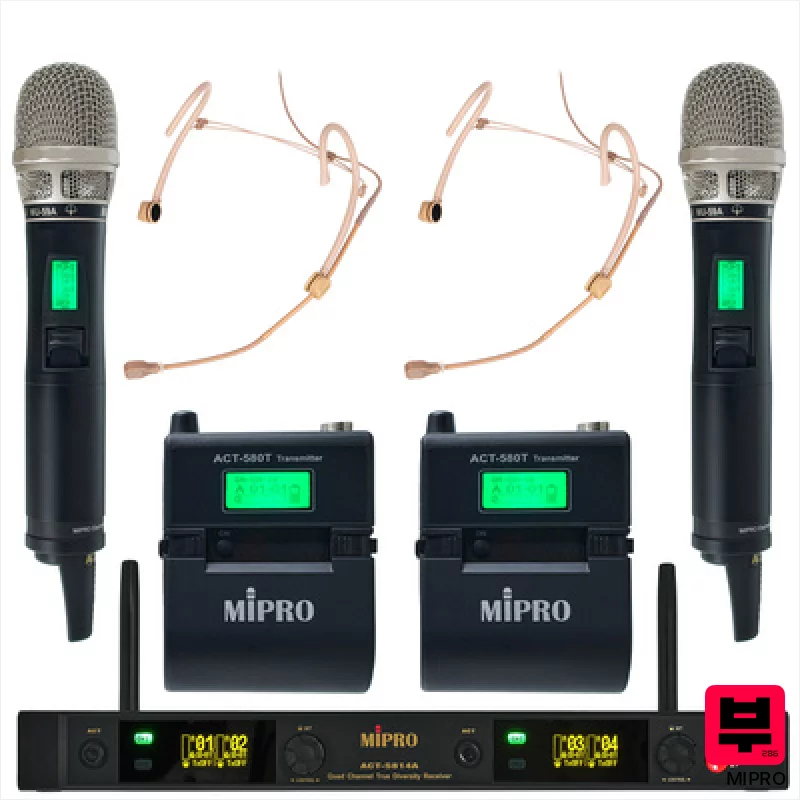
Mipro ACT-5800 MU-506HS/MU-59 Quad
- • True diversity receiver significantly reduces dropouts in challenging environments.
- • FHSS frequency hopping intelligently avoids interference from WiFi and other signals.
- • Cascading capability allows expansion for larger performances with minimal antenna clutter.
- • OLED display provides clear, at-a-glance system status information.
- • The unit's size and weight make it less portable for solo performers.
- • While versatile, it’s primarily geared toward live performance; studio use is less ideal.
- • The price point positions it as a premium investment, not a budget option.
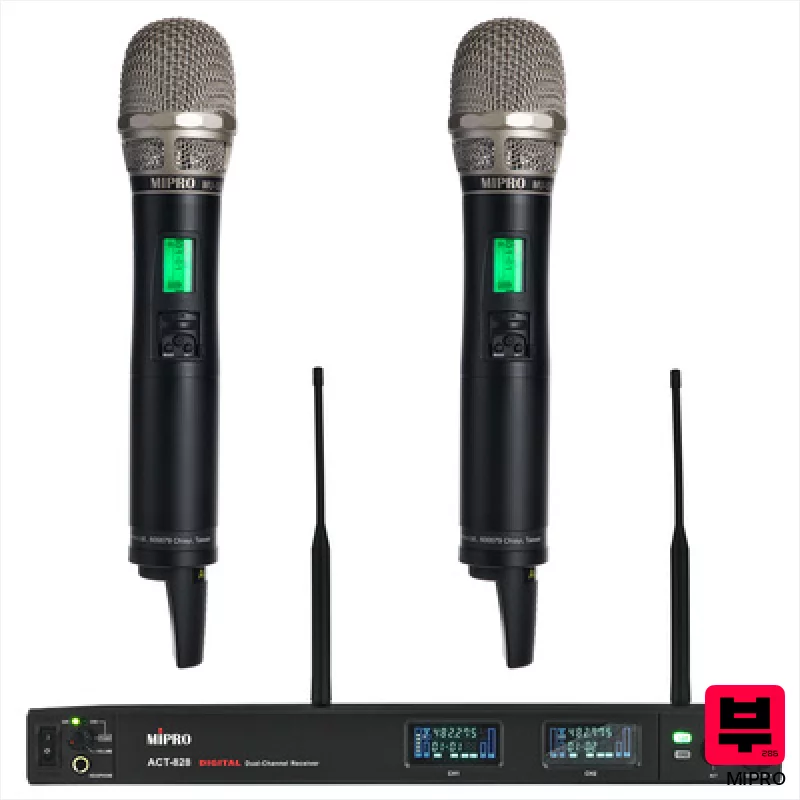
Mipro ACT-800 MU-59 Twin Set 5UA
- • ACT Automatic Channel Targeting simplifies setup, crucial for busy live environments.
- • 72 MHz bandwidth offers exceptional channel density and frequency flexibility.
- • AES/EBU output provides a high-quality digital connection for recording setups.
- • Robust build quality with rack ears ensures stability and professional integration.
- • Premium-priced, making it a significant investment for smaller operations.
- • Size and weight (1.8 kg) can be cumbersome for portable applications.
- • Limited versatility if needing a wider range of microphone types.
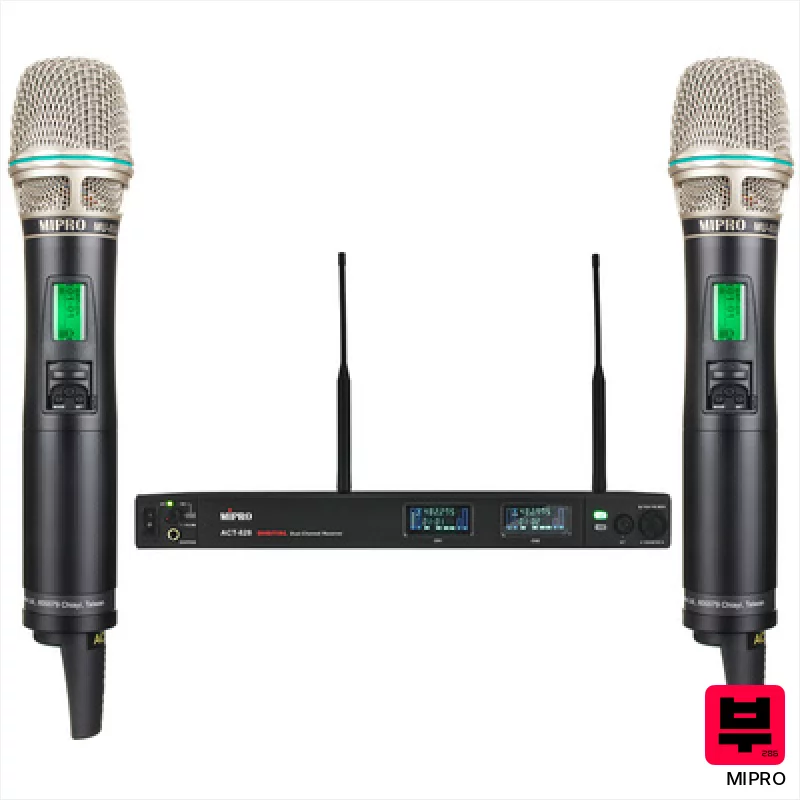
Mipro ACT-800 MU-80 Twin Set 5UA
- • Excellent dynamic range (115 dBA) minimizes unwanted noise
- • ACT automatic channel targeting simplifies setup significantly
- • Robust build quality with rack ears for secure installation
- • AES/EBU output caters to high-end digital mixing consoles
- • Premium-priced, a significant investment for most users
- • The 72 MHz bandwidth, while broad, could still be restrictive in dense RF environments
- • Size and weight (1.8 kg) make it less portable for some applications
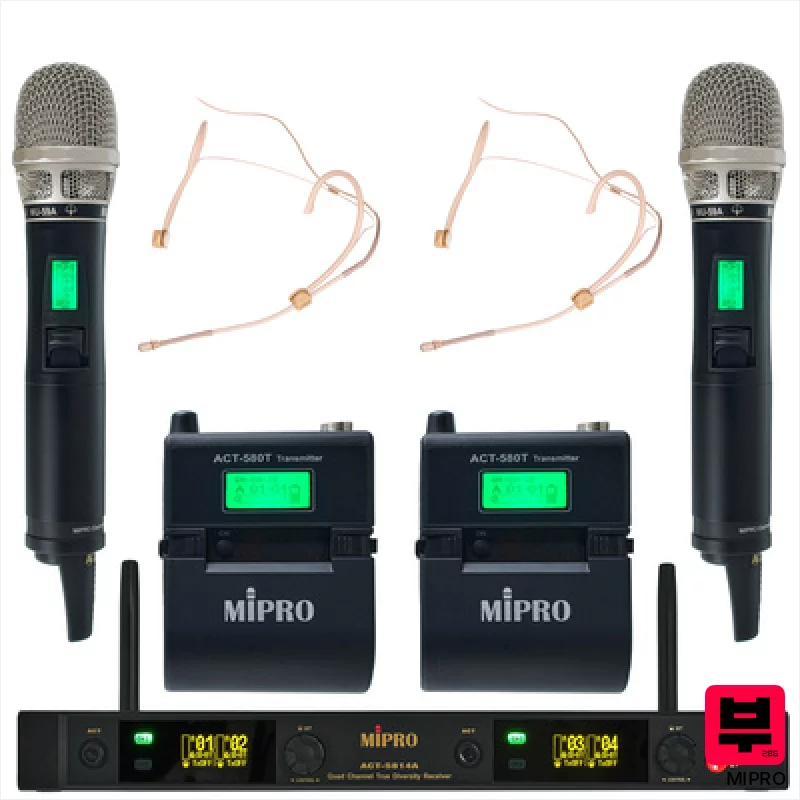
Mipro ACT-5800 MU-55HNS/MU-59 Quad
- • Excellent FHSS frequency hopping avoids WiFi interference effectively.
- • Quad receiver setup offers exceptional flexibility for multiple performers.
- • OLED display provides clear, at-a-glance system status information.
- • Cascading antenna outputs are a smart solution for larger venues.
- • The unit's size and weight can be cumbersome for solo performers.
- • The bundled handheld mics might not suit all vocal styles/preferences.
- • While the range is stated, real-world performance depends heavily on environment.
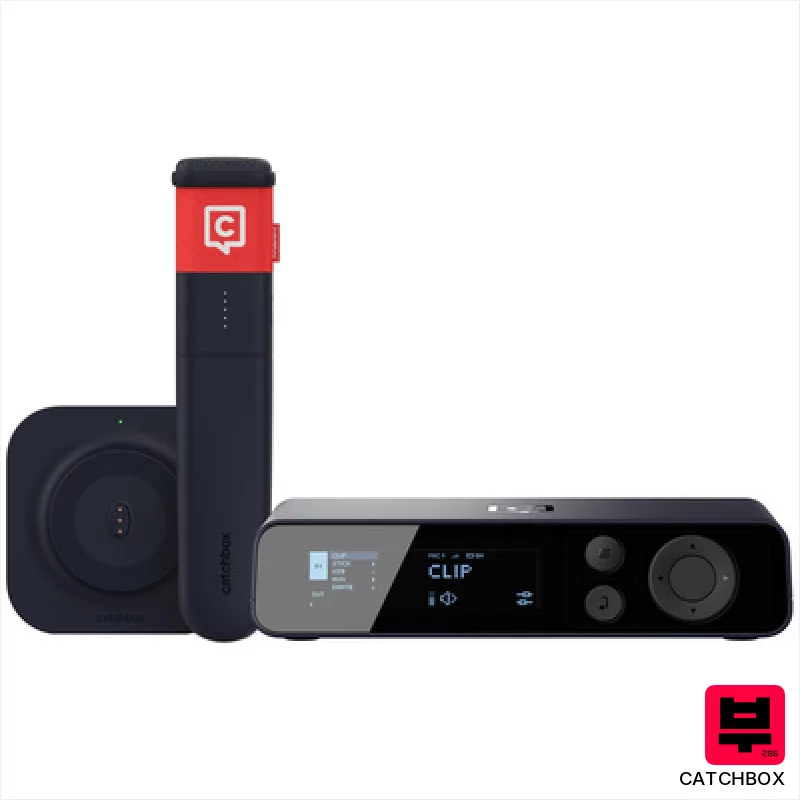
Catchbox Plus Hub2D Stick Red Bundle
- • The Hub2D's Dante input offers seamless integration with professional audio networks.
- • Stick mic's omnidirectional pattern captures natural room sound and audience interaction.
- • Stealth Mode is brilliant for discreet operation in sensitive environments.
- • Robust build quality with a Kensington lock suggests durability for touring use.
- • The receiver’s size and weight (300g) might be cumbersome for some users.
- • Limited channel count (2) restricts scalability for larger events.
- • The USB-C reliance for inputs/outputs might limit compatibility with older gear.
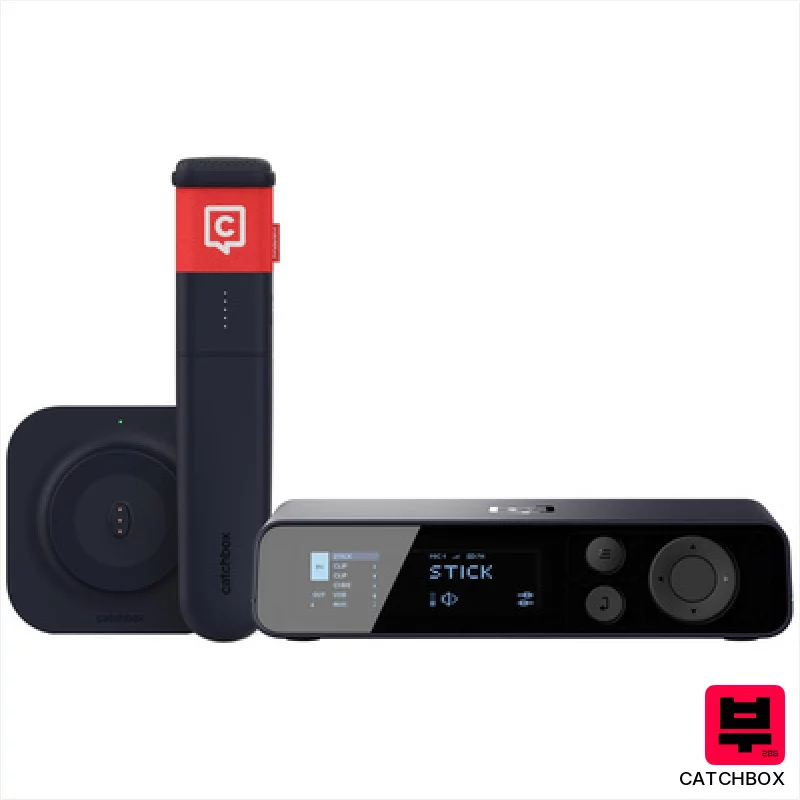
Catchbox Plus Hub4 Stick Red Bundle
- • The Hub4’s graphical UI simplifies complex mixing and DSP adjustments significantly.
- • Built-in antennas offer reliable coverage, minimizing dropouts in dynamic environments.
- • The Stick mic's omnidirectional pickup handles diverse speaker placements well.
- • Kensington lock and stealth mode add valuable security and discreet operation.
- • The system's size and weight (300g for the receiver) can be cumbersome for mobile use.
- • Euroblock connectors require adapters for standard XLR microphones or cables.
- • Battery life, while rechargeable, is a potential concern for extended events.

Catchbox Plus Hub2 Stick Red Bundle
- • Excellent audio clarity thanks to the condenser mic capsule.
- • The graphical user interface simplifies complex wireless settings.
- • Euroblock connections offer robust, reliable signal transfer.
- • Stealth Mode is genuinely useful for discreet operation.
- • The receiver unit is relatively bulky for portable applications.
- • Price point places it in a premium-priced category, limiting accessibility.
- • Omnidirectional pickup can be problematic in noisy environments.

Sennheiser ew 500 G4-KK205 GBW Band
- • NEUMANN KK 205 capsule delivers exceptional clarity and detail
- • GBW band offers robust frequency allocation and reliability
- • WSM software provides intuitive frequency management and control
- • SKM 500 G4 transmitter boasts excellent build quality and ergonomics
- • Premium-priced system represents a significant investment
- • Battery life necessitates careful monitoring and potential replacements
- • Receiver size may be cumbersome for some performers
How to Choose the Best Wireless Microphones with Handheld Microphone
Frequency Band & Channel Count
More channels mean less interference, critical for densely populated venues or stages with multiple wireless setups. 2.4GHz is convenient but susceptible to Wi-Fi bleed; UHF (specifically, systems with a wide bandwidth) are generally more reliable, though licensing can be a factor.
Latency
A subtle delay can wreck your timing and feel, especially for nuanced vocal phrasing. Anything over 5ms is noticeable and potentially problematic for live performance. Recording latency is even more critical - even a few milliseconds can throw off the vibe.
Dynamic Range & Noise Floor
You need headroom to handle loud peaks without distortion, and a low noise floor to capture subtle vocal nuances. A system with a poor dynamic range will sound compressed and lifeless, while excessive noise will bury your performance in the mix.
Build Quality & Ergonomics
Let's face it, gear gets abused. A flimsy system will fail you onstage. Handheld mics should feel balanced and comfortable, with reliable buttons and a solid capsule mount. The receiver needs to be robust enough to survive being tossed in a case.
Digital vs. Analog Transmission
Digital systems can offer cleaner signals and more features, but they're often more complex to set up and prone to digital artifacts if not implemented correctly. Analog systems are simpler and generally more transparent, but susceptible to RF interference.
Buying Guide
Don't cheap out. Seriously. A $200 wireless system will probably cut corners on the capsule, the receiver's components, and the build quality - and you'll hear it. Look for systems with a wide frequency range, a reputation for reliability, and a comfortable handheld feel. Pay attention to the receiver's display - clear information about signal strength and battery life is invaluable when you're under pressure on stage. Wireless is a tool; it shouldn't be a liability.
How This List Is Built
We don't play these instruments — we're a catalog, not a review desk, and we'd rather say so than pretend otherwise. This page ranks 15 wireless microphones with handheld microphone from the Thomann catalogue, which is the largest single source of specification data in this category.
Position is computed, not curated. Four signals, in order of weight: how completely the manufacturer documents the instrument (number of published specifications), where it sits in the price range, how specific the model designation is — which filters out generic accessories — and whether a product image exists. The same inputs always produce the same order, so nothing here is shuffled to look fresh.
What this list is good for: narrowing a category down to a shortlist by spec and budget. What it isn't: a substitute for hearing an instrument. Before you buy, read hands-on reviews and, where you can, play it. Full methodology.

