
Best Wireless Microphones with Handheld Microphone for Events 2026
Alright, so you're running events - weddings, corporate gigs, conferences, that kind of thing. A wired mic just isn't cutting it anymore. Wireless handhelds free you up, but choosing the right system can be a headache. Let's break down the best options, focusing on what actually matters for live events - sound, reliability, and that ability to cut through a room full of chatter.
Last updated: July 8, 2026 • Next update: July 15, 2026

Sennheiser EW-DX 4x 945 Q1-9 Set
- • Rock-solid build quality; the receiver feels exceptionally durable for stage use.
- • Dante connectivity offers seamless integration with modern digital workflows.
- • AES 256 encryption provides robust security for sensitive performances.
- • SKM transmitters are lightweight and comfortable, even during extended use.
- • The receiver's weight (approx. 4.6kg) can be a challenge for mobile setups.
- • Requires AA batteries or a separate battery pack, adding to operational costs.
- • Capsule isn't included, representing an additional expense for users.
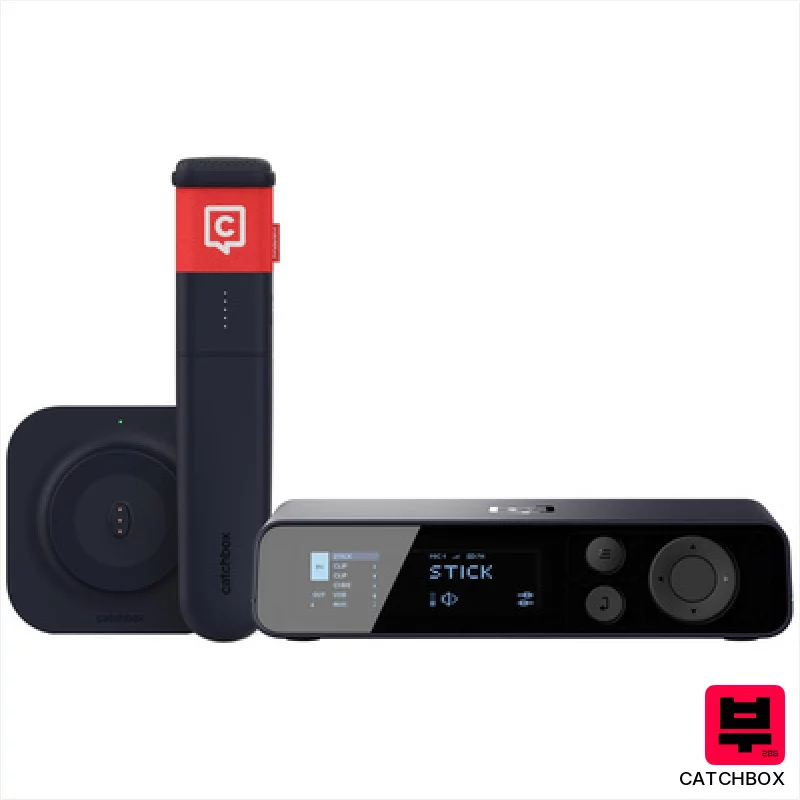
Catchbox Plus Hub4 Stick Red Bundle
- • The Hub4’s graphical UI simplifies complex mixing and DSP adjustments significantly.
- • Built-in antennas offer reliable coverage, minimizing dropouts in dynamic environments.
- • The Stick mic's omnidirectional pickup handles diverse speaker placements well.
- • Kensington lock and stealth mode add valuable security and discreet operation.
- • The system's size and weight (300g for the receiver) can be cumbersome for mobile use.
- • Euroblock connectors require adapters for standard XLR microphones or cables.
- • Battery life, while rechargeable, is a potential concern for extended events.

Mipro ACT-800 MU-90 Set 5UA
- • Excellent dynamic range (115 dBA) minimizes unwanted noise and feedback.
- • ACT Automatic Channel Targeting simplifies setup, crucial for busy stages.
- • Digital AES/EBU output offers professional-grade audio connectivity options.
- • Robust build quality and rack mountability suggest reliable, long-term use.
- • The 72 MHz bandwidth, while broad, might still be restrictive in densely populated RF environments.
- • Limited channel count compared to some higher-end systems can be a constraint in large productions.
- • The receiver's size (210x44x230mm) might be bulky for some portable setups.

Mipro ACT-800 MU-80 Set 5UA
- • ACT Automatic Channel Targeting simplifies setup, crucial for live performance environments.
- • Impressive 115dB dynamic range ensures clean signal even in noisy venues.
- • AES/EBU digital output offers professional-grade connectivity options.
- • Robust build quality and metal chassis suggest longevity and stage-readiness.
- • The 72MHz bandwidth, while wide, might still be restrictive in congested areas.
- • Rack mounting requires optional accessories, adding to the overall investment.
- • The VFD display, while informative, could be brighter for outdoor use.

Catchbox Plus Hub2 Stick Red Bundle
- • Excellent audio clarity thanks to the condenser mic capsule.
- • The graphical user interface simplifies complex wireless settings.
- • Euroblock connections offer robust, reliable signal transfer.
- • Stealth Mode is genuinely useful for discreet operation.
- • The receiver unit is relatively bulky for portable applications.
- • Price point places it in a premium-priced category, limiting accessibility.
- • Omnidirectional pickup can be problematic in noisy environments.
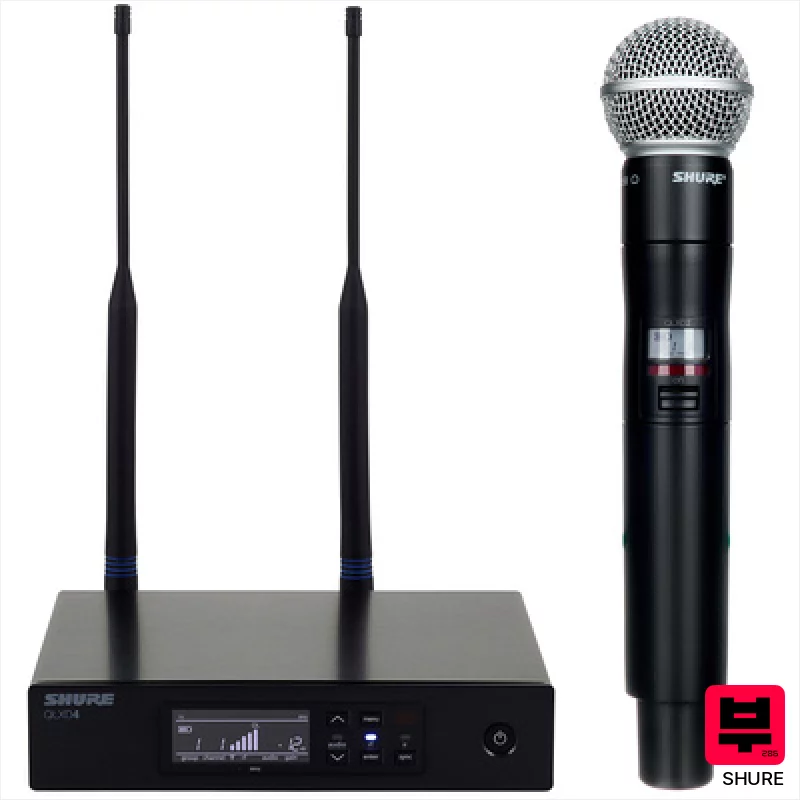
Shure QLXD24/SM58 K51
- • Rock-solid Shure build quality; feels like it'll survive a gig's worth of abuse.
- • AES-256 encryption provides excellent security against interference and eavesdropping.
- • SM58 capsule delivers that classic, reliable vocal tone—a true industry standard.
- • Wide 72 MHz bandwidth allows for flexible channel selection and frequency hopping.
- • The receiver's size (9.5") can be a constraint in smaller rigs or on crowded stages.
- • Premium-priced, representing a significant investment for smaller bands or solo performers.
- • Limited versatility; primarily designed for vocal performance, not ideal for instruments.
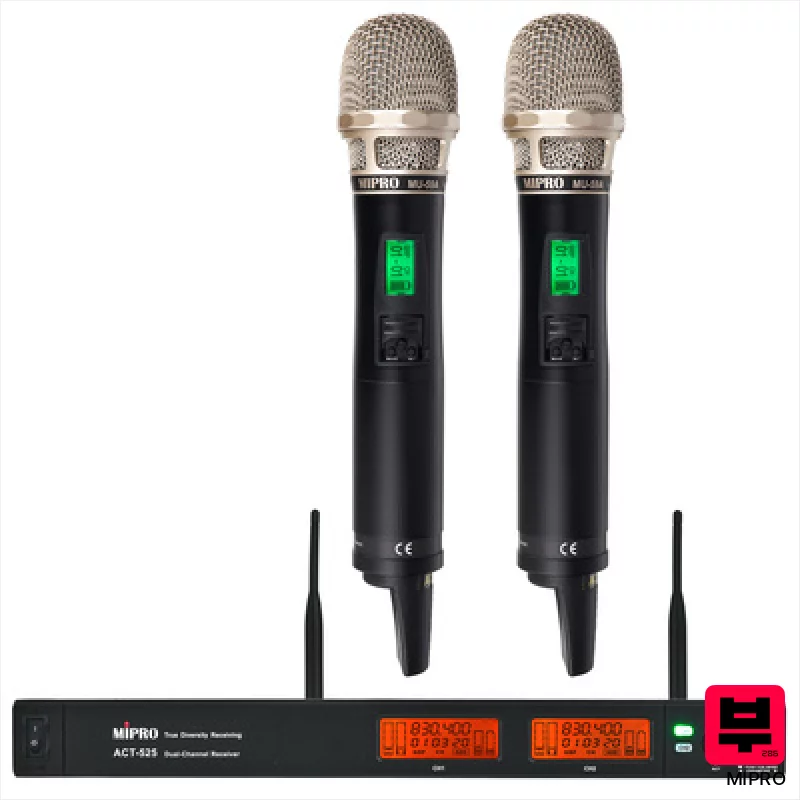
Mipro ACT-500 MU-59 Twin Set 8AD
- • Excellent ACT channel targeting simplifies setup significantly.
- • MU-59 capsule delivers a robust, clear vocal presence.
- • Solid build quality; feels durable for stage use.
- • Wide 9MHz bandwidth allows for flexible channel allocation.
- • Receiver is relatively heavy, can be cumbersome for mobile setups.
- • Limited frequency band might restrict usage in crowded RF environments.
- • No digital features like AES encryption for sensitive applications.

Mipro ACT-5800 MU-59 Twin Set
- • True diversity receiver significantly reduces dropouts and interference issues.
- • FHSS frequency hopping intelligently avoids WiFi congestion, crucial for modern venues.
- • Cascading receiver feature allows for expansion to support more microphones easily.
- • OLED display offers clear, at-a-glance information about channel and signal strength.
- • The build quality, while decent, doesn't feel quite as premium as some higher-end systems.
- • Range of 100 meters is achievable only in ideal, line-of-sight conditions.
- • Limited channel selection compared to some competing systems at a similar price point.

Shure QLXD24/SM58 S50
- • Rock-solid Shure build quality ensures years of reliable performance.
- • SM58 capsule delivers the iconic, versatile vocal tone we all know.
- • AES-256 encryption provides secure, interference-free transmission.
- • Intuitive infrared frequency syncing simplifies channel management.
- • The receiver's size can be cumbersome for smaller venues or travel.
- • Premium-priced, representing a significant investment for many performers.
- • Limited frequency band flexibility compared to broader UHF systems.

Shure QLXD24/SM87 G51
- • SM87 capsule delivers Shure's signature robust, vocal clarity.
- • AES-256 encryption provides truly secure, interference-free transmission.
- • Receiver's PAR 9.5 housing offers excellent durability for stage use.
- • Ethernet connectivity enables remote system monitoring and configuration.
- • The system is premium-priced, a significant investment for many performers.
- • The SM87's cardioid pattern can be unforgiving with mic technique.
- • QLXD series, while robust, can be complex for users unfamiliar with digital wireless systems.
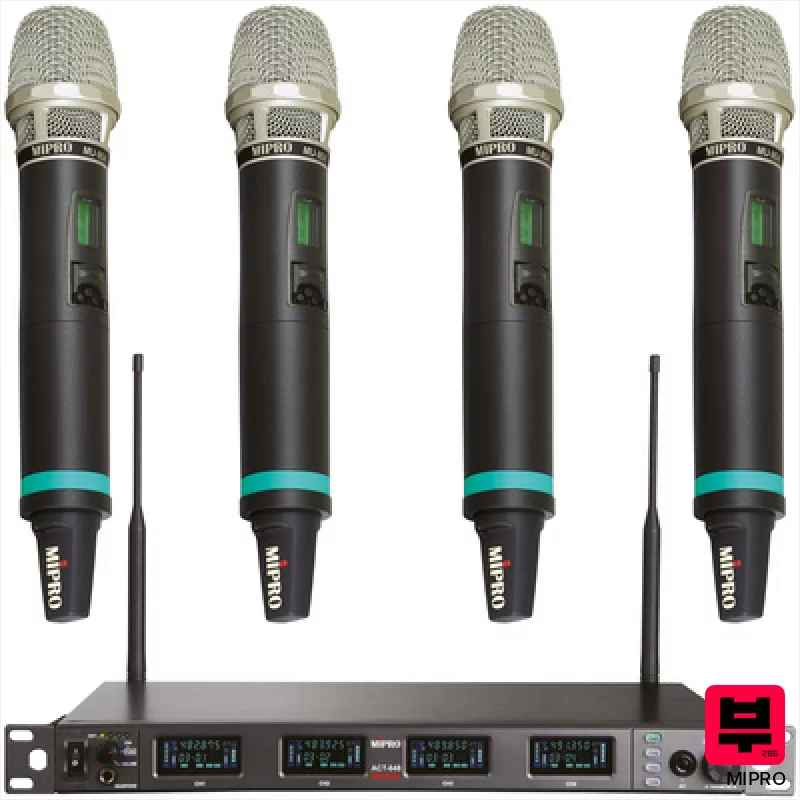
Mipro ACT-848 MU90 Quad Set 5UB
- • ACT Automatic Channel Targeting simplifies setup, crucial for complex live environments.
- • 72 MHz bandwidth offers exceptional channel availability, minimizing interference risks.
- • AES/EBU outputs provide high-quality digital audio routing flexibility.
- • Robust build quality and TNC antenna connections ensure reliability on stage.
- • The receiver's weight (2.6 kg) can be cumbersome for portable setups.
- • Premium-priced, limiting accessibility for smaller venues or budget-conscious users.
- • Limited microphone type compatibility – primarily designed for Mipro handhelds.
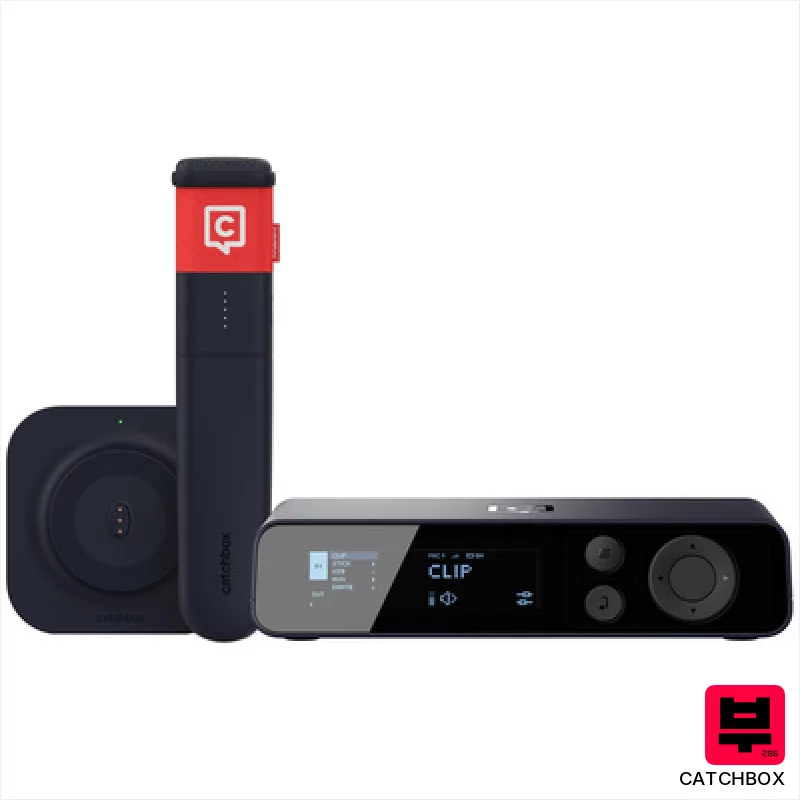
Catchbox Plus Hub2D Stick Red Bundle
- • The Hub2D's Dante input offers seamless integration with professional audio networks.
- • Stick mic's omnidirectional pattern captures natural room sound and audience interaction.
- • Stealth Mode is brilliant for discreet operation in sensitive environments.
- • Robust build quality with a Kensington lock suggests durability for touring use.
- • The receiver’s size and weight (300g) might be cumbersome for some users.
- • Limited channel count (2) restricts scalability for larger events.
- • The USB-C reliance for inputs/outputs might limit compatibility with older gear.

Shure QLXD24/KSM9 S50
- • KSM9 capsule delivers exceptionally clear, detailed vocal reproduction.
- • AES-256 encryption provides robust, secure wireless transmission.
- • Wide 72 MHz switching bandwidth offers excellent channel flexibility.
- • Solid metal transmitter construction feels premium and durable.
- • The system is premium-priced, a significant investment for many performers.
- • Battery life (with AA) can be a limiting factor for extended gigs.
- • The S50 frequency band might face interference in densely populated areas.

Shure QLXD24/SM58 H51
- • Rock-solid Shure build quality, feels like a tank.
- • SM58 capsule delivers classic, reliable vocal performance.
- • AES-256 encryption offers excellent security for live events.
- • Wide 72 MHz bandwidth provides channel flexibility in congested areas.
- • Premium-priced, a significant investment for most performers.
- • Receiver size and weight can be cumbersome for mobile setups.
- • Limited frequency agility compared to some competing systems.

Sennheiser EW-DP 42-1-S Set Q1-6
- • Digital clarity offers exceptionally clean, low-noise audio reproduction.
- • Smart Assist app simplifies setup and monitoring, a real time-saver.
- • Receiver's magnetic mounting provides flexible placement options.
- • Wide 56 MHz bandwidth ensures frequency availability in crowded RF environments.
- • The receiver's compact size might feel less robust for heavy-duty use.
- • Limited frequency range (Q1-6) restricts operation in some regions.
- • AA battery backup adds bulk and potential for inconsistent performance.
How to Choose the Best Wireless Microphones with Handheld Microphone
Frequency Band
Events often have crowded RF spaces. 2.4GHz can be a nightmare with Wi-Fi interference; 5.8GHz is usually better, but check local regulations. UHF systems, while requiring licensing in some areas, often offer the cleanest signal.
Dynamic Range & Noise Floor
A low noise floor is critical. You don't want to amplify the room hum, just the voice. Look for systems that offer decent headroom to handle louder performers without clipping - a muddy breakup is the enemy.
Build Quality & Durability
Handheld mics get dropped. Seriously. The body needs to be robust and the capsule needs to be able to take a beating. Cheap plastic housings are a recipe for disaster - invest in something that feels solid.
Latency
Even slight latency is noticeable, especially for presenters or anyone needing to react quickly. Lower latency is always better; anything over 5ms is generally imperceptible, but check reviews to confirm.
Range & Reliability
Don't just look at the advertised range. Test it in your typical event space, accounting for walls and obstructions. A system that drops out mid-sentence is a career-ender.
Buying Guide
Don't chase the cheapest option - you'll pay for it in headaches. Wireless systems are a compromise; you're trading freedom for potential interference and battery life. Paying a bit more for a reputable brand often means better components, a cleaner signal, and a system that will actually last through a few years of gigging. Check the receiver's display - a clear, informative display showing signal strength and battery level is worth its weight in gold.
Our Methodology
We're not just looking at spec sheets here. We've spent countless hours playing these systems live, A/B testing against wired standards, and putting them through the ringer in everything from small rooms to large ballrooms. We're listening for that subtle warmth, that annoying digital harshness, and how well they handle feedback - the stuff you won't find in a product description.

