
Best Splitters and Combiners Under $5,000 2026
So, you're wrestling with a wireless mic setup - multiple singers, drum kits needing multiple channels, that choir needing individual monitoring? Splitting and combining signals cleanly is critical, and it's easy to blow your budget. This isn't about the bleeding edge; we're focused on solid, reliable splitters and combiners that won't leave you panicking mid-gig, all under $5000. Let's find you something that works, sounds good, and doesn't require a second mortgage.
Last updated: September 29, 2026
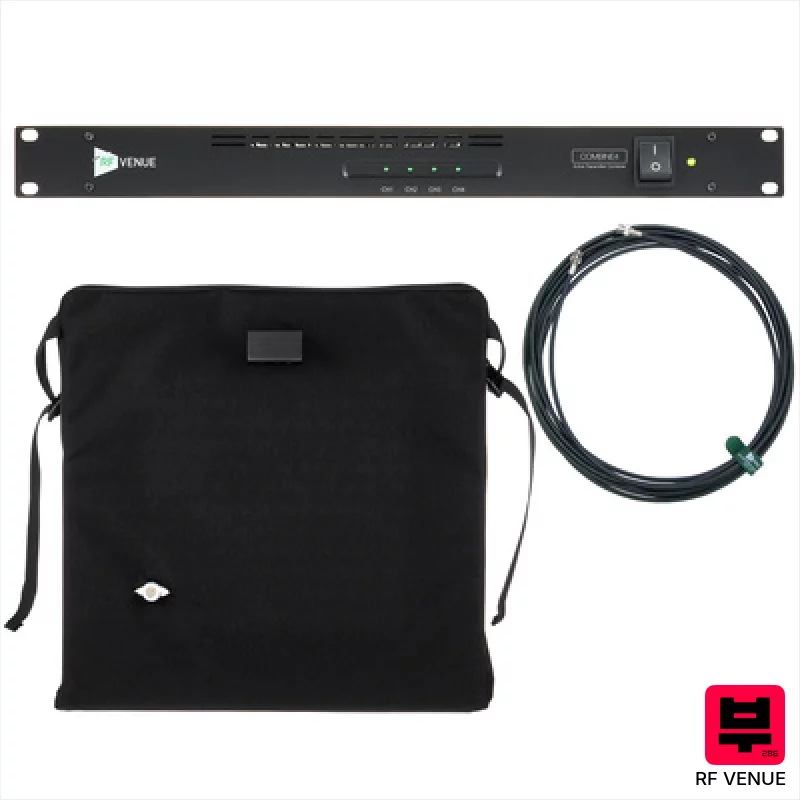
RF Venue 4CH In-Ear Monitor Bundle
- • Robust CP Beam antenna offers exceptional directional gain and clarity.
- • Active combiner provides clean signal aggregation with minimal loss.
- • RG8X-25 cable ensures low-loss signal transmission over a generous length.
- • Foldable antenna design simplifies transport and setup for touring applications.
- • The bundle's weight makes it less ideal for smaller, mobile setups.
- • Active combiner requires external power, adding to logistical considerations.
- • Frequency range, while broad, may still present interference challenges in congested RF environments.
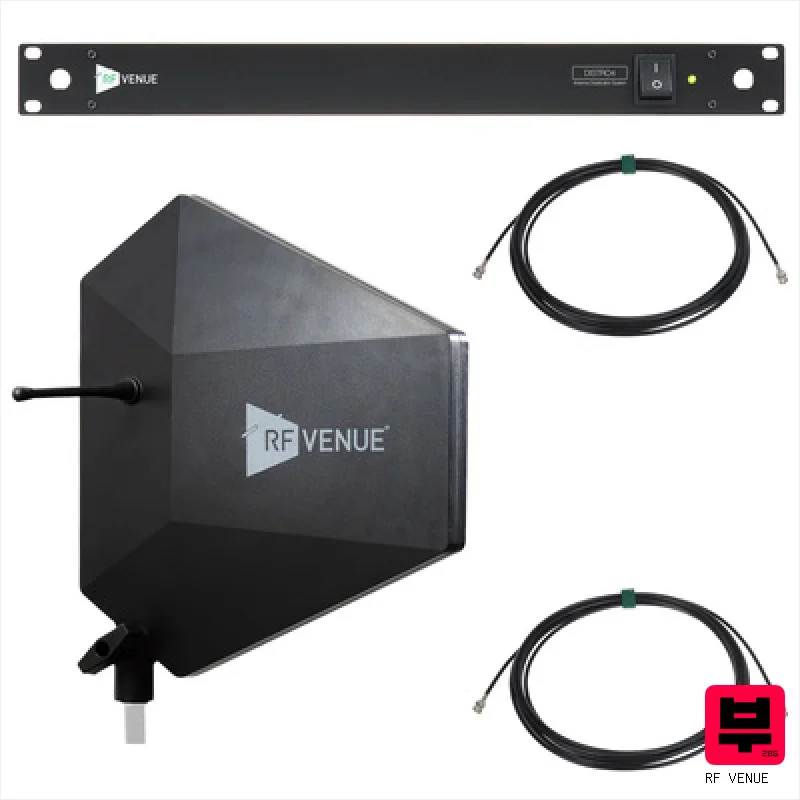
RF Venue 4CH IP Wireless Microphone Set
- • Universal compatibility with any wireless system brands
- • Single antenna handles both horizontal and vertical waves
- • IP44 rating protects against outdoor weather and splashes
- • Wide frequency coverage from 470 to 952 MHz
- • Heavy 2.2 kg weight makes handheld use tiring
- • No gain control listed for signal adjustment
- • Dipole and LPDA patterns may not suit every venue
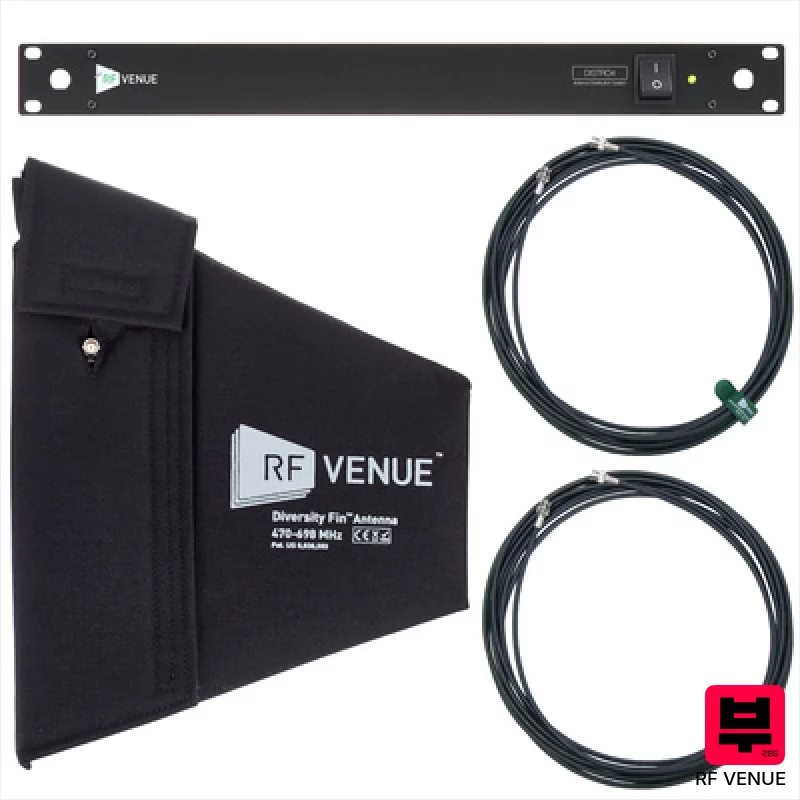
RF Venue 4CH Wireless Microphone Bundle
- • Excellent antenna gain for improved wireless signal clarity.
- • Distro 4 splitter handles multiple receivers efficiently.
- • Rugged construction; built to withstand demanding environments.
- • Passive antenna eliminates power requirements and potential noise.
- • Significant size and weight, limiting portability.
- • Limited frequency range compared to some wider-band systems.
- • Passive design means no adjustable gain; can be a drawback.
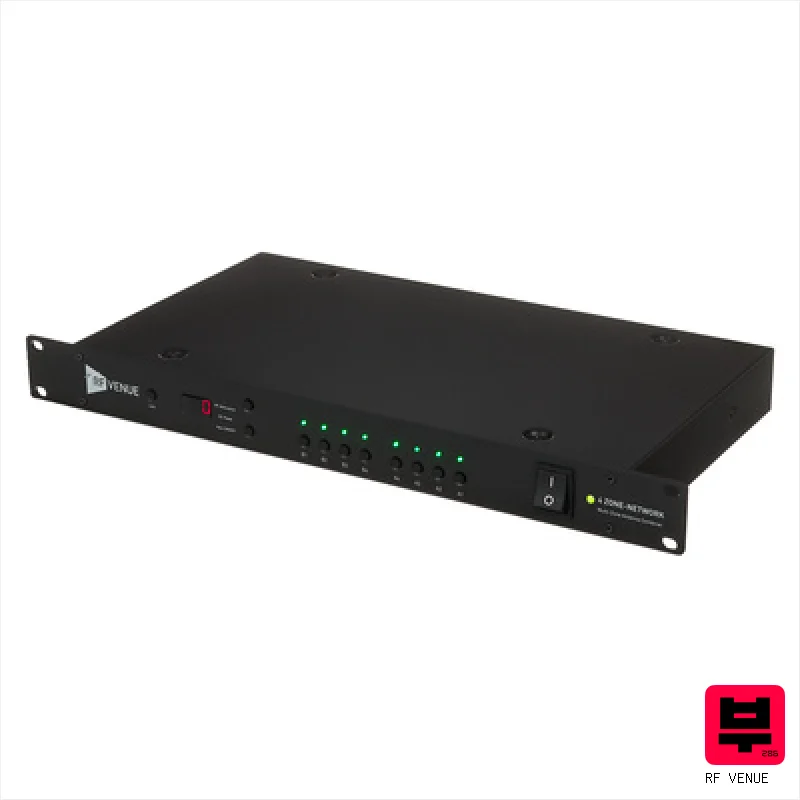
RF Venue 4 Zone Network
- • Four pairs of diversity antennas ensure reliable signal coverage.
- • Centralized control simplifies managing multiple wireless sets.
- • Active antenna combiner optimizes signal strength at 3dB gain.
- • Compact 19-inch rack mount design saves valuable stage space.
- • Only two BNC outputs limit distribution to few microphones.
- • Input impedance is standard 50 Ohms with no alternative options.
- • Frequency range 470-960 MHz may overlap with other radio services.
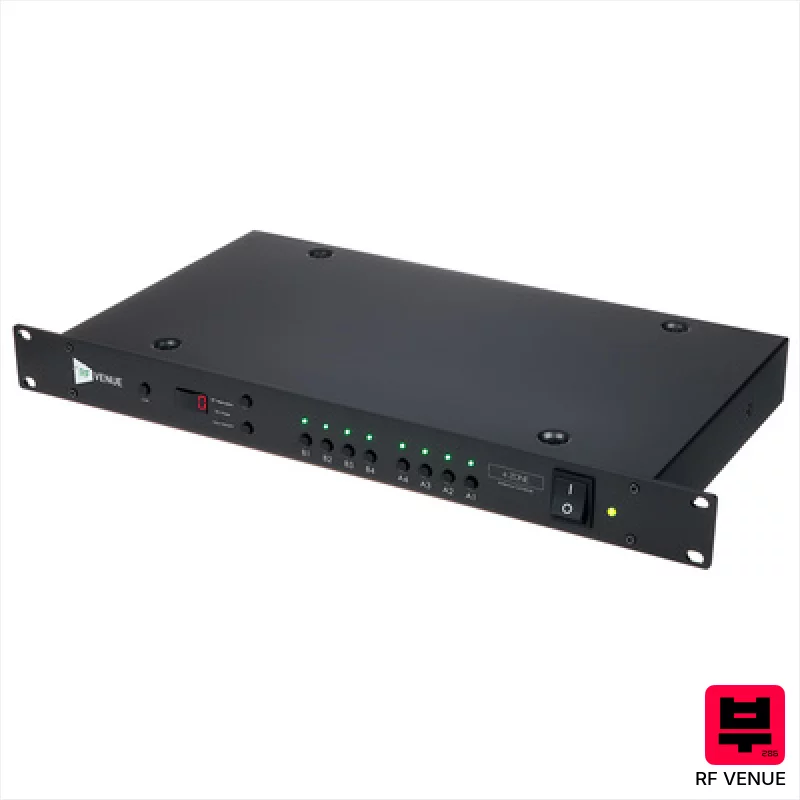
RF Venue 4 Zone Antenna Combiner
- • Robust 1U rackmount simplifies integration into existing broadcast setups.
- • High-quality BNC connectors ensure reliable signal transfer and longevity.
- • 3dB system gain boosts signal strength, extending wireless microphone range.
- • Four independent zones provide flexible coverage for large venues or complex productions.
- • Significant weight necessitates sturdy rack infrastructure to prevent instability.
- • Premium-priced, making it a substantial investment for smaller operations.
- • Limited frequency range; may not cover all wireless microphone systems globally.
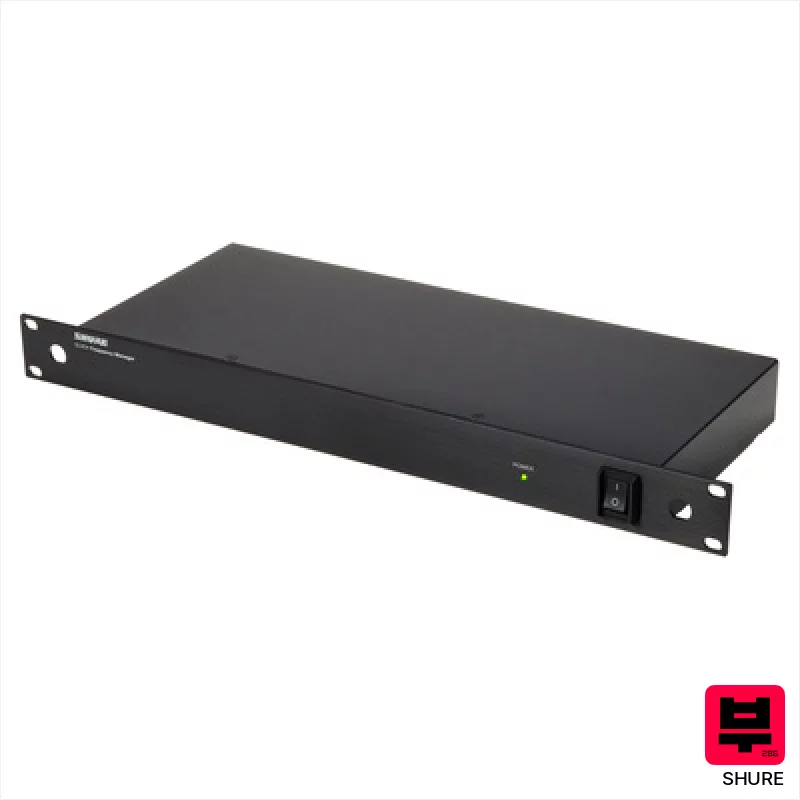
Shure GLXD+ Frequency Manager
- • Robust 1U rackmount chassis ensures reliable stage deployment.
- • Dual-band frequency management minimizes interference in dense RF environments.
- • Supports up to 16 GLXD4R+ receivers, ideal for large events.
- • Reverse SMA connectors offer flexibility in antenna selection and placement.
- • Price point places it firmly in the professional, high-end wireless ecosystem.
- • Requires a significant investment in compatible Shure GLXD4R+ receivers.
- • The size (19”/1U) can be a constraint in smaller, space-limited racks.
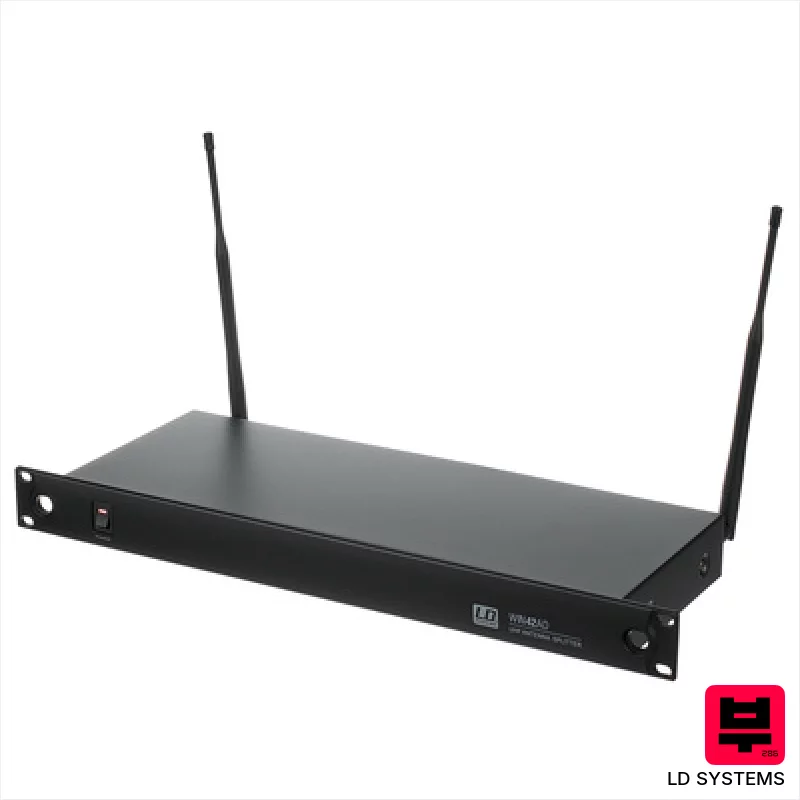
LD Systems LD WIN42 AD
- • Solid 19in rackmount chassis for stable, professional setups
- • Included antennas offer a basic starting point for wireless coverage
- • BNC connections are robust and reliable for antenna cabling
- • Gain of 3dB helps boost signal strength for better wireless clarity
- • Limited frequency range restricts compatibility with some newer wireless systems
- • Weight (4.8 kg) makes transport and installation slightly cumbersome
- • Power supply range (12-18V) could be more flexible for certain applications
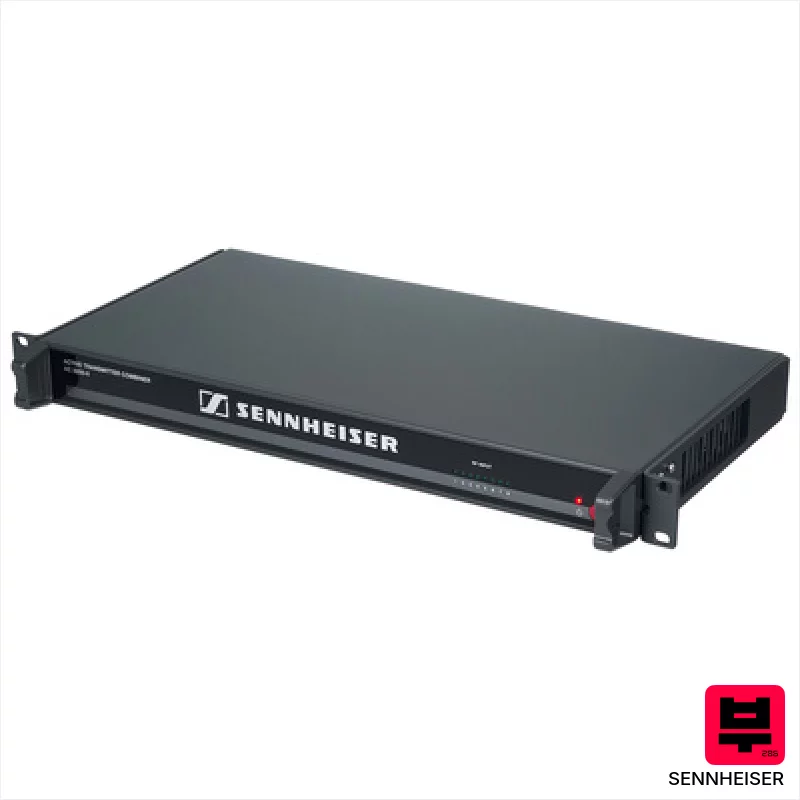
Sennheiser AC3200-MK II
- • Rock-solid build quality with robust metal chassis for reliable stage use
- • Excellent interference rejection thanks to sophisticated filtering techniques
- • Provides clean, transparent signal combining with minimal loss
- • Supports a high power input (100mW) for strong signal integrity
- • Premium-priced, a significant investment for smaller setups
- • Requires external power supply (NT12) adding to complexity and potential cable clutter
- • Limited to 8 input channels, not suitable for very large wireless microphone systems
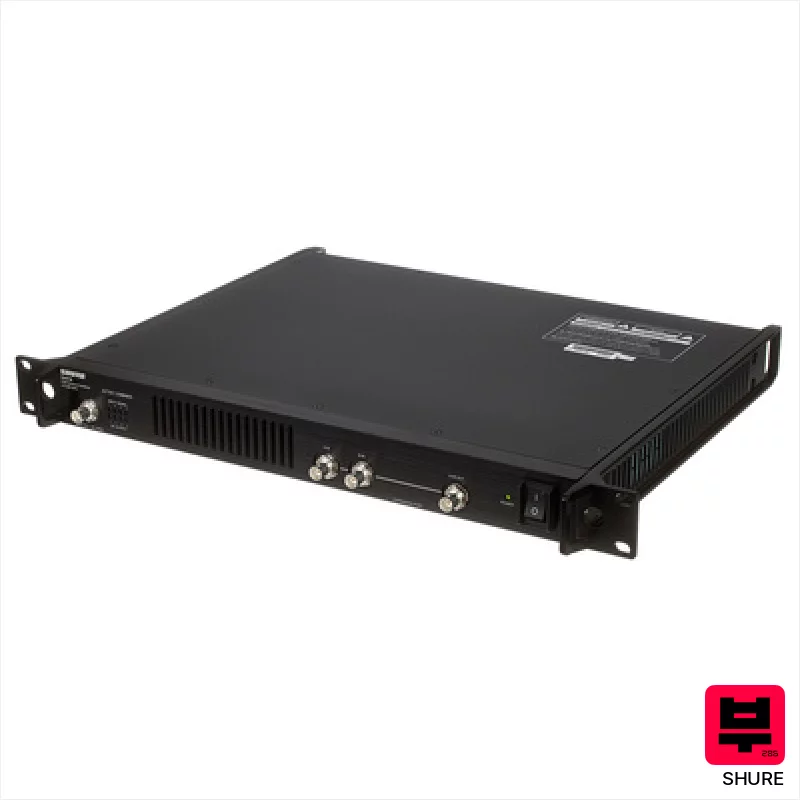
Shure PA421B-E
- • Robust 19-inch rackmount chassis ensures reliable road use.
- • Excellent signal combining minimizes interference for complex wireless setups.
- • Expansion port allows scaling for larger in-ear monitoring systems.
- • Integrated DC power outputs simplify transmitter powering.
- • Premium-priced, a significant investment for smaller operations.
- • Limited frequency range may require careful channel planning.
- • Can be complex to configure initially, requires some technical understanding.
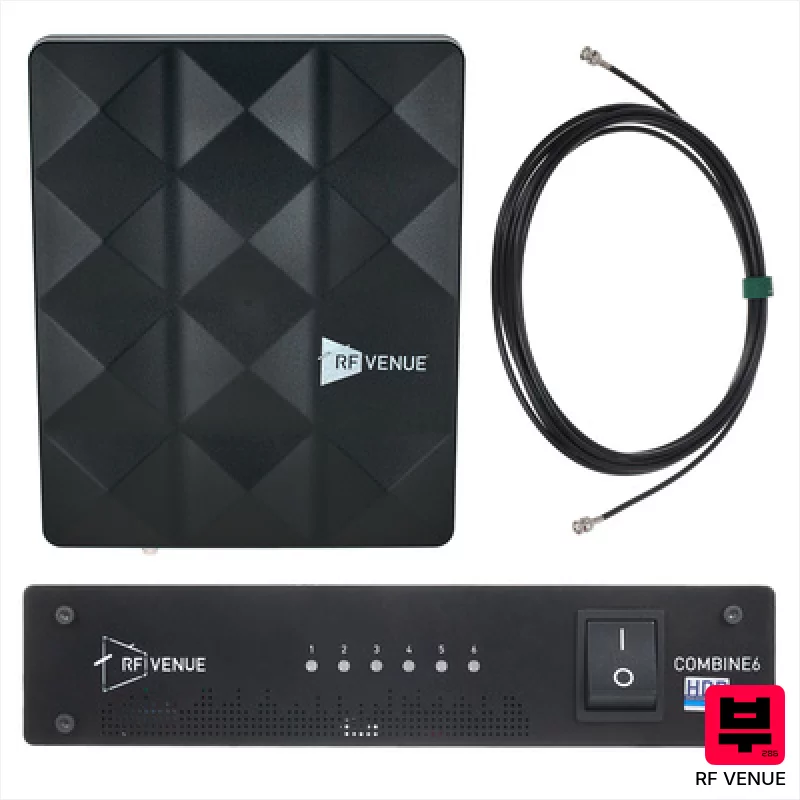
RF Venue 6CH In-Ear Monitor Bundle
- • Combine 6 HDR handles high channel counts, crucial for complex IEM systems.
- • CP Stage antenna's IP44 rating offers reliable performance in challenging environments.
- • RG8X-25 cables are well-shielded, minimizing RF interference and signal loss.
- • Robust build quality inspires confidence; feels like it'll withstand gigging life.
- • The combiner's size (210x45x224mm) can be a constraint in tight rack spaces.
- • Hypercardioid antenna pattern requires careful placement for optimal coverage.
- • Premium-priced, representing a significant investment for smaller setups.
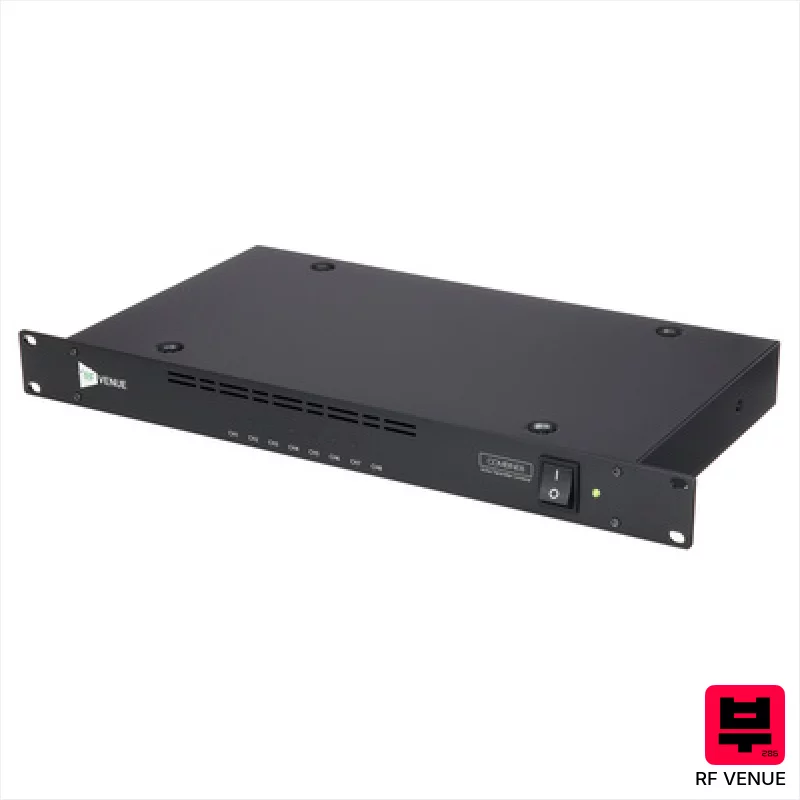
RF Venue Combine 8
- • Robust, all-aluminum chassis provides exceptional shielding and durability.
- • Active design delivers consistent signal combining with minimal loss.
- • RF Venue's renowned filtering minimizes intermodulation and interference.
- • Provides clean, reliable RF signal aggregation for complex wireless systems.
- • Significant weight makes rack transport and installation more challenging.
- • Limited frequency range restricts use in systems exceeding 608 MHz.
- • Premium-priced, represents a substantial investment for smaller setups.
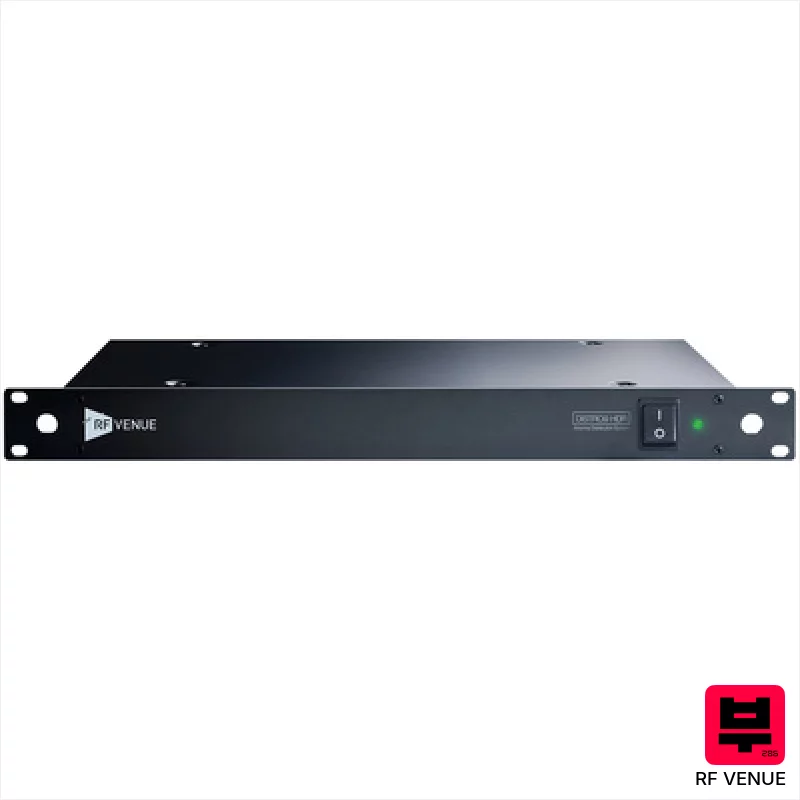
RF Venue Distro 9 HDR
- • Robust, heavy-duty construction using premium RF Venue components
- • Active distribution ensures exceptionally clean signal integrity across all outputs
- • High Dynamic Range (HDR) minimizes intermodulation distortion in dense RF environments
- • Multiple outputs provide maximum flexibility for complex wireless setups
- • Significant weight makes rack installation and transport challenging
- • Premium-priced, representing a substantial investment for smaller operations
- • Limited to the 50-1000 MHz range; may not cover all emerging wireless bands
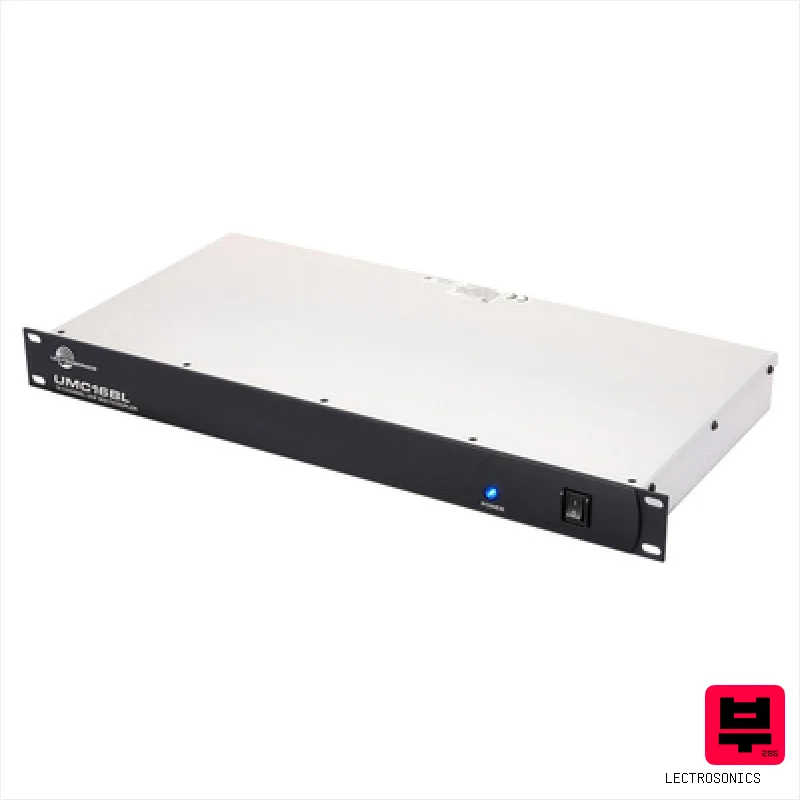
Lectrosonics UMC16B-L
- • Distributes signals from two antennas to eight receivers at once.
- • Ceramic filtering minimizes interference in crowded UHF bands.
- • Reduces cable and antenna costs in large wireless setups.
- • Combines two inputs into sixteen usable output channels.
- • Heavy weight of 1.45 kg may be difficult to carry.
- • Requires specific DCR15/A4U power supply to operate.
- • No built-in battery option for portable operation.
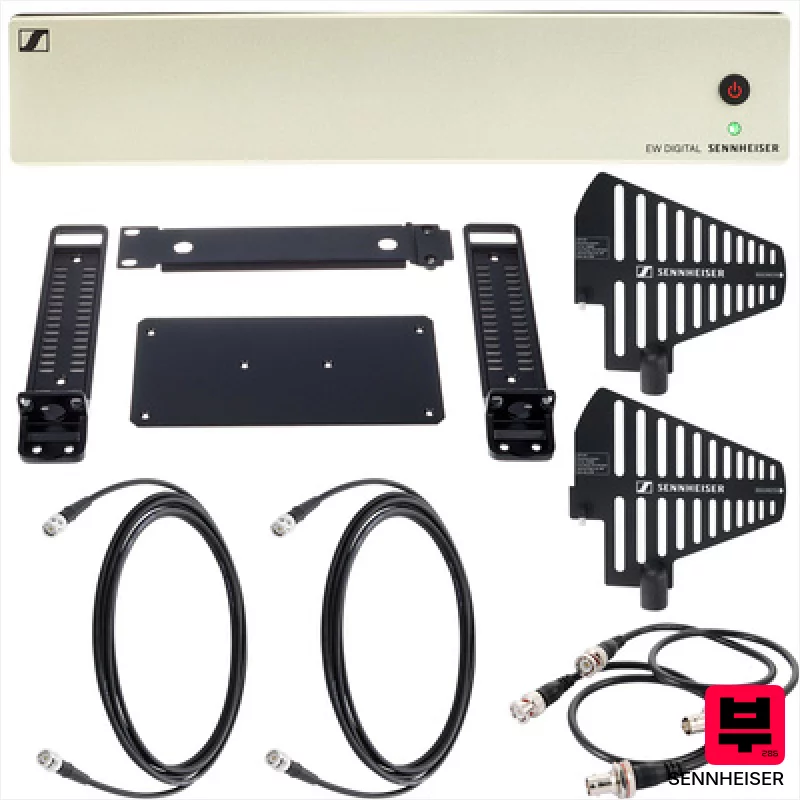
Sennheiser EW-D Q-R-S Splitter Set I
- • Robust ASA splitter handles multiple receiver feeds reliably.
- • Directional antennas provide excellent signal rejection of interference.
- • Low-damping BNC cables minimize signal loss over distance.
- • AM2 antenna cable allows flexible rack mounting options.
- • High-end price point makes it a significant investment.
- • Limited channel count compared to more expansive wireless systems.
- • Passive antennas' performance is still dependent on antenna placement.
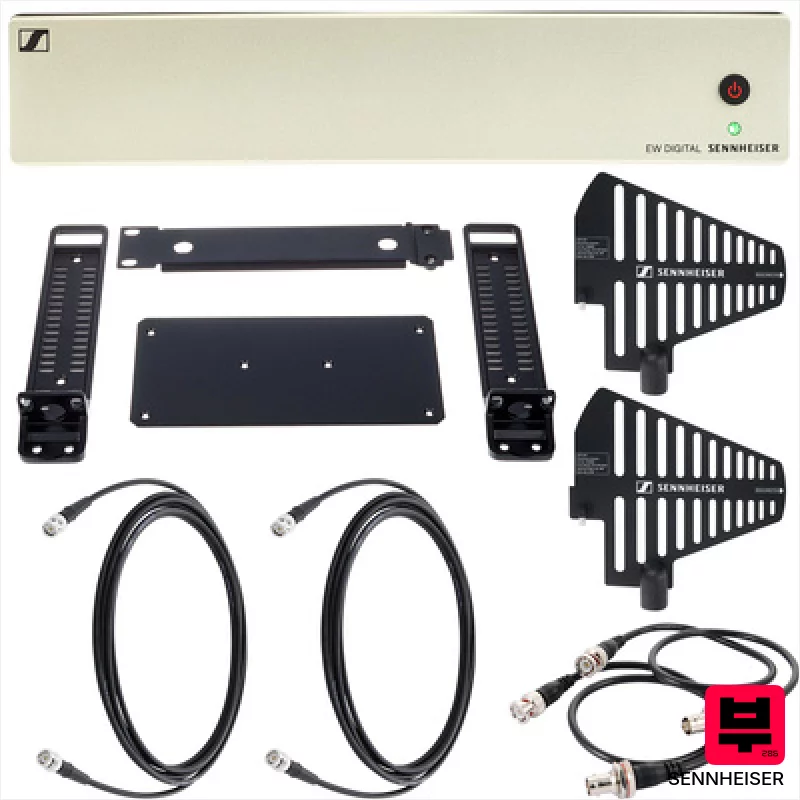
Sennheiser EW-D T-U-V-W Splitter Set I
- • Robust ASA splitter handles multiple antennae with reliable DC power distribution
- • Directional antennas offer improved signal gain and rejection of unwanted interference
- • High-quality BNC cables minimize signal loss over longer runs
- • AM2 antenna cable facilitates flexible rack mounting and front panel access
- • The system’s complexity demands careful setup and understanding of RF principles
- • The passive antennas' directional nature requires precise positioning for optimal performance
- • Premium-priced, making it a significant investment for smaller operations
Every splitters and combiners that matches
47 models match this page. The 15 above are covered in detail; the rest are listed here with their published specifications.
Splitters and Combiners by the numbers
Measured across all 47 models in this category, so «wide», «short» or «expensive» mean something you can check.
How to Choose the Best Splitters and Combiners
Signal Integrity
This is paramount. A good splitter shouldn't color the signal - it should be transparent. We're listening for added noise, phase shift, or a softening of transients; anything that diminishes the articulation of your sources.
Isolation
How well does each output isolate from the others? Poor isolation means bleed and feedback headaches on stage, especially with multiple vocalists or instruments sharing frequencies. We're looking for at least 40dB isolation, ideally more.
Gain Handling
Can it handle hot signals without distortion or compression? Drum mics and loud brass instruments can easily overload a weak unit. Headroom is your friend; it lets you push the signal without nasty breakup.
Routing Flexibility
Combiners are tricky. Do you need to combine multiple signals into one? How many inputs and outputs do you realistically need? Think about future expansion and the potential for complex routing scenarios.
Build Quality & Reliability
Road-worthy gear isn't about flashy aesthetics. It's about robust construction, reliable connectors, and a power supply that won't fail you halfway through a set. Cheap plastic and flimsy connectors are a red flag.
Buying Guide
At this price point, you're making trade-offs. You're unlikely to find a unit with every feature under the sun. Often, cheaper units will sacrifice isolation or suffer from slightly higher noise floors - a subtle hum that might not be noticeable on its own but adds up in a complex mix. Prioritize signal integrity above all else; a transparent splitter is worth its weight in gold, even if it lacks fancy routing options. Don't cheap out on the cables either; a bad cable can negate the benefits of a good splitter.
How This List Is Built
We don't play these instruments — we're a catalog, not a review desk, and we'd rather say so than pretend otherwise. This page covers 47 splitters and combiners from the Thomann catalogue, which is the largest single source of specification data in this category: 15 in detail, the rest listed with their specifications.
Position is computed, not curated. We parse the manufacturer's own description into actual values — nut width, scale, fret count, fingerboard radius, size, alloy — and rank on them: how many specifications a model has published, how many of them are measurable numbers, and how precisely it meets this page's criterion. A product image adds a little. Price is not a ranking signal: it tells you nothing about whether a neck fits your hand. The same inputs always produce the same order, so nothing here is shuffled to look fresh.
What this list is good for: narrowing a category down to a shortlist by spec and budget. What it isn't: a substitute for hearing an instrument. Before you buy, read hands-on reviews and, where you can, play it. Full methodology.

