
Best Sennheiser Splitters and Combiners 2026
So, you're wrestling with wireless mics and need to split or combine signals? Sennheiser's done this for decades, and while they aren't the absolute cheapest option, their splitters and combiners are built to survive the rigors of a real gig. We're talking about gear that needs to handle feedback, interference, and the occasional spilled beer - and Sennheiser's approach is generally rock-solid. Let's break down what makes their stuff tick.
Last updated: September 28, 2026
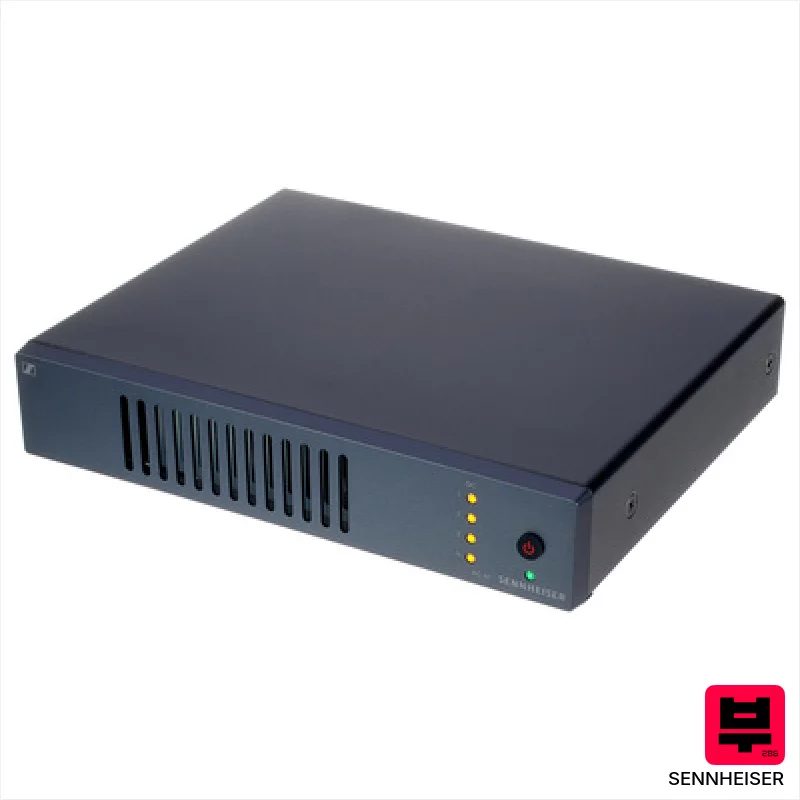
Sennheiser AC41 Antenna Combiner
- • Excellent noise reduction for IEM monitoring applications
- • Robust metal chassis provides reliable protection and durability
- • Active combiner design minimizes intermodulation distortion effectively
- • Seamless integration with Sennheiser’s G4 wireless ecosystem
- • Limited compatibility outside of Sennheiser’s G4 systems
- • Relatively premium-priced compared to passive combiner alternatives
- • The physical size (1U) can be a constraint in tight rack spaces
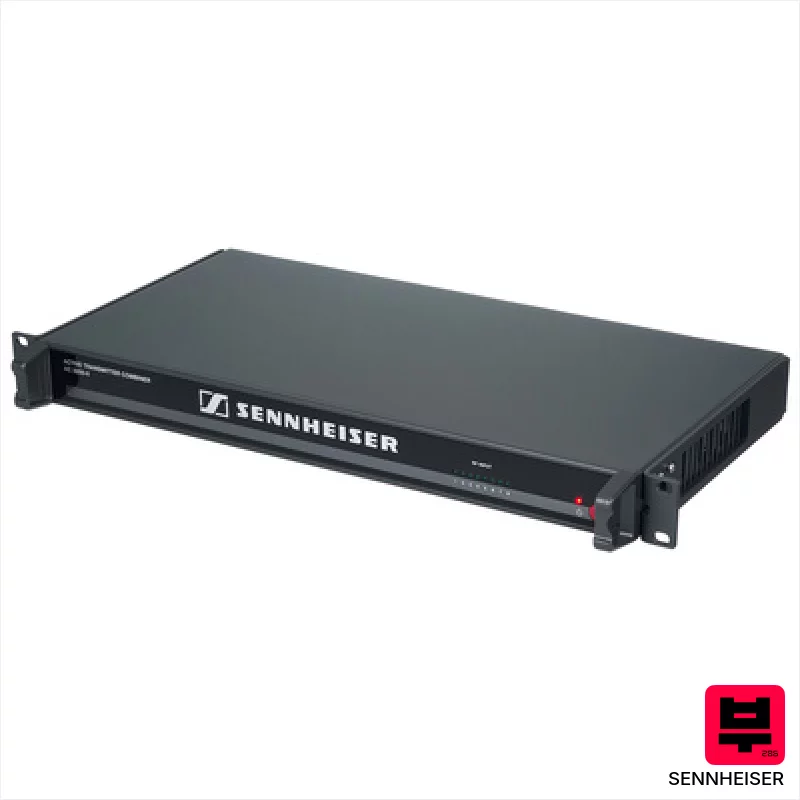
Sennheiser AC3200-MK II
- • Rock-solid build quality with robust metal chassis for reliable stage use
- • Excellent interference rejection thanks to sophisticated filtering techniques
- • Provides clean, transparent signal combining with minimal loss
- • Supports a high power input (100mW) for strong signal integrity
- • Premium-priced, a significant investment for smaller setups
- • Requires external power supply (NT12) adding to complexity and potential cable clutter
- • Limited to 8 input channels, not suitable for very large wireless microphone systems
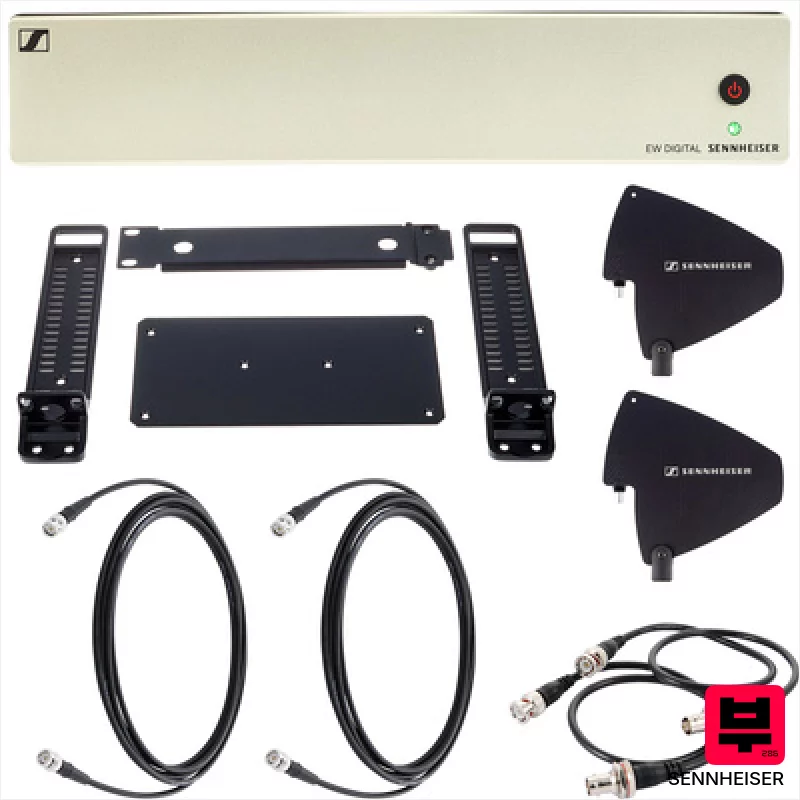
Sennheiser EW-D X-Y Splitter Set I
- • Robust ASA splitter offers reliable dual 1:4 signal distribution.
- • AD 1800 antennas provide excellent directional gain for clear reception.
- • GZL RG 8 cables minimize signal loss over longer distances.
- • Comprehensive kit simplifies antenna placement and rack integration.
- • Premium-priced, representing a significant investment for smaller operations.
- • Limited frequency range might not suit all wireless microphone systems.
- • Antenna size (180x192x22mm) can be bulky for portable setups.
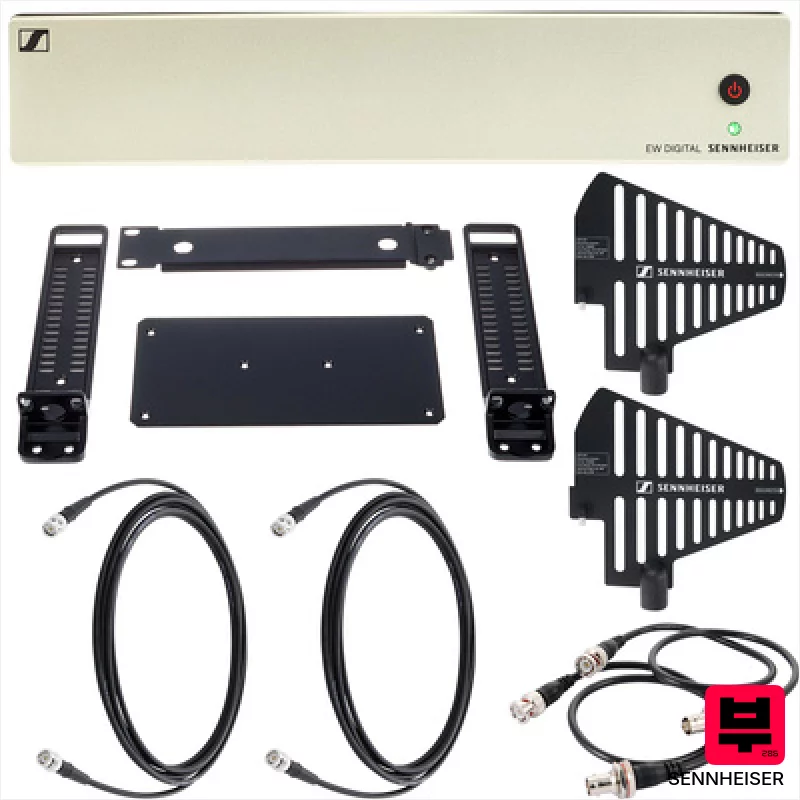
Sennheiser EW-D T-U-V-W Splitter Set I
- • Robust ASA splitter handles multiple antennae with reliable DC power distribution
- • Directional antennas offer improved signal gain and rejection of unwanted interference
- • High-quality BNC cables minimize signal loss over longer runs
- • AM2 antenna cable facilitates flexible rack mounting and front panel access
- • The system’s complexity demands careful setup and understanding of RF principles
- • The passive antennas' directional nature requires precise positioning for optimal performance
- • Premium-priced, making it a significant investment for smaller operations
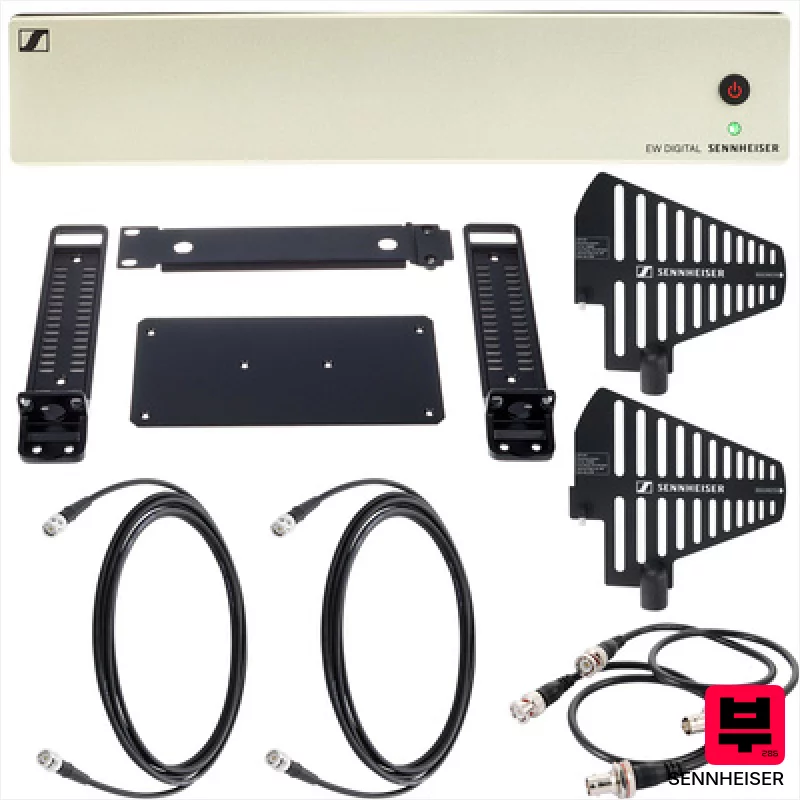
Sennheiser EW-D Q-R-S Splitter Set I
- • Robust ASA splitter handles multiple receiver feeds reliably.
- • Directional antennas provide excellent signal rejection of interference.
- • Low-damping BNC cables minimize signal loss over distance.
- • AM2 antenna cable allows flexible rack mounting options.
- • High-end price point makes it a significant investment.
- • Limited channel count compared to more expansive wireless systems.
- • Passive antennas' performance is still dependent on antenna placement.
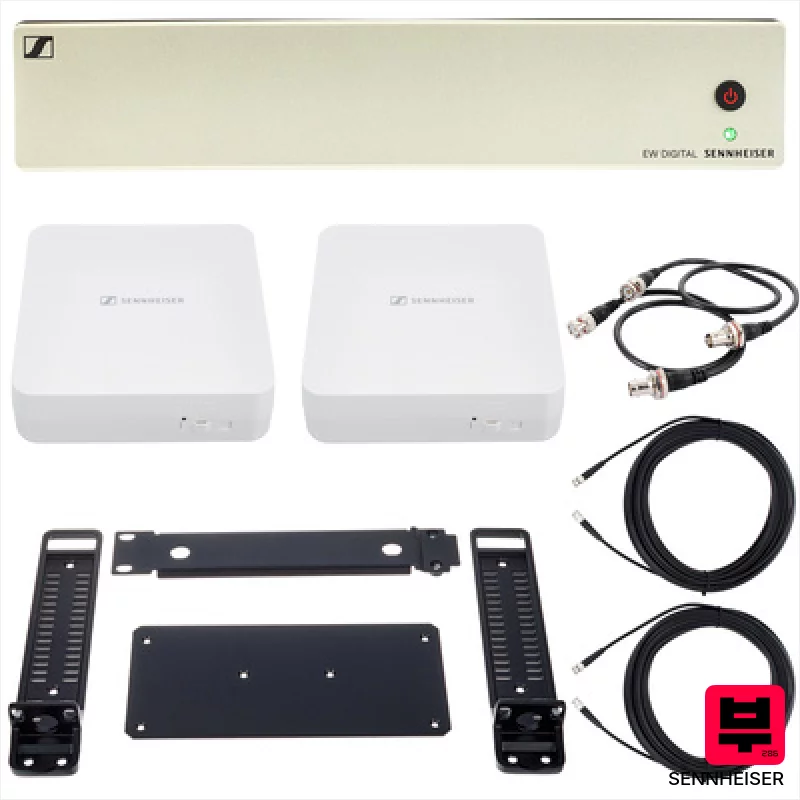
Sennheiser EW-D TUVW Splitter Install Set
- • Dual 1:4 splitting provides flexible antenna routing for complex wireless setups.
- • Sennheiser's ASA T-U-V-W ensures reliable signal distribution with DC voltage.
- • Included AWM directional antennas offer good gain and coverage for varied environments.
- • Long 20m RG 8x cables minimize signal loss over considerable distances.
- • The overall system is premium-priced, a significant investment for smaller operations.
- • 20m cables necessitate careful routing and may require boosters for longer runs.
- • The system's complexity demands a degree of technical understanding for optimal setup.
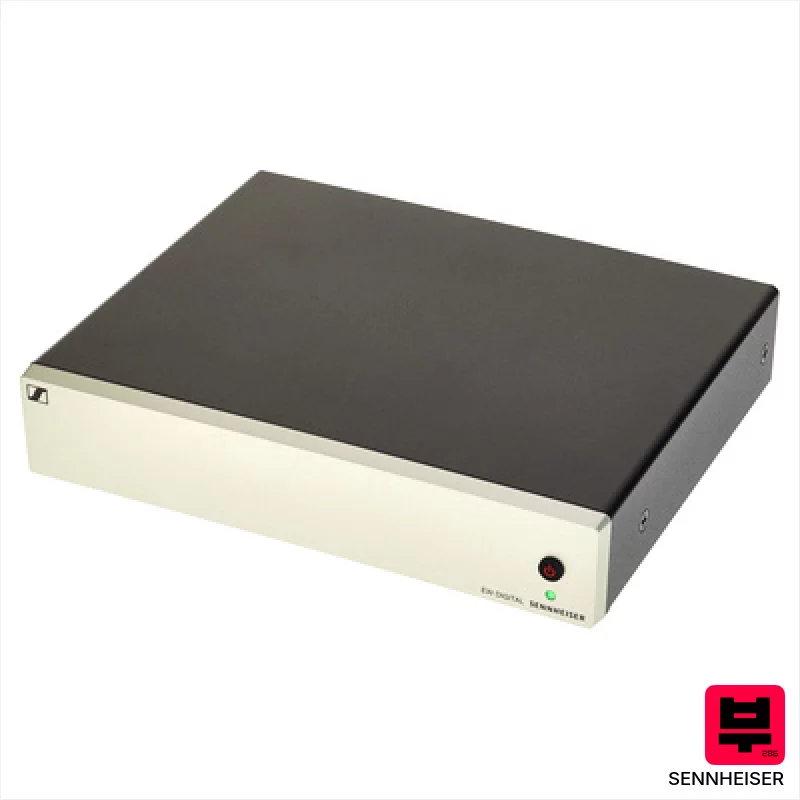
Sennheiser EW-D ASA X-Y
- • Rock-solid build quality; feels like it'll survive a tour bus.
- • Excellent signal clarity, minimizes interference in crowded RF environments.
- • DC voltage distribution simplifies powering multiple antennas.
- • The 1:4 split provides significant flexibility for complex setups.
- • Price point puts it out of reach for budget-conscious users.
- • Limited frequency range compared to some wider-band antenna systems.
- • Bulky design might be challenging in tight spaces.
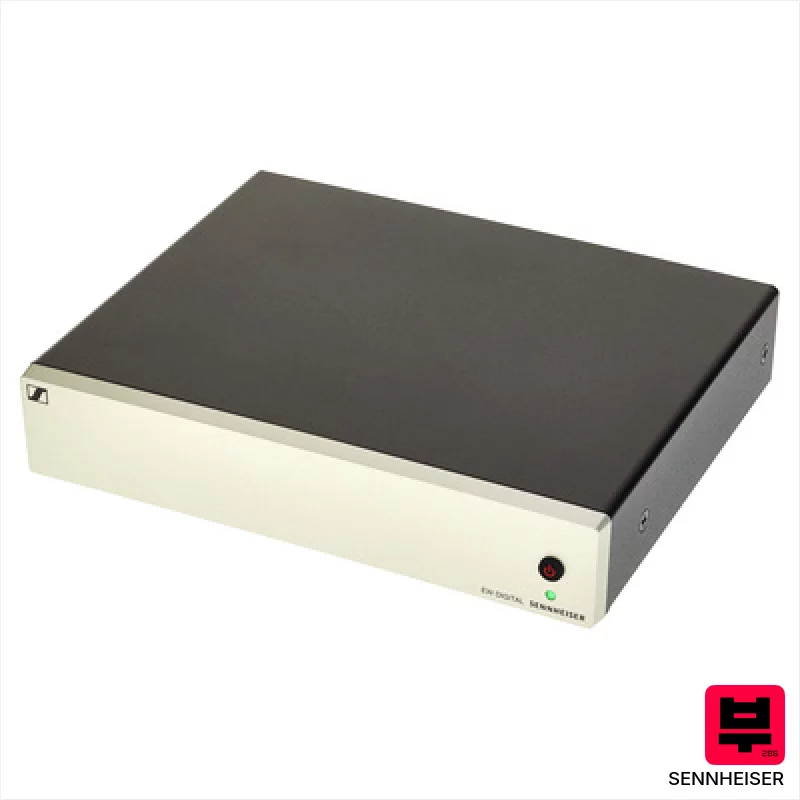
Sennheiser EW-D ASA T-U-V-W
- • Rock-solid Sennheiser build quality, inspires confidence
- • Dual 1:4 splitting maximizes receiver channel count
- • DC voltage distribution simplifies powering handhelds
- • BNC connections ensure reliable signal integrity
- • Limited frequency range compared to broader spectrum splitters
- • Higher price point makes it a significant investment
- • Requires careful antenna placement for optimal performance
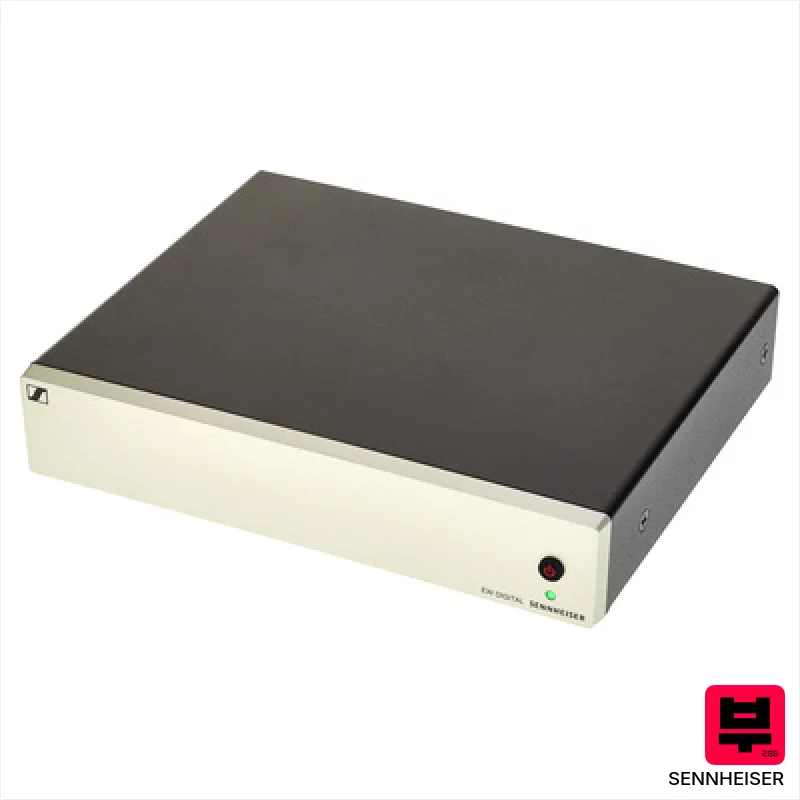
Sennheiser EW-D ASA Q-R-S
- • Rock-solid Sennheiser build quality ensures long-term reliability.
- • Dual 1:4 splitting maximizes channel count from a single antenna.
- • Integrated DC voltage distribution simplifies receiver power management.
- • BNC connectors offer robust, secure signal connections.
- • Price point places it firmly in the professional/broadcast category.
- • Limited flexibility for non-Sennheiser EW-D systems.
- • Relatively bulky design may require dedicated rack space.
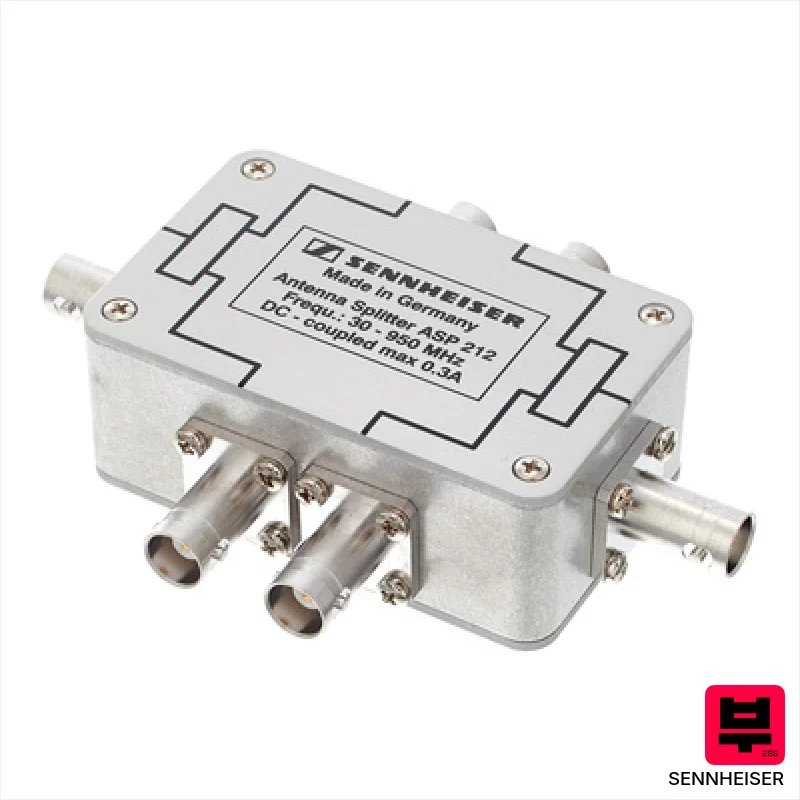
Sennheiser ASP212
- • Robust metal chassis ensures reliable operation on demanding stages.
- • Sennheiser's proven RF design minimizes signal loss and interference.
- • Simple passive design eliminates power requirements and potential noise.
- • Compact 1U rackmount format maximizes space efficiency in crowded rigs.
- • Passive design inherently introduces some signal loss compared to active splitters.
- • Limited DC power handling restricts compatibility with certain power-hungry antennas.
- • No built-in equalization or filtering for advanced signal shaping.

Sennheiser EW-D T-U-V-W Splitter Set II
- • Active splitter ensures clean signal distribution with minimal loss
- • Includes robust GA3 rack kit for professional front-panel integration
- • Omnidirectional antennas offer wide coverage and consistent reception
- • Low-damping BNC cables minimize signal degradation over distance
- • Premium-priced, representing a significant investment for smaller operations
- • Frequency range might require coordination in congested RF environments
- • Antenna cable length (5m) could be limiting for some rack configurations
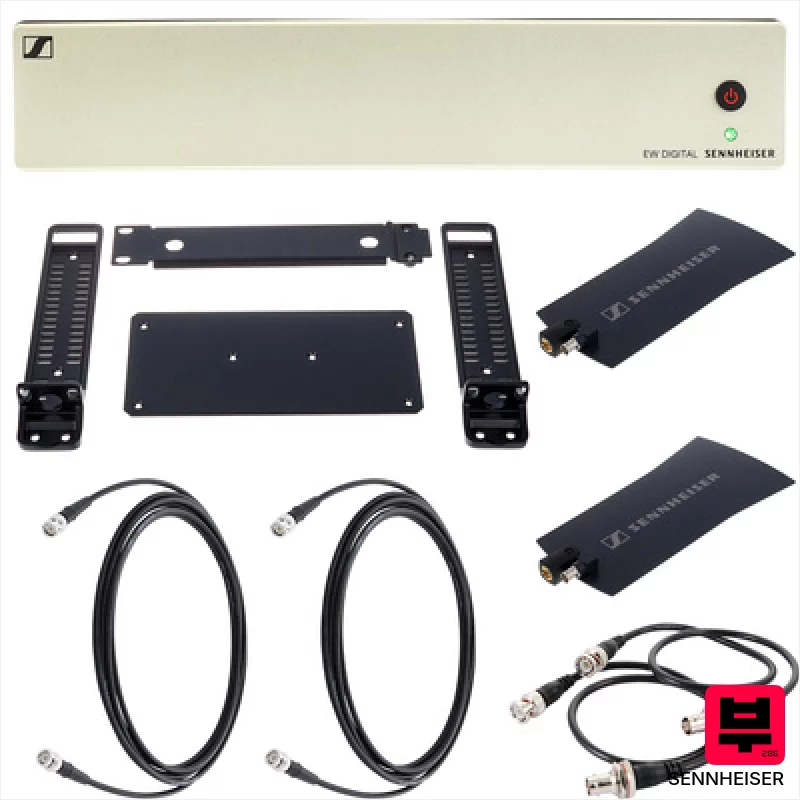
Sennheiser EW-D Q-R-S Splitter Set II
- • Robust, Sennheiser-engineered active splitter ensures clean signal distribution
- • Included GA3 rack kit provides professional, clean front panel access
- • A1031 U antennas offer wide coverage with excellent gain
- • Low-damping BNC cables minimize signal loss over longer runs
- • Premium-priced, a significant investment for smaller operations
- • Limited frequency range may require careful channel coordination
- • Antenna placement critical for optimal performance and minimal interference
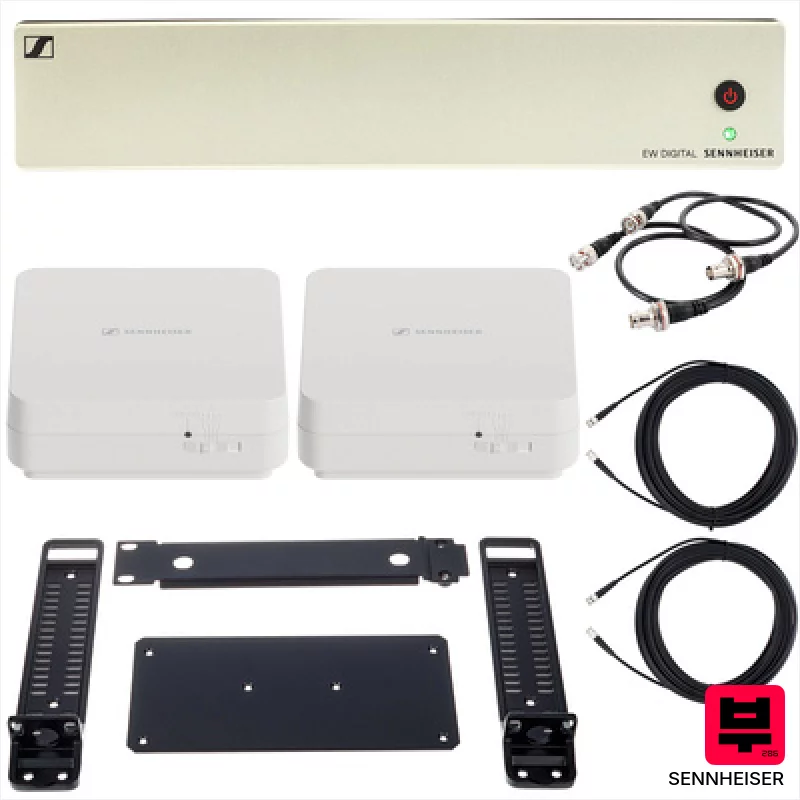
Sennheiser EW-D QRS Splitter Install Set
- • Dual 1:4 splitting offers exceptional channel density for complex setups
- • Active antenna design ensures consistent signal strength and reduced interference
- • Includes eight BNC cables and a power supply, a complete installation solution
- • Robust construction and Sennheiser’s proven reliability for demanding professional use
- • Premium-priced, a significant investment for smaller operations
- • Limited frequency range compared to broader spectrum wireless systems
- • Bulky size (180x180x53mm) may pose mounting challenges in tight spaces
Splitters and Combiners by the numbers
Measured across all 48 models in this category, so «wide», «short» or «expensive» mean something you can check.
How to Choose the Best Splitters and Combiners
Build Quality
Sennheiser's known for robust construction. These aren't flimsy plastic boxes; they're built to take a beating, which is crucial when you're hauling gear in and out of venues. The metal housings feel solid, and the connectors are generally reliable - a welcome change from some of the cheaper stuff out there.
Signal Integrity
This is the big one. A good splitter shouldn't degrade the signal; a combiner should accurately merge them. Sennheiser's designs consistently maintain a clean signal path, minimizing any loss of headroom or introduction of unwanted noise. You want your vocal to cut through the mix, not disappear into a hiss.
RF Performance
Wireless is all about RF. Sennheiser's splitters and combiners are designed to minimize interference and maintain a strong signal, especially important in crowded RF environments like concert halls or festivals. They're not magic, but they're designed with practical RF considerations.
Compatibility
Sennheiser's gear is generally designed to play nice with their own systems, obviously, but they also offer good compatibility with other brands. However, be mindful of impedance matching - a mismatch can introduce signal loss and distortion. Always check the specs.
Noise Floor
A quiet noise floor is essential for a clean signal. Sennheiser splitters and combiners consistently exhibit low noise, which is crucial for capturing subtle nuances in vocals and instruments. That low-end thump needs to be clean, not masked by unwanted hiss.
Buying Guide
Look, Sennheiser isn't the cheapest. You're paying for reliability and a consistent signal path. Avoid the absolute bottom-tier clones - they'll likely cut corners on shielding and component quality, leading to more headaches than they're worth. If you're doing a lot of live work or recording in challenging environments, the extra investment in a Sennheiser splitter/combiner is often justified; it's about avoiding problems down the line.
How This List Is Built
We don't play these instruments — we're a catalog, not a review desk, and we'd rather say so than pretend otherwise. This page covers 13 of 48 splitters and combiners from the Thomann catalogue, which is the largest single source of specification data in this category: 13 in detail, the rest listed with their specifications.
Position is computed, not curated. We parse the manufacturer's own description into actual values — nut width, scale, fret count, fingerboard radius, size, alloy — and rank on them: how many specifications a model has published, how many of them are measurable numbers, and how precisely it meets this page's criterion. A product image adds a little. Price is not a ranking signal: it tells you nothing about whether a neck fits your hand. The same inputs always produce the same order, so nothing here is shuffled to look fresh.
What this list is good for: narrowing a category down to a shortlist by spec and budget. What it isn't: a substitute for hearing an instrument. Before you buy, read hands-on reviews and, where you can, play it. Full methodology.

