
Best Shure Splitters and Combiners 2026
Okay, so you're wrestling with multiple wireless mics - lead vox, backing harmonies, that wandering tambourine player - and you need to get them all running cleanly into your mixer. Shure's splitters and combiners aren't just about functionality; they're about preserving signal integrity when you're dealing with the nuances of live performance. Let's be honest, a muddy wireless signal can kill a gig faster than a blown amp, and Shure's got some solid options to keep things tight.
Last updated: September 29, 2026
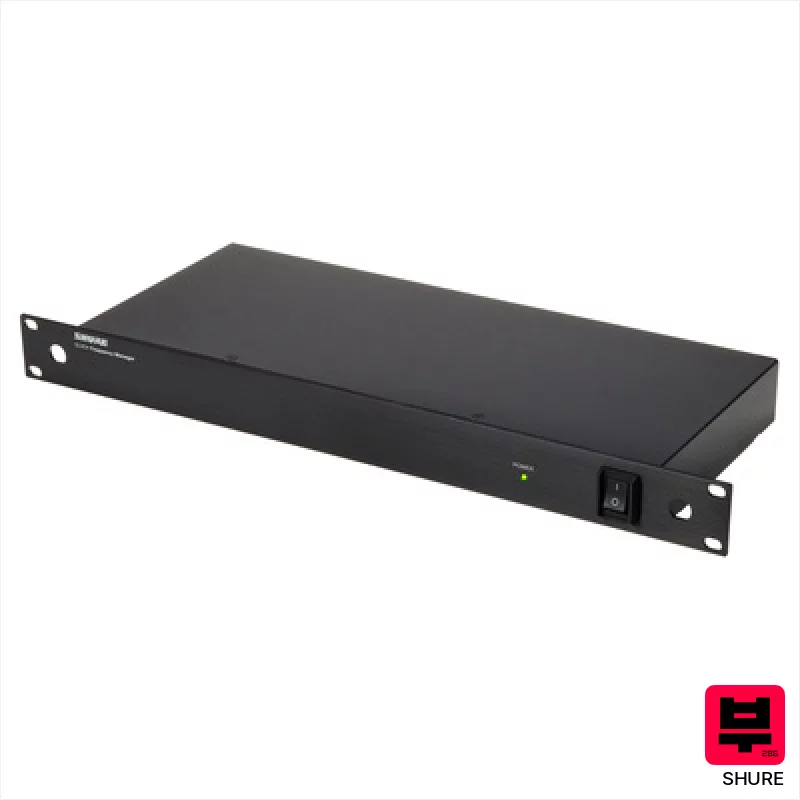
Shure GLXD+ Frequency Manager
- • Robust 1U rackmount chassis ensures reliable stage deployment.
- • Dual-band frequency management minimizes interference in dense RF environments.
- • Supports up to 16 GLXD4R+ receivers, ideal for large events.
- • Reverse SMA connectors offer flexibility in antenna selection and placement.
- • Price point places it firmly in the professional, high-end wireless ecosystem.
- • Requires a significant investment in compatible Shure GLXD4R+ receivers.
- • The size (19”/1U) can be a constraint in smaller, space-limited racks.
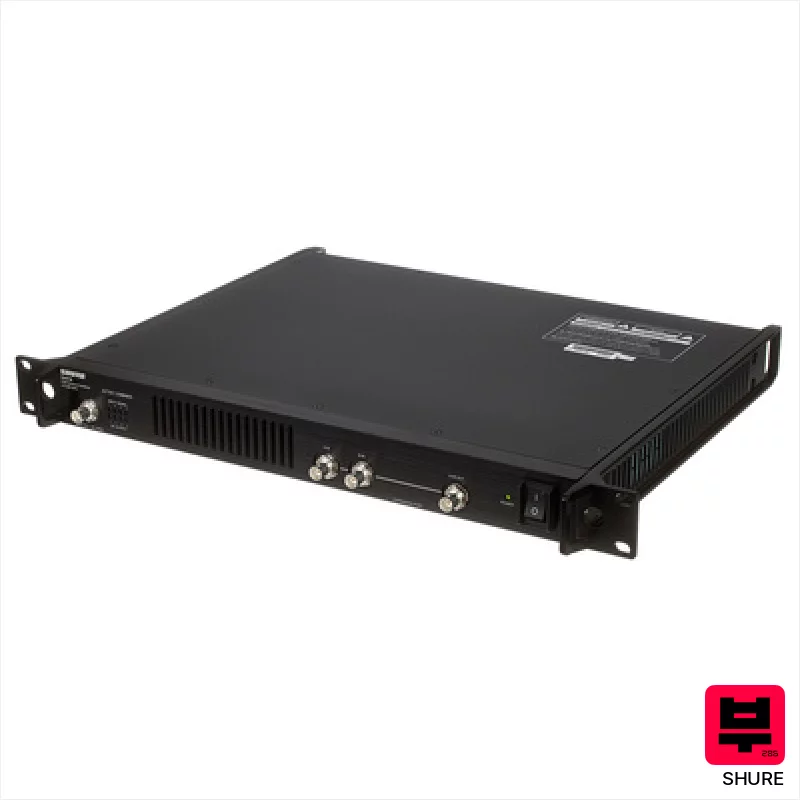
Shure PA421B-E
- • Robust 19-inch rackmount chassis ensures reliable road use.
- • Excellent signal combining minimizes interference for complex wireless setups.
- • Expansion port allows scaling for larger in-ear monitoring systems.
- • Integrated DC power outputs simplify transmitter powering.
- • Premium-priced, a significant investment for smaller operations.
- • Limited frequency range may require careful channel planning.
- • Can be complex to configure initially, requires some technical understanding.
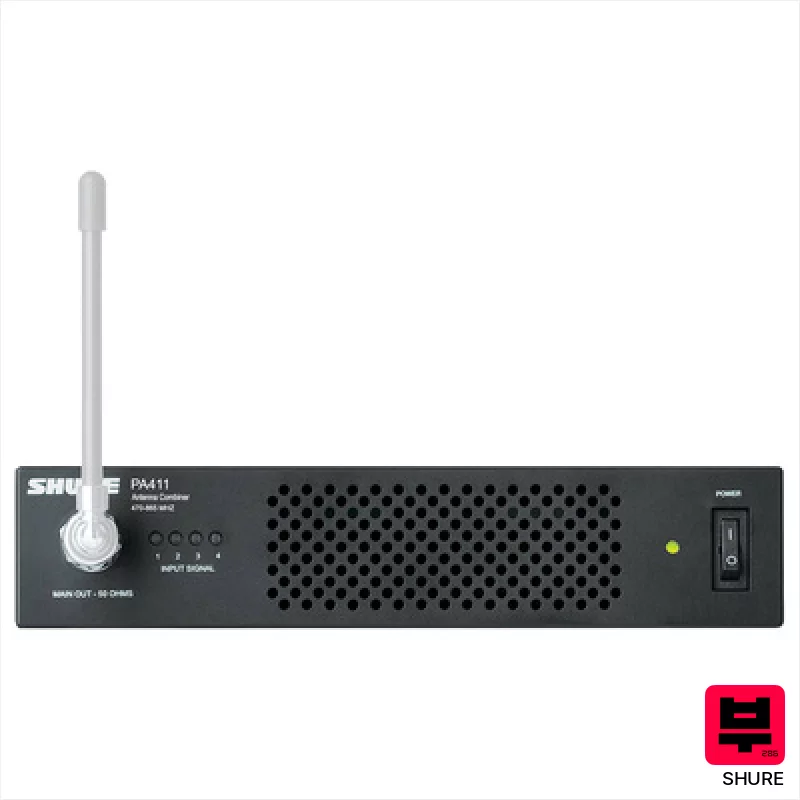
Shure PA411 Antenna Combiner
- • Solid Shure build quality ensures reliable operation for years.
- • Compact 1U design saves valuable rack space in tight rigs.
- • BNC outputs offer flexibility with both active and passive antennas.
- • Integrated DC output simplifies receiver power, reducing cable clutter.
- • Price point places it in the premium-priced category for smaller installations.
- • Limited to Shure PSM transmitters, restricting system compatibility.
- • Antenna not included; requires separate purchase and careful selection.

Shure UA844+SWB-LCE
- • Robust 19-inch rackmount chassis provides excellent physical protection
- • Cascading capability allows expansion to support even more receivers
- • Low-voltage cables simplify integration with BLX and SLX systems
- • Provides clean signal splitting with minimal loss across multiple channels
- • Price point positions it as a premium investment for professional setups
- • Limited gain adjustment necessitates careful antenna placement and system optimization
- • Physical size and weight make portability challenging for mobile applications

Shure UA844+SWB-E
- • Robust 19 in rack housing ensures stability in demanding environments
- • Amplified RF signal combats losses when splitting to multiple receivers
- • Cascading capability expands system capacity beyond the initial four receivers
- • Shure’s proven RF expertise guarantees reliable, interference-free operation
- • Relatively high cost compared to passive antenna splitters
- • Requires external DC power, adding to setup complexity
- • Limited to Shure wireless systems; not universally compatible

Shure UA221DB-RSMA
- • Solid Shure build quality ensures reliable performance in demanding environments.
- • RSMA connector simplifies integration with GLXD4R+ receivers, reducing setup time.
- • Includes coaxial cables and mounting hardware, offering a complete solution.
- • Passive design avoids introducing unwanted noise or distortion to the signal.
- • Limited to GLXD4R+ receivers; not a universal antenna splitter.
- • Passive design means no gain adjustment; relies on receiver's antenna strength.
- • Adds complexity to antenna system; requires careful placement for optimal coverage.
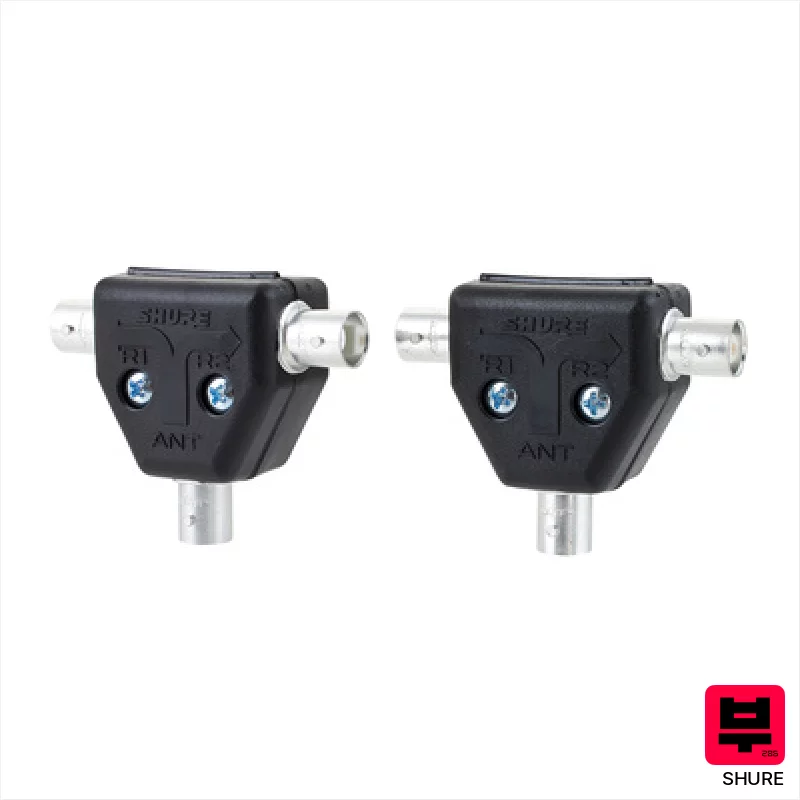
Shure UA 221
- • Solid Shure build quality ensures reliable operation for years.
- • Passive design eliminates power requirements, simplifying setup.
- • Included HF cable set minimizes signal loss and interference.
- • Universal compatibility works with a wide range of Shure wireless receivers.
- • Passive design offers no adjustable gain, limiting flexibility.
- • Limited to two receivers, not ideal for larger productions.
- • BNC connector may require an adapter for some setups.
Splitters and Combiners by the numbers
Measured across all 48 models in this category, so «wide», «short» or «expensive» mean something you can check.
How to Choose the Best Splitters and Combiners
Signal Integrity
Shure's designs prioritize minimal signal loss and distortion. We're talking about preserving the articulation of a snare drum hit or the subtle breathiness in a vocalist's performance - that's what separates a professional sound from a 'something's not quite right' vibe.
RF Performance
Shure has a long history in RF technology. Their combiners are designed to minimize interference and maximize channel availability, which is absolutely crucial when you're sharing frequencies with other bands or venues with dense wireless setups. Less dropouts, more confidence.
Build Quality
These aren't flimsy plastic boxes. Shure's splitters and combiners are built to withstand the rigors of touring. Robust construction means they'll survive being crammed into a gear case and tossed around.
Isolation
Good isolation prevents bleed between channels. Imagine a backing vocal leaking into the lead vocal mic - it's a mix nightmare. Shure's combiners do a decent job of keeping things clean, though budget alternatives often fall short.
Compatibility
Shure's gear generally plays well with other brands, but optimal performance is, of course, achieved when using them within a Shure wireless ecosystem. It's like using Fender amps with Fender guitars - it just works better.
Buying Guide
Look, you can find cheaper splitters and combiners out there, but you're often sacrificing signal quality and build. The Shure units aren't the absolute cheapest, but they represent a sweet spot between price and performance. If you're running multiple wireless mics for a serious gig or tracking work, investing in a Shure combiner or splitter is money well spent - it's about preventing problems before they arise and ensuring your sound is professional.
How This List Is Built
We don't play these instruments — we're a catalog, not a review desk, and we'd rather say so than pretend otherwise. This page covers 7 of 48 splitters and combiners from the Thomann catalogue, which is the largest single source of specification data in this category: 7 in detail, the rest listed with their specifications.
Position is computed, not curated. We parse the manufacturer's own description into actual values — nut width, scale, fret count, fingerboard radius, size, alloy — and rank on them: how many specifications a model has published, how many of them are measurable numbers, and how precisely it meets this page's criterion. A product image adds a little. Price is not a ranking signal: it tells you nothing about whether a neck fits your hand. The same inputs always produce the same order, so nothing here is shuffled to look fresh.
What this list is good for: narrowing a category down to a shortlist by spec and budget. What it isn't: a substitute for hearing an instrument. Before you buy, read hands-on reviews and, where you can, play it. Full methodology.

