
Best Splitters and Combiners for Broadcast Facilities 2026
Alright, let's talk splitters and combiners for broadcast. You're not running a bedroom recording setup here; you're handling live mics, multiple feeds, and need rock-solid reliability. A bad splitter can introduce noise, phase issues, or even outright fail during a live broadcast, and that's a career-ender. We're going to break down what you need to look for - beyond just the number of ports - to keep your signal clean and your broadcast running smooth.
Last updated: July 15, 2026 • Next update: July 22, 2026
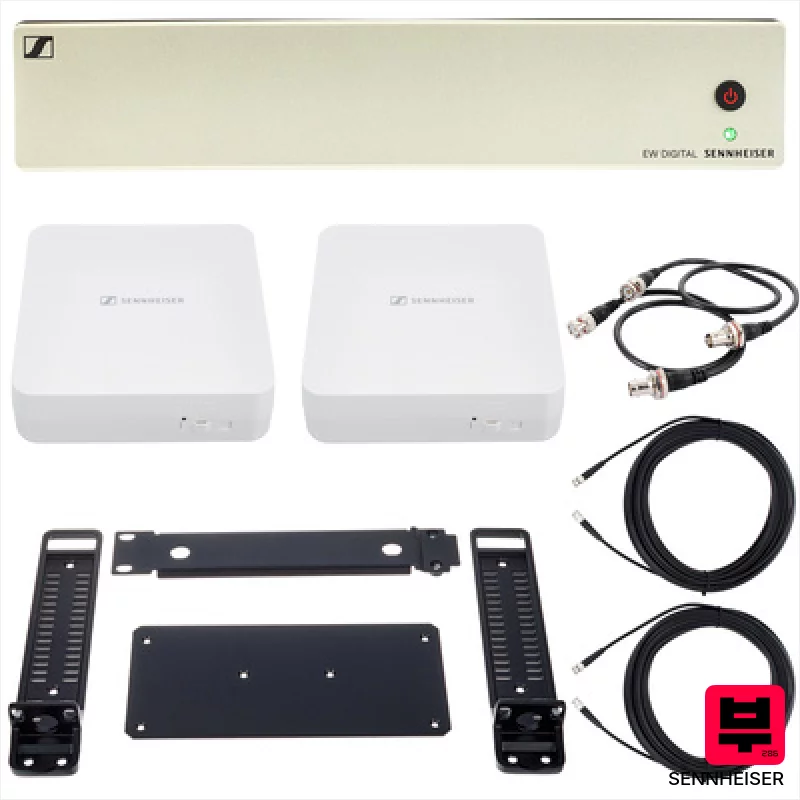
Sennheiser EW-D TUVW Splitter Install Set
- • Dual 1:4 splitting provides flexible antenna routing for complex wireless setups.
- • Sennheiser's ASA T-U-V-W ensures reliable signal distribution with DC voltage.
- • Included AWM directional antennas offer good gain and coverage for varied environments.
- • Long 20m RG 8x cables minimize signal loss over considerable distances.
- • The overall system is premium-priced, a significant investment for smaller operations.
- • 20m cables necessitate careful routing and may require boosters for longer runs.
- • The system's complexity demands a degree of technical understanding for optimal setup.
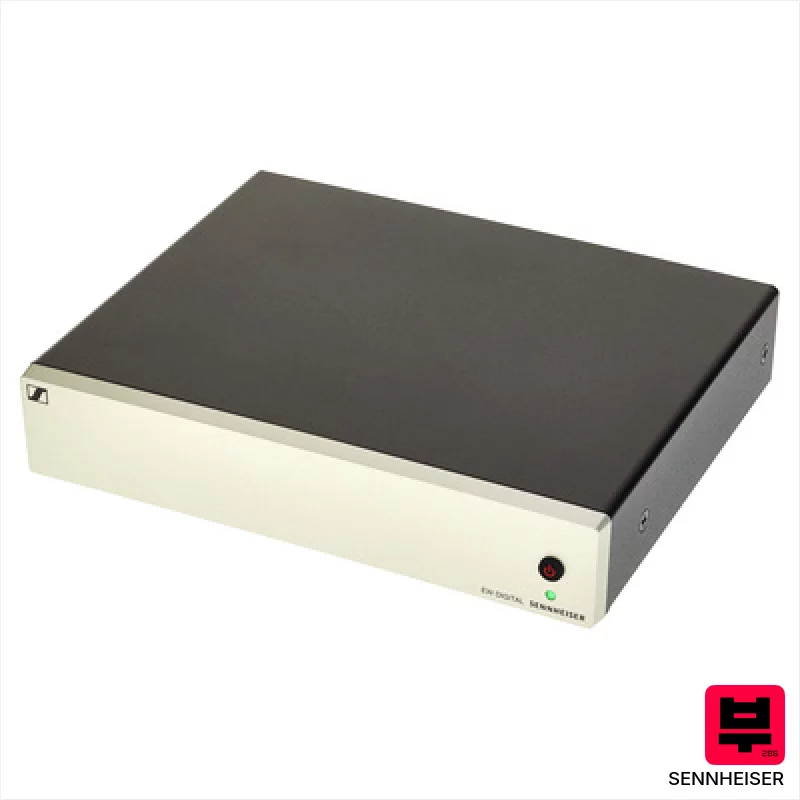
Sennheiser EW-D ASA T-U-V-W
- • Rock-solid Sennheiser build quality, inspires confidence
- • Dual 1:4 splitting maximizes receiver channel count
- • DC voltage distribution simplifies powering handhelds
- • BNC connections ensure reliable signal integrity
- • Limited frequency range compared to broader spectrum splitters
- • Higher price point makes it a significant investment
- • Requires careful antenna placement for optimal performance
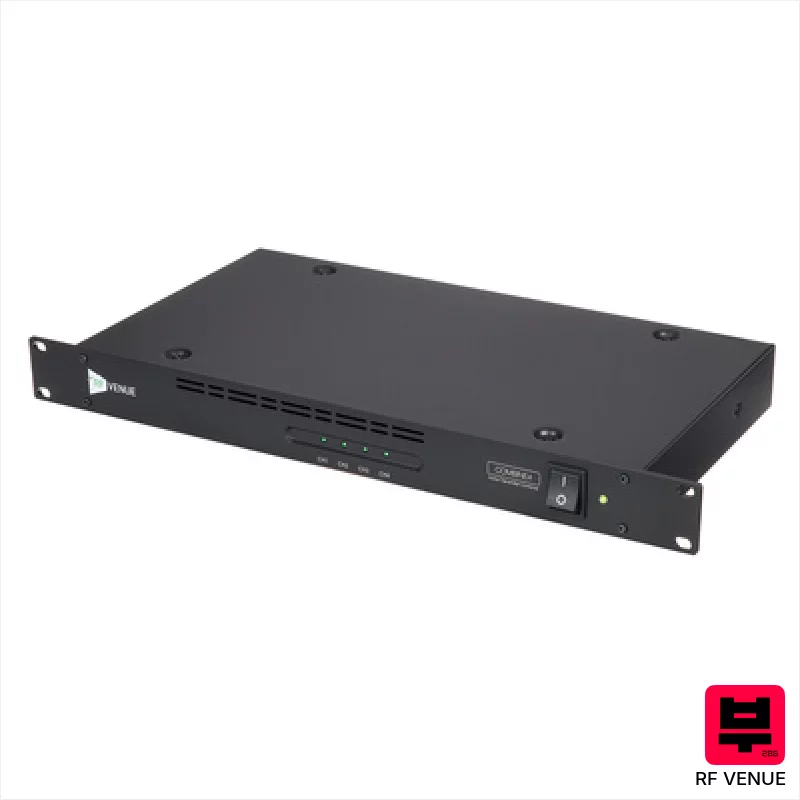
RF Venue Combine 4
- • Robust RF Venue build quality inspires immediate confidence.
- • Active combiner design minimizes signal loss and intermodulation.
- • Four BNC inputs offer flexible antenna system configuration.
- • Compact depth allows for tight rack space integration.
- • Premium-priced, a significant investment for smaller setups.
- • Limited frequency range; may not cover all wireless systems.
- • Weight (2.3kg) makes mobile use less convenient.
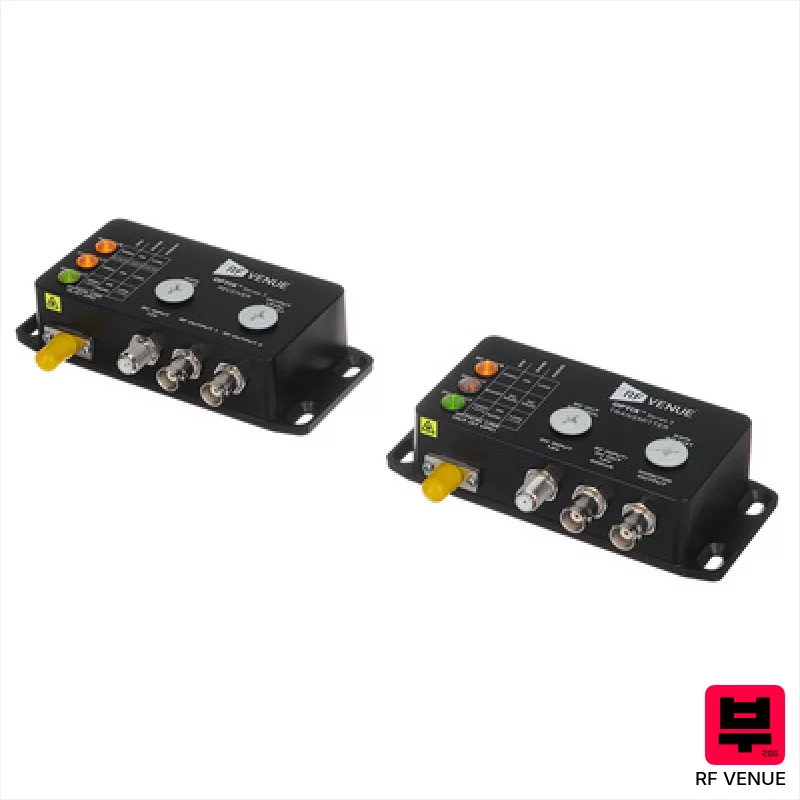
RF Venue OPTIX1-S3
- • Exceptional dynamic range minimizes interference in congested RF environments.
- • Fiber optic transmission ensures pristine audio quality, immune to electrical noise.
- • BNC connectors offer reliable, professional RF signal integrity.
- • Integrated HF monitoring simplifies troubleshooting and signal optimization.
- • Premium-priced, representing a significant investment for smaller operations.
- • Limited to a single channel, requiring multiple sets for multi-mic systems.
- • ST/UPC optical connectors are less common than some other fiber standards.
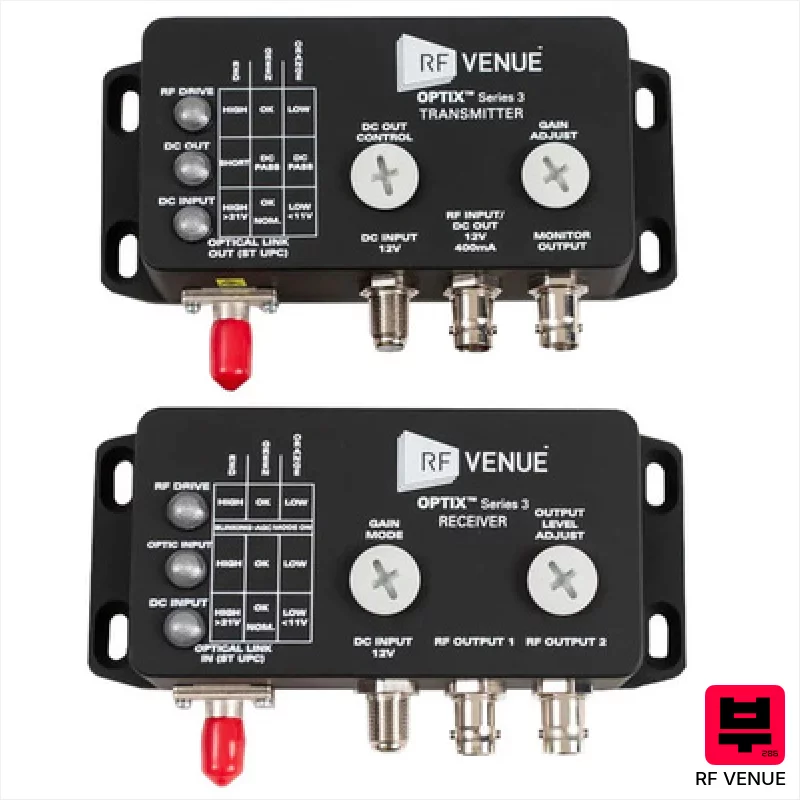
RF Venue OPTIX2-S3
- • Rock-solid RF Venue build quality ensures dependable operation.
- • Extends wireless signals over long distances with minimal signal degradation.
- • The 60dB dynamic range handles challenging RF environments effectively.
- • Integrated HF monitoring simplifies troubleshooting and system optimization.
- • The substantial weight makes rack mounting and transport less convenient.
- • Premium-priced, placing it out of reach for many smaller installations.
- • ST/UPC optical connectors are less common than some alternatives.
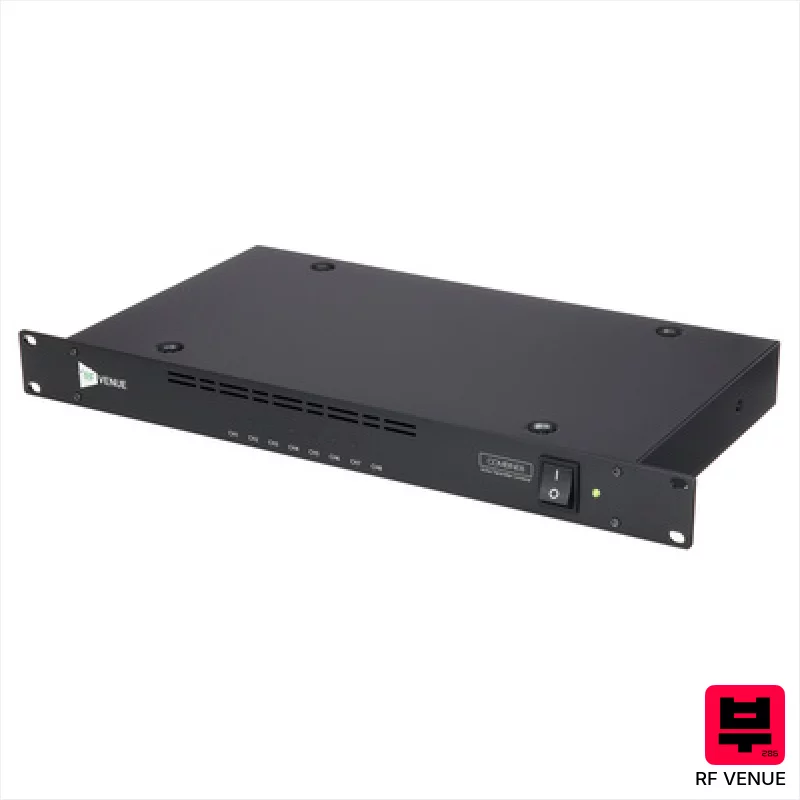
RF Venue Combine 8
- • Robust, all-aluminum chassis provides exceptional shielding and durability.
- • Active design delivers consistent signal combining with minimal loss.
- • RF Venue's renowned filtering minimizes intermodulation and interference.
- • Provides clean, reliable RF signal aggregation for complex wireless systems.
- • Significant weight makes rack transport and installation more challenging.
- • Limited frequency range restricts use in systems exceeding 608 MHz.
- • Premium-priced, represents a substantial investment for smaller setups.
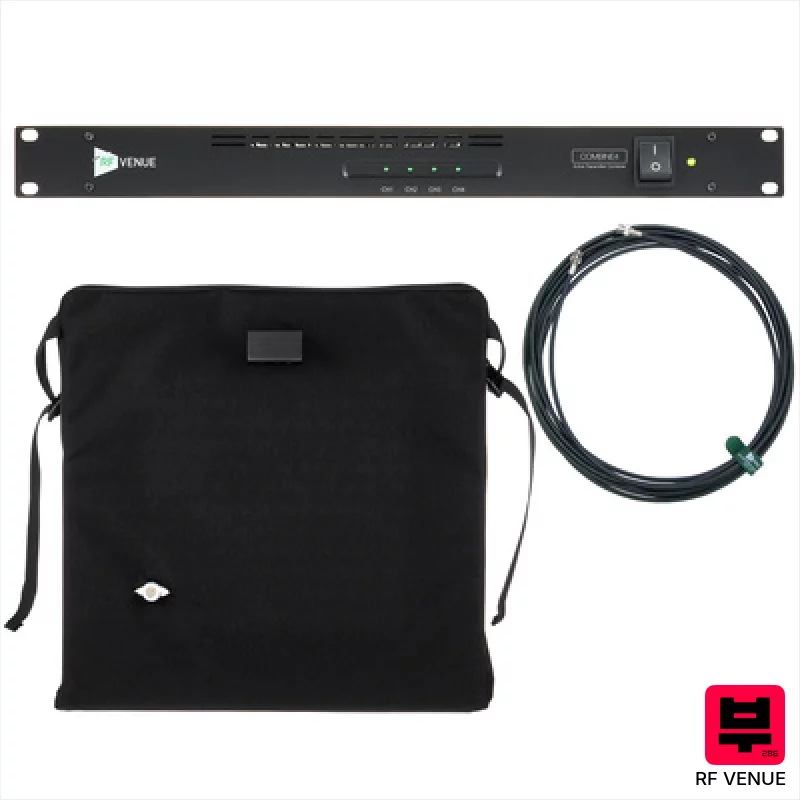
RF Venue 4CH In-Ear Monitor Bundle
- • Robust CP Beam antenna offers exceptional directional gain and clarity.
- • Active combiner provides clean signal aggregation with minimal loss.
- • RG8X-25 cable ensures low-loss signal transmission over a generous length.
- • Foldable antenna design simplifies transport and setup for touring applications.
- • The bundle's weight makes it less ideal for smaller, mobile setups.
- • Active combiner requires external power, adding to logistical considerations.
- • Frequency range, while broad, may still present interference challenges in congested RF environments.
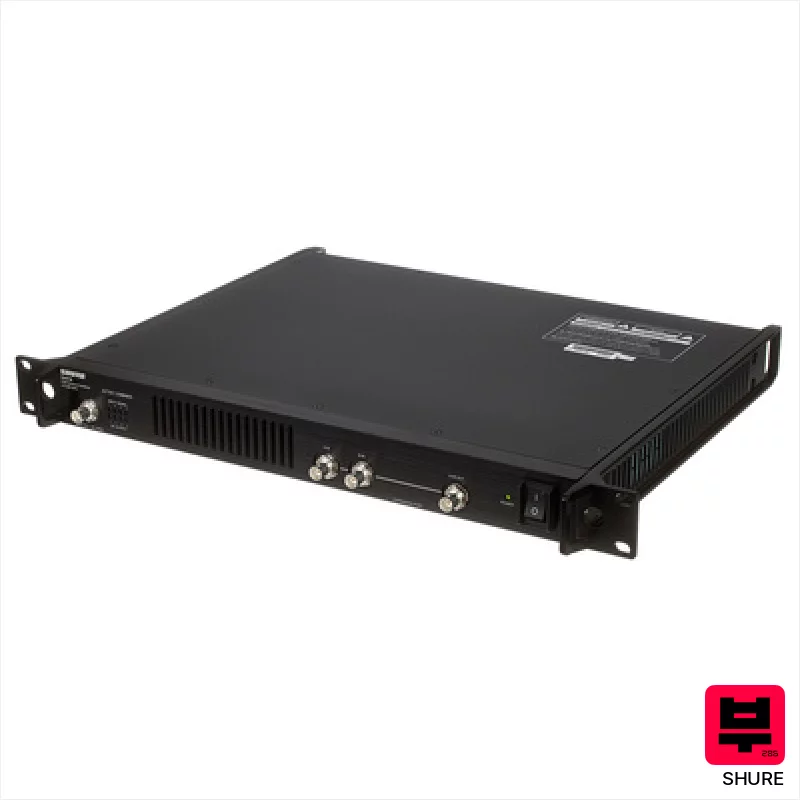
Shure PA421B-E
- • Robust 19-inch rackmount chassis ensures reliable road use.
- • Excellent signal combining minimizes interference for complex wireless setups.
- • Expansion port allows scaling for larger in-ear monitoring systems.
- • Integrated DC power outputs simplify transmitter powering.
- • Premium-priced, a significant investment for smaller operations.
- • Limited frequency range may require careful channel planning.
- • Can be complex to configure initially, requires some technical understanding.
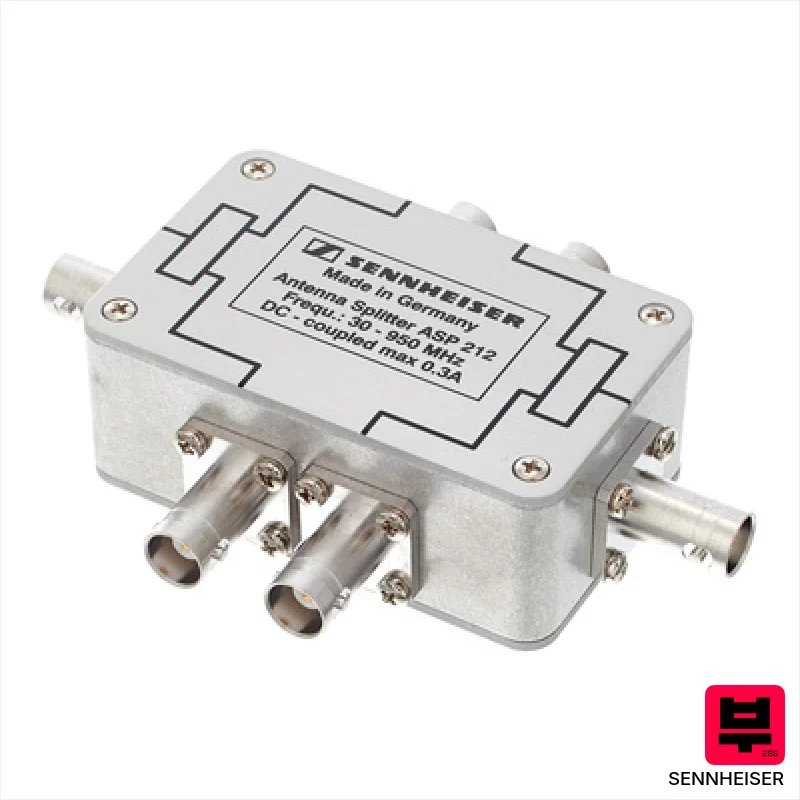
Sennheiser ASP212
- • Robust metal chassis ensures reliable operation on demanding stages.
- • Sennheiser's proven RF design minimizes signal loss and interference.
- • Simple passive design eliminates power requirements and potential noise.
- • Compact 1U rackmount format maximizes space efficiency in crowded rigs.
- • Passive design inherently introduces some signal loss compared to active splitters.
- • Limited DC power handling restricts compatibility with certain power-hungry antennas.
- • No built-in equalization or filtering for advanced signal shaping.
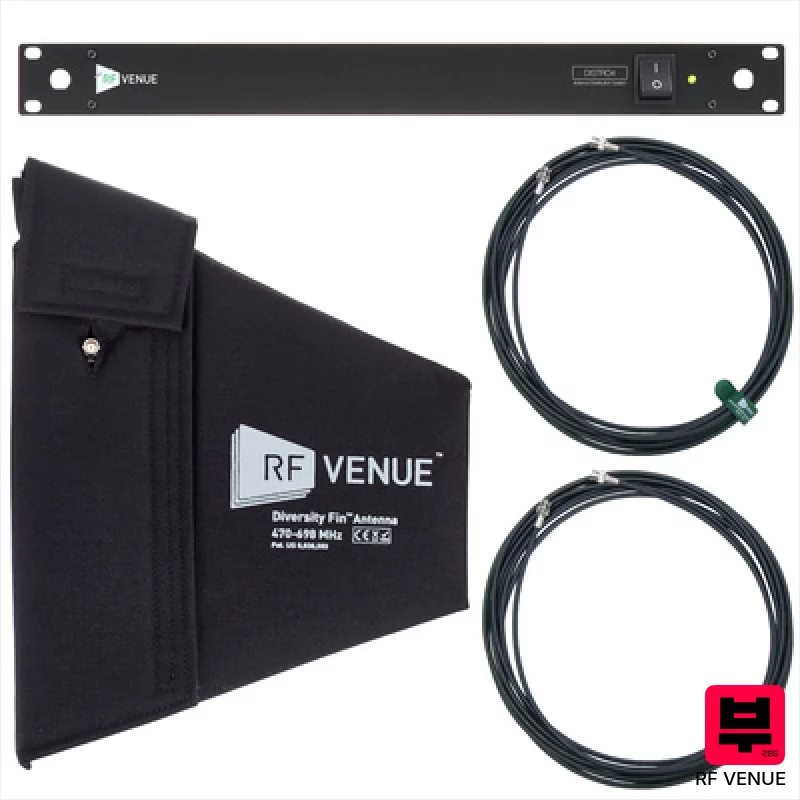
RF Venue 4CH Wireless Microphone Bundle
- • Excellent antenna gain for improved wireless signal clarity.
- • Distro 4 splitter handles multiple receivers efficiently.
- • Rugged construction; built to withstand demanding environments.
- • Passive antenna eliminates power requirements and potential noise.
- • Significant size and weight, limiting portability.
- • Limited frequency range compared to some wider-band systems.
- • Passive design means no adjustable gain; can be a drawback.
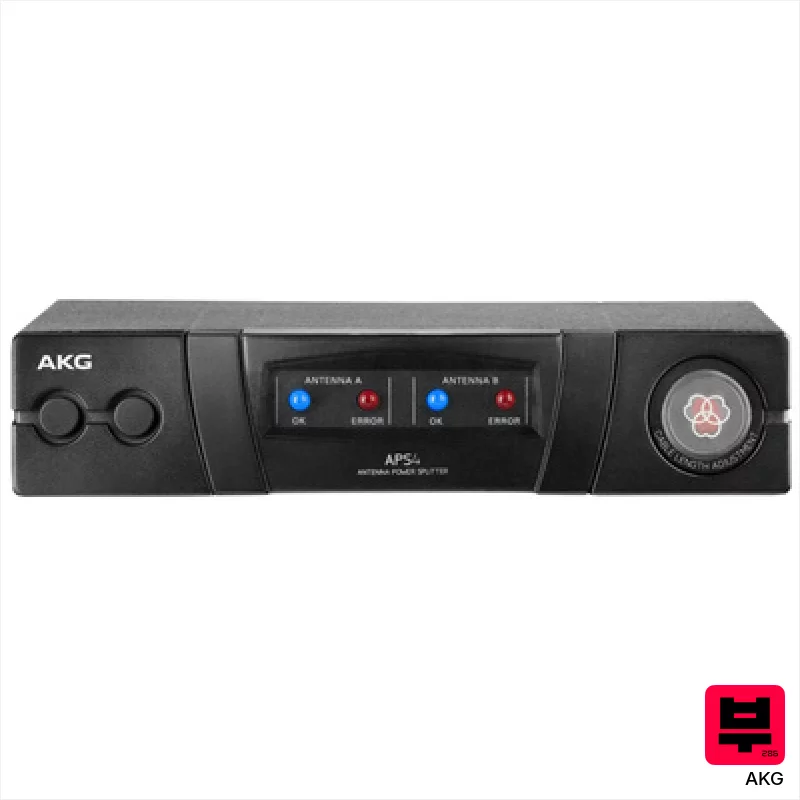
AKG APS4
- • Robust metal chassis ensures reliable stage use and longevity
- • Integrated damping switch allows for precise antenna level adjustment
- • Cascading capability expands system capacity for larger events
- • Power supply via antenna cable simplifies setup and reduces cable clutter
- • Limited frequency range compared to broader spectrum antenna systems
- • Price point places it in a premium-priced category for wireless setups
- • Primarily designed for AKG systems, limiting compatibility
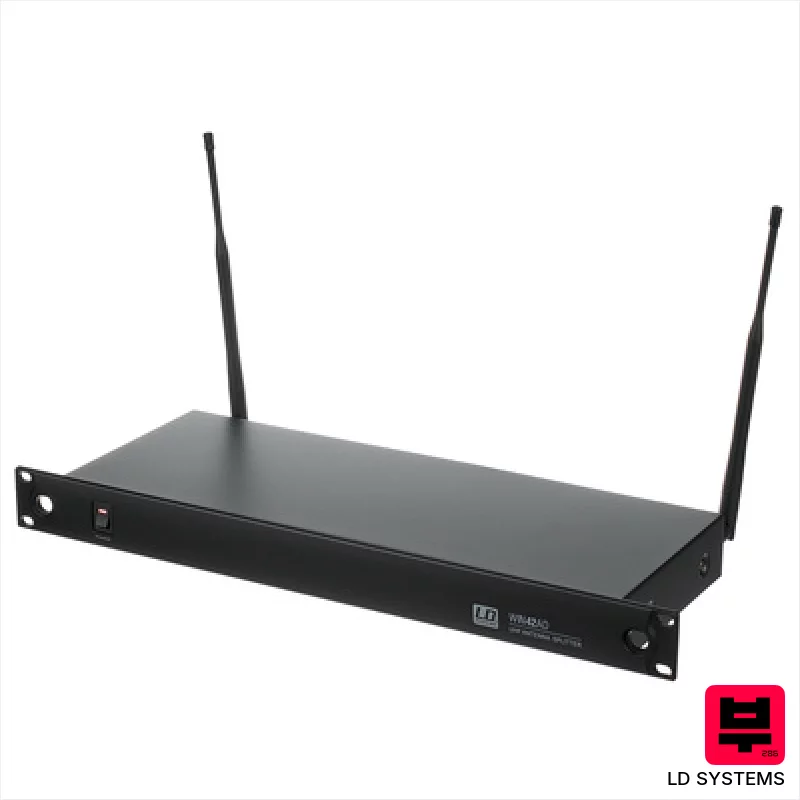
LD Systems LD WIN42 AD
- • Solid 19in rackmount chassis for stable, professional setups
- • Included antennas offer a basic starting point for wireless coverage
- • BNC connections are robust and reliable for antenna cabling
- • Gain of 3dB helps boost signal strength for better wireless clarity
- • Limited frequency range restricts compatibility with some newer wireless systems
- • Weight (4.8 kg) makes transport and installation slightly cumbersome
- • Power supply range (12-18V) could be more flexible for certain applications
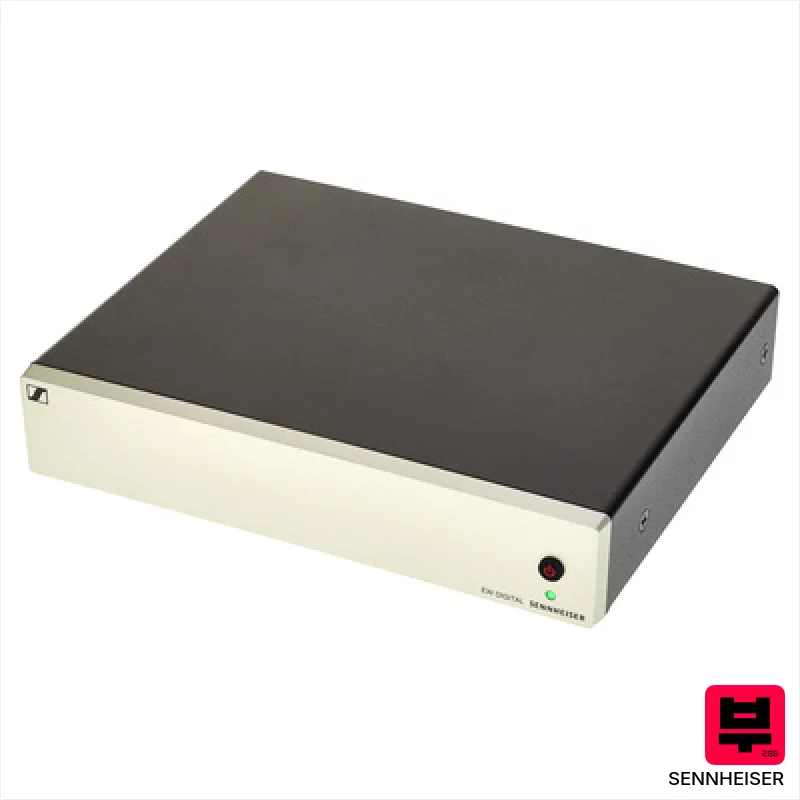
Sennheiser EW-D ASA Q-R-S
- • Rock-solid Sennheiser build quality ensures long-term reliability.
- • Dual 1:4 splitting maximizes channel count from a single antenna.
- • Integrated DC voltage distribution simplifies receiver power management.
- • BNC connectors offer robust, secure signal connections.
- • Price point places it firmly in the professional/broadcast category.
- • Limited flexibility for non-Sennheiser EW-D systems.
- • Relatively bulky design may require dedicated rack space.
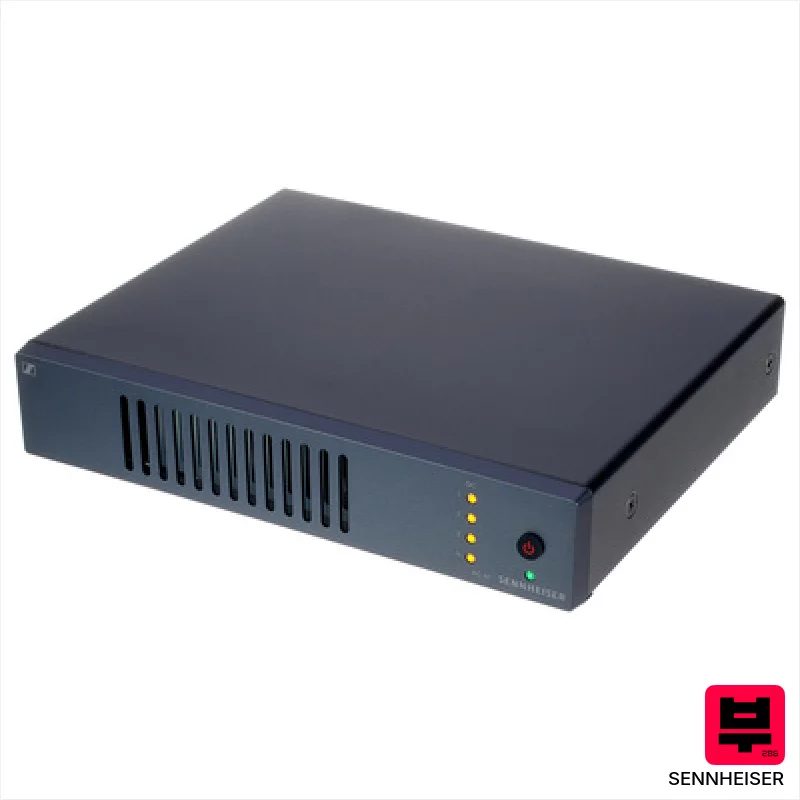
Sennheiser AC41 Antenna Combiner
- • Excellent noise reduction for IEM monitoring applications
- • Robust metal chassis provides reliable protection and durability
- • Active combiner design minimizes intermodulation distortion effectively
- • Seamless integration with Sennheiser’s G4 wireless ecosystem
- • Limited compatibility outside of Sennheiser’s G4 systems
- • Relatively premium-priced compared to passive combiner alternatives
- • The physical size (1U) can be a constraint in tight rack spaces

Shure UA221DB-RSMA
- • Solid Shure build quality ensures reliable performance in demanding environments.
- • RSMA connector simplifies integration with GLXD4R+ receivers, reducing setup time.
- • Includes coaxial cables and mounting hardware, offering a complete solution.
- • Passive design avoids introducing unwanted noise or distortion to the signal.
- • Limited to GLXD4R+ receivers; not a universal antenna splitter.
- • Passive design means no gain adjustment; relies on receiver's antenna strength.
- • Adds complexity to antenna system; requires careful placement for optimal coverage.
How to Choose the Best Splitters and Combiners
Isolation
Broadcast signals need to be clean. Poor isolation between channels means bleed-through and phase cancellation, muddying the mix and making it impossible to properly EQ individual elements. You want at least 60dB isolation, preferably more.
Noise Floor
Even the best mics can be ruined by a noisy splitter. A low noise floor is critical; anything above -90dB referenced to 1V is a red flag. It'll creep into your signal, especially when you're dealing with quiet vocals or delicate instruments.
Phase Response
Phase shift is the silent killer. Even subtle phase shifts can negatively impact the perceived clarity and imaging of your broadcast. Look for splitters with minimal phase distortion across the audible spectrum - ideally, within 1 degree.
Impedance Matching
Mismatched impedances can cause signal loss and reflections. A good splitter will maintain consistent impedance regardless of the connected equipment, preventing unwanted coloration or frequency response changes. This is especially important when feeding multiple consoles or recorders.
Build Quality & Power
Let's be honest, broadcast environments aren't gentle. You need something that can handle the bumps and the heat. A robust power supply and solid construction are non-negotiable; a flimsy unit will fail when you need it most.
Buying Guide
Don't chase the biggest number of ports; focus on quality first. Cheaper splitters often cut corners on isolation and noise performance, which will negate any benefit from having more outputs. Spending a little more on a reputable brand - Radial, Countryman, BSS - is an investment in reliability and a clean signal. And always, always check the power requirements and make sure you have a clean power source to avoid hum and noise.
Our Methodology
We don't just look at spec sheets; we put these units through their paces. That means A/B comparisons against known-good references, feeding them hot signals to test headroom, and simulating real-world broadcast scenarios - think multiple mics, long cable runs, and potential interference. We're listening for noise, phase anomalies, and overall signal degradation - the stuff that affects the final sound.

