
Best Splitters and Combiners for Multi Antenna Systems 2026
So you're diving into a multi-antenna wireless system - smart move for serious stage work or those tricky recording situations where cable clutter is the enemy. These setups aren't just about getting a cleaner signal; they're about expanding your frequency options and creating a more robust, reliable wireless rig. But slapping any old splitter on your mics won't cut it; you need something designed to handle the complexities of multiple receivers and antennas without introducing phase issues or signal degradation. Let's break down what to look for.
Last updated: July 15, 2026 • Next update: July 22, 2026
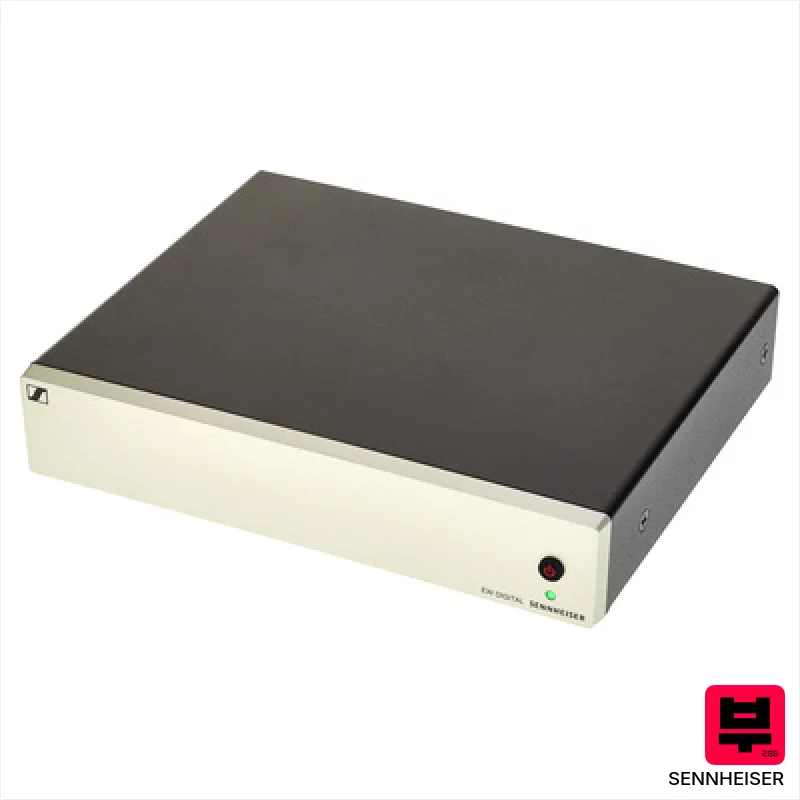
Sennheiser EW-D ASA Q-R-S
- • Rock-solid Sennheiser build quality ensures long-term reliability.
- • Dual 1:4 splitting maximizes channel count from a single antenna.
- • Integrated DC voltage distribution simplifies receiver power management.
- • BNC connectors offer robust, secure signal connections.
- • Price point places it firmly in the professional/broadcast category.
- • Limited flexibility for non-Sennheiser EW-D systems.
- • Relatively bulky design may require dedicated rack space.
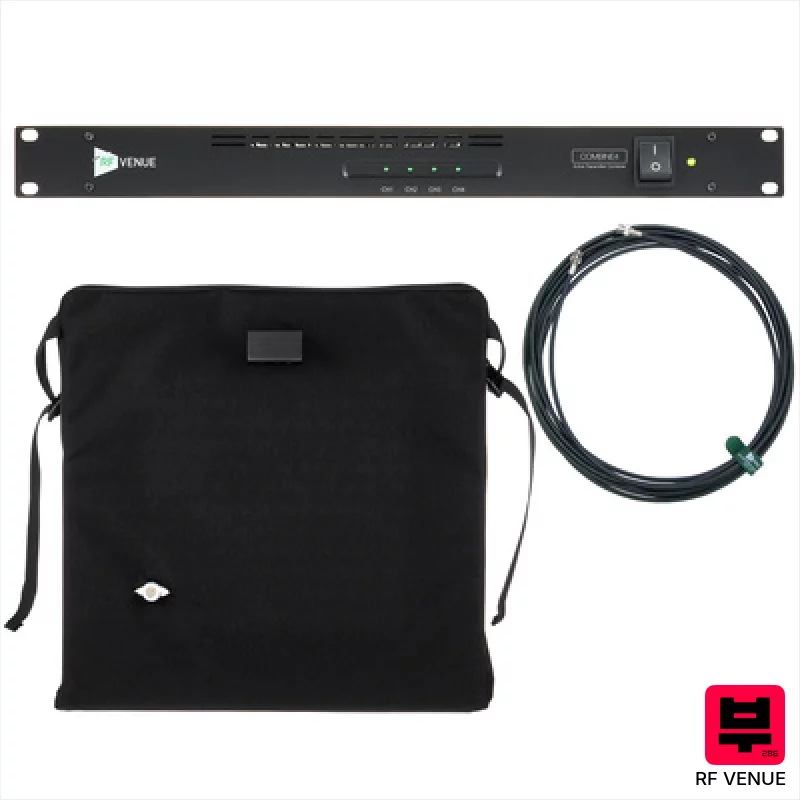
RF Venue 4CH In-Ear Monitor Bundle
- • Robust CP Beam antenna offers exceptional directional gain and clarity.
- • Active combiner provides clean signal aggregation with minimal loss.
- • RG8X-25 cable ensures low-loss signal transmission over a generous length.
- • Foldable antenna design simplifies transport and setup for touring applications.
- • The bundle's weight makes it less ideal for smaller, mobile setups.
- • Active combiner requires external power, adding to logistical considerations.
- • Frequency range, while broad, may still present interference challenges in congested RF environments.
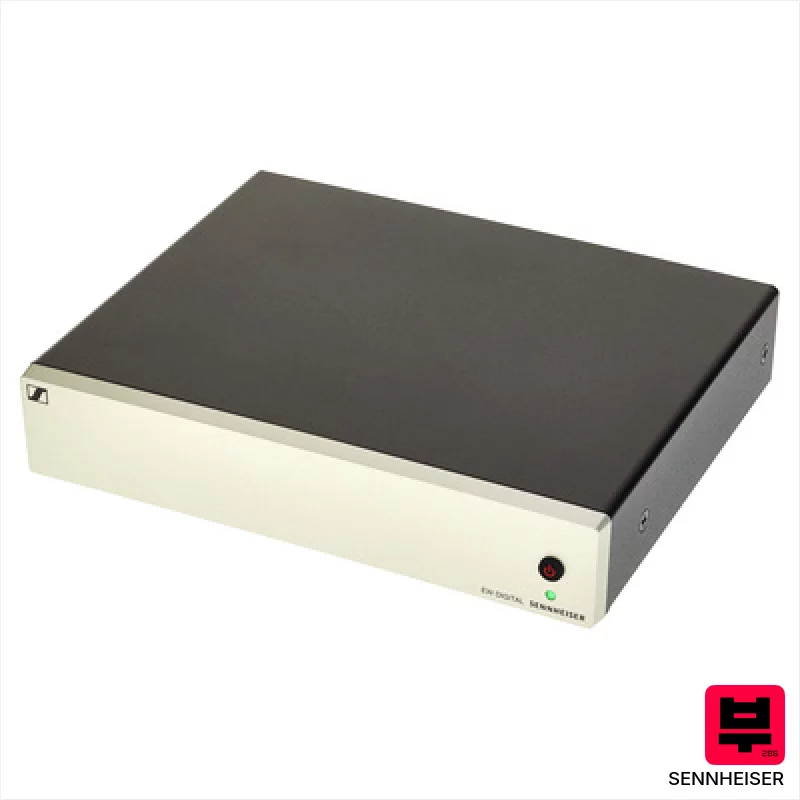
Sennheiser EW-D ASA T-U-V-W
- • Rock-solid Sennheiser build quality, inspires confidence
- • Dual 1:4 splitting maximizes receiver channel count
- • DC voltage distribution simplifies powering handhelds
- • BNC connections ensure reliable signal integrity
- • Limited frequency range compared to broader spectrum splitters
- • Higher price point makes it a significant investment
- • Requires careful antenna placement for optimal performance
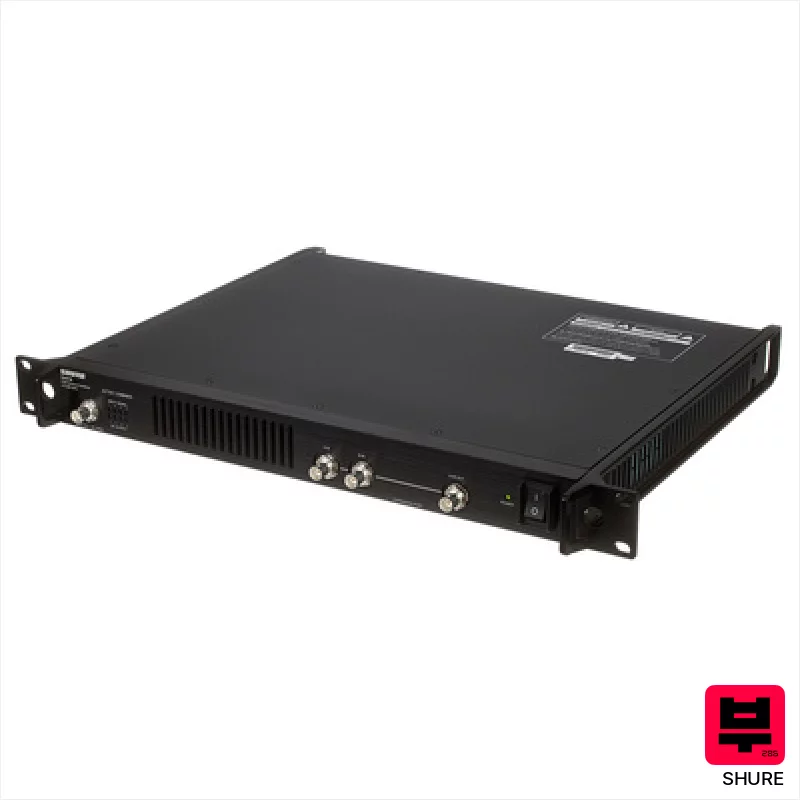
Shure PA421B-E
- • Robust 19-inch rackmount chassis ensures reliable road use.
- • Excellent signal combining minimizes interference for complex wireless setups.
- • Expansion port allows scaling for larger in-ear monitoring systems.
- • Integrated DC power outputs simplify transmitter powering.
- • Premium-priced, a significant investment for smaller operations.
- • Limited frequency range may require careful channel planning.
- • Can be complex to configure initially, requires some technical understanding.
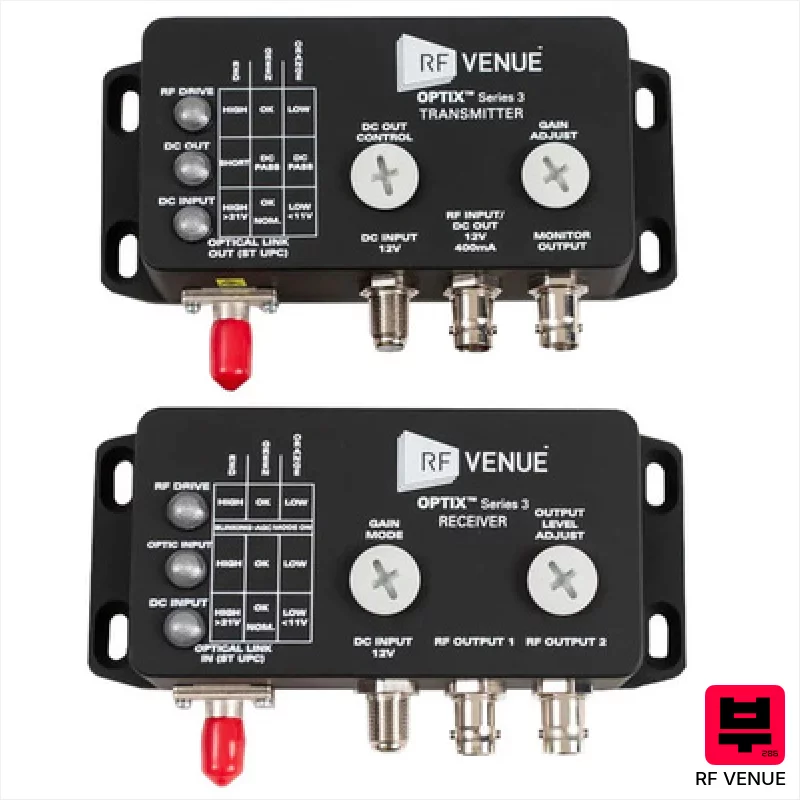
RF Venue OPTIX2-S3
- • Rock-solid RF Venue build quality ensures dependable operation.
- • Extends wireless signals over long distances with minimal signal degradation.
- • The 60dB dynamic range handles challenging RF environments effectively.
- • Integrated HF monitoring simplifies troubleshooting and system optimization.
- • The substantial weight makes rack mounting and transport less convenient.
- • Premium-priced, placing it out of reach for many smaller installations.
- • ST/UPC optical connectors are less common than some alternatives.
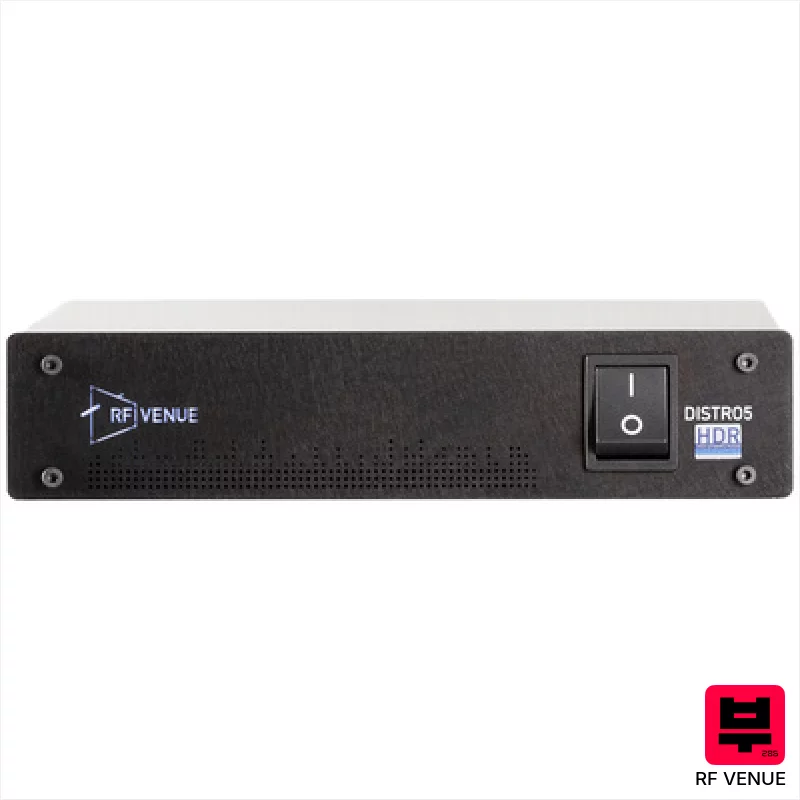
RF Venue Distro 5 HDR
- • Robust aluminum chassis ensures exceptional durability for stage use.
- • Active design provides consistent signal distribution, minimizing loss and interference.
- • Ten outputs offer flexibility for complex multi-transmitter setups.
- • HDR technology improves signal clarity and reduces intermodulation distortion.
- • The unit's weight makes it less ideal for portable or mobile applications.
- • Limited frequency range restricts use with systems operating outside 470-698 MHz.
- • Higher price point positions it as a premium investment for serious wireless users.

Shure UA844+SWB-LCE
- • Robust 19-inch rackmount chassis provides excellent physical protection
- • Cascading capability allows expansion to support even more receivers
- • Low-voltage cables simplify integration with BLX and SLX systems
- • Provides clean signal splitting with minimal loss across multiple channels
- • Price point positions it as a premium investment for professional setups
- • Limited gain adjustment necessitates careful antenna placement and system optimization
- • Physical size and weight make portability challenging for mobile applications
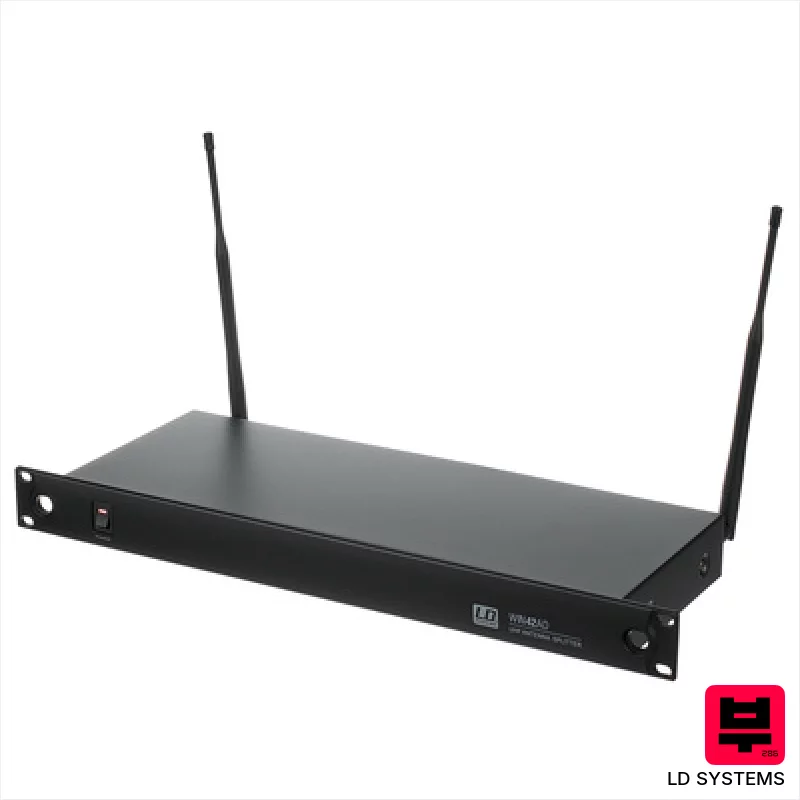
LD Systems LD WIN42 AD
- • Solid 19in rackmount chassis for stable, professional setups
- • Included antennas offer a basic starting point for wireless coverage
- • BNC connections are robust and reliable for antenna cabling
- • Gain of 3dB helps boost signal strength for better wireless clarity
- • Limited frequency range restricts compatibility with some newer wireless systems
- • Weight (4.8 kg) makes transport and installation slightly cumbersome
- • Power supply range (12-18V) could be more flexible for certain applications
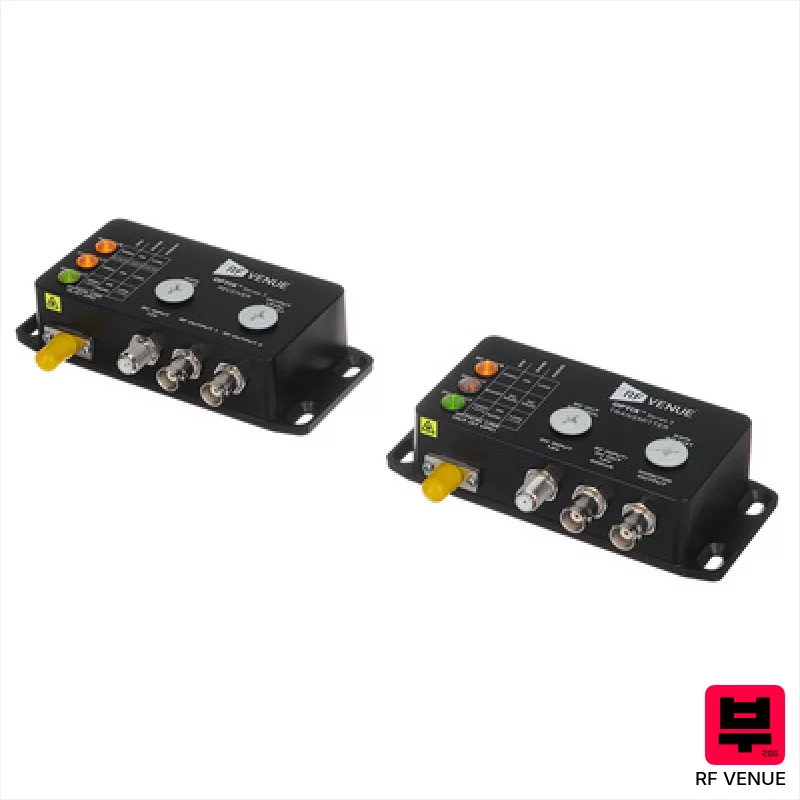
RF Venue OPTIX1-S3
- • Exceptional dynamic range minimizes interference in congested RF environments.
- • Fiber optic transmission ensures pristine audio quality, immune to electrical noise.
- • BNC connectors offer reliable, professional RF signal integrity.
- • Integrated HF monitoring simplifies troubleshooting and signal optimization.
- • Premium-priced, representing a significant investment for smaller operations.
- • Limited to a single channel, requiring multiple sets for multi-mic systems.
- • ST/UPC optical connectors are less common than some other fiber standards.
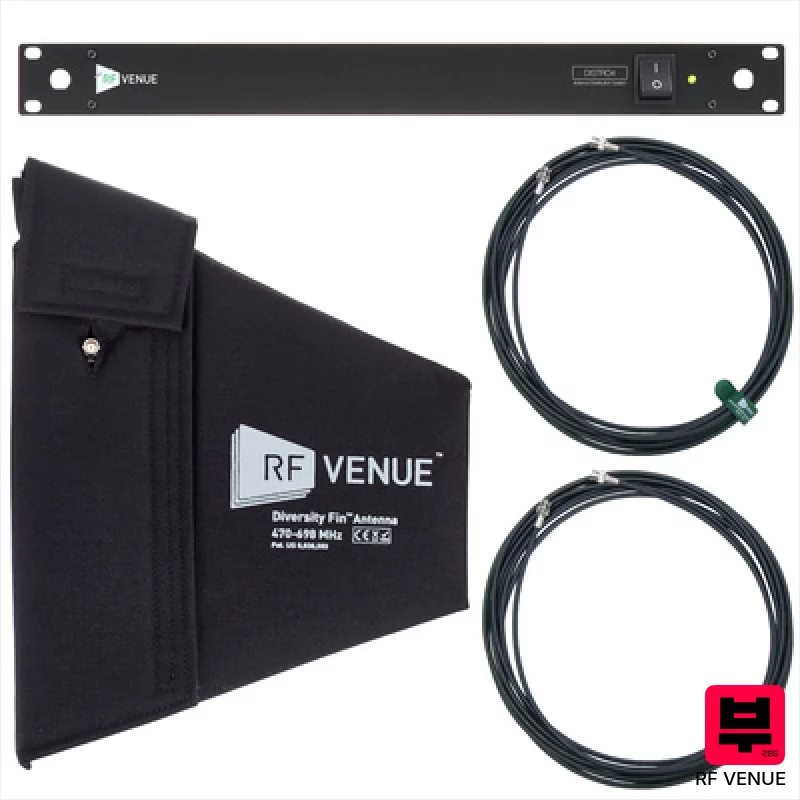
RF Venue 4CH Wireless Microphone Bundle
- • Excellent antenna gain for improved wireless signal clarity.
- • Distro 4 splitter handles multiple receivers efficiently.
- • Rugged construction; built to withstand demanding environments.
- • Passive antenna eliminates power requirements and potential noise.
- • Significant size and weight, limiting portability.
- • Limited frequency range compared to some wider-band systems.
- • Passive design means no adjustable gain; can be a drawback.

RF Venue Combine 6 HDR
- • Robust, all-steel construction ensures exceptional durability for demanding touring environments.
- • Active design provides clean, consistent signal combining with minimal loss.
- • Link inputs allow for flexible antenna system expansion and redundancy configurations.
- • HDR (High Dynamic Range) processing handles strong signals without distortion or overload.
- • The unit's weight makes it less ideal for portable or space-constrained applications.
- • Limited frequency range restricts its use with systems operating outside 470-608 MHz.
- • Premium-priced, representing a significant investment for smaller setups.
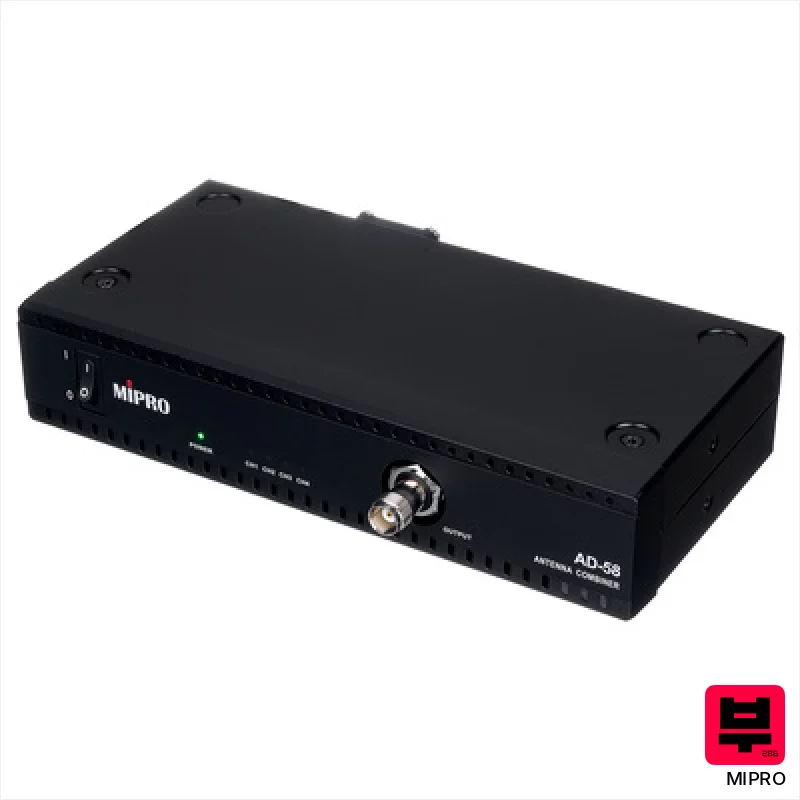
Mipro AD-58
- • Solid build quality; feels robust despite its size.
- • Excellent signal combining minimizes interference in crowded RF environments.
- • TNC connectors offer a reliable, professional connection standard.
- • 10dB gain provides a noticeable boost without introducing excessive noise.
- • Limited to Mipro MI-58 series transmitters, restricting flexibility.
- • TNC connectors may require adapters for some common setups.
- • Relatively compact size can be a disadvantage for complex installations.
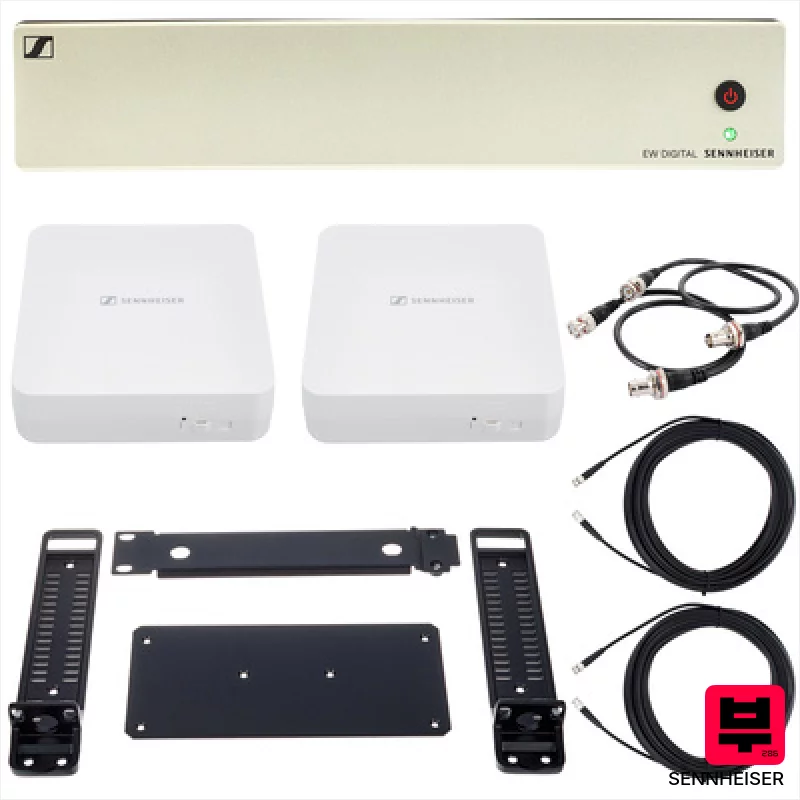
Sennheiser EW-D TUVW Splitter Install Set
- • Dual 1:4 splitting provides flexible antenna routing for complex wireless setups.
- • Sennheiser's ASA T-U-V-W ensures reliable signal distribution with DC voltage.
- • Included AWM directional antennas offer good gain and coverage for varied environments.
- • Long 20m RG 8x cables minimize signal loss over considerable distances.
- • The overall system is premium-priced, a significant investment for smaller operations.
- • 20m cables necessitate careful routing and may require boosters for longer runs.
- • The system's complexity demands a degree of technical understanding for optimal setup.
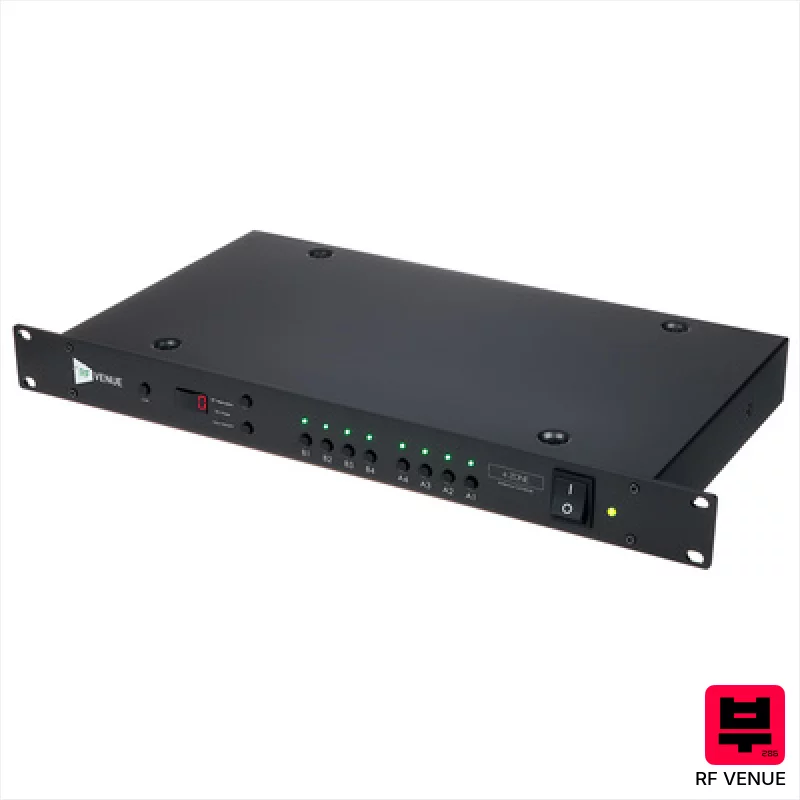
RF Venue 4 Zone Antenna Combiner
- • Robust 1U rackmount simplifies integration into existing broadcast setups.
- • High-quality BNC connectors ensure reliable signal transfer and longevity.
- • 3dB system gain boosts signal strength, extending wireless microphone range.
- • Four independent zones provide flexible coverage for large venues or complex productions.
- • Significant weight necessitates sturdy rack infrastructure to prevent instability.
- • Premium-priced, making it a substantial investment for smaller operations.
- • Limited frequency range; may not cover all wireless microphone systems globally.
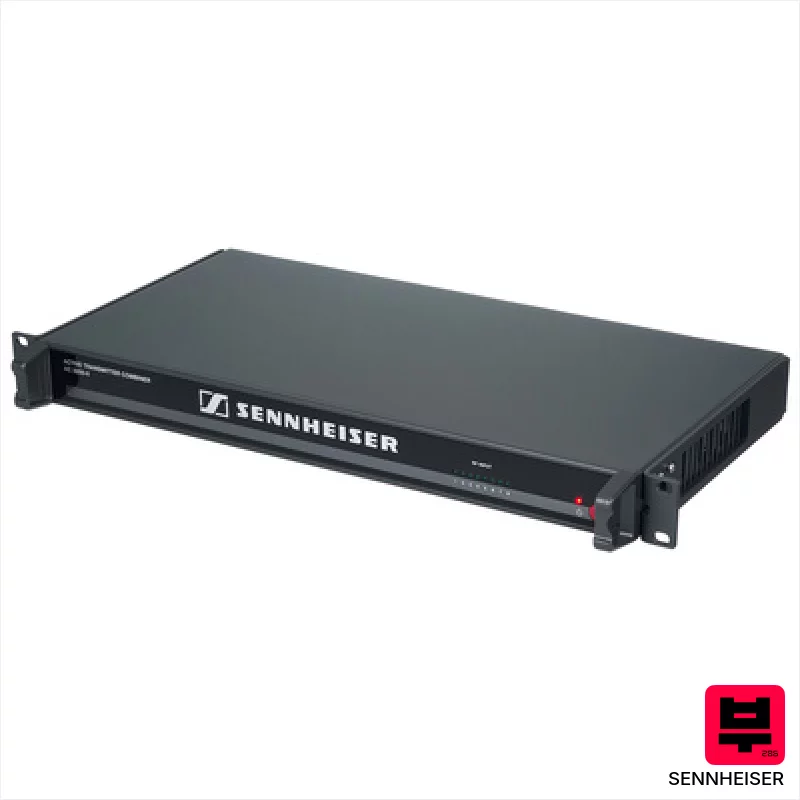
Sennheiser AC3200-MK II
- • Rock-solid build quality with robust metal chassis for reliable stage use
- • Excellent interference rejection thanks to sophisticated filtering techniques
- • Provides clean, transparent signal combining with minimal loss
- • Supports a high power input (100mW) for strong signal integrity
- • Premium-priced, a significant investment for smaller setups
- • Requires external power supply (NT12) adding to complexity and potential cable clutter
- • Limited to 8 input channels, not suitable for very large wireless microphone systems
How to Choose the Best Splitters and Combiners
Impedance Matching
Critical. Mismatched impedance introduces reflections and phase cancellations - that means your signal gets muddy, and feedback becomes a nightmare. Look for units with clearly specified impedance values (usually 600Ω or 75Ω) and ensure they're compatible with your wireless receivers and antennas.
Frequency Response Flatness
A splitter shouldn't color your sound. We're looking for a broad, flat response that doesn't introduce unwanted peaks or dips. A slight bump in the upper mids can actually help a vocal cut through the mix, but anything drastic is a red flag - especially for instruments.
Isolation/Rejection
This is what separates a cheap cable splitter from a proper combiner. Good isolation means signals from different antennas don't bleed into each other, preventing interference and ensuring clean separation. Poor isolation leads to phase issues and a weak, undefined sound.
Insertion Loss
Every component introduces some signal loss. Minimizing insertion loss is key, especially when dealing with already-low signal levels from microphones. Lower insertion loss means you need less gain, which translates to a cleaner signal with less noise.
Construction Quality
Let's be honest, these things get tossed around. Rugged construction, solid connectors, and reliable shielding are essential for gigging reliability. A flimsy plastic housing and wobbly connectors are a recipe for disaster.
Buying Guide
Don't cheap out here. A $20 splitter from a discount site might look like it works, but it's likely cutting corners on impedance matching and isolation, leading to phase issues and a compromised signal. Spend the extra money on a reputable brand - Radial, Countryman, or even Behringer (their MA series isn't terrible) - and you'll save headaches down the line. Remember, your wireless system is only as good as its weakest link.
Our Methodology
We're not relying on manufacturer claims here. We've spent countless hours A/B testing these splitters and combiners in both live and studio environments - band rehearsals, full band gigs, vocal tracking sessions, the whole nine yards. It's about listening for subtle tonal shifts, evaluating noise floor performance, and seeing how these units hold up under the pressure of a real-world stage setup.

