AudioFu Chart · October 2026
Best Sennheiser Receivers 2026
The top pick is Sennheiser XSW 1-825-A Handheld Mic Wireless System - A Band (5480572… ($212). Sennheiser XSW2-835-A Handheld Wireless Microphone System - A Band… leads the high end. Ranked by the AudioFu Index from 39 models, prices checked every night.
Last updated: October 26, 2026
Top 10
Full detail for the 10 highest AudioFu Index scores. Every other model is listed below.
-
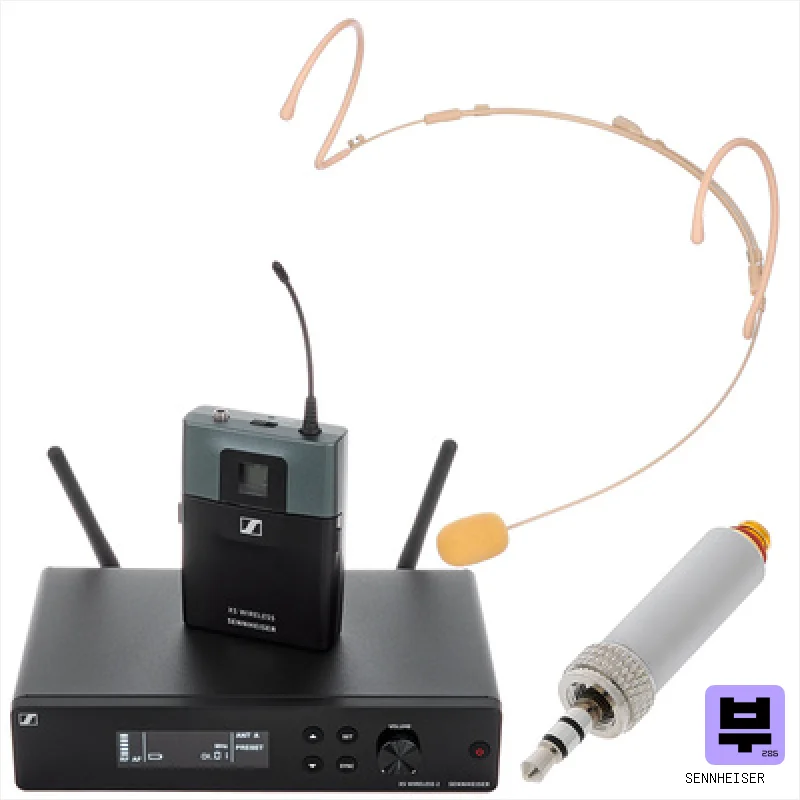
Sennheiser XSW 1-825-A Handheld Mic Wireless System - A Band (5480572…
EM-XSW 1-E-Band · Sennheiser
45 for sale on Reverb1 finish at Thomann
The EM-XSW 1 is a solid, dependable wireless receiver – perfect for smaller gigs, presentations, or educational settings where you need reliable UHF performance without the complexity of more advanced systems. It's a straightforward solution that gets the job done, prioritizing clean signal and ease of use over bells and whistles.
Pros
- Reliable E-Band operation avoids common RF congestion.
- Antenna diversity improves signal stability in challenging environments.
- Compact receiver design simplifies setup and transport.
Cons
- Limited channel count restricts flexibility in crowded RF spaces.
- Basic feature set lacks advanced options like frequency scanning.
63AudioFu
IndexStableno change since Aug 17Aug 17$212 now$212€189 at Thomann · in stockCheck price ↗ -
Sennheiser XSW 1-825-A Handheld Mic Wireless System - A Band (5480572…
EM-XSW 1-A-Band · Sennheiser
45 for sale on Reverb1 finish at Thomann
The XSW 1-A Band is a dependable, straightforward receiver. It's a great budget-friendly option for vocalists, presenters, or smaller bands needing a reliable wireless signal, especially where frequency crowding isn't a major concern. It's simple to use, and gets the job done without unnecessary complexity.
Pros
- Robust build quality; feels solid and reliable for gigging.
- A-Band offers decent channel availability in many regions.
- Integrated antennas simplify setup, reducing cable clutter.
Cons
- Limited frequency range compared to broader band receivers.
- No digital control or advanced features like frequency scanning.
63AudioFu
IndexStableno change since Aug 17Aug 17$212 now$212€189 at Thomann · in stockCheck price ↗ -
Sennheiser XSW 1-825-A Handheld Mic Wireless System - A Band (5480572…
EM-XSW 1-B-Band · Sennheiser
45 for sale on Reverb1 finish at Thomann
The EM-XSW 1-B-Band is a dependable, straightforward wireless receiver. It’s a great, budget-friendly option for smaller bands, solo performers, or presenters needing reliable audio without the complexity of higher-end systems. Its simplicity makes it easy to learn and use, delivering clean audio without fuss.
Pros
- Solid build quality; feels robust despite its size.
- B-Band frequency offers reliable operation in many regions.
- Antenna diversity minimizes dropouts during performance.
Cons
- Limited channel count restricts use in complex, crowded RF environments.
- B-Band frequency allocation can vary, requiring local verification.
63AudioFu
IndexStableno change since Aug 17Aug 17$222 now$222€198 at Thomann · in stockCheck price ↗ -
Sennheiser e906 Supercardioid Dynamic Instrument Microphone
XSW-D Instrument RX · Sennheiser
39 for sale on Reverb1 finish at Thomann
The XSW-D Instrument RX is a solid, reliable wireless solution for gigging musicians needing a straightforward instrument connection. It’s great for acoustic guitarists, bass players, and keyboardists who want freedom of movement without a complicated system—a really well-thought-out and affordable option for smaller venues or solo performers.
Pros
- Robust metal housing offers excellent durability on stage.
- Clear, uncolored signal transmission ideal for acoustic instruments.
- Simple setup and intuitive controls for quick operation.
Cons
- Limited frequency range compared to higher-end wireless systems.
- Single receiver restricts flexibility for multiple instrument setups.
61AudioFu
IndexStableno change since Aug 17Aug 17$200 now$200€179 at Thomann · in stockCheck price ↗ -
Sennheiser XSW2-835-A Handheld Wireless Microphone System - A Band…
EM-XSW 2-A-Band · Sennheiser
26 for sale on Reverb1 finish at Thomann
This XSW 2-A is a dependable workhorse receiver – no frills, just solid performance. It's a great choice for stage performers, presenters, or anyone needing a reliable wireless solution without breaking the bank. The clean A-band signal makes it a good option for environments where other wireless systems are prevalent.
Pros
- Rock-solid Sennheiser build quality; feels durable and reliable.
- A-Band offers relatively clean spectrum, good for many venues.
- Diversity reception minimizes dropouts in challenging RF environments.
Cons
- A-Band availability can be limited in some regions due to licensing.
- Lacks advanced features like frequency scanning or user presets.
60AudioFu
Index↓ 5.9%since Aug 17 · lowest so far$379 · Aug 17$357 now$357€319 at Thomann · in stockCheck price ↗ -
Sennheiser XSW2-835-A Handheld Wireless Microphone System - A Band…
EM-XSW 2-E-Band · Sennheiser
26 for sale on Reverb1 finish at Thomann
This EM-XSW 2-E-Band receiver is a solid workhorse for live sound and broadcast applications where reliable UHF performance is key. The E-band offers cleaner airspace, and the build is unmistakably Sennheiser. It's a great solution for bands, presenters, and anyone needing dependable wireless without the premium price tag of their top-tier offerings.
Pros
- Rock-solid E-Band frequency allocation minimizes interference
- Sennheiser’s renowned build quality ensures reliable performance
- Diversity reception significantly reduces dropouts and noise
Cons
- Limited channel count compared to higher-end Sennheiser systems
- E-band availability can vary by region, requiring careful checking
57AudioFu
IndexStableno change since Aug 17Aug 17$368 now$368€329 at Thomann · in stockCheck price ↗ -
Sennheiser XSW2-835-A Handheld Wireless Microphone System - A Band…
EM-XSW 2-B-Band · Sennheiser
26 for sale on Reverb1 finish at Thomann
The EM-XSW 2-B-Band is a reliable workhorse receiver, offering Sennheiser's signature quality at a more accessible price point. It's a great choice for bands, presenters, or anyone needing a dependable wireless system for straightforward applications – think corporate events or smaller stage performances where top-tier features aren't essential.
Pros
- Rock-solid Sennheiser build quality, feels durable for gigging.
- B-Band frequency offers good availability in many regions.
- Diversity reception minimizes dropouts and interference.
Cons
- B-Band frequency can be congested in densely populated areas.
- Limited channel count compared to higher-end Sennheiser systems.
57AudioFu
IndexStableno change since Aug 17Aug 17$368 now$368€329 at Thomann · in stockCheck price ↗ -
Sennheiser XSW2-835-A Handheld Wireless Microphone System - A Band…
EM-XSW 2-GB-Band · Sennheiser
26 for sale on Reverb1 finish at Thomann
The EM-XSW 2-GB-Band is a solid, dependable wireless receiver for gigging musicians. It’s a great choice for bands and vocalists needing a reliable, affordable system without the complexity of more premium models. The build quality is surprisingly good for the price point, and the ease of setup is a real plus.
Pros
- Robust metal chassis provides excellent durability for stage use
- GB-Band offers reliable operation in many regions, minimizing interference
- Diversity reception significantly reduces dropouts and improves signal stability
Cons
- Limited frequency band compared to wider range systems restricts channel availability
- Antennas are basic and might require upgrades for larger venues
57AudioFu
IndexStableno change since Aug 17Aug 17$391 now$391€349 at Thomann · in stockCheck price ↗ -
- Size9.5"
- Weight1 kg
The ew-D EM Y1-3 is a solid, dependable wireless receiver for vocalists or instruments needing a clean, reliable signal. It's a great choice for touring musicians, presenters, or anyone needing a single, high-quality wireless channel – especially where RF congestion is a concern. The digital transmission really cuts through the noise.
Pros
- Rock-solid Sennheiser build quality; feels incredibly durable.
- Digital clarity minimizes RF interference, a huge plus live.
- Compact size eases rack mounting in tight spaces.
Cons
- Single-channel limits flexibility for multi-mic setups.
- Weight makes portability a consideration for frequent travel.
50AudioFu
IndexStableno change since Aug 17Aug 17$312 now$312€279 at Thomann · in stockCheck price ↗ -
- Size9.5"
- Weight1 kg
The Sennheiser ew-D S7-10 is a dependable workhorse receiver – perfect for presenters, vocalists, or anyone needing a single, reliable wireless channel. Its digital clarity and robust construction make it a solid choice for both stage and studio use, especially where interference is a concern. The rack mountability is a nice touch for more permanent installations.
Pros
- Solid build quality; feels robust and ready for gigging.
- Digital transmission offers clean, interference-free audio.
- Sennheiser’s proven RF performance – reliable signal stability.
Cons
- Single channel limits use in multi-mic scenarios.
- Weight (approx. 1 kg) can be cumbersome for portable setups.
50AudioFu
IndexStableno change since Aug 17Aug 17$312 now$312€279 at Thomann · in stockCheck price ↗
All 39 receivers
Same index, same nightly prices — compact. Colour options of one model share a row. Tap a photo to zoom.
- 11
Sennheiser EW-D EM R4-9Sennheiser50Stable$312€279$312€279Check ↗
- 12
Sennheiser EW-D EM R1-6Sennheiser50Stable$312€279$312€279Check ↗
- 13
Sennheiser EW-D EM Q1-6Sennheiser50Stable$312€279$312€279Check ↗
- 14
Sennheiser EW-D EM S1-7Sennheiser50Stable$312€279$312€279Check ↗
- 15
Sennheiser EW-DX EM 2 Q1-9Sennheiser50Stable$1,118€999$1,118€999Check ↗
- 16
Sennheiser EW-DX EM 2 U1/5Sennheiser50Stable$1,229€1,098$1,229€1,098Check ↗
- 17
Sennheiser EW-DX EM 2 Dante R1-9Sennheiser50Stable$1,565€1,398$1,565€1,398Check ↗
- 18
Sennheiser EW-DX EM 4 Dante R1-9Sennheiser50Stable$3,670€3,279$3,670€3,279Check ↗
- 19
Sennheiser EW-DX EM 4 Dante S2-10Sennheiser50Stable$3,691€3,298$3,691€3,298Check ↗
- 20
Sennheiser EW-DX EM 4 Dante Q1-9Sennheiser50Stable$3,691€3,298$3,691€3,298Check ↗
- 21
Sennheiser EW-DX EM 2 Dante U1/5Sennheiser49↑ 0.7%$1,453€1,298$1,453€1,298Check ↗
- 22
Sennheiser EW-DX EM 2 Dante Q1-9Sennheiser49↑ 0.7%$1,453€1,298$1,453€1,298Check ↗
- 23
Sennheiser EW-DX EM 2 Dante S2-10Sennheiser49↑ 0.7%$1,453€1,298$1,453€1,298Check ↗
- 24
Sennheiser EW-D EM U1/5Sennheiser48↑ 3.6%$323€289$323€289Check ↗
- 25
Sennheiser EW-DX EM 2 R1-9Sennheiser45↑ 9.9%$1,229€1,098$1,229€1,098Check ↗
- 26
Sennheiser SL Rack Receiver DW-3-EUSennheiser40↑ 4.5%$700€625$700€625Check ↗
- 27
Sennheiser EM-XSW 1 Dual A-BandSennheiser38↓ 7.3%$413€369$413€369Check ↗
- 28
Sennheiser EM 6000Sennheiser · 2 finishes38Stable$4,017€3,589$4,017€3,589Check ↗
- 29
Sennheiser XSW-D XLR male RXSennheiser36↓ 3.4%$189€169$189€169Check ↗
- 30
Sennheiser EW-DP EK Q1-6Sennheiser36↓ 2.8%$391€349$391€349Check ↗
- 31
Sennheiser XSW-D Mini Jack RXSennheiser35Stable$200€179$200€179Check ↗
- 32
Sennheiser EM-XSW 1 Dual GB-BandSennheiser35Stable$402€359$402€359Check ↗
- 33
Sennheiser EM-XSW 1 Dual E-BandSennheiser35Stable$413€369$413€369Check ↗
- 34
Sennheiser EM-XSW 1 Dual B-BandSennheiser35Stable$445€398$445€398Check ↗
- 35
Sennheiser EKP AVXSennheiser35Stable$503€449$503€449Check ↗
- 36
Sennheiser SL MCR 2 DW-3Sennheiser35Stable$2,014€1,799$2,014€1,799Check ↗
- 37
Sennheiser SL MCR 4 DW-3Sennheiser35Stable$3,525€3,149$3,525€3,149Check ↗
- 38
Sennheiser EW-DP EK U1/5Sennheiser32↑ 6.1%$391€349$391€349Check ↗
- 39
Sennheiser EW-DP EK R1-6Sennheiser30↑ 9.1%$402€359$402€359Check ↗
Receivers by the numbers
Measured across all 115 models we track, not a sample.
Median $402 — half of all receivers here cost less.
median of 47 models · 9.5"–19"
median of 46 models · 0.56 kg–3 kg
How to choose the best receivers
Frequency Response & Clarity
Sennheiser's receivers consistently deliver a transparent sound - it's not colored or hyped, just clean. This is crucial for vocals, where you want the natural timbre to shine, and for instruments where you don't want the receiver muddying the tone. The extended frequency response means you're not losing high-end sparkle or low-end thump.
Dynamic Range & Headroom
A lot of cheaper receivers clip or introduce noise when pushed. Sennheiser receivers, especially the higher-end models, offer serious headroom. This translates to a cleaner signal even when the drummer's laying down a monster beat or your vocalist is belting it out.
Interference Rejection
This is the big one. Live sound is a chaotic environment, and wireless signals are easily disrupted. Sennheiser's receivers have some of the best interference rejection I've seen, using technologies like Digital Frequency Diversity to hop around and find a clean channel. Less time fighting dropouts, more time playing.
Build Quality & Durability
Let's be honest, gear gets beat up. Sennheiser receivers are built like tanks - metal chassis, robust controls, and generally a feel of serious quality. They're designed to withstand the rigors of touring and constant use.
Channel Capacity & Flexibility
If you're running multiple wireless channels - vocal, guitar, keys - you need a receiver that can handle it. Sennheiser offers receivers with multiple channels or the ability to expand with additional modules, giving you the flexibility to grow your wireless setup.
Buying guide
So, you're ditching the cables and going wireless? Smart move, especially if you're battling stage clutter or need freedom for a vocal performance. Sennheiser's been the gold standard for wireless rigs for decades, and for good reason - their receivers are just built different. Let's break down the best Sennheiser receivers out there, and what makes them worth the investment for serious players.
Don't chase the latest model just for the sake of it. Older Sennheiser receivers - like the EK 3000 series - still offer incredible performance and can be found at a much better price. The trade-off is often fewer features, but the core audio quality is still top-notch.
Paying extra for things like Dante connectivity or advanced antenna systems is great if you need them, but for most gigging musicians, the core performance is what matters.
How the AudioFu Index works
Five measured signals and nothing else — no stars from strangers, no “tested by experts” we didn’t do. The weights are fixed and public. We don’t play these instruments; we measure the market around them.
This chart covers 40 receivers from the Thomann catalogue (of 115 in the category). Before you buy, read hands-on reviews and, where you can, play it. Full methodology.
AudioFu earns a commission when you buy through our Thomann links. It never changes the order — the index does.
- Demand40%
How many of this exact model are for sale on Reverb right now — what musicians actually buy and resell.
- Lineup20%
How many finishes Thomann stocks — makers expand the models that sell.
- Price15%
Where the price has moved since we started tracking in August.
- Specs15%
How completely the maker documents it.
- Maker10%
How deep the brand’s range is in this category.
Questions
Are Sennheiser receivers really worth the price?
Absolutely, if you value reliability and clean audio. Cheap wireless systems often cut corners on components, leading to noise and dropouts. A Sennheiser receiver is an investment in your performance.
What's the difference between UHF and 2.4GHz wireless?
UHF (Ultra High Frequency) is the traditional choice for live sound, offering more channels and generally better range. 2.4GHz is becoming more popular, but can be more susceptible to interference from Wi-Fi and Bluetooth devices.
Can I use any Sennheiser microphone with their receivers?
Not always. Make sure the microphone and receiver are compatible - they need to be from the same series or specifically designed to work together. Using mismatched components can result in poor audio or no signal at all.
How do I deal with wireless interference?
First, scan for clear channels using the receiver's built-in scanner. Experiment with antenna placement - higher is generally better. If problems persist, consider using directional antennas to reject signals from unwanted sources.
What's Digital Frequency Diversity?
It's a smart system that constantly monitors the signal and automatically switches to a clear frequency if interference is detected - a huge help in crowded RF environments.