
Best Receivers for Theater 2026
So, you're wrangling a cast of actors and need a reliable wireless system for your theater production? It's not just about plugging something in; you need a receiver that's rock-solid, can handle multiple mics without flaking out, and won't add a weird coloration to the actors' voices. A bad receiver can make a nuanced performance sound muddy or brittle, and that's a recipe for disaster - trust me, I've been there after a headset mic failed mid-soliloquy.
Last updated: July 22, 2026 • Next update: July 29, 2026
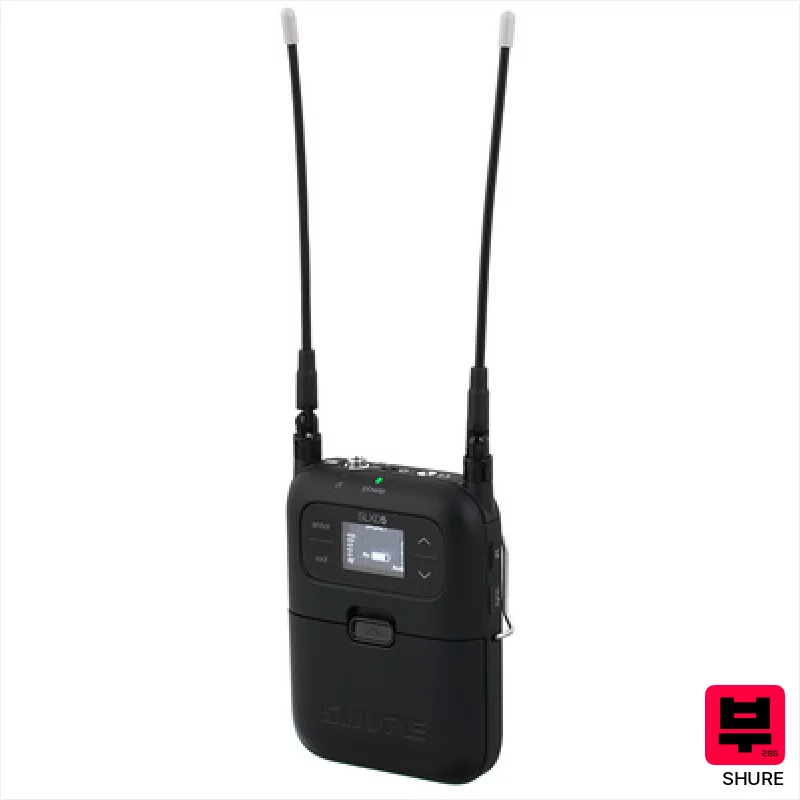
Shure SLXD5 K59
- • Excellent audio clarity with Shure's renowned sound quality.
- • Compact and lightweight design for easy portability and setup.
- • Flexible power options: AA batteries or rechargeable pack.
- • Intuitive interface simplifies operation even for less experienced users.
- • Limited frequency range restricts channel availability in crowded RF environments.
- • Single-channel operation necessitates multiple receivers for multiple performers.
- • Battery life, while decent, could be improved for extended gigs.
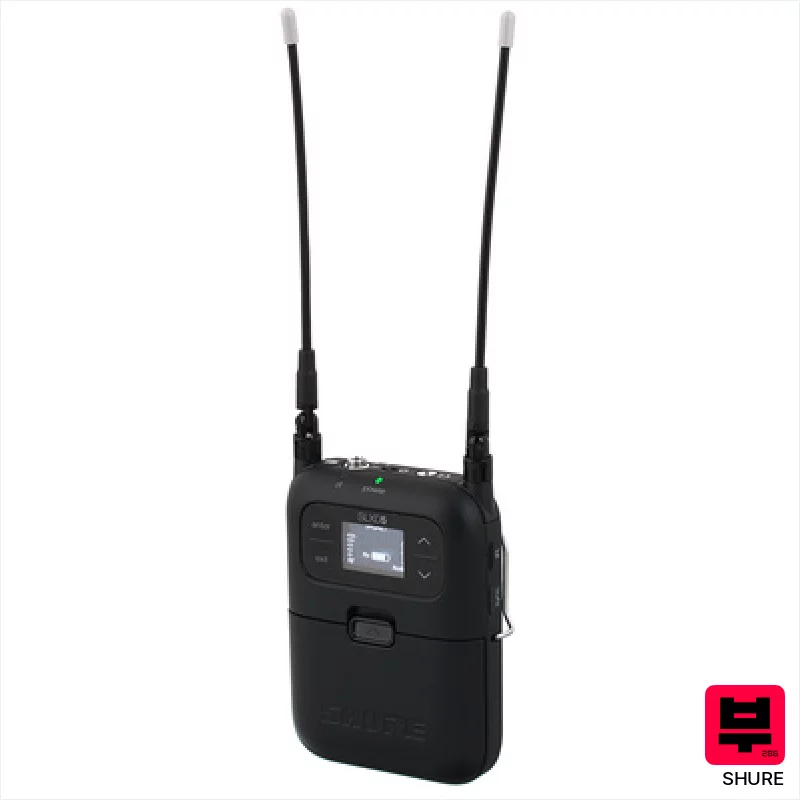
Shure SLXD5 G59
- • Robust, all-metal receiver construction inspires confidence and durability.
- • Shure’s G59 frequency band offers reliable performance in congested wireless environments.
- • Simple, intuitive interface makes setup and operation straightforward for any user.
- • Excellent audio clarity; captures vocals and instruments with Shure's signature balanced tone.
- • Limited frequency range compared to broader band systems restricts channel availability.
- • Battery life, while adequate, necessitates carrying spares for longer events.
- • Lacks advanced features like Dante connectivity found in higher-tier Shure receivers.
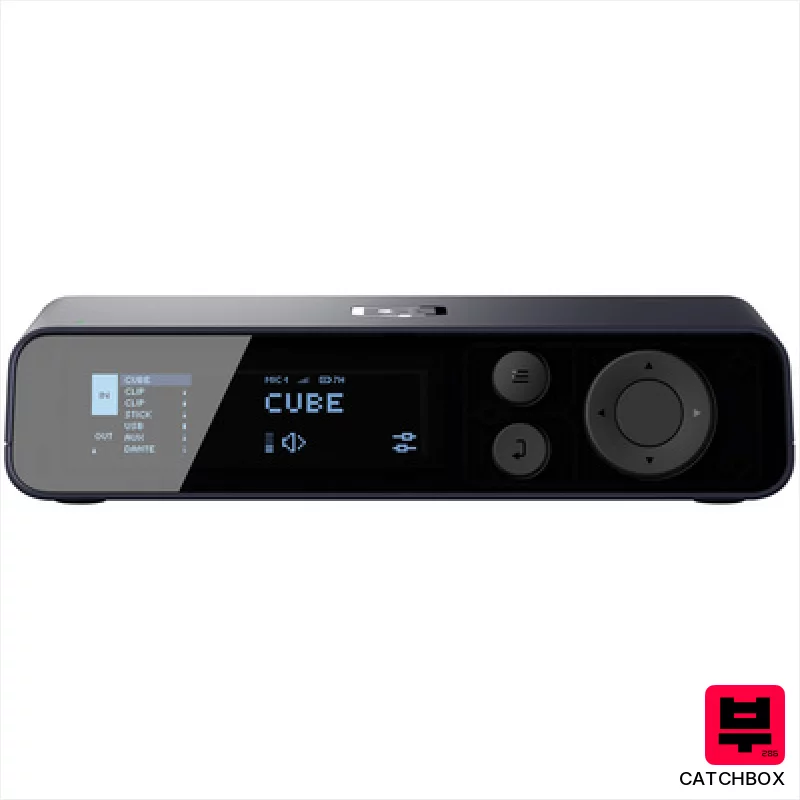
Catchbox Plus Hub4D
- • Dante integration simplifies complex audio routing significantly.
- • Graphical interface offers intuitive control over receiver settings.
- • Built-in antennas provide reliable coverage without external additions.
- • Stealth Mode minimizes visual presence in sensitive environments.
- • Price point positions it as a premium investment for serious users.
- • Euroblock connectors require adapters for standard XLR connections.
- • Limited channel expansion beyond the four built-in units.
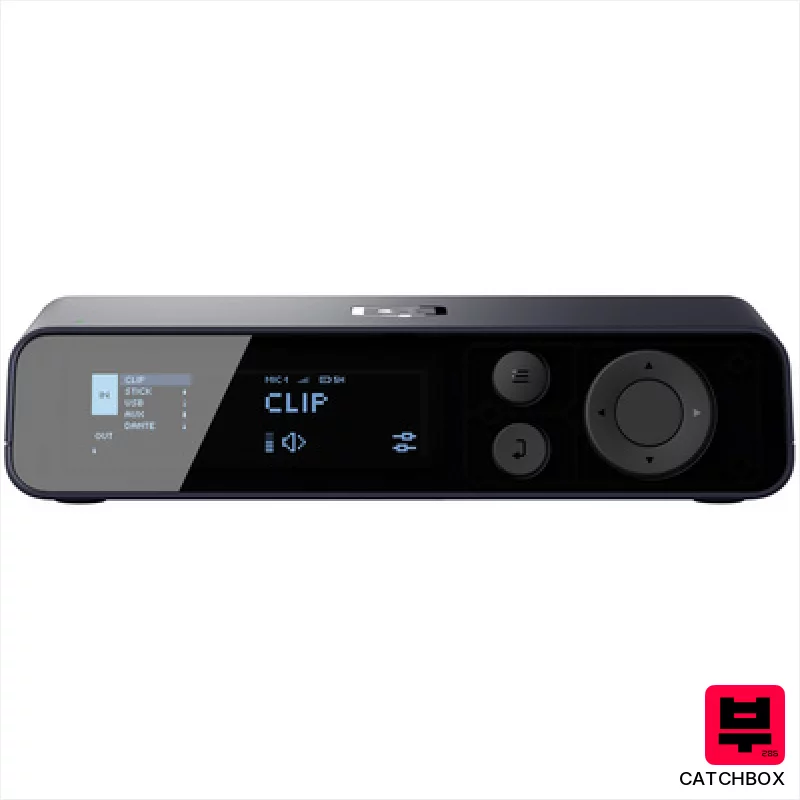
Catchbox Plus Hub2D
- • Dante integration provides seamless digital audio workflow for professional setups.
- • Built-in antennas offer reliable coverage; good for mobile or challenging environments.
- • Graphical user interface simplifies configuration and monitoring of receiver parameters.
- • Stealth Mode minimizes visual presence, useful for discreet audio capture.
- • The Euroblock connectors are less common, potentially requiring adapters.
- • Weight of 300g makes it less ideal for portable, battery-powered operation.
- • Limited to two channels restricts use for larger, multi-mic setups.

Shure SLXD4QDAN+E G65
- • Galvanized steel chassis offers exceptional durability for demanding stage use.
- • Dante connectivity provides seamless integration into networked audio systems.
- • IR sync simplifies transmitter pairing, saving valuable setup time.
- • 118dB dynamic range handles loud sources with remarkable clarity and headroom.
- • Premium-priced, representing a significant investment for smaller operations.
- • Limited frequency band compared to some broader wireless systems.
- • Relatively bulky form factor may pose challenges in space-constrained racks.
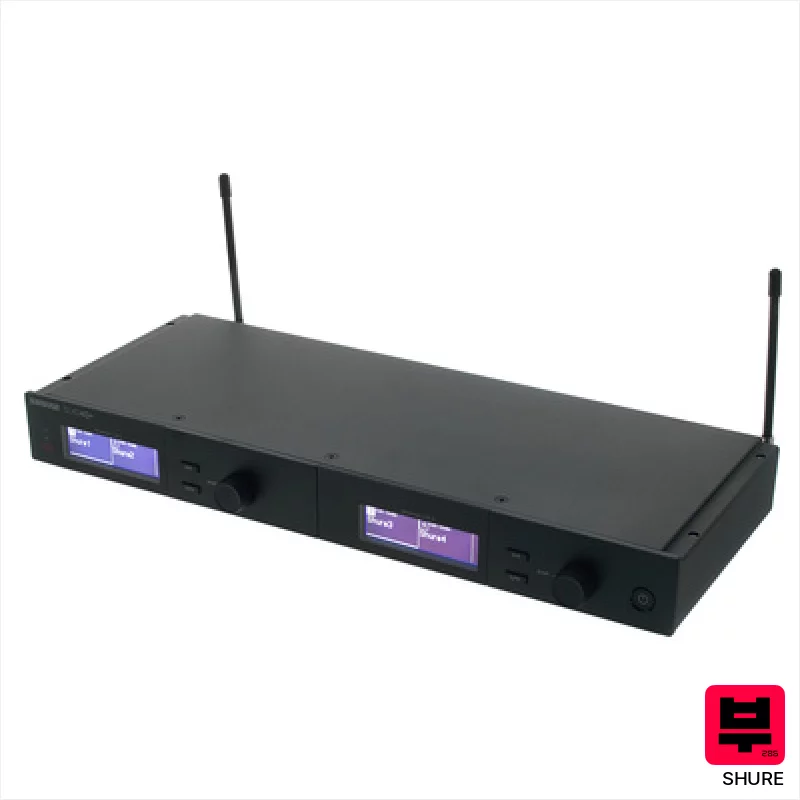
Shure SLXD4Q+E S50
- • Robust galvanised steel housing offers excellent durability on stage.
- • IR sync simplifies transmitter pairing, saving valuable setup time.
- • Exceptional 1118 dB dynamic range handles loud sources cleanly.
- • Switchable mic/line level provides versatility for various input sources.
- • The unit's weight (1.9kg) can be cumbersome for mobile setups.
- • Premium-priced, limiting accessibility for smaller bands or budget-conscious users.
- • Limited frequency range compared to some competing systems.
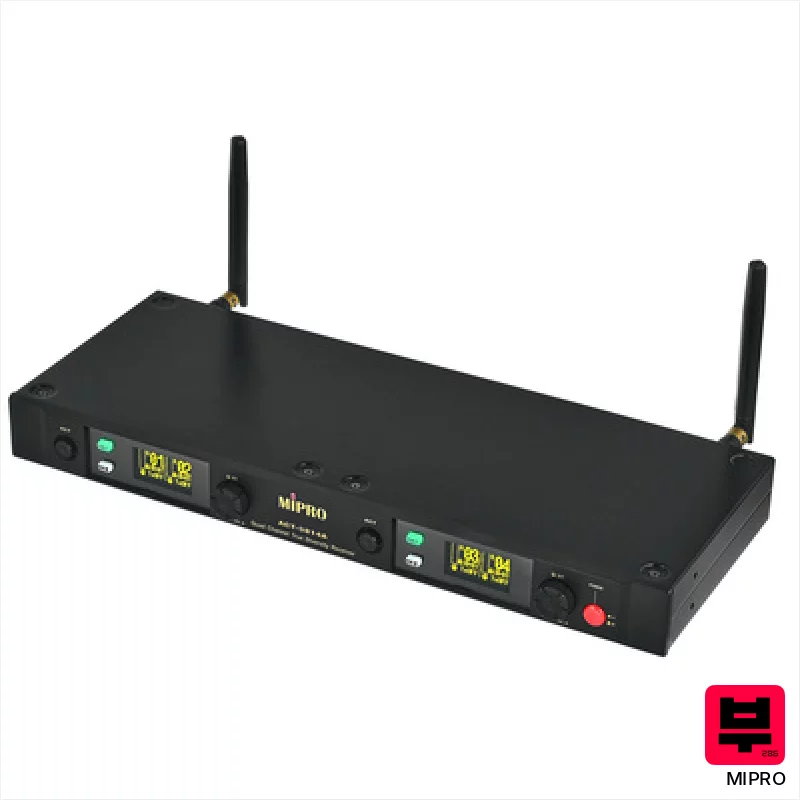
Mipro ACT-5814A
- • FHSS hopping minimizes interference in congested RF environments.
- • OLED display offers clear, real-time status information.
- • Cascading antenna outputs simplify multi-mic setups significantly.
- • Compact chassis makes it manageable for portable or studio use.
- • Limited frequency band compared to wider UHF systems.
- • Build quality feels adequate but not premium-grade robust.
- • Mix output functionality is a somewhat basic implementation.
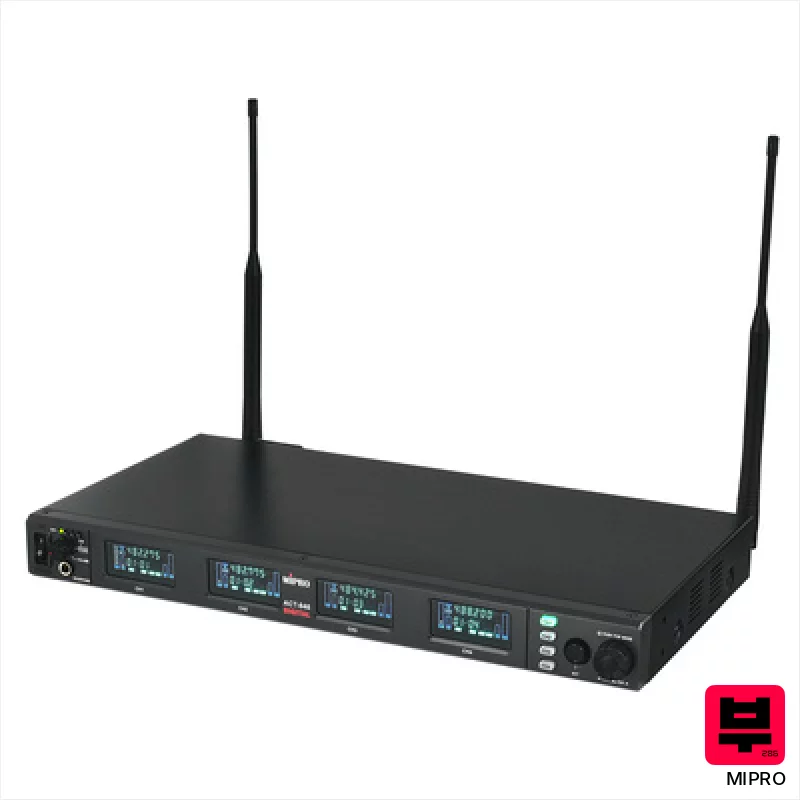
Mipro ACT-848 5UA
- • Excellent ACT channel targeting simplifies frequency coordination in crowded RF environments.
- • Impressive 115 dBA dynamic range handles loud stage volumes with ease.
- • AES/EBU digital output provides clean, professional audio signal path.
- • Robust build quality and included rack ears ensure stable, professional setup.
- • The 72 MHz bandwidth, while generous, can still be limiting for very large events.
- • Price point places it firmly in the premium wireless receiver category.
- • RJ11 remote I/O might require additional investment for full remote control.
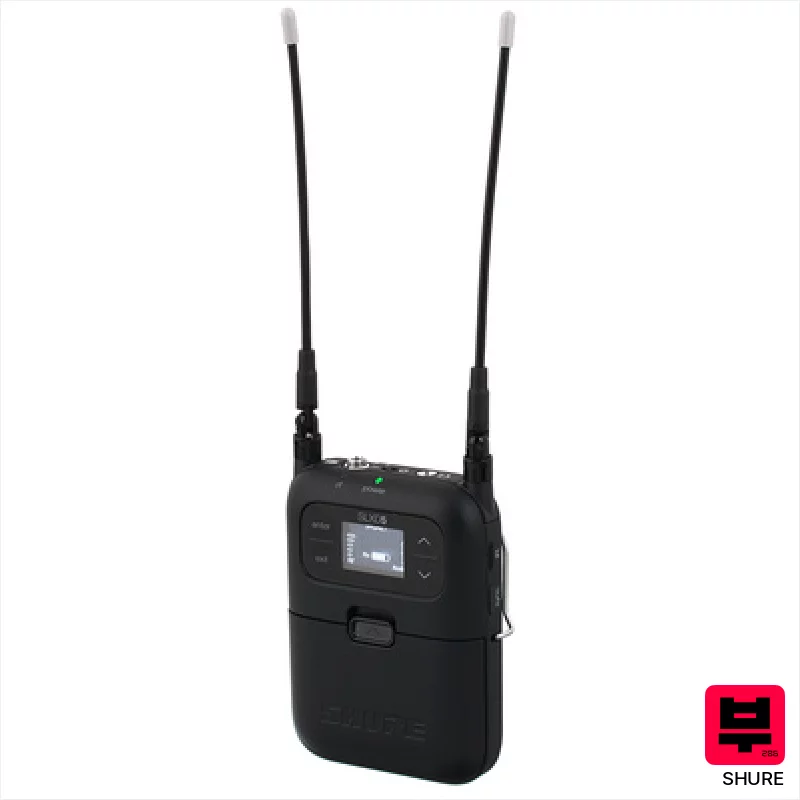
Shure SLXD5 H56
- • Excellent Shure build quality; feels robust and reliable for mobile use.
- • Clear, natural sound reproduction; handles vocals and instruments well.
- • Simple setup and intuitive controls; quick to deploy in live situations.
- • Good battery life; provides ample time for most gigs and rehearsals.
- • Limited frequency range; potential for interference in congested RF environments.
- • Single-channel operation; requires multiple receivers for multiple performers.
- • Lacks advanced features like digital encryption found in higher-end Shure systems.

Shure SLXD4Q+E K55
- • Galvanized steel chassis offers exceptional durability for stage use.
- • Shure's IR sync simplifies transmitter pairing, saving setup time.
- • 118dB dynamic range ensures clean audio even in noisy environments.
- • Flexible mic/line level switching accommodates diverse audio sources.
- • Premium-priced, making it a significant investment for smaller operations.
- • 606-694 MHz frequency band might face interference in congested areas.
- • Limited frequency band compared to broader UHF systems.
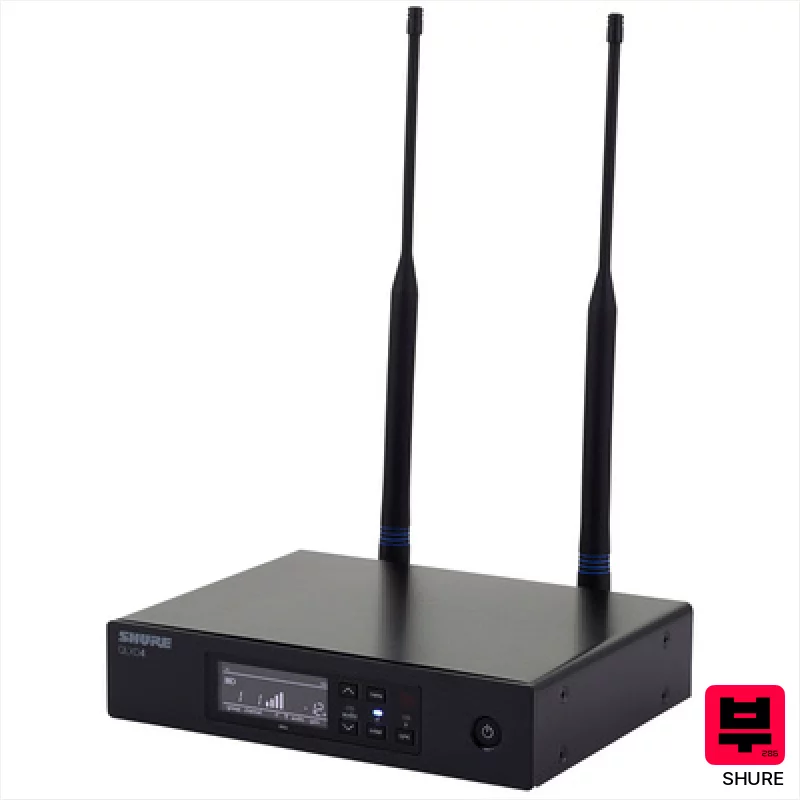
Shure QLXD4 G51
- • Robust PAR9.5 housing offers exceptional durability for stage use.
- • AES-256 encryption guarantees secure, interference-free audio transmission.
- • Wide 72 MHz bandwidth provides ample channel flexibility in congested RF environments.
- • Ethernet connectivity allows for remote system monitoring and control.
- • The PAR9.5 housing, while durable, adds considerable weight compared to smaller receivers.
- • Limited to UHF frequencies, restricting use in some specialized applications.
- • Requires careful antenna placement for optimal signal reception and coverage.
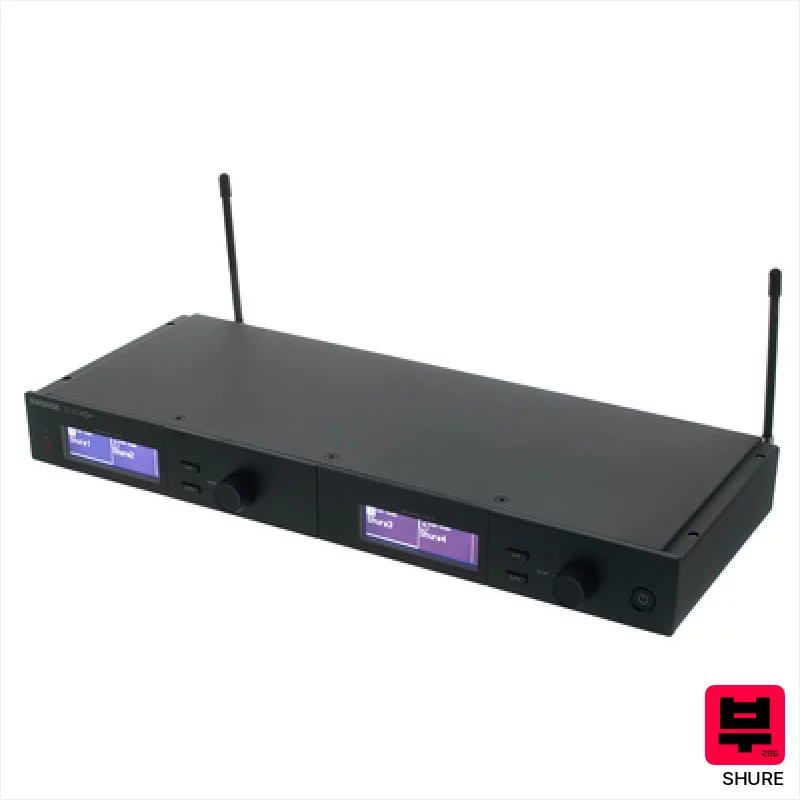
Shure SLXD4Q+E G65
- • Robust galvanised steel housing provides excellent roadworthiness.
- • Shure’s IR sync simplifies transmitter pairing significantly.
- • 118dB dynamic range handles loud sources with exceptional clarity.
- • Four outputs offer flexible routing for complex setups.
- • The unit's weight (1.9kg) can be a factor for portable applications.
- • Premium-priced, limiting accessibility for smaller operations or hobbyists.
- • Frequency range (470-608 MHz) may face regulatory restrictions in some regions.
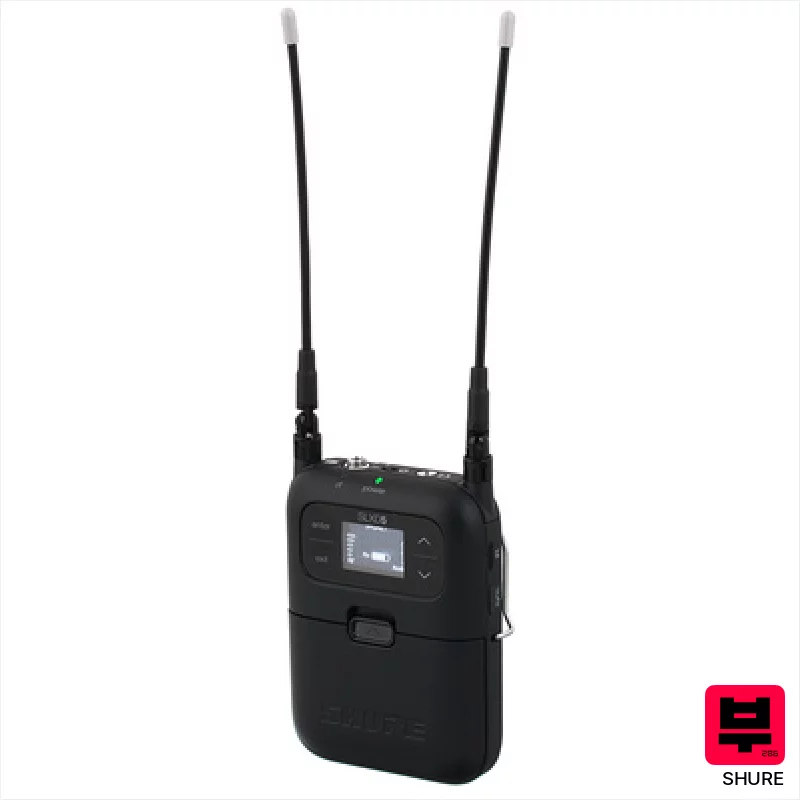
Shure SLXD5 J53
- • Excellent Shure build quality; feels robust and reliable.
- • J53 band offers clean, interference-free operation in many areas.
- • Flexible power options: AA or rechargeable for convenience.
- • Compact design with hot shoe adapter for easy camera mounting.
- • Limited frequency band compared to broader SLXD systems.
- • Single-channel operation restricts use to solo performers/one vocal.
- • No Dante or Ethernet connectivity for advanced integration.
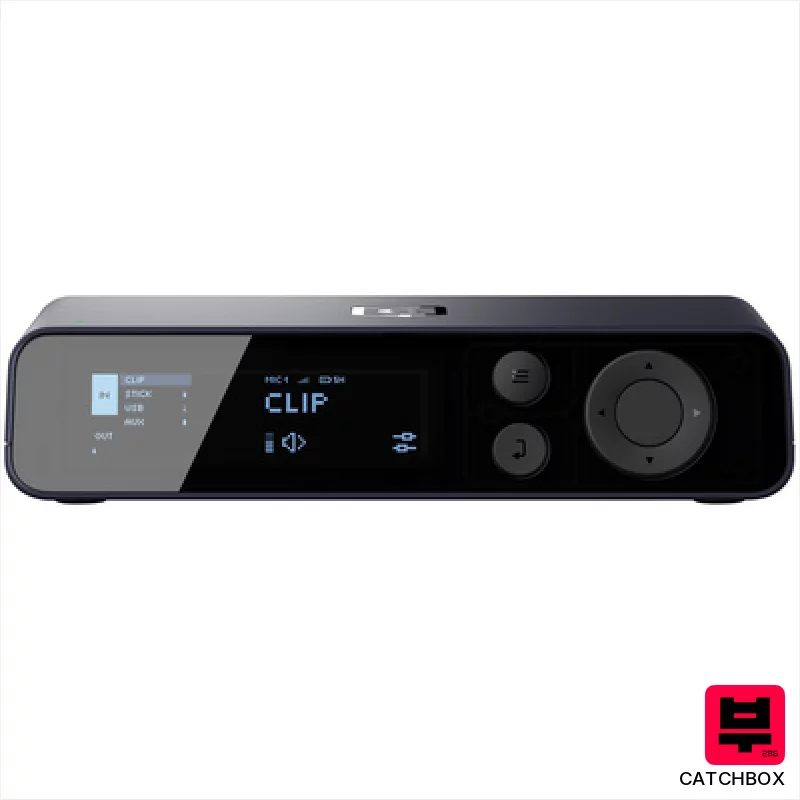
Catchbox Plus Hub2
- • Stealth Mode is genuinely useful for discreet recordings.
- • Graphical UI simplifies complex settings quickly and intuitively.
- • Robust build quality; feels like it can handle gigging life.
- • Euroblock connections provide reliable, secure audio pathways.
- • Limited to two channels; not ideal for large ensembles.
- • 100m range is optimistic; real-world performance varies greatly.
- • Euroblock connectors require adapters for standard XLR setups.
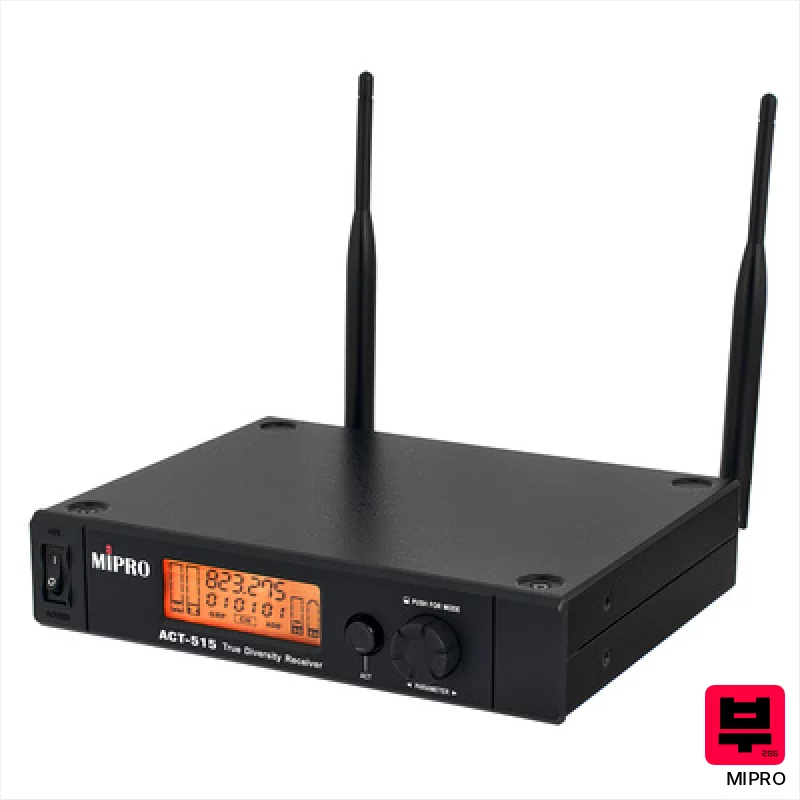
Mipro ACT-515 8AD
- • Solid build quality; metal chassis feels robust and durable.
- • ACT automatic channel targeting simplifies setup in crowded RF environments.
- • The 9MHz bandwidth allows for a decent number of compatible channels.
- • Dual squelch and interference warning prevent unwanted noise and feedback.
- • Limited frequency range restricts compatibility with some systems.
- • The receiver's size and weight make it less portable than smaller units.
- • The LCD display, while functional, lacks the clarity of higher-end models.
How to Choose the Best Receivers
Frequency Band & Spectrum Management
Theater spaces can be RF nightmares, with tons of potential interference from lighting, projectors, and other gear. UHF is generally your best bet, but knowing how to scan for clear frequencies and manage multiple channels is crucial. Dual receivers are almost mandatory for larger productions.
Dynamic Range & Noise Floor
You want a receiver that can handle a quiet whisper and a sudden shout without clipping or introducing a distracting hiss. A good dynamic range (measured in dB) means more headroom and cleaner audio, especially when dealing with varied vocal dynamics.
Receiver Sensitivity
This determines how well the receiver picks up signals from the handheld or bodypack mics. Higher sensitivity is good, but it also means you're more susceptible to picking up unwanted noise if it's not managed correctly. It's a balancing act.
Audio Quality & Tone
Cheap receivers often introduce a harsh, brittle high-end or a muddy low-midrange. You're looking for transparency - the receiver should be as invisible as possible, letting the actor's natural voice shine through. That subtle, natural articulation is what sells a performance.
Build Quality & Reliability
Gigs happen in less-than-ideal conditions. You need a receiver that can withstand being bumped, dropped (it happens!), and generally abused without failing. Solid construction and reliable components are worth the investment - downtime is the enemy.
Buying Guide
Don't get lured in by the 'budget' wireless systems. Those often cut corners on build quality and frequency stability, leading to dropouts and audio artifacts that'll drive you nuts. Paying a bit more for a system with a good reputation for reliability and a wide frequency range is an investment in a smooth production. If you're running more than two mics, seriously consider a multi-channel receiver - it'll save you headaches down the line.
Our Methodology
We don't just look at spec sheets here. We've put these receivers through the ringer - live rehearsals with full casts, complex blocking scenarios, and A/B comparisons against other industry-standard systems. We're listening for things that matter: how well they handle interference, dynamic range, and most importantly, how they impact the natural tone of the voices they're capturing.

