AudioFu Chart · October 2026
Best Receivers for Beginner 2026
The top pick is Sennheiser XSW 1-825-A Handheld Mic Wireless System - A Band (5480572… ($212). Albrecht ATR400 Tourist Receiver gives you the most for the money at $66. Ranked by the AudioFu Index from 78 models across 12 brands, prices checked every night.
Last updated: October 26, 2026
Top 10
Full detail for the 10 highest AudioFu Index scores. Every other model is listed below.
-
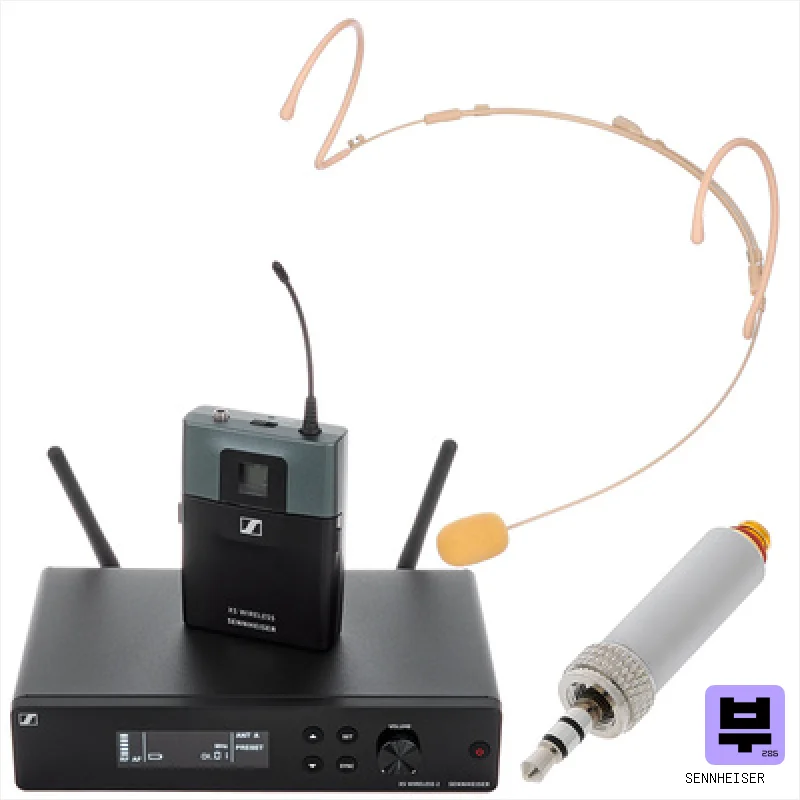
Sennheiser XSW 1-825-A Handheld Mic Wireless System - A Band (5480572…
EM-XSW 1-E-Band · Sennheiser
45 for sale on Reverb1 finish at Thomann
The EM-XSW 1 is a solid, dependable wireless receiver – perfect for smaller gigs, presentations, or educational settings where you need reliable UHF performance without the complexity of more advanced systems. It's a straightforward solution that gets the job done, prioritizing clean signal and ease of use over bells and whistles.
Pros
- Reliable E-Band operation avoids common RF congestion.
- Antenna diversity improves signal stability in challenging environments.
- Compact receiver design simplifies setup and transport.
Cons
- Limited channel count restricts flexibility in crowded RF spaces.
- Basic feature set lacks advanced options like frequency scanning.
63AudioFu
IndexStableno change since Aug 17Aug 17$212 now$212€189 at Thomann · in stockCheck price ↗ -
Sennheiser XSW 1-825-A Handheld Mic Wireless System - A Band (5480572…
EM-XSW 1-A-Band · Sennheiser
45 for sale on Reverb1 finish at Thomann
The XSW 1-A Band is a dependable, straightforward receiver. It's a great budget-friendly option for vocalists, presenters, or smaller bands needing a reliable wireless signal, especially where frequency crowding isn't a major concern. It's simple to use, and gets the job done without unnecessary complexity.
Pros
- Robust build quality; feels solid and reliable for gigging.
- A-Band offers decent channel availability in many regions.
- Integrated antennas simplify setup, reducing cable clutter.
Cons
- Limited frequency range compared to broader band receivers.
- No digital control or advanced features like frequency scanning.
63AudioFu
IndexStableno change since Aug 17Aug 17$212 now$212€189 at Thomann · in stockCheck price ↗ -
Sennheiser e906 Supercardioid Dynamic Instrument Microphone
XSW-D Instrument RX · Sennheiser
39 for sale on Reverb1 finish at Thomann
The XSW-D Instrument RX is a solid, reliable wireless solution for gigging musicians needing a straightforward instrument connection. It’s great for acoustic guitarists, bass players, and keyboardists who want freedom of movement without a complicated system—a really well-thought-out and affordable option for smaller venues or solo performers.
Pros
- Robust metal housing offers excellent durability on stage.
- Clear, uncolored signal transmission ideal for acoustic instruments.
- Simple setup and intuitive controls for quick operation.
Cons
- Limited frequency range compared to higher-end wireless systems.
- Single receiver restricts flexibility for multiple instrument setups.
61AudioFu
IndexStableno change since Aug 17Aug 17$200 now$200€179 at Thomann · in stockCheck price ↗ -
Sennheiser XSW 1-825-A Handheld Mic Wireless System - A Band (5480572…
EM-XSW 1-B-Band · Sennheiser
45 for sale on Reverb1 finish at Thomann
The EM-XSW 1-B-Band is a dependable, straightforward wireless receiver. It’s a great, budget-friendly option for smaller bands, solo performers, or presenters needing reliable audio without the complexity of higher-end systems. Its simplicity makes it easy to learn and use, delivering clean audio without fuss.
Pros
- Solid build quality; feels robust despite its size.
- B-Band frequency offers reliable operation in many regions.
- Antenna diversity minimizes dropouts during performance.
Cons
- Limited channel count restricts use in complex, crowded RF environments.
- B-Band frequency allocation can vary, requiring local verification.
63AudioFu
IndexStableno change since Aug 17Aug 17$222 now$222€198 at Thomann · in stockCheck price ↗ -
- Weight0.08 kg
This ANNY R B8 is a surprisingly handy little receiver, especially if you're already using LD Systems Anny speakers. It's a budget-friendly solution for basic wireless vocal or instrument applications – think small events, karaoke, or simple presentations where ultimate audio fidelity isn't the top priority. Just be aware of the potential for interference in crowded RF spaces.
Pros
- Compact and lightweight receiver for portable PA setups
- Individual channel volume controls simplify monitoring and mixing
- Decent 80m range offers reasonable mobility for smaller venues
Cons
- Limited frequency band restricts channel availability in congested areas
- Lacks diversity reception, prone to interference in challenging RF environments
37AudioFu
IndexStableno change since Aug 17Aug 17$129 now$129€115 at Thomann · in stockCheck price ↗ -
This Albrecht ATR400 is a surprisingly capable receiver for tour guides and similar applications where clear, simple communication is key. It's lightweight and has a long battery life, making it practical for all-day use. Don't expect high-end audio quality or a ton of control options, but for basic, reliable voice transmission, it’s hard to beat at this price point.
Pros
- Lightweight and compact design ideal for extended carrying.
- Integrated lithium battery offers impressive 18-hour operation.
- 2.4 GHz ISM band ensures broad usability across Europe.
Cons
- Limited channel selection might cause interference in crowded environments.
- Plastic construction feels budget-oriented, not exceptionally durable.
-
- Size9.5"
The t.bone GigA Pro Receiver is a surprisingly capable wireless receiver for the price. It’s a great entry point for vocalists, presenters, or small bands needing reliable wireless without the premium price tag. The build quality feels solid, and the ease of IR sync is a real time-saver.
Pros
- Robust metal housing provides excellent protection during gigging.
- True diversity minimizes dropouts in crowded RF environments.
- OLED display offers clear, at-a-glance status information.
Cons
- Limited channel count compared to higher-end systems.
- 2.4 GHz band can be susceptible to interference from other devices.
36AudioFu
IndexStableno change since Aug 17Aug 17$133 now$133€119 at Thomann · in stockCheck price ↗ -
This little Mooer receiver is a clever solution for guitarists wanting wireless convenience with their smartphones or tablets. It's a budget-friendly way to ditch cables for practice, recording demos, or even some live performance scenarios where a short range is acceptable. Perfect for bedroom players and mobile content creators.
Pros
- Compact and lightweight, ideal for mobile recording setups
- UHF band offers decent range, minimizing interference potential
- Integrated USB-C power & data simplifies workflow significantly
Cons
- Limited range (65ft) requires line-of-sight for reliable performance
- Single stereo output restricts multi-instrument or complex routing options
-
This receiver module is a solid, budget-friendly option if you’re already invested in the Roadboy B6 ecosystem. It's ideal for smaller gigs, presentations, or rehearsal spaces where simplicity and portability are key. The 16 channels give you some breathing room, but remember you’ll need to factor in external antennas for the best signal.
Pros
- Compact design integrates seamlessly with Roadboy B6 speakers
- 16 switchable channels offer flexibility in crowded RF environments
- UHF frequency range provides good penetration through common obstacles
Cons
- Limited frequency range restricts use in some regions with stricter regulations
- Lack of AES/EBU digital output limits professional studio integration
31AudioFu
Index↓ 1.8%since Aug 17 · lowest so far$124 · Aug 17$122 now$122€109 at Thomann · in stockCheck price ↗ -
- Size9.5"
The t.bone free solo Receiver 823 MHz is a solid, budget-friendly option for smaller gigs or rehearsals where you need wireless capability without a huge investment. Its infrared sync is a nice touch, and the compact size is a bonus. Ideal for vocalists or instrumentalists in smaller bands needing a simple, reliable wireless solution.
Pros
- Infrared sync simplifies transmitter setup, a genuine time-saver.
- 25 KHz channel spacing offers decent frequency flexibility.
- Compact 1U design maximizes rack space efficiency.
Cons
- 823 MHz band can be susceptible to interference in crowded RF environments.
- Limited channel count restricts scalability for larger productions.
36AudioFu
IndexStableno change since Aug 17Aug 17$156 now$156€139 at Thomann · in stockCheck price ↗
All 78 receivers
Same index, same nightly prices — compact. Colour options of one model share a row. Tap a photo to zoom.
- 11
Sirus Quad R 823 MKIISirus43Stable$200€179$200€179Check ↗
- 12
Sirus Quad R 470Sirus43Stable$200€179$200€179Check ↗
- 13
the t.bone GigA Pro Bodypack Receiverthe t.bone28Stable$111€99$111€99Check ↗
- 14
LD Systems Receiver Module for RoadboyLD Systems30Stable$124€111$124€111Check ↗
- 15
Shure BLX4 H8EShure · 6 finishes44Stable$222€198$222€198Check ↗
- 16
Shure GLXD6=-Z2GLXD6+ · Shure58Stable$319€285$319€285Check ↗
- 17
Sennheiser XSW-D XLR male RXSennheiser36↓ 3.4%$189€169$189€169Check ↗
- 18
XVive U35 Microphone ReceiverXVive26Stable$133€119$133€119Check ↗
- 19
Sennheiser XSW-D Mini Jack RXSennheiser35Stable$200€179$200€179Check ↗
- 20
Mipro ACT-5801Mipro39Stable$241€215$241€215Check ↗
- 21
Sennheiser EW-D EM Y1-3Sennheiser50Stable$312€279$312€279Check ↗
- 22
Sennheiser EW-D EM S7-10Sennheiser50Stable$312€279$312€279Check ↗
- 23
Sennheiser EW-D EM R4-9Sennheiser50Stable$312€279$312€279Check ↗
- 24
Sennheiser EW-D EM R1-6Sennheiser50Stable$312€279$312€279Check ↗
- 25
Sennheiser EW-D EM Q1-6Sennheiser50Stable$312€279$312€279Check ↗
- 26
Sennheiser EW-D EM S1-7Sennheiser50Stable$312€279$312€279Check ↗
- 27
Sennheiser EW-D EM U1/5Sennheiser48↑ 3.6%$323€289$323€289Check ↗
- 28
LD Systems Receiver Set B6LD Systems18Stable$140€125$140€125Check ↗
- 29
LD Systems Receiver SetLD Systems18Stable$141€126$141€126Check ↗
- 30
Mipro ACT-515 8ADMipro · 2 finishes42Stable$323€289$323€289Check ↗
- 31
Shure SLXD4E K59Shure · 14 finishes65↓ 2.1%$514€459$514€459Check ↗
- 32
Shure GLXD4=-Z2GLXD4R+ · Shure · 2 finishes61Stable$490€438$490€438Check ↗
- 33
Sennheiser XSW2-835-A Handheld Wireless Microphone System - A Band…EM-XSW 2-A-Band · Sennheiser60↓ 5.9%$357€319$357€319Check ↗
- 34
Sennheiser XSW2-835-A Handheld Wireless Microphone System - A Band…EM-XSW 2-E-Band · Sennheiser57Stable$368€329$368€329Check ↗
- 35
Sennheiser XSW2-835-A Handheld Wireless Microphone System - A Band…EM-XSW 2-B-Band · Sennheiser57Stable$368€329$368€329Check ↗
- 36
Sennheiser XSW2-835-A Handheld Wireless Microphone System - A Band…EM-XSW 2-GB-Band · Sennheiser57Stable$391€349$391€349Check ↗
- 37
Sennheiser EW-DX EM 2 Q1-9Sennheiser50Stable$1,118€999$1,118€999Check ↗
- 38
Sennheiser EW-DX EM 2 U1/5Sennheiser50Stable$1,229€1,098$1,229€1,098Check ↗
- 39
Sennheiser EW-DX EM 2 Dante R1-9Sennheiser50Stable$1,565€1,398$1,565€1,398Check ↗
- 40
Sennheiser EW-DX EM 4 Dante R1-9Sennheiser50Stable$3,670€3,279$3,670€3,279Check ↗
- 41
Sennheiser EW-DX EM 4 Dante S2-10Sennheiser50Stable$3,691€3,298$3,691€3,298Check ↗
- 42
Sennheiser EW-DX EM 4 Dante Q1-9Sennheiser50Stable$3,691€3,298$3,691€3,298Check ↗
- 43
Shure SLXD4QDAN+E S50Shure50Stable$3,894€3,479$3,894€3,479Check ↗
- 44
Shure SLXD4QDAN+E K55Shure50Stable$3,915€3,498$3,915€3,498Check ↗
- 45
Shure SLXD4QDAN+E G65Shure50Stable$3,915€3,498$3,915€3,498Check ↗
- 46
Shure QLXD4 K51Shure · 4 finishes49Stable$979€875$979€875Check ↗
- 47
Sennheiser EW-DX EM 2 Dante U1/5Sennheiser49↑ 0.7%$1,453€1,298$1,453€1,298Check ↗
- 48
Sennheiser EW-DX EM 2 Dante Q1-9Sennheiser49↑ 0.7%$1,453€1,298$1,453€1,298Check ↗
- 49
Sennheiser EW-DX EM 2 Dante S2-10Sennheiser49↑ 0.7%$1,453€1,298$1,453€1,298Check ↗
- 50
Shure SLXD5 S50Shure · 8 finishes47↓ 2.2%$503€449$503€449Check ↗
Receivers by the numbers
Measured across all 115 models we track, not a sample.
Median $503 — half of all receivers here cost less.
median of 47 models · 9.5"–19"
median of 46 models · 0.56 kg–3 kg
How to choose the best receivers
Ease of Use
Beginners shouldn't be wrestling with menus and frequency scanning. Look for clear visual indicators (LEDs for signal strength, battery status) and a straightforward setup process. A complicated receiver just adds stress when you're trying to dial in a good sound.
Frequency Band & Range
2.4GHz is common and generally works well, but be aware of potential interference from Wi-Fi. 5.8GHz offers more channels, but can be more susceptible to obstructions. Range is marketing - real-world performance will vary based on environment.
Build Quality & Durability
Gigs happen. Rehearsals get rough. You need a receiver that can take a bit of abuse without crapping out. Cheap plastic feels cheap for a reason - it's not going to last.
Audio Quality & Dynamic Range
You're not chasing pristine studio recordings, but you do want clean, clear audio. A receiver with decent dynamic range will handle both quiet vocals and a screaming guitar solo without distortion. Watch out for receivers that compress the signal too much, flattening your dynamics.
Antenna Performance
The antenna is your receiver's ears. A receiver with a weak antenna will be prone to dropouts, especially in crowded spaces. External antennas can help, but start with something decent built-in.
Buying guide
So, you're diving into the wireless mic world - awesome! It's a game changer for stage presence and freedom, but that receiver is the crucial link. Don't get overwhelmed by the fancy stuff; as a beginner, you need something reliable, easy to use, and that won't break the bank. Let's find a receiver that lets you focus on the music, not the tech headaches.
For a beginner, prioritize simplicity and reliability over features you won't use. Don't get lured in by fancy features like Dante or AES67 - those are for later. Cheap receivers will often cut corners on the antenna and internal components, leading to dropouts and a muddy sound.
Spending a bit more upfront for something that's genuinely reliable is going to save you headaches (and potential gigs) down the line.
How the AudioFu Index works
Five measured signals and nothing else — no stars from strangers, no “tested by experts” we didn’t do. The weights are fixed and public. We don’t play these instruments; we measure the market around them.
This chart covers 115 receivers from the Thomann catalogue. Before you buy, read hands-on reviews and, where you can, play it. Full methodology.
AudioFu earns a commission when you buy through our Thomann links. It never changes the order — the index does.
- Demand40%
How many of this exact model are for sale on Reverb right now — what musicians actually buy and resell.
- Lineup20%
How many finishes Thomann stocks — makers expand the models that sell.
- Price15%
Where the price has moved since we started tracking in August.
- Specs15%
How completely the maker documents it.
- Maker10%
How deep the brand’s range is in this category.
Questions
What's the difference between UHF and 2.4GHz?
UHF offers more channels, but is more susceptible to interference from other devices. 2.4GHz is common in consumer electronics, so interference can be an issue, but it's generally easier to set up.
How do I avoid interference?
Keep the receiver away from Wi-Fi routers and other electronic devices. Scan for clear frequencies using the receiver's built-in scanner. If you're experiencing dropouts, try repositioning the receiver or using an external antenna.
Can I use any antenna with my receiver?
Usually, yes, but check the connector type (SMA, BNC). Using a higher-gain antenna can extend your range, but it also makes you more susceptible to picking up interference.
My wireless mic keeps cutting out. What's wrong?
Battery life, distance from the receiver, and interference are the usual culprits. Make sure the batteries are fresh, move closer to the receiver, and scan for a clear frequency.
Do I need a diversity receiver?
Diversity receivers use two antennas to improve signal stability. For a beginner, it's not essential, but it can be a worthwhile investment if you're performing in challenging environments.