
Best Teenage Engineering General Synthesizers 2026
Okay, so you're looking into Teenage Engineering synths? Smart move. They've carved out a really unique niche - tiny, portable, and surprisingly capable instruments that can genuinely inspire. But they're not for everyone; you gotta understand what you're getting into, because that aesthetic comes with some tradeoffs. Let's break down the General series and see if they fit your needs, whether you're crafting beats in a bedroom or gigging out in a sweaty club.
Last updated: April 11, 2026
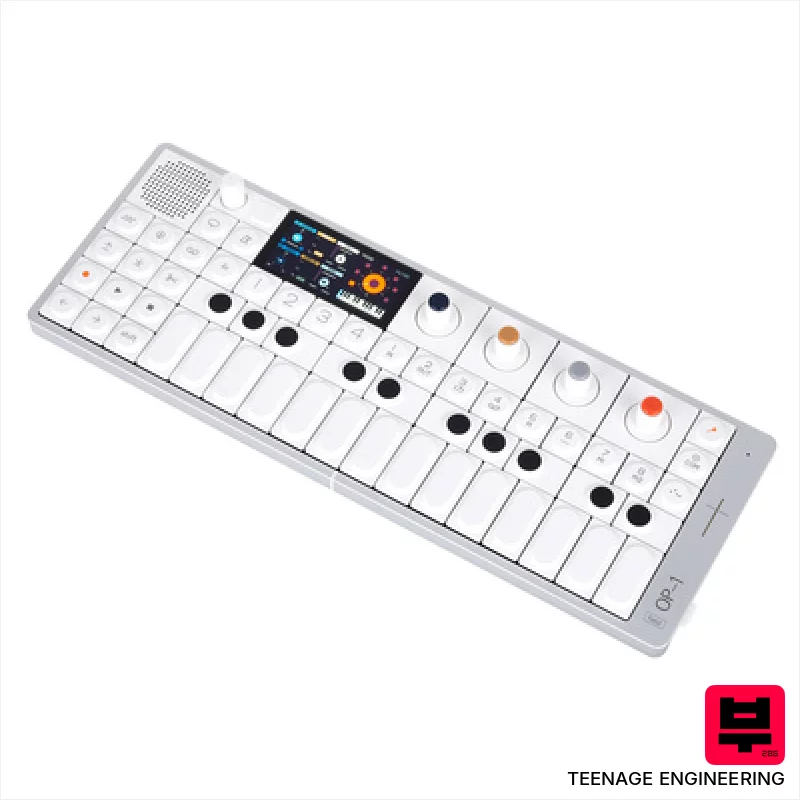
Teenage Engineering OP-1 field
- • Excellent stereo sample engine provides surprising depth
- • Tape formats offer unique creative workflows and sonic textures
- • Compact and portable, ideal for mobile music creation
- • Intuitive interface fosters experimentation and happy accidents
- • Mini keys are cramped, challenging for players with larger hands
- • Limited polyphony can restrict complex arrangements
- • Price point places it out of reach for many aspiring musicians

Teenage Engineering PO-20 arcade
- • Pocket-sized portability enables spontaneous music creation anywhere
- • Chord control simplifies complex harmonies for instant gratification
- • Punch-in effects add immediate character and sonic experimentation
- • Intuitive sequencer fosters rapid beat creation and chiptune exploration
- • Limited parameter control restricts nuanced sound design possibilities
- • Tiny speaker lacks serious projection for performance scenarios
- • Plastic build feels less robust compared to higher-end gear

Teenage Engineering PO-12 rhythm
- • Extremely portable: pocket-sized design makes it ideal for travel.
- • Unique, lo-fi sounds: distinct character for experimental music.
- • Intuitive sequencer: 16-step patterns are easy to program.
- • Affordable entry point: accessible to beginners and budget-conscious producers.
- • Limited sound palette: 16 sounds offer constrained creative options.
- • Tiny speaker: lacks serious volume for performance scenarios.
- • 3.5mm connections: require adapters for standard gear.

Teenage Engineering PO-16 factory
- • Pocket-sized, yet surprisingly feature-rich sequencing capabilities.
- • The 16 distinct sounds offer a broad palette for experimentation.
- • Parameter locking adds depth, moving beyond basic sequencing.
- • Integrated speaker is surprisingly loud and clear for its size.
- • Limited polyphony restricts complex chord voicings and arrangements.
- • Plastic construction feels a bit fragile for gigging situations.
- • 3.5mm connections require adapters for most studio setups.

Teenage Engineering PO-14 sub
- • Pocket-sized design offers incredible portability for on-the-go music making
- • The sequencer’s parameter lock feature allows for nuanced, evolving basslines
- • Surprisingly robust build quality for its size, feels surprisingly solid
- • Integrated speaker is decent for practice and quick jams, surprisingly loud
- • Limited polyphony restricts layering and complex arrangements
- • 3.5mm connections are a bit fiddly and less secure than standard jacks
- • Sound palette, while creative, lacks the depth of higher-end synthesizers
How to Choose the Best General Synthesizers
Heritage & Design
Teenage Engineering isn't about recreating vintage gear. Their design language is playful, modular-inspired, and distinctly Scandinavian - think IKEA meets synthesizers. It's a vibe, and it's instantly recognizable, which can be a pro or con depending on your aesthetic.
Tone Characteristics
Don't expect fat analog warmth like a Juno. The General series tends towards a brighter, more digital character - often with a glassy, FM-influenced edge. There's a certain immediacy to the sound, but dialing in that classic, gooey low-end can be a challenge. They excel at textures and percussive sounds, though.
Portability & Workflow
This is the big win. These things are tiny! Seriously, they're pocketable. The limited controls force you to be creative, but it also means you might be reaching for an editor for deeper tweaking. The workflow can be a little quirky, especially if you're used to a full-sized synth.
Build Quality
The plastic casing is undeniably durable for the size, but it feels cheap. It's lightweight, which is great for portability, but it lacks the heft and reassuring solidity of metal-bodied synths. Don't expect this to survive a serious stage dive.
Connectivity & Expandability
The OPZ system, while cool in concept, has its quirks. Wireless MIDI is a neat feature, but latency can be an issue. The expansion slots offer a lot of potential for customization, but the modules themselves add to the cost and complexity.
Buying Guide
Look, you're paying for the design and the portability as much as the sound engine. Don't expect flagship-level audio fidelity. If you're after a warm, classic analog sound, this isn't it. But if you want a unique, inspiring, and genuinely fun instrument for sketching out ideas or adding quirky textures, the General series is worth a look. Consider an editor to unlock their full potential.
How This List Is Built
We don't play these instruments — we're a catalog, not a review desk, and we'd rather say so than pretend otherwise. This page ranks 5 general synthesizers from the Thomann catalogue, which is the largest single source of specification data in this category.
Position is computed, not curated. Four signals, in order of weight: how completely the manufacturer documents the instrument (number of published specifications), where it sits in the price range, how specific the model designation is — which filters out generic accessories — and whether a product image exists. The same inputs always produce the same order, so nothing here is shuffled to look fresh.
What this list is good for: narrowing a category down to a shortlist by spec and budget. What it isn't: a substitute for hearing an instrument. Before you buy, read hands-on reviews and, where you can, play it. Full methodology.

