AudioFu
AudioFu Chart · October 2026
Best General Synthesizers for Beginner 2026
The top pick is Korg Volca Beats Analogue Rhythm Machine ($148). Korg Monotron Delay Ribbon Synthesizer gives you the most for the money at $50. Arturia MicroFreak 25-Key Algorithmic Synthesizer leads the high end. Ranked by the AudioFu Index from 208 models across 36 brands, prices checked every night.
Last updated: October 11, 2026
Top 10
Full detail for the 10 highest AudioFu Index scores. Every other model is listed below.
-
The Volca Bass is a seriously fun little bass machine. It's perfect for electronic musicians, beatmakers, or anyone wanting a portable, analog bass sound without a massive investment. It’s surprisingly capable for its size and price point, though don’t expect a full-featured studio workstation.
Pros
- Analog oscillators deliver warm, punchy bass tones.
- Compact size makes it incredibly portable for music creation.
- Step sequencer and Active Step provide rhythmic experimentation.
Cons
- Limited polyphony restricts complex layering possibilities.
- Miniature controls can be fiddly for larger hands.
63AudioFu
Index↓ 7.0%since Aug 14 · lowest so far$159 · Aug 14$148 now$148€132 at Thomann · in stockCheck price ↗ -
Behringer Pro VS Mini 4-Voice Hybrid Vector Synthesizer
JT Mini · Behringer
14 for sale on Reverb1 finish at Thomann
The JT Mini is a surprisingly capable little synth, offering a genuine taste of analog warmth at a budget-friendly price. It’s perfect for bedroom producers, electronic music enthusiasts, or anyone wanting to explore subtractive synthesis without a huge investment. The sequencer is a real highlight, encouraging experimentation and creating fun, evolving sounds.
Pros
- Genuine analog warmth and character despite the price point
- Impressive 3-voice polyphony expands sonic possibilities
- Motion sequencer offers engaging, hands-on creative workflow
Cons
- Plastic build feels less robust than higher-end synths
- Mini jack connections feel flimsy and a bit dated
57AudioFu
Index↓ 22.0%since Aug 14 · lowest so far$122 · Aug 14$95 now$95€85 at Thomann · in stockCheck price ↗ -
The Monotron Delay is a quirky, fun little synth that’s perfect for sound designers, experimental musicians, or anyone wanting a quick dose of analog goodness. Its ribbon controller takes some getting used to, but the classic Korg filter and delay create a surprisingly rich and engaging sound – a real pocket-sized creative powerhouse.
Pros
- Unique ribbon controller offers expressive, unconventional playing.
- MS-10/MS-20 filter delivers a classic, gritty Korg analog tone.
- Compact size and integrated speaker provide instant, portable sound.
Cons
- Ribbon controller lacks the precision of traditional keys.
- Monophonic operation limits harmonic complexity and layering.
52AudioFu
Index↓ 6.3%since Aug 14 · lowest so far$54 · Aug 14$50 now$50€45 at Thomann · in stockCheck price ↗ -
The Monotron Duo is a quirky, fun little synth perfect for experimental soundscapes and quick sketches. Its dual oscillators and MS-20 filter give it a surprisingly rich sound, and the ribbon controller offers a unique tactile feel. It’s an ideal grab-and-go instrument for musicians wanting analog character on a budget.
Pros
- Dual oscillators offer surprisingly thick, evolving sounds.
- MS-20 filter delivers a gritty, classic Korg character.
- Ribbon controller is surprisingly expressive for nuanced playing.
Cons
- Ribbon controller lacks precise pitch control for advanced techniques.
- Integrated speaker is weak; headphone output is essential.
-
Korg Volca Kick Analog Bass / Kick Generator
Volca Kick · Korg
30 for sale on Reverb1 finish at Thomann
The Volca Kick is a pocket-sized powerhouse for bass and percussion. Its MS-20 inspired filter gives it a seriously raw and aggressive edge, perfect for electronic music producers and experimental sound designers who want instant gratification and a unique sonic signature. It's a blast for quickly crafting rhythmic textures.
Pros
- MS-20 filter resonance creates unique, aggressive textures
- Compact size makes it ideal for travel and experimentation
- Simple interface encourages immediate sound design exploration
Cons
- Single voice limits complexity for layered sounds
- Limited modulation options restrict sonic versatility
59AudioFu
Index↓ 4.0%since Aug 14 · lowest so far$167 · Aug 14$160 now$160€143 at Thomann · in stockCheck price ↗ -
Teenage Engineering PO-12 Pocket Operator Rhythm
PO-12 rhythm · Teenage Engineering
18 for sale on Reverb1 finish at Thomann
The PO-12 is a fun, quirky little drum machine that's perfect for sparking creativity or adding a retro vibe to your tracks. It’s incredibly affordable and portable, making it a great impulse buy or a unique addition to any producer's arsenal—just don’t expect studio-grade fidelity or extensive sound options.
Pros
- Extremely portable: pocket-sized design makes it ideal for travel.
- Unique, lo-fi sounds: distinct character for experimental music.
- Intuitive sequencer: 16-step patterns are easy to program.
Cons
- Limited sound palette: 16 sounds offer constrained creative options.
- Tiny speaker: lacks serious volume for performance scenarios.
-
Korg Monologue Monophonic Analog Synthesizer
Monologue Silver · Korg
55 for sale on Reverb3 finishes at Thomann
The Monologue Silver is a fantastic little analog powerhouse. It's incredibly fun for basslines, leads, and sound design, especially if you're into gritty, raw sounds. Perfect for producers, electronic musicians, or anyone wanting a focused, hands-on analog experience without a huge investment.
Pros
- Solid metal chassis provides a reassuring, robust feel.
- The sequencer is surprisingly deep for a monophonic synth.
- Excellent value for an all-analog, subtractive synthesizer.
Cons
- Limited polyphony restricts layering and complex arrangements.
- The 25-key keyboard feels cramped for extended playing sessions.
74AudioFu
Index↓ 10.0%since Aug 14 · lowest so far$335 · Aug 14$301 now$301€269 at Thomann · in stockCheck price ↗ -
Arturia MicroFreak 25-Key Algorithmic Synthesizer
MicroFreak · Arturia
74 for sale on Reverb1 finish at Thomann
- Weight1.02 kg
- Keys25 keys
The MicroFreak is a quirky, fun synth perfect for experimental sound design and those craving a unique, tactile playing experience. Its compact size makes it great for travel, and the sequencing capabilities are surprisingly powerful for a small instrument – a real creative playground for producers and experimental musicians.
Pros
- Unique synthesis engine offers startlingly diverse sonic textures
- Touch keyboard surprisingly expressive with polyphonic aftertouch
- Compact size and lightweight design enable excellent portability
Cons
- Limited key range restricts playing complex chords or basslines
- Paraphonic nature limits true polyphony for layered sounds
75AudioFu
Index↓ 5.7%since Aug 14 · lowest so far$335 · Aug 14$316 now$316€282 at Thomann · in stockCheck price ↗ -
- Weight2 kg
The MicroBrute UFO is a quirky and surprisingly powerful little synth. Its unique shape and patching capabilities encourage experimentation, and the Steiner-Parker filter gives it a raw, aggressive edge. It's perfect for sound designers, electronic musicians, and anyone wanting a fun, accessible entry point into analogue synthesis.
Pros
- Unique UFO design fosters creative patching workflows
- Steiner-Parker filter delivers a distinct, aggressive character
- Compact size makes it incredibly portable and desktop-friendly
Cons
- Mini keys are cramped, not ideal for extended playing sessions
- Monophonic nature limits harmonic complexity and layering
72AudioFu
Index↓ 22.6%since Aug 14 · lowest so far$390 · Aug 14$302 now$302€270 at Thomann · in stockCheck price ↗ -
Teenage Engineering PO-20 Pocket Operator Arcade
PO-20 arcade · Teenage Engineering
25 for sale on Reverb1 finish at Thomann
The PO-20 Arcade is a fantastic little impulse machine. It's ridiculously fun for quick jams, chiptune explorations, or anyone wanting a pocket-sized, instantly gratifying sound source – perfect for beginners or experienced musicians seeking a playful creative outlet.
Pros
- Pocket-sized portability enables spontaneous music creation anywhere
- Chord control simplifies complex harmonies for instant gratification
- Punch-in effects add immediate character and sonic experimentation
Cons
- Limited parameter control restricts nuanced sound design possibilities
- Tiny speaker lacks serious projection for performance scenarios
All 208 general synthesizers
Same index, same nightly prices — compact. Colour options of one model share a row. Tap a photo to zoom.
- 11
Stylophone Mini WHStylophone · 2 finishes38Stable$28€25$28€25Check ↗
- 12
Teenage Engineering PO-16 Pocket Operator FactoryPO-16 factory · Teenage Engineering43↑ 1.4%$83€74$83€74Check ↗
- 13
Stylophone S-1 AnalogStylophone · 2 finishes38Stable$38€34$38€34Check ↗
- 14
Korg Volca FM2 Digital FM Synthesizer/SequencerVolca FM2 · Korg52↓ 1.9%$173€154$173€154Check ↗
- 15
Korg Volca Nubass Vacuum Tube SynthesizerVolca Nubass · Korg51Stable$167€149$167€149Check ↗
- 16
Korg Volca Modular Micro Modular SynthesizerVolca Modular · Korg51Stable$170€152$170€152Check ↗
- 17
Behringer Pro-VS MiniBehringer42↓ 1.1%$99€88$99€88Check ↗
- 18
Behringer JT-4000M MicroBehringer37Stable$55€49$55€49Check ↗
- 19
Behringer UB-1 MicroBehringer37Stable$66€59$66€59Check ↗
- 20
Korg Volca Keys Analog Loop SynthVolca Keys · Korg46Stable$151€135$151€135Check ↗
- 21
Stylophone StylosetteStylophone34Stable$44€39$44€39Check ↗
- 22
Stylophone BowieStylophone34Stable$44€39$44€39Check ↗
- 23
Widara Distant Voices ThereminWidara37↓ 34.3%$73€65$73€65Check ↗
- 24
Roland S-1 AIRA Compact Tweak SynthesizerAIRA Compact S-1 Tweak Synth · Roland51↑ 6.3%$207€185$207€185Check ↗
- 25
Moog Mavis Monophonic Analog Synthesizer VoiceMavis · Moog60Stable$303€270$303€270Check ↗
- 26
Yamaha Reface DXYamaha · 4 finishes71Stable$403€360$403€360Check ↗
- 27
Behringer CZ-1 MiniBehringer37Stable$100€89$100€89Check ↗
- 28
Roland J-6 AIRA Compact Chord SynthesizerAIRA Compact J-6 Chord Synth · Roland49↑ 13.3%$211€188$211€188Check ↗
- 29
Behringer UB-Xa MiniBehringer37Stable$111€99$111€99Check ↗
- 30
Behringer D MiniBehringer37Stable$111€99$111€99Check ↗
- 31
Stylophone Gen-X2Stylophone34Stable$89€79$89€79Check ↗
- 32
Stylophone ThereminStylophone39Stable$145€129$145€129Check ↗
- 33
Behringer AKS MiniBehringer37Stable$133€119$133€119Check ↗
- 34
Soma Laboratory Ether Anti Radio V2Ether V2 · SOMA37↑ 1.5%$151€135$151€135Check ↗
- 35
Behringer MS-1 MKII GreyBehringer51↓ 10.8%$279€249$279€249Check ↗
- 36
Korg Volca Beats Analogue Rhythm MachineVolca Bass Bundle · Korg38↓ 5.7%$186€166$186€166Check ↗
- 37
Sonicware Liven Lofi-12 27-Key Sampling GrooveboxLIVEN Lofi-12 · Sonicware46↓ 10.8%$279€249$279€249Check ↗
- 38
Stylophone Bowie Case BundleStylophone20Stable$53€47$53€47Check ↗
- 39
Moog ThereminiMoog61↓ 7.3%$429€383$429€383Check ↗
- 40
Instruo Pocket ScionInstruo29Stable$162€145$162€145Check ↗
- 41
Sonicware Liven Bass & Beats 27-Key Wavetable Bass Synthesizer and…LIVEN Bass & Beats · Sonicware43Stable$301€269$301€269Check ↗
- 42
AKAI Professional MPK mini Play MK3 Bag BundleAKAI Professional · 2 finishes26↓ 3.6%$149€133$149€133Check ↗
- 43
Sonicware Liven Texture Lab 27-Key Sampling GrooveboxLIVEN XFM · Sonicware45↑ 7.4%$324€289$324€289Check ↗
- 44
Sonicware Liven Texture Lab 27-Key Sampling GrooveboxLIVEN Texture Lab · Sonicware43Stable$313€279$313€279Check ↗
- 45
SOMA Rumble of Ancient TimesSOMA29↑ 13.4%$189€169$189€169Check ↗
- 46
Behringer MonoPoly 37-Key Polyphonic SynthesizerMonoPoly · Behringer56↓ 10.6%$436€389$436€389Check ↗
- 47
Behringer Vocoder VC340Behringer56↓ 4.9%$436€389$436€389Check ↗
- 48
Sonicware Liven 8bit Warps 27-Key Synthesizer GrooveboxLIVEN 8bit warps · Sonicware41Stable$301€269$301€269Check ↗
- 49
Korg Volca Keys Analog Loop SynthVolca Keys Bundle · Korg28Stable$189€169$189€169Check ↗
- 50
Arturia MicroFreak 25-Key Algorithmic SynthesizerMicroFreak Bag Bundle · Arturia45↓ 5.2%$346€309$346€309Check ↗
- 51
Behringer MS-5 37-Key 2-Voice SynthesizerMS-5 · Behringer52↓ 13.2%$415€370$415€370Check ↗
- 52
Korg Monologue Monophonic Analog SynthesizerMonologue Silver Case Set · Korg42↓ 7.4%$352€314$352€314Check ↗
- 53
Korg Monologue Monophonic Analog SynthesizerMonologue Blue Case Set · Korg41↓ 2.8%$347€310$347€310Check ↗
- 54
SOMA Quantum OceanSOMA35Stable$300€268$300€268Check ↗
- 55
Sonicware LIVEN Ambient ØSonicware37↑ 3.6%$324€289$324€289Check ↗
- 56
Korg Monologue Monophonic Analog SynthesizerMonologue BK Case Set · Korg41↓ 1.2%$369€329$369€329Check ↗
- 57
ESI XSynthESI37↓ 18.1%$335€299$335€299Check ↗
- 58
Sonicware LIVEN EvokeSonicware32↑ 3.6%$324€289$324€289Check ↗
- 59
Yamaha Reface DX Decksaver SetYamaha24Stable$431€385$431€385Check ↗
- 60
Arturia AstroLab 61-Key Stage KeyboardAstroLab · Arturia74↓ 11.2%$1,442€1,287$1,442€1,287Check ↗
- 61
Roland Juno-106 61-Key Programmable Polyphonic SynthesizerJuno-X · Roland74↓ 1.2%$1,825€1,629$1,825€1,629Check ↗
- 62
Korg MicroKORG 2 37-Key Synthesizer/VocodermicroKORG 2 · Korg73↓ 21.1%$503€449$503€449Check ↗
- 63
Korg Multi/Poly 37-Key Analog Modeling Synthesizermulti/poly · Korg72↓ 12.7%$905€808$905€808Check ↗
- 64
Korg MicroKORG 2 37-Key Synthesizer/VocodermicroKORG S · Korg · 2 finishes71↓ 2.1%$513€458$513€458Check ↗
- 65
Yamaha CK61 Digital Stage PianoCK61 · Yamaha · 2 finishes70Stable$966€862$966€862Check ↗
- 66
Korg Minilogue XD Polyphonic Analogue SynthesizerMinilogue · Korg · 2 finishes69Stable$532€475$532€475Check ↗
- 67
Arturia PolyBrute 61-Key SynthesizerPolyBrute · Arturia69↓ 8.0%$2,627€2,344$2,627€2,344Check ↗
- 68
Korg Modwave mkii 37-Key Wavetable SynthesizerModwave MKII · Korg68↓ 16.2%$640€571$640€571Check ↗
- 69
Korg KROSS 2 61 61-Key Synthesizer WorkstationKross 2-61 · Korg68Stable$746€666$746€666Check ↗
- 70
Yamaha CK88 Digital Stage PianoCK88 · Yamaha · 2 finishes68↓ 1.5%$1,433€1,279$1,433€1,279Check ↗
- 71
Moog Grandmother 32-Key Semi-Modular Analog SynthesizerGrandmother · Moog67↓ 5.4%$1,187€1,059$1,187€1,059Check ↗
- 72
Korg Wavestate 37-Key Wave Sequencing SynthesizerWavestate SE · Korg67↓ 13.6%$1,321€1,179$1,321€1,179Check ↗
- 73
Moog Subsequent 37 Analog SynthSubsequent 37 · Moog66↓ 8.2%$1,881€1,679$1,881€1,679Check ↗
- 74
Roland Jupiter-Xm 37-Key SynthesizerJupiter-X · Roland66↓ 6.0%$2,632€2,349$2,632€2,349Check ↗
- 75
Yamaha MX88 88-Key Synthesizer w/ GHS Key Weighting SystemMX88 · Yamaha65↓ 8.3%$1,119€999$1,119€999Check ↗
- 76
Roland Fantom 6 EX 61-Key Workstation KeyboardFantom-6 EX · Roland65Stable$3,771€3,365$3,771€3,365Check ↗
- 77
Sequential Trigon-6 49-Key 6-Voice Polyphonic SynthesizerTrigon-6 · Sequential65↑ 11.1%$4,145€3,699$4,145€3,699Check ↗
- 78
Arturia MiniFreak 37-Key 6-Voice Polyphonic Hybrid SynthesizerMiniFreak · Arturia64↓ 0.7%$611€545$611€545Check ↗
- 79
Roland FANTOM-08 88-Key Workstation KeyboardFantom-08 · Roland64↓ 0.6%$1,949€1,739$1,949€1,739Check ↗
- 80
Sequential Pro 3 37-Key 3-Voice Monophonic / Paraphonic SynthesizerPro 3 · Sequential · 2 finishes64↑ 3.8%$2,431€2,169$2,431€2,169Check ↗
- 81
Roland FANTOM-06 61-Key Workstation KeyboardFantom-06 · Roland63↑ 4.8%$1,443€1,288$1,443€1,288Check ↗
- 82
Roland Jupiter-Xm 37-Key SynthesizerJupiter-Xm · Roland63Stable$1,736€1,549$1,736€1,549Check ↗
- 83
Roland Fantom 7 EX 76-Key Workstation KeyboardFantom-7 EX · Roland63Stable$4,033€3,599$4,033€3,599Check ↗
- 84
Korg MS-20 Mini Semi-Modular Analog SynthesizerMS-20 mini · Korg62↓ 1.1%$615€549$615€549Check ↗
- 85
Suzuki OM-108 Omnichord ReissueOmnichord OM-108 · Suzuki · 2 finishes62↓ 3.6%$895€799$895€799Check ↗
- 86
Roland FANTOM-07 76-Key Workstation KeyboardFantom-07 · Roland62Stable$1,781€1,589$1,781€1,589Check ↗
- 87
Expressive E Osmose 49-Key 24-Voice Polyphonic SynthesizerOsmose · Expressive E62Stable$1,792€1,599$1,792€1,599Check ↗
- 88
Oberheim TEO-5 44-Key 5-Voice SynthesizerTEO-5 · Oberheim61↑ 5.3%$1,769€1,579$1,769€1,579Check ↗
- 89
Novation MiniNova 37-Key 18-Voice SynthesizerMiniNova · Novation60↑ 5.3%$447€399$447€399Check ↗
- 90
Roland Fantom 8 EX 88-Key Workstation KeyboardFantom-8 EX · Roland60Stable$4,336€3,869$4,336€3,869Check ↗
- 91
Korg Wavestate MkII 37-Key Wave Sequencing SynthesizerWavestate MkII · Korg59↓ 5.3%$635€567$635€567Check ↗
- 92
Modal Electronics Carbon8X 61-Key Experimental SynthesizerCarbon8 · Modal · 2 finishes59↓ 19.2%$895€799$895€799Check ↗
- 93
Sequential Prophet-6 49-Key 6-Voice Polyphonic SynthesizerProphet 6 · Sequential59↑ 12.2%$4,257€3,799$4,257€3,799Check ↗
- 94
Korg Opsix mkii 37-Key Altered FM Synthesizeropsix MKII · Korg58↓ 6.7%$622€555$622€555Check ↗
- 95
Mellotron M4000D MiniMellotron · 5 finishes58Stable$2,240€1,999$2,240€1,999Check ↗
- 96
Oberheim OB-X8 61-Key 8-Voice SynthesizerOB-X8 · Oberheim58↑ 8.2%$5,938€5,299$5,938€5,299Check ↗
- 97
Kurzweil K2088 88-Key Synthesizer WorkstationK2088 · Kurzweil57↓ 8.0%$2,576€2,299$2,576€2,299Check ↗
- 98
Sequential Prophet Rev2 61-Key 8-Voice Polyphonic SynthesizerProphet REV2-8 HeadphoneBundle · Sequential · 2 finishes57↑ 13.9%$3,025€2,699$3,025€2,699Check ↗
- 99
Sequential Prophet-10 61-Key 10-Voice Polyphonic SynthesizerProphet 10 · Sequential57↑ 4.0%$5,243€4,679$5,243€4,679Check ↗
- 100
ASM Hydrasynth ExplorerASM56↓ 4.3%$656€585$656€585Check ↗
- 101
Pittsburgh Modular Taiga Keyboard 37-Key Paraphonic SynthesizerTaiga Keyboard · Pittsburgh Modular56↓ 10.0%$1,310€1,169$1,310€1,169Check ↗
- 102
ASM Hydrasynth Desktop Polyphonic SynthesizerHydrasynth Keyboard · ASM56↓ 2.3%$1,422€1,269$1,422€1,269Check ↗
- 103
Sequential Take 5 44-Key 5-Voice Compact Polyphonic SynthesizerTake 5 · Sequential56↑ 5.3%$1,769€1,579$1,769€1,579Check ↗
- 104
Waldorf Iridium Desktop SynthesizerIridium Keyboard · Waldorf56↓ 1.5%$2,868€2,559$2,868€2,559Check ↗
- 105
Sequential Prophet-5 61-Key 5-Voice Polyphonic SynthesizerProphet 5 · Sequential56↑ 6.8%$4,253€3,795$4,253€3,795Check ↗
- 106
Novation Bass Station II 25-Key Monophonic SynthesizerBass Station II · Novation55↑ 10.0%$492€439$492€439Check ↗
- 107
Modal Electronics Argon8X 8 Voice 61-Key Wavetable SynthesizerArgon8 · Modal55↓ 11.3%$695€620$695€620Check ↗
- 108
Behringer DeepMind 12 Polyphonic Analog SynthDeepMind 12 · Behringer55Stable$705€629$705€629Check ↗
- 109
Modal Electronics Cobalt8M Desktop Virtual Analog SynthesizerCobalt8X · Modal · 2 finishes55Stable$891€795$891€795Check ↗
- 110
ASM Hydrasynth DeluxeASM55↓ 3.8%$1,725€1,539$1,725€1,539Check ↗
- 111
Behringer OdysseyBehringer54Stable$520€464$520€464Check ↗
- 112
Novation Summit 61-Key 16-Voice SynthesizerSummit · Novation54↑ 16.2%$2,688€2,399$2,688€2,399Check ↗
- 113
Groove Synthesis 3rd Wave 24-Voice 61-Key Wavetable Synthesizer3rd Wave · Groove Synthesis54Stable$6,375€5,689$6,375€5,689Check ↗
- 114
Behringer DeepMind 6 37-Key 6-Voice Polyphonic Analog SynthDeepMind 6 · Behringer53Stable$558€498$558€498Check ↗
- 115
Behringer Wave 8-Voice 49-Key Hybrid SynthesizerWave · Behringer53↓ 13.4%$582€519$582€519Check ↗
- 116
Roland Gaia 2 37-Key 22-Voice SynthesizerGAIA 2 · Roland53↑ 16.9%$783€699$783€699Check ↗
- 117
Roland AX-Edge 49-Key Keytar SynthesizerAX-Edge Black · Roland · 2 finishes53↓ 2.0%$1,097€979$1,097€979Check ↗
- 118
Moog MessengerMoog52↓ 30.3%$624€557$624€557Check ↗
- 119
SOMA Lyra-8 OrangeSOMA · 5 finishes52Stable$891€795$891€795Check ↗
- 120
Korg Kross 2-88MBKorg52Stable$1,164€1,039$1,164€1,039Check ↗
- 121
Sequential OB-6 49-Key 6-Voice Polyphonic SynthesizerOB-6 · Sequential52↑ 13.0%$4,253€3,795$4,253€3,795Check ↗
- 122
SOMA FluxSOMA51↓ 13.1%$1,344€1,199$1,344€1,199Check ↗
- 123
UDO Audio Super 6 12-Voice Polyphonic Binaural Analog-Hybrid…Super 6 Blue · UDO Audio51Stable$2,902€2,590$2,902€2,590Check ↗
- 124
Sequential Prophet Rev2 61-Key 16-Voice Polyphonic SynthesizerProphet REV2-16 · Sequential51↑ 7.1%$3,462€3,089$3,462€3,089Check ↗
- 125
Yamaha MODX M6Yamaha50Stable$1,558€1,390$1,558€1,390Check ↗
- 126
Yamaha MODX M7Yamaha50Stable$1,939€1,730$1,939€1,730Check ↗
- 127
Teenage Engineering OP-1 Field Portable Synthesizer WorkstationOP-1 field · Teenage Engineering50↓ 5.9%$1,994€1,779$1,994€1,779Check ↗
- 128
Arturia AstroLab 88Arturia50↓ 12.5%$2,352€2,099$2,352€2,099Check ↗
- 129
Soma Laboratory Lyra-4 Organismic SynthesizerLyra-4 Black · SOMA · 2 finishes49↑ 11.5%$499€445$499€445Check ↗
- 130
PWM Mantis 37-Key Duophonic SynthesizerMantis · PWM49↓ 26.0%$1,119€999$1,119€999Check ↗
- 131
Roland Juno-D6Roland48↓ 15.8%$895€799$895€799Check ↗
- 132
Arturia MiniFreak VocoderArturia47↓ 22.9%$518€462$518€462Check ↗
- 133
Korg RK-100S 2 BlackKorg · 2 finishes47↓ 1.0%$775€692$775€692Check ↗
- 134
Behringer UB-XaBehringer47Stable$1,007€899$1,007€899Check ↗
- 135
Roland Juno-D7Roland47↓ 13.0%$1,013€904$1,013€904Check ↗
- 136
Korg miniKORG 700SmKorg47↓ 9.7%$1,355€1,209$1,355€1,209Check ↗
- 137
Behringer Poly D 4-Voice Polyphonic SynthesizerPoly D · Behringer46↓ 12.2%$559€499$559€499Check ↗
- 138
Roland Juno-D8Roland46↓ 10.8%$1,299€1,159$1,299€1,159Check ↗
- 139
Arturia MiniBrute 2 NoirArturia45↓ 12.3%$481€429$481€429Check ↗
- 140
Midiplus X8 MaxMidiplus45↓ 8.6%$593€529$593€529Check ↗
- 141
Arturia AstroLab 61 SilverArturia45Stable$1,781€1,589$1,781€1,589Check ↗
- 142
Yamaha MODX M8Yamaha45Stable$2,174€1,940$2,174€1,940Check ↗
- 143
Moog MuseMoog45↓ 12.2%$3,246€2,897$3,246€2,897Check ↗
- 144
UDO Audio Super Gemini 20-Voice 61-Key Bi-Timbral SynthesizerSuper Gemini White · UDO Audio45Stable$4,695€4,190$4,695€4,190Check ↗
- 145
Novation Bass Station II Swifty EditionNovation44↓ 14.3%$470€419$470€419Check ↗
- 146
Kurzweil K2061Kurzweil44↓ 9.1%$2,240€1,999$2,240€1,999Check ↗
- 147
Roland JD-XiRoland43↓ 5.5%$634€566$634€566Check ↗
- 148
Modal Element OneModal43Stable$716€639$716€639Check ↗
- 149
Yamaha MX61 V2 61-Key Digital SynthesizerMX61 V2 Black · Yamaha43↓ 7.1%$727€649$727€649Check ↗
- 150
Sonicware ELZ_1 playSonicware · 2 finishes43Stable$783€699$783€699Check ↗
- 151
AKAI Professional MPC Key 37 G2AKAI Professional43↓ 1.0%$1,086€969$1,086€969Check ↗
- 152
Soma Laboratory Enner 5-Voice SynthesizerEnner Red · SOMA43↑ 16.9%$1,086€969$1,086€969Check ↗
- 153
Mellotron MicroMicro Black · Mellotron43↓ 1.8%$1,209€1,079$1,209€1,079Check ↗
- 154
Arturia PolyBrute 12Arturia43↓ 6.7%$3,764€3,359$3,764€3,359Check ↗
- 155
Moog Geddy Lee Minimoog Model DMoog43↓ 7.3%$5,816€5,190$5,816€5,190Check ↗
- 156
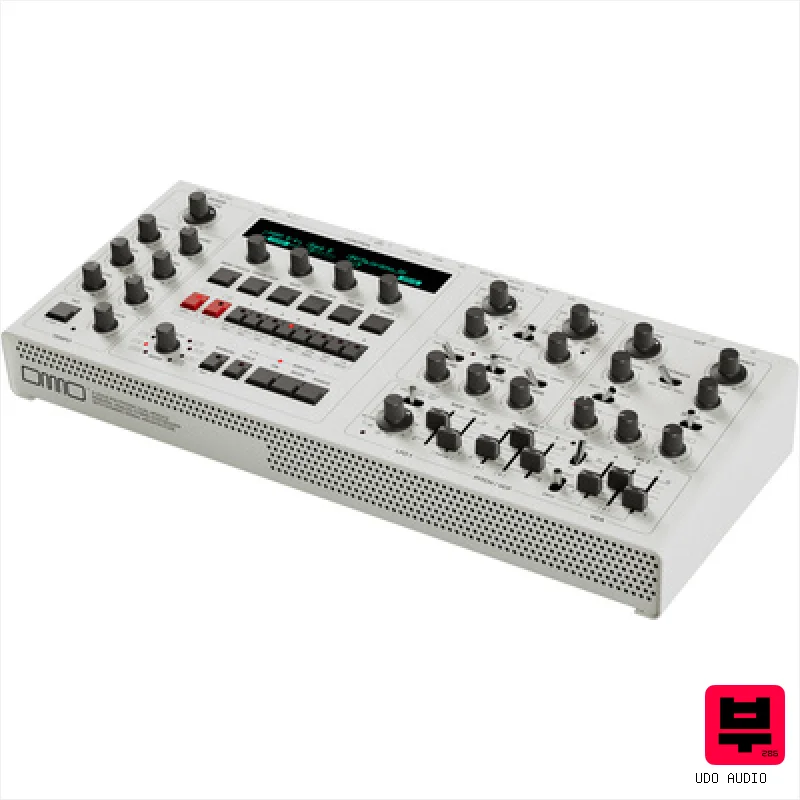
UDO Audio DMNO BlackUDO Audio · 2 finishes42Stable$3,327€2,969$3,327€2,969Check ↗
- 157
UDO Audio Super 8 WhiteUDO Audio42Stable$3,809€3,399$3,809€3,399Check ↗
- 158
Midiplus X4 MaxMidiplus41Stable$481€429$481€429Check ↗
- 159
Midiplus X6 MaxMidiplus41Stable$559€499$559€499Check ↗
- 160
Arturia AstroLab 37Arturia41↓ 1.5%$716€639$716€639Check ↗
- 161
Clavia Nord Lead A1Clavia Nord · 2 finishes41Stable$1,680€1,499$1,680€1,499Check ↗
- 162
Pittsburgh Modular Voltage Lab 2Pittsburgh Modular41↓ 11.8%$2,075€1,852$2,075€1,852Check ↗
- 163
LOVE Synthesizers First Love WhiteLOVE Synthesizers · 2 finishes40Stable$667€595$667€595Check ↗
- 164
Sequential FourmSequential40Stable$895€799$895€799Check ↗
- 165
SOMA EnigmaSOMA40Stable$929€829$929€829Check ↗
- 166
Moog Grandmother 32-Key Semi-Modular Analog SynthesizerGrandmother Case Set · Moog40↓ 4.8%$1,344€1,199$1,344€1,199Check ↗
- 167
Expressive E Osmose 61Expressive E40↓ 7.0%$2,050€1,829$2,050€1,829Check ↗
- 168
Korg MicroKORG 2 37-Key Synthesizer/VocoderMicrokorg Case Bundle · Korg39Stable$626€559$626€559Check ↗
- 169
Moog Matriarch DarkMoog39Stable$2,240€1,999$2,240€1,999Check ↗
- 170
ASM Leviasynth KeyboardASM39↓ 5.9%$3,057€2,728$3,057€2,728Check ↗
- 171
Moog Minimoog Bob Moog Tribute Ed.Moog39Stable$5,378€4,799$5,378€4,799Check ↗
- 172
PWM Malevolent 32-Key Semi-Modular Analog SynthesizerMalevolent · PWM38↓ 4.4%$492€439$492€439Check ↗
- 173
AKAI Professional MPC Key 37AKAI Professional38↓ 2.6%$839€749$839€749Check ↗
- 174
Expressive E Osmose 49-Key 24-Voice Polyphonic SynthesizerOsmose Bag Bundle · Expressive E38↓ 2.8%$1,991€1,777$1,991€1,777Check ↗
- 175
Clavia Nord Wave 2Clavia Nord38↓ 3.5%$2,688€2,399$2,688€2,399Check ↗
- 176
Novation MiniNova 37-Key 18-Voice SynthesizerMiniNova Case Set · Novation36↑ 3.8%$615€549$615€549Check ↗
- 177
Pittsburgh Modular Lifeforms SV-2Pittsburgh Modular36Stable$1,792€1,599$1,792€1,599Check ↗
- 178
Sequential Prophet-6 49-Key 6-Voice Polyphonic SynthesizerProphet 6 Case Set · Sequential36↑ 11.1%$4,369€3,899$4,369€3,899Check ↗
- 179
Behringer JN-80 49-Key 8-Voice Polyphonic Analog SynthesizerJN-80 · Behringer · 2 finishes35Stable$626€559$626€559Check ↗
- 180
Manikin-Electronic Memotron M2K BlackManikin-Electronic · 2 finishes35Stable$1,781€1,589$1,781€1,589Check ↗
- 181
cyma forma ALTcyma forma34Stable$1,433€1,279$1,433€1,279Check ↗
- 182
Haken Audio Slim Continuum 21s8xHaken Audio34Stable$2,184€1,949$2,184€1,949Check ↗
- 183
Frap Tools MagnoliaFrap Tools34Stable$4,705€4,199$4,705€4,199Check ↗
- 184
Novation Bass Station II 25-Key Monophonic SynthesizerBass Station II Bag Bundle · Novation33↑ 9.8%$503€449$503€449Check ↗
- 185
Behringer OdysseyOdyssey Bag Bundle · Behringer33Stable$570€509$570€509Check ↗
- 186
Behringer DeepMind 12 Polyphonic Analog SynthDeepMind 12 Case Set · Behringer33Stable$895€799$895€799Check ↗
- 187
SOMA Enner Night FrogSOMA33↑ 21.4%$1,086€969$1,086€969Check ↗
- 188
SOMA Terra Organic DarkSOMA33↑ 20.7%$2,157€1,925$2,157€1,925Check ↗
- 189
Behringer Wave 8-Voice 49-Key Hybrid SynthesizerWave Case Bundle · Behringer31↓ 10.1%$774€691$774€691Check ↗
- 190
Waldorf STVCWaldorf31↑ 10.2%$925€825$925€825Check ↗
- 191
Behringer Poly D 4-Voice Polyphonic SynthesizerPoly D Bag Bundle · Behringer30↓ 10.0%$604€539$604€539Check ↗
- 192
Arturia AstroLab Stand SetArturia30↓ 10.0%$1,512€1,349$1,512€1,349Check ↗
- 193
Arturia AstroLab Wooden Legs SetArturia30↓ 9.8%$1,646€1,469$1,646€1,469Check ↗
- 194
Roland AX-Edge 49-Key Keytar SynthesizerAX-Edge White Bag Bundle · Roland29↓ 0.9%$1,176€1,049$1,176€1,049Check ↗
- 195
Roland AX-Edge 49-Key Keytar SynthesizerAX-Edge Black Bag Bundle · Roland29Stable$1,227€1,095$1,227€1,095Check ↗
- 196
Polyend SynthPolyend27↑ 57.6%$846€755$846€755Check ↗
- 197
Behringer DeepMind 12 Bag/Stand BundleBehringer25Stable$777€693$777€693Check ↗
- 198
Korg Minilogue XD Case BundleKorg25Stable$817€729$817€729Check ↗
- 199
Behringer DeepMind 12 Gator Case BundleBehringer25↓ 0.9%$894€798$894€798Check ↗
- 200
Yamaha Reface YC Decksaver SetYamaha24Stable$444€396$444€396Check ↗
- 201
Yamaha Reface CP Decksaver SetYamaha24Stable$453€404$453€404Check ↗
- 202
Yamaha Reface CS Decksaver SetYamaha24↑ 1.2%$464€414$464€414Check ↗
- 203
Arturia AstroLab 37 Case BundleArturia24↓ 1.3%$884€789$884€789Check ↗
- 204
Expressive E Osmose 61 Performer BundleExpressive E24↓ 5.1%$2,094€1,869$2,094€1,869Check ↗
- 205
Moog Geddy Lee Minimoog Case BundleMoog24Stable$6,264€5,590$6,264€5,590Check ↗
- 206
AKAI Professional MPC Key 37 Case BundleAKAI Professional23↓ 2.9%$1,022€912$1,022€912Check ↗
- 207
Expressive E Osmose Performer BundleExpressive E22Stable$1,792€1,599$1,792€1,599Check ↗
- 208
Sequential Prophet 5 Headphone BundleSequential22↑ 7.0%$4,313€3,849$4,313€3,849Check ↗
General Synthesizers by the numbers
Measured across all 241 models we track, not a sample.
Median $839 — half of all general synthesizers here cost less.
median of 182 models · 1.12 kg–15 kg
most common · 38 models
median of 21 models · 25–88
How to choose the best general synthesizers
Playability
A shallow action and comfortable neck profile make a huge difference when you're first learning. You don't want to fight the instrument just to get a sound; it'll kill your motivation. Keys that feel like a piano are generally a good starting point.
Sound Architecture Complexity
Too many menus and layers can be paralyzing. We're looking for synths that offer a clear signal path, with accessible controls, ideally with a good selection of presets to get you started.
Preset Quality & Variety
A killer preset library isn't everything, but it's a fantastic learning tool. Being able to hear what's possible can spark ideas and help you understand how different parameters interact. A good range of sounds - pads, leads, basses - is vital.
Connectivity & Expandability
Even as a beginner, thinking about future use is smart. MIDI in/out is essential for syncing with other gear, and audio outputs (at least stereo) are a must for recording or gigging. USB MIDI is practically a given these days.
Value for Money
Let's be honest, synths can be expensive. We're looking for instruments that offer a good balance of features, sound quality, and build quality for the price - avoiding anything that feels flimsy or compromises too much.
Buying guide
So, you're diving into the synth world? Awesome. It's easy to get overwhelmed - there are a million sounds, a million knobs, and a million different ways to make noise. This isn't about finding the 'best' sounding synth, it's about finding the best one for learning - something playable, intuitive, and inspiring for a beginner, without breaking the bank or requiring a PhD in oscillators.
Don't get seduced by the 'infinite possibilities' - those often come with a steep learning curve. A simpler synth you can actually play and understand will get you further than a complex beast you abandon after a week. Used gear is your friend - you can often find excellent deals on instruments that have been gently used.
Pay attention to key action - if it feels stiff or unresponsive, move on.
How the AudioFu Index works
Five measured signals and nothing else — no stars from strangers, no “tested by experts” we didn’t do. The weights are fixed and public. We don’t play these instruments; we measure the market around them.
This chart covers 242 general synthesizers from the Thomann catalogue. Before you buy, read hands-on reviews and, where you can, play it. Full methodology.
AudioFu earns a commission when you buy through our Thomann links. It never changes the order — the index does.
- Demand40%
How many of this exact model are for sale on Reverb right now — what musicians actually buy and resell.
- Lineup20%
How many finishes Thomann stocks — makers expand the models that sell.
- Price15%
Where the price has moved since we started tracking in August.
- Specs15%
How completely the maker documents it.
- Maker10%
How deep the brand’s range is in this category.
Questions
What's the difference between subtractive, FM, and wavetable synthesis?
Subtractive is the classic - oscillators generate sound, filters shape it. FM uses oscillators to modulate each other, creating complex, often metallic tones. Wavetable synthesis cycles through different waveforms, offering evolving sounds. Start with subtractive; it's the most intuitive.
Do I need a MIDI keyboard?
While some synths have built-in keys, a separate MIDI keyboard gives you more control and flexibility. It's the standard way to play synths, and opens up a world of possibilities for connecting to other gear.
What about virtual synths (VSTs)?
VSTs are software synths that run on your computer. They're great, but a hardware synth offers a tactile experience and can be inspiring in a way software sometimes isn't. Consider both - hardware for the feel, software for the range.
I'm on a tight budget. What can I expect?
Budget synths will likely cut corners on key action, build quality, and sometimes the overall sound. Don't expect boutique warmth or pristine clarity. Focus on finding something playable and inspiring, even if it's a little rough around the edges.
How important are presets?
Presets are a crutch and a learning tool. Use them to explore sounds and understand how parameters affect the final result, but don't rely on them entirely. The real fun comes from creating your own sounds.