
Best Envelope Modules Under $200 2026
Alright, so you're diving into modular and need some envelopes, but your budget's looking lean? Totally get it. Envelopes are the heartbeat of a patch - they control the dynamics, the attack, the decay, the overall feel. We're gonna look at some solid options under $200 that won't leave you wanting, even if they don't have every bell and whistle.
Last updated: September 28, 2026

Tiptop Audio Z4000 NS
- • Dual-range pots offer incredible precision at all speeds
- • Attack slope switch expands sound design possibilities significantly
- • Flexible output scaling and inversion adds creative modulation options
- • Compact 8HP footprint makes it ideal for dense modular setups
- • Power draw is relatively high for a single module
- • Limited CV outputs restrict complex envelope shaping
- • The initial learning curve can be steep for ADSR novices

Erica Synths Black EG2
- • Excellent ADSR shaping with a noticeable, warm analog character.
- • Loop mode offers creative rhythmic possibilities beyond standard envelopes.
- • Compact 8HP footprint maximizes space in dense modular racks.
- • Robust build quality; Erica Synths consistently delivers durable modules.
- • Limited CV output flexibility compared to more complex envelope modules.
- • Sustain level can be tricky to dial in precisely for certain sounds.
- • Gate length adjustment lacks fine-grained resolution; can feel a bit abrupt.
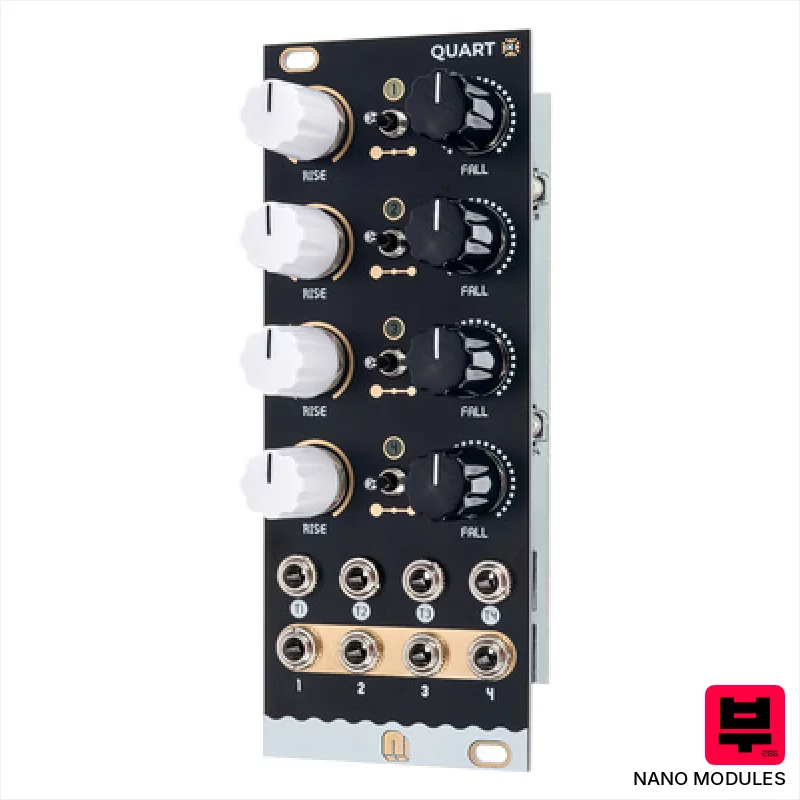
NANO Modules QUART
- • Four channels offer incredible routing flexibility for complex modulation.
- • The selectable time ranges provide a surprising depth of tonal shaping.
- • Dual functionality as both envelope generator and LFO is exceptionally useful.
- • Compact 10HP footprint makes it ideal for dense modular setups.
- • The 15mm depth might create clearance issues in shallower racks.
- • Limited attack/release shaping beyond simple time adjustment.
- • The stepped controls can feel less precise for subtle modulation.
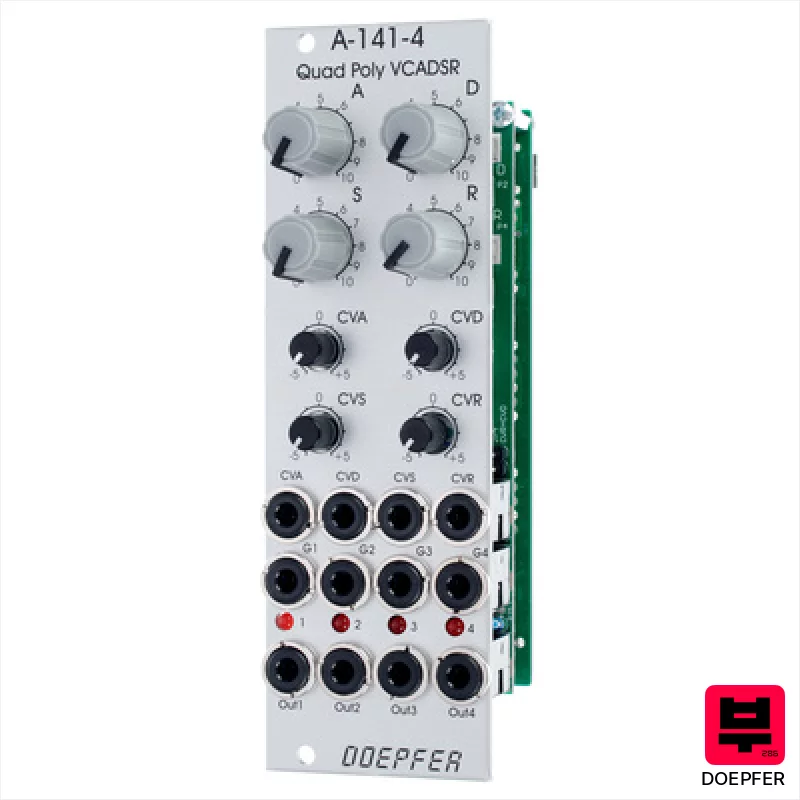
Doepfer A-141-4
- • Excellent polyphonic envelope shaping capabilities for complex textures
- • Doepfer's signature robust build quality; feels solid and dependable
- • CV control over all parameters offers incredible modulation flexibility
- • Exponential waveform provides unique, organic envelope characteristics
- • 8HP footprint can be restrictive in smaller Eurorack cases
- • Limited range of envelope shapes compared to more modern modules
- • 60mA/-70mA power draw can strain smaller power supplies
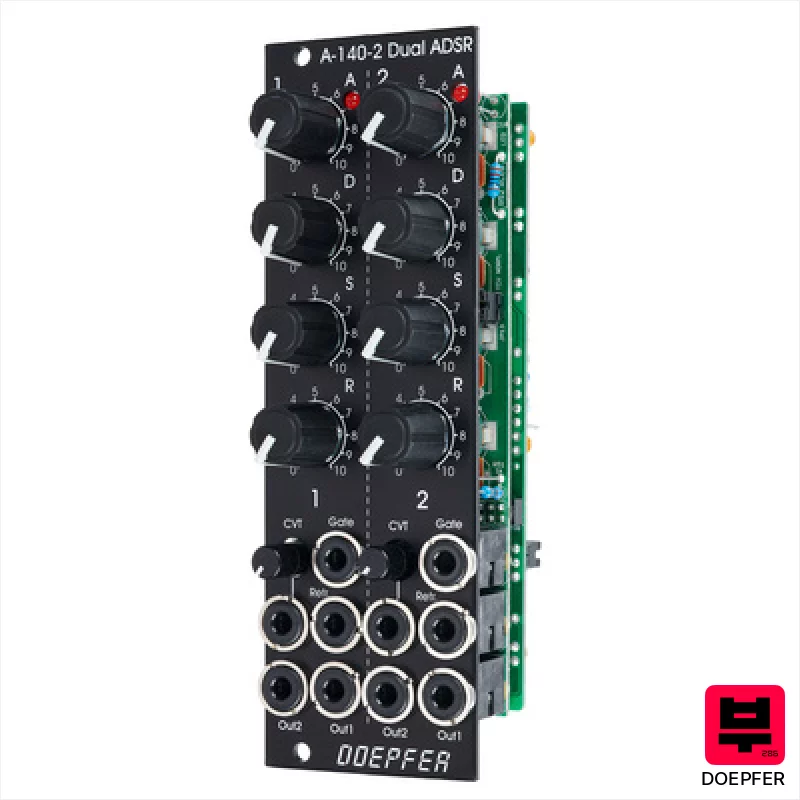
Doepfer A-140-2 VE
- • Solid, reliable Doepfer build quality, a hallmark of Eurorack design
- • Vintage Edition black panel adds a classic, understated aesthetic
- • Dual envelopes offer flexibility for complex modulation sequences
- • Attenuators on CV inputs allow precise parameter control and shaping
- • Limited modulation destinations compared to more modern envelope modules
- • 40mm depth might be restrictive in shallow Eurorack cases
- • Voltage range of 0-10V may require level shifting in some systems
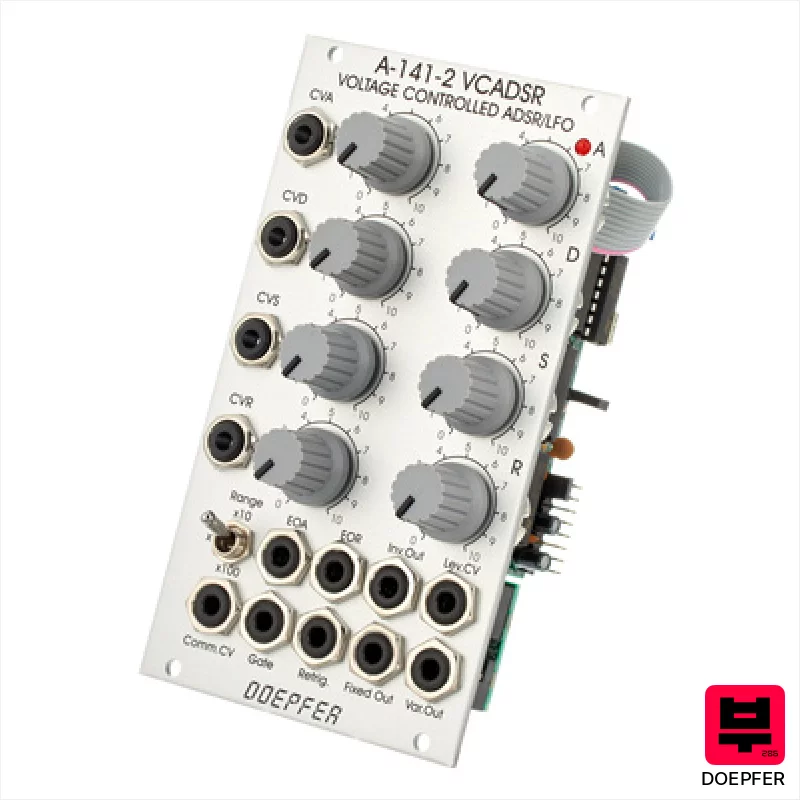
Doepfer A-141-2
- • Classic Doepfer build quality: robust, reliable, and durable.
- • Versatile ADSR shaping for percussive to evolving sounds.
- • Excellent CV response for precise modulation control.
- • Compact 14HP footprint ideal for space-constrained modular systems.
- • Limited modulation options compared to more modern envelope modules.
- • Attack times can feel slightly sluggish for very fast transients.
- • Basic functionality; lacks advanced features like looping or curves.

4ms EnvVCA
- • Excellent AD envelope shaping with the fader provides nuanced control.
- • The built-in VCA delivers a clean, punchy signal with good headroom.
- • Cycle button offers a unique, self-oscillating modulation possibility.
- • Compact 8HP footprint makes it ideal for space-constrained modular systems.
- • Limited time range options might restrict very slow or very fast envelope needs.
- • Envelope level output is a bit low, requiring amplification in some setups.
- • Lack of attenuators on the CV inputs can make fine-tuning tricky.
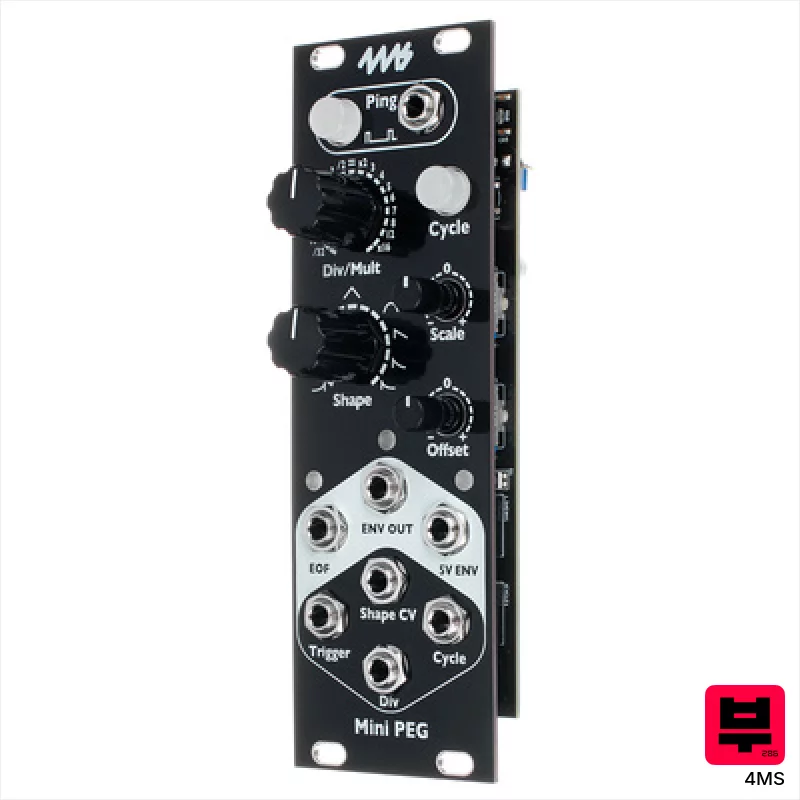
4ms Mini PEG
- • Unique ping-based envelope generation offers rhythmic possibilities.
- • Shape CV input provides nuanced control over envelope character.
- • Compact 8HP footprint maximizes space in tight Eurorack setups.
- • Excellent dynamic range with +/- 9.4V output capability.
- • Limited overall shape options compared to dedicated envelope modules.
- • Ping-based timing can be less predictable for precise envelope durations.
- • The bipolar offset can be a little finicky to dial in accurately.
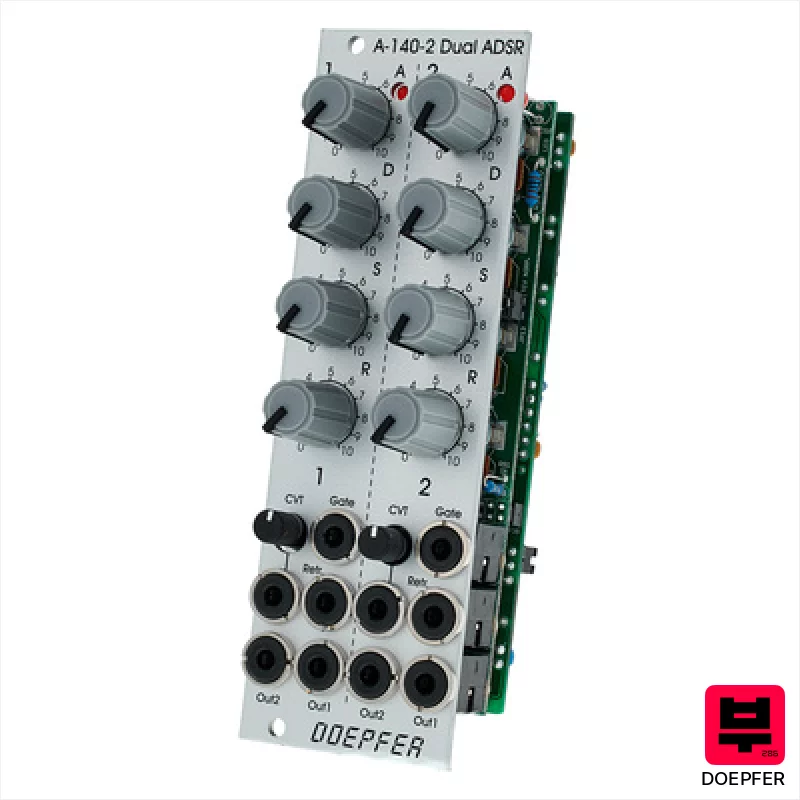
Doepfer A-140-2
- • Rock-solid Doepfer build quality ensures long-term reliability
- • Flexible CV input with attenuator offers nuanced modulation
- • Fast attack times enable percussive envelope shaping
- • Compact 8HP footprint maximizes space in Eurorack systems
- • Limited modulation destinations compared to more complex envelopes
- • Voltage range of 0-10V might require level shifting in some systems
- • Basic functionality; lacks advanced features like looping or exponential response
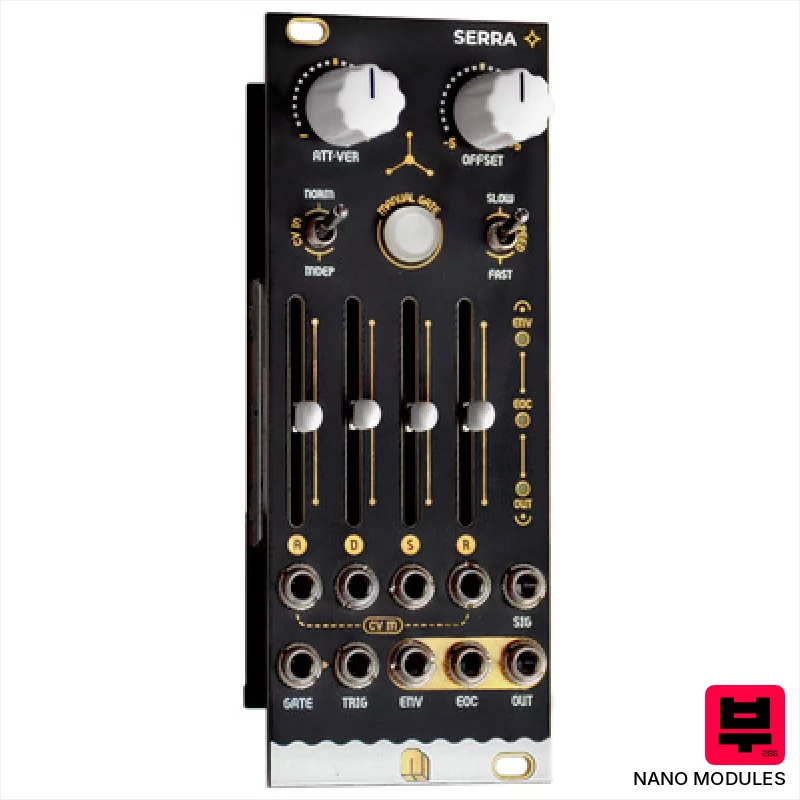
NANO Modules SERRA
- • Excellent fader-based CV control offers precise envelope shaping.
- • The attenuator/offset provides significant signal manipulation flexibility.
- • Slow/Fast switch expands envelope possibilities beyond standard ADSR.
- • Compact size (10HP) makes it ideal for space-constrained modular setups.
- • The bipolar attenuator's range, while useful, can be limiting for extreme modulation.
- • The manual gate button's illumination is a minor aesthetic detail, not a core function.
- • While versatile, it lacks looping or more complex envelope shaping options.
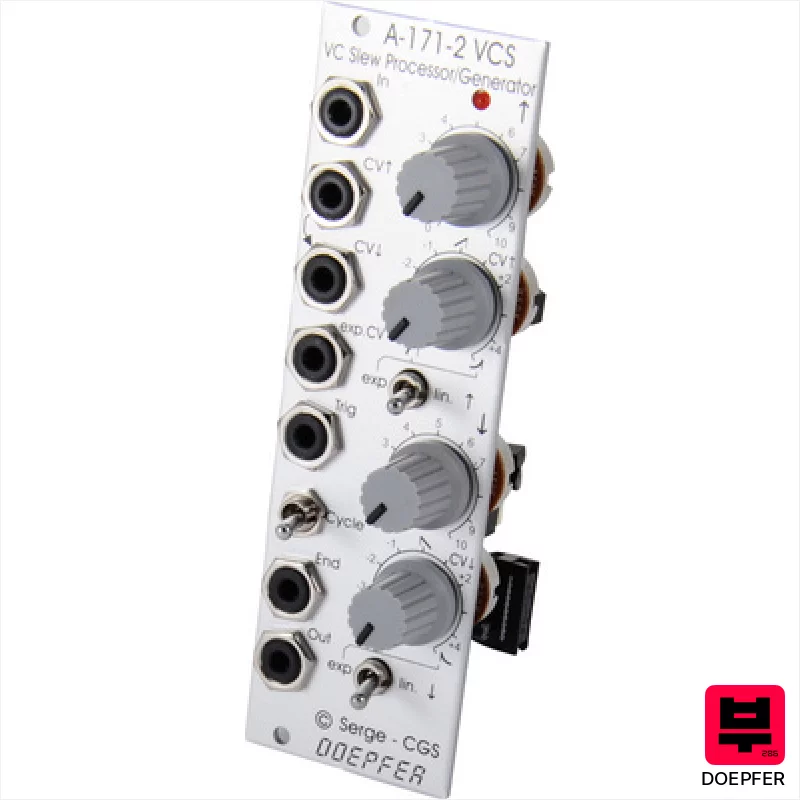
Doepfer A-171-2
- • Robust, all-metal construction ensures long-term reliability.
- • The incremental curve switch provides genuinely usable tonal shaping.
- • Excellent slew-up control allows for subtle to aggressive transitions.
- • Compact 8HP footprint makes it ideal for dense modular setups.
- • Limited functionality compared to more complex envelope modules.
- • The linear curve can sound quite abrupt without careful adjustment.
- • The power draw, while not excessive, can add up in larger systems.
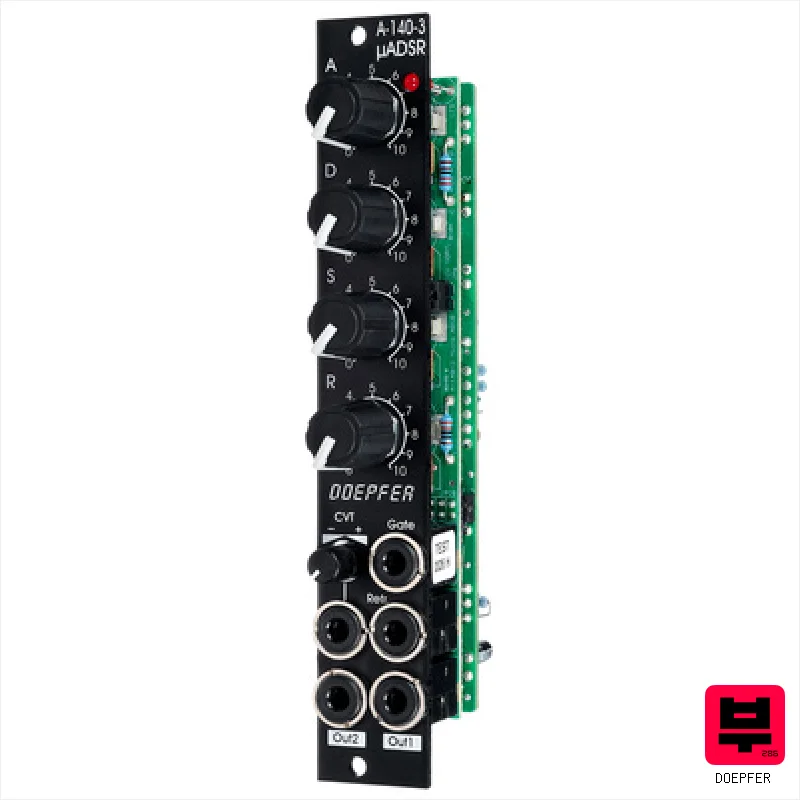
Doepfer A-140-3 VE
- • Compact 4 HP size fits tight rack spaces easily
- • Bipolar CV input lets you control multiple parameters
- • Selectable jumper modes for Attack, Decay, or combined
- • Micro ADSR range covers from 1 ms to 30 seconds
- • Only one envelope stage limits complex shaping
- • No built-in VCA or LFO for standalone use
- • Black panel is standard but lacks color options
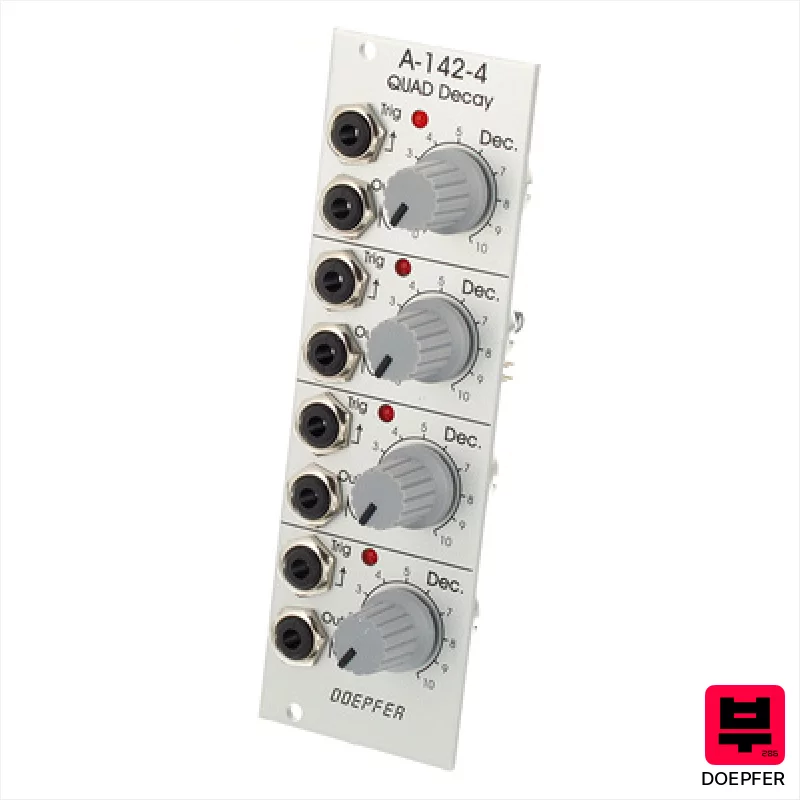
Doepfer A-142-4 Quad decay
- • Reliable Doepfer build quality ensures long-term stability.
- • Four independent decay envelopes offer flexible routing options.
- • Manual decay time control provides precise, repeatable shaping.
- • Normalized triggering simplifies sequencing and complex modulation.
- • 8HP footprint can be restrictive in smaller racks.
- • Limited attack and sustain stages restrict tonal versatility.
- • Lack of attenuators on CV outputs limits modulation control.
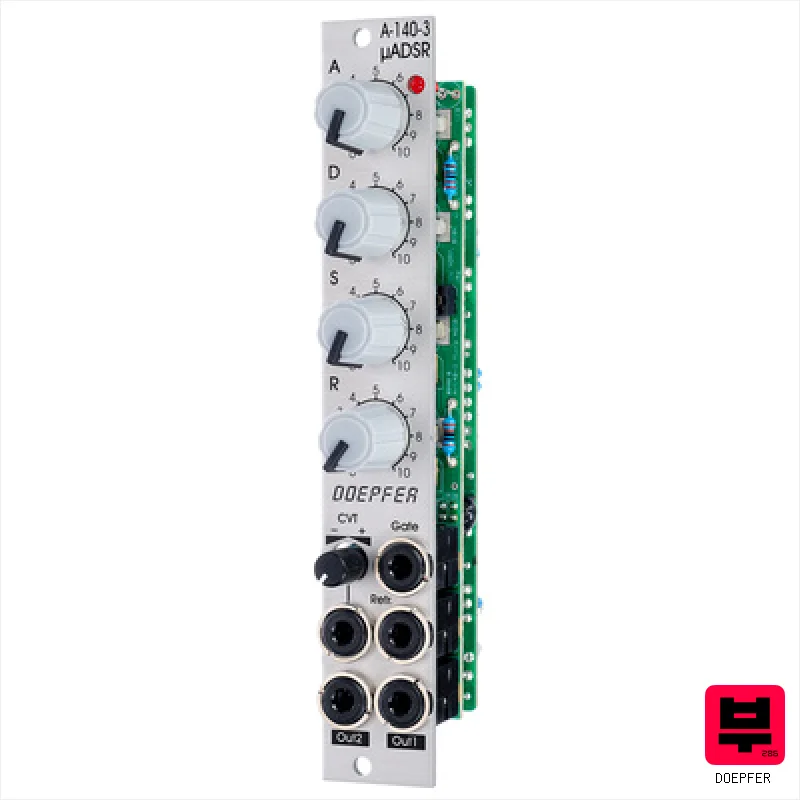
Doepfer A-140-3
- • Bipolar attenuator lets you shape multiple parameters at once
- • Retrigger input enables complex rhythmic envelope programming
- • Compact 40 mm depth saves valuable rack space
- • Wide time range covers ultra-fast to very slow attacks
- • Only one output channel limits routing options
- • No dedicated CV output for controlling external gear
- • Single stage design offers limited modulation depth

Doepfer A-140 Vintage Edition
- • Classic Doepfer build quality: robust metal chassis and reliable components
- • 3-step switch provides surprisingly versatile envelope shaping options
- • Compact 8HP footprint ideal for densely populated modular racks
- • Vintage Edition front panel offers a classic, understated aesthetic
- • Limited attack/decay time range compared to modern envelope generators
- • Power draw, while modest, can add up in larger systems
- • The stepped time control isn't as precise as a continuously variable pot
Every envelope modules that matches
24 models match this page. The 15 above are covered in detail; the rest are listed here with their published specifications.
| # | Model | Specifications | Price |
|---|---|---|---|
| 16 | Doepfer A-142-5 1U | not published | $101 |
| 17 | Doepfer A-142-1 | not published | $97 |
| 18 | Rides In The Storm FEG | not published | $86 |
| 19 | Doepfer A-142-6 1U | not published | $79 |
| 20 | Doepfer A-140 | not published | $74 |
| 21 | Behringer Abacus | not published | $56 |
| 22 | Behringer 140 Dual Envelope/LFO | not published | $44 |
| 23 | Behringer Dual Envelope Generator 1033 | not published | $43 |
| 24 | Behringer 911 Envelope Generator | not published | $38 |
Envelope Modules by the numbers
Measured across all 24 models in this category, so «wide», «short» or «expensive» mean something you can check.
How to Choose the Best Envelope Modules
ADSR Range
A wider range lets you dial in everything from subtle tremolo to aggressive, percussive sounds. Limited range can feel restrictive, especially when sculpting complex textures.
Attack Time
How quickly the envelope reaches its peak level. Fast attacks are great for snappy percussion, slow attacks for pads and evolving textures. Some cheaper modules can feel 'digital' with their attack - lacking that organic feel.
Release Time
Controls how long the sound fades after the gate signal stops. Too short and things sound abrupt; too long and you get muddy trails. Watch out for releases that 'step' instead of smoothly decaying.
CV Smoothing
Some modules have a gritty, stepped CV output, which can introduce unwanted noise or artifacts, especially when modulating other modules. Smooth CV output is a must for clean, predictable patching.
Build Quality
Plastic enclosures and flimsy pots are a sign of corners cut. A module that feels solid and reliable will last longer and give you a better experience - especially if you're gigging.
Buying Guide
At this price point, you're making trade-offs. Don't expect fully logarithmic controls or pristine, noise-free operation. Look for modules with a good ADSR range and reasonably smooth CV. If you can swing it, a module with a metal enclosure and better pots will be a more reliable investment, even if it's just slightly above your budget. Ultimately, it's about finding something that inspires you to make sounds.
How This List Is Built
We don't play these instruments — we're a catalog, not a review desk, and we'd rather say so than pretend otherwise. This page covers 24 envelope modules from the Thomann catalogue, which is the largest single source of specification data in this category: 15 in detail, the rest listed with their specifications.
Position is computed, not curated. We parse the manufacturer's own description into actual values — nut width, scale, fret count, fingerboard radius, size, alloy — and rank on them: how many specifications a model has published, how many of them are measurable numbers, and how precisely it meets this page's criterion. A product image adds a little. Price is not a ranking signal: it tells you nothing about whether a neck fits your hand. The same inputs always produce the same order, so nothing here is shuffled to look fresh.
What this list is good for: narrowing a category down to a shortlist by spec and budget. What it isn't: a substitute for hearing an instrument. Before you buy, read hands-on reviews and, where you can, play it. Full methodology.

