
Best Envelope Modules Under $300 2026
So, you're diving into modular and need a solid envelope generator - smart move. They're the backbone of so much movement and character in your patches. Finding a good one that doesn't drain your bank account can be tricky, but there are some serious contenders under $300. Let's break down what you should be looking for and which modules deliver the most bang for your buck.
Last updated: September 28, 2026
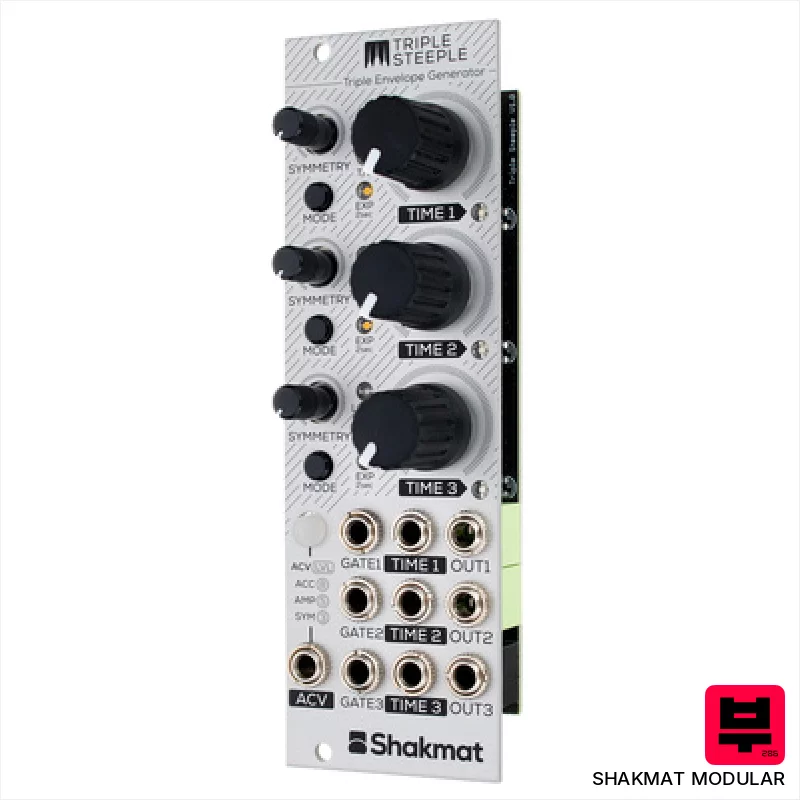
Shakmat Modular Triple Steeple
- • Excellent time/symmetry control offers nuanced envelope shaping.
- • Five selectable modes provide impressive versatility for diverse sound design.
- • Shakmat's robust build quality feels solid and dependable for modular use.
- • Adjustable output voltage expands the module's utility for various applications.
- • 8HP width can be restrictive in smaller Eurorack cases.
- • Limited modulation destinations compared to some higher-end envelope modules.
- • The stepped controls can feel less precise for subtle adjustments.
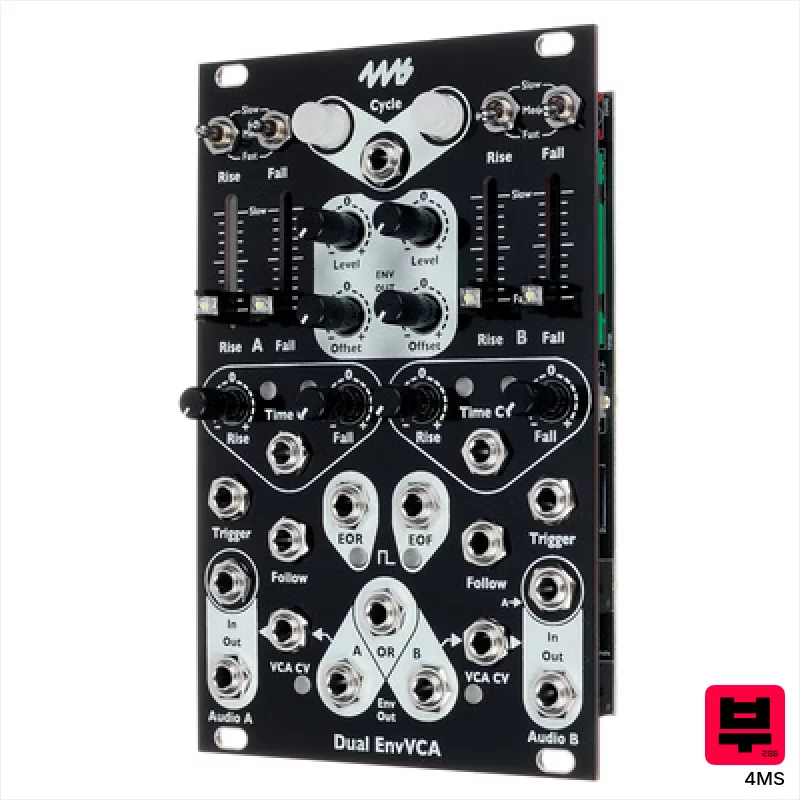
4ms Dual EnvVCA
- • Dual channels offer incredible flexibility for complex modulation.
- • Fader-based time control is intuitive and provides tactile precision.
- • OR logic output expands routing possibilities significantly.
- • Robust 4ms build quality ensures longevity and reliable performance.
- • Wide output voltage range (-10V to +10V) provides ample headroom.
- • End-of-rise/fall triggers enable precise sequencing and triggering.
- • Limited time range selection compared to more modern envelope modules.
- • Normalization, while convenient, can restrict certain patching options.
- • Power draw is a bit higher than some other modules in its class.
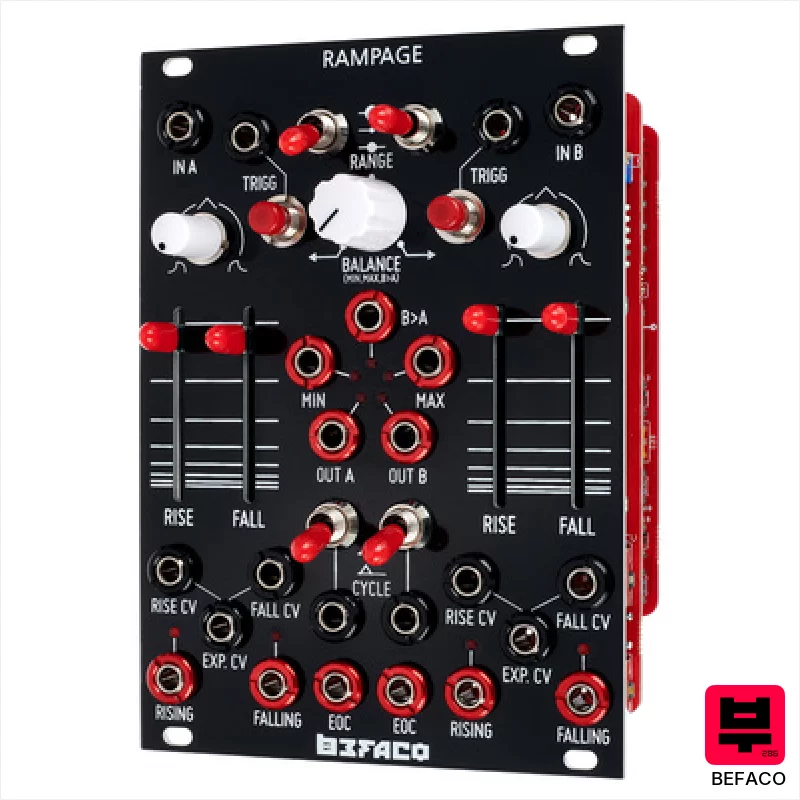
Befaco Rampage
- • Dual-channel design offers exceptional routing flexibility and creative possibilities.
- • Faders provide intuitive, real-time control over rise and fall times.
- • Logic section expands utility, generating complex gate signals for sequencing.
- • Robust build quality; Befaco's reputation for durable modules shines through.
- • 18HP footprint can be restrictive in smaller Eurorack cases.
- • The learning curve is steeper than simpler envelope modules; requires study.
- • Limited modulation destinations compared to more complex multi-function modules.
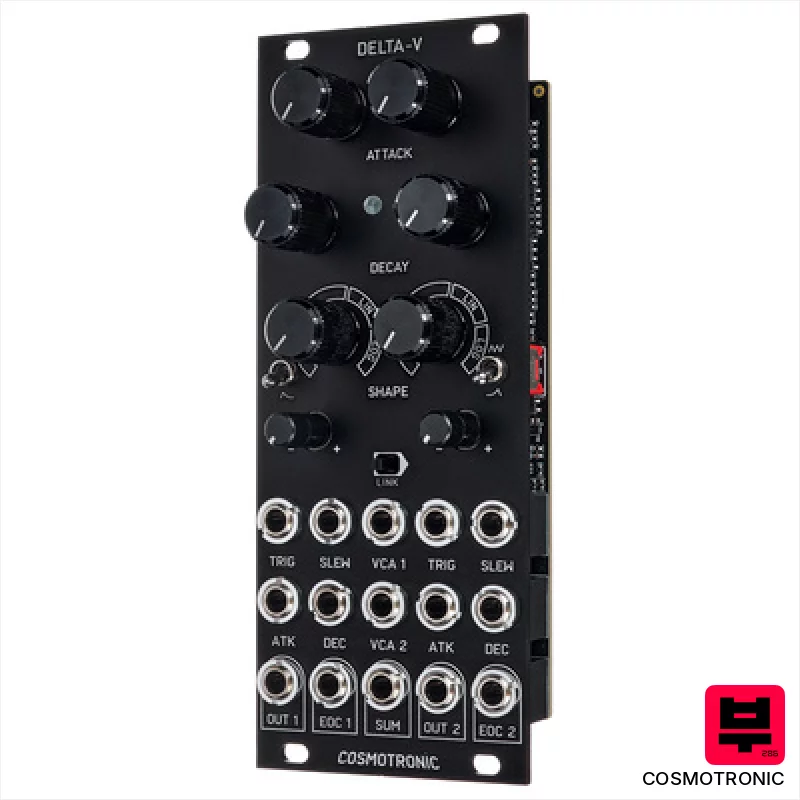
Cosmotronic Delta-V
- • Highly versatile function generator covering ADSR, LFO, and VCA functions
- • Excellent control over curve shaping; logarithmic mode is surprisingly musical
- • Compact 10HP footprint maximizes space in dense modular systems
- • Bipolar attenuator provides nuanced control over output signal level
- • 70mA current draw can be significant for power-constrained systems
- • Limited modulation destinations compared to more complex envelope modules
- • The small size might make precise potentiometer adjustments a little fiddly
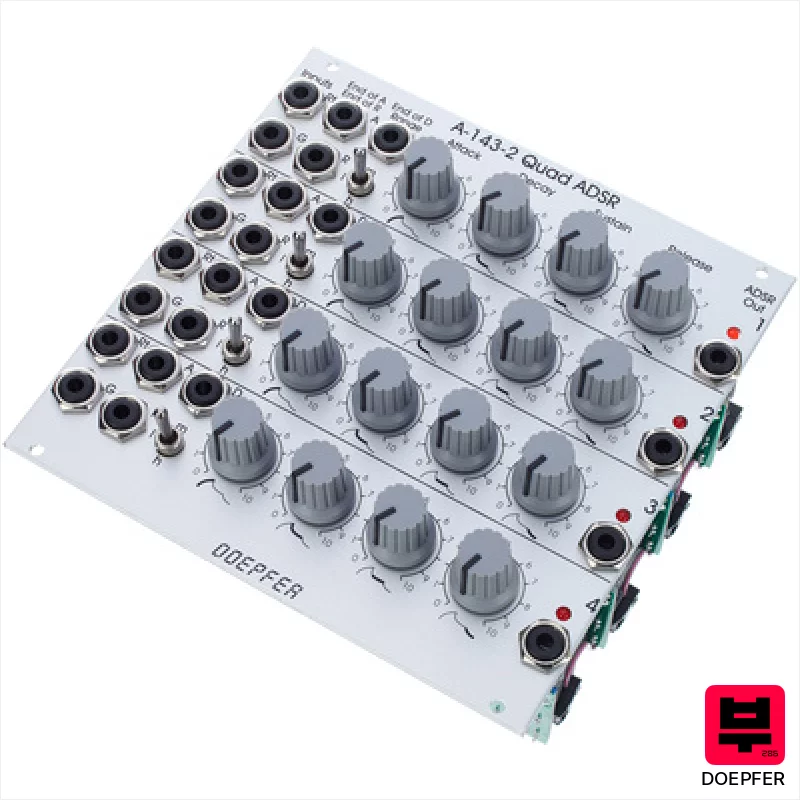
Doepfer A-143-2
- • Four independent envelopes offer immense patching flexibility.
- • Doepfer's robust construction ensures long-term reliability.
- • AD-LFO functionality expands creative sound design possibilities.
- • Classic Doepfer sound – punchy, responsive, and predictable.
- • 26HP is a significant space commitment in a modular system.
- • The original ADSR curve can feel a bit abrupt for some applications.
- • Limited modulation options beyond basic ADSR control.
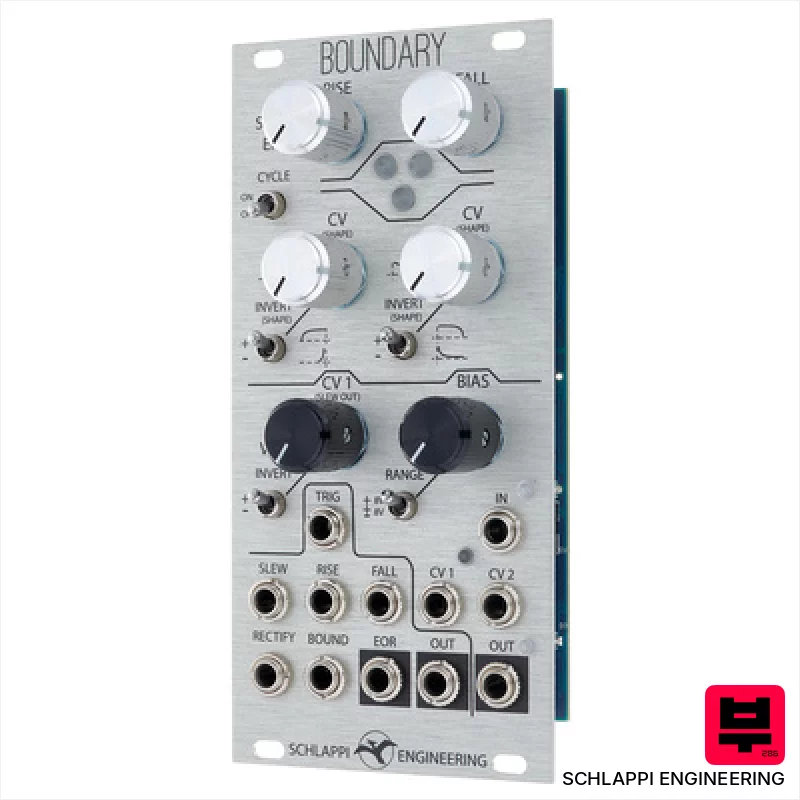
Schlappi Engineering Boundary
- • Remarkable flexibility for a module of its size, truly a Swiss Army knife.
- • Bound input creates unique, bouncing envelope shapes, adding sonic character.
- • Individually controllable attack and decay times offer precise envelope shaping.
- • The VCA section's bias control allows for nuanced amplitude modulation.
- • 12 TE width can be limiting in smaller Eurorack cases.
- • Steep learning curve given the module's complexity and multiple functions.
- • Limited number of CV outputs for a module with so many functions.

NANO Modules ARC
- • Incredibly versatile dual-functionality allows for complex modulation shaping.
- • Wide slew rate adjustment offers everything from subtle fades to aggressive clicks.
- • The logarithmic curve control adds unique and organic envelope shaping possibilities.
- • Logic outputs provide creative routing options for intricate modular patches.
- • 24HP footprint might be restrictive for smaller Eurorack cases.
- • Steep learning curve for users unfamiliar with envelope/LFO modulation concepts.
- • Limited waveform options compared to dedicated VCOs or LFOs.
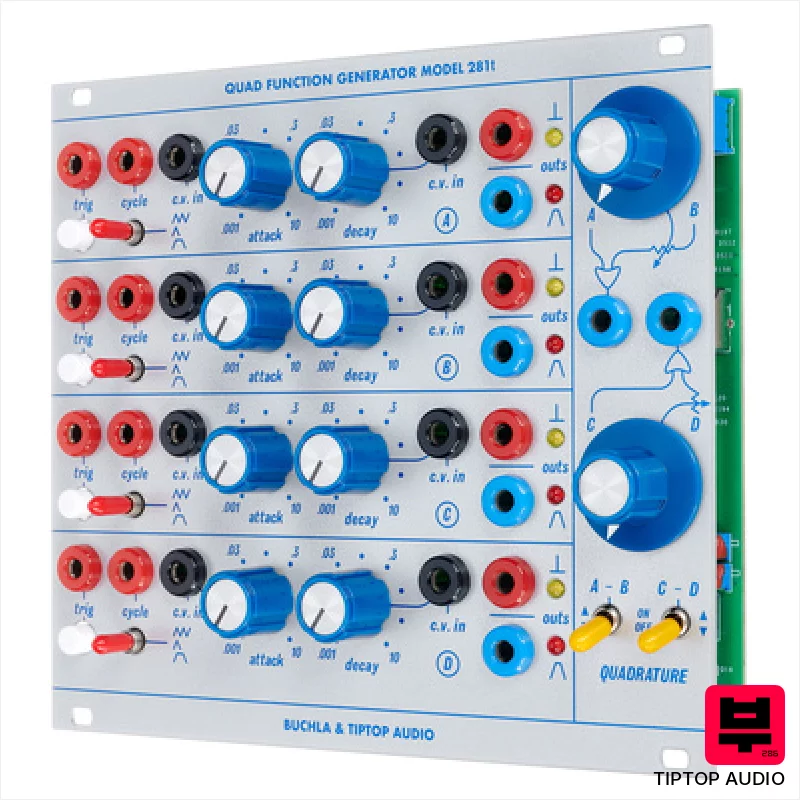
Tiptop Audio Model 281t
- • Robust aluminum chassis feels incredibly solid and durable.
- • Quadrature switching offers versatile waveforms for complex modulation.
- • Cycle gate input expands rhythmic possibilities significantly.
- • Individual ADSR control per channel provides precise envelope shaping.
- • 28 TE width can be restrictive in smaller Eurorack cases.
- • Limited modulation destinations compared to some larger function generators.
- • The cyclic mode can be a bit unpredictable without careful parameter adjustment.
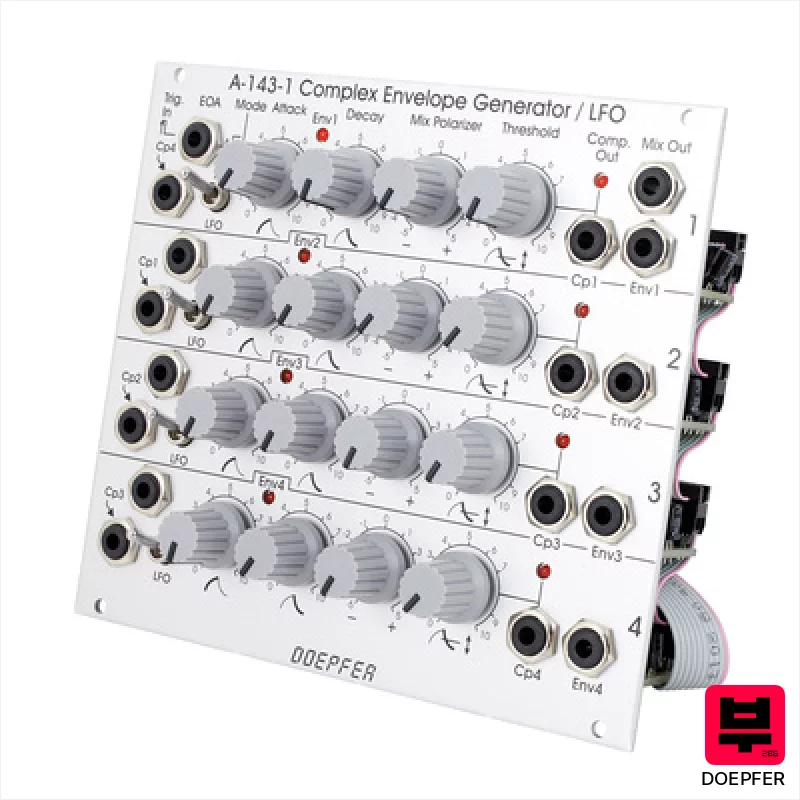
Doepfer A-143-1
- • Excellent timing resolution for complex, evolving envelopes
- • Four independent AD generators maximize patching flexibility
- • Robust Doepfer build quality ensures long-term reliability
- • Compact 28HP footprint maximizes rack space efficiency
- • Limited modulation input compared to more modern envelope modules
- • Steeper learning curve for intricate envelope shaping
- • Can feel a bit basic for users needing more advanced features

Vostok Instruments Fuji
- • Six channels offer impressive routing flexibility for complex modulation.
- • Attack/Decay controls provide precise envelope shaping capabilities.
- • Normalised trigger simplifies sequencing and cascading effects.
- • Compact 10HP footprint saves valuable space in tight racks.
- • Limited waveform options compared to more expensive function generators.
- • Bipolar LFO range (+/-8V) might be restrictive for some applications.
- • Plastic knobs feel slightly less premium than metal alternatives.
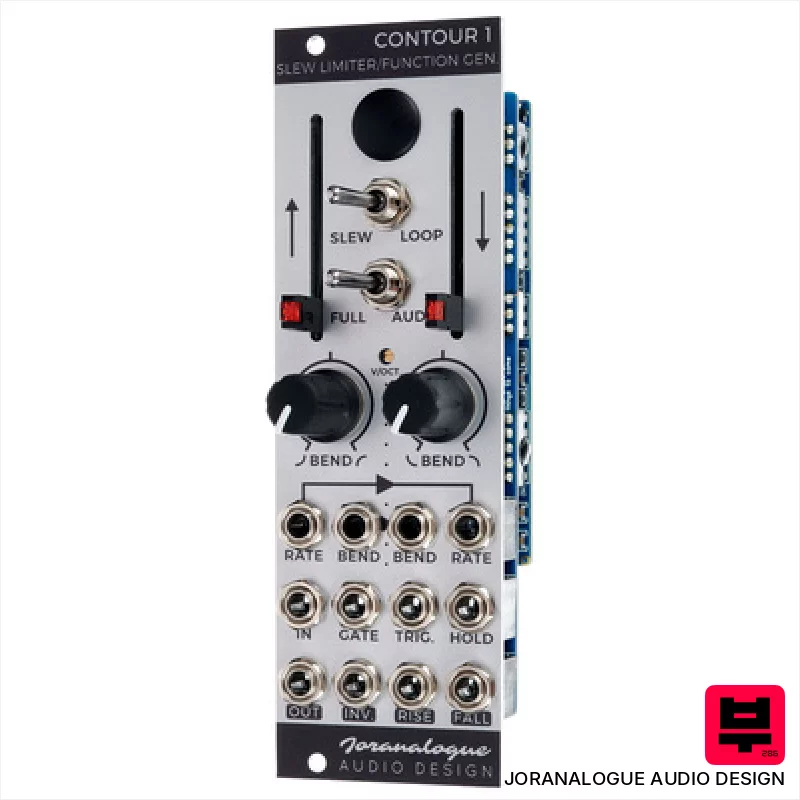
Joranalogue Audio Design Contour 1
- • Highly versatile module, functioning as multiple utilities
- • Joranalogue’s signature smooth, musical slew shaping
- • Excellent CV response for nuanced envelope sculpting
- • Compact 8HP footprint maximizes rack space efficiency
- • Limited modulation destinations compared to larger envelopes
- • 8HP can feel cramped for complex patching scenarios
- • The fader control may be less precise than rotary knobs
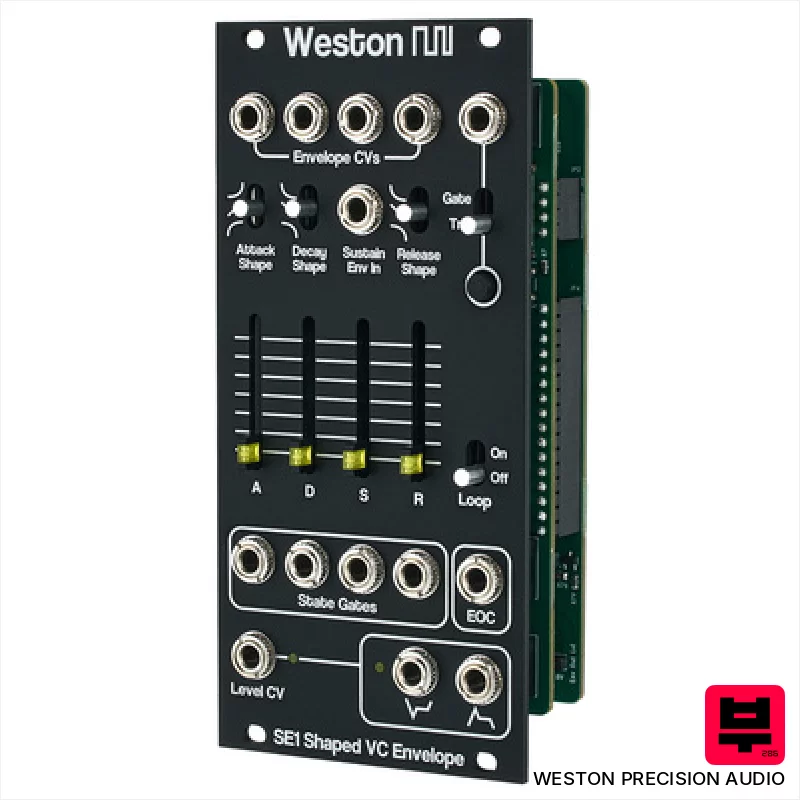
Weston Precision Audio SE1 Shaped VC Envelope
- • Exceptional shaping flexibility with independent exponential, linear, and logarithmic curves.
- • The dedicated VCA for sustain provides nuanced control over the envelope's output.
- • Multiple outputs (positive, inverted, EOC, gate) offer extensive patching possibilities.
- • Solid build quality; Weston’s known for reliable, robust analog circuitry.
- • 12HP footprint can be restrictive in smaller modular systems.
- • Limited sustain time range might not suit extremely long, evolving sounds.
- • The button-based trigger can feel less precise than a dedicated trigger input.
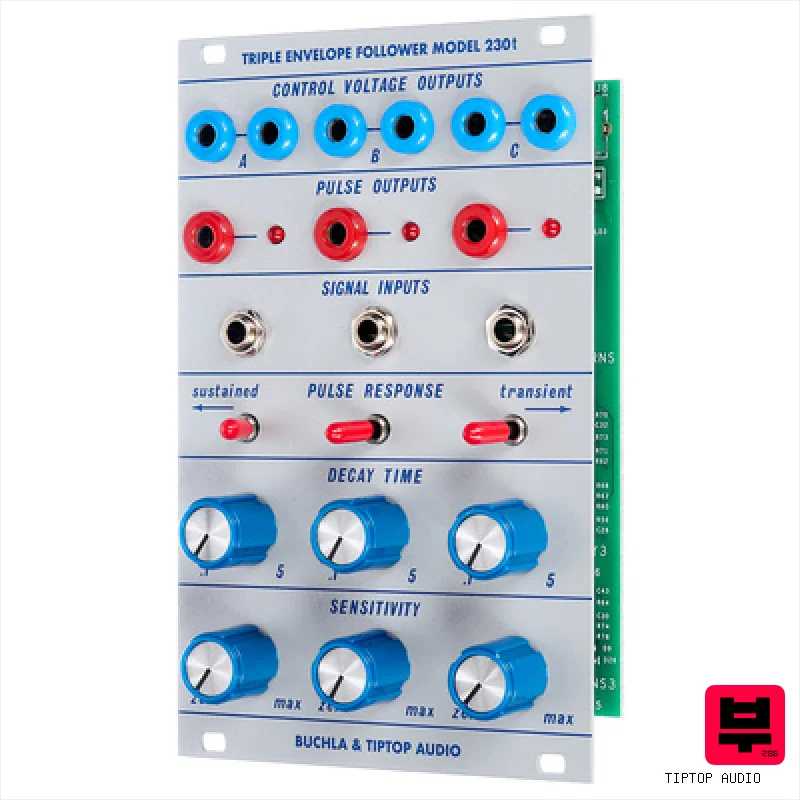
Tiptop Audio Buchla Model 230t
- • Three separate audio input channels for complex routing
- • Instant transient detection for precise attack control
- • Adjustable sensitivity allows fine-tuning to any signal
- • Decay time ranges from milliseconds to five seconds
- • Only two CV outputs per channel limits routing options
- • Compact 25 mm depth might struggle with crowded racks
- • No stated input impedance affects compatibility with some sources

cre8audio Function Junction
- • Pittsburgh Modular's design expertise shines through in the robust circuit design.
- • The ADSR's looping function offers unique rhythmic possibilities.
- • The dual LFOs provide versatile modulation options for complex sounds.
- • The mixer's three channels simplify routing and signal shaping.
- • 16HP is a bit tight for comfortable knob adjustments.
- • The analogue design inherently introduces some noise floor, audible in quiet passages.
- • LFO waveforms are limited to triangle and square – lacks more exotic options.
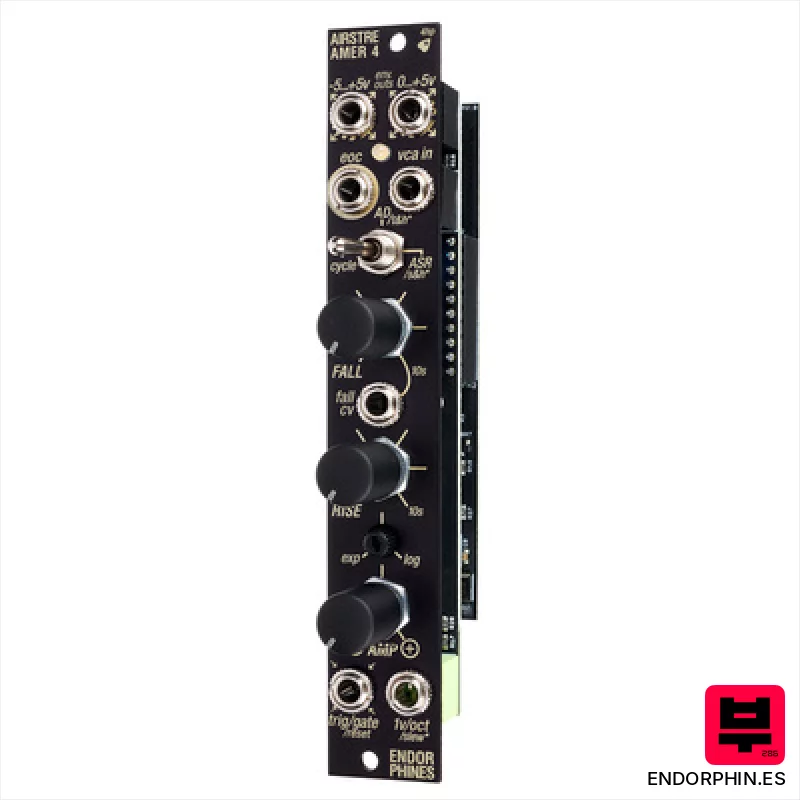
Endorphin.es Airstreamer 4 Black
- • Excellent response times for percussive envelopes.
- • The bipolar VCA CV input offers nuanced dynamic control.
- • Compact 4HP footprint maximizes modular space efficiency.
- • Robust metal enclosure feels premium and durable.
- • Limited modulation destinations compared to larger envelopes.
- • The logarithmic characteristic curve might be too subtle for some.
- • Power draw, while manageable, can be a factor in dense racks.
Every envelope modules that matches
41 models match this page. The 15 above are covered in detail; the rest are listed here with their published specifications.
| # | Model | Specifications | Price |
|---|---|---|---|
| 16 | Befaco VC ADSR | not published | $204 |
| 17 | Endorphin.es Airstreamer 4 Silver | not published | $204 |
| 18 | Tiptop Audio Z4000 NS | not published | $200 |
| 19 | Erica Synths Black EG2 | not published | $193 |
| 20 | NANO Modules QUART | not published | $182 |
| 21 | Doepfer A-141-4 | not published | $181 |
| 22 | Doepfer A-140-2 VE | not published | $181 |
| 23 | Doepfer A-141-2 | not published | $180 |
| 24 | 4ms EnvVCA | not published | $177 |
| 25 | 4ms Mini PEG | not published | $165 |
| 26 | Doepfer A-140-2 | not published | $159 |
| 27 | NANO Modules SERRA | not published | $154 |
| 28 | Doepfer A-171-2 | not published | $141 |
| 29 | Doepfer A-140-3 VE | not published | $124 |
| 30 | Doepfer A-142-4 Quad decay | not published | $120 |
| 31 | Doepfer A-140-3 | not published | $113 |
| 32 | Doepfer A-140 Vintage Edition | not published | $105 |
| 33 | Doepfer A-142-5 1U | not published | $101 |
| 34 | Doepfer A-142-1 | not published | $97 |
| 35 | Rides In The Storm FEG | not published | $86 |
| 36 | Doepfer A-142-6 1U | not published | $79 |
| 37 | Doepfer A-140 | not published | $74 |
| 38 | Behringer Abacus | not published | $56 |
| 39 | Behringer 140 Dual Envelope/LFO | not published | $44 |
| 40 | Behringer Dual Envelope Generator 1033 | not published | $43 |
| 41 | Behringer 911 Envelope Generator | not published | $38 |
Envelope Modules by the numbers
Measured across all 41 models in this category, so «wide», «short» or «expensive» mean something you can check.
How to Choose the Best Envelope Modules
Attack/Decay Range
A wider range gives you more flexibility for everything from snappy percussive sounds to slow, evolving pads. Cheap envelopes often have limited range, making it hard to dial in subtle nuances.
Curve Control
Look for an envelope that lets you shape the attack and decay curves-exponential, linear, or even something more complex. This is what separates a bland envelope from one that can really breathe with your sound.
Trigger Modes
Does it offer retriggering, looping, or other trigger options? These can be crucial for creating complex rhythmic patterns and textures beyond simple ADSR.
Output Scaling/Offset
Being able to adjust the output amplitude and offset is vital for ensuring the envelope's signal integrates well with other modules without clipping or being too quiet. A lack of this can lead to constant gain-staging headaches.
Stability/Drift
Cheaper components can lead to voltage drift over time, especially in warmer environments. This manifests as subtle (or not so subtle) changes in the envelope's shape, which is a real pain in the long run.
Buying Guide
At this price point, you're going to encounter some trade-offs. The absolute fastest attack times or the smoothest curves might be missing, and the build quality might not be as rock-solid as a Eurorack behemoth. Focus on modules with good curve control - that's where you'll get the most expressive results. Don't chase the absolute cheapest; a slightly more expensive module with better components and more features will likely save you frustration down the road.
How This List Is Built
We don't play these instruments — we're a catalog, not a review desk, and we'd rather say so than pretend otherwise. This page covers 41 envelope modules from the Thomann catalogue, which is the largest single source of specification data in this category: 15 in detail, the rest listed with their specifications.
Position is computed, not curated. We parse the manufacturer's own description into actual values — nut width, scale, fret count, fingerboard radius, size, alloy — and rank on them: how many specifications a model has published, how many of them are measurable numbers, and how precisely it meets this page's criterion. A product image adds a little. Price is not a ranking signal: it tells you nothing about whether a neck fits your hand. The same inputs always produce the same order, so nothing here is shuffled to look fresh.
What this list is good for: narrowing a category down to a shortlist by spec and budget. What it isn't: a substitute for hearing an instrument. Before you buy, read hands-on reviews and, where you can, play it. Full methodology.

