
Best Envelope Modules for Advanced Modulation 2026
Okay, so you're past the basic ADSR and want to really sculpt your modulation - that's awesome. A standard envelope can only take you so far when you're trying to create evolving textures, complex rhythmic patterns, or utterly bizarre soundscapes. The right envelope module becomes a critical ingredient for pushing your modular system beyond predictable territory; it's about more than just volume shaping now, it's about dynamic control of filters, pitch, and all sorts of other parameters.
Last updated: July 15, 2026 • Next update: July 22, 2026
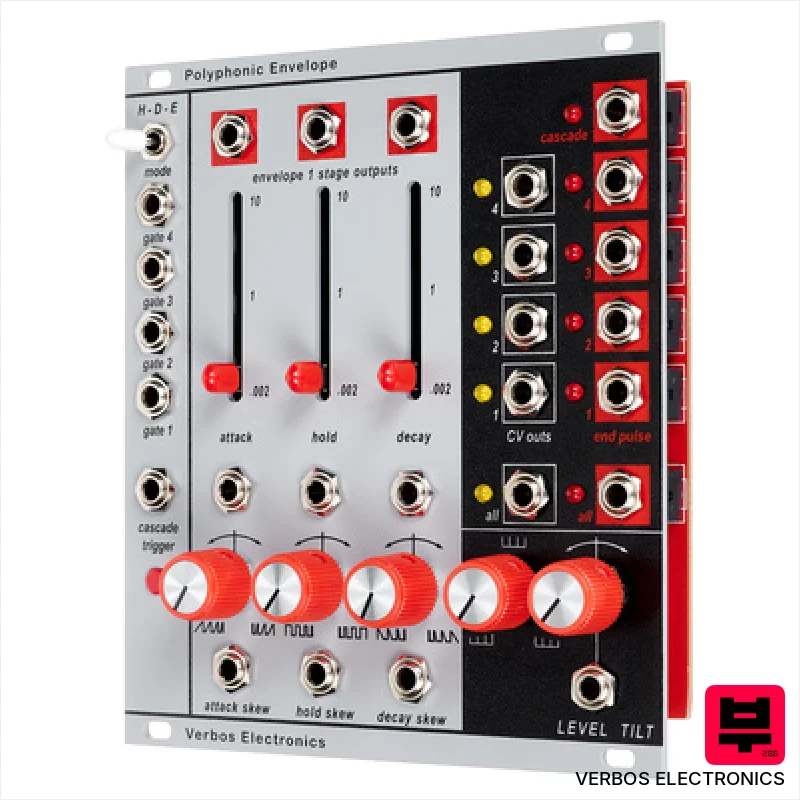
Verbos Electronics Polyphonic Envelope
- • Exceptional dynamic shaping across multiple voices, truly unique sound.
- • The fader control offers immediate, intuitive envelope time adjustments.
- • Skew control introduces complex, evolving textures with CV modulation.
- • Cascade mode enables intricate rhythmic patterns and generative sequences.
- • The power draw might strain smaller or older power supplies.
- • The learning curve for complex cascading and skew manipulation is steep.
- • The relatively small form factor can feel cramped for extensive patching.
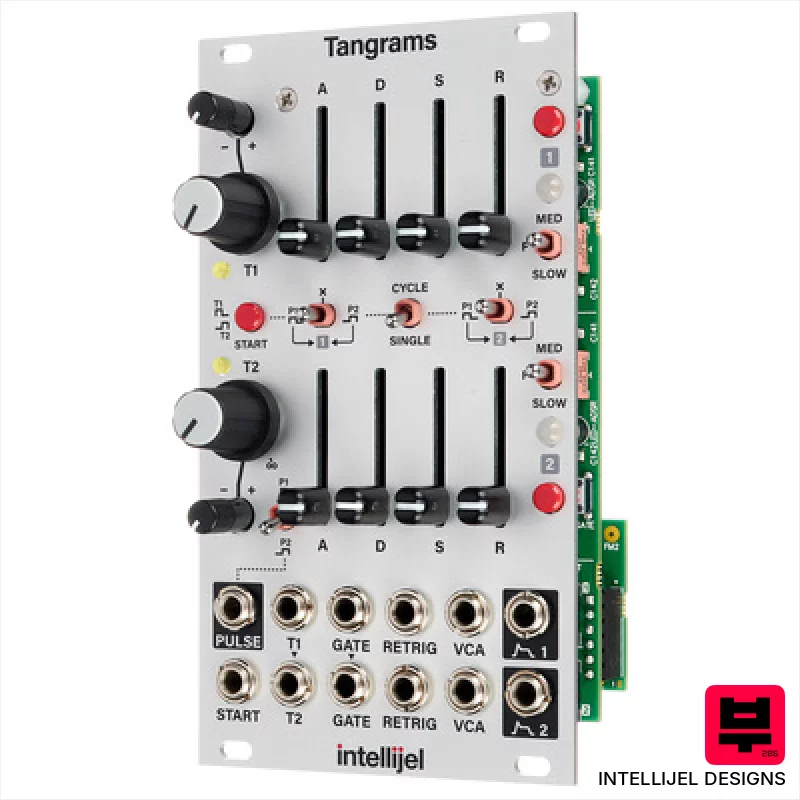
Intellijel Designs Tangrams
- • Excellent dynamic response, particularly with fast attack times.
- • The dual design significantly expands sound design possibilities.
- • Retrigger inputs offer unique rhythmic and sequencing capabilities.
- • Intelligent gate handling prevents clicks and unwanted artifacts.
- • 14HP can be tight in smaller Eurorack cases, demanding careful patching.
- • Limited modulation destinations compared to more complex envelope solutions.
- • The single cycle switch can be unintuitive for beginners.

Tiptop Audio Octostages
- • Excellent polyphonic envelope shaping capabilities for complex textures.
- • The Polytip system streamlines patching and reduces cable clutter significantly.
- • Robust build quality; Tiptop's known for durable enclosures and reliable components.
- • Sliders offer precise, tactile control over envelope parameters.
- • 20HP footprint can be limiting in smaller modular setups.
- • Limited modulation options beyond the CV input – more advanced modulation needs external sources.
- • The Polytip system, while efficient, requires dedicated cables and can be a commitment.
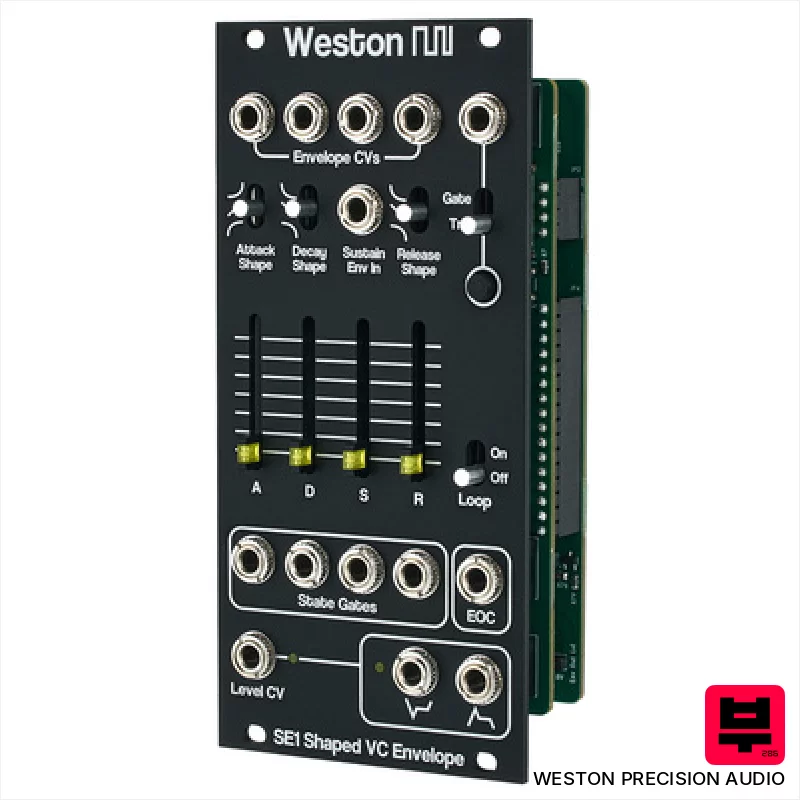
Weston Precision Audio SE1 Shaped VC Envelope
- • Exceptional shaping flexibility with independent exponential, linear, and logarithmic curves.
- • The dedicated VCA for sustain provides nuanced control over the envelope's output.
- • Multiple outputs (positive, inverted, EOC, gate) offer extensive patching possibilities.
- • Solid build quality; Weston’s known for reliable, robust analog circuitry.
- • 12HP footprint can be restrictive in smaller modular systems.
- • Limited sustain time range might not suit extremely long, evolving sounds.
- • The button-based trigger can feel less precise than a dedicated trigger input.
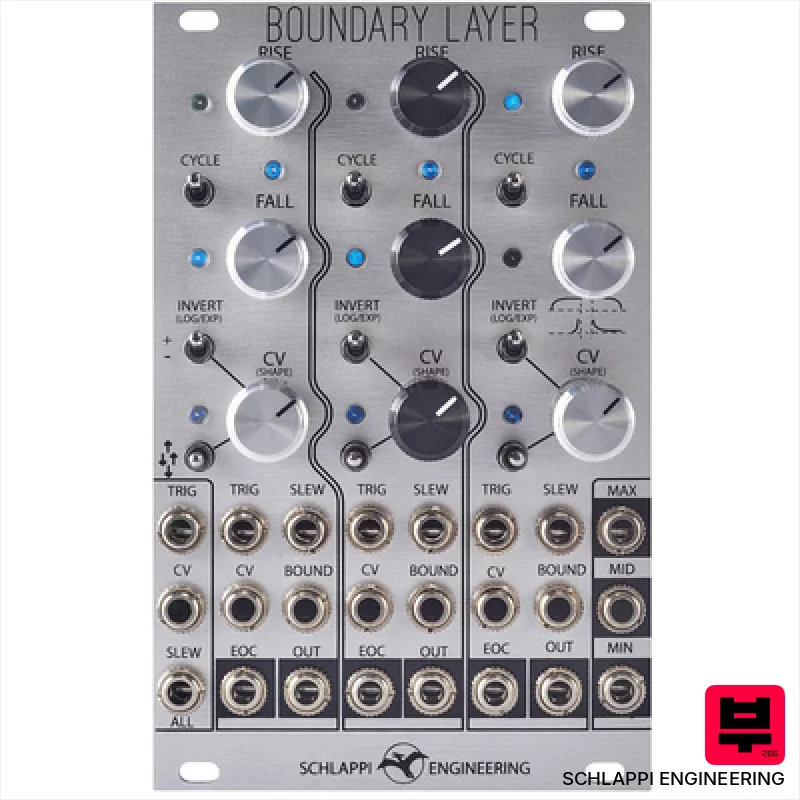
Schlappi Engineering Boundary Layer
- • Remarkable flexibility for complex modulation routing and shaping.
- • The characteristic curve adjustment adds nuanced envelope possibilities.
- • Solid build quality; feels robust despite the compact 16HP footprint.
- • Three channels offer a surprising amount of functionality in a small space.
- • The learning curve is steep for those unfamiliar with function generators.
- • Power draw is a bit higher than average, impacting PSU capacity.
- • Bound input functionality could be more clearly explained in the manual.

ADDAC 506 VC Stochastic Function Gen
- • Four channels offer incredible flexibility for complex textures.
- • Internal random generators add organic, unpredictable movement.
- • Comprehensive CV routing allows deep modulation possibilities.
- • Expandability with the 506B unlocks even more creative avenues.
- • 20HP footprint can be restrictive in smaller modular systems.
- • Steep learning curve; requires a solid understanding of modular synthesis.
- • Price point positions it as a premium investment for serious users.

Vostok Instruments Fuji
- • Six channels offer impressive routing flexibility for complex modulation.
- • Attack/Decay controls provide precise envelope shaping capabilities.
- • Normalised trigger simplifies sequencing and cascading effects.
- • Compact 10HP footprint saves valuable space in tight racks.
- • Limited waveform options compared to more expensive function generators.
- • Bipolar LFO range (+/-8V) might be restrictive for some applications.
- • Plastic knobs feel slightly less premium than metal alternatives.
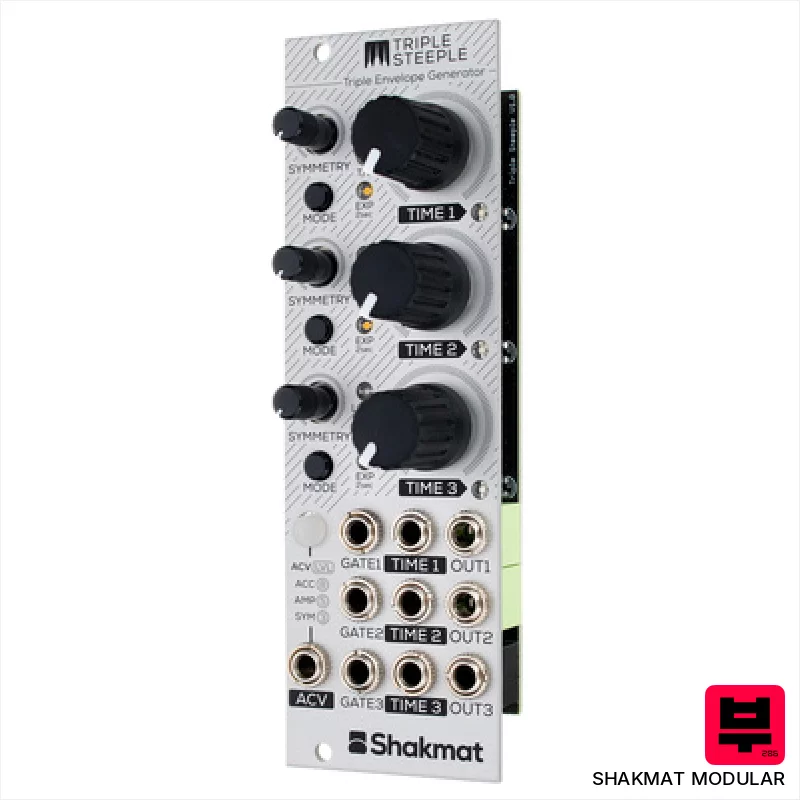
Shakmat Modular Triple Steeple
- • Excellent time/symmetry control offers nuanced envelope shaping.
- • Five selectable modes provide impressive versatility for diverse sound design.
- • Shakmat's robust build quality feels solid and dependable for modular use.
- • Adjustable output voltage expands the module's utility for various applications.
- • 8HP width can be restrictive in smaller Eurorack cases.
- • Limited modulation destinations compared to some higher-end envelope modules.
- • The stepped controls can feel less precise for subtle adjustments.
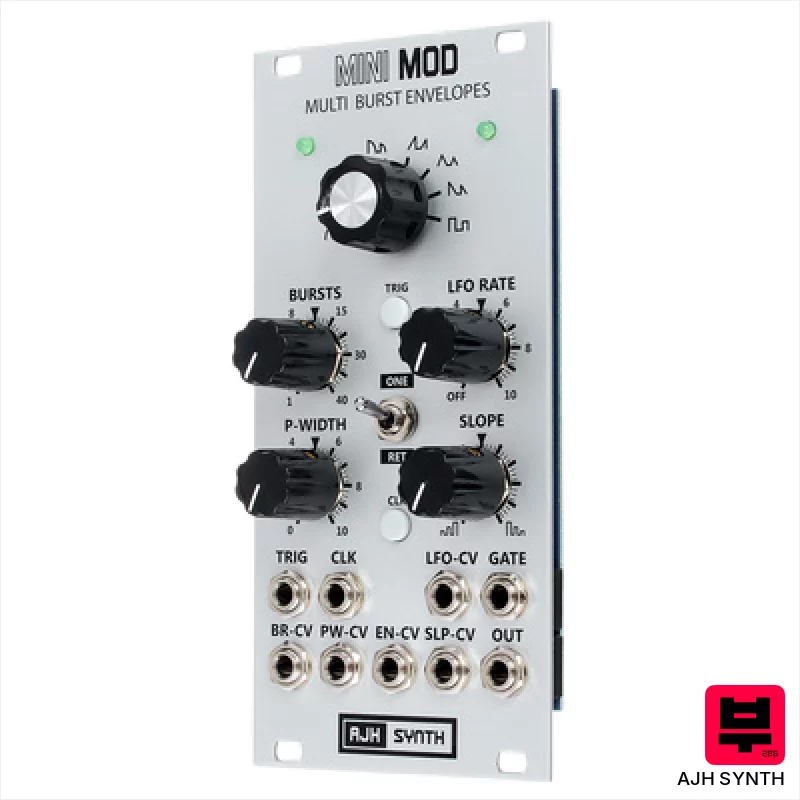
AJH Synth Multi Burst Envelopes Silver
- • Excellent burst waveform variety offers unique rhythmic possibilities.
- • Adjustable burst repetition (up to 40) is genuinely useful.
- • Internal LFO adds organic modulation to burst timing.
- • Solid build quality; the silver faceplate feels premium.
- • 12TE width might be restrictive in smaller Eurorack cases.
- • Pulsewidth control, while powerful, requires careful tweaking.
- • Limited burst shaping beyond the provided waveforms.
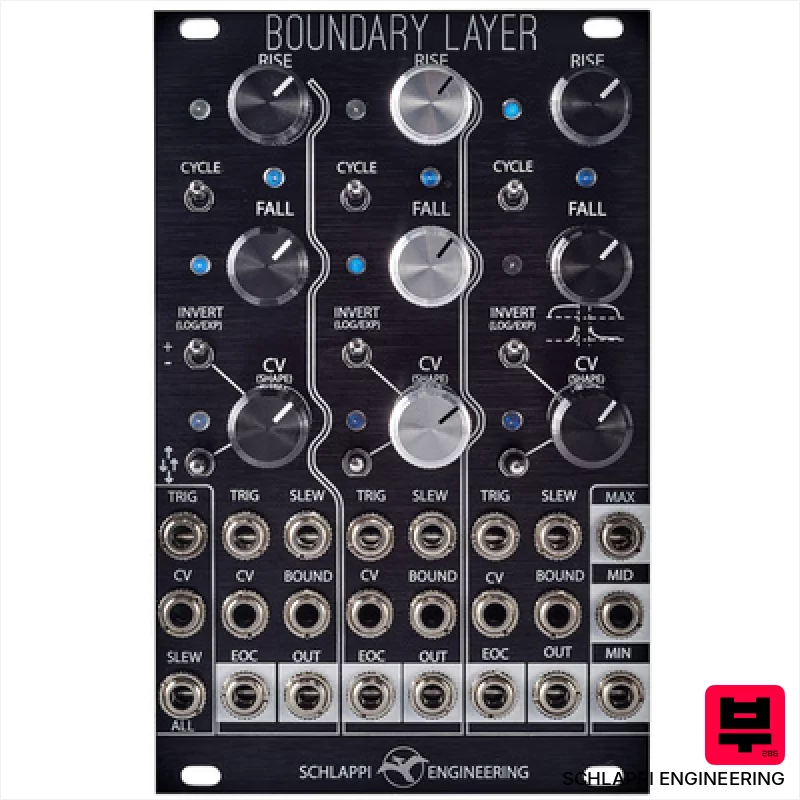
Schlappi Engineering Boundary Layer Black
- • Three independent channels offer exceptional routing flexibility for complex modulation.
- • The adjustable characteristic curves provide nuanced envelope shaping possibilities.
- • Schlappi’s build quality is evident – robust panel and tight component tolerances.
- • Cycle mode allows for rhythmic patterns and stepped modulation sequences easily.
- • 16HP footprint can be restrictive in smaller Eurorack cases.
- • The sheer number of controls can feel overwhelming for beginners.
- • Limited input options – lacks dedicated attenuators or offset for CV signals.

Expert Sleepers Aloysius
- • Excellent curve shaping provides nuanced envelope possibilities.
- • Compact 8HP footprint maximizes modular space efficiency.
- • Robust Expert Sleepers build quality ensures long-term reliability.
- • Multiple operating modes offer flexibility for varied patching scenarios.
- • Limited stage count restricts complex envelope shaping.
- • Signal output voltage (+8V) may be limiting for some modules.
- • Fast time range can feel a bit rushed for slower, evolving sounds.

cre8audio Function Junction
- • Pittsburgh Modular's design expertise shines through in the robust circuit design.
- • The ADSR's looping function offers unique rhythmic possibilities.
- • The dual LFOs provide versatile modulation options for complex sounds.
- • The mixer's three channels simplify routing and signal shaping.
- • 16HP is a bit tight for comfortable knob adjustments.
- • The analogue design inherently introduces some noise floor, audible in quiet passages.
- • LFO waveforms are limited to triangle and square – lacks more exotic options.

NANO Modules ARC
- • Incredibly versatile dual-functionality allows for complex modulation shaping.
- • Wide slew rate adjustment offers everything from subtle fades to aggressive clicks.
- • The logarithmic curve control adds unique and organic envelope shaping possibilities.
- • Logic outputs provide creative routing options for intricate modular patches.
- • 24HP footprint might be restrictive for smaller Eurorack cases.
- • Steep learning curve for users unfamiliar with envelope/LFO modulation concepts.
- • Limited waveform options compared to dedicated VCOs or LFOs.
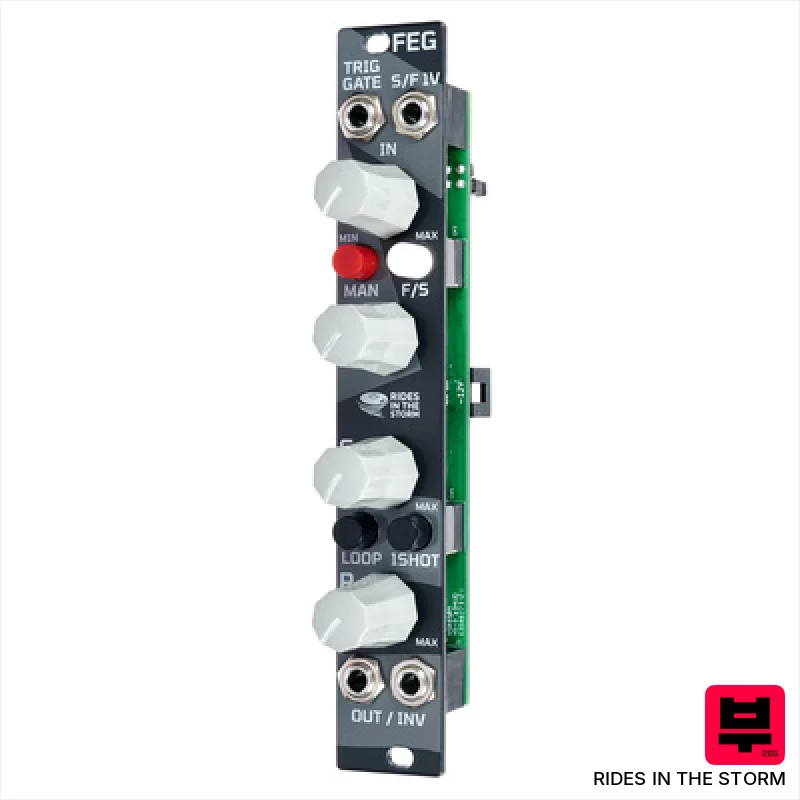
Rides In The Storm FEG
- • Excellent time range flexibility for diverse envelope shaping.
- • Compact 4TE width maximizes space in tight Eurorack setups.
- • Loop and one-shot modes offer creative rhythmic possibilities.
- • Robust build quality; feels solid and well-assembled.
- • Limited voltage output (8.5V) might need amplification in some applications.
- • 30mA current draw could be a concern in power-constrained systems.
- • Reset behavior jumper adds a minor complexity for initial setup.
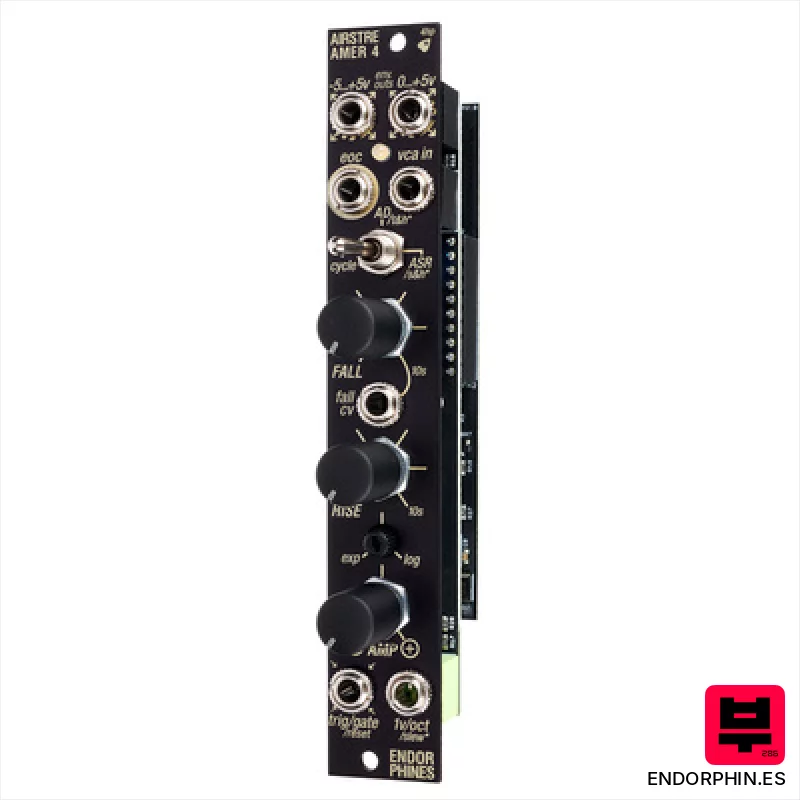
Endorphin.es Airstreamer 4 Black
- • Excellent response times for percussive envelopes.
- • The bipolar VCA CV input offers nuanced dynamic control.
- • Compact 4HP footprint maximizes modular space efficiency.
- • Robust metal enclosure feels premium and durable.
- • Limited modulation destinations compared to larger envelopes.
- • The logarithmic characteristic curve might be too subtle for some.
- • Power draw, while manageable, can be a factor in dense racks.
How to Choose the Best Envelope Modules
Attack/Release Curves
Linear, exponential, logarithmic - it's not just about speed, it's about how that speed feels. Exponential attacks are great for percussive sounds, while logarithmic can create really smooth, organic swells. A module with multiple curve options gives you serious sculpting power.
Segmented/Multi-Stage Envelopes
These let you create complex shapes with multiple attack and release phases. Think of it like having several envelopes layered on top of each other, allowing for incredibly nuanced and evolving modulation - crucial for anything beyond simple drone sounds.
Timing Resolution/Accuracy
How precisely can you set those attack and release times? Cheap modules can be sloppy, leading to timing drift and unpredictable results. Consistent timing is essential for rhythmic modulation and syncing with other modules.
Output Options/Polarity
Can the envelope output positive and negative voltages? This is vital for controlling filters and other parameters that respond to both positive and negative modulation signals. Dedicated positive/negative outputs are ideal, but some modules offer polarity inversion switches.
Triggering Flexibility
Beyond simple gate triggers, look for features like retriggering, looping, or even sample-and-hold triggering. These open up a world of possibilities for creating rhythmic and generative modulation sequences.
Buying Guide
Don't get lured in by a ton of features if the fundamentals are off. A module with a slightly simpler feature set but rock-solid timing and a responsive feel will always be more useful than a feature-bloated mess. You'll pay a premium for accurate timing and well-implemented curves, and it's worth it - sloppy modulation sounds amateurish. Also, consider the module's power draw; some of these more complex envelopes can be hungry.
Our Methodology
We're not relying on spec sheets here. We've spent months putting these envelope modules through the wringer - patching them into everything from subtle vibrato to aggressive filter sweeps, tracking how they perform in a live band setting, and A/B'ing them against each other in both studio and bedroom environments. It's about how they feel and how they sound in the real world, not just the numbers on a page.

